DJI Osmo Pocket 3 Deal: Camera vs Creator Combo at Reported Record-Low Prices

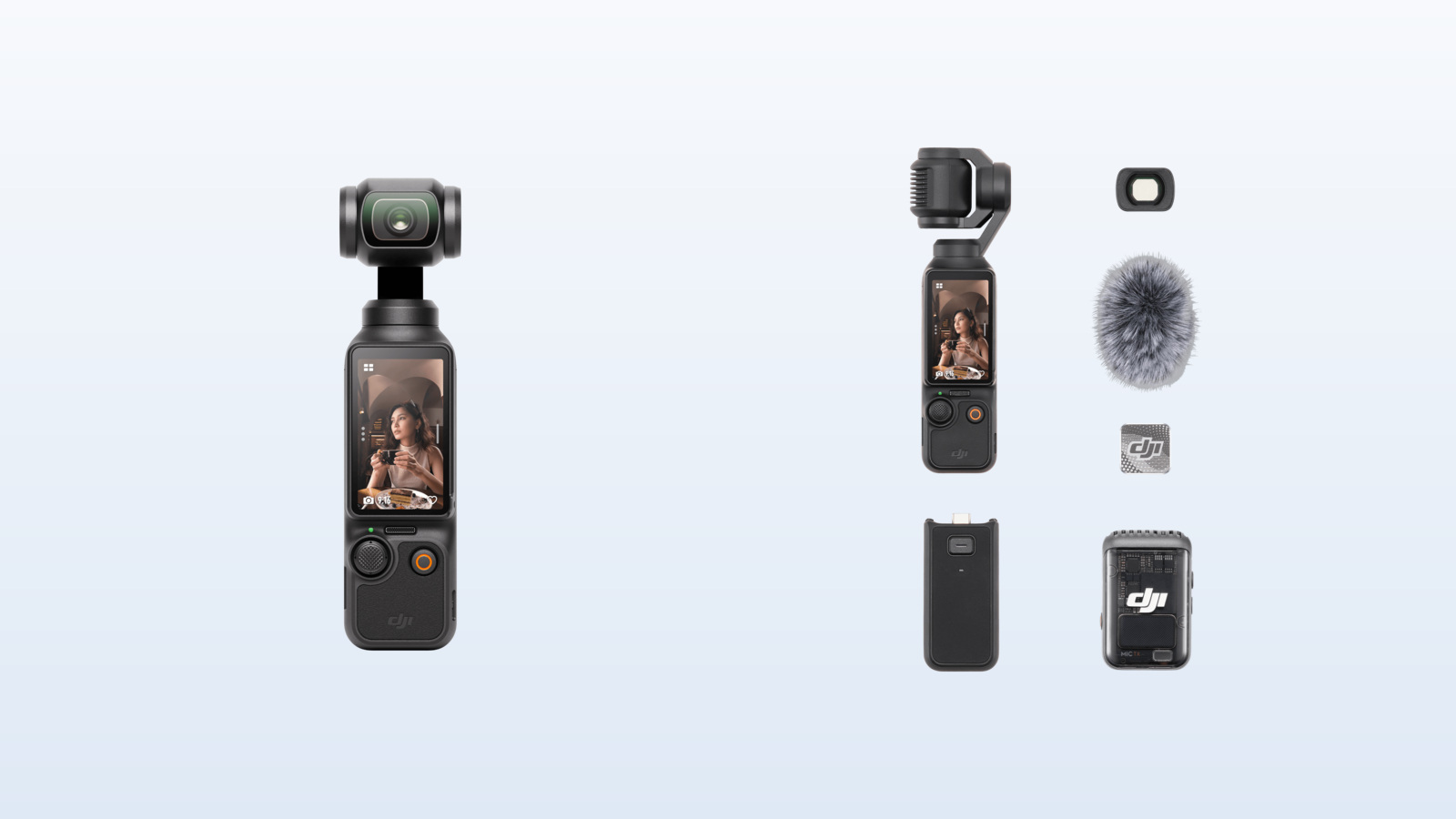
DJI Osmo Pocket 3 camera and Creator Combo accessories shown side by side

The DJI Osmo Pocket 3 is back in the deal spotlight. Amateur Photographer reported on October 7, 2026, that the pocket gimbal camera had fallen to unusually low promotional pricing, including a Creator Combo offer aimed squarely at YouTubers and solo creators. The important caveat is that retailer prices and sellers can change quickly, so the figures below are deal-report snapshots rather than a promise of today’s checkout price.

Even with newer pocket cameras on the market, the Pocket 3 remains a practical choice for people who want stabilized 4K video, reliable subject tracking and better low-light potential than a typical action camera—without carrying a mirrorless body, lens and separate gimbal.

The deal at a glance

  • Camera-only kit: deal coverage in early October cited pricing around $395, compared with DJI’s $439 store price.
  • Creator Combo: deal coverage on October 6–7 cited a $495 promotional price, compared with DJI’s $549 store price.
  • These are reported promotional prices, not a guarantee of the lowest price at every retailer or in every region.
  • Before ordering, confirm the seller, exact bundle contents, return policy and final checkout price.

The Creator Combo discount is especially notable because its accessories solve several common vlogging problems at once: wireless audio, longer operating time, a stable tabletop setup and a wider field of view. The camera-only option can still be the better buy if you already own those pieces.

Why the Pocket 3 still stands out for creators
Why the Pocket 3 still stands out for creators

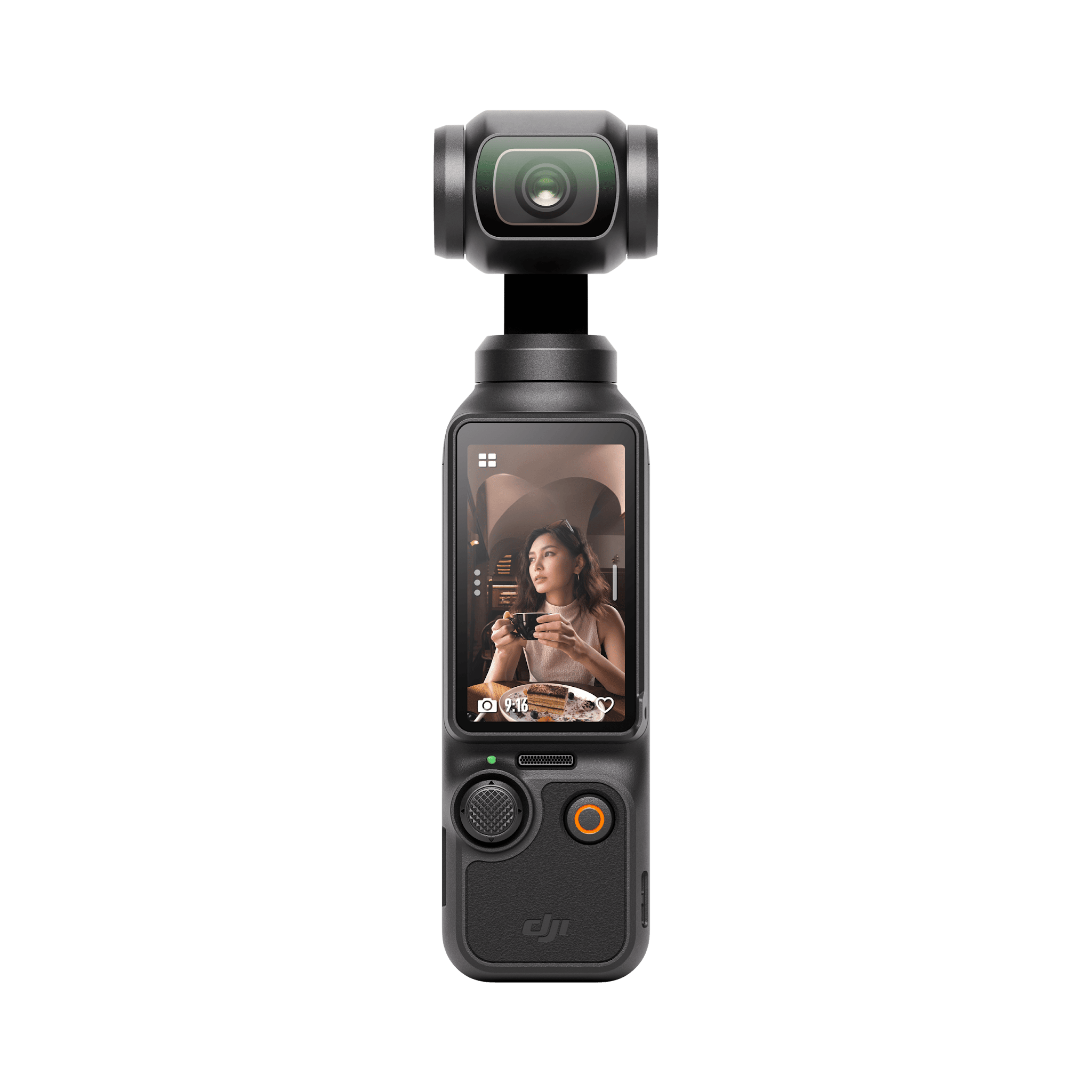
The Pocket 3 combines a 1-inch CMOS sensor with a three-axis mechanical gimbal. That hardware pairing is the reason it can produce smooth walking footage while retaining more natural motion than electronic stabilization alone. Its 20mm-equivalent f/2.0 lens is wide enough for handheld vlogging, travel scenes and room interiors without creating the extremely stretched look of some action cameras.

DJI lists 4K recording up to 120 frames per second in slow-motion mode, a rotating 2-inch OLED touchscreen, fast full-pixel focusing and ActiveTrack 6.0. The display turns between horizontal and vertical orientations, which makes it easier to frame standard YouTube video and portrait-oriented clips from the same small camera.

Battery performance is also useful for travel and event coverage. DJI rates the camera for up to 166 minutes under its 1080p/24 laboratory test, with an 80% charge in about 16 minutes and a full charge in about 32 minutes when used with a compatible charger. High-resolution recording, tracking, screen brightness and temperature will affect real-world endurance.

Camera only vs Creator Combo: What changes?
Camera only vs Creator Combo: What changes?

Both packages center on the same Osmo Pocket 3 camera, so image quality and stabilization do not improve merely because you choose the Creator Combo. The decision is about accessories and workflow.

Choose the camera-only kit if…

  • You already own a wireless microphone or normally record voiceovers later.
  • You have a compact tripod, USB-C power bank and carrying case that fit your workflow.
  • You want the lowest entry price and prefer to add accessories only when needed.

For an experienced creator with an established audio and support kit, the standard package avoids paying twice for gear. It is also the simpler choice for travelers who want the smallest possible setup.

Choose the Creator Combo if…

  • You film walk-and-talk videos, interviews or pieces to camera and need wireless audio.
  • You want a battery handle and mini tripod ready for long days and static shots.
  • You expect to use the wide-angle lens for arm’s-length framing, interiors or group clips.

The Creator Combo can be the stronger value when its sale premium over the basic kit is modest. Buying a comparable wireless microphone, handle, tripod, lens and bag separately can erase the apparent savings of the camera-only deal.

What is included in the Creator Combo?

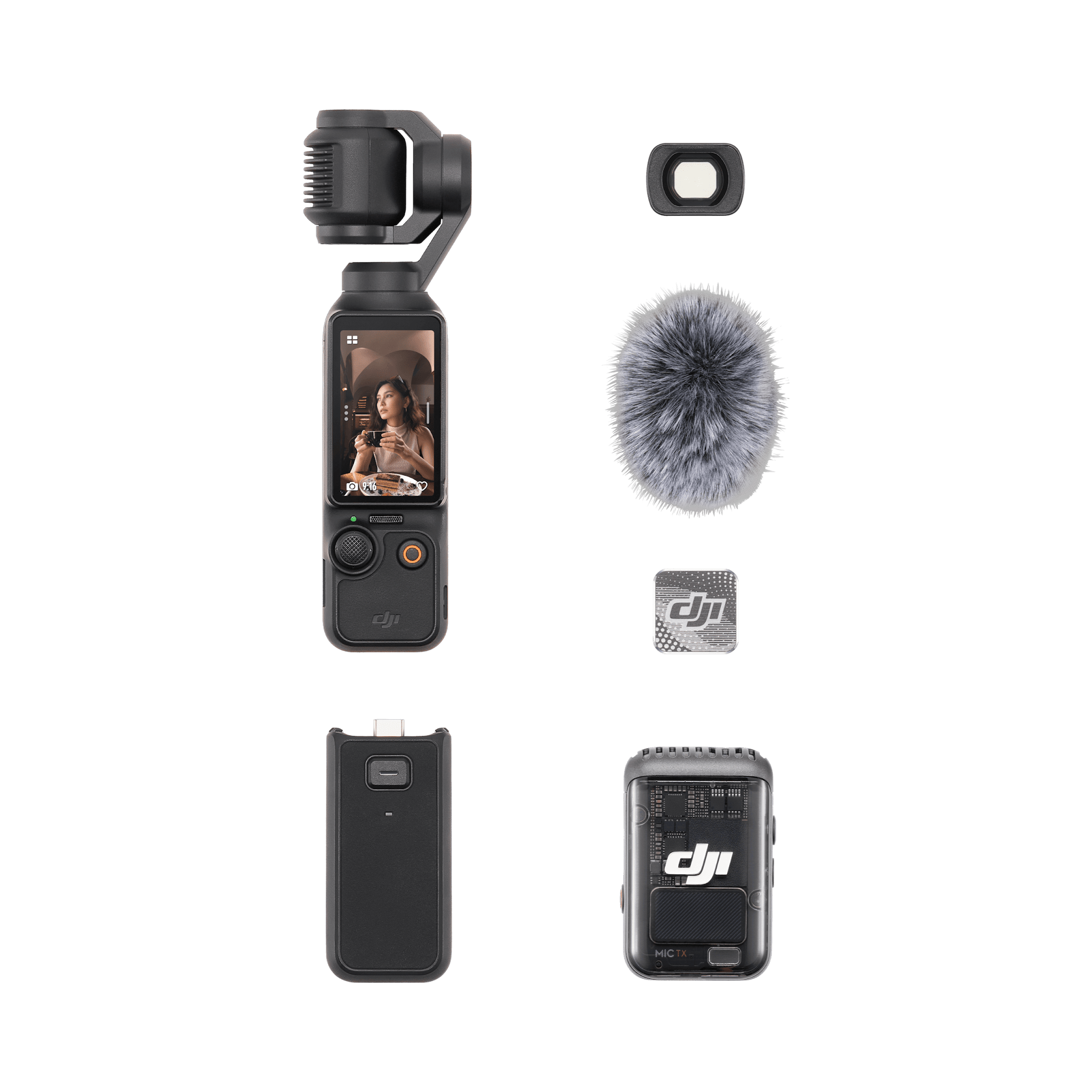
DJI’s official Creator Combo listing includes the core camera accessories below. Retailer listings can vary, so compare the exact product description before paying.

  • DJI Osmo Pocket 3 camera
  • DJI Mic 2 transmitter with windscreen and clip magnet
  • Battery handle
  • Mini tripod
  • Wide-angle lens
  • Carrying bag, protective cover, wrist strap and USB-C cable

The Mic 2 transmitter is the bundle’s most important upgrade for many creators. Clear speech usually matters more to viewers than a small difference in image quality, and wireless audio makes it easier to keep the camera far enough away for a natural composition.

Shop the two DJI Osmo Pocket 3 options

Check the DJI Osmo Pocket 3 camera-only kit on Amazon

Check the DJI Osmo Pocket 3 Creator Combo on Amazon

Disclosure: ReaderSpice may earn a commission from qualifying purchases made through the Amazon links above, at no additional cost to you.

Amazon prices, sellers and stock can change without notice. Confirm that the listing is sold by Amazon or an authorized seller you trust, and verify that the package name matches the accessories shown before ordering.

What to check before buying

The listing and seller

A low price is less attractive if it comes from an unfamiliar marketplace seller, carries an unclear warranty or omits expected accessories. Read the seller line, delivery estimate, return window and bundle description—not just the headline price.

Storage and editing needs

The Pocket 3 requires a microSD card for recording. DJI’s current specifications list support for cards up to 1TB, but speed and reliability matter as much as capacity. Choose a compatible card from DJI’s recommended list, particularly if you plan to shoot high-frame-rate 4K video.

Weather and shooting distance

This is a compact gimbal camera, not a rugged waterproof action camera. Protect it from rain, sand and impacts, and remember that its fixed wide lens is optimized for people, travel and everyday scenes rather than distant wildlife or field sports.

The accessories you already own

The Creator Combo is not automatically better. If you already have strong audio gear and a compact support setup, the basic package may deliver identical footage for less. If you are starting from scratch, the Combo is often easier to justify because it arrives as a coherent kit.

Is the DJI Osmo Pocket 3 still worth buying in 2026?

Yes—when the discount is real and the camera matches the job. The Pocket 3 remains especially useful for travel vloggers, YouTube presenters, family filmmakers and one-person crews who prioritize smooth handheld footage and fast setup. Its large sensor, mechanical stabilization, rotating screen and tracking tools still form a well-balanced package.

The limitations are equally clear. It does not replace an interchangeable-lens camera for long telephoto work, specialized photography or the highest-end production needs. It also needs more weather protection than an action camera. Buyers who understand those tradeoffs can get substantial value from either kit.

Bottom line

Choose the camera-only deal if you already own the supporting gear. Choose the Creator Combo if wireless audio, a battery handle, mini tripod and wide-angle lens would otherwise be separate purchases. In both cases, treat the reported $395 and $495 prices as reference points from October 2026 deal coverage, then compare the live Amazon price and seller before checking out.

Sources

Amateur Photographer — DJI Osmo Pocket 3 deal report (October 7, 2026)

DJI — Osmo Pocket 3 product page

DJI — Osmo Pocket 3 specifications

DJI Store — Osmo Pocket 3 Creator Combo

Inline image 1: Official DJI Osmo Pocket 3 camera product image

Inline image 1 alt text: Front view of the DJI Osmo Pocket 3 gimbal camera

Inline image 1 source: DJI official Osmo Pocket 3 product page

Inline image 2: Official DJI Osmo Pocket 3 Creator Combo product image

Inline image 2 alt text: DJI Osmo Pocket 3 Creator Combo camera, microphone and filming accessories

Inline image 2 source: DJI official Creator Combo product page
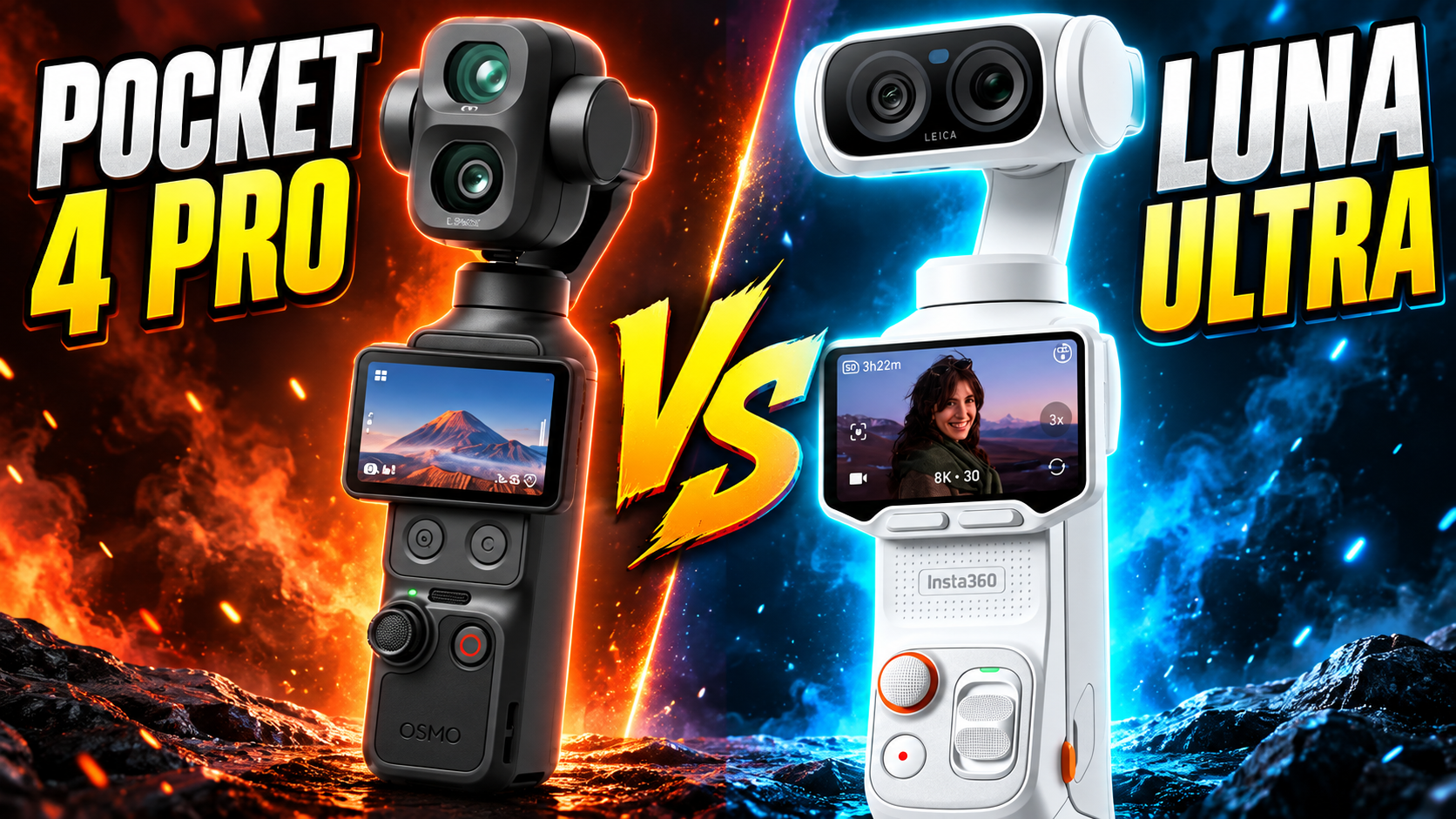
DJI Osmo Pocket 4P vs Insta360 Luna Ultra: The Dual-Lens Pocket Camera War Is Here

DJI and Insta360 are now fighting for the same creator with two of the most ambitious pocket gimbal cameras yet. The DJI Osmo Pocket 4P doubles down on cinematic 4K, extreme dynamic range, fast slow motion and DJI’s tracking ecosystem, while the Insta360 Luna Ultra pushes the category toward 8K, Leica optics, a detachable monitoring screen and a more flexible remote-shooting workflow.

Both cameras use a 1-inch main sensor, both add a dedicated 60mm-class telephoto camera, both have three-axis mechanical stabilization, and both are built for creators who want more than a phone without carrying a mirrorless camera and separate gimbal.

The similarities stop there. DJI and Insta360 made very different choices around resolution, color workflow, storage, screen design and creator features. Here is how the Osmo Pocket 4P and Luna Ultra compare based on current official specifications and announced features.

Quick Comparison: Two Dual-Lens Cameras, Two Different Priorities

DJI Osmo Pocket 4P: 1-inch wide camera, 1/1.28-inch 60mm med-tele camera, up to 17 stops of dynamic range in supported D-Log 2 shooting, 4K up to 240fps on the wide camera, ActiveTrack 8.0, 103GB built-in storage and up to 210 minutes of rated operating time.

Insta360 Luna Ultra: 1-inch 8K main camera, 1/1.3-inch 60mm telephoto camera, Leica Summicron optics, 8K30, 4K120, 10-bit I-Log, detachable 2-inch OLED monitoring screen, 47GB internal storage plus microSD expansion up to 2TB, and up to 240 minutes of rated battery life under Insta360’s laboratory conditions.

Camera Hardware: Surprisingly Similar on Paper

Image: DJI Osmo Pocket 4P official Cannes preview image. Source: DJI.

The basic camera layouts are remarkably close. DJI uses an all-new 1-inch CMOS wide-angle camera with a 20mm-equivalent f/2.0 lens and pairs it with a 1/1.28-inch 60mm-equivalent med-tele camera with an f/1.8 aperture. DJI says the wide camera can deliver up to 17 stops of dynamic range in its supported D-Log 2 workflow.

Luna Ultra also uses a 1-inch main camera, but its main Leica Summicron lens is slightly faster at f/1.8. Its secondary 60mm-equivalent telephoto camera uses a 1/1.3-inch sensor and an f/2.0 aperture. The difference in telephoto sensor size is small on paper, so real-world image processing, autofocus, highlight handling and low-light performance will matter more than the fractionally different sensor dimensions.

Both systems give creators a true wide-to-telephoto jump without swapping lenses. That is a major change for pocket gimbal cameras, which historically relied heavily on digital cropping once users wanted a tighter frame.

Resolution and Slow Motion: 8K vs Extreme 4K Frame Rates

This is one of the clearest differences. Luna Ultra can record 8K 16:9 video at up to 30fps and 4K at up to 120fps. It also supports 10-bit I-Log and Dolby Vision, giving creators both high-resolution capture and a professional grading option.

DJI takes a different route. The Osmo Pocket 4P tops out at 4K rather than 8K, but the wide camera can record 4K slow motion up to 240fps, while the med-tele camera can reach 4K up to 200fps in supported modes. For creators who film sports, action, product sequences or cinematic slow-motion inserts, those frame rates are a major advantage.

So the tradeoff is straightforward: Luna Ultra gives you more resolution for reframing and cropping, while Pocket 4P puts more emphasis on high-frame-rate 4K capture.

Dynamic Range and Color: DJI D-Log 2 vs Insta360 I-Log

DJI is heavily promoting the Osmo Pocket 4P’s new D-Log 2 workflow. DJI says the wide camera can reach up to 17 stops of dynamic range under its stated test conditions, which is unusually ambitious for a camera this small. The goal is to preserve more highlight and shadow information for color grading, especially in high-contrast scenes.

Insta360 counters with 10-bit I-Log on Luna Ultra, along with Dolby Vision and Leica color options. Insta360 lists a maximum video bitrate of 150Mbps and supports 10-bit video across its professional modes. Luna Ultra’s Leica partnership also gives it a distinctive color-science story that may appeal to creators who want attractive footage without always doing a heavy grade.

The important detail is that spec-sheet dynamic range and real usable dynamic range are not always the same thing. Independent side-by-side testing will still matter for skin tones, highlight roll-off, shadow noise and matching the wide and telephoto cameras.

Zoom and Telephoto: Both Reach 12x, but Differ in Approach

Both cameras are built around a 20mm wide view and a 60mm telephoto view, giving a natural 1x-to-3x optical jump. DJI advertises up to 12x zoom and ActiveTrack support at high zoom levels. The dedicated 60mm f/1.8 camera is particularly aimed at portraits and compressed-background shots.

Luna Ultra also reaches up to 12x in supported 4K modes and offers up to 6x Clarity Zoom. Its 8K mode supports zoom from 1x to 6x, and the second camera is central to Insta360’s five-focal-length shooting concept.

For creators who regularly film people, stages, street scenes or distant travel details, both cameras are far more flexible than a traditional single-lens pocket gimbal.

Screen and Solo-Creator Workflow: Luna Ultra Has the More Radical Design

Image: Insta360 Luna Ultra product configuration. Source: Metapod product listing (manufacturer product image).

DJI keeps a conventional integrated 2-inch OLED display on the Pocket 4P. That should feel familiar to anyone coming from the Pocket 3 or Pocket 4, and it keeps the camera simple and self-contained.

Luna Ultra does something much more unusual: its 2-inch OLED touchscreen can detach from the camera and operate as a remote monitor and controller. The detachable screen also has its own microphone. For a one-person production setup, that can be extremely useful when the camera is across the room, on a tripod, attached to a rig or positioned somewhere that makes a fixed screen hard to see.

For travel vlogging and handheld shooting, DJI’s simpler integrated design may be more straightforward. For solo creators who frequently film themselves from a distance, Insta360’s detachable screen can fundamentally change the workflow.

Tracking and Stabilization

Both cameras use three-axis mechanical gimbals, so neither relies only on electronic stabilization. DJI combines its gimbal with ActiveTrack 8.0 and specifically promotes subject tracking even at longer zoom settings.

Insta360 also provides intelligent tracking and framing features on Luna Ultra, including multi-person tracking and remote monitoring through the detachable display. Both are clearly designed for creators who work without a second camera operator.

Storage: DJI Gives More Built In, Insta360 Gives More Expansion

Osmo Pocket 4P includes 103GB of built-in storage according to DJI’s current product comparison information. That is a major convenience when you want to start recording immediately without relying on a memory card.

Luna Ultra includes 47GB of internal storage, but it also supports microSD cards up to 2TB. That makes Luna Ultra considerably more expandable for long trips, extended shoots and large 8K projects.

The better approach depends on your workflow: DJI gives you more usable space inside the camera from day one, while Insta360 gives you far more potential capacity through removable media.

Battery and Charging

DJI rates the Osmo Pocket 4P for up to 210 minutes of operation when recording 1080p/24fps under its specified laboratory conditions. DJI also states that the camera can reach 80% charge in about 18 minutes and 100% in about 32 minutes with a compatible PD charger.

Insta360 rates Luna Ultra for up to 240 minutes at 1080p/24fps with the screen and Wi-Fi off under laboratory conditions. It lists about 23 minutes to reach 80% and around 38 minutes for a full charge using a compatible 45W USB-C setup.

These battery numbers are not directly representative of demanding 4K120, 4K240 or 8K recording, so creators should expect shorter real-world endurance in high-resolution, high-frame-rate modes.

Size and Weight

DJI lists the Osmo Pocket 4P at about 230 grams. Insta360 lists Luna Ultra at approximately 233 grams in Cosmic Black and 235 grams in Stellar White. In practical terms, they are in the same weight class.

That makes this comparison especially interesting: both companies have managed to fit two cameras, a mechanical gimbal and a touchscreen into a device that still weighs well under a typical mirrorless camera body before adding a lens.

Price and Availability

Pricing varies by region. DJI’s regional stores currently list the Osmo Pocket 4P from roughly USD $609 in some markets, while availability and pricing differ by country. Insta360 lists Luna Ultra in the United States at $769.99.

That gives DJI a lower entry price in markets where both are officially sold, but regional availability is important and buyers should check the current local store before comparing purely on price.

Shop Insta360 Luna Ultra on Amazon

ReaderSpice may earn a commission from qualifying purchases made through this affiliate link, at no additional cost to you.

Which One Fits Your Workflow?

The Osmo Pocket 4P makes the strongest case for creators who prioritize high-frame-rate 4K, maximum dynamic-range potential, DJI’s tracking ecosystem, substantial built-in storage and a more conventional pocket-camera workflow.

Luna Ultra stands out for creators who want 8K capture, Leica optics, a detachable monitoring screen, expandable storage and a remote-shooting design built around solo production. Its 8K resolution also gives more room for reframing in post, while the detachable screen is genuinely different from DJI’s approach.

Neither camera is simply a copy of the other. DJI is leaning toward compact cinematic performance and speed; Insta360 is leaning toward resolution, flexible monitoring and creator-oriented hardware experimentation. That makes this one of the most interesting pocket-camera matchups of 2026.

Sources

DJI — Osmo Pocket 4P Product Page

DJI — Osmo Pocket 4P Official Cannes Announcement

DJI — Osmo Pocket 4P / Pocket Series Comparison

DJI Support — Osmo Pocket 4P Charging and Battery Information

Insta360 — Luna Ultra Hardware Specifications

Insta360 — Luna Ultra Photo & Video Specifications

Insta360 — Luna Ultra Official Announcement

Digital Camera World — DJI Osmo Pocket 4P vs Insta360 Luna Ultra Comparison

DJI Neo Hits Record-Low $139 on Amazon as New U.S. Drone Tariffs Take Effect

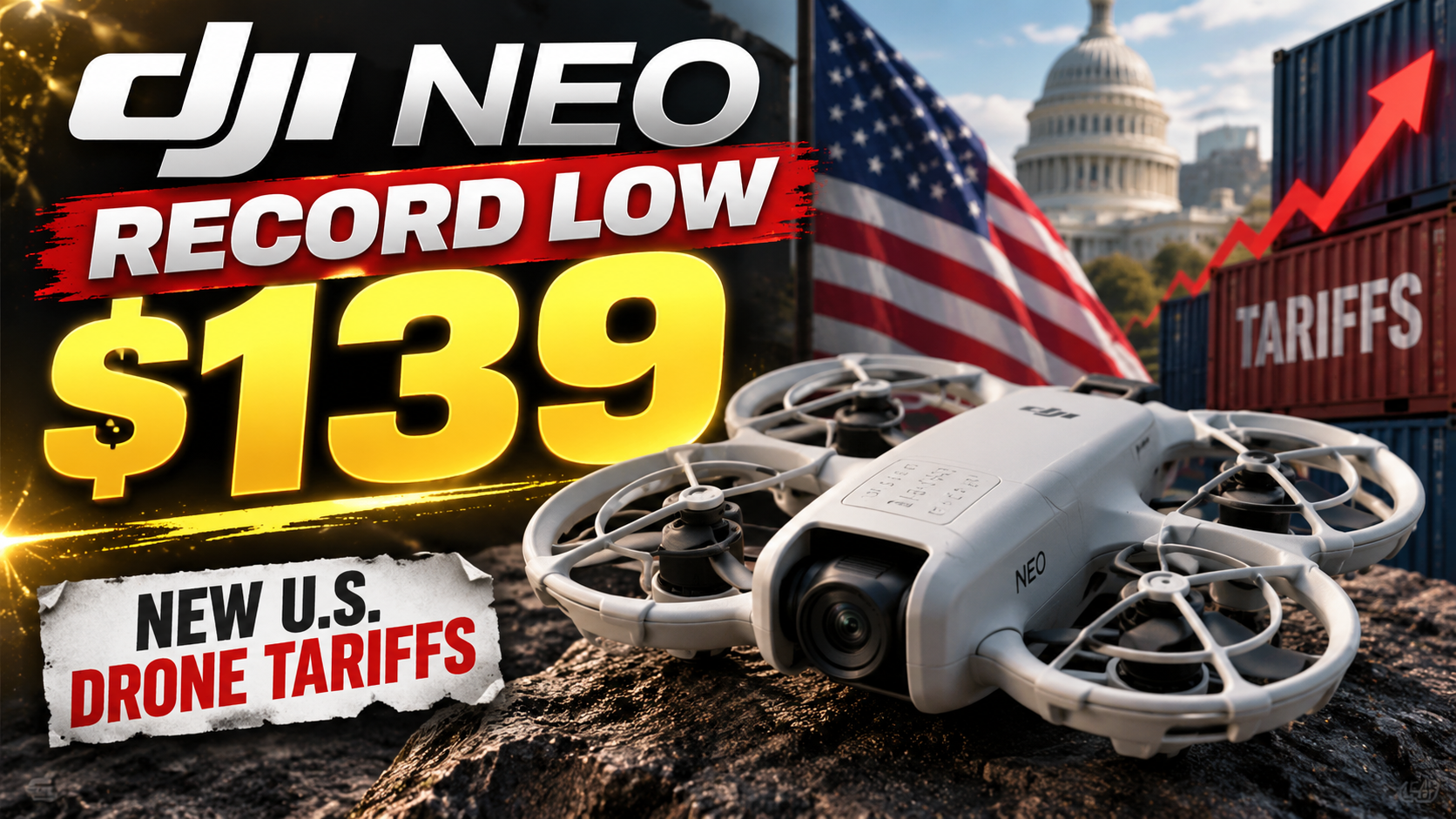
If you’ve been waiting for a cheap way to get into DJI drones, this could be one of the best buying opportunities we’ve seen. The DJI Neo has dropped to just $139 on Amazon, down from its regular $199 price — a 30% discount and a record-low price.

The timing of this deal is especially interesting because new U.S. tariffs on imported drones have just taken effect, potentially putting upward pressure on drone prices as retailers replenish their inventories.

DJI Neo Drops to Just $139

Amazon is currently offering the controller-free DJI Neo Mini Drone with 4K UHD Camera for $139.


Amazon deal:

“Check the DJI Neo $139 deal on Amazon” https://amzn.to/4qWsV9j

Price and availability can change at any time.

At $139, the Neo is $60 below its $199 regular price, representing a 30% discount. Recent deal tracking and reporting identify this as the lowest price seen for the drone.

The sale isn’t limited to the basic configuration either. Amazon deal listings have recently shown:

– DJI Neo — $139

– DJI Neo Three-Battery Combo — $199

– DJI Neo Fly More Combo with RC-N3 — $239

– DJI Neo Motion Fly More Combo with Goggles N3 — $369

For buyers who want to fly with a traditional controller, the $239 Fly More Combo may offer the strongest overall value because it includes the RC-N3 controller, three Intelligent Flight Batteries and a two-way charging hub.

Why the $139 DJI Neo Is Such a Good Deal

Despite its low price, the DJI Neo isn’t simply a toy drone.

It weighs only about 135 grams and can record stabilized 4K/30fps video. It’s designed particularly well for beginners, travelers, vloggers and creators who want aerial footage without carrying a larger drone.

Some of its biggest features include palm takeoff and landing, AI subject tracking, QuickShots, full propeller guards and multiple control options.

You don’t even need a conventional remote controller to start using the basic Neo. It can work with DJI’s mobile app and automated flight modes, making it especially convenient as a compact flying camera.

Why the Timing Matters: New U.S. Drone Tariffs

There’s another reason this particular sale deserves attention.

New U.S. Section 232 tariffs covering unmanned aircraft systems went into effect for covered imports beginning September 3, 2026.

Under the presidential proclamation, covered drones with a maximum takeoff weight of 25 kilograms or less can face an additional 25% ad valorem duty, subject to the classifications and exceptions established by the proclamation.

Certain larger drones, thermal-imaging UAS, docking stations and specified critical components can face duties as high as 100%.

The U.S. Customs and Border Protection implementation guidance confirms that the new UAS duties became effective September 3. An additional 25% duty covering certain other UAS components is scheduled to become effective February 9, 2027.

Does That Mean the DJI Neo Will Become 25% More Expensive?

Not necessarily.

A 25% import tariff doesn’t mean Amazon simply takes today’s $139 price and adds another 25% at checkout.

The tariff applies at the import level to covered products. Retail prices depend on several factors, including import value, existing inventory, distributor costs, retailer margins and how much of the additional cost manufacturers or sellers decide to absorb.

There’s also an important inventory consideration.

Drones that were already imported before the new tariff took effect aren’t suddenly charged the new tariff simply because they’re sitting on a retailer’s shelf.

That means some of the DJI drones currently being sold in the United States could effectively represent pre-tariff inventory.

The bigger question is what happens when retailers need to replace that inventory with newly imported units subject to the new duty structure.

There is no guarantee that DJI Neo prices will increase, but the additional import costs create a legitimate risk of higher retail pricing once inventory turns over.

Is the DJI Neo Worth Buying at $139?

At $139, the DJI Neo becomes extremely compelling for someone buying their first DJI drone or a creator looking for an inexpensive secondary drone.

Its combination of 4K recording, subject tracking, palm launch, compact size and DJI’s stabilization technology is difficult to match at this price.

For casual users, the $139 base model makes sense.

For someone planning to fly regularly, however, the $239 Fly More Combo deserves serious consideration because the additional batteries, charging hub and RC-N3 controller significantly expand what you can do with the Neo.

Should You Buy Before Drone Prices Rise?

Nobody can guarantee that the DJI Neo will become more expensive after the current inventory sells out.

What we do know is that the Neo has reached a record-low $139 price at the same time new U.S. drone import tariffs are beginning to affect incoming products.

That’s an unusual combination.

If you’ve already been planning to buy a DJI Neo, waiting specifically for a substantially lower price may therefore carry more risk than usual.


Check the current Amazon price here:


“DJI Neo on Amazon”

https://amzn.to/4qWsV9j

Disclosure: If you use an affiliate link on your website, Prices and availability are subject to change.