
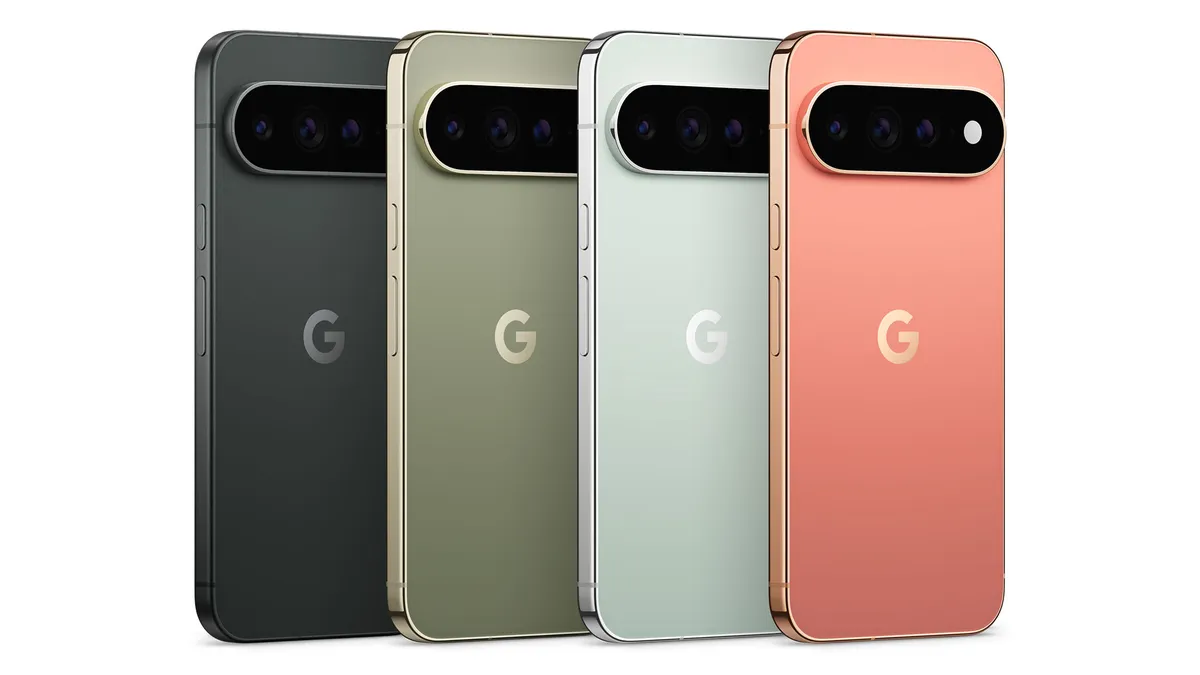
Google’s Pixel 11 Pro and Pixel 11 Pro XL are officially released. Announced on August 12, the phones reached retail on August 20, 2026, with US launch prices starting at $1,099 and $1,299. Both begin at 256GB. For buyers, the central question is whether the XL’s larger format justifies another $200. Source: Google’s launch announcement.
Affiliate disclosure: As an Amazon Associate I earn from qualifying purchases.
Check price and availability on Amazon (paid link). Confirm the model, storage, seller and final price on Amazon before purchasing.
Pixel 11 Pro vs Pixel 11 Pro XL: Key specifications
| Feature | Pixel 11 Pro | Pixel 11 Pro XL |
|---|---|---|
| US starting price | $1,099 | $1,299 |
| Display | 6.3-inch LTPO OLED | 6.8-inch LTPO OLED |
| Refresh rate | 1–120Hz | 1–120Hz |
| Processor | Google Tensor G6 | Google Tensor G6 |
| Typical battery capacity | 4,850mAh | 5,115mAh |
| Wireless charging | Up to 25W, Qi2.2 | Up to 25W, Qi2.2 |
| Storage / RAM | 256GB / 12GB; 512GB or 1TB / 16GB | 256GB / 12GB; 512GB or 1TB / 16GB |
The XL’s advantages are size and charging
Google lists wired charging to approximately 55% in 30 minutes for the Pro, versus 75% for the XL, using suitable separately sold USB-C PPS chargers. Those are manufacturer test figures, not ReaderSpice measurements. The XL’s larger battery also should not be read as a guaranteed proportional increase in runtime.
Our buying take: the smaller Pro is the more sensible starting point if pocketability matters. Choose the XL if a larger screen for editing, maps or watching videos is worth the added cost and size.
Pro cameras on both models
Both phones list a 50MP main camera, 48MP ultrawide and 48MP telephoto with 5x optical zoom. That makes the larger phone a screen-and-battery decision rather than a requirement for the listed Pro camera hardware. Source: Google’s specifications.
Google also introduces 5x Portrait Mode and up to 120x Pro Zoom. The latter combines processing with the camera system; it is not 120x optical zoom. Google says the redesigned telephoto sensor improves light sensitivity, while Night Sight captures faster. Real-world image quality still needs to be judged from samples, especially at extreme zoom. Source: Google’s camera announcement.
Magic Capture and tools for solo creators
Magic Capture can produce photos and video during the same session, automatically selecting moments and applying edits such as cropping and unblurring. Camera Looks adds customizable styles at capture. Source: Google’s feature overview.
Creator Suite is particularly relevant to people filming themselves. Google describes a teleprompter that scrolls as you speak, social framing guides, project folders and Storyboard tools for trimming and rearranging clips. Rambler adds voice input designed to clean up filler words. These features could reduce steps between an idea and a finished clip, although that is an editorial assessment rather than a hands-on verdict. Availability and language restrictions apply to AI features. Source: Google’s feature overview.
A notification light and long-term support
HiLight uses colored LEDs around the flash for information such as incoming calls and Gemini activity. Both Pro phones also receive seven years of OS, security and Pixel Drop updates. Source: Google.
Which one makes more sense?
The Pixel 11 Pro is our default pick on specifications for buyers who want to keep spending lower. The XL is easier to justify when screen space and faster wired top-ups are daily priorities. Before choosing, compare the final price of your preferred storage tier: the cheapest version also has less RAM. This is a launch comparison based on official information, not a hands-on review.