
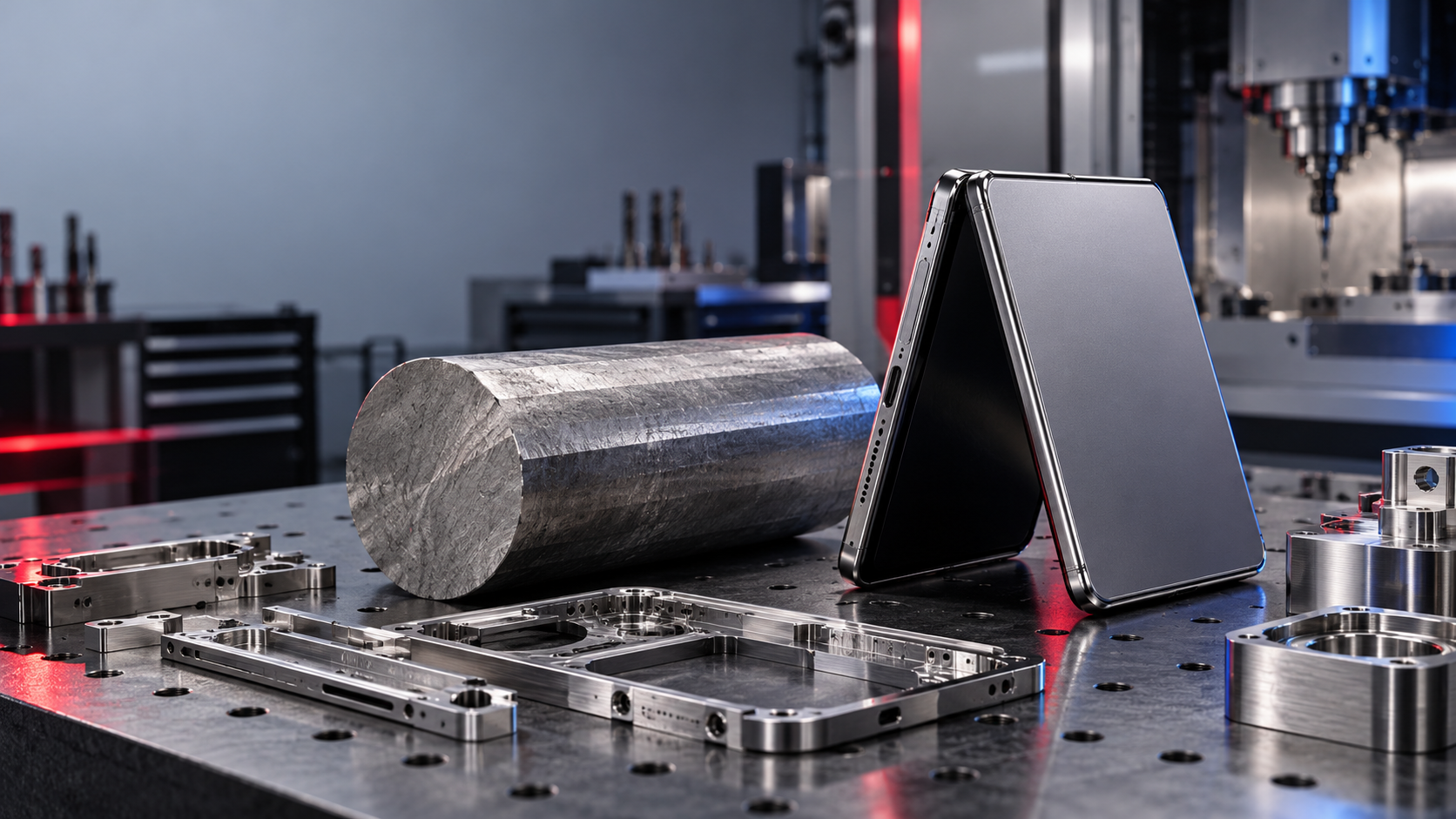
Apple has named two more American suppliers behind its newest iPhones: Pennsylvania titanium producer Perryman Company for the iPhone Duo enclosure, and Delaware-headquartered Qnity Electronics for advanced films used in the iPhone 18 Pro’s variable-aperture camera. The October 20 announcement turns two headline hardware features into a more concrete supply-chain story—and gives buyers a clearer picture of what “made in America” does and does not mean for these devices.
The confirmed numbers are substantial. Apple says it will commit up to $100 million to Perryman over three years, while nearly 100 components in iPhone Duo and iPhone 18 Pro now come from American companies in more than a dozen states. Those claims come from Apple, not an independent supply-chain audit, so they should be read as company disclosures rather than a complete bill of materials.
What Apple confirmed
- Perryman melts, forges and rolls grade 5 titanium for iPhone Duo at its Houston, Pennsylvania, site.
- The titanium contains at least 80 percent recycled material, according to Apple.
- Apple plans to commit up to $100 million to Perryman over the next three years.
- Qnity Electronics will produce advanced films essential to the iPhone 18 Pro variable-aperture camera system.
- Apple says nearly 100 iPhone Duo and iPhone 18 Pro components are produced by U.S. companies across more than 12 states.
The announcement is about materials and components, not complete domestic phone assembly. Apple did not say that either iPhone is wholly manufactured in the United States, did not publish the American share of each device’s value, and did not provide unit volumes for Perryman or Qnity.
Why Perryman’s titanium deal matters for iPhone Duo
The iPhone Duo is Apple’s first foldable phone, so its enclosure has to balance several competing demands: rigidity around the hinge, resistance to deformation, low weight and a finish suitable for a premium device. Apple identifies the enclosure material as grade 5 titanium, commonly known as Ti-6Al-4V. It is widely used where high strength relative to weight matters, but Apple has not published the Duo enclosure’s exact alloy processing, thickness or repair procedure.
Perryman’s role covers three upstream stages—melting, forging and rolling—rather than simply cutting a finished imported sheet. That distinction makes the Pennsylvania operation more meaningful than a final machining step. Apple also says the titanium has a minimum of 80 percent recycled content. The release does not identify the remaining feedstock, the energy mix used for processing or a product-specific carbon-footprint reduction, so the recycled-content figure should not be stretched into a broader environmental claim.
The $100 million language also needs precision. Apple says it will commit “up to” that amount over three years; it does not describe the figure as an immediate payment or guarantee a particular production volume. For Perryman, the value is a long-term customer relationship and a chance to scale specialty-metal capacity. For Apple, a domestic source can shorten part of the logistics chain and diversify supply, but it does not eliminate global dependencies elsewhere in the phone.
What Qnity’s camera-film work means
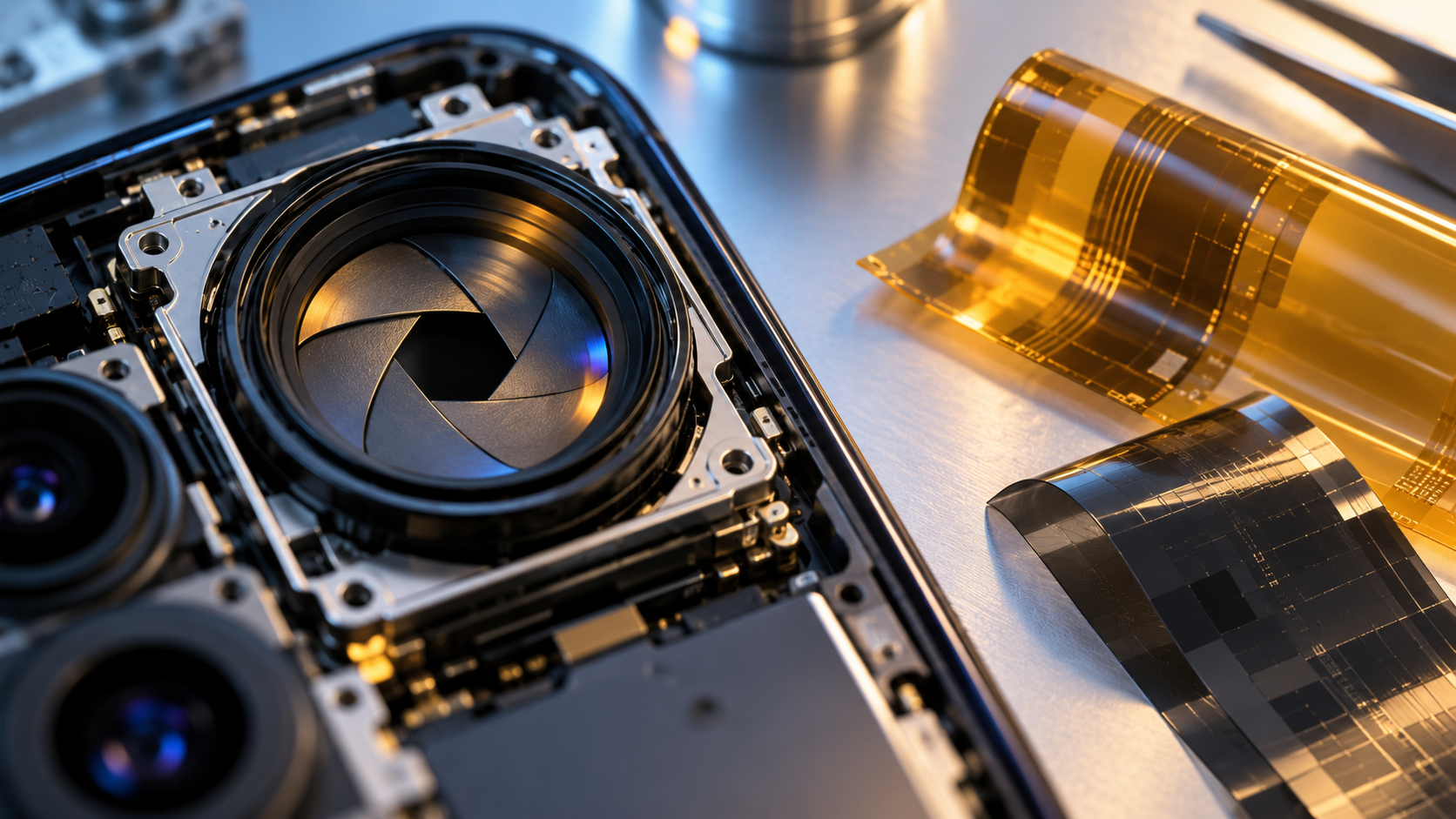
Qnity is supplying advanced films used in the iPhone 18 Pro’s variable-aperture system. Apple’s launch materials describe the 48-megapixel Fusion Main camera as using six laser-cut blades that move between apertures, changing both incoming light and depth of field. The company says the camera can automatically adjust, while pro users can select aperture values in supported software.
An advanced film can perform several jobs in a compact camera assembly, including insulation, adhesion, protection, light control or flexible electrical interconnection. Apple does not specify the film’s chemistry, layer count, factory location or exact mechanical function. It is therefore accurate to say Qnity supplies a critical material for the system, but not to imply that Qnity manufactures the aperture blades, lens or complete camera module.
For photographers, the useful distinction is physical versus computational control. A mechanical aperture changes the light path before it reaches the sensor. A wider opening can admit more light and produce shallower depth of field; a narrower opening can increase depth of field and help in bright scenes, subject to diffraction and the limits of a phone-size optical system. Apple’s image processing still matters, but it is working with a different optical input rather than simulating every effect after capture.
Apple’s Final Cut Camera 2.4 update adds direct aperture adjustment plus shutter-priority and aperture-priority modes on iPhone 18 Pro. That makes the hardware relevant beyond automatic snapshots. Independent testing is still needed to measure actual transmission, edge sharpness, flare, focus behavior and whether transitions remain smooth during video.
The broader U.S. iPhone supply-chain map
Glass and wireless silicon
Apple says Corning’s Harrodsburg, Kentucky, facility will produce all cover glass for iPhone—including iPhone Duo—and Apple Watch sold worldwide by the end of 2026. Broadcom is expanding wireless-chip production in Fort Collins, Colorado; Apple says a $1.5 billion investment is intended to support more than 15 billion U.S.-made chips over a multiyear agreement.
Coherent supplies vertical-cavity surface-emitting laser technology from Sherman, Texas. Those VCSEL components support features such as Face ID and the Dynamic Island. Together, glass, wireless silicon and optical sensing show that Apple’s domestic footprint extends well beyond the two suppliers highlighted in the October 20 announcement.
Chips, packaging and testing
Apple says TSMC’s Arizona operation produced more than 100 million chips for Apple in 2026. Separately, Amkor is building a packaging and test site in Peoria, Arizona; Apple says it will be among the first customers and that the first two phases are expected to create more than 3,500 jobs. Fabrication, packaging and testing are different stages, so the presence of all three is more consequential than any one factory viewed alone.
The important caveat is that these totals cover multiple Apple products and chip types. Apple has not provided a phone-by-phone map showing which iPhone Duo or iPhone 18 Pro configurations use each U.S.-made component, nor has it said that every unit contains the same domestic parts.
Training and final assembly
Apple opened an Advanced Manufacturing Center in Houston in August to train small and midsize businesses in automation and advanced production. The same Houston campus is producing servers for Apple Intelligence and is scheduled to begin manufacturing Mac mini in 2026. Those programs support skills and equipment, but Apple’s iPhone announcement does not say final iPhone assembly is moving to the United States.
What Apple has not confirmed
- The percentage of each phone’s components, cost or labor that is American.
- Exact Perryman and Qnity production volumes or the factories used for every processing step.
- Whether every iPhone Duo and iPhone 18 Pro sold globally includes the same U.S.-sourced parts.
- A complete life-cycle assessment for the 80-percent-recycled titanium.
- Changes to price, availability, warranty coverage or repairability resulting from the supplier deals.
These gaps do not invalidate the announcement. They define its scope. Apple has disclosed notable upstream partnerships and investment commitments, not a full independent accounting of an iPhone’s origin.
What this means for buyers
The supplier news does not change the iPhone Duo’s October 23 availability or the iPhone 18 Pro’s existing retail status. It also should not be treated as evidence that the phones will be easier to repair. Titanium grade, recycled content and domestic sourcing are different questions from whether a frame, hinge or camera module can be replaced without specialized tools and parts pairing.
For iPhone 18 Pro buyers, the variable aperture remains the most practical feature in this story. Look for independent photo and video tests across the full aperture range, especially low-light motion, highlight handling, depth transitions and focus breathing. For iPhone Duo shoppers, durability testing around the hinge, inner display and titanium frame will be more useful than the country of origin alone.
Anyone who needs a compact charging brick can compare the Apple 20W USB-C Power Adapter on Amazon, but confirm the seller, cable requirements and return policy before ordering. The verified listing is ASIN B08L5M9BTJ; the adapter is sold separately from its cable.
Disclosure: ReaderSpice may earn a commission from qualifying Amazon purchases made through the link above, at no additional cost to you.
Bottom line
Apple’s October 20 disclosure adds useful detail to the newest iPhone supply chain. Perryman’s Pennsylvania operation will supply high-recycled-content grade 5 titanium for iPhone Duo under a commitment worth up to $100 million, while Qnity will make advanced films tied to the iPhone 18 Pro’s physical variable-aperture camera system.
The story is bigger than two suppliers: Apple points to glass in Kentucky, wireless chips in Colorado, sensing technology in Texas, chip fabrication and packaging in Arizona, and manufacturing training in Houston. Still, this is not a claim that iPhones are wholly made in America. It is evidence that more strategically important materials and component stages are being placed inside the United States—and a reminder to separate verified supplier facts from broader political or marketing shorthand.
Sources
Apple — American Manufacturing Program partners for iPhone Duo and iPhone 18 Pro
Apple — iPhone Duo preorder and product overview
Apple — iPhone 18 Pro and iPhone 18 Pro Max announcement
Apple — Final Cut Camera 2.4 variable-aperture update
Apple — Advanced Manufacturing Center in Houston
Apple — American Manufacturing Program launch and $600 billion U.S. commitment