
Apple HomeView, HomePod mini 2 and New Apple TV 4K: Prices, Features and Release Dates

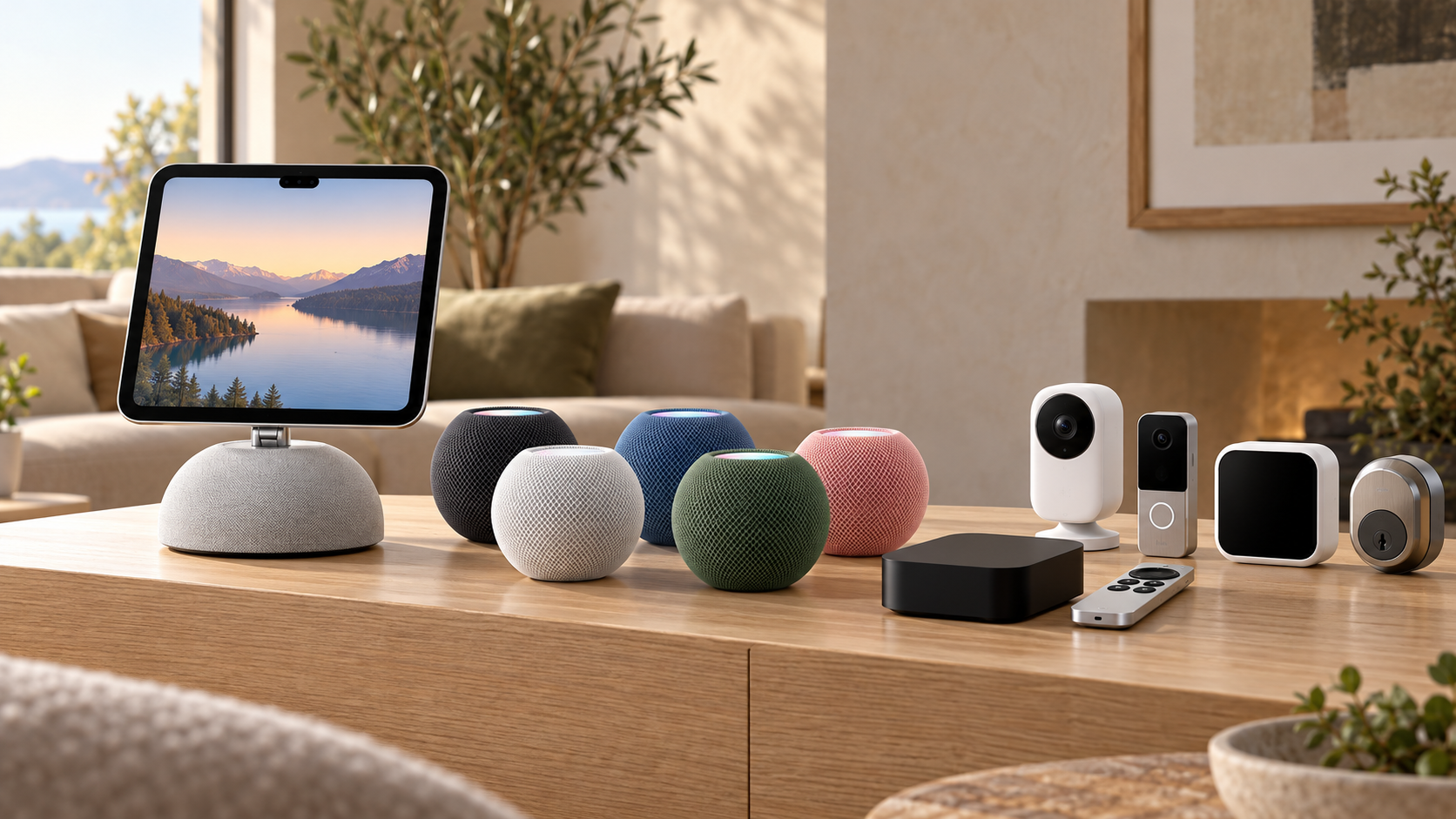
Apple HomeView, HomePod mini 2, Apple TV 4K and smart-home accessories arranged in a modern living room

Apple has turned its long-rumored smart-home push into a real product lineup. On October 13, 2026, the company introduced the $299 Apple HomeView smart display, the $149 HomePod mini 2, a $299 fourth-generation Apple TV 4K and Apple Home Collection accessories built with LG Electronics and Schneider Electric.

The announcements replace months of speculation with firm prices, specifications and release windows. They also create a more complicated buying decision: the least expensive new device arrives first, while some of the most ambitious Siri AI features will still depend on software updates, compatible Apple Intelligence devices or an eligible iCloud+ plan.

Prices and release dates at a glance

  • Apple HomeView: $299; preorders open October 13; available November 13.
  • Apple HomeView (Wall Mounted): $299; preorders open October 13; available November 13. Mounts cost extra.
  • HomePod mini 2: $149; preorders open October 13; available October 30.
  • Apple TV 4K (4th generation): $299; preorders open October 13; available November 13.
  • Apple Home Collection: accessories start arriving in December, with selected products following in early 2027.

Apple HomeView: a $299 screen for the center of the home
Apple HomeView: a $299 screen for the center of the home

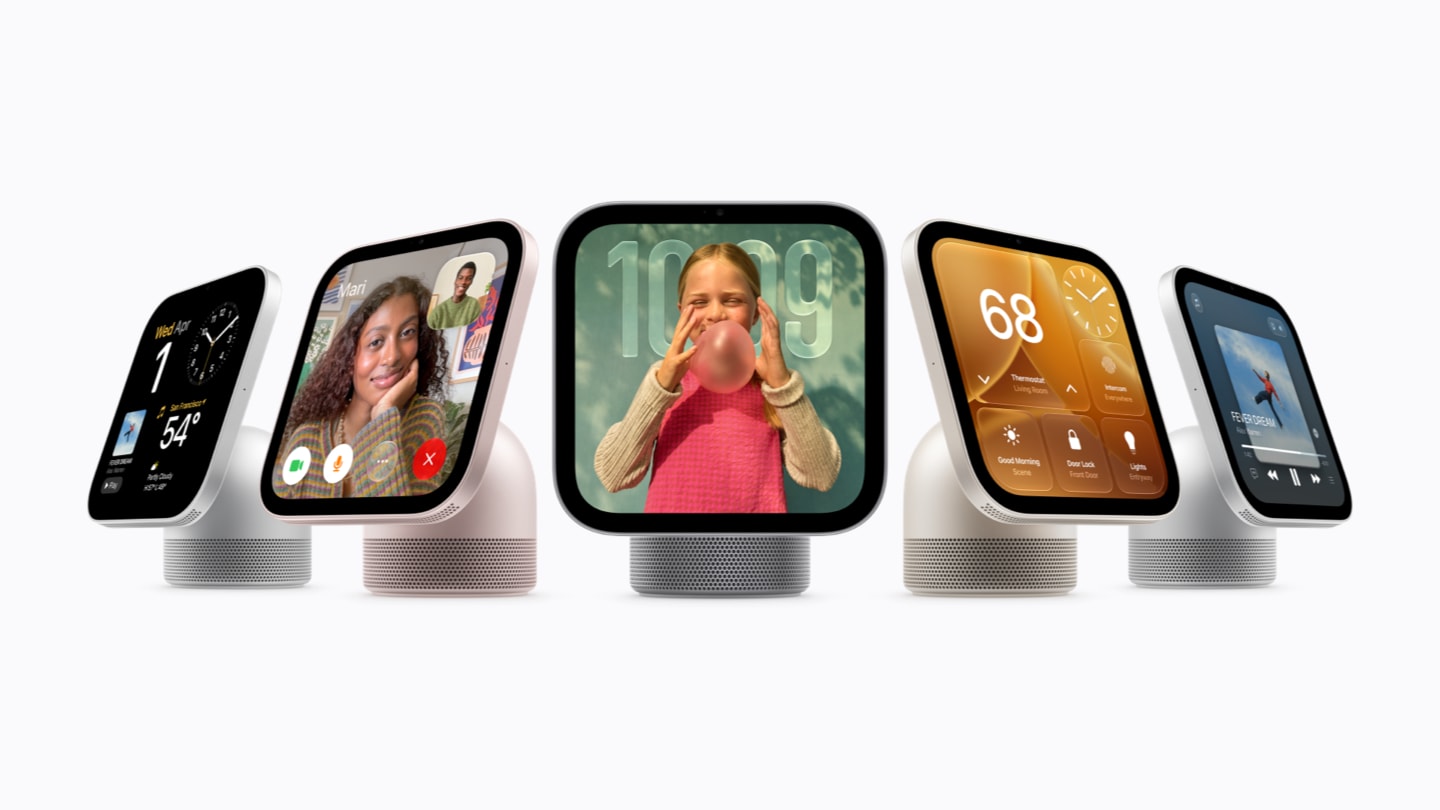
HomeView is Apple’s new shared household screen. The tabletop model combines a 7-inch Liquid Retina display, a tilting stainless-steel hinge and a domed speaker base. It comes in silver, starlight, rose pink and space gray. A separate wall-mounted model uses the same 7-inch display and sells for the same $299 starting price in silver or space gray.

The display automatically adjusts from 500 nits down to 0.3 nits and changes the amount of information shown based on how far away a user is. It can recognize up to six household members by their faces, then present each person’s own Home Screen, widgets and private information. Personal content in apps such as Messages and Calendar appears only when the recognized person’s paired iPhone or iPad is nearby and was recently unlocked.

HomeView is also a FaceTime device, digital photo frame, music player, recipe assistant and smart-home dashboard. Its camera uses Center Stage during calls, while the Home Camera face can show as many as nine live camera feeds. With supported cameras and an eligible iCloud+ subscription, Apple says it can recognize people, pets, packages and vehicles and produce descriptions of HomeKit Secure Video clips.

The tabletop model has two full-range drivers in the display, a down-firing woofer and two force-cancelling passive radiators. The wall model uses two drivers tuned for on-wall placement. Both go on sale November 13 in the United States, United Kingdom, Canada, Australia, India and New Zealand, while Singapore preorders begin October 15. Apple says HomeView will not initially be sold in the European Union because Siri AI is not available in iOS there.

Wall buyers should include the mount in their budget. Schneider Home’s USB-C wall connector starts at $59.95, the AC-wired mount starts at $79.95 and a $129.95 Power over Ethernet mount is scheduled for early 2027.

HomePod mini 2: better audio, new colors and Siri AI later
HomePod mini 2: better audio, new colors and Siri AI later

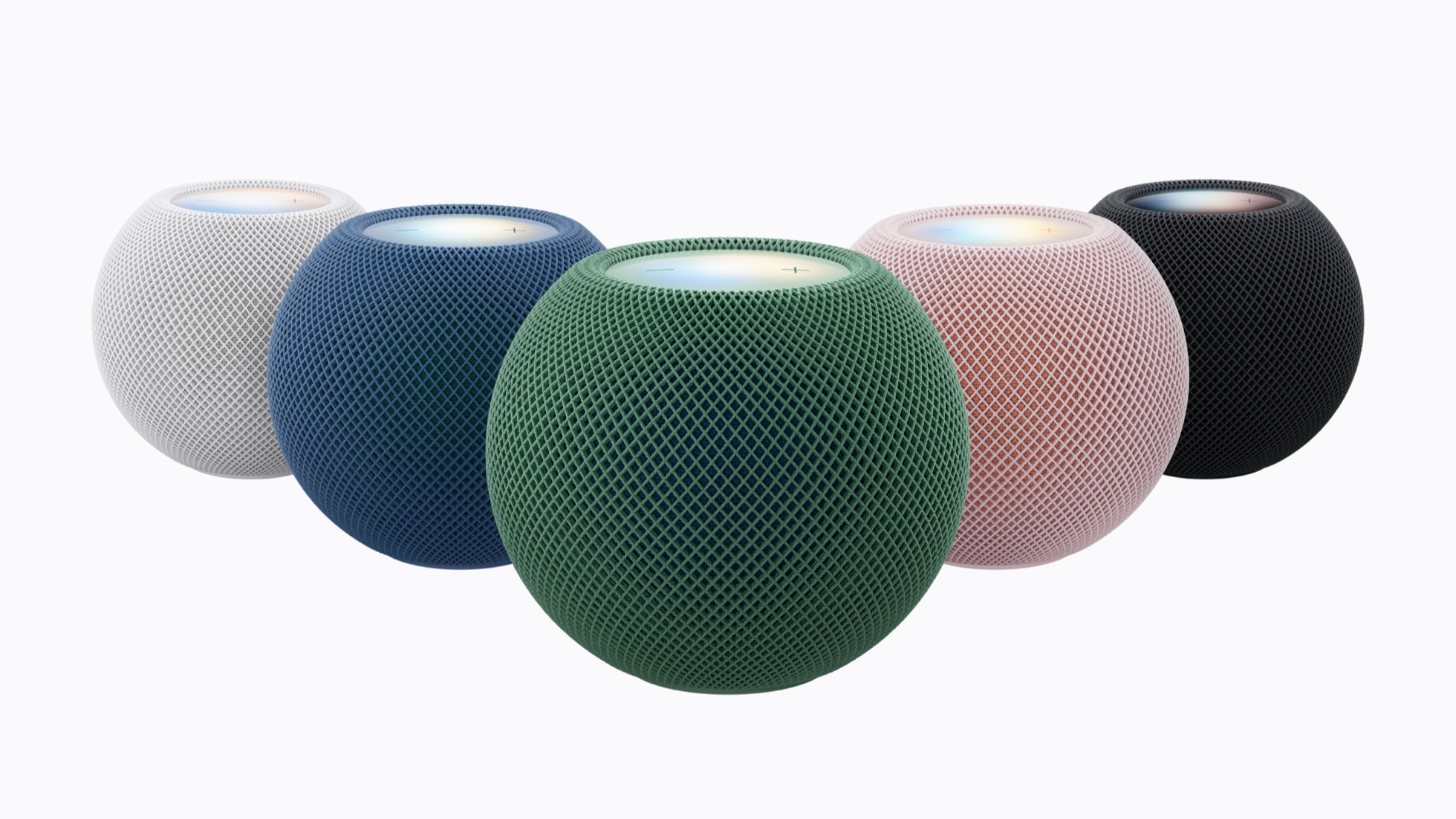
HomePod mini 2 is the first major hardware refresh of Apple’s compact speaker. It keeps the familiar spherical shape but moves to the S10 chip, adds new pink, green, blue, white and midnight finishes, and introduces Sound Glow: the top surface can pulse in colors derived from album artwork and react to bass and treble.

Apple says the speaker uses computational audio to optimize dynamic range, loudness and acoustic performance in real time. A single unit can fill a room, two can form a stereo pair and multiple units can join a multiroom setup. It can also act as a Mac speaker on compatible Macs with Wi-Fi 6E or later.

The biggest new home-theater feature requires more hardware. Four HomePod mini 2 speakers—matching front and rear pairs—can work with the new Apple TV 4K to create a calibrated surround setup. The devices determine speaker position and automatically adjust timing and levels for the room.

Siri AI is a key part of the pitch, but it will not be available on HomePod mini 2 at launch. Apple says it is coming in a free future software update. Personal-context requests will require the home owner to use a compatible Apple Intelligence-enabled iPhone or iPad with Siri AI turned on.

New Apple TV 4K: A19, hands-free Siri and a smarter remote
New Apple TV 4K: A19, hands-free Siri and a smarter remote

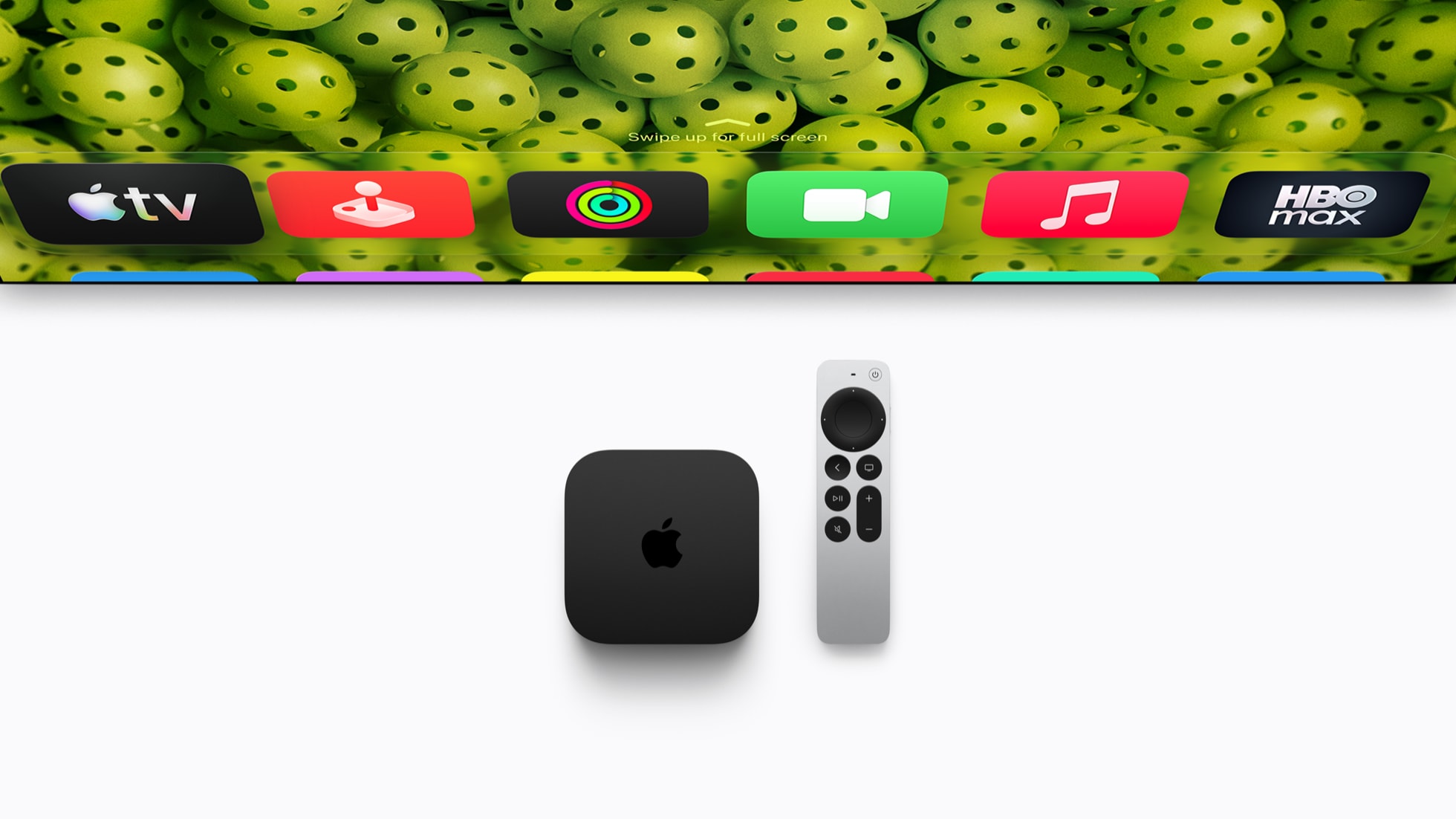
The fourth-generation Apple TV 4K is a larger performance upgrade than its unchanged exterior suggests. Apple says the A19 chip delivers up to 50 percent faster CPU performance and up to twice the GPU performance of the previous model. A dedicated AV1 decoder should make high-quality streams more efficient and reduce bandwidth use for services that support the format.

Three built-in far-field microphones let viewers speak to Siri without holding the remote. Apple says echo cancellation can isolate a voice while audio is playing. Siri AI appears in a full-screen discovery interface, can answer follow-up questions about a show and can draw on personal context from a compatible iPhone for requests such as playing a recommendation mentioned in a message.

The Siri Remote keeps its established shape but adds stronger Find My features. Precision Finding can guide users to the remote when paired with supported recent iPhones, and the newest remote can play a sound. Apple says the remote remains compatible with Apple TV HD and earlier Apple TV 4K models.

For smart-home use, the box includes Wi-Fi and Thread, runs automations, supports guest access and processes HomeKit Secure Video locally. With compatible cameras and iCloud+, Apple Intelligence can generate camera activity descriptions and summarize notifications. The new Apple TV 4K costs $299 and arrives November 13.

Apple Home Collection: cameras, locks and climate controls
Apple Home Collection: cameras, locks and climate controls

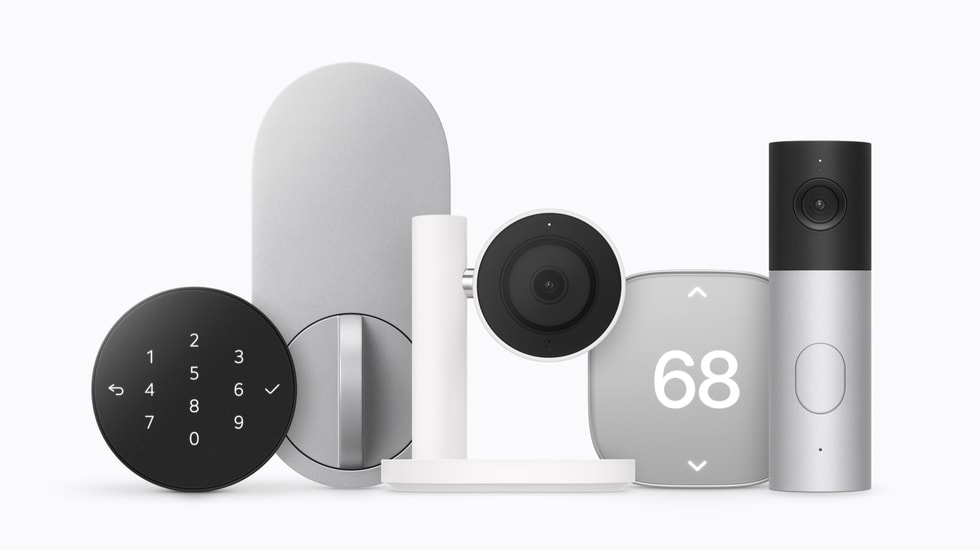
Apple Home Collection is not a set of Apple-manufactured accessories. The products are designed with LG Electronics and Schneider Electric, sold through Apple and built for one-tap iPhone setup, Home app control and Siri. No separate manufacturer account or companion app is required, and Apple says Home app data remains end-to-end encrypted.

The first wave includes four LG cameras with video up to 2.5K, a smart deadbolt, thermostats and room sensors. Each accessory supports Thread, can receive updated network credentials when home Wi-Fi changes and can work alone or as part of an Apple Home scene.

  • LG Video Doorbell Wired starts at $249.95; LG Floodlight Cam starts at $399.95; LG Outdoor Cam Plug-In starts at $299.95; and LG Indoor Cam Plug-In starts at $199.95.
  • LG Smart Deadbolt Lock starts at $349.95 and supports hands-free unlocking with Ultra Wideband, Home Key, a PIN pad and a hidden backup key slot.
  • LG Smart Thermostat and Schneider Home Smart Thermostat each start at $199.95. Compatible temperature and room sensors start at $39.95.

Camera footage can be processed locally on a compatible Apple home hub or through Private Cloud Compute. Eligible iCloud+ plans store event video history for 10 days and add natural-language search and automatic video descriptions. Availability starts in December, although Apple says selected accessories will not arrive until early 2027.

Siri AI is not identical across the new lineup

The shared Siri AI branding hides important differences. HomeView launches with Siri AI in beta in HomeView software 27.2. Apple TV 4K launches with the beta in supported English-language markets, and Apple says second-generation and newer Apple TV 4K models can also receive access. HomePod mini 2 owners must wait for a future update.

Broad world-knowledge answers and more conversational exchanges can work without each person owning an Apple Intelligence device. Personalized requests that use messages, calendars or other private context require a paired compatible iPhone or iPad. Apple also notes that some server-based Apple Intelligence features have daily limits and that expanded access may carry a fee in the future.

What should buyers do?

HomeView is the most distinctive new product, and $299 is competitive for a display, speaker, FaceTime terminal and home hub in one device. Its value will depend on whether a household already uses Apple Home, iCloud+, Apple Music and compatible iPhones. Buyers in mixed Android and Apple households should study the setup and personalization requirements before ordering.

HomePod mini 2 is easier to recommend for new Apple households than as an automatic upgrade for every existing owner. The S10 chip, Sound Glow and four-speaker home theater support are meaningful additions, but the headline Siri AI feature arrives later. Existing HomePod users should wait for final software compatibility details before replacing multiple speakers.

The new Apple TV 4K has the clearest performance story, yet its $299 price is unusually high for a streaming box. The A19 chip, microphones, smarter remote and home-hub features may justify the cost for committed Apple users, but casual streamers should compare it with less expensive alternatives. Readers who need a streamer now can compare the current Apple TV 4K on Amazon while checking Apple’s new-model preorder terms and return policy.

Disclosure: ReaderSpice may earn a commission from qualifying Amazon purchases made through the link above, at no additional cost to you.

Sources

Apple announces Apple HomeView

Apple unveils the fourth-generation Apple TV 4K
Apple announces HomePod mini 2

Apple introduces Apple Home Collection

iOS 27 Is Here: The Biggest New iPhone Features You Should Try First

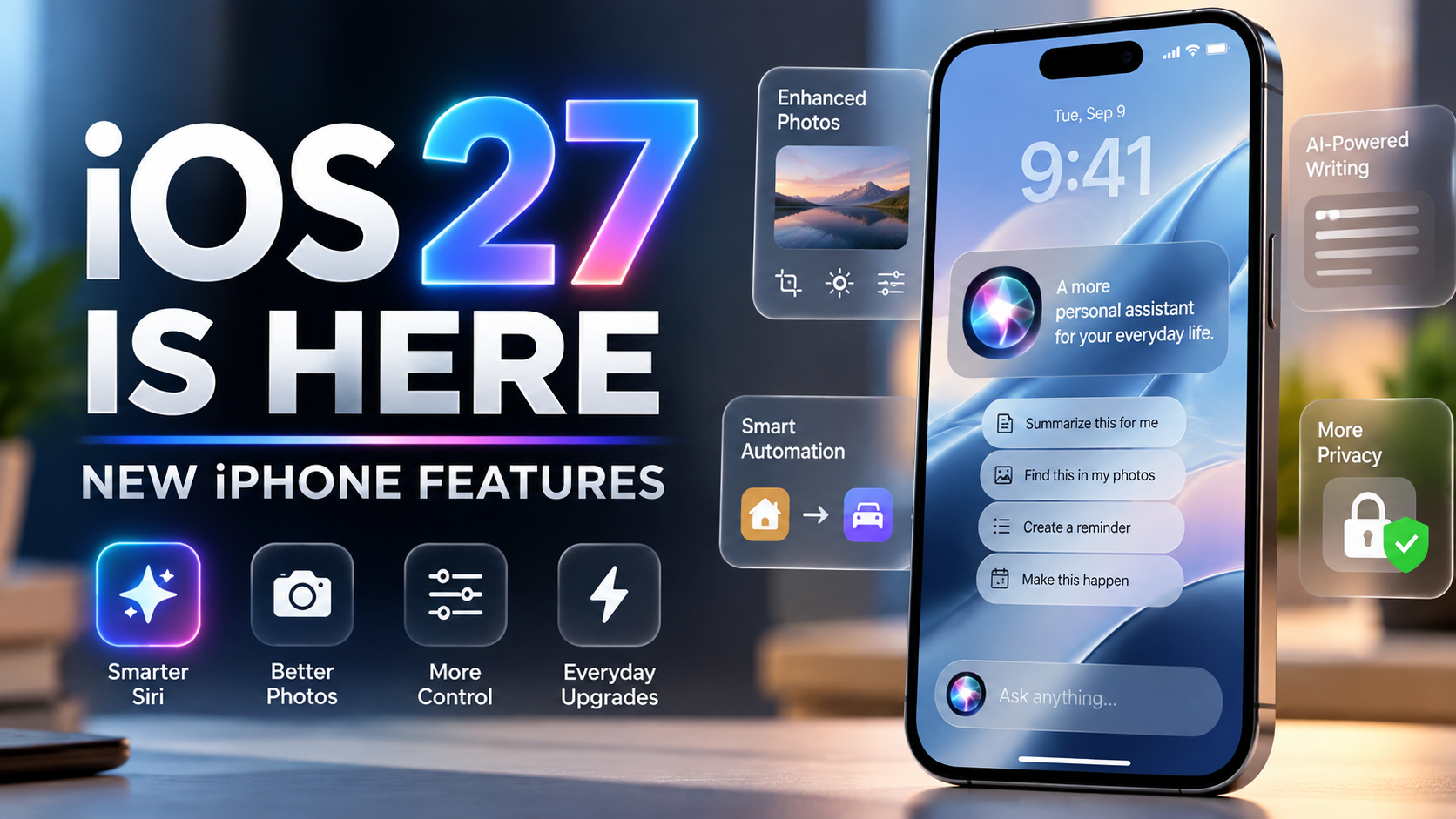
Apple has officially released iOS 27, bringing one of the biggest Siri upgrades in years alongside new Apple Intelligence features, photo-editing tools, design controls, parental protections, and performance improvements. The update began rolling out September 14, 2026, and is available for supported iPhones.

The headline feature is Siri AI, Apple’s reimagined assistant. But iOS 27 is more than an AI update. There are useful changes throughout the system that can make an iPhone feel smarter, more customizable, and easier to use.

Here are the iOS 27 features worth trying first, plus what you need to know about compatibility.

Siri AI Is the Star of iOS 27

Apple describes Siri AI as a more capable and conversational assistant built on the next generation of Apple Intelligence. Instead of handling only simple commands, the new Siri is designed to understand personal context, what is currently on your screen, and follow-up questions.

For example, Siri can surface relevant information from messages, emails, photos, and other personal content when responding to a request. Apple also says Siri can perform more actions across apps, such as helping draft an email or working with information already visible on the screen.

A dedicated Siri app is another major change. It gives users a place to revisit conversations, while iCloud can privately sync Siri conversation history across supported Apple devices.

Siri AI is initially rolling out in beta in English. Apple says French, Japanese, Korean, Portuguese, and Spanish support is coming next.

Try the New Photo Editing Tools

iOS 27 expands Apple Intelligence inside Photos. New tools include Spatial Reframing and improvements to Clean Up, giving compatible iPhones additional ways to adjust images after they have been captured.

Spatial Reframing can intelligently extend or reposition a photo to better fit a composition or wallpaper. This could be particularly useful when a favorite image does not naturally fit the iPhone Lock Screen.

Clean Up has also been improved for removing distracting objects or elements from an image. These features make the Photos app increasingly capable without requiring a separate editing app for quick fixes.

Siri Can Understand What’s on Your Screen

Onscreen awareness is one of the most practical parts of Siri AI. When something is displayed on your iPhone, you can ask Siri questions about it or request an action related to that content.

That could reduce the need to copy information between apps manually. Apple’s examples show Siri using information from webpages and personal content to answer questions and perform tasks.

This is one of the features that could make the new Siri feel substantially different from the older voice assistant, especially once more third-party apps support Siri’s expanded app actions.

More Control Over the Liquid Glass Look

iOS 27 continues Apple’s Liquid Glass design while giving users more control over its appearance. One notable addition is the ability to adjust the visual effect, making the interface easier to personalize.

For anyone who liked the overall design direction but wanted more control over transparency and readability, this is a small but welcome improvement.

Shortcuts Gets Smarter With Natural Language

Apple is also making automation easier. iOS 27 expands intelligence in Shortcuts, allowing users to create and work with automations using more natural language.

This has the potential to make Shortcuts more approachable for people who previously found building multi-step automations complicated. Instead of understanding every action in advance, users can describe more of what they want to accomplish and let the system help construct the workflow.

Better Writing Assistance Across iPhone

Apple Intelligence is more deeply integrated into everyday apps in iOS 27. Writing tools can help users compose, rewrite, and proofread text in places such as Mail and Messages.

The goal is not simply to generate text, but to make assistance available within the apps where people are already communicating. That can be useful for polishing an email, changing tone, or quickly improving a message without switching to another application.

New Parental Controls and Child Safety Features

iOS 27 also includes expanded tools for families. Apple has added stronger parental controls, including more options around age-appropriate apps, web browsing approvals, Screen Time, and communication safety.

These improvements are designed to give parents more control over what younger users can access while making those controls easier to manage from Apple devices.

Performance Improvements Matter Too

Not every meaningful upgrade needs to be flashy. Apple says its latest software releases include broader platform improvements intended to make devices more responsive and easier to use.

Apple highlights broad performance improvements in iOS 27, including up to 30% faster app launches, up to 70% faster loading of new captures in Photos, and up to 80% faster AirDrop transfers. Apple also lists more seamless switching between Wi‑Fi and cellular networks. Actual gains can vary by device and task.

Which iPhones Support iOS 27?

iOS 27 is available for iPhone 11 and later, as well as iPhone SE (2nd generation and later). However, installing iOS 27 does not mean every device receives every feature.

Apple Intelligence has stricter hardware requirements. Apple lists iPhone 15 Pro and iPhone 15 Pro Max, all iPhone 16 models, and later compatible iPhones among the supported devices for Apple Intelligence. Siri AI also requires an Apple Intelligence-capable device and is beginning its public rollout as a beta.

That distinction is important for owners of older supported iPhones: they can still receive iOS 27 and many of its system improvements, but the biggest AI features require newer hardware.

Should You Install iOS 27 Now?

For most users with a supported iPhone, iOS 27 is a significant update worth considering, especially if you own a device capable of running Apple Intelligence. Siri AI is the biggest reason to explore the release, but the photo tools, customization changes, family features, and system refinements make the update broader than Siri alone.

As with any major operating-system release, users who depend on critical work apps may prefer to verify app compatibility first. It is also sensible to back up important data before installing a major iOS update.

For compatible iPhones, the update can be found under Settings > General > Software Update.

The Bottom Line

iOS 27 marks a major step in Apple’s effort to make the iPhone more context-aware and useful through Apple Intelligence. Siri AI finally moves Siri toward richer conversations, personal context, onscreen understanding, and deeper app actions, while Apple has also added improvements that benefit users outside the AI experience.

If you have an Apple Intelligence-compatible iPhone, Siri AI and the new Photos features should be near the top of your list to try. On older supported iPhones, the design, safety, and performance changes still give iOS 27 plenty to explore.

Sources

Apple Newsroom — Major updates for Apple’s software platforms are now available

Apple — iOS 27 features, compatibility, and availability

Apple Support — Apple security releases and iOS 27 compatibility

The Verge — Apple releases iOS 27 with Siri AI

Apple’s September 9 Event: iPhone 18 Pro, Foldable iPhone Ultra and Siri AI Expectations

iPhone 18 rumors and Apple iPhone roadmap concept

Editor’s note: Apple has confirmed the event date and livestream details. Product specifications and lineup details below are clearly labeled as expectations or rumors until Apple announces them.

Apple’s “Surprise and shine” event is almost here, and this year’s keynote could be one of the company’s most important launches in years. Apple has officially confirmed a special event for Wednesday, September 9, at 10 a.m. Pacific Time, with the livestream available through Apple.com and the Apple TV app.

The company has not revealed its full product list. However, the latest reporting points to a premium-focused iPhone launch, Apple’s first foldable iPhone, a major moment for Siri AI, and possible updates to the Apple Watch, AirPods, and smart-home lineup.

Here is what is confirmed, what is widely expected, and what remains speculation ahead of the keynote.

What Apple has officially confirmed

Apple’s official event page confirms the “Surprise and shine” keynote will begin at 10 a.m. PT on September 9. Viewers can watch it at Apple.com or through the Apple TV app. Apple has not publicly confirmed product names or specifications, so every hardware detail beyond the event itself should be treated as a rumor until the keynote begins.

That distinction matters this year because reports suggest Apple may be changing its normal iPhone launch strategy. Instead of introducing every new iPhone model at once, the company may focus the September event on its most expensive and technically ambitious products.

The biggest expected announcement: a foldable iPhone

The headline product is widely expected to be Apple’s first foldable iPhone, sometimes called the iPhone Ultra in rumors. Reuters reports that analysts expect a book-style device that opens like a passport and could cost more than $2,500.

MacRumors reports that the rumored design may use a smaller outer OLED display of roughly 5.5 inches and a larger inner display of approximately 7.8 inches. That would give the phone a tablet-like workspace when opened while keeping it usable as a conventional smartphone when closed.

The main question is whether Apple can solve the problems that have affected other foldable phones. Buyers will be watching for a sturdy hinge, a less visible crease, a thin profile, strong battery life, and software that takes advantage of the larger screen. A foldable iPhone that simply opens into a larger display would be less compelling than one that offers better multitasking, file handling, video editing, and productivity tools.

Pricing could be the biggest barrier. Reports and analyst expectations place the device well above the price of a traditional iPhone Pro Max. Limited launch availability is also possible, especially if Apple is still refining production yields for the new display and hinge system.

iPhone 18 Pro and iPhone 18 Pro Max

The iPhone 18 Pro and iPhone 18 Pro Max are also expected to headline the event. Current reporting suggests Apple could delay the standard iPhone 18, iPhone 18 Plus, and a new iPhone 18e until a later spring launch window.

The Pro models are rumored to keep a familiar overall design while receiving meaningful internal upgrades. The most frequently discussed improvements include Apple’s next-generation A20 Pro chip, a new C2 modem, a smaller Dynamic Island, and a higher-resolution front-facing camera.

The iPhone 18 Pro Max could receive an exclusive camera upgrade. Rumors point to a variable-aperture main camera that would give photographers more control over light and depth-of-field effects. A longer optical zoom has also been discussed, although Apple has not confirmed either feature.

Battery life may become another major selling point. A more efficient chip, modem improvements, and a larger battery could help the Pro Max deliver longer real-world endurance. The important question is whether Apple will use those gains to make the phone last longer or to power more demanding camera, gaming, and AI features.

The rumored A20 Pro chip and Apple’s AI strategy

The A20 Pro chip is expected to be built on a more advanced manufacturing process, potentially improving speed and efficiency. But the bigger story may be how Apple connects the new chip to Apple Intelligence.

Reuters reports that the new Siri will be a central test for Apple’s new leadership. Apple has already previewed a more capable Siri, and reports suggest the company may use Google AI technology behind the scenes as part of the broader Siri overhaul.

The event could show how Apple plans to make AI useful without turning the iPhone into a collection of disconnected chatbot features. The most important demonstrations would involve personal context, app actions, follow-up questions, on-device processing, privacy controls, and reliable performance.

Availability may be complicated by regulation. Reuters reports that the new Siri could face delays in Europe and China, meaning some features may arrive later or work differently depending on the user’s region.

Apple Watch and AirPods updates

The Apple Watch Series 12 and Apple Watch Ultra 4 are also expected, although the rumored changes appear less dramatic than the foldable iPhone. Reports suggest Apple may focus on a faster chip, improved battery efficiency, health and fitness features, and closer integration with the updated Siri.

A new band attachment system has also been rumored. If that change happens, existing watch bands may not fit future models, so current Apple Watch owners should pay attention to compatibility details.

AirPods updates are another possibility. Tom’s Guide reports that Apple may introduce AirPods 5 with a faster chip, possible volume controls, and health-related features. The more ambitious AirPods Ultra concept—with cameras that could help Siri understand the environment—is reportedly not expected until a later date.

Possible smart-home announcements

Apple may also use the event to preview or launch new smart-home hardware, including a HomePod-style hub with a display, a refreshed HomePod mini, or an updated Apple TV. These products are less certain than the iPhone announcements, but they would fit Apple’s wider effort to make the home a more important part of its ecosystem.

A display-equipped home hub could give Apple a stronger answer to products from Google and Amazon. The challenge will be making the device useful without creating another screen that simply duplicates an iPhone or iPad.

Confirmed vs. rumored: what to expect

Status Details
Confirmed by Apple September 9 event, 10 a.m. PT, livestream on Apple.com and Apple TV app, “Surprise and shine” branding
Widely expected iPhone 18 Pro, iPhone 18 Pro Max, first foldable iPhone, new Siri AI features, Apple Watch updates, AirPods updates
Still uncertain Exact product names, final prices, pre-order dates, standard iPhone 18 timing, smart-home hardware, regional Siri availability, final specifications

What to watch during the keynote

The most important part of the presentation may not be the product count. Watch how Apple positions the foldable iPhone. Is it a luxury product, a productivity device, or the beginning of a new mainstream category?

Pay close attention to the software demonstrations. A foldable iPhone needs more than a large screen; it needs a convincing reason to open it. Apple’s multitasking interface, app support, file management, and video features may be just as important as the hinge and display.

For the iPhone 18 Pro models, look for improvements that can be tested in everyday use: camera speed, zoom quality, low-light performance, battery life, heat management, charging, and AI features that work consistently rather than only in a scripted demo.

How to watch Apple’s September 9 event

The keynote begins at 10 a.m. PT on Wednesday, September 9. Viewers can watch through Apple’s official event page or the Apple TV app. Apple also typically makes the presentation available to watch again after the livestream ends.

If you need a current iPhone before Apple’s keynote, you can check the iPhone 17 Pro Max on Amazon. Pricing, stock, seller, and delivery availability may change.

Final thoughts

Apple’s September event could mark a turning point. The iPhone 18 Pro models may deliver the expected annual improvements, but the foldable iPhone and Siri AI could define the keynote’s long-term importance.

For buyers, the smartest approach is to wait for Apple to confirm the final prices, availability, battery claims, camera features, and regional software support. Rumors can help set expectations, but the keynote will determine which ideas become real products.

ReaderSpice will update this coverage after Apple reveals the official lineup, pricing, specifications, and release dates.

Sources