
Final Cut Camera 2.4 Adds Variable Aperture to iPhone 18 Pro: What It Changes

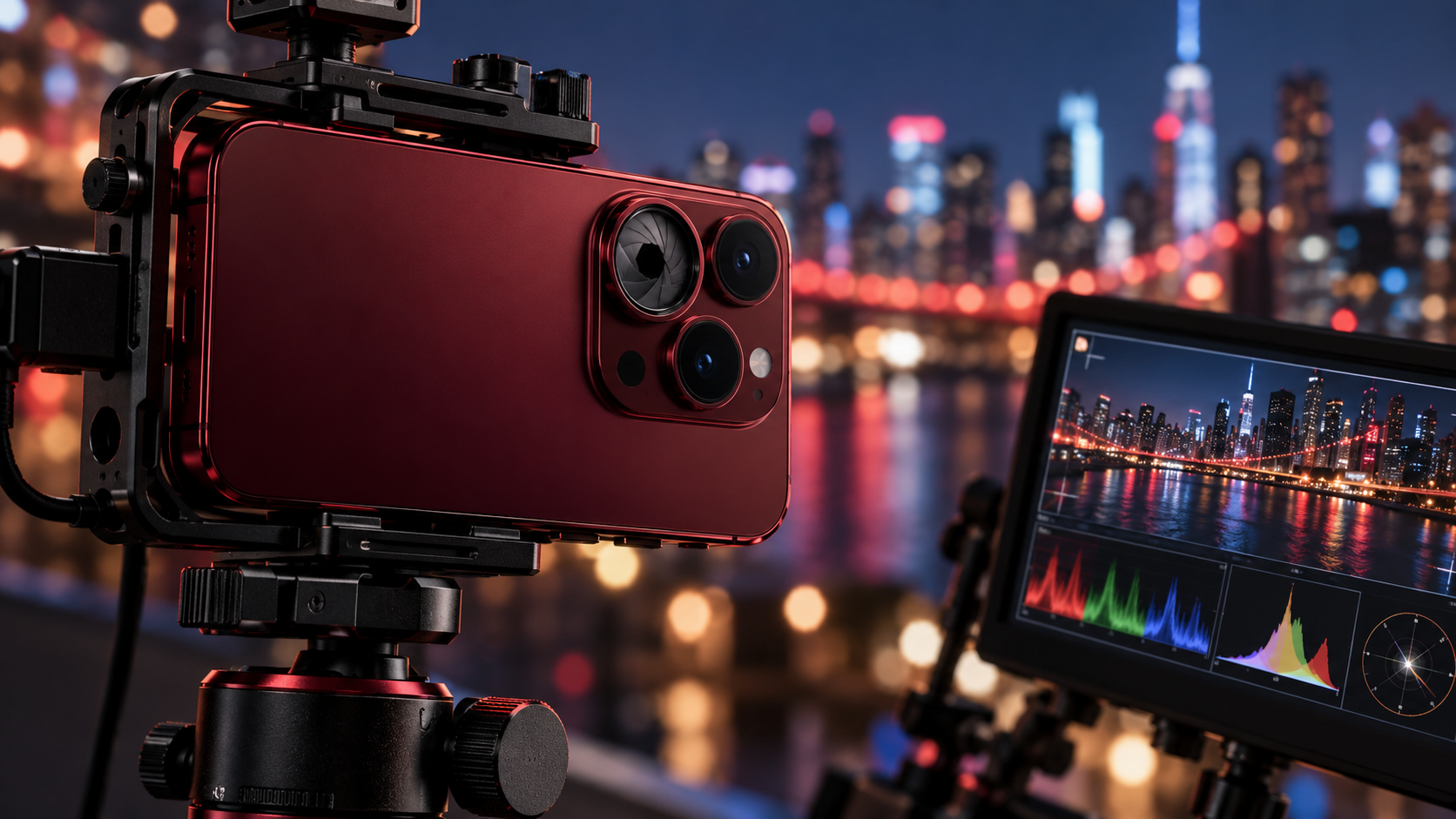
iPhone 18 Pro on a video rig with an adjustable aperture lens and professional monitoring scopes

Apple’s Final Cut Camera has received its most important update yet for mobile filmmakers. The new Final Cut Camera 2.4 brings direct variable-aperture control to iPhone 18 Pro, a redesigned interface, better exposure tools, and professional monitoring features that move the free app closer to a compact cinema-camera control center.

According to Apple’s announcement, the update is available now as a free download for supported iPhones. Some features work broadly with iOS 27, but physical aperture control is exclusive to the iPhone 18 Pro and iPhone 18 Pro Max because those models have Apple’s new variable-aperture Fusion Main camera.

Quick take

  • Final Cut Camera 2.4 is a free update.
  • Variable-aperture control requires an iPhone 18 Pro or iPhone 18 Pro Max.
  • The app adds shutter-priority and aperture-priority shooting modes.
  • New scopes, clean SDI output, and genlock offset target serious productions.
  • Regular ProRes and Apple Log footage can now carry editable Cinematic mode data.

How variable aperture changes iPhone video
How variable aperture changes iPhone video

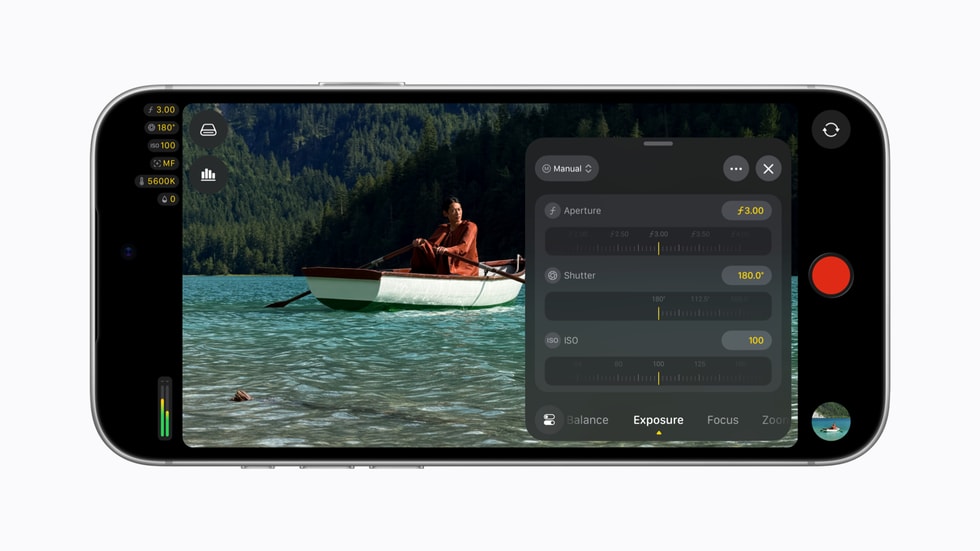
A conventional phone camera usually has a fixed aperture, so exposure is managed mainly through shutter speed, ISO, filters, and software processing. The iPhone 18 Pro’s Fusion Main camera can physically change its aperture. In Final Cut Camera 2.4, creators can select an aperture directly or let the app balance aperture and shutter behavior through priority modes.

That matters in three practical ways. A wider aperture lets in more light and can create shallower depth of field. A narrower aperture admits less light and keeps more of a scene in focus. Most importantly for video, aperture control gives filmmakers another way to hold a preferred shutter angle without immediately reaching for a stronger neutral-density filter or raising ISO.

The effect is not magic. A phone sensor and short focal length still produce more depth of field than a large-sensor cinema camera at comparable framing. But direct aperture control is a meaningful step because it gives creators a real optical choice rather than relying entirely on simulated background blur.

Aperture priority and shutter priority

Final Cut Camera now lets iPhone 18 Pro users choose aperture-priority or shutter-priority operation. Aperture priority is useful when depth of field or low-light performance is the creative priority. Shutter priority is better when motion rendering must remain consistent, such as maintaining a cinematic shutter angle while walking, panning, or filming action.

For controlled productions, manual aperture remains the most predictable option. Auto or priority modes are more convenient when light changes quickly, but creators should watch for visible exposure shifts during a take.

What else is new in Final Cut Camera 2.4

Apple redesigned the app around faster access to common controls and a cleaner viewfinder. The update includes:

  • Direct access to shutter angle, ISO, white balance, and aperture controls.
  • Customizable overlays with false color and clipping indicators.
  • Improved focus peaking with adjustable sensitivity.
  • A recording tally light and a two-finger gesture that clears the viewfinder.
  • A refreshed interface intended to reduce menu hunting while shooting.

False color and clipping indicators are particularly useful because they make exposure problems easier to spot before recording. Focus-peaking sensitivity should also help when working with detailed scenes or shallow depth of field, where an overly aggressive overlay can become distracting.

Professional scopes, clean SDI output, and genlock offset

Video scopes for more reliable exposure

With iOS 27, the app gains an RGB Parade and histogram. The RGB Parade separates red, green, and blue channel information, making color casts and channel clipping easier to diagnose. The histogram provides a fast overview of tonal distribution. Neither replaces a calibrated monitor, but both are valuable when shooting in Apple Log or under mixed lighting.

Clean SDI output for broadcast workflows

Final Cut Camera can now send a clean video signal through an HDMI-to-SDI converter. “Clean” means the outgoing feed omits the app’s controls and overlays, which makes the signal suitable for external recorders, switchers, monitors, and broadcast streaming systems. The feature is most relevant to multicamera crews and event producers; casual shooters are unlikely to need it.

Genlock offset solves a specialized timing problem

Genlock keeps multiple cameras synchronized to a common timing reference. The new offset control can compensate for latency differences between an iPhone and other genlocked cameras. Apple also says it can help reduce artifacts when recording displays. This is a niche addition, but it signals that Apple expects iPhones to appear in more professional multicamera rigs.

Cinematic effects now work with ProRes and Apple Log

The update also changes how creators can use Cinematic mode. Regular video recorded with Final Cut Camera can carry focus and depth information that remains adjustable in Final Cut Pro, including footage captured in ProRes and Apple Log. Editors can change focus points and depth of field after the shoot instead of committing to every focus decision on location.

Apple’s Creator Studio update says Final Cut Pro and Motion on Mac can apply these effects to native iPhone 18 Pro footage. For creators who prefer to capture a high-quality Log master and make aesthetic choices later, that is more useful than being locked into a separate Cinematic capture mode.

Who should install it

Every Final Cut Camera user benefits from the redesigned controls, exposure overlays, focus-peaking improvements, and monitoring tools. The update is most compelling for iPhone 18 Pro owners who shoot interviews, short films, product videos, live events, or multicamera projects.

Owners of older iPhones will not gain a physical variable aperture through software, but the interface and iOS 27 monitoring features can still improve their workflow. If your production depends on external monitoring or synchronization, confirm that every adapter, converter, cable, and destination device supports the required signal before a live shoot.

How to get started

  • Update the iPhone to iOS 27.
  • Install or update to new Final Cut Camera 2.4 from the App Store.
  • On iPhone 18 Pro, open the exposure controls and test manual aperture, aperture priority, and shutter priority.
  • Enable false color, clipping indicators, or scopes one at a time so the viewfinder stays readable.
  • Run a short recording test before using clean SDI output, genlock, ProRes, or Apple Log on a paid production.

A stable support is still one of the simplest upgrades for phone video. You can compare iPhone video tripod and rig options on Amazon. As an Amazon Associate, ReaderSpice earns from qualifying purchases.

Bottom line

Final Cut Camera 2.4 makes the iPhone 18 Pro’s variable aperture genuinely useful instead of leaving it as a hardware specification. Direct aperture control, priority modes, exposure overlays, scopes, clean SDI output, and genlock offset create a more coherent professional workflow from capture through Final Cut Pro. Most people will use only a fraction of these tools, but filmmakers now have more control over exposure, focus, motion, and monitoring without paying for the camera app itself.
Sources

Apple Newsroom: Final Cut Camera 2.4 update

Apple Newsroom: Apple Creator Studio updates

iPhone 18 Pro Camera Code Leak Reveals Manual Focus, Exposure Scopes and Variable-Aperture Processing

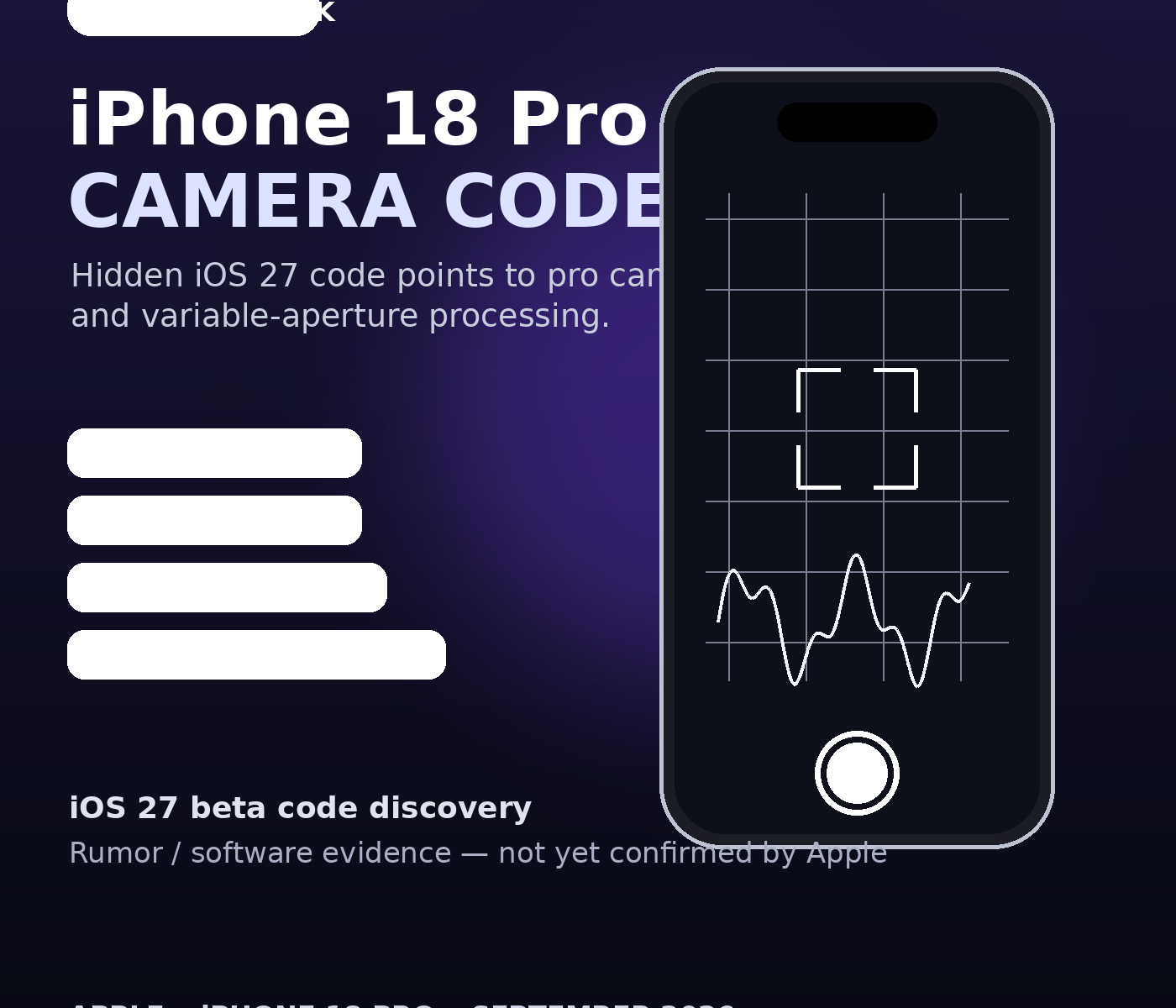
iPhone 18 Pro camera leak featured image highlighting manual focus, exposure scopes and variable aperture

Updated: September 7, 2026

Fresh clues inside the iOS 27 beta may reveal where Apple is taking the iPhone camera next. A new code analysis points to a group of advanced shooting tools that are not currently available to users, including manual focus, focus peaking, exposure scopes, overexposure warnings, repeated self-timer shots, and image correction that changes according to aperture position.

The most important detail is the aperture-aware processing. On its own, software code does not prove that Apple will ship a mechanical variable-aperture camera. But the finding arrives after months of supply-chain reports and leaker claims that the iPhone 18 Pro generation—especially the iPhone 18 Pro Max—could introduce exactly that kind of hardware.

This makes the discovery more meaningful than a typical social-media rumor. The evidence appears to come from Apple’s own beta software, while the hardware connection is still unconfirmed and should be treated as a credible rumor rather than fact.

Five Advanced Camera Tools Found in iOS 27 Beta Code

MacRumors reported on September 7 that forum member “pdfu” identified references to five camera-related capabilities while examining iOS 27 beta code. None of these functions is enabled for regular users in the current beta, so Apple could still change, delay, or remove them before release.

1. Exposure scopes

The code reportedly contains support for exposure-analysis tools such as a histogram or waveform. These displays can help photographers and videographers judge whether a scene is too dark, too bright, or unevenly exposed without relying only on the on-screen preview.

2. Focus peaking and highlight warnings

Focus peaking appears to be another hidden capability. This type of overlay marks areas that are sharply focused, making manual focusing easier. Separate warning overlays could also identify clipped highlights or overexposed parts of the frame with visual patterns or color indicators.

3. Repeated self-timer photos

Apple also appears to have experimented with a self-timer option that can automatically begin another countdown after each shot. That could make it easier to capture several timed photos in sequence without restarting the timer manually.

4. Manual focus

The beta reportedly includes underlying controls for setting and locking focus manually. A similar focus slider appeared during earlier iOS development before being removed, but MacRumors says the newer code is restricted to devices that ship with iOS 27 or later. That restriction makes upcoming iPhone hardware especially relevant.

5. Aperture-aware image correction

This is the most notable discovery. The software reportedly contains lens-correction logic that can adjust processing as an aperture changes, using multiple calibration points rather than assuming one fixed lens opening.

That behavior would make sense for a physical variable-aperture system, where the lens can open wider or stop down depending on lighting conditions or shooting intent.

Why the Aperture Code Matters for iPhone 18 Pro Max

Variable aperture has been one of the more persistent iPhone 18 Pro camera rumors. Supply-chain analyst Ming-Chi Kuo previously said Apple was planning the feature for the iPhone 18 Pro generation. In April, ETNews reporting cited by MacRumors said suppliers were beginning production work for components associated with the new camera mechanism.

The model split remains less certain. Earlier reports pointed to both Pro models, while Ice Universe later claimed that variable aperture would be exclusive to the iPhone 18 Pro Max. Bloomberg’s Mark Gurman also drew attention to the possibility after commenting that Apple’s September event artwork could be a nod to a mechanical aperture on the Pro Max.

The new iOS 27 code does not settle that disagreement. It does, however, create a new software link between the long-running hardware rumor and Apple’s camera-processing pipeline.

What a Variable Aperture Could Change

Recent Pro iPhones use a fixed aperture on the main camera, meaning the physical lens opening does not change from shot to shot. A variable-aperture system would give Apple another way to control how much light reaches the sensor.

A wider aperture can be useful when more light is needed, while a narrower aperture can help control bright scenes and potentially provide different depth-of-field behavior. The practical benefit will depend heavily on Apple’s implementation, sensor size, lens design, and how much control the company gives users.

If Apple combines variable-aperture hardware with manual focus, exposure scopes, focus peaking, and highlight warnings, the bigger story could be a more creator-oriented Camera app rather than one isolated camera upgrade.

Confirmed, Credible and Still Speculative

  • Direct software evidence: According to the published code analysis, iOS 27 beta contains references to the advanced camera tools described above. The features are not currently exposed to users.
  • Credible rumor: Multiple established sources have reported that Apple is developing a variable-aperture main camera for the iPhone 18 Pro generation, with more recent reporting leaning toward the Pro Max as the likely recipient.
  • Still uncertain: Apple has not announced these hidden camera tools, and beta code can point to experiments that never ship. It is also not confirmed whether variable aperture will be exclusive to the iPhone 18 Pro Max or appear on both Pro models.

Why This Leak Stands Out

Most pre-launch iPhone rumors originate with suppliers, accessory makers, analysts, or social-media leakers. This report is different because the newest evidence comes from software code tied to Apple’s own operating system.

That still does not make every hidden feature a launch guarantee. Software development regularly includes unfinished, disabled, or abandoned functions. But aperture-dependent processing appearing just before an iPhone generation already linked to mechanical-aperture hardware is a notable convergence of software and supply-chain evidence.

Final Thoughts

The iPhone 18 Pro camera story is increasingly about direct control. If even part of this hidden camera toolkit reaches the final release, future iPhones could offer photographers and creators a more technical shooting experience with manual focus aids, better exposure monitoring, and processing designed to work with changing lens behavior.

The biggest remaining question is whether Apple reserves variable aperture for the iPhone 18 Pro Max. With Apple’s September 9 event approaching, the answer may be close.

Related ReaderSpice Coverage

Sources

MacRumors — Five iPhone 18 Pro Camera Features Seemingly Leak in Code (September 7, 2026)
MacRumors — iPhone 18 Pro Variable Aperture Camera Enters Production (April 16, 2026)
MacRumors — Only iPhone 18 Pro Max Rumored to Get Variable Aperture Camera (August 27, 2026)

Editorial note: This article was independently written from reported facts and source material. It does not reproduce source articles or copyrighted passages.