
Affiliate disclosure: This article includes spaces for affiliate links. When links are added, ReaderSpice may earn a commission from qualifying purchases at no extra cost to you.
Travel should feel exciting, not like a battle against overstuffed luggage, dead phone batteries, tangled cables, and uncomfortable airport waits. The right travel gear does not mean buying every gadget marketed as a “must-have.” It means choosing a small collection of useful items that solve real problems and earn their place in your suitcase.
Whether you are planning a weekend road trip, a family vacation, an international flight, or a work trip, this travel packing guide focuses on practical essentials. These are the items that help you stay organized, protect your electronics, sleep more comfortably, and move through airports with less stress.
The best approach is to build a travel kit around your habits. A frequent flyer may prioritize a compact carry-on and a universal adapter, while a family traveler may value packing cubes, a foldable tote, and a dependable power bank. Use this list as a starting point, then adjust it for your destination and travel style.
Why the right travel gear matters
Good travel gear saves time and reduces small frustrations. Packing cubes can separate clothing by person or outfit. A cable organizer keeps charging accessories from disappearing into the bottom of a bag. A luggage tracker can make it easier to locate a checked suitcase. A reusable bottle can help you stay hydrated after security.
The goal is not to pack more. The goal is to make the items you already carry easier to find, easier to protect, and easier to use.
15 travel essentials worth packing
1. A lightweight carry-on suitcase
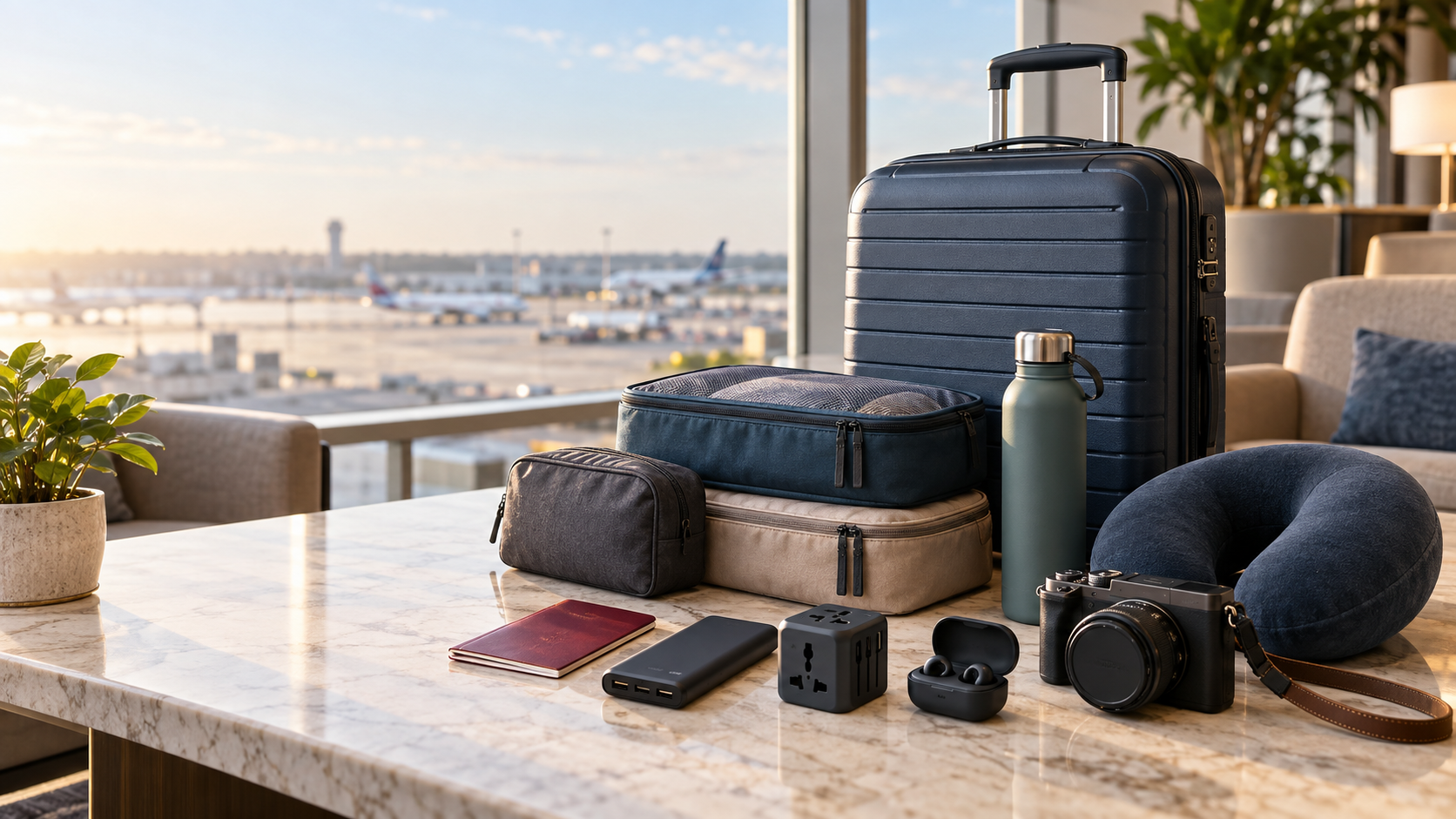
A reliable carry-on is the foundation of a simple travel setup. Look for a durable shell or strong soft-sided construction, smooth wheels, a comfortable handle, and an interior layout that keeps clothing from shifting. A suitcase with a separate compression panel or zippered compartments can make a noticeable difference when you are packing quickly.
Before buying, check the carry-on size limits for the airlines you use most often. Dimensions can vary, and an attractive suitcase is not useful if it must be checked at the gate.
Where to shop: View lightweight carry-on options on Amazon.
2. Packing cubes
Packing cubes turn one large compartment into a simple organization system. Use one cube for shirts, another for pants, another for undergarments, and a smaller one for accessories. They are especially helpful for family travel because each person can have a different color.
Choose cubes with durable zippers, breathable panels, and flexible fabric. Compression cubes can save space, but avoid overstuffing them because that can add weight and make clothes harder to access.
Where to shop: View compression packing cubes on Amazon.
3. A personal-item travel backpack
A compact backpack is often more useful than a second small suitcase. It can hold your passport, wallet, tablet, camera, snacks, medications, and charging gear while keeping both hands free.
Look for a padded laptop sleeve, a luggage pass-through, water-resistant material, and quick-access pockets. A structured backpack also makes it easier to slide under an airplane seat without crushing fragile items.
4. A universal travel adapter
International travelers should pack a universal adapter that supports the plug types used at their destination. A good model should feel solid, stay firmly in the wall, and provide enough USB ports for the devices you normally carry.
Remember that an adapter changes the plug shape, not necessarily the voltage. Check the voltage requirements of appliances such as hair dryers, curling irons, and electric shavers before using them abroad.
Where to shop: View universal travel adapters on Amazon.
5. A dependable power bank
A power bank can be the difference between finding your hotel, calling a rideshare, and navigating an airport—or being stuck with a dead phone. Choose a model with enough capacity for your devices, clear battery indicators, and at least one fast-charging port.
Airline rules for spare lithium batteries can vary, so keep power banks in your carry-on rather than checked luggage and review your airline’s current requirements before flying.
6. A short charging cable kit
Long cables are useful at home but can become a tangled mess in a suitcase. A travel cable kit with short USB-C, Lightning, or other cables you actually use can save space.
Pack one wall charger with multiple ports instead of several separate charging bricks. Labeling cables or using different colors can also help prevent them from being left behind in a hotel room.
7. A luggage tracker
A small Bluetooth luggage tracker can provide extra peace of mind when you check a bag or leave items in a hotel. It will not replace airline baggage support, but it may help you understand whether your luggage is nearby, still at the airport, or already moving toward the carousel.
Check compatibility with your phone before buying, and keep the tracker attached securely inside the luggage rather than loosely in an outside pocket.
8. Noise-canceling headphones or earbuds
Noise-canceling headphones are useful on airplanes, trains, buses, and busy hotel lobbies. They can make engine noise and background conversations less distracting, while also giving you a way to enjoy movies, music, or podcasts.
For travel, comfort and battery life matter as much as sound quality. If you use wireless earbuds, pack the charging case and consider carrying a wired backup if your entertainment system requires one.
9. A supportive travel pillow
A travel pillow is worth considering if you regularly take long flights or overnight journeys. The best design depends on how you sleep. Some travelers prefer a wraparound pillow that supports the chin, while others prefer a compact inflatable model that takes less room.
Do not judge a pillow only by how soft it feels in a store. Support, packability, washable fabric, and the ability to use it without pushing your head too far forward are more important.
10. A reusable water bottle
A reusable bottle helps you stay hydrated and reduces the need to buy several disposable bottles during a trip. Choose a leak-resistant model that fits the side pocket of your backpack and is easy to clean.
For air travel, empty the bottle before security and refill it afterward where permitted. A wide-mouth design is convenient for adding ice and cleaning the inside.
11. A compact toiletry bag
A hanging toiletry bag or structured pouch makes it easier to keep liquids, grooming items, and medications together. Choose transparent or easy-to-clean compartments and pack only the products you genuinely use.
For flights, organize liquids according to current airport security rules. Travel-size containers can reduce weight, but make sure they are labeled if you are transferring products from larger bottles.
12. A foldable tote bag
A lightweight foldable tote is one of the most useful backup items in a travel bag. It can carry souvenirs, groceries, beach items, laundry, or an extra layer when your main bag is full.
Look for reinforced handles and fabric that folds into a compact pouch. A tote can also become a practical personal item during the return trip, but check airline baggage rules before relying on it at the gate.
13. A portable luggage scale
A small luggage scale can prevent an expensive surprise at the airport counter. Weigh your suitcase after packing and again before leaving your hotel, especially if you expect to bring home gifts or shopping.
Choose a scale with a clear display, a strong strap, and a compact shape. Store it in an easy-to-reach pocket rather than at the very bottom of your suitcase.
14. A small first-aid and medicine pouch
A basic medicine pouch should include the items your household commonly needs, such as prescriptions, bandages, pain relievers, motion-sickness remedies, and any personal essentials. Keep prescriptions in their original containers when appropriate and carry important medication in your personal item.
Do not create a travel medical kit based only on a generic list. Your needs, destination, and doctor’s advice should guide what you bring.
15. A compact laundry kit
A few detergent sheets, a stain-removal pen, a sink stopper, and a small laundry bag can help you pack fewer clothes. Washing a shirt or two during a longer trip may let you travel with a smaller suitcase.
Keep detergent sealed inside a waterproof pouch and follow local instructions for using shared hotel sinks or laundry facilities.
How to choose travel gear without overpacking
Start with the problem you want to solve. If your suitcase is always disorganized, buy packing cubes before buying another bag. If your phone keeps running out of power, improve your charger and power bank setup. If you struggle to sleep in transit, prioritize a comfortable pillow and headphones.
Next, check size and weight. A product can be useful at home but inconvenient on the road if it takes up too much room. Finally, choose items that serve more than one purpose. A backpack can be a personal item, day bag, and camera bag. A foldable tote can carry groceries, beach gear, or overflow clothing.
A simple travel packing formula
For a short trip, begin with one carry-on, one personal item, and a small set of versatile clothing. Add packing cubes for organization, a charger kit for electronics, and one comfort item for the journey. Keep documents, medication, valuables, and essential electronics in your personal item.
Before leaving, weigh your suitcase, charge your devices, refill your bottle after security, and take a quick photo of your packed bag. That final photo can help you remember where items belong and document the condition of your luggage before a flight.
Recommended travel gear links to add
- Lightweight carry-on suitcase — View on Amazon
- Compression packing cubes — View on Amazon
- Universal travel adapter — View on Amazon
- Multi-port charger and power bank — View on Amazon
- Noise-canceling headphones or earbuds — View on Amazon
- Foldable travel tote — View on Amazon
- Portable luggage scale — View on Amazon
Final thoughts
The best travel gear is not the gear with the longest feature list. It is the gear that helps you pack faster, find what you need, protect your essentials, and stay comfortable when plans change.
Build your kit gradually. Start with a carry-on, packing cubes, a personal-item backpack, a dependable charging setup, and one or two comfort items. Once those basics work for you, add specialized products only when they solve a problem you actually experience.
A lighter, better-organized travel setup can make the entire journey feel easier—from the moment you leave home to the moment you unpack at your destination.
Frequently asked questions
What is the most important travel gear to buy first?
Start with a dependable carry-on, packing cubes, a personal-item backpack, and a reliable charger. These four items solve the most common organization and convenience problems.
Are travel gadgets worth buying?
Some are useful, but only when they solve a real problem. Prioritize compact, durable products that you will use on nearly every trip instead of novelty gadgets that add weight.
How can I avoid overpacking travel gear?
Choose multipurpose items, limit duplicate chargers, and pack products based on your itinerary. If an item does not improve comfort, organization, safety, or communication, consider leaving it at home.