
Snap SPECS AR Glasses: $2,195 Price, AI Features and Fall 2026 Release

Snap SPECS augmented-reality glasses with AI interface and $2,195 fall 2026 launch details

Snap has officially opened preorders for SPECS, its first consumer augmented-reality glasses. The new wearable costs $2,195, puts a transparent display and self-contained computing hardware inside the frame, and is expected to start shipping later in fall 2026 in the United States, United Kingdom and France.

This is not another lightweight pair of camera glasses. SPECS are closer to a compact spatial computer: they can place navigation, translation, entertainment, work tools and AI-generated information into the wearer’s field of view. That ambition also explains the unusually high price and the much bulkier frame.

Here is what Snap has confirmed, what SPECS Intelligence adds, and who should—or should not—consider preordering.

What Snap officially announced

Snap’s September 16 announcement expands SPECS from a previously revealed hardware project into a complete commercial platform. Preorders are now available in the U.S., UK and France with a $200 refundable deposit. Shipping is expected later this fall, although Snap has not provided a specific delivery date.

The company also confirmed an in-person SPECS First Look experience at Westfield Century City in Los Angeles beginning October 1. That is important for a device this expensive and unusual: buyers can see how the display looks, test the fit and judge the weight before committing.

SPECS hardware: what you get

The glasses use see-through waveguide displays with a 51-degree field of view. Snap compares the perceived size to a 115-inch screen viewed from about 10 feet away. The frame contains the computing hardware itself, so SPECS do not require a separate processing puck or tethered battery pack.

Confirmed hardware and design details include:

  • Two frame sizes: 47mm Narrow Fit and 52mm Wide Fit
  • A weight of 132 grams for the 47mm model or 136 grams for the 52mm model
  • Custom stereo speakers and six high-signal-to-noise MEMS microphones
  • Bluetooth phone pairing for calls, notifications and music
  • Hand and voice interaction through Snap’s AI-native operating system
  • A prominent external LED that illuminates or flashes during photo, video or audio recording

At well over 130 grams, SPECS are substantially heavier than ordinary eyeglasses and many camera-first smart glasses. The hardware is technically ambitious, but comfort will be one of the biggest questions for early buyers.

SPECS Intelligence extends beyond the glasses

SPECS Intelligence is Snap’s new “anticipatory” AI service. Instead of only waiting for a question, it is designed to organize information from accounts and tools a user chooses to connect, then surface relevant context at useful moments.

Snap’s examples include preparing decisions and reminders before a meeting, combining flight, hotel and dinner details for a trip, and flagging a work deadline that overlaps with travel. On the glasses, that information can appear directly in view. The service can reportedly connect to tools such as Gmail and Slack.

The preview is already available through the SPECS iOS app in the U.S. for users 18 and older. A fuller invitation-only experience is planned for Mac, with access offered through a waitlist. Snap has not announced an Android version.

Beyond AI, the glasses support visual translation in 60 languages, walking navigation, a browser for streaming services, Bluetooth calling, a virtual workspace, and shared augmented-reality experiences. Snap is also working with the NBA, WNBA, Spotify, Tripadvisor, Shopify and HBO Max on specialized experiences.

What the $2,195 price includes

The standard SPECS price is $2,195. Snap requires a $200 refundable deposit at preorder, with the remaining balance collected closer to shipment. A $2,395 Connected Case bundle adds a charging case that provides four additional charges and cellular connectivity.

In the U.S., Verizon plans start at $10 per month for existing Verizon customers and $20 per month for non-Verizon customers. Snap is also partnering with Orange in France and EE in the UK, with local pricing to be announced.

This positioning makes SPECS an early-adopter and professional tool rather than a mass-market replacement for a phone. The base model costs far more than Meta’s camera-focused smart glasses, but SPECS also include true see-through AR displays and onboard spatial computing.

Privacy: what Snap says

Smart glasses raise immediate privacy questions, especially when cameras and microphones are pointed at people nearby. Snap says SPECS do not use facial recognition to identify people and do not continuously record or save audio, video or photos. The center LED is designed to alert bystanders whenever recording is active.

For SPECS Intelligence, Snap says users choose which accounts and services to connect. The company states that Snap personnel cannot view personal content used with the service, and that content from connected accounts will not be used to train or fine-tune its AI models or to deliver personalized ads.

Those are meaningful commitments, but buyers should still review the final privacy settings and permissions before connecting email, calendars, workplace tools or travel accounts. An assistant that anticipates needs must process substantial personal context to be useful.

Who SPECS are really for

Snap is pitching SPECS to both consumers and businesses. For individuals, the strongest use cases are hands-free navigation, live translation, large virtual displays, interactive learning and creative AR. For enterprises, Snap is partnering with Salesforce, NVIDIA, Amazon Web Services, Trifork and Hololight for hands-free tasks on store floors, in factories and in the field.

The enterprise angle may be more convincing at launch. A company can justify a premium device if it reduces training time, overlays repair instructions or gives workers real-time access to inventory and customer data. Most consumers will need a clearer daily benefit before spending more than $2,000 on glasses.

Should you preorder?

SPECS are one of the most technically interesting consumer wearables announced in 2026, but preorder caution is sensible. The price is high, the frame is heavy, the software ecosystem is still developing and the exact shipping date remains unconfirmed.

Interested buyers should try the Los Angeles demo if possible, verify which frame size fits, and wait for independent battery-life, display-quality and comfort testing. The $200 deposit is refundable, but early access still means accepting first-generation compromises.

A more affordable smart-glasses alternative

If you want hands-free photos, calls and audio without a full AR display, you can compare Ray-Ban Meta smart glasses on Amazon. They are not a direct substitute for SPECS, but they represent the more established camera-and-audio category at a much lower price.

Disclosure: ReaderSpice may earn a commission from qualifying Amazon purchases at no additional cost to you.

Sources

Snap Newsroom — Making Computing More Human with SPECS

SPECS official product page and FAQ

Reuters — Snap targets enterprises with Salesforce, NVIDIA and AWS tools
The Verge — SPECS Intelligence comes to iOS and Mac

TP-Link Tapo C120 and C200 Security Flaws: Update Your Camera Now

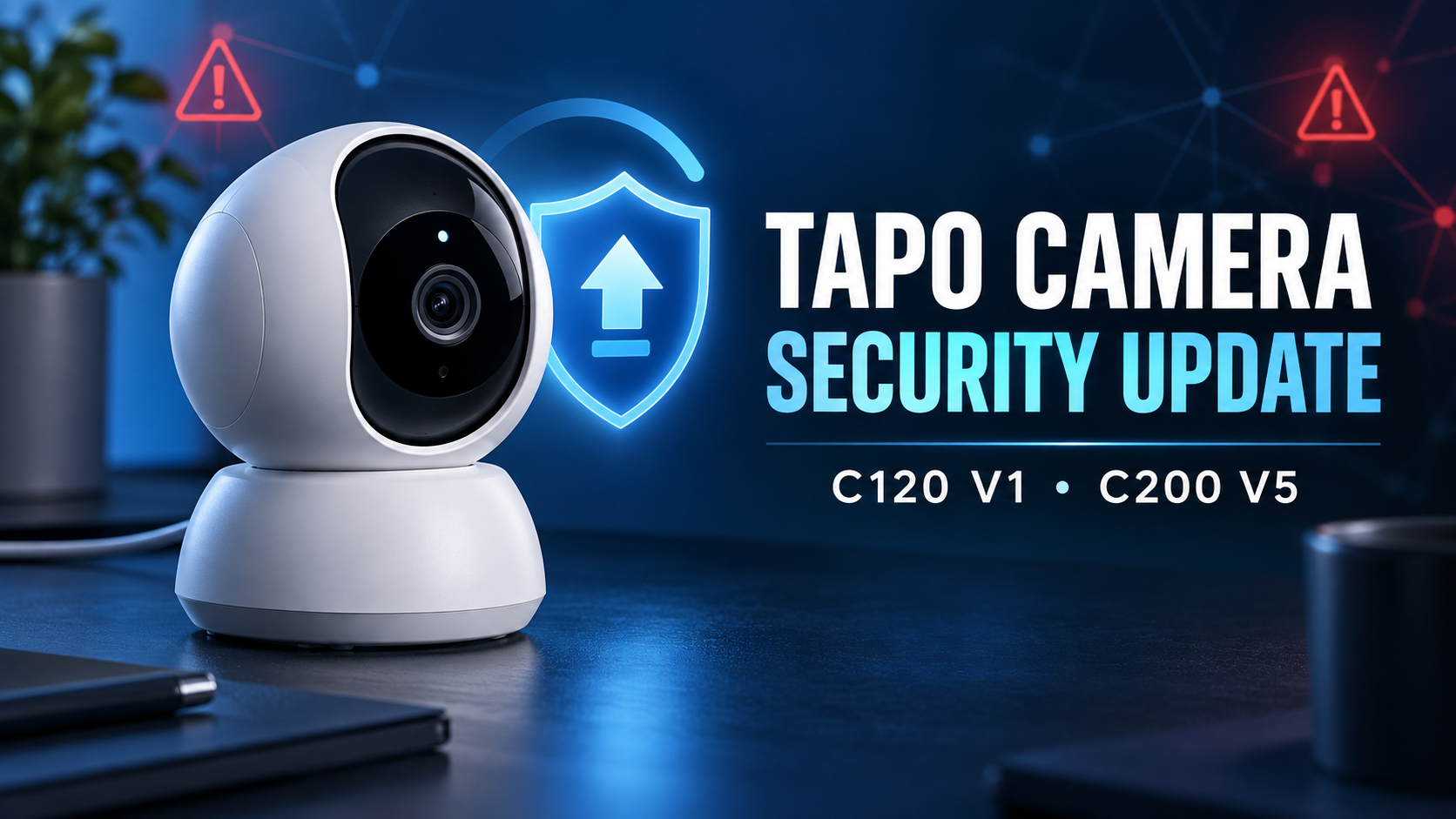
Smart indoor camera beside a security shield and firmware update symbol for the Tapo C120 V1 and C200 V5 security update

Two high-severity security flaws affect specific hardware versions of TP-Link’s Tapo C120 and C200 cameras. TP-Link has released patched firmware, so owners should check the model and hardware version in the Tapo app and install the latest update now.

The important limitation is that this is not a warning about every Tapo camera. TP-Link’s advisory identifies the Tapo C120 hardware version V1 and Tapo C200 hardware version V5. Older or different hardware revisions are not listed in this advisory, although keeping any connected camera current remains good practice.

Which Tapo cameras are affected?

  • Tapo C120 V1 — affected by CVE-2026-15315. Fixed in firmware 1.9.3 Build 260521 or later.
  • Tapo C200 V5 — affected by CVE-2026-15315 and CVE-2026-15316. Fixed in firmware V5_1.4.6 Build 260709 Rel.27675n or later.

If your camera has a different hardware version, do not install firmware intended for V1 or V5 manually. Use the Tapo app or the correct regional TP-Link support page so the device receives the package built for its exact model and revision.

What the security flaws could allow

CVE-2026-15315: authentication bypass

The first flaw affects the local login process. TP-Link says an attacker on the local network could exploit weak challenge-parameter validation, bypass normal authentication and obtain administrative session tokens without knowing the owner’s password.

That administrative access could allow unauthorized configuration changes and other privileged actions. OPSWAT, the research group that reported the issue, says access may also expose privacy-sensitive functions such as live video and stored recordings. The vulnerability has a CVSS 4.0 score of 8.7, rated High.

CVE-2026-15316: denial of service

The second flaw affects only the listed Tapo C200 V5 hardware. A nearby-network attacker could send an oversized encrypted credential value during the camera’s onboarding flow. Insufficient validation can make the HTTPS service crash or cause the camera to restart, temporarily interrupting management and monitoring. TP-Link rates this flaw High with a CVSS 4.0 score of 7.1.

Why local network access still matters

Both vulnerabilities require network access to the affected camera. That is an important boundary: the advisory does not describe a one-click attack that any random person on the internet can launch against every Tapo camera. Still, local-network access is not the same as harmless. A compromised computer, an untrusted guest device, weak Wi-Fi security or an exposed camera-management interface could put an attacker in the right position.

For a device that may watch living spaces, entrances or a child’s room, the safest response is to patch promptly rather than rely only on the local-network requirement.

How to update a Tapo C120 or C200

  • Open the Tapo app and tap your affected camera.
  • Open Device Settings, then select Firmware Update. TP-Link also allows you to check all devices from Me > Firmware Update.
  • Confirm the hardware version and install the newest firmware offered for that exact camera.
  • Keep the camera powered and connected during installation. Do not unplug it while the update is being applied.
  • After the camera restarts, return to Firmware Update and confirm that no newer version is pending.

TP-Link’s official firmware-update guide shows both update paths. Automatic Update can also be enabled, but it is still worth checking manually after a security advisory because staged rollouts may not reach every device at the same moment.

What to do after installing the patch

  • Do not expose the camera’s local management interface directly to the internet.
  • Use WPA2 or WPA3 security with a strong, unique Wi-Fi password.
  • Place cameras and other smart-home devices on a guest or IoT network when your router supports network isolation.
  • Review shared Tapo-account access and remove people or devices that no longer need it.
  • Enable automatic firmware updates, then periodically verify that the camera is still current.

A firmware patch closes the reported defects, but network segmentation and careful account management reduce the damage another compromised smart-home device could cause.

Should you replace the camera?

Not solely because of these two flaws. TP-Link has provided fixes for the affected hardware, and updating is the direct remedy. Replacement makes more sense if your camera can no longer receive security updates, repeatedly fails to update or no longer fits your privacy and monitoring needs.

If you are comparing current alternatives or accessories, you can browse Tapo cameras and accessories on Amazon. ReaderSpice participates in the Amazon Associates Program and may earn a commission from qualifying purchases at no additional cost to you.

Bottom line

Owners of Tapo C120 V1 and C200 V5 cameras should update immediately. The authentication-bypass flaw could grant an attacker on the local network administrative access, while the C200-specific input-validation flaw could interrupt camera management and monitoring. Check the hardware revision first, accept only the firmware offered for that exact device, and confirm the update completed successfully.

Sources

TP-Link security advisory for Tapo C120 and C200

OPSWAT technical disclosure of CVE-2026-15315 and CVE-2026-15316

TP-Link guide to updating Tapo and Kasa firmware

NIST NVD record for CVE-2026-15315

NIST NVD record for CVE-2026-15316

Samsung Gallery Google Photos Sync Starts Rolling Out: How It Works

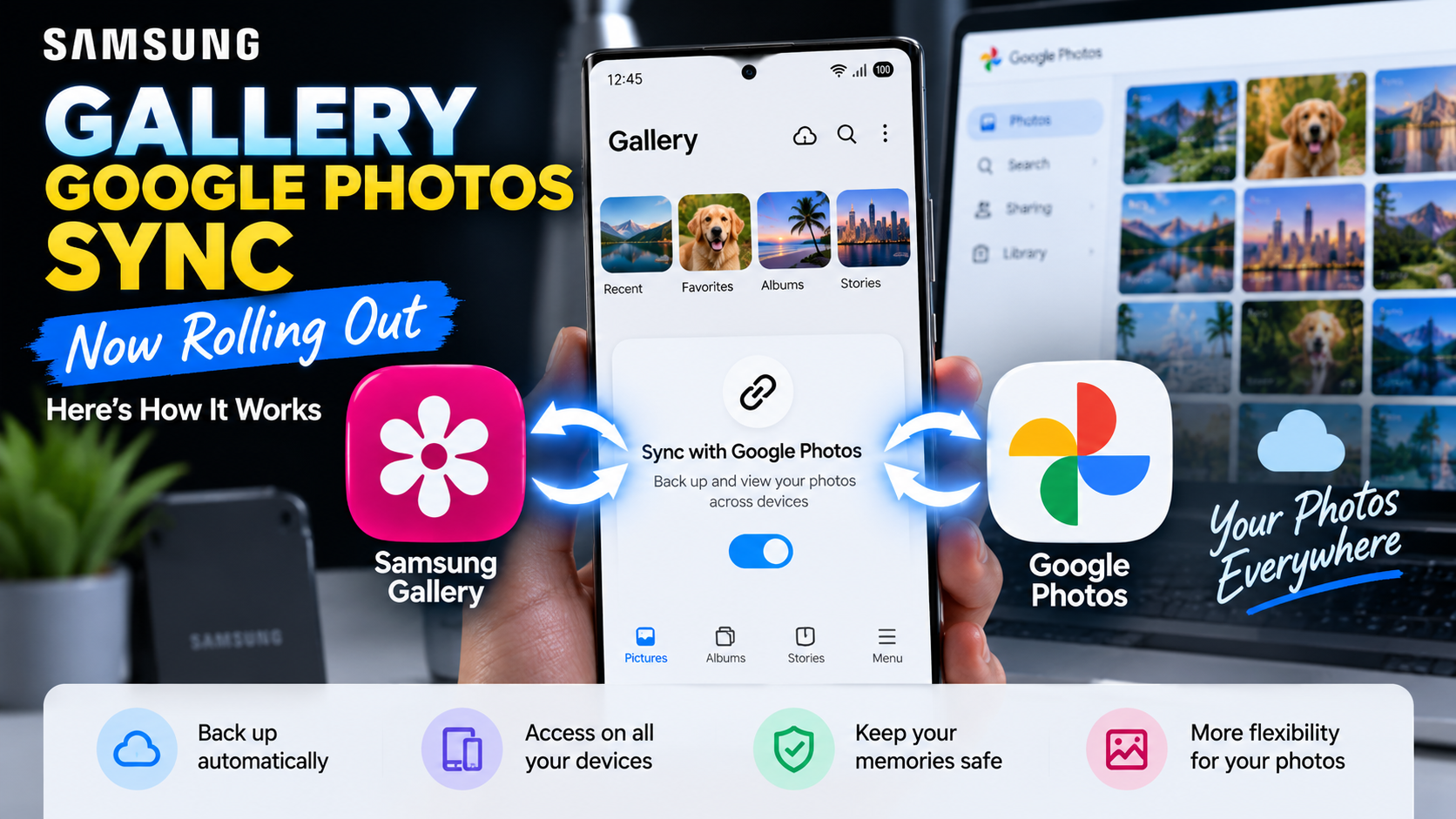
Samsung Gallery Google Photos sync setup shown on a Galaxy phone with the new Sync photos and videos option

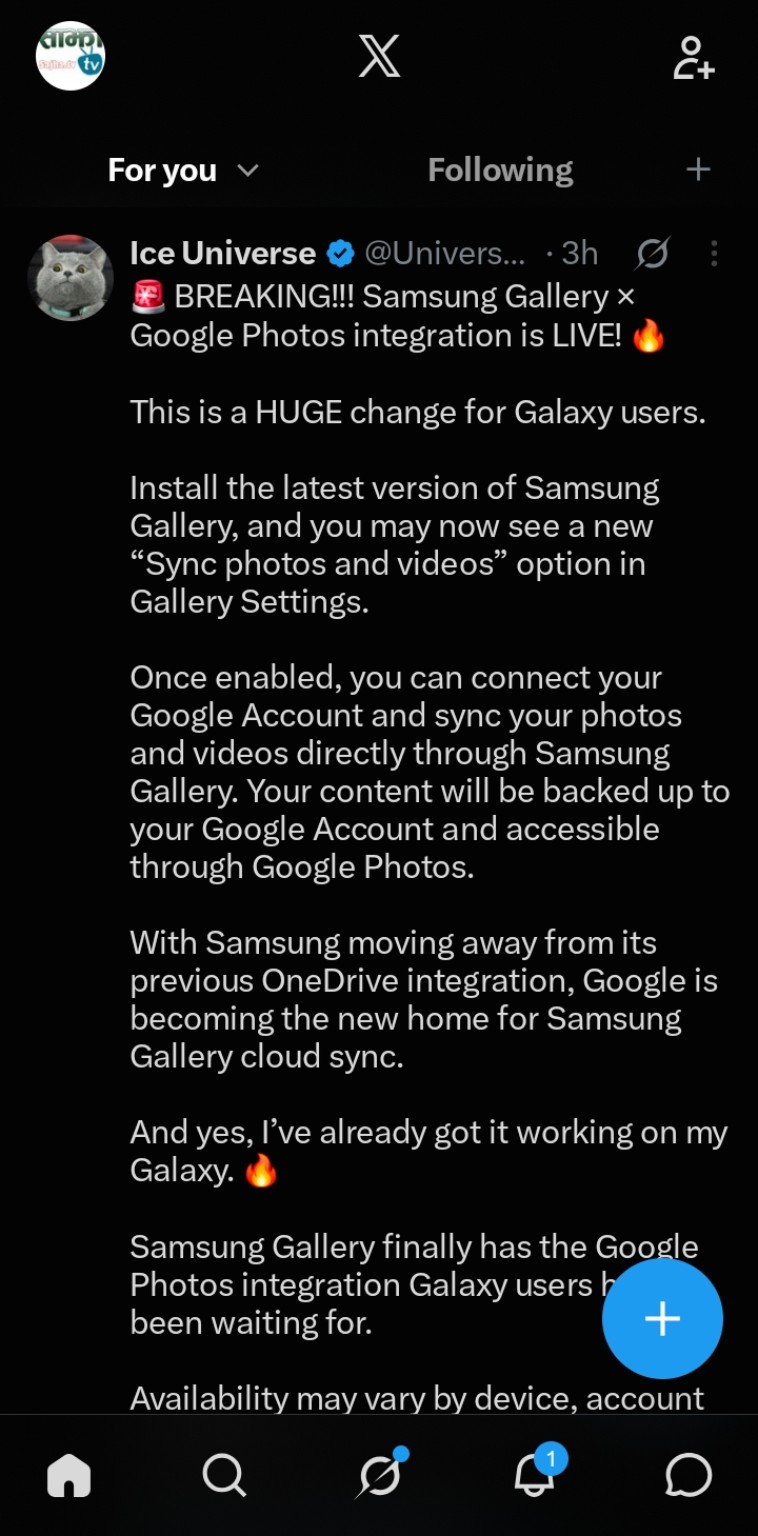
Samsung is beginning to roll out a major change to its Gallery app: direct syncing with Google Photos. New screenshots shared by Ice Universe on X show the feature working on a Galaxy device, including a new “Sync photos and videos” option inside Samsung Gallery settings.

The timing is important. Microsoft has confirmed that direct Samsung Gallery-to-OneDrive syncing ends on September 30, 2026. Google has published official documentation explaining how Samsung Gallery Cloud Sync works with a Google Account, confirming that synced photos and videos are stored in Google Photos.

Samsung Gallery’s Google Photos Sync Is Now Appearing for Users

Ice Universe shared screenshots showing Samsung Gallery version 15.9.01.7 with the new sync option available. The setup screen says users can keep photos and videos available across devices by syncing Gallery with Google.

Samsung Gallery’s Google Photos Sync Is Now Appearing for Users

Source: Ice Universe (@UniverseIce) on X

Samsung Gallery’s Google Photos Sync Is Now Appearing for Users

Source: Ice Universe (@UniverseIce) on X

Users choose a personal Google Account and continue through the setup process. The screenshots also indicate that a Samsung account is required on the device. Samsung says using the same Samsung account on other supported devices can provide access to synced photos and videos.

Samsung Gallery’s Google Photos Sync Is Now Appearing for Users

Source: Ice Universe (@UniverseIce) on X

Samsung Gallery’s Google Photos Sync Is Now Appearing for Users

Source: Ice Universe (@UniverseIce) on X

Samsung Gallery’s Google Photos Sync Is Now Appearing for Users

Source: Ice Universe (@UniverseIce) on X

Google Confirms How Samsung Gallery Cloud Sync Works

Google’s official Photos support documentation confirms that compatible Samsung devices can sync their native Gallery with a personal Google Account. Google says the feature requires a supported Samsung device, Android 13 or newer, and a personal Google Account. Google Workspace accounts and supervised accounts are not supported.

Once enabled, photos and videos can be backed up from Samsung Gallery to the user’s Google Account and accessed through Google Photos. Users can choose specific device folders such as Camera, Screenshots, or Downloads.

Important Differences From Normal Google Photos Backup

Google says media uploaded through Samsung Gallery Cloud Sync uses the user’s Google Account storage and is backed up in original quality. Deletions also synchronize: deleting a synced item in Samsung Gallery or Google Photos can remove it from both apps and cloud storage.

There is an important limitation. Photos backed up only through Samsung Gallery Cloud Sync are not automatically included in every Google Photos feature. Google says those items may not appear in Memories and highlights, Live albums, or Search unless they are also backed up through the Google Photos app.

Why Samsung Is Moving Away From OneDrive

Samsung Gallery has relied on Microsoft OneDrive for integrated cloud syncing for years. Microsoft says that integration ends September 30, 2026. Photos already stored in OneDrive will remain there, but after the cutoff they will no longer appear through Samsung Gallery’s direct OneDrive integration.

Users who want to remain with Microsoft can continue using OneDrive’s own camera backup. For Galaxy owners already invested in Google services, the new Gallery integration provides a more native path to keep Samsung Gallery backed up while accessing those files through Google Photos.

How to Check If You Have the New Feature

Open Samsung Gallery → Menu → Settings and look for “Sync photos and videos.” If it appears, select a personal Google Account and follow the on-screen permissions and setup steps.

The rollout appears gradual and may depend on device, account, software version, and region. Google notes that Gallery Cloud Sync availability can vary, so not seeing the option yet does not necessarily mean your Galaxy device will not receive it.

Shopping for a Galaxy S26 Ultra?

If you’re shopping for Samsung’s Galaxy S26 Ultra, you can check its current price and availability on Amazon.

Check the Samsung Galaxy S26 Ultra price on Amazon.

As an Amazon Associate, ReaderSpice may earn from qualifying purchases at no additional cost to you.

What This Means for Galaxy Users

The biggest change is convenience. Galaxy owners will no longer need Samsung Gallery’s old OneDrive connection to get integrated cloud syncing. Samsung Gallery can remain the primary gallery interface while Google handles cloud storage behind the scenes.

At the same time, Samsung Gallery Cloud Sync and conventional Google Photos backup are not completely identical. Anyone who relies heavily on Google Photos Search, Memories, or Live Albums should review Google’s documentation before changing an existing backup setup.

Sources

Ice Universe (@UniverseIce) on X — screenshots showing Samsung Gallery 15.9.01.7 and the new sync setup

Google Photos Help — Sync your Samsung Gallery with your Google Account

Microsoft Support — Changes to Samsung Gallery sync and OneDrive

9to5Google — Samsung Gallery adds Google Photos backup support

Google’s September 2026 Pixel Drop Adds Smarter VIPs, Scam Warnings and Watch Gestures

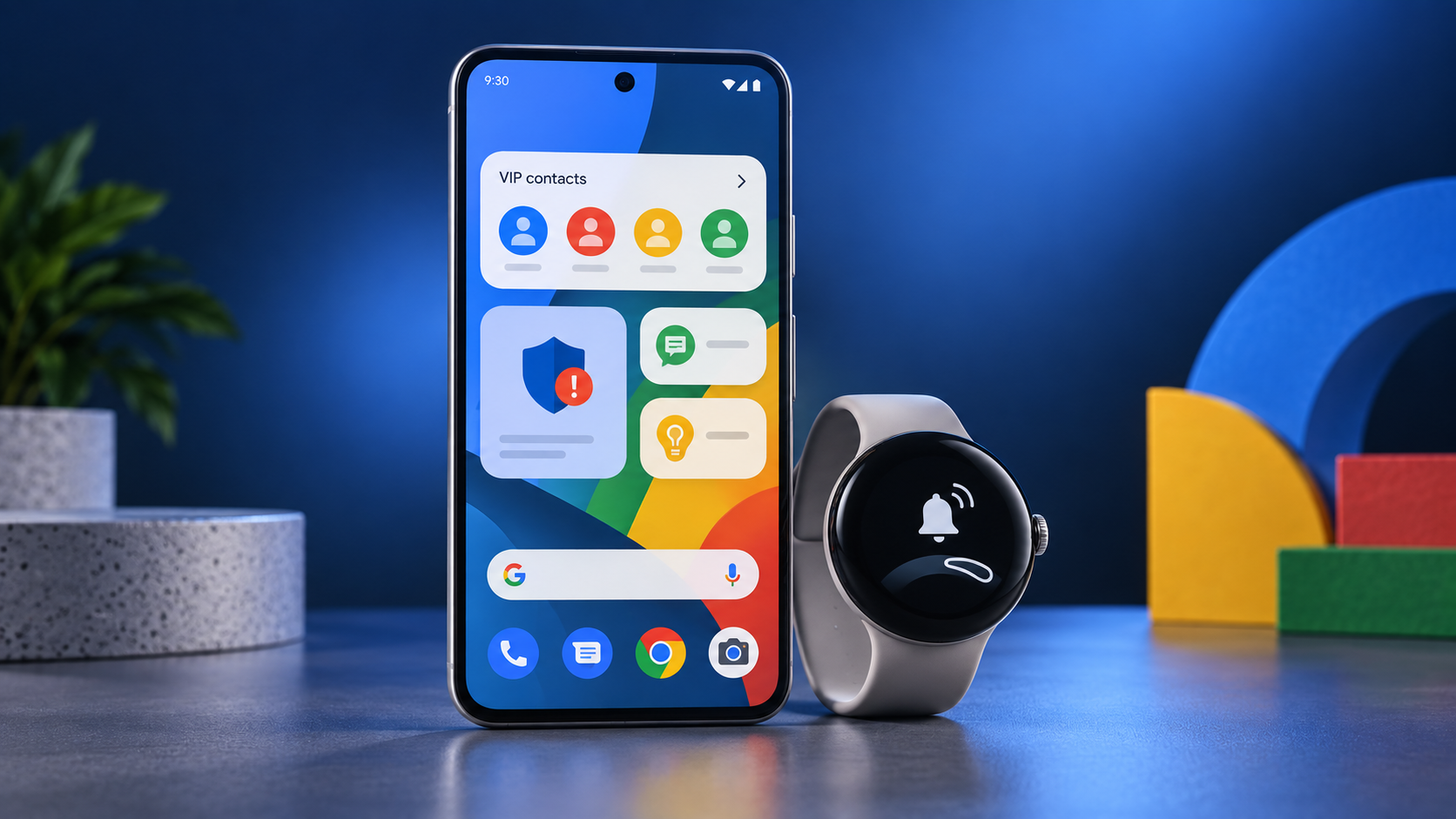
Google Pixel phone and Pixel Watch illustrating VIP contacts, scam warnings and watch gestures in the September 2026 Pixel Drop.

Google’s official September 2026 Pixel Drop is rolling out with practical updates for Pixel phones and watches. The release improves Pixel VIP contact widgets, expands scam warnings, adds more one-handed Pixel Watch controls, and introduces limited-time Harry Potter customization packs. Availability varies by device, country, language, carrier and app version.

Google has begun rolling out its September 2026 Pixel Drop, delivering a set of convenience, safety and wearable improvements rather than one dramatic flagship feature. The most useful changes focus on keeping important contacts close, warning users about suspicious messages earlier and making Pixel Watch interactions easier with one hand.

Confirmed: Google announced the update on September 15, 2026. The features are official, but availability is not universal. Some require specific Pixel models, supported countries or languages, current versions of Google apps, and the latest available system software.

Pixel VIPs become more useful from the home screen

Pixel VIPs already gives users a dedicated place for close friends and family, including recent interactions and shared information. The September update makes that experience faster to reach.

Updated home-screen widgets let users call or message a VIP with a single tap. A floating navigation control makes it easier to move between VIP profiles, while notification badges highlight unread or important messages without requiring users to open several communication apps.

Google’s support documentation says Pixel VIPs can include people using either Android or iOS devices. The feature itself is centered on the Pixel owner’s phone, so contacts do not need to own a Pixel.

Why it matters: This turns Pixel VIPs from a buried contact hub into a more useful daily shortcut. It is especially helpful for families, caregivers and anyone who regularly checks in with a small group of people.

Scam Detection expands, including Gboard warnings

Google is also expanding scam protection for messages. The company says Scam Detection for chat-app notifications is reaching additional regions and languages. In the United States, Gboard can provide inline warnings when a user is typing a response to a suspicious message in supported apps.

That distinction matters. This is not a promise that every fraudulent message will be caught, and it does not replace careful judgment. It is an additional warning layer designed to interrupt common social-engineering tactics before a user replies or shares sensitive information.

Confirmed limitations:

• Availability depends on the country, language, app and device.

• Google identifies Pixel 6 and newer phones for the expanded phone features.

• A warning is a risk signal, not proof that a message is fraudulent.

• Users should still verify unexpected requests through a trusted contact method.

Shop Google Pixel 11 on Amazon

Pixel Watch gains easier one-handed controls

The September Pixel Drop also improves Pixel Watch interaction. Google says Raise to Talk is being refined, while One Handed Gestures are gaining support in more apps. On supported watches, pinch-style controls can reduce the need to touch the screen when checking notifications or performing simple actions.

Google’s regional documentation identifies Pixel Watch 3 and newer for the newly expanded watch features, although the exact experience can differ by model and region.

Why it matters: Small gesture improvements can be genuinely useful while walking, exercising, carrying groceries or using the watch with the opposite hand occupied. The update is evolutionary, but it makes existing hardware easier to use.

Shop Google Pixel Watch 5 on Amazon

ReaderSpice may earn a commission from qualifying purchases made through this affiliate link, at no additional cost to you.

Harry Potter customization packs are the lighter addition

Google is pairing the practical updates with Harry Potter Audiobook Packs that can change a Pixel phone’s wallpaper, icons and sounds. Eligible users can also receive a two-month Audible trial.

This is a promotional, limited-time feature rather than a permanent system upgrade. Google says the theme packs are available through December 31, 2026, with offer availability and redemption terms varying by market.

Which Pixel devices are eligible?

Google’s announcement says the new phone features are available on Pixel 6 and newer devices, while the watch enhancements apply to Pixel Watch 3 and newer models. However, eligibility does not mean every feature arrives simultaneously.

Before assuming something is missing, users should check:

• Settings > System > Software updates

• Google Play system updates

• Updates for Contacts, Gboard and other relevant Google apps

• Regional and language availability

• Carrier rollout timing

Google notes that Pixel Drop releases can arrive in phases. A supported device may therefore receive the update later than another phone or watch in a different market.

What is confirmed and what is not

Confirmed by Google:

• Updated Pixel VIP home-screen widgets and notification badges

• Expanded scam warnings for supported messages and regions

• Pixel Watch Raise to Talk improvements

• Additional One Handed Gesture integrations

• Harry Potter customization packs and an eligible Audible trial

Not confirmed:

• A single worldwide release time for every feature

• Identical functionality across all countries, languages and carriers

• Compatibility with every messaging app

• Perfect detection of fraudulent messages

The bottom line

The September 2026 Pixel Drop is not a hardware-changing release, but it adds several features that can improve everyday use. Faster access to important contacts, earlier scam warnings and more convenient watch gestures are the strongest additions. Pixel owners should update both system software and Google apps, then check individual feature availability rather than expecting every change to appear at once.

Sources

Google — September Pixel Drop: New Pixel VIP updates, Pixel Watch features, and more

Google Pixel Help — Quickly access your favorite contacts with Pixel VIPs

Android Central — Google’s September Pixel Drop upgrades VIP contacts, scam detection and Pixel Watch

Samsung Galaxy S27 Ultra Camera Leak Points to More Natural Photos and Better Pro Video

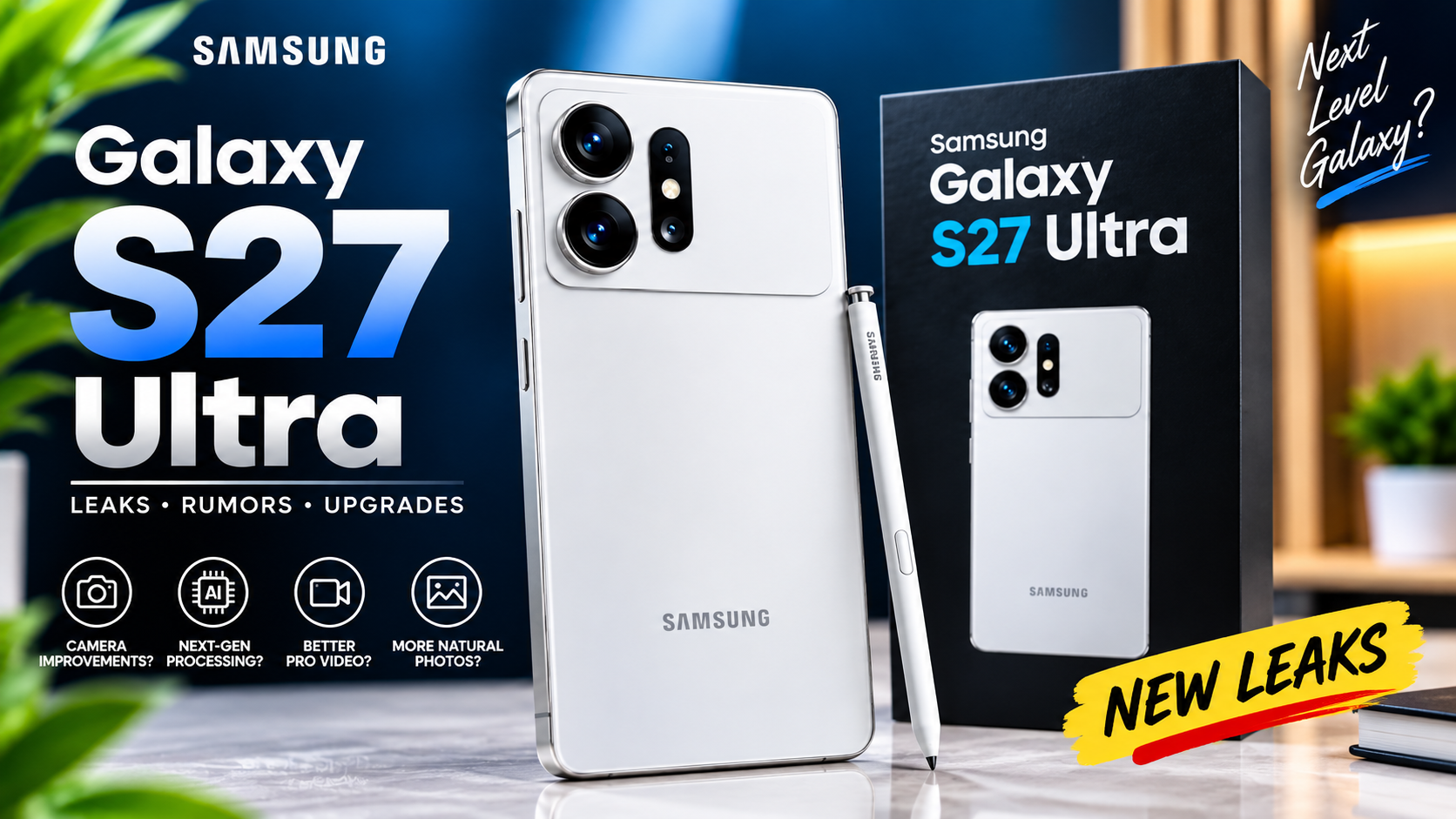
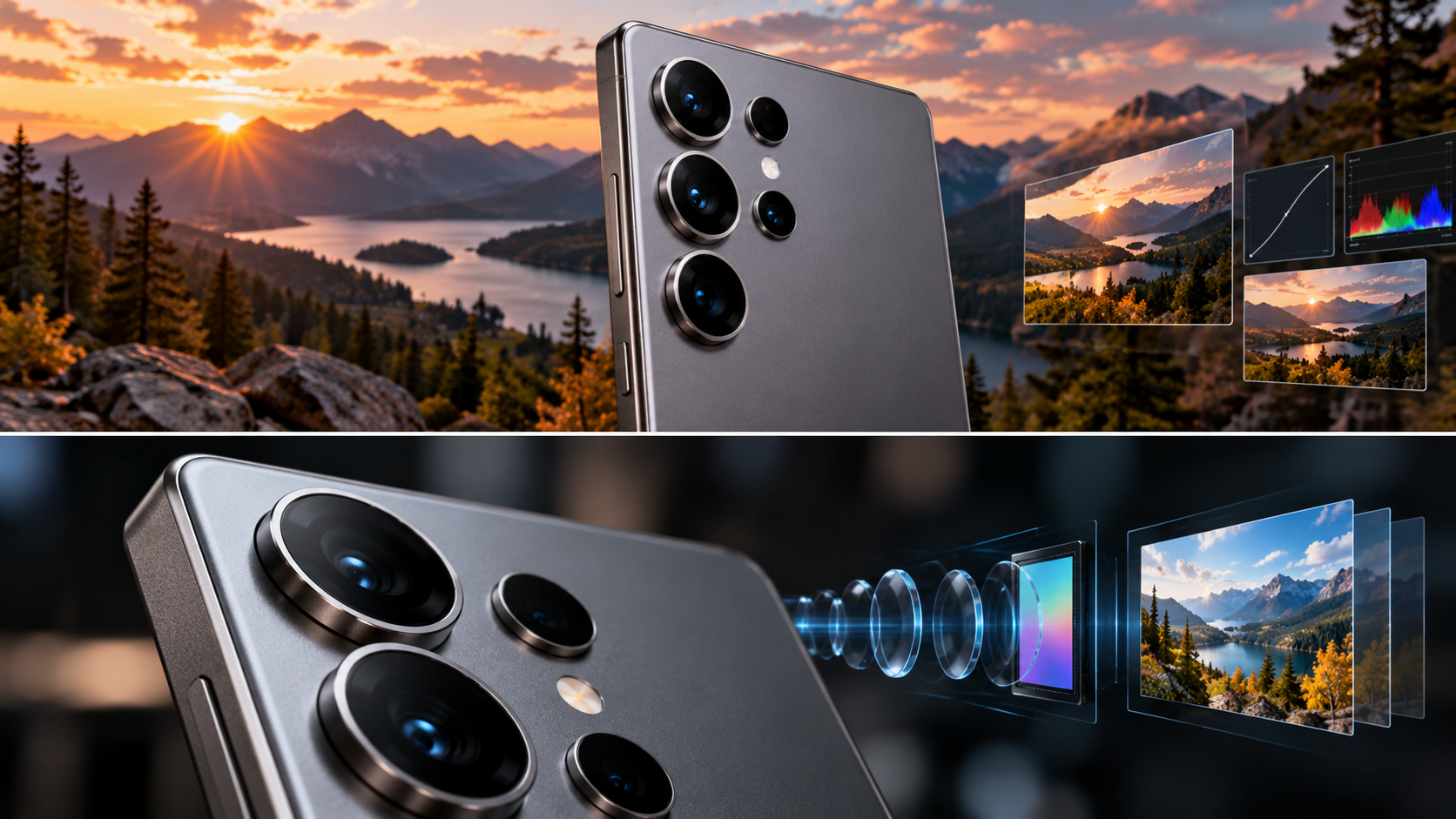
Samsung’s Galaxy S27 Ultra may be getting a camera upgrade that is less about headline resolution and more about how photos and video actually look. A fresh leak claims Samsung is revising its image-processing pipeline to produce warmer, more natural-looking photos while also updating Samsung Log and the APV professional video codec for improved dynamic range.

The claims are interesting because they suggest Samsung could focus on computational photography and professional video tools even as some familiar camera hardware remains in place. However, the newest processing details come from a relatively unknown source, so they should be treated as an early rumor rather than a finalized specification.

A New Image-Processing Direction for the Galaxy S27 Ultra

A New Image-Processing Direction for the Galaxy S27 Ultra

According to reporting from Android Authority and SamMobile, the Galaxy S27 Ultra is rumored to use a revised image-processing pipeline aimed at warmer and more natural color rendering. The current Galaxy S26 Ultra can lean cooler in some scenes, so a deliberate shift in color science could be noticeable even without a dramatic change in megapixel counts.

The leak also points to wider dynamic range. That could matter in difficult scenes such as sunsets, bright windows, backlit portraits, and landscapes where a phone has to preserve highlight detail without crushing darker areas. If Samsung combines improved processing with the other rumored sensor changes, the result could be a more meaningful camera upgrade than the specification sheet alone suggests.

Samsung Log and APV Could Get Better Too

Video is another part of the rumor. Samsung is said to be updating both Samsung Log and APV, or Advanced Professional Video. The goal is reportedly improved dynamic range rather than higher headline recording resolutions. Current reporting still points to 4K recording at up to 120 frames per second and 8K at 30 frames per second.

That would fit Samsung’s recent direction. Samsung Log gives creators a flatter image with more flexibility for color grading, while APV is designed for higher-quality professional workflows. Better dynamic range in those formats could be particularly useful for creators who want more control over highlights, shadows, and color in post-production.

For users who simply record family videos or quick clips, these changes may not be as obvious as a new zoom lens. For creators, however, improvements to Log, codec quality, and dynamic range can have a much larger effect on how far footage can be pushed during editing.

The 5x Telephoto Rumor Has Changed Again

This processing leak arrives while the Galaxy S27 Ultra’s zoom-camera story is also changing. Earlier rumors suggested Samsung was testing a larger 50MP 4x telephoto camera that could potentially replace the familiar 5x unit. More recent information from long-time Samsung leaker Ice Universe disputes that claim.

According to that newer report, Samsung is expected to retain a 5x periscope telephoto camera using a 1/2.52-inch sensor. Android Authority notes that this would be similar in size to the 5x hardware used in recent Galaxy Ultra models. The dedicated 3x telephoto is still rumored to be at risk of disappearing, although Samsung has not confirmed the final camera configuration.

That distinction matters. If Samsung keeps familiar 5x hardware, improvements to processing, color, HDR, and computational zoom become even more important. A camera system does not have to replace every sensor to improve, but Samsung would need its software pipeline to deliver visible gains.

How Credible Is This Leak?

The safest way to read the latest information is to separate the claims by source. The warmer color processing and updated Log/APV details were attributed to WalleGalaxy, an account Android Authority describes as relatively unknown. That makes those specific claims lower-confidence for now.

The 5x telephoto information has somewhat stronger sourcing because it comes from Ice Universe, who has a long history of Samsung-related leaks. Even so, it remains unofficial information about an unreleased phone, and Samsung could still change hardware or software before mass production.

There is also disagreement among current reports about the broader rear-camera layout. Some reports describe a move from four rear cameras to three, while others continue to reference a four-camera setup. Until multiple reliable sources converge—or Samsung announces the device—those details should not be treated as settled.

Why This Could Matter More Than Another Megapixel Increase

Smartphone cameras increasingly depend on the entire imaging pipeline: sensor data, HDR capture, noise reduction, sharpening, white balance, color mapping, and computational fusion. A phone can use excellent hardware and still produce disappointing results if the processing is too aggressive or inconsistent.

That is why the rumored move toward warmer, more natural color could be important. Samsung does not necessarily need every image to look warmer; consistency and believable skin tones are more valuable than simply changing the color temperature. The real question will be whether the company can preserve its punchy Galaxy look while producing more natural results when a scene calls for it.

For video, expanded dynamic range in Log and APV could similarly be more useful than another resolution increase. Many creators already have enough resolution at 4K. What they often need is cleaner tonal information, better highlight retention, and footage that grades predictably.

What We’re Watching Next

The next meaningful evidence would be corroboration from established Samsung sources, firmware or camera-app findings, supply-chain information, or early hardware samples. We will also be watching whether the rumored three-camera layout gains stronger support and whether Samsung really removes the dedicated 3x telephoto.

For now, the most interesting possibility is that the Galaxy S27 Ultra camera upgrade may be as much about image quality and creator tools as it is about new hardware. If the processing leak proves accurate, Samsung could be preparing a more natural photo style and a stronger professional-video workflow for its next Ultra flagship.

Sources

Android Authority — Samsung could give the Galaxy S27 Ultra a major camera processing upgrade

SamMobile — Galaxy S27 Ultra camera could have warmer colors and a wider dynamic range

Android Authority — Could Galaxy S27 Ultra bring zoom camera upgrades? New leak has bad news

Gadgets 360 — Samsung Galaxy S27 Ultra Could Get New Image Processing for More Natural Photos

10 Beautiful Fall Road Trips in the U.S. for 2026: Where to See the Best Autumn Colors

Fall road trips have a special kind of magic. Cooler temperatures make long drives more comfortable, summer crowds begin to thin, and forests across the United States turn into sweeping landscapes of red, orange, gold, and yellow. The challenge is timing your trip well: peak color can shift from year to year depending on elevation, latitude, temperature, rainfall, and local weather.

If you are planning an autumn getaway in 2026, these ten routes offer a mix of mountain scenery, national parks, lakeshores, small towns, and classic American highways. Instead of treating peak foliage dates as guarantees, use the timing below as a planning window and check local foliage reports shortly before leaving.

1. Blue Ridge Parkway — Virginia and North Carolina

Few American roads are as closely associated with fall as the Blue Ridge Parkway. The route winds through the Appalachian Mountains between Virginia and North Carolina, giving travelers repeated overlooks, forested ridges, hiking opportunities, and access to communities throughout the region.

The National Park Service highlights the Blue Ridge Parkway as one of the country’s standout places for autumn color. Because the parkway covers a long distance and major changes in elevation, color does not peak everywhere at once. That can actually help road trippers: if one elevation has passed peak, another part of the route may still be approaching its best color.

Best for: Mountain overlooks, photography, hiking, and a multi-day scenic drive.

2. Skyline Drive and Shenandoah National Park — Virginia

Skyline Drive runs through Shenandoah National Park and is one of the easiest ways to experience a broad Appalachian fall landscape from the car. The National Park Service describes Shenandoah as particularly well known for fall color, with views across valleys and forested mountains.

Build extra time into the drive. The best experience is not simply reaching the other end; it is stopping at overlooks, taking a short trail, and watching the landscape change as the road gains and loses elevation. Travelers coming from the Washington, D.C. region can also turn Shenandoah into a manageable weekend road trip.

Best for: A weekend getaway, panoramic overlooks, and easy access from the Mid-Atlantic.

3. Great Smoky Mountains — Tennessee and North Carolina

Great Smoky Mountains National Park combines dense forests, mountain roads, streams, and one of the most diverse fall landscapes in the Southeast. The National Park Service specifically recommends autumn drives and hikes in the park, including options that can help visitors explore beyond the busiest areas.

Elevation matters here. Higher areas can begin changing earlier while lower valleys often hold their color later. That extended transition gives travelers a wider opportunity to see foliage than a destination where everything changes at roughly the same time.

Best for: Families, mountain drives, hiking, and combining scenery with a longer Tennessee or North Carolina trip.

4. Kancamagus Highway — New Hampshire

New Hampshire’s Kancamagus Highway, often called “the Kanc,” is a classic New England foliage drive through the White Mountains. Visit New Hampshire describes the scenic stretch as 34.5 miles long and warns that there are no gas stations along the route and little to no cell service in places.

The drive can be completed quickly when traffic is light, but peak foliage season can dramatically increase travel time. Fill the tank before entering the route, download offline maps, and leave enough time for overlooks and short walks rather than trying to rush through.

Best for: Classic New England color, mountain scenery, and a compact one-day road trip.

5. Acadia National Park and Park Loop Road — Maine

Acadia offers something different from an inland forest drive: autumn foliage alongside lakes, granite mountains, and the Maine coast. The National Park Service says the park’s 27-mile Park Loop Road passes forests, lakes, mountains, shoreline scenery, overlooks, picnic areas, and trailheads.

A fall trip can combine the loop with stops around Jordan Pond, Otter Point, and other well-known areas. Check current park conditions and any vehicle-reservation requirements that apply to specific destinations before traveling.

Best for: Coastal scenery, photography, hiking, and travelers who want fall color plus ocean views.

6. Rocky Mountain National Park — Colorado

Colorado’s autumn palette is different from the dense red-and-orange forests of the East. In Rocky Mountain National Park, golden aspens stand out against evergreens and high mountain terrain. The National Park Service notes that fall color progresses down the mountains from higher subalpine areas toward lower elevations.

Weather can change quickly in the Rockies, particularly as autumn advances. Check road conditions before setting out, carry layers, and avoid assuming that a warm afternoon at lower elevation means conditions will be the same higher in the park.

Best for: Golden aspens, dramatic mountain backdrops, wildlife viewing, and high-elevation scenery.

7. M-22 and the Leelanau Peninsula — Michigan

Michigan is easy to overlook when planning a national fall road trip, but its combination of hardwood forests and Great Lakes shoreline makes it a strong autumn destination. Pure Michigan highlights M-22 along the Leelanau Peninsula for its fall color and glimpses of Lake Michigan.

Michigan’s color generally progresses from north to south, with the Upper Peninsula changing before much of the Lower Peninsula. That makes a current foliage map especially useful when deciding exactly where to drive. M-22 works well for travelers who want colorful roads without giving up lake views and small-town stops.

Best for: Great Lakes scenery, small towns, shoreline drives, and Midwest road trips.

8. Natchez Trace Parkway — Mississippi, Alabama, and Tennessee

For a slower-paced Southern fall drive, the Natchez Trace Parkway offers a long corridor through Mississippi, Alabama, and Tennessee. The National Park Service recommends the parkway for its crimson foliage and autumn atmosphere.

This is a good choice for travelers who prefer a road-trip experience built around the journey itself. Rather than chasing a single famous viewpoint, plan a series of short stops and allow the route’s forests and historic landscape to set the pace.

Best for: Relaxed driving, Southern scenery, and travelers who prefer a less mountainous route.

9. Guadalupe Mountains National Park — Texas

Texas may not be the first state that comes to mind for fall foliage, but Guadalupe Mountains National Park gives Texans a late-season option. According to the National Park Service, leaves in the Guadalupe Mountains usually begin changing from mid-October through mid-November, making the park one of the later opportunities on this list.

For travelers starting in Texas, it can also be an appealing alternative to flying across the country just to see autumn color. Remember that this is rugged desert-and-mountain country, so check trail, weather, water, and road information before departure.

Best for: Texas road trippers, late-season color, hiking, and desert-meets-mountain scenery.

10. A Michigan Upper Peninsula Fall Drive

If you want a longer northern adventure, Michigan’s Upper Peninsula can deliver an entirely different scale of fall scenery. Pure Michigan notes that color arrives earlier in the Upper Peninsula than in the Lower Peninsula and highlights routes such as the Black River National Forest Scenic Byway near Lake Superior.

The Upper Peninsula is best treated as a multi-day trip rather than a quick drive. Distances can be substantial, weather can shift, and the temptation to stop for waterfalls, lake views, forest roads, and overlooks will slow you down — in a good way.

Best for: Multi-day adventures, waterfalls, Lake Superior scenery, and travelers who want to get away from major cities.

When Is the Best Time for a Fall Road Trip?

There is no single nationwide peak-foliage week. Northern destinations and high elevations generally begin changing earlier, while southern and lower-elevation destinations can hold color later. New Hampshire’s official foliage guidance says northern parts of the state historically begin showing color around mid-September, with the White Mountains following later in September. In Texas, the National Park Service says Guadalupe Mountains typically changes much later, from roughly mid-October into mid-November.

For 2026, treat historical timing as a starting point rather than a promise. Check an official park page, state tourism foliage tracker, road conditions, and the weather forecast during the week before your trip.

What to Pack for a Fall Road Trip

Autumn road trips can involve warm afternoons, cold mornings, rain, wind, and occasionally early snow at higher elevations. A few practical items can make the drive easier:

• A reliable phone mount for navigation

• A USB-C car charger or portable power bank

• Refillable water bottles and a small travel cooler

• A compact first-aid and roadside emergency kit

• Layers, including a light insulated jacket and rain shell

• Comfortable walking or hiking shoes

• A flashlight or headlamp

• Offline maps for areas with weak cellular coverage

If you are building your road-trip kit, check current travel essentials on Amazon before you leave. Prices and availability can change, so compare options based on your vehicle, trip length, and destination.

How to Make the Most of Your Fall Drive

Start early. Popular foliage routes can become crowded by late morning, especially on weekends. Sunrise and early-morning light can also produce some of the best photography.

Download maps before leaving reliable cellular coverage, keep the fuel tank comfortably above empty, and avoid stopping on road shoulders unless parking is explicitly permitted. Use designated overlooks and pullouts instead.

Most importantly, keep your itinerary flexible. Fall color is a natural event, not a scheduled attraction. A route that is slightly before or after peak can still be beautiful, and changing your elevation or driving an hour north or south may completely change what you see.

Final Thoughts

The best fall road trip is not necessarily the route with the most famous foliage. It is the one that fits your timing, driving distance, preferred scenery, and available days. The Blue Ridge Parkway and Shenandoah deliver classic Appalachian views; the Kancamagus Highway and Acadia provide a quintessential New England experience; Rocky Mountain National Park brings golden aspens and dramatic peaks; Michigan mixes hardwood color with Great Lakes scenery; and Guadalupe Mountains gives Texas travelers a later-season option.

Choose a route, watch the local foliage reports, and leave room in the schedule for unexpected stops. In autumn, the detours are often the part of the trip you remember most.

Sources

National Park Service — Autumn in National Parks

Visit New Hampshire — Ultimate NH Fall Foliage Road Trip Guide

National Park Service — Acadia Park Loop Road

Pure Michigan — Fall Color in Pure Michigan

Pure Michigan — Beautiful Places in Michigan to Visit in the Fall

Samsung One UI 9 Rollout Begins for Galaxy S26 Series: What’s New and What to Expect

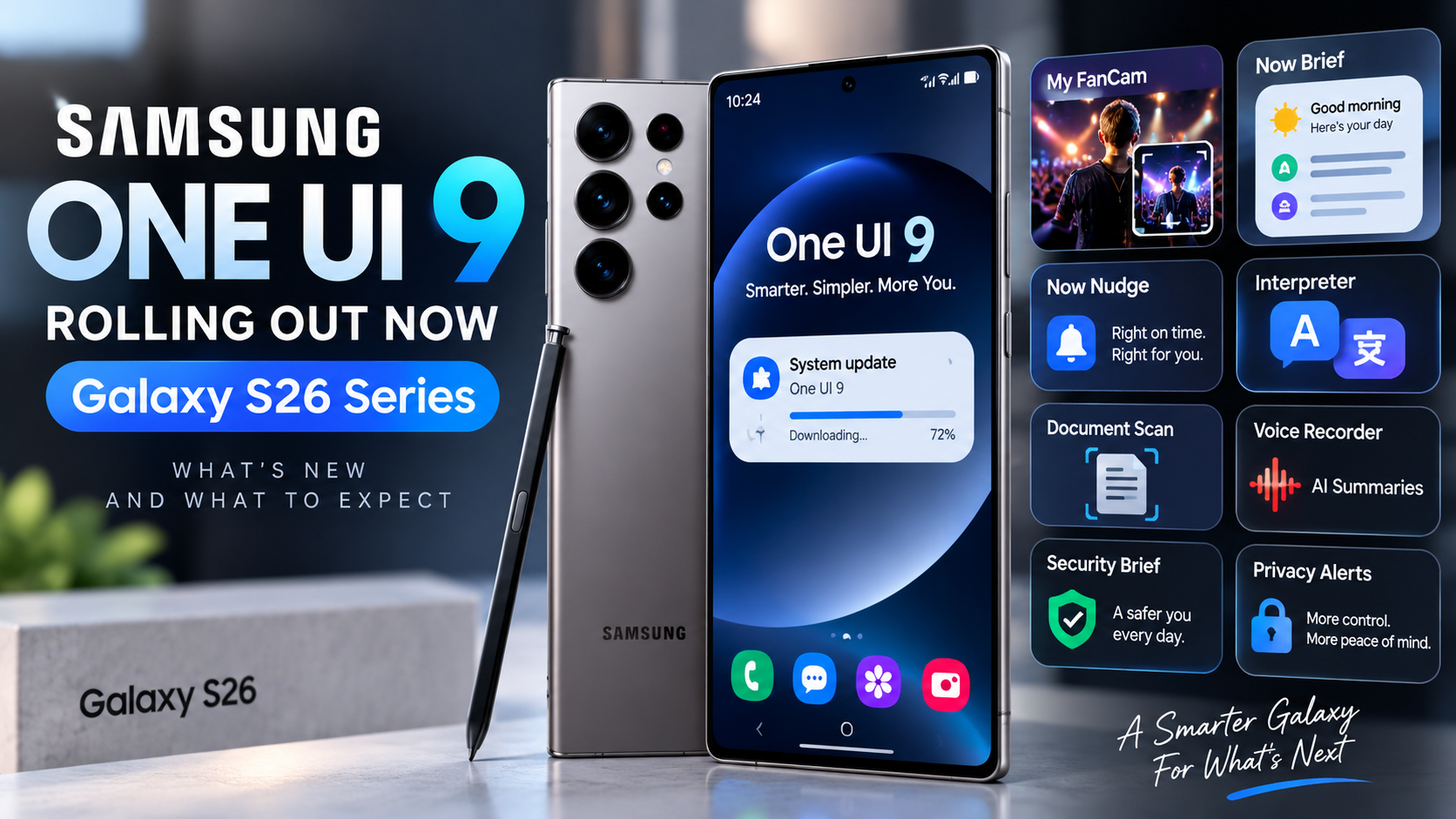
Samsung has officially started rolling out One UI 9 to the Galaxy S26 series, marking the next major software update for its flagship phones. The rollout began September 16 with the Galaxy S26, Galaxy S26+, and Galaxy S26 Ultra, after One UI 9 first appeared on Samsung’s newest foldables.

For Galaxy S26 owners, this is more than a visual refresh. Samsung is emphasizing smarter Galaxy AI tools, more personalized daily information, easier device-care controls, and new privacy and communication features. Availability can still vary by market, carrier, language, and device, so some users may receive the update later than others.

What’s New in One UI 9?

One UI 9 expands Samsung’s AI-assisted experience while trying to make everyday tasks require fewer steps. Several of the most notable additions focus on video, personalized information, device support, translation, privacy, and contextual suggestions.


My FanCam Makes Recorded Video Easier to Reframe

My FanCam can automatically track a selected person in a recorded video and intelligently reframe the footage to keep that person centered as the scene changes. Samsung positions the feature as a way to turn performances, sports moments, family videos, and other moving scenes into more shareable clips with less manual editing.

For creators and parents who frequently record moving subjects, this could be one of the more immediately useful One UI 9 additions.

Now Brief Gets More Personal

Samsung is also expanding Now Brief with generative and editable cards. Users can choose more of the information that appears in their daily brief and create cards around areas such as health, weather, and video.

The goal is to make Now Brief feel less like a fixed information feed and more like a personalized dashboard built around what each user actually wants to see.

Now Nudge Adds Contextual Suggestions

Now Nudge is designed to surface useful actions based on what is happening on the phone. Depending on supported apps, language, and region, it can provide contextual suggestions involving messages, photos, and multitasking.

As with many Galaxy AI features, Samsung notes that availability and functionality can differ by region, language, device model, and supported application.

Interpreter and Communication Improvements

One UI 9 continues Samsung’s focus on translation and cross-language communication. Interpreter improvements are intended to make conversations across supported languages easier, although language packs, Samsung Account requirements, and regional availability can affect which capabilities are available.

Document Scan and Productivity Tools

Samsung is also improving tools that help users capture and work with information. Document scanning and related productivity features can reduce the friction involved in turning physical documents into usable digital content.

For users who rely on their Galaxy phone for work, school, receipts, forms, or travel documents, these smaller workflow improvements may be just as valuable as the headline AI features.

Warranty and Care Moves Into Settings

One UI 9 brings device support and protection information directly into the Settings menu. Samsung says users can check warranty coverage for connected mobile devices, run self-diagnostics, view repair estimates where available, manage Samsung Care+, and schedule service with fewer steps.

This is a practical improvement because support information no longer needs to feel separated from the device-management experience.

Privacy Alerts Add Another Layer of Awareness

Privacy Alerts are designed to help users notice potentially unusual background permission activity. Samsung says these alerts can surface through Now Brief on supported devices.

The feature does not replace normal permission management, but it can provide another signal when an app’s behavior may deserve attention. Samsung cautions that Privacy Alerts may not account for every relevant factor.

Scam Detection Expands in Supported Markets

Samsung is also expanding Scam Detection to additional countries and languages. The feature is intended to help identify potentially fraudulent calls in supported markets. Availability remains region-dependent, so it should not be assumed that every One UI 9 device will receive identical scam-protection capabilities at the same time.

Which Phones Get One UI 9 First?

Samsung’s official September 16 announcement says the rollout starts with:

One UI 9 previously debuted on the Galaxy Z Fold8 Ultra, Galaxy Z Fold8, and Galaxy Z Flip8. Samsung says the update will gradually expand to additional Galaxy devices, with timing varying by market and model.

Should Galaxy S26 Owners Update Immediately?

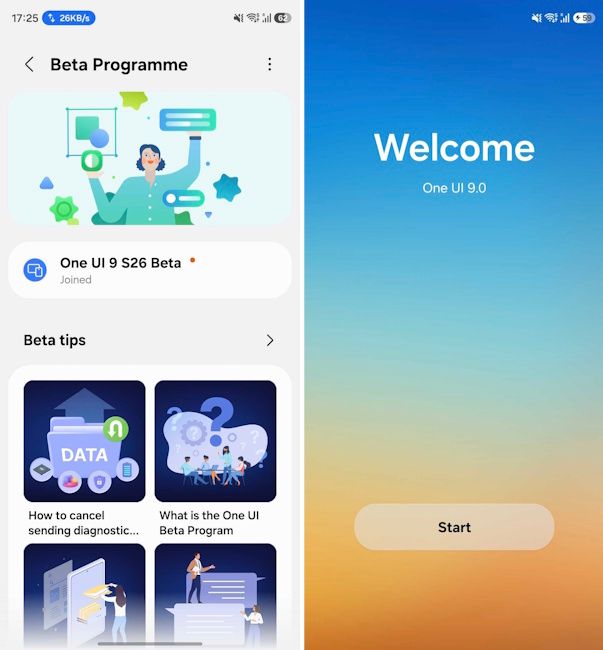
For most users, the official stable rollout is the version to watch for rather than installing unofficial software. Because Samsung distributes updates progressively, not seeing One UI 9 immediately does not necessarily mean anything is wrong with your phone.

Galaxy S26 owners can check Settings > Software update > Download and install. Before installing a major operating-system update, it is also sensible to back up important data and make sure the phone has sufficient battery and storage available.

What One UI 9 Means for Samsung’s Galaxy Strategy

One UI 9 shows Samsung continuing to move Galaxy AI from individual novelty features toward tools that appear throughout everyday phone use. My FanCam targets content creation, Now Brief and Now Nudge focus on personalized assistance, while Warranty and Care and Privacy Alerts address device management and trust.

The more important question will be how consistently these features work across languages, regions, carriers, and older Galaxy hardware as the rollout expands. Some One UI 9 capabilities have specific device or market requirements, so the experience on an S26 Ultra may not be identical to every Galaxy phone that receives the update later.

The Bottom Line

The Galaxy S26 series is at the front of Samsung’s wider One UI 9 rollout. The update combines new Galaxy AI capabilities with practical improvements to video editing, daily information, communication, device care, privacy, and security.

If you own a Galaxy S26, S26+, or S26 Ultra, watch the Software update section over the coming days as availability expands. ReaderSpice will continue following the rollout as One UI 9 reaches more Galaxy devices and Samsung reveals additional regional details.

Looking for the Galaxy S26 Ultra? Check the current price on Amazon (affiliate link).

Sources

Samsung Global Newsroom — Samsung Begins Official Rollout of One UI 9, Bringing the Latest Galaxy Experiences to More Devices

Samsung Mobile Press — One UI 9 Official Rollout

DJI Osmo Pocket 4P vs Insta360 Luna Ultra: The Dual-Lens Pocket Camera War Is Here

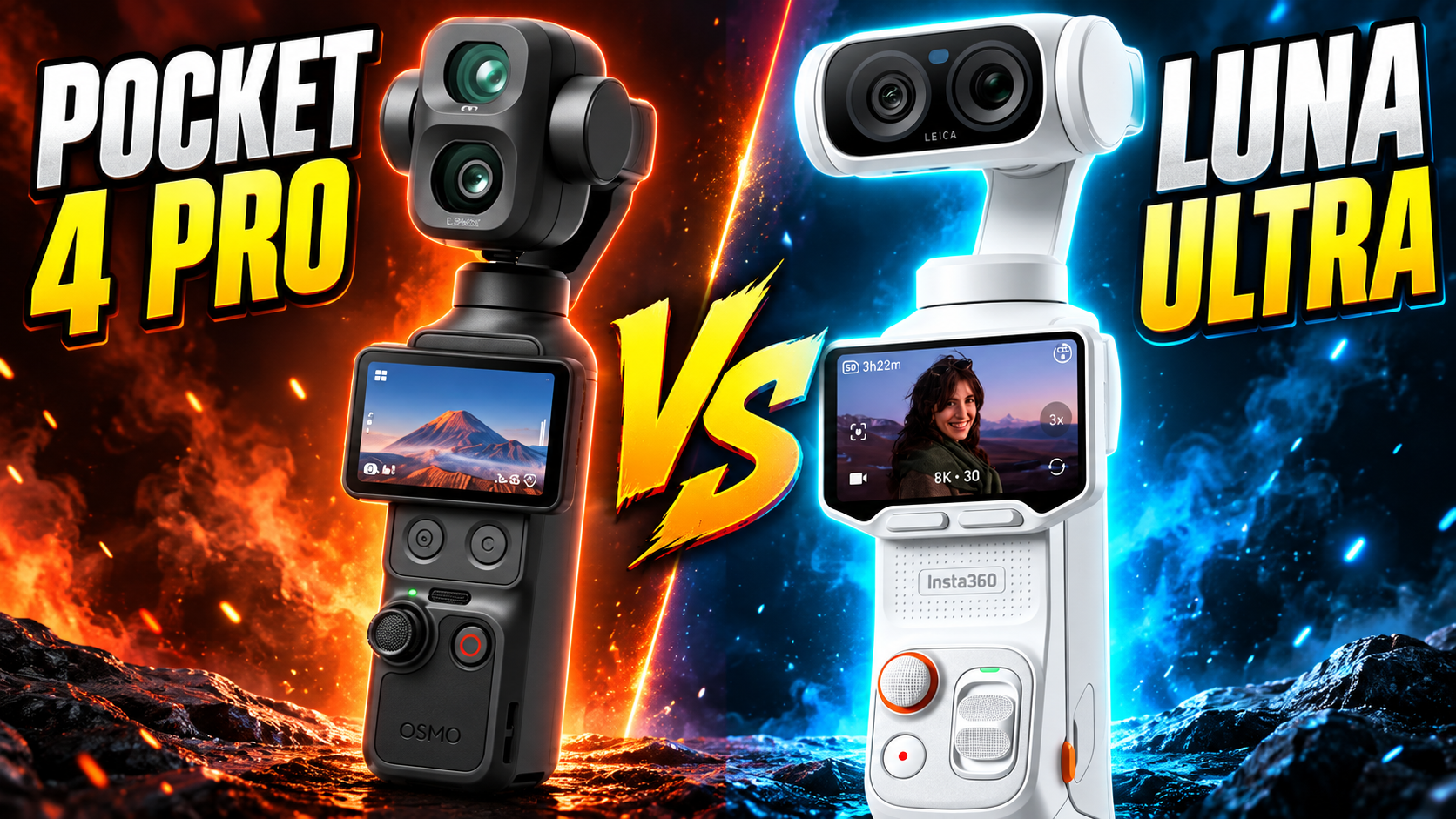
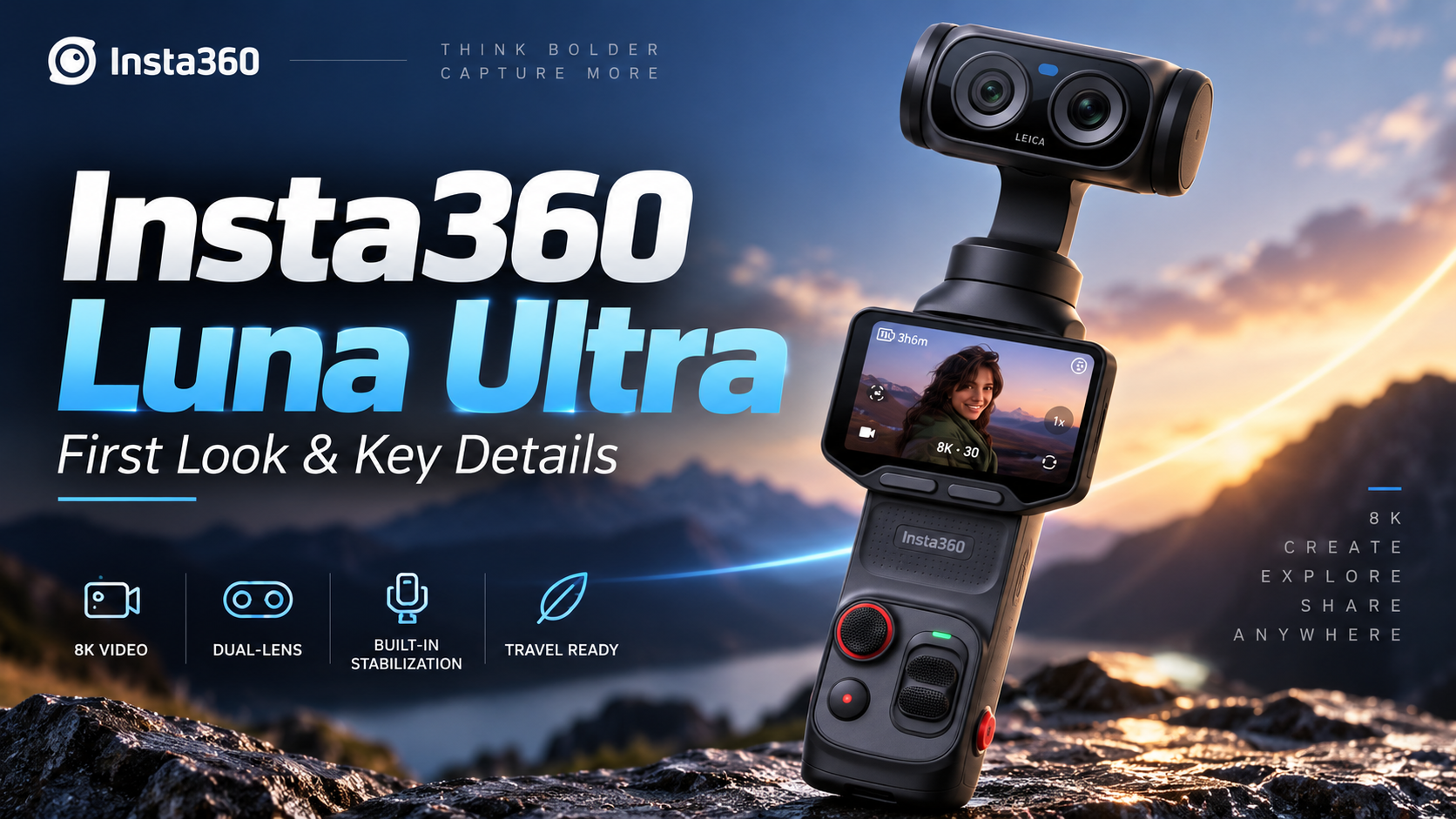
DJI and Insta360 are now fighting for the same creator with two of the most ambitious pocket gimbal cameras yet. The DJI Osmo Pocket 4P doubles down on cinematic 4K, extreme dynamic range, fast slow motion and DJI’s tracking ecosystem, while the Insta360 Luna Ultra pushes the category toward 8K, Leica optics, a detachable monitoring screen and a more flexible remote-shooting workflow.

Both cameras use a 1-inch main sensor, both add a dedicated 60mm-class telephoto camera, both have three-axis mechanical stabilization, and both are built for creators who want more than a phone without carrying a mirrorless camera and separate gimbal.

The similarities stop there. DJI and Insta360 made very different choices around resolution, color workflow, storage, screen design and creator features. Here is how the Osmo Pocket 4P and Luna Ultra compare based on current official specifications and announced features.

Quick Comparison: Two Dual-Lens Cameras, Two Different Priorities

DJI Osmo Pocket 4P: 1-inch wide camera, 1/1.28-inch 60mm med-tele camera, up to 17 stops of dynamic range in supported D-Log 2 shooting, 4K up to 240fps on the wide camera, ActiveTrack 8.0, 103GB built-in storage and up to 210 minutes of rated operating time.

Insta360 Luna Ultra: 1-inch 8K main camera, 1/1.3-inch 60mm telephoto camera, Leica Summicron optics, 8K30, 4K120, 10-bit I-Log, detachable 2-inch OLED monitoring screen, 47GB internal storage plus microSD expansion up to 2TB, and up to 240 minutes of rated battery life under Insta360’s laboratory conditions.

Camera Hardware: Surprisingly Similar on Paper

Image: DJI Osmo Pocket 4P official Cannes preview image. Source: DJI.

The basic camera layouts are remarkably close. DJI uses an all-new 1-inch CMOS wide-angle camera with a 20mm-equivalent f/2.0 lens and pairs it with a 1/1.28-inch 60mm-equivalent med-tele camera with an f/1.8 aperture. DJI says the wide camera can deliver up to 17 stops of dynamic range in its supported D-Log 2 workflow.

Luna Ultra also uses a 1-inch main camera, but its main Leica Summicron lens is slightly faster at f/1.8. Its secondary 60mm-equivalent telephoto camera uses a 1/1.3-inch sensor and an f/2.0 aperture. The difference in telephoto sensor size is small on paper, so real-world image processing, autofocus, highlight handling and low-light performance will matter more than the fractionally different sensor dimensions.

Both systems give creators a true wide-to-telephoto jump without swapping lenses. That is a major change for pocket gimbal cameras, which historically relied heavily on digital cropping once users wanted a tighter frame.

Resolution and Slow Motion: 8K vs Extreme 4K Frame Rates

This is one of the clearest differences. Luna Ultra can record 8K 16:9 video at up to 30fps and 4K at up to 120fps. It also supports 10-bit I-Log and Dolby Vision, giving creators both high-resolution capture and a professional grading option.

DJI takes a different route. The Osmo Pocket 4P tops out at 4K rather than 8K, but the wide camera can record 4K slow motion up to 240fps, while the med-tele camera can reach 4K up to 200fps in supported modes. For creators who film sports, action, product sequences or cinematic slow-motion inserts, those frame rates are a major advantage.

So the tradeoff is straightforward: Luna Ultra gives you more resolution for reframing and cropping, while Pocket 4P puts more emphasis on high-frame-rate 4K capture.

Dynamic Range and Color: DJI D-Log 2 vs Insta360 I-Log

DJI is heavily promoting the Osmo Pocket 4P’s new D-Log 2 workflow. DJI says the wide camera can reach up to 17 stops of dynamic range under its stated test conditions, which is unusually ambitious for a camera this small. The goal is to preserve more highlight and shadow information for color grading, especially in high-contrast scenes.

Insta360 counters with 10-bit I-Log on Luna Ultra, along with Dolby Vision and Leica color options. Insta360 lists a maximum video bitrate of 150Mbps and supports 10-bit video across its professional modes. Luna Ultra’s Leica partnership also gives it a distinctive color-science story that may appeal to creators who want attractive footage without always doing a heavy grade.

The important detail is that spec-sheet dynamic range and real usable dynamic range are not always the same thing. Independent side-by-side testing will still matter for skin tones, highlight roll-off, shadow noise and matching the wide and telephoto cameras.

Zoom and Telephoto: Both Reach 12x, but Differ in Approach

Both cameras are built around a 20mm wide view and a 60mm telephoto view, giving a natural 1x-to-3x optical jump. DJI advertises up to 12x zoom and ActiveTrack support at high zoom levels. The dedicated 60mm f/1.8 camera is particularly aimed at portraits and compressed-background shots.

Luna Ultra also reaches up to 12x in supported 4K modes and offers up to 6x Clarity Zoom. Its 8K mode supports zoom from 1x to 6x, and the second camera is central to Insta360’s five-focal-length shooting concept.

For creators who regularly film people, stages, street scenes or distant travel details, both cameras are far more flexible than a traditional single-lens pocket gimbal.

Screen and Solo-Creator Workflow: Luna Ultra Has the More Radical Design

Image: Insta360 Luna Ultra product configuration. Source: Metapod product listing (manufacturer product image).

DJI keeps a conventional integrated 2-inch OLED display on the Pocket 4P. That should feel familiar to anyone coming from the Pocket 3 or Pocket 4, and it keeps the camera simple and self-contained.

Luna Ultra does something much more unusual: its 2-inch OLED touchscreen can detach from the camera and operate as a remote monitor and controller. The detachable screen also has its own microphone. For a one-person production setup, that can be extremely useful when the camera is across the room, on a tripod, attached to a rig or positioned somewhere that makes a fixed screen hard to see.

For travel vlogging and handheld shooting, DJI’s simpler integrated design may be more straightforward. For solo creators who frequently film themselves from a distance, Insta360’s detachable screen can fundamentally change the workflow.

Tracking and Stabilization

Both cameras use three-axis mechanical gimbals, so neither relies only on electronic stabilization. DJI combines its gimbal with ActiveTrack 8.0 and specifically promotes subject tracking even at longer zoom settings.

Insta360 also provides intelligent tracking and framing features on Luna Ultra, including multi-person tracking and remote monitoring through the detachable display. Both are clearly designed for creators who work without a second camera operator.

Storage: DJI Gives More Built In, Insta360 Gives More Expansion

Osmo Pocket 4P includes 103GB of built-in storage according to DJI’s current product comparison information. That is a major convenience when you want to start recording immediately without relying on a memory card.

Luna Ultra includes 47GB of internal storage, but it also supports microSD cards up to 2TB. That makes Luna Ultra considerably more expandable for long trips, extended shoots and large 8K projects.

The better approach depends on your workflow: DJI gives you more usable space inside the camera from day one, while Insta360 gives you far more potential capacity through removable media.

Battery and Charging

DJI rates the Osmo Pocket 4P for up to 210 minutes of operation when recording 1080p/24fps under its specified laboratory conditions. DJI also states that the camera can reach 80% charge in about 18 minutes and 100% in about 32 minutes with a compatible PD charger.

Insta360 rates Luna Ultra for up to 240 minutes at 1080p/24fps with the screen and Wi-Fi off under laboratory conditions. It lists about 23 minutes to reach 80% and around 38 minutes for a full charge using a compatible 45W USB-C setup.

These battery numbers are not directly representative of demanding 4K120, 4K240 or 8K recording, so creators should expect shorter real-world endurance in high-resolution, high-frame-rate modes.

Size and Weight

DJI lists the Osmo Pocket 4P at about 230 grams. Insta360 lists Luna Ultra at approximately 233 grams in Cosmic Black and 235 grams in Stellar White. In practical terms, they are in the same weight class.

That makes this comparison especially interesting: both companies have managed to fit two cameras, a mechanical gimbal and a touchscreen into a device that still weighs well under a typical mirrorless camera body before adding a lens.

Price and Availability

Pricing varies by region. DJI’s regional stores currently list the Osmo Pocket 4P from roughly USD $609 in some markets, while availability and pricing differ by country. Insta360 lists Luna Ultra in the United States at $769.99.

That gives DJI a lower entry price in markets where both are officially sold, but regional availability is important and buyers should check the current local store before comparing purely on price.

Shop Insta360 Luna Ultra on Amazon

ReaderSpice may earn a commission from qualifying purchases made through this affiliate link, at no additional cost to you.

Which One Fits Your Workflow?

The Osmo Pocket 4P makes the strongest case for creators who prioritize high-frame-rate 4K, maximum dynamic-range potential, DJI’s tracking ecosystem, substantial built-in storage and a more conventional pocket-camera workflow.

Luna Ultra stands out for creators who want 8K capture, Leica optics, a detachable monitoring screen, expandable storage and a remote-shooting design built around solo production. Its 8K resolution also gives more room for reframing in post, while the detachable screen is genuinely different from DJI’s approach.

Neither camera is simply a copy of the other. DJI is leaning toward compact cinematic performance and speed; Insta360 is leaning toward resolution, flexible monitoring and creator-oriented hardware experimentation. That makes this one of the most interesting pocket-camera matchups of 2026.

Sources

DJI — Osmo Pocket 4P Product Page

DJI — Osmo Pocket 4P Official Cannes Announcement

DJI — Osmo Pocket 4P / Pocket Series Comparison

DJI Support — Osmo Pocket 4P Charging and Battery Information

Insta360 — Luna Ultra Hardware Specifications

Insta360 — Luna Ultra Photo & Video Specifications

Insta360 — Luna Ultra Official Announcement

Digital Camera World — DJI Osmo Pocket 4P vs Insta360 Luna Ultra Comparison

Insta360 Luna Ultra: Dual-Lens Leica Gimbal Camera Brings 8K, Telephoto Zoom and a Detachable Screen

Insta360 has entered the premium pocket-gimbal camera fight with the Luna Ultra, a Leica co-engineered dual-lens camera aimed at creators who want stabilized video, serious zoom flexibility, and high-resolution recording without carrying a mirrorless camera and separate gimbal.

Announced on June 10, 2026, the Luna Ultra combines a 1-inch main camera with a 1/1.3-inch telephoto camera, Leica Summicron optics, 8K recording, a detachable OLED touchscreen and three-axis mechanical stabilization. U.S. pricing starts at $769.99.

Image: Insta360 Luna Ultra in Stellar White. Source: CANEX product listing (manufacturer product image).

Why the Dual-Camera Design Matters

The Luna Ultra’s biggest distinction is its two-camera system. The main camera uses a 1-inch sensor with an f/1.8 lens and a 20mm-equivalent focal length, while the telephoto camera uses a 1/1.3-inch sensor with an f/2.0 lens and a 60mm-equivalent focal length.

That second camera gives creators more framing flexibility than a typical single-lens pocket gimbal. Insta360 lists up to 12x zoom for supported photo and video modes, including up to 6x Clarity Zoom. In 8K video, zoom is available from 1x to 6x, while supported 4K modes can extend to 12x.

8K Video, 4K120 and 10-Bit Recording

The Luna Ultra can record 8K 16:9 video at up to 30fps and 4K 16:9 video at up to 120fps. It also supports 10-bit video, Dolby Vision and I-Log, giving more flexibility to creators who want either ready-to-share footage or additional latitude for color work in post-production.

For slow motion, the camera supports 4K at up to 120fps and 1080p at up to 240fps. Maximum video bitrate is listed at 150Mbps, with H.265 encoding.

A Detachable Screen Changes How You Can Shoot

Image: Insta360 Luna Ultra Cosmic Black standard bundle and accessories. Source: Metapod product listing (manufacturer product image).

Another standout feature is the detachable 2-inch OLED touchscreen. The screen has a 318 x 564 resolution, 1,000-nit brightness and 60Hz refresh rate. Because it can operate away from the main camera body, it opens up more flexible monitoring and framing possibilities when the camera is positioned somewhere that would normally make its built-in display difficult to see.

The camera includes four microphones in total—three on the main unit and one on the detachable touchscreen remote. That design could be especially useful for solo creators, vloggers and people filming themselves.

Three-Axis Gimbal Stabilization and Creator-Focused Tracking

Unlike electronic-only stabilization, Luna Ultra uses a three-axis mechanical gimbal. Insta360 also pairs the hardware with intelligent tracking features designed to keep a subject framed while the camera moves.

This combination is particularly relevant for walking vlogs, product demonstrations, travel videos and solo creator setups where keeping a subject centered without a second camera operator can make shooting considerably easier.

Storage, Battery and Charging

Luna Ultra includes 47GB of internal storage and also supports microSD cards up to 2TB. USB-C uses USB 3.0 for transfers.

The main unit has a 1,550mAh battery, while the detachable touchscreen remote has its own 210mAh battery. Insta360 rates battery life at up to 240 minutes under its laboratory test conditions at 1080p/24fps with the screen and Wi-Fi turned off. The company lists approximately 23 minutes to reach 80% charge and about 38 minutes for a full charge when using a compatible 45W USB-C charging setup under its test conditions.

One limitation worth noting is environmental protection: Insta360 states that Luna Ultra is not waterproof, splashproof or dustproof. Creators planning beach, rain or dusty outdoor shoots will need to take additional precautions.

Who Is the Insta360 Luna Ultra For?

At $769.99, Luna Ultra is positioned as a premium creator camera rather than an inexpensive pocket camera. Its strongest appeal is likely to be the combination of a large 1-inch main sensor, dedicated telephoto camera, mechanical stabilization, high-resolution video and detachable monitoring screen in one relatively compact system.

For travel creators, vloggers and one-person production setups, the ability to move between wide framing and tighter telephoto shots without changing lenses could be especially useful. The detachable display and tracking tools also address a common problem for solo shooters: monitoring composition while standing away from the camera.

The bigger question for buyers is whether those features justify the premium over simpler single-lens gimbal cameras. For creators who expect to use the telephoto camera, 8K capture and remote-screen workflow regularly, Luna Ultra offers a notably different toolset rather than simply adding incremental specifications.

Price and Availability

Insta360 announced Luna Ultra on June 10, 2026. U.S. pricing starts at $769.99, with availability through the Insta360 Store and other retailers. Configurations and bundle pricing can vary by market.

Shop Insta360 Luna Ultra on Amazon

ReaderSpice may earn a commission from qualifying purchases made through this affiliate link, at no additional cost to you.

Sources

Insta360 — Luna Ultra Hardware Specifications

Insta360 — Luna Ultra Photo & Video Specifications

Insta360 — Luna Ultra Official Announcement

PR Newswire / Insta360 — Luna Ultra Launch Announcement

Apple iPhone Duo vs Samsung Galaxy Z Fold8: Which Foldable Is Right for You?

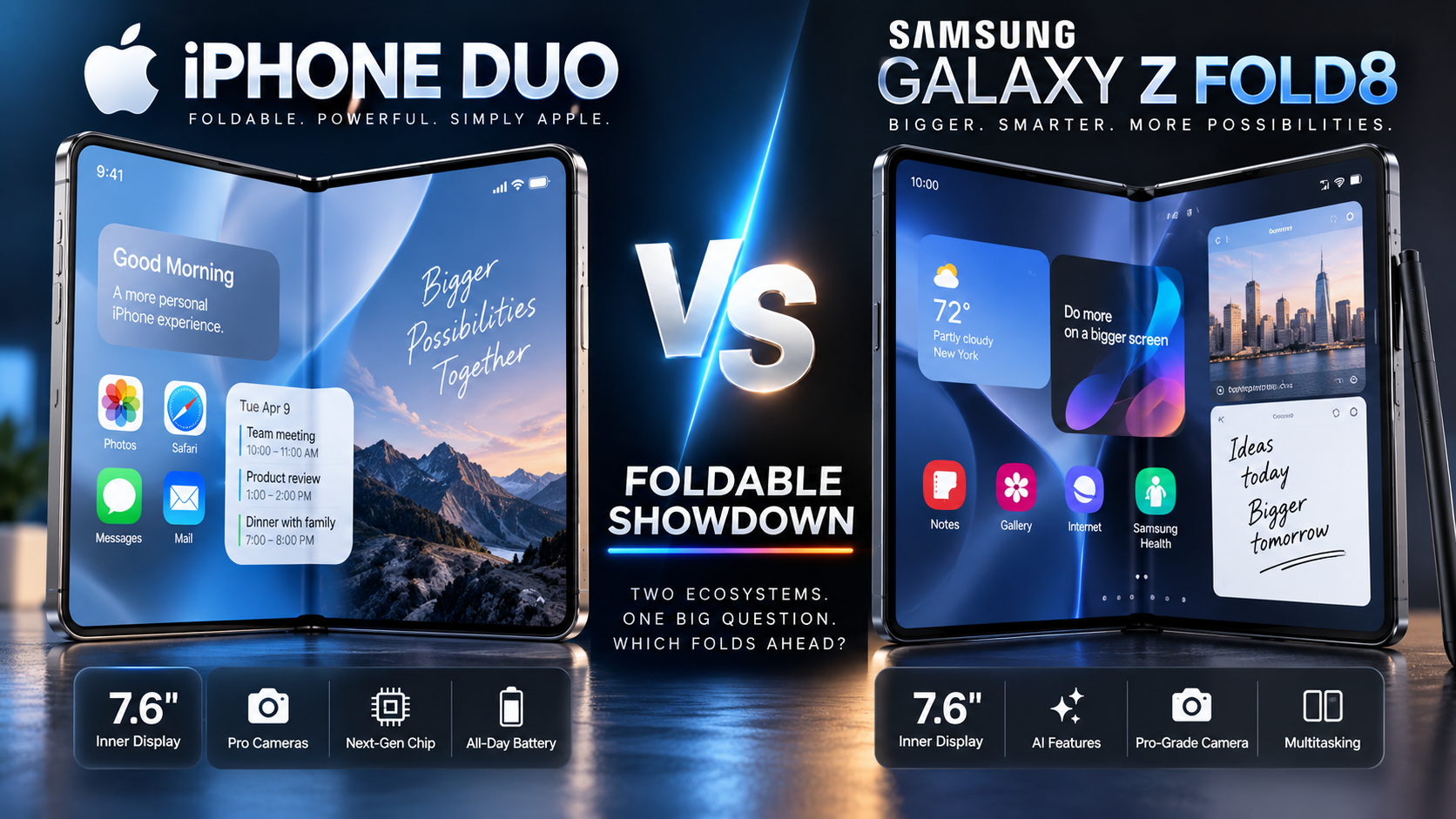
Apple has officially entered the foldable-phone market with the iPhone Duo, putting its first folding iPhone directly against Samsung’s Galaxy Z Fold8. Both use a passport-style book design, both open to a 7.6-inch display, and both target buyers willing to spend flagship-level money for a phone that can become a small tablet.

But these two foldables take noticeably different approaches. Apple emphasizes iOS integration, its A20 Pro chip, Apple Intelligence, Apple Pencil support and continuity between the two displays. Samsung’s Fold8 is dramatically lighter, thinner when unfolded, built around Galaxy AI and Android multitasking, and comes from a company with years of foldable-phone experience.

Here is how the iPhone Duo and Galaxy Z Fold8 compare based on their official specifications and announced features.

Design: Similar Idea, Very Different Weight

The biggest surprise is how similar the basic form factors are. Apple’s iPhone Duo has a 5.4-inch outer display and a 7.6-inch inner folding display. Samsung gives the Galaxy Z Fold8 a 5.5-inch cover display and the same 7.6-inch main-screen size.

The difference becomes much more obvious when you pick up the spec sheet. Samsung says the Galaxy Z Fold8 weighs just 201 grams and measures 4.5 mm thick when unfolded. Apple lists the iPhone Duo at 254 grams and 5.2 mm unfolded.

That makes the Fold8 53 grams lighter. For a device designed to be carried every day, that difference could be meaningful. Apple counters with a grade 5 titanium construction and a precision hinge, while Samsung uses Armor Aluminum, Gorilla Glass, an Armor FlexHinge and its Flex Titanium display reinforcement.

Displays: Both Give You a 7.6-Inch Canvas

Both phones open to a 7.6-inch OLED display with adaptive refresh rates up to 120Hz. Apple’s inner Super Retina XDR panel has a 2670-by-1878 resolution at 430 ppi, while Samsung’s Fold8 uses a 7.6-inch main display designed around a wider 4:3 aspect ratio.

Apple also applies a nano-texture finish to the inner screen to reduce glare. The iPhone Duo supports Apple Pencil (USB-C), which gives Apple an interesting productivity angle for handwritten notes, markup and creative work.

Samsung focuses heavily on side-by-side productivity. Its wide main screen supports Multi Window, and Samsung has spent several generations refining Android apps, drag-and-drop workflows and multitasking for Galaxy Fold devices.

iOS 27 vs Android and Galaxy AI

Software may be the biggest reason to choose one device over the other.

The iPhone Duo ships with iOS 27.1, with Apple redesigning parts of iOS specifically for the foldable form factor. When opened, the Duo can show two Home Screen pages, and Apple has adapted the Dock, navigation controls, Dynamic Island and Live Activities for the larger folding canvas. Content can react as the phone folds, rotates or switches displays.

The Duo also combines Apple Intelligence and Siri AI with the foldable interface. For people already using Macs, iPads, Apple Watches and AirPods, the broader Apple ecosystem may be one of its strongest advantages.

Samsung approaches productivity from the Android side. Galaxy Z Fold8 combines Galaxy AI with Google’s Gemini experiences and Samsung’s mature Multi Window system. Samsung specifically highlights side-by-side productivity and AI workflows on the Fold8’s larger display.

Performance: A20 Pro vs Snapdragon 8 Elite Gen 5 for Galaxy

Apple powers the iPhone Duo with its A20 Pro chip, along with a custom vapor chamber and dual-battery architecture. Samsung uses the Snapdragon 8 Elite Gen 5 for Galaxy, a customized Qualcomm platform with upgraded CPU, GPU and NPU performance.

Raw benchmark numbers will matter once the devices can be tested side by side, but both are positioned as premium flagship processors. In day-to-day use, the larger difference may come from how iOS and Android use the folding display rather than from processor speed alone.

Cameras: Two Different Takes on Foldable Photography

The iPhone Duo includes a 48MP Fusion Main camera and a 48MP Ultra Wide camera, with 2x optical-quality zoom. Apple also uses the folding design for new shooting options, including ways to use the outer display while taking photos and video.

Samsung’s Galaxy Z Fold8 has a 50MP Wide camera and a 50MP Ultra Wide camera, with up to 10x digital zoom. Samsung describes it as a camera system aimed at social-media creators and also takes advantage of the foldable body for flexible shooting positions.

Neither phone should automatically be judged by megapixel count alone. Image processing, video quality, low-light performance and consistency will require real-world testing.

Battery and Charging

Samsung lists a 4,800 mAh typical battery for the Galaxy Z Fold8 and rates it for up to 26 hours of video playback under its test conditions.

Apple does not market the iPhone Duo around a conventional mAh figure on its main product page. Instead, Apple uses a dual-battery architecture and describes the device as delivering all-day battery life. Real-world comparisons will be especially important because foldable battery life can vary significantly depending on how often the large inner screen is used.

Price and Availability

Apple’s iPhone Duo starts at $1,999 in the United States with 256GB of storage. Apple says pre-orders begin October 16, 2026, with availability beginning October 23.

Samsung launched the Galaxy Z Fold8 earlier, with general U.S. availability beginning August 7, 2026. Retail pricing and promotions can change, so buyers should compare current offers rather than relying only on launch pricing.

Amazon Shopping Links

ReaderSpice may earn a commission from qualifying purchases made through affiliate links, at no additional cost to you.

Shop Samsung Galaxy Z Fold8 on Amazon

Shop Apple iPhone models on Amazon

These are standard Amazon links for now and can be replaced with ReaderSpice affiliate links.

Where the iPhone Duo Stands Out

The iPhone Duo is particularly notable for bringing Apple’s ecosystem to a foldable for the first time. It combines the A20 Pro, iOS 27.1, Apple Intelligence, Apple Pencil support, a nano-texture 7.6-inch display and Apple’s familiar app ecosystem in a completely new iPhone form factor.

It is also Apple’s first generation of foldable hardware, which makes independent durability and long-term hinge testing worth watching once the phone reaches customers.

Where the Galaxy Z Fold8 Stands Out

Samsung’s Fold8 has a substantial portability advantage on paper. At 201 grams and 4.5 mm unfolded, it is considerably lighter and thinner than the iPhone Duo. Samsung also brings years of experience developing foldable software, Multi Window workflows and hinge designs.

For users who frequently run multiple apps at once or already use Galaxy and Google services, the Fold8’s Android-based multitasking environment offers a different experience from Apple’s approach.

Which One Fits Your Needs?

The specifications point to two distinct priorities rather than a universal winner. The iPhone Duo brings foldable hardware into Apple’s ecosystem, with iOS 27.1, Apple Intelligence, Apple Pencil support and tight integration with other Apple products. The Galaxy Z Fold8 emphasizes lower weight, a thinner unfolded design, established foldable multitasking and Galaxy AI.

People already invested in either ecosystem may find that software, apps, accessories and connected devices matter more than small differences in specifications. Buyers who are flexible between iOS and Android should also consider portability, multitasking style, cameras, durability and current pricing before deciding.

Sources

Apple Newsroom — Apple unveils iPhone Duo

Apple — iPhone Duo Technical Specifications

Samsung — Galaxy Z Fold8 Features

Samsung Newsroom — Making the Most of Your New Galaxy Z Fold8

9to5Mac — iPhone Duo vs Galaxy Z Fold8 specification comparison