
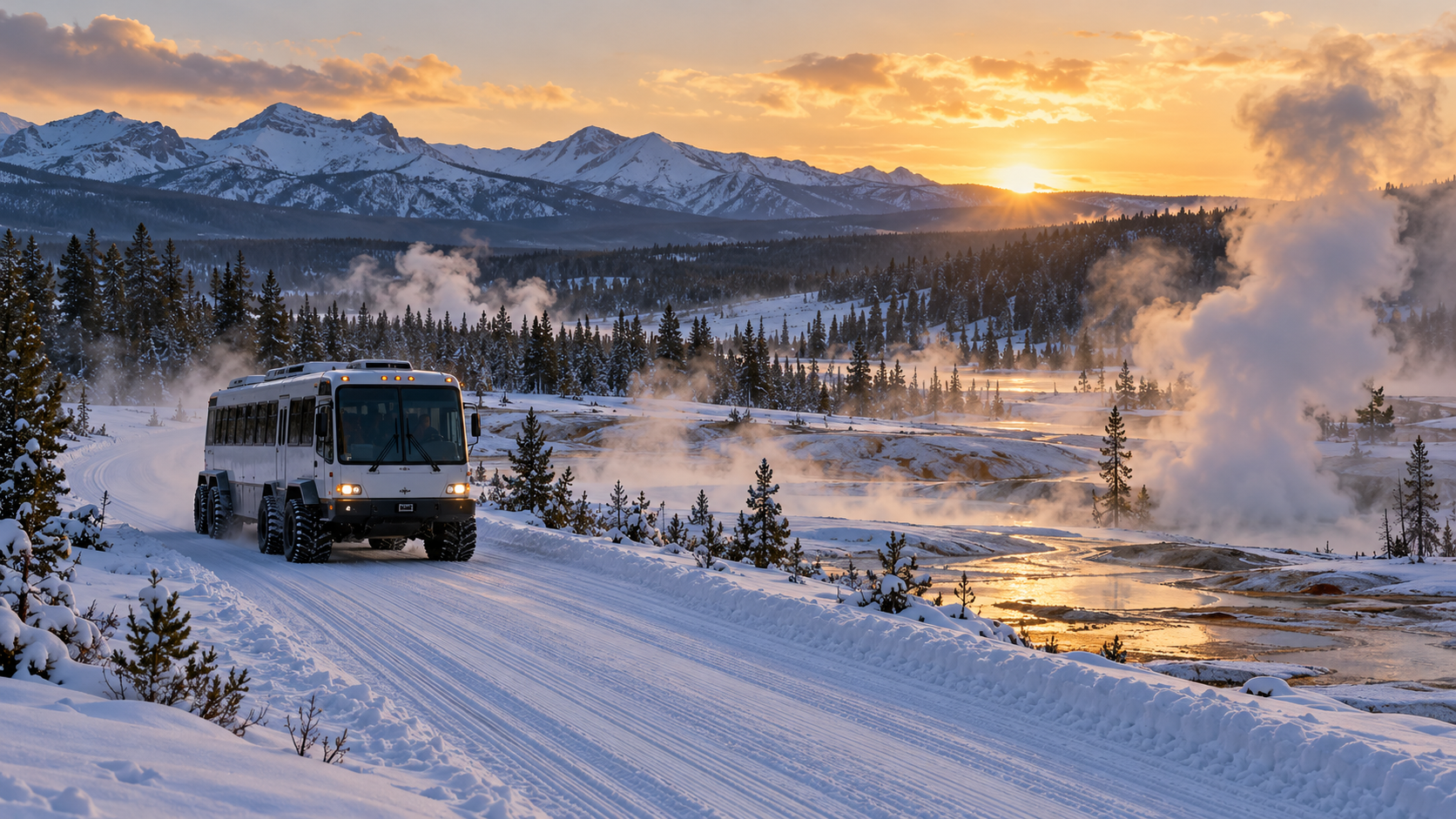
Yellowstone’s summer driving season ends with a hard reset. The National Park Service’s 2026 road calendar keeps most interior roads open to regular vehicles through October 31, then closes them while crews prepare for winter. The northern road from Gardiner through Mammoth Hot Springs and Tower Junction to Cooke City remains the only park route generally open to ordinary cars year-round, weather permitting.
The next major date is December 15, 2026. That is when the park’s groomed-road system is scheduled to reopen for limited snowcoach and snowmobile travel. The routes do not all stay open to the same March closing date, and a snowcoach reservation is not the same thing as permission to drive a rental car into the interior.
This guide uses the NPS road and operating-date pages updated October 28, 2026, plus the current-conditions page updated October 29. Every date remains weather-dependent, so treat the schedule as a planning framework and check the live road map immediately before travel.
Yellowstone winter 2026–27 at a glance
- Regular-car access: North Entrance to Northeast Entrance is generally open year-round, weather permitting.
- Interior road closure: most regular-vehicle routes close after October 31, 2026.
- Early-winter gap: November 1 through December 14 has no scheduled oversnow access to the interior.
- Oversnow opening: groomed routes are scheduled to open December 15, 2026.
- Staggered spring closures: oversnow routes close between March 7 and March 15, 2027.
- Winter lodging: Mammoth Hot Springs Hotel and Old Faithful Snow Lodge publish limited winter dates.
- Conditions rule: storms, thin snow, mechanical issues and wildlife can change access without notice.
The most common planning mistake is to read “Yellowstone is open” as “every entrance and attraction is reachable by car.” The park is open 24 hours a day and 365 days a year, but winter access is a network of separate corridors, limited facilities and reservation-based transportation.
What closes after October 31
The West Entrance–Madison–Old Faithful corridor, the Madison–Norris and Mammoth–Norris roads, the Norris–Canyon road, the East Entrance–Fishing Bridge route, Canyon–Bridge Bay, the South Entrance–West Thumb road and the main West Thumb connections are all scheduled to end regular-vehicle service after October 31. Dunraven Pass, Beartooth Highway and Chief Joseph Scenic Byway have earlier seasonal limits or separate state-managed closures.
That creates an important shoulder-season gap. Between the regular-road closure and the December 15 oversnow opening, travelers should not plan a private-car visit to Old Faithful, Canyon, West Thumb or the park interior. The northern road remains the practical in-park driving option, but snow, ice or an incident can still close it temporarily.
Navigation apps may continue drawing routes through a closed entrance. A route line is not an access notice. Use the NPS road map, Wyoming 511, Montana road reports and the park’s recorded road line before leaving a gateway town.
How winter access splits into two systems
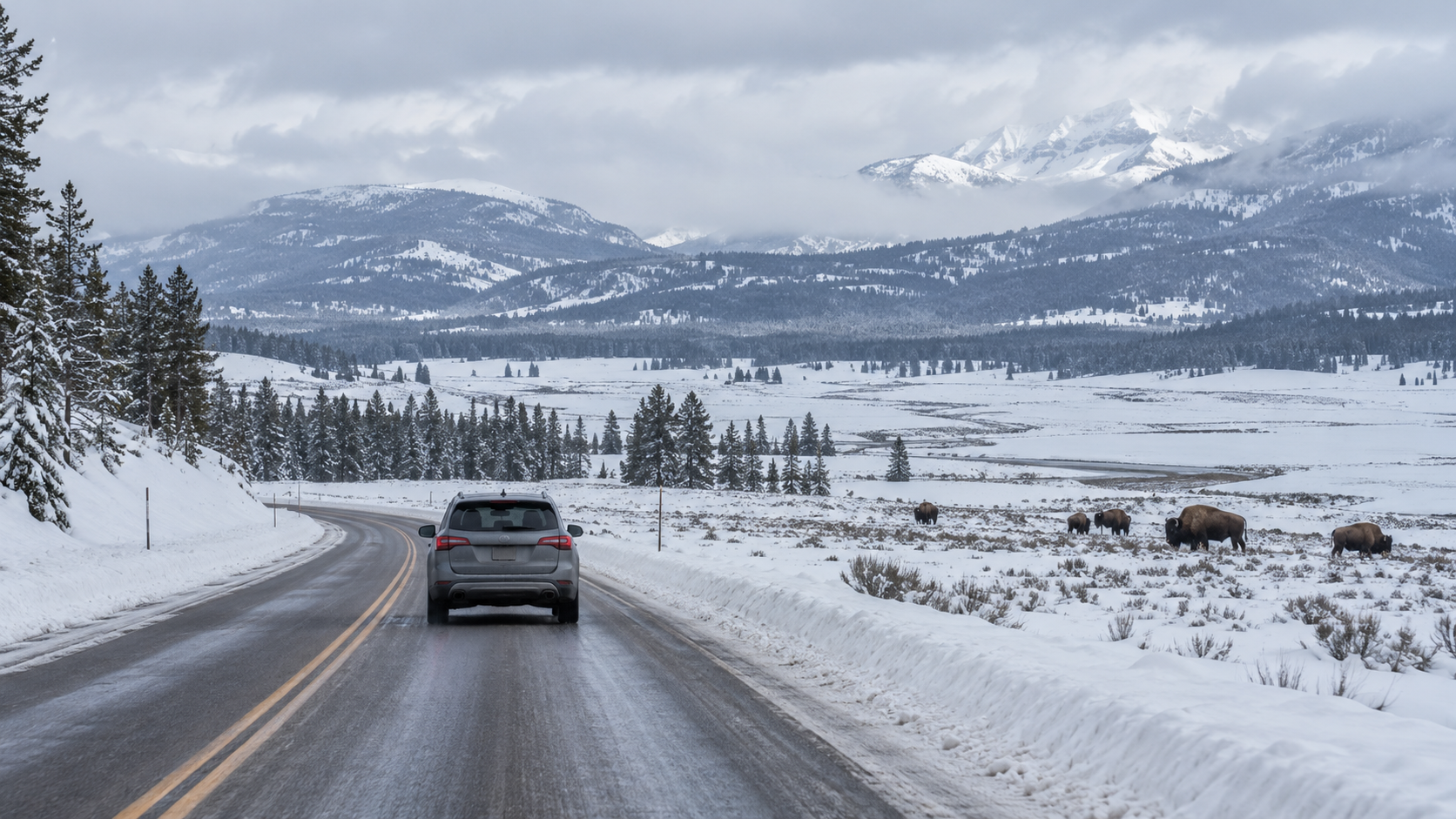
Yellowstone operates as two very different winter destinations. The northern range is a conventional road trip with winter driving hazards. The interior is an oversnow trip that normally requires a commercially guided snowcoach or snowmobile, except for the park’s limited noncommercial snowmobile permit program.
On the northern road, visitors can drive from Gardiner through Mammoth and Tower Junction toward the Northeast Entrance. The route serves Lamar Valley wildlife viewing and year-round Mammoth services, but the highway east of Cooke City does not function as an unrestricted winter through-route to Red Lodge or Cody.
For Old Faithful and most interior destinations, plan around the operator’s pickup point, departure time, luggage rules and cancellation policy. A reservation from West Yellowstone does not automatically work from Mammoth, Jackson or Cody. The gateway named on the confirmation matters.
Oversnow dates by road segment
The NPS schedule opens the groomed-road system on December 15, but spring closures are staggered so plowing can begin. These are the published 2026–27 dates:
- Mammoth Hot Springs to Norris: December 15, 2026, through March 7, 2027.
- Norris to Madison, Norris to Canyon Village, and Canyon Village to Washburn Hot Springs Overlook: December 15, 2026, through March 9, 2027.
- Canyon Village to Fishing Bridge: December 15, 2026, through March 14, 2027.
- West, South and East entrances and all remaining groomed roads: December 15, 2026, through March 15, 2027.
These dates describe authorized oversnow travel, not unrestricted access. Weather, snow depth and operational conditions can delay an opening or force a temporary closure. The final week of the season is especially easy to misread: a route to one area may still be operating after the Mammoth–Norris segment has closed.
Choose the right winter gateway
North Entrance: the regular-car option
Gardiner, Montana, is the gateway for the year-round northern road. It is the simplest choice for visitors focused on Mammoth Hot Springs, Lamar Valley, wildlife and a self-driven itinerary. Carry winter emergency supplies, keep the fuel tank comfortably full and leave more time than a dry-road estimate suggests.
The road is open weather permitting, not guaranteed every hour of winter. Park alerts, state highways leading to Gardiner and the approach to Cooke City can each have different conditions. If a closure blocks the chosen wildlife corridor, do not stop in a travel lane or improvise an off-road viewpoint.
West, South and East entrances: oversnow only
West Yellowstone is a major starting point for guided interior trips once the oversnow season begins. The South Entrance can connect with operators serving the Jackson area, while East Entrance access depends on available authorized service and the trip being offered on the selected date. Ordinary wheeled vehicles cannot simply follow a snowcoach route.
Before paying for a flight or hotel, confirm the exact pickup town and whether the tour includes transportation to the park boundary. Winter distances are deceptive: Jackson, West Yellowstone, Gardiner and Cody are separate bases, not interchangeable neighborhoods.
Snowcoach or snowmobile: which fits the trip
A snowcoach is usually the easier choice for first-time winter visitors, families, photographers carrying equipment and travelers who prefer an enclosed vehicle. It offers shelter from wind and cold, but schedules are fixed, space is limited and stops depend on the operator and route.
A guided snowmobile trip is more exposed and physically demanding. Riders need appropriate insulated gear, must follow guide instructions and may face age, license or passenger rules. Noise, cold and hand fatigue can be more significant than expected. The NPS also runs a limited Non-commercially Guided Snowmobile Access Program with permits and specific requirements; it is not a general self-guided exception.
- Compare the exact route and attractions, not only the vehicle type.
- Confirm whether outerwear, boots, helmet or lunch is included.
- Ask about luggage limits for overnight stays at Old Faithful.
- Read the weather and cancellation policy before booking.
- Verify mobility needs, child rules and restroom access with the operator.
What is open in winter
Winter services are concentrated. At Mammoth, the NPS lists Albright Visitor Center, Mammoth Park Store, Mammoth General Store, Mammoth Medical Clinic, the post office and Mammoth Campground as year-round operations, subject to their own hours and holiday closures. Mammoth Hot Springs Hotel lodging is listed through March 7, 2027, with dining and several services through March 8.
At Old Faithful, the 2026–27 table lists the Snow Lodge’s lodging and cabins from December 16 through March 5. The Obsidian Dining Room runs December 16 through March 7, while the Geyser Grill is listed from December 15 through March 15. The Old Faithful Visitor Education Center begins its winter season December 15, with its closing date still listed as TBD on the October 28 update.
Canyon, Madison, Fishing Bridge, West Thumb and other locations may have visitor-center lobbies or warming huts during the oversnow season, but most summer lodging, stores, campgrounds and restaurants are closed. A warming hut is not a full-service visitor center. Pack food, water and backup layers even when a tour includes planned stops.
Facility tables can change without advance notice. Recheck both the NPS operating-date page and the concessioner reservation before departure, particularly for holiday hours, dining and luggage transfers.
A realistic three-day winter plan
Day 1: northern range and Mammoth
Base in Gardiner or Mammoth, check the road report at breakfast and drive only as far as conditions comfortably allow. Prioritize Mammoth terraces, pullouts along the northern road and a Lamar Valley wildlife window. Turn around before darkness if the road is icy or visibility is falling.
Day 2: a reserved interior trip
Use the pickup location printed on the reservation and arrive early. A day snowcoach to Old Faithful can consume most daylight once loading, road conditions and scenic stops are included. Do not schedule a tight evening flight or a long cross-state drive immediately afterward.
Day 3: weather buffer
Keep the final day flexible for a delayed tour, a shorter northern-range outing, skiing or snowshoeing on an officially open route, or a gateway-town activity. Winter plans need a buffer because a single storm can change both park access and the highway needed to reach the airport.
Cold, ice and limited connectivity change the safety plan
The NPS says winter daytime temperatures commonly range from 0°F to 20°F, with subzero conditions especially common at night and at higher elevations. A heated vehicle reduces exposure, but it does not remove the need for insulated layers, gloves, hat, dry socks and a way to protect skin in an emergency stop.
- Carry blankets, water, high-energy food, a headlamp and a charged power bank.
- Keep the gas tank full enough to handle a closure or long detour.
- Download the NPS app content and maps before entering the park.
- Use traction aids on icy boardwalks and stay on designated surfaces.
- Never walk into a closed road, thermal basin or groomed oversnow route.
- Text 82190 to 888-777 for Yellowstone road alerts, or call 307-344-2117 for the recorded road report.
Cell service is unreliable. Share the itinerary with someone outside the park and carry the operator’s phone number on paper. If the park closes a road or facility, treat that decision as final for the day instead of searching for an unofficial bypass.
Wildlife viewing requires distance
Winter can make animals easier to see against snow, but it does not make them safer to approach. NPS guidance requires at least 100 yards from bears, wolves and cougars and at least 25 yards from bison, elk and other wildlife. If an animal approaches, move away and give it the route.
Do not stop in a travel lane for a bison or wolf sighting. Use a legal pullout, stay inside the vehicle when appropriate and follow ranger or guide instructions. Food scraps and unsecured packs also create wildlife problems; ravens and other animals can quickly scatter unattended items.
A paper map is useful—but it cannot show live closures
The National Geographic Trails Illustrated Yellowstone National Park Map, ISBN-10 and Amazon ASIN 1566952956, is a waterproof, tear-resistant topographic map with roads, trails and major park features. It can be a useful offline backup when a phone has no signal or battery.
Compare the National Geographic Yellowstone map on Amazon. Confirm the edition, seller, current price and return terms before ordering. Use the map for orientation, then use the current NPS road page for closures and seasonal access.
Affiliate disclosure: ReaderSpice may earn a commission from qualifying Amazon purchases made through the link above, at no additional cost to you.
Booking checklist
- Choose the trip type: northern-road driving, a day oversnow tour or an overnight Old Faithful stay.
- Match the hotel to the tour’s pickup gateway.
- Confirm the operator, date, route, vehicle type and luggage allowance.
- Check every traveler’s clothing, mobility and age requirements.
- Save the NPS road map, operating dates and reservation offline.
- Recheck park roads, state highways and weather 24 hours before departure.
- Build at least one flexible day into flights and lodging.
The bottom line
Yellowstone winter access is straightforward only after separating regular cars from oversnow travel. After October 31, most interior roads close to wheeled vehicles. The northern road remains generally open, while authorized snowcoach and snowmobile service is scheduled to begin December 15 and close in stages from March 7 through March 15, 2027.
Pick the gateway before the hotel, confirm the exact route before the flight and check conditions again on travel day. A smaller itinerary with one reserved interior trip and one flexible northern-range day is safer—and usually more rewarding—than trying to reproduce a summer loop in winter.
Sources
National Park Service: Yellowstone Park Roads — updated October 28, 2026
National Park Service: Yellowstone Operating Dates — updated October 28, 2026
National Park Service: Yellowstone Current Conditions — updated October 29, 2026
National Park Service: Explore Yellowstone in Winter
National Park Service: Yellowstone Maps and offline resources
National Geographic Maps: Yellowstone National Park Map, product 201, ISBN 9781566952958
Amazon: National Geographic Yellowstone National Park Map, ASIN 1566952956