
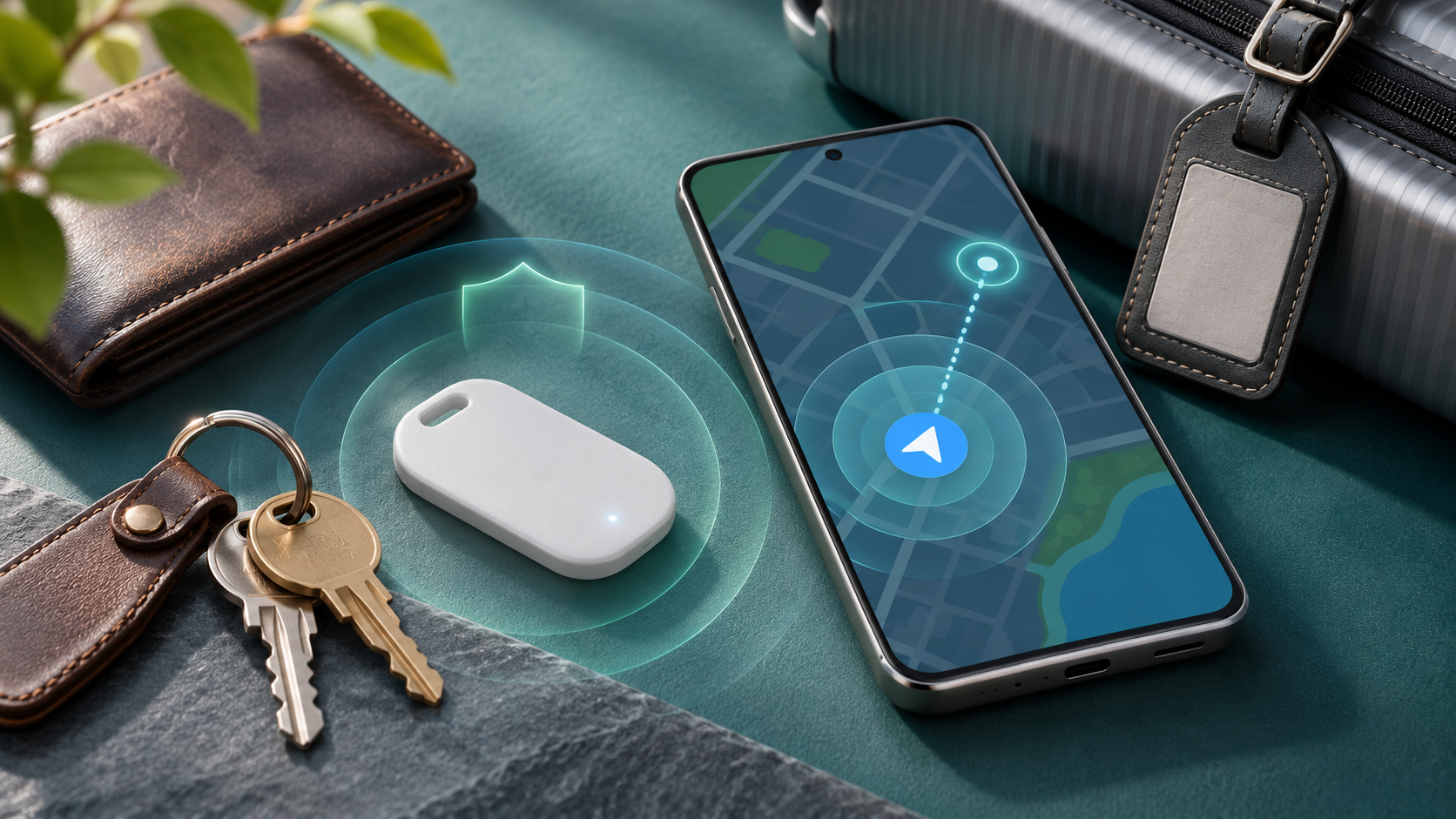
Google has set November 11, 2026 as the U.S. launch date for Pixel Tag, its first-party Find Hub tracker. A single tag is listed at $29.99 and a four-pack at $99.99. The important buying question is not simply whether it works with Android, but which parts work on a particular phone: basic locating, ultra-wideband direction finding and Bluetooth Channel Sounding do not have identical hardware requirements.
This launch-day guide separates confirmed specifications from availability that can change during the day. It is not a hands-on review, and it does not treat a product-page listing as proof that every region or retailer has stock.
Pixel Tag quick take
- Official U.S. price: $29.99 for one or $99.99 for four.
- Baseline phone requirement: Android 9 or newer for Pixel Tag setup and Find Hub use.
- Near-field precision: UWB can show distance and direction on compatible hardware; Bluetooth 6 Channel Sounding can provide precise distance on compatible hardware.
- Long-range locating: Google says Find Hub draws on more than 1 billion Android devices, but network sightings are not the same as continuous GPS tracking.
- Hardware: 28 x 46.1 x 5.4 mm, 11.8 grams with battery, IP67 rating, speaker and replaceable CR2032 battery rated for more than a year.
- Privacy: encrypted Find Hub location data, automatic unknown-tracker alerts and physical disable instructions are central to safe use.
Price and launch-day availability
Pixel Tag’s slim body is designed for wallets as well as cases and keychain accessories. Image: Google
Google’s November Pixel Drop announcement lists Pixel Tag at $29.99 for one and $99.99 for a four-pack in the United States, with availability starting November 11. The Google Store product page is the best place to confirm whether checkout is actually open, the delivery estimate and whether a required accessory is included.
Launch-day reporting was published across different time zones, and some articles appeared before Google Store orders were live. That makes the safest wording simple: November 11 is the official start date, but inventory and checkout availability can open in stages. Check the live product page rather than relying on a headline or a cached search result.
Google has not confirmed a Pixel Tag Amazon listing in the official launch materials reviewed for this guide. Do not buy an unrelated tracker from a search ad assuming it is the same product, and verify the seller, model name, return policy and phone compatibility before ordering.
Hardware, battery and durability
Pixel Tag is an elongated Fog-colored tracker made from polycarbonate and metal. Google lists dimensions of 28 x 46.1 x 5.4 mm and a weight of 11.8 grams with the battery installed. The thin profile is useful for a wallet or luggage pocket, but the tag does not have a built-in attachment hole. Keys and bags will need a compatible holder or case.
The user-replaceable CR2032 coin cell is rated for more than one year. Actual life will vary with ringing, network use, temperature and precision-finding sessions. The IP67 rating means meaningful dust and water resistance under controlled conditions; it should not be described as permanently waterproof or treated as a swimming accessory.
What Android phones can use Pixel Tag
Google’s specifications set Android 9 or newer as the baseline. That covers setup, Fast Pair and ordinary Find Hub functions on a wide range of modern Android phones. It does not mean every compatible phone gets the same close-range precision experience.
Basic Find Hub compatibility
A supported Android phone can pair the tag, view its last reported position, play the tag’s sound when nearby and use the crowdsourced Find Hub network when the tag is farther away. Bluetooth and location permissions still need to be set correctly, and background restrictions can delay alerts.
UWB direction and distance
Ultra-wideband can provide visual distance and directional guidance when both the phone and the tracker support UWB. A phone without UWB can still use the tag’s standard locating tools, but it will not gain directional arrows merely because it runs Android 9 or later.
Bluetooth 6 Channel Sounding
Bluetooth Channel Sounding is a separate precision layer. On compatible Bluetooth 6 hardware it can estimate exact distance, while UWB adds direction. Buyers should check the phone manufacturer’s specifications instead of assuming that a recent Android version automatically includes Bluetooth 6 or UWB radios.
How Pixel Tag finds belongings near and far
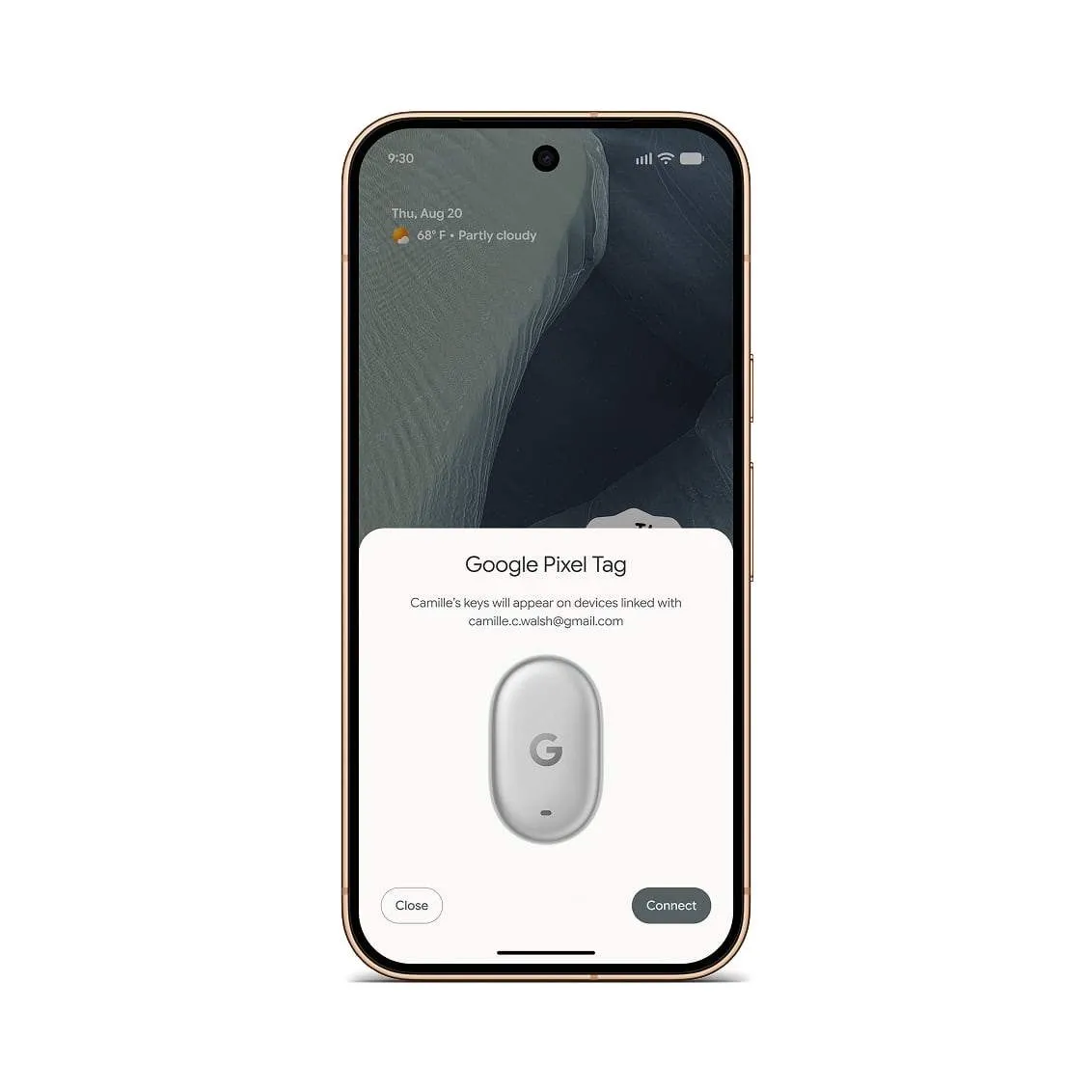
Fast Pair starts the Pixel Tag setup flow on a nearby Android phone. Image: Google
Close to home, the fastest tools are the built-in speaker and supported precision finding. Farther away, Pixel Tag broadcasts a privacy-preserving Bluetooth signal that nearby participating Android devices can detect and relay to Find Hub. Google says the network includes more than 1 billion Android devices.
That scale can help in busy places, but a tracker is not a GPS or cellular modem. Location updates depend on another participating device passing within range, its settings and connectivity, and the network delivering a new sighting. A rural trail, a metal container or a moving vehicle can therefore produce sparse or delayed updates.
Setup checklist
- Update the phone to a supported Android version and install current Google Play system updates.
- Turn on Bluetooth and location, then open the Pixel Tag package near the unlocked phone to start Fast Pair.
- Confirm the tag appears in Find Hub and give it a specific name such as “Blue suitcase” instead of “Tracker.”
- Test Play sound before attaching the tag, then test again from inside the actual wallet, bag or case.
- Check whether the phone supports UWB or Bluetooth 6 Channel Sounding if precision finding matters to the purchase.
- Enable Left Behind alerts only for items where repeated notifications will be useful, and review any safe-location exceptions.
- Record the battery type and test the tag before travel; a CR2032 is replaceable, but a dead tag cannot report a new location.
Left Behind alerts, sharing and reverse phone finding
Find Hub can send a Left Behind alert when the phone and tag separate, which is useful for a backpack, camera bag or checked luggage. Tune safe places carefully: a home exception can reduce noise, but it can also hide a genuinely forgotten item if the location boundary is too broad.
Google also supports item sharing for households and teams; TechCrunch reports that a Pixel Tag location can be shared with up to 10 people in Find Hub. Lost Mode can expose owner-provided contact details and a short message to help a finder return the item. Share only the minimum contact information you are comfortable displaying.
The physical button can work in the other direction: double-pressing it can ring a misplaced paired phone. Compatible Pixel Watches, Pixel Buds and Gemini commands can also help ring a tag, reducing the need to start every search from the phone.
Privacy and unwanted-tracker alerts
Google says Pixel Tag location data is end-to-end encrypted and is not stored as readable location history by the Find Hub network. Pixel Tag also participates in Android’s automatic unknown-tracker alert system, which warns when a compatible tag that is separated from its owner appears to be moving with someone else.
An unknown-tracker alert should be treated as a safety signal, not dismissed as a pairing error. Android can help make the tracker play a sound and show information needed to identify or disable it. Turning off Bluetooth, location or airplane mode on the phone does not physically disable the tracker; follow the manufacturer-specific disable steps. If personal safety is at risk, move to a safe public place and contact local authorities or a trusted person before confronting anyone.
What Pixel Tag does not do
- It does not contain a cellular modem or provide continuous live GPS tracking.
- It does not guarantee a fresh network sighting in low-traffic or radio-blocked locations.
- It does not give every Android 9 phone UWB or Bluetooth 6 precision finding.
- It does not include a built-in keyring hole; many uses require a holder or case.
- Its IP67 rating is resistance under specified conditions, not permission for indefinite immersion.
- It should not be relied on as the only anti-theft or personal-safety system for a vehicle, child or pet.
A verified Amazon alternative for Galaxy owners
Samsung’s Galaxy SmartTag2, model EI-T5600BBEGUS (ASIN B0CCBXRYRC), is listed on Amazon. It is a genuinely relevant alternative for owners of compatible Samsung Galaxy phones, not a universal substitute for Pixel Tag. SmartTag2 uses Samsung’s SmartThings Find ecosystem, so a buyer should confirm Galaxy-device requirements and regional feature support before choosing it over Google’s Find Hub option.
Affiliate disclosure: ReaderSpice may earn a commission from qualifying purchases made through the Amazon link above, at no extra cost to you. Availability, seller, price and bundle contents can change; verify that the listing identifies ASIN B0CCBXRYRC and model EI-T5600BBEGUS before checkout.
Who should buy Pixel Tag — and who should wait
Buy if
- You use Android 9 or newer and want a first-party tracker built around Google Find Hub.
- You value a slim tracker, replaceable battery, Left Behind alerts and reverse phone ringing.
- You have confirmed that your phone supports the precision feature you expect, not just baseline compatibility.
Wait if
- Google Store checkout is not live in your region or the delivery date is unclear.
- You need independent battery, speaker and real-world Find Hub testing before buying several tags.
- You expect built-in GPS, cellular recovery or a keyring hole without an accessory.
- Your household is centered on another tracking ecosystem and cross-platform sharing matters more than Google integration.
Bottom line
Pixel Tag’s $29.99 price is familiar, but its buying case rests on Android integration: Find Hub scale, UWB direction, Bluetooth 6 distance finding, replaceable battery and privacy alerts. The baseline is broad, while the best precision experience is hardware-dependent. Confirm live stock, your phone’s radios and the attachment accessory you need before ordering.
Sources
- November Pixel Drop: Gemini Intelligence and Pixel Tag — Google, November 10, 2026.
- Meet Pixel Tag, Google’s first-party tracker for Find Hub — Google, August 12, 2026.
- Google Pixel Tag product page — Google Store, accessed November 11, 2026.
- Pixel Tag technical specifications — Google Pixel Help, accessed November 11, 2026.
- Find unknown trackers — Android Help, accessed November 11, 2026.
- Google’s Pixel Tag tracker is now available — The Verge, November 10, 2026.
- Pixel Tag, Google’s $30 Android-ready answer to Apple’s AirTag, is now available — TechCrunch, November 10, 2026.
- No, the Pixel Tag is not available today — 9to5Google, November 10, 2026.
- Galaxy SmartTag2 product page — Samsung, accessed November 11, 2026.