
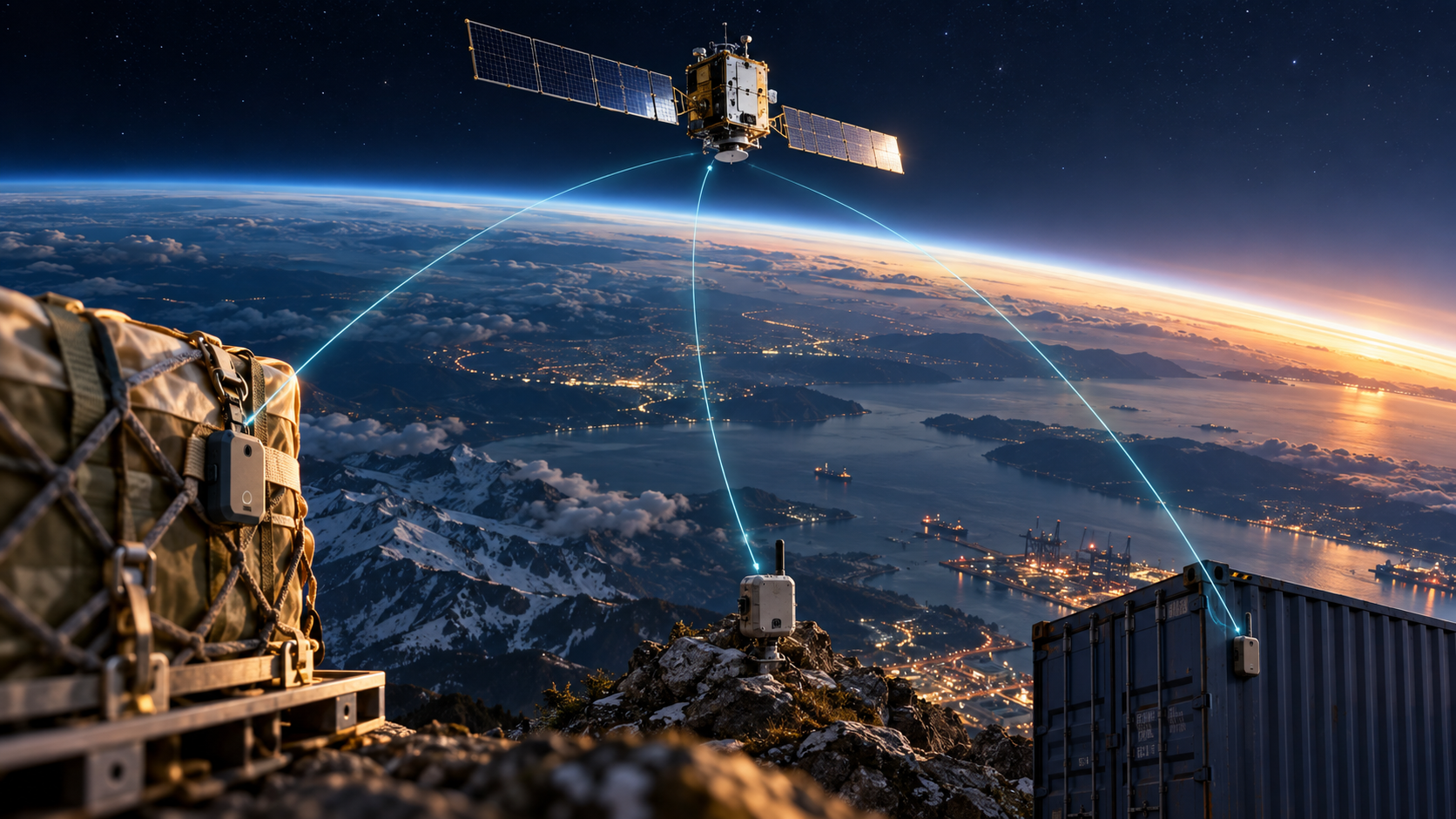
Hubble Network says its satellite constellation is now generally available to developers who want ordinary Bluetooth Low Energy devices to send location and sensor data from beyond cellular coverage. The September 23 announcement sounds almost unbelievable: a low-power radio found in trackers, sensors and industrial equipment can reach satellites hundreds of kilometers overhead without a dedicated satellite modem.
The important qualifier is that this is a developer platform, not a switch that instantly gives every pair of earbuds, phone or consumer tracker satellite service. A compatible product needs Hubble’s software development kit, suitable firmware, an antenna and radio design that can support the link, power management, service provisioning and access to the network.
What Hubble announced
Hubble opened its satellite network to general availability on September 23, 2026. The company says manufacturers can add its SDK to products built around Bluetooth Low Energy radios and enable them to transmit small packets of location or sensor information through orbit when cellular or local gateway coverage is unavailable.
The Seattle startup also announced a $200 million Series C funding round led by Smith Point Capital. Reuters reported that the round values Hubble at $1.6 billion and brings its total funding to $300 million. Hubble says the money will help expand its current six-satellite constellation to 60 satellites by 2030.
How Bluetooth reaches a satellite
Bluetooth is normally associated with short-range links between nearby devices, but achievable range depends on transmit power, receiver sensitivity, antenna design, the data rate and the surrounding environment. Hubble’s system is optimized to detect extremely weak Bluetooth Low Energy transmissions from orbit and to carry compact telemetry rather than high-bandwidth consumer traffic.
A participating device broadcasts a specially configured signal. A Hubble satellite passing overhead receives that message, and Hubble’s network routes the data to the developer’s application. The model is best suited to small, occasional updates such as a location point, temperature reading, equipment state or alert.
What Bluetooth-to-satellite can and cannot do
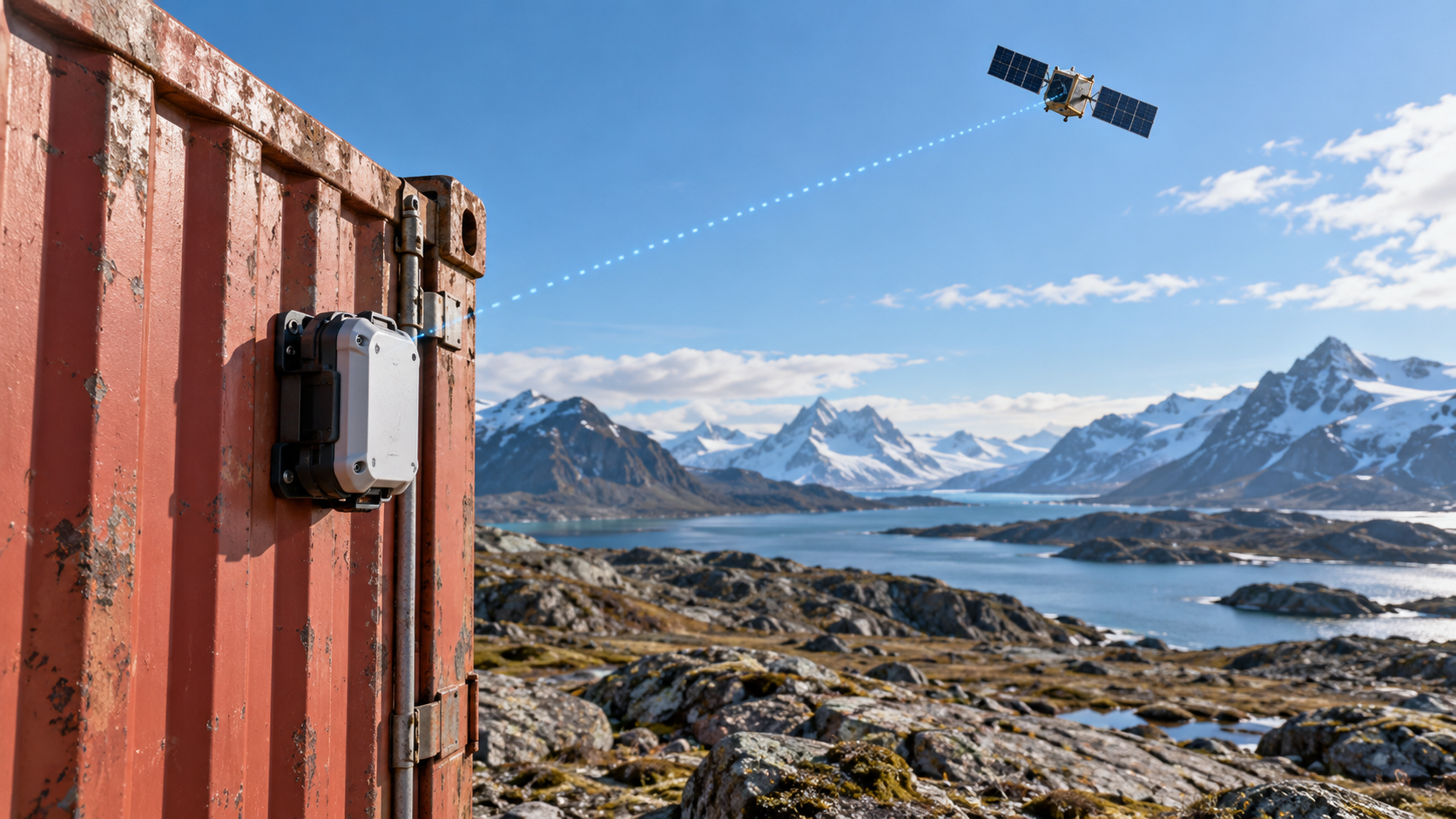
Hubble’s announcement expands what developers can build, but it should not be confused with satellite broadband or emergency satellite calling on a smartphone.
What it can support:
- Location updates from equipment, cargo and remote assets
- Small sensor readings such as temperature, humidity or equipment status
- Alerts from devices operating outside reliable cellular coverage
- Low-cost tracking designs that avoid a separate satellite modem
What it does not automatically provide:
- Voice calls, video streaming or normal internet access
- Instant satellite capability for every Bluetooth gadget already in your home
- Continuous real-time GPS tracking without considering power, satellite passes and update frequency
- A universal replacement for cellular, Wi-Fi or purpose-built emergency communicators
Why this could matter
Dedicated satellite hardware has traditionally added meaningful cost, size and power requirements to a connected product. Hubble claims its approach can add less than 50 cents to the bill of materials for a new design because manufacturers can use a Bluetooth radio already present in the device. That is a company estimate, not a guaranteed retail price.
The biggest opportunity is likely industrial rather than consumer. Shipping labels could report the location or condition of individual packages instead of only the pallet carrying them. Construction equipment, farm assets, environmental sensors and remote field gear could send basic updates after leaving cellular coverage. Disaster response and infrastructure monitoring are other potential uses, provided the devices are engineered and provisioned correctly.
What consumers should know
Existing Bluetooth accessories do not become satellite-connected simply because the network is open. A manufacturer must integrate Hubble’s SDK, test the radio and antenna configuration, manage network credentials and decide how frequently the device should transmit. Battery life, enclosure materials, orientation, terrain and local regulations can all affect performance.
Consumers should also distinguish a finding network from live navigation. A small tracker may send periodic sightings or sensor messages, but that does not mean it will deliver a moving dot every second. Coverage can depend on satellite availability and the product’s transmission schedule. Hubble has not announced a universal consumer subscription or an upgrade path for every current Bluetooth tracker.
For comparison, current Bluetooth item trackers and accessories on Amazon rely on nearby phones or their own supported finding networks; shoppers should not assume they include Hubble satellite access unless the manufacturer explicitly says so.
Where the network stands
Hubble says it has six satellites in low Earth orbit and plans to reach 60 by 2030. Its separate terrestrial finding network reportedly includes more than 100 million gateways across 170 countries and more than three million square miles. The company says more than 500,000 devices are active on that terrestrial network, over 10 times the figure from a year earlier.
Those numbers come from Hubble and describe a network that is still expanding. Real-world availability, message delay and performance will vary by device design, geography and satellite visibility. Developers evaluating the platform should test the exact hardware and deployment environment rather than treating “global” as a promise of uninterrupted coverage.
Partners and early use cases
Hubble identifies Texas Instruments, Samsara, InPlay and Reelables among companies working with its technology. Texas Instruments previously collaborated with Hubble on Bluetooth-to-satellite connectivity, while Reelables has been developing printable smart labels for cargo. Samsara is exploring coverage for connected equipment operating beyond traditional networks.
These partnerships show why the launch matters even if most consumers cannot buy a Hubble-enabled tracker today. General availability gives manufacturers a clearer path from pilot projects to commercial deployments.
Privacy, security and reliability questions
Making more objects trackable also creates data-governance responsibilities. Buyers and businesses should ask who can view location and sensor information, how long it is retained, whether transmissions and stored data are encrypted, and how a lost or resold device is removed from an account.
Organizations also need a fallback plan. A low-power satellite message should not be the only safety channel for a worker in a dangerous location, and a Bluetooth tracker is not a substitute for a certified emergency beacon. Hubble’s service could be valuable for visibility and telemetry, but the requirements are different when human safety depends on a message arriving.
Bottom line
Hubble Network’s general-availability launch is a meaningful step toward making satellite telemetry cheaper and easier to add to everyday hardware. Its most credible near-term benefit is small location and sensor messages from purpose-built Bluetooth Low Energy devices outside normal network coverage.
The headline is not that every Bluetooth device can suddenly talk to space. It is that manufacturers now have another way to design that capability without adding a dedicated satellite modem. The real test will be commercial products, transparent pricing and dependable performance as Hubble grows from six satellites toward its planned 60-satellite constellation.
Disclosure: ReaderSpice may earn a commission from qualifying purchases made through Amazon links, at no additional cost to you.
Sources
Hubble Network general-availability and funding announcement
Reuters report on Hubble Network’s $200 million funding round
Texas Instruments and Hubble Network collaboration announcement