
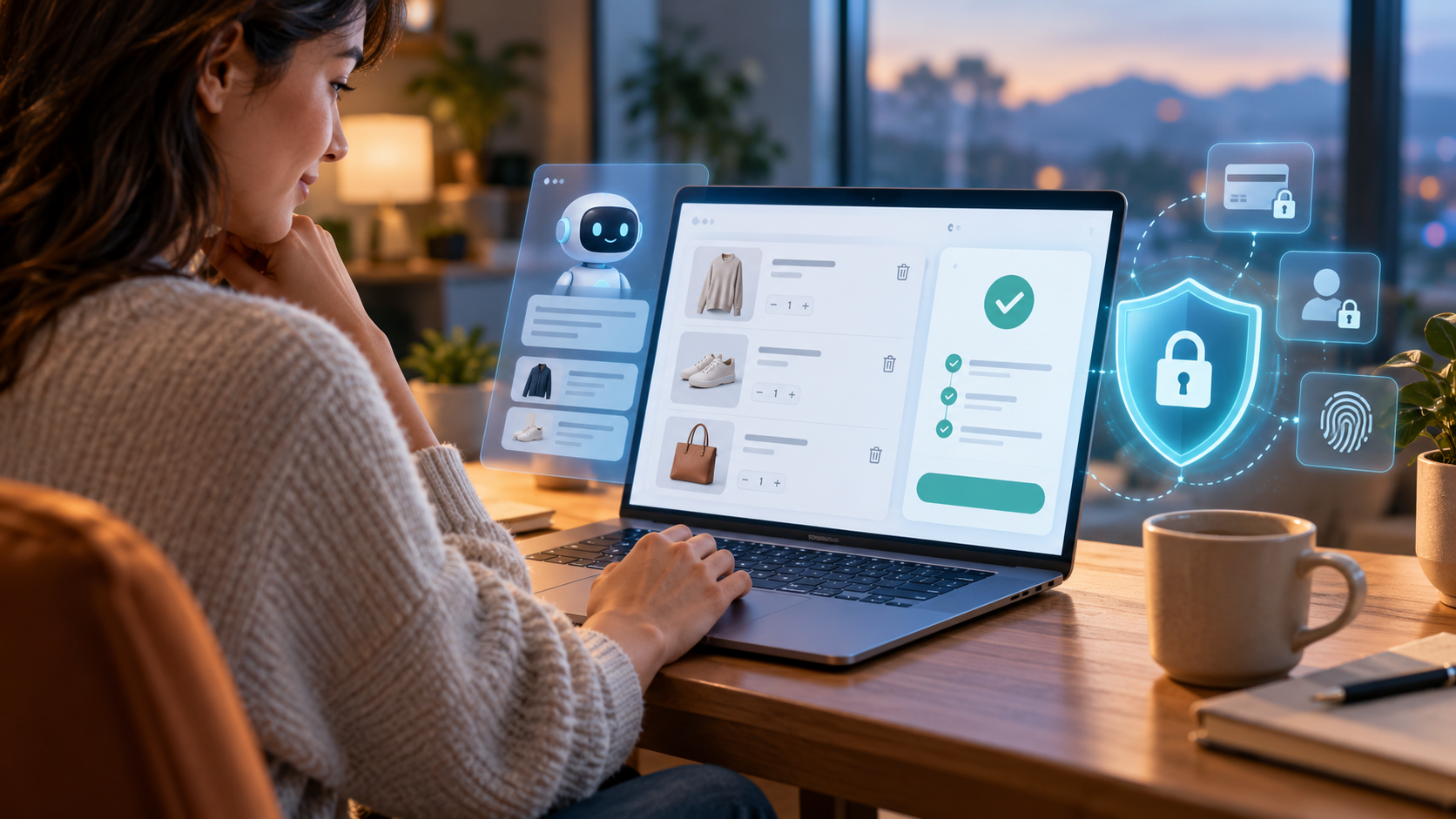
AI shopping agents promise to compare products, fill carts and eventually complete purchases with less work from you. The convenience is real, but so is the jump in responsibility: a tool that moves from recommending a product to spending money can expose payment data, misunderstand instructions or leave shoppers unsure who is accountable when something goes wrong.
Those concerns moved beyond theory this week. On September 22, 2026, major banks warned that agentic commerce is developing faster than the consumer protections around it. The safest approach today is to let AI do the research while keeping a human approval step before checkout.
AI shopping agents are moving into checkout
Traditional shopping chatbots answer questions or surface links. An agentic shopping tool can take additional actions on a shopper’s behalf, such as browsing several stores, adding items to a cart, applying preferences and preparing or submitting a payment. The more authority it receives, the more useful it can be—and the larger the consequences of a bad recommendation, compromised account or misunderstood instruction.
Interest is growing quickly. Reuters reported that AI-originated searches at British retailer John Lewis climbed from 0.3% to 2.5% in one year. Payment networks and technology companies are meanwhile building systems that identify an agent, verify its authority and pass safer payment credentials without exposing the underlying card number.
Why banks are warning now
A group that included NatWest, Bank of America, ING, Capital One, Commonwealth Bank of Australia and ASB Bank told policymakers that shoppers may not know whether an AI agent is acting in their best interest. The banks highlighted risks involving sensitive financial information, insecure payment routes, scams and unclear options for getting money back.
Their proposed protections include clear disclosure when AI is involved, more transparency about how recommendations are made, stronger data safeguards, interoperability and meaningful consumer choice. In plain language, the shopper should know which system is acting, what it is allowed to do, which data it can see and how to stop or challenge a purchase.
Retailers are drawing their own boundaries. Amazon recently blocked Meta’s Muse shopping agent, saying the tool accessed its service without authorization and raised transparency, privacy and security concerns. Meta said Muse could not access secure login or payment information. The dispute, covered by The Verge, shows that an agent may work on one storefront but be limited or rejected on another.
Where the risks show up
The danger is not simply that an AI will pick the wrong color. A shopping agent may combine browsing history, personal preferences, delivery addresses, account credentials and payment instructions. If permissions are vague, that data can travel farther than a shopper expects or remain connected longer than necessary.
An agent can also be manipulated by a misleading product page, fake review, malicious instruction or fraudulent merchant. Even without an attack, it may optimize for price while overlooking return restrictions, subscription terms, shipping costs, compatibility or a seller’s reputation. And if the agent, retailer and payment provider disagree about who authorized the transaction, resolving a refund can become more complicated.
Eight safety checks before authorizing a purchase
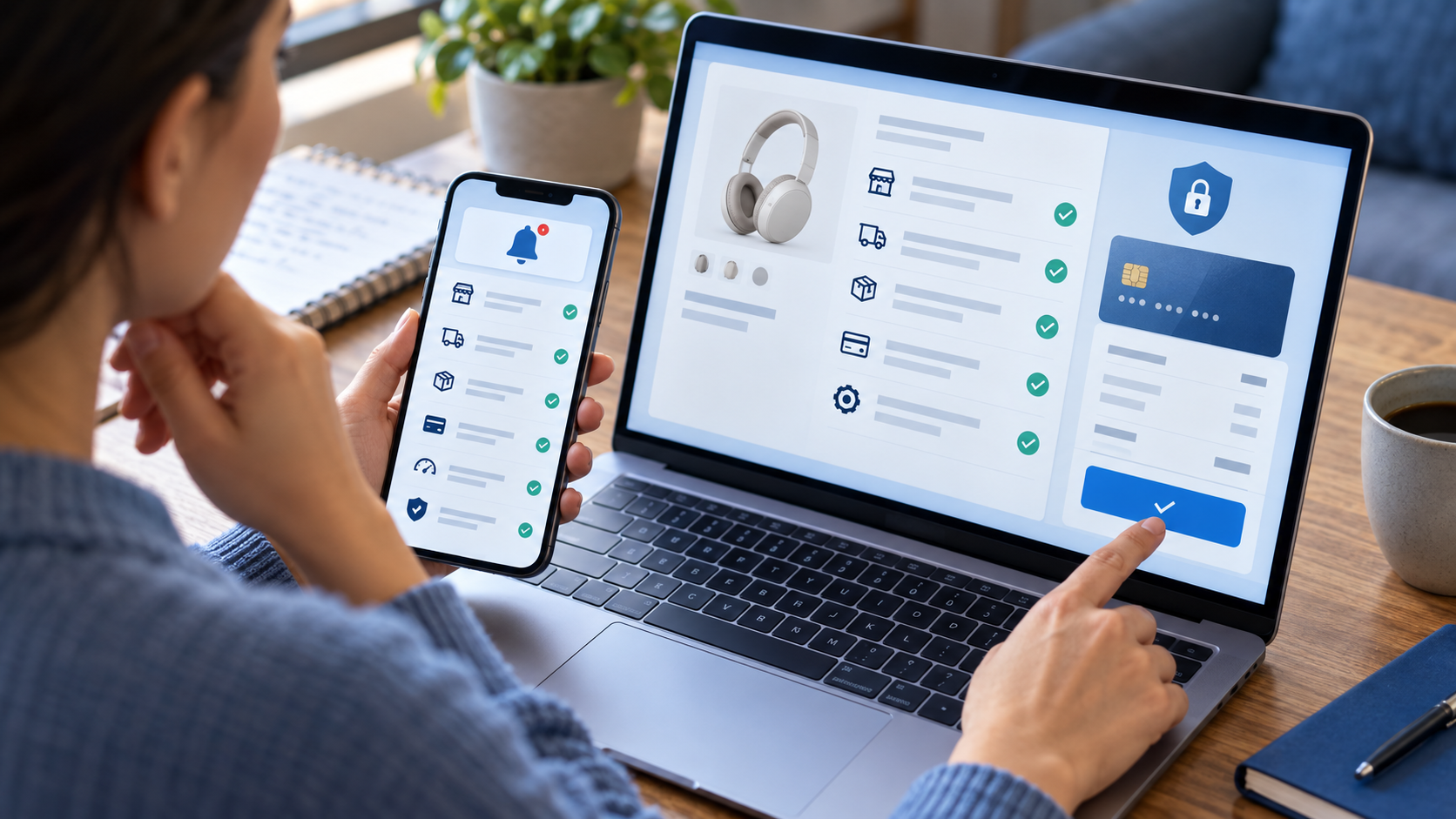
1. Require approval at checkout
Use a setting that makes the agent stop before the final purchase. Review the exact product, seller, quantity, total price, delivery address and payment method yourself. Fully autonomous buying is a poor default for unfamiliar sellers, subscriptions, travel, high-value products or anything with strict return rules.
2. Set narrow spending and merchant limits
Give the agent the smallest useful authority. A per-purchase ceiling is better than a broad monthly promise, and an approved merchant list is safer than open-ended permission to buy anywhere. Category restrictions can also prevent an agent from substituting a product that creates a safety, compatibility or warranty problem.
3. Prefer tokenized or limited-use payment credentials
Where available, use a card issuer’s virtual number, network token or other credential that can be paused or replaced without exposing the primary account number. Mastercard explains that tokenization substitutes a unique alternate number for the card number. That reduces exposure, but it does not make a fraudulent or mistaken purchase harmless.
4. Never paste raw passwords or card details into a chat
A legitimate checkout should use a clearly identified payment flow. Do not give an agent your banking password, one-time security code or complete card credentials in ordinary conversation. If an AI tool asks for information that your bank says it will never request, stop and open the bank or retailer’s official app directly.
5. Verify the merchant outside the agent’s summary
Open the product page yourself and check the seller name, final price, shipping date, return window, warranty and recurring charges. For an unfamiliar store, confirm the domain carefully and look for independent contact information. An agent’s polished summary is not proof that a seller is genuine.
6. Turn on immediate transaction alerts
Enable purchase notifications from the card issuer or wallet so you can see a charge as soon as it happens. After an agent-assisted order, review both the retailer confirmation and the payment alert. Act quickly if the amount, merchant or item does not match what you approved.
7. Limit memory, history and connected-account access
Review which conversations, shopping histories, inboxes, loyalty accounts and payment methods the agent can use. Remove connections that are not needed for the current task, and delete stored instructions that contain sensitive details. A shopping assistant should not need permanent access to every part of your digital life.
8. Know the refund and dispute route before buying
Check whether the agent provider, merchant or card issuer handles problems first. Save the agent’s instructions, the item page, your approval screen and the order confirmation. The FTC advises consumers who paid a scammer to contact the payment company promptly and ask whether the transaction can be reversed.
If an agent-assisted purchase goes wrong
Move quickly and preserve a clear record. The most useful first steps are:
- Save screenshots of the agent’s recommendation, your approval and the retailer’s confirmation.
- Contact the merchant through its official website or app and request cancellation or a refund.
- Notify the card issuer or payment provider if the charge was unauthorized, fraudulent or materially different from what you approved.
- Change exposed passwords, revoke the agent’s permissions and review connected accounts for other activity.
Do not assume every agentic payment has the same protections. Visa, Mastercard and Ant International began work on a common trust framework in September 2026 to help identify and verify shopping agents, but standards and product controls remain in development. Check the terms of the specific service and payment method you use.
The practical bottom line
AI shopping agents are already useful for comparing specifications, building shortlists and finding alternatives. The higher-risk step is letting software make an irreversible financial decision. Until agent identity, authorization, liability and dispute handling are consistent across services, keep checkout approval in human hands.
A hardware security key can add strong sign-in protection to accounts that support security keys or passkeys. Hardware security keys are available on Amazon; verify compatibility with your devices and important accounts before buying.
Disclosure: ReaderSpice may earn a commission from qualifying Amazon purchases made through links in this article, at no additional cost to you.
Sources
Reuters: Banks warn AI shopping bots raise scam, fraud and data-privacy risks
The Verge: Amazon blocks Meta’s Muse AI agent
Reuters: Payment firms team up on an AI agent trust framework
Federal Trade Commission: What to do if you were scammed
Mastercard: A history of payment cards and tokenization