
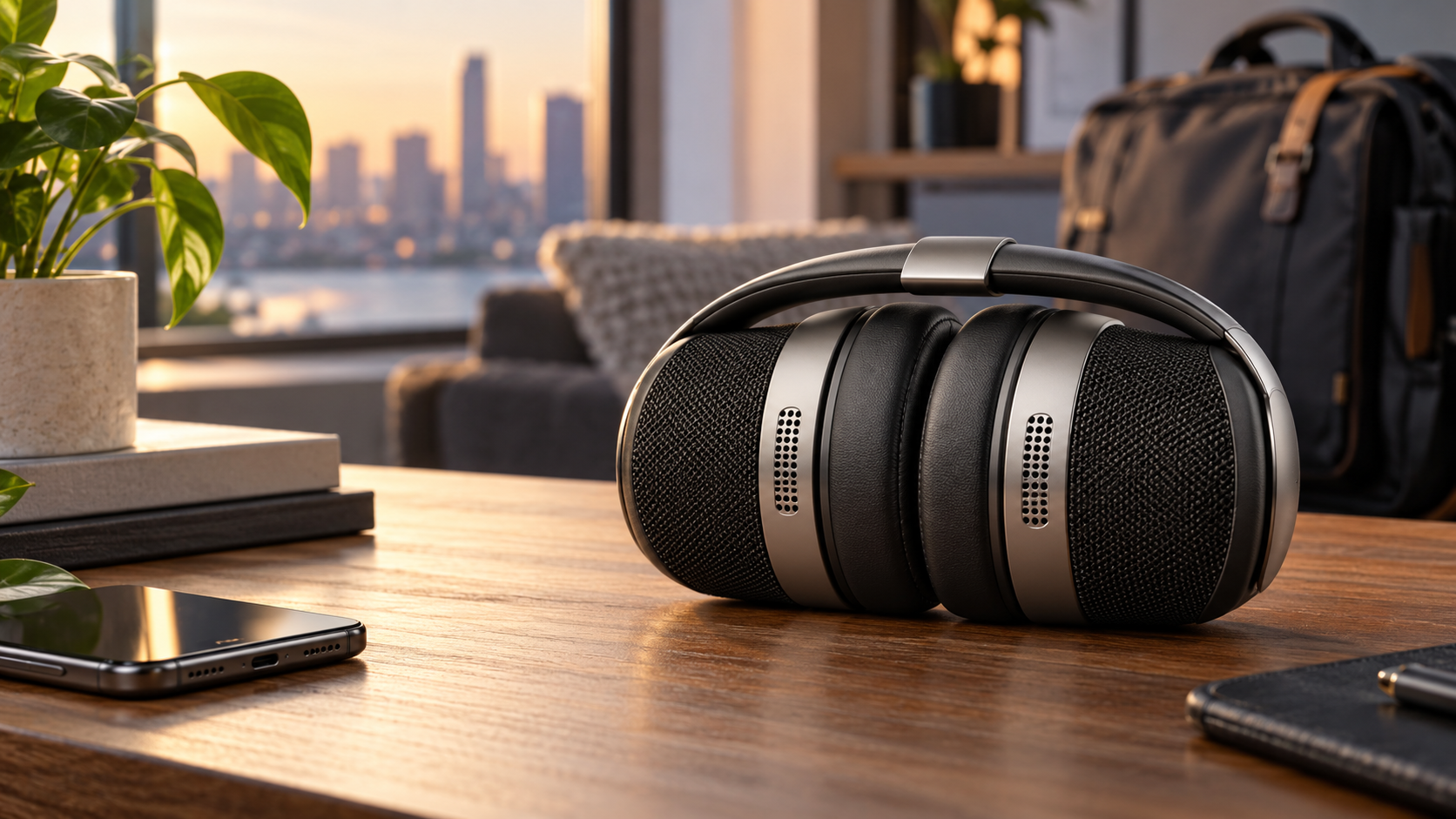
The TDM Neo solves an unusually specific problem: it is a pair of on-ear wireless headphones that physically twists into a compact Bluetooth speaker. After debuting at CES and raising more than $154,000 on Kickstarter, the $249 hybrid is now available in the United States—and independent reviews finally show where the clever engineering helps and where it forces compromises.
This is a review roundup, not a ReaderSpice hands-on test. TDM’s specifications are identified as manufacturer claims, while comfort, sound and usability observations are attributed to reviewers who used production hardware.
The short version is that the transformation mechanism appears dependable and the headphone-mode battery estimate is exceptional. The less flattering consensus is that buyers sacrifice active noise cancellation, comfort and sound quality to avoid carrying two separate devices.
Disclosure: ReaderSpice may earn a commission from qualifying purchases made through Amazon links, at no additional cost to you.
The quick take
- TDM Neo costs $249 and is available in Onyx Black or Cool White through TDM and U.S. retailers.
- Four 40mm drivers are split between private headphone playback and two outward-facing 5W speaker channels.
- The flexible headband and magnetic closure make the switch between modes simple, and multiple reviewers found the mechanism convincing.
- TDM claims more than 200 hours in headphone mode and about 16 hours in speaker mode, with up to eight hours from a five-minute charge.
- There is no active noise cancellation and no published water-resistance rating.
- Independent reviews broadly agree that the design is more impressive than the sound, especially in speaker mode.
What TDM Neo is and what comes in the box
TDM—short for Tomorrow Doesn’t Matter—describes Neo as a hybrid headphone-speaker. Each earcup contains an inward-facing 40mm driver for normal listening and an outward-facing 40mm driver for shared playback. Twist the flexible band, bring the magnetic sections together and the electronics route audio to the external pair.
The official package includes the headphones, a carrying case, a USB-C charging cable and a 3.5mm auxiliary cable. Bluetooth 6.0 multipoint is listed for wireless connections, while the analog input offers a useful fallback for airplane screens, older laptops and other sources that lack Bluetooth.
The Verge reported U.S. availability at $249 through TDM, Amazon and Walmart. Stock, color choice and return terms can vary by seller, so buyers should verify the exact offer at checkout. TDM’s own store currently advertises free shipping and a 30-day return window.
How the twist design changes modes
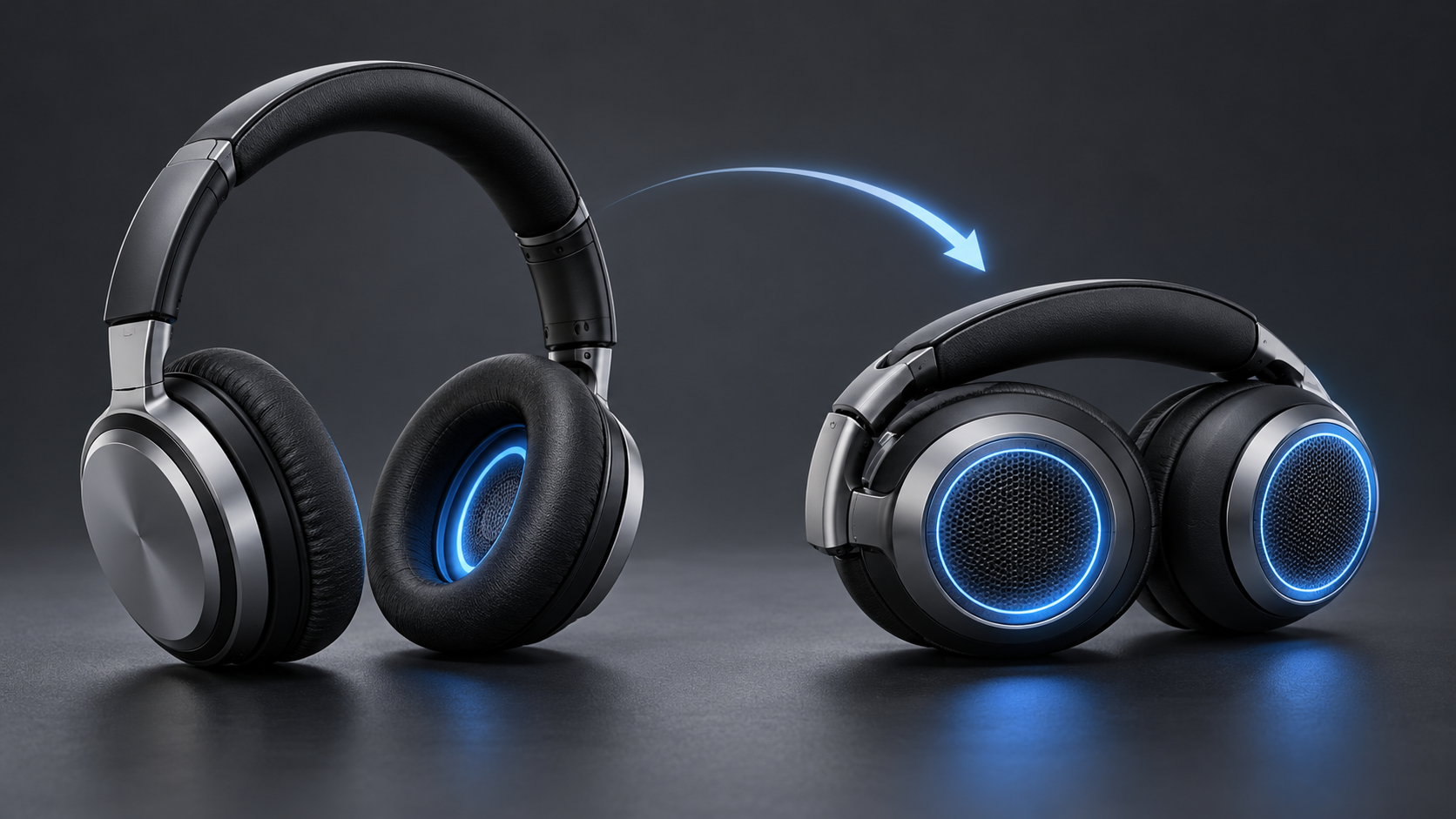
The transformation is the strongest part of the product. WIRED found that the headband rolls smoothly, the magnets meet securely and playback switches reliably. The folded unit rests on two rubberized sections, keeping the active speaker surfaces aimed outward instead of buried against a table.
That engineering is more meaningful than a software shortcut. Neo carries two distinct driver pairs so the room-facing speakers do not blast through the ear cushions. The physical position tells the device which set to use, and the companion app can customize what the twisting action does.
The design still creates ergonomic costs. Four full-size drivers, the flexible structure and the magnets bring the weight to about 340 grams, or 11.9 ounces. WIRED measured it as noticeably heavier than several conventional over-ear alternatives, even though Neo sits on the ear rather than surrounding it.
Speaker mode also changes the orientation of controls and ports. WIRED noted that the volume control feels reversed after folding and the USB-C cable exits upward. TechRadar found the folded speaker could feel less stable than a purpose-built portable speaker. Those are small details, but they matter on a hotel nightstand or crowded desk.
Headphone mode: long battery life, no ANC
Neo’s headline battery figure is more than 200 hours in headphone mode. Even if real-world use falls short, the claim is far beyond the 30-to-60-hour range common among mainstream wireless headphones. A five-minute charge is rated for up to eight hours, and a full charge takes roughly three hours.
The tradeoff is that Neo omits active noise cancellation. Passive isolation from the firm on-ear cushions can reduce some outside sound, but it cannot counter steady aircraft, train or HVAC noise the way a good ANC system can. For travel—the exact situation where carrying one device instead of two sounds useful—that omission is especially important.
WIRED described headphone playback as detailed and pleasant but confined, with clear bass and vocals yet less openness than strong competitors. TechRadar reached a harsher conclusion, praising the battery life while calling the overall tuning imprecise. These are subjective judgments, but both reviews place the sound below the best choices near the price.
Comfort may be equally decisive. The memory-foam pads and adjustable band are replaceable, but the combination of weight, clamp and on-ear pressure will not suit every head. A buyer considering Neo should plan a long continuous listening test during the return window, not just a five-minute demo.
Speaker mode: convenient, but not a Flip 7 replacement
Folded into speaker mode, Neo activates two outward-facing 5W drivers for 10W total output. The concept is useful in a hotel room, kitchen or small gathering because the speaker is already attached to something a traveler planned to carry.
The independent audio verdict is the main problem. WIRED found enough volume for casual listening but described the sound as thin and underwhelming beside the JBL Flip 7. TechRadar likewise reported weak bass and limited balance compared with inexpensive dedicated speakers.
That does not make speaker mode worthless. Voice audio, background music and quick sharing can be practical, and the 16-hour estimate is competitive for a compact secondary function. But buyers expecting the punch, weather resistance and stable tabletop behavior of a purpose-built outdoor speaker should lower expectations.
There is no published IP rating. The upward-facing USB-C port in folded mode reinforces that Neo should stay away from rain, pool edges, sand and dusty outdoor use. A hybrid that replaces two products only saves space when its limitations fit the destination.
Battery, charging and replaceable parts
The unusually long headphone endurance is the clearest specification win. Speaker playback consumes far more power, which explains the drop from 200-plus hours to about 16 hours. Actual results will vary with volume, Bluetooth conditions, call use and app settings.
TDM sells a replacement-battery kit and says the ear cushions can be replaced. The Verge also reported that both the battery and memory-foam pads are removable. That gives the hardware a better chance of surviving beyond the original cell’s useful life, provided replacement parts remain available.
Repairability claims should still be evaluated practically. Buyers should check the price, shipping region, tools and warranty implications of a battery swap before treating it as a guaranteed long-term advantage. A replaceable component is useful only if the part can still be purchased when it is needed.
USB-C handles charging, while the included 3.5mm cable can carry audio. TDM’s materials do not position USB-C as a digital wired-audio connection, so shoppers who want lossless playback from a laptop or phone should not assume charging support also means USB audio.
App, EQ and account requirements
The TDM app exposes battery status, separate equalizer settings for headphone and speaker modes, low-latency gaming, device finding, battery-saving options and customizable twist behavior. Separate EQ profiles are sensible because the two driver pairs behave differently.
TechRadar found that editing the custom five-band EQ and using the find-device feature required an account. That requirement may be acceptable to some buyers, but it adds another credential and data relationship to an audio product whose basic listening functions do not inherently need cloud identity.
Before signing in, review the app’s permissions and privacy policy. Test that the hardware buttons, analog cable and basic Bluetooth playback remain useful without an account. Features that matter should be verified during the return period rather than assumed from a store-page checklist.
The $249 value question and a verified alternative
Neo’s value depends almost entirely on how much one-device convenience is worth. The engineering is distinctive, and buying one object means one case, one battery and one charging routine. But the product competes simultaneously with conventional headphones and mature portable speakers.
WIRED’s comparison is instructive: it recommends considering the Soundcore Space One Pro for comfortable folding ANC headphones, then adding a dedicated speaker such as the JBL Flip 7. The pair costs more at list price but is often close to Neo’s total when discounted, and each device is designed around a single job.
Readers who prioritize noise cancellation can check the Soundcore Space One Pro on Amazon (ASIN B0CZDHS41T). It is a genuine alternative rather than the featured product, so compare the current price and seller before deciding. ReaderSpice may earn a commission from qualifying purchases made through this tracked link.
The other cost is packing volume. Two dedicated products may sound better, but they take more room and require separate charging. Neo is strongest for a traveler who genuinely uses both modes, accepts on-ear comfort and values instant switching more than maximum fidelity.
Consider TDM Neo if:
- You regularly want private headphones and a small room speaker on the same trip.
- More than 200 hours of claimed headphone battery life matters more than active noise cancellation.
- The physical transformation and replaceable parts are worth paying for.
- You mainly use speaker mode for podcasts, background listening or quick sharing.
Skip it if:
- You need strong ANC for flights, commuting or an open office.
- You want the sound, bass and weather resistance of a dedicated portable speaker.
- Heavy on-ear headphones become uncomfortable during long sessions.
- You expect water resistance, USB-C digital audio or premium sound at $249.
What to test during the return window
- Wear Neo continuously for at least an hour and check clamp pressure, heat and soreness.
- Compare headphone sound with a familiar pair using the same songs and volume.
- Fold and unfold the mechanism repeatedly, confirming reliable driver switching and magnet alignment.
- Test speaker mode at the real distance and volume you expect to use.
- Check whether the upward-facing ports and control orientation work in the intended location.
- Verify multipoint switching, analog input, microphone quality and any app features you consider essential.
- Confirm seller, warranty, return shipping and replacement-part availability before the return deadline.
Verdict
TDM Neo is a real piece of engineering, not a cosmetic gimmick. The flexible band, magnets, automatic routing and separate driver pairs turn a strange CES idea into hardware that reviewers say transforms smoothly and reliably.
The product is nevertheless easier to admire than to recommend broadly. Independent tests agree that the $249 hybrid gives up ANC, comfort and sound quality, while speaker mode cannot match strong dedicated models. Its extraordinary headphone battery life and replaceable components soften that judgment but do not erase it.
Neo makes sense for a narrow buyer: someone who repeatedly carries both headphones and a speaker, wants one object instead, and accepts the acoustic compromise. Everyone else should compare two separate devices before paying for the twist.
Sources
TDM official Neo product page and specifications
WIRED TDM Neo review — October 23, 2026
The Verge U.S. availability and hardware report — October 6, 2026
TechRadar TDM Neo review — October 17, 2026
Kickstarter TDM Neo campaign and updates