Sony AI Sound Separation: How It Restores Films, Cleans Calls and Splits Music

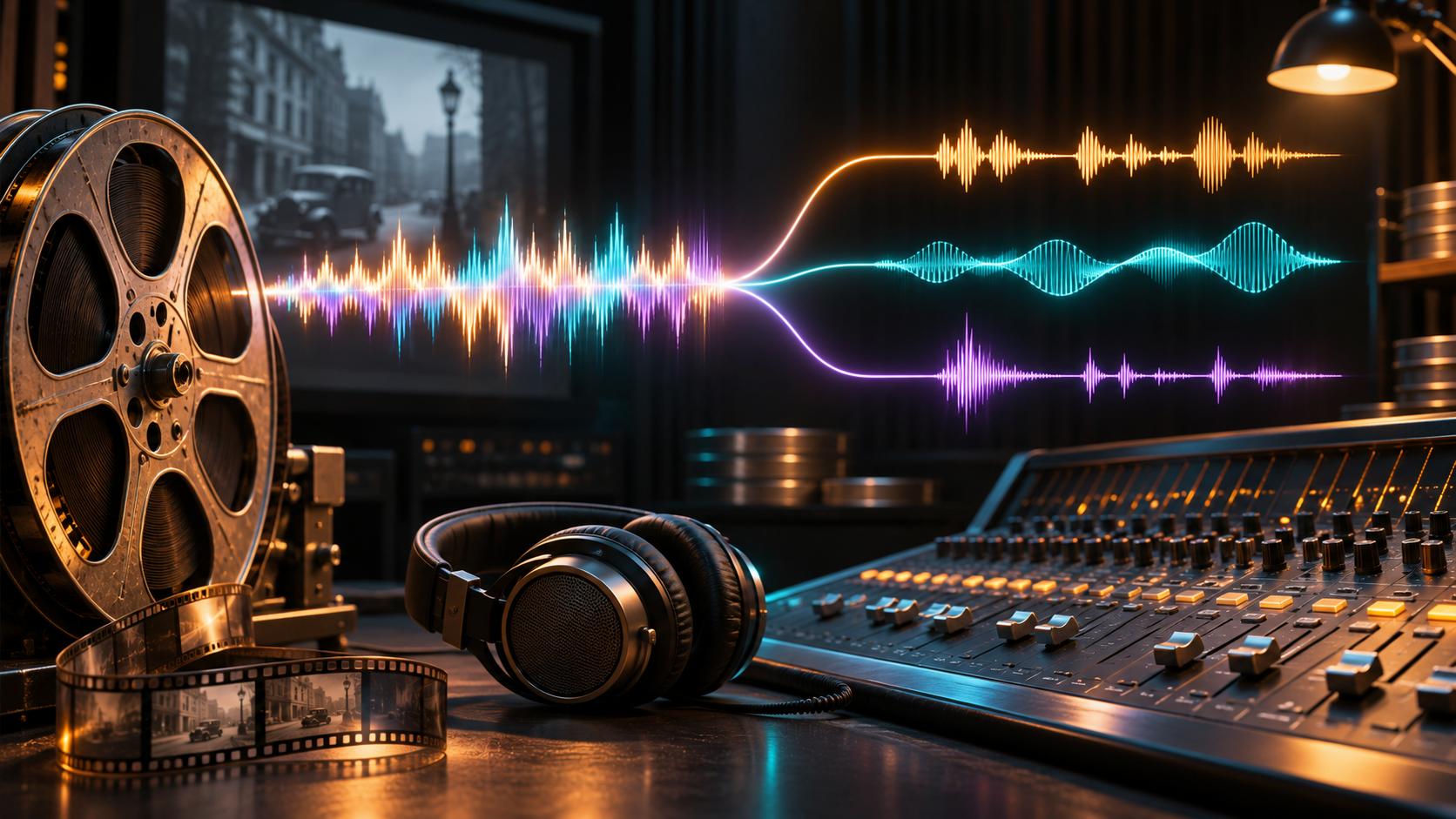
Vintage film reel, studio headphones and an audio console beneath one waveform separating into dialogue, music and effects

Sony has spent more than a decade teaching neural networks to pull individual sounds out of a finished mix. Its November 2, 2026 technology update shows that the work has moved beyond laboratory demonstrations: engineers have used it to rebuild classic film soundtracks, isolate hard-to-separate synthesizer parts and improve the voice path in consumer audio products.

The practical idea is simple even though the engineering is not. A recording may contain dialogue, music, effects, traffic, room noise and several instruments at once. Sound-separation software estimates the contribution of a chosen source and produces a new stem that can be edited or remixed. It does not recover a magically perfect original track, and Sony has not announced a standalone consumer restoration app. Human engineers still decide which output is usable and how it should be mixed.

For readers, the useful distinction is between Sony’s production technology and features available in current products. Film restoration and research models are specialist workflows. AI beamforming in headphones is a consumer application that uses related principles to emphasize a caller’s voice. Both depend on recognizing patterns in a mixture, but they solve different problems and should not be treated as one universal feature.

ReaderSpice may earn a commission from purchases made through links in this article. As an Amazon Associate, we earn from qualifying purchases.

Sony AI sound separation at a glance

  • Sony says it began applying deep learning to sound separation in 2013.
  • The technology estimates separate sources such as speech, instruments, sound effects or noise from one mixed recording.
  • Sony used separation during 4K UHD work on Lawrence of Arabia and Gandhi, and during the 4K remaster of the animated film Angel’s Egg.
  • Research now includes text- and video-guided models that can request a particular sound rather than only a fixed set of stems.
  • Consumer examples include AI beamforming for clearer calls, but Sony has not released the film-restoration system as a general consumer tool.

How AI sound separation works
How AI sound separation works

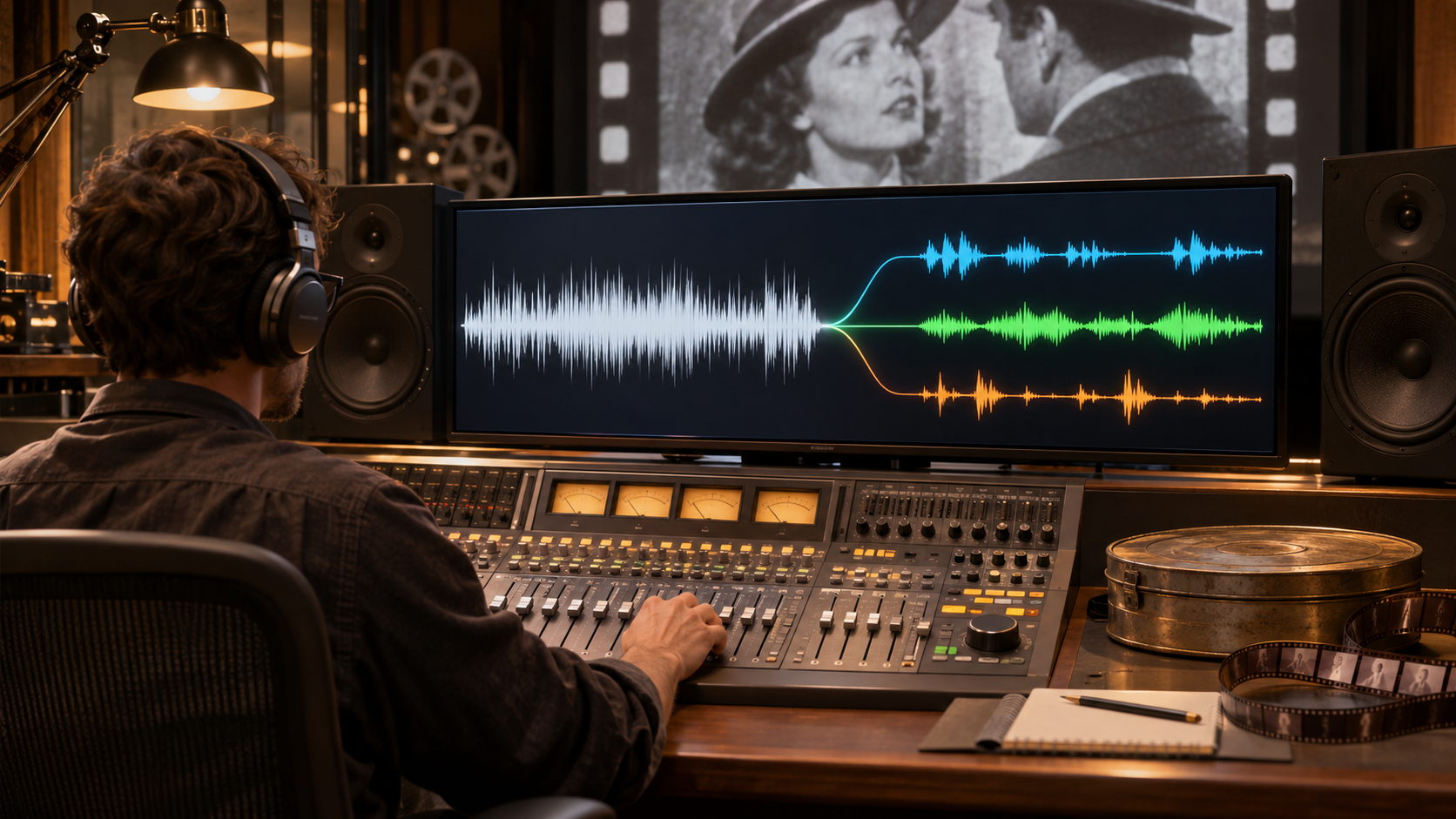
A conventional audio mix adds sources together. Once dialogue, ambience and music share the same waveform, there is no perfect mathematical switch that turns one component off. Modern systems instead learn statistical patterns from training examples. During training, a model sees mixtures along with known target sources and adjusts itself to predict a mask or waveform that preserves the requested source while suppressing the others.

At inference time, the model receives a recording it has never heard before. It analyzes frequency, timing, timbre and other structure, then produces estimated stems. In a movie restoration, those stems might be dialogue and effects. In music, they might be vocals, drums or a particular synthesizer line. In a call, the target is the speaker’s voice and the unwanted components are surrounding conversations, wind or room noise.

Sony’s newer research broadens the cue used to select a target. Its CLIPSep work explored text queries, while the 2026 MMAudioSep project adapts a video-to-audio generative model so a text prompt, video or both can guide separation. That is an important shift: instead of building a different model for every instrument or sound class, one system can be asked for the source that matches a semantic description. The research remains distinct from a shipping consumer editor, and published benchmark gains do not guarantee clean results on every archival recording.

How Sony rebuilt classic film soundtracks

Lawrence of Arabia and Gandhi

Older films often survive with dialogue, effects and music combined in a limited number of channels. That creates a problem for a modern spatial remix: engineers cannot place dialogue at the center and move ambience around the room if all of those elements are locked together. Sony says sound separation was used when creating 4K UHD versions of Lawrence of Arabia and Gandhi so components from the historic masters could be estimated separately and reconstructed in a spatial mix.

This is restoration, not invention. The goal is to give mixers useful control over elements already present in the source while preserving the character of the original performance. The Columbia Classics 4K Ultra HD collection confirms that both films were remastered for the format. Sony’s technology story explains the separation step; the final artistic and quality decisions remained with the restoration and mixing teams.

Angel’s Egg and difficult archival material

Sony also points to Mamoru Oshii’s 1985 animated film Angel’s Egg. The company says separation contributed to its 4K remaster, which premiered in the Cannes Classics program in May 2025 before a later theatrical release. Animation can present the same archival problem as live action: dialogue, score and designed effects may exist only as a finished mix rather than as pristine, synchronized production stems.

The case matters because it shows why source separation can be valuable even when no new scene or sound is being generated. A model can create editing access that was lost when the original mix was printed. That can support cleanup, localization, accessibility and spatial presentation, provided the output is reviewed against the source rather than accepted automatically.

What consumers can use today

AI beamforming for clearer calls

The clearest current consumer example is call processing. Sony’s WH-1000XM6 documentation describes an AI-based beamforming system that uses microphones and voice-pickup processing to emphasize the wearer’s speech. Beamforming uses the timing and level differences between microphones to focus on a direction, while learned processing helps distinguish the voice from competing noise. That is not the same pipeline used to restore a film, but it applies the same broader goal: estimate the wanted source inside a mixture.

Sony advertises the headphones with a dedicated noise-cancelling processor, twelve microphones, multipoint Bluetooth and up to 30 hours of battery life with noise cancellation enabled. Those are manufacturer specifications, not ReaderSpice lab results. Call quality can change with wind, microphone position, firmware, connected device and competing voices, so buyers should still compare independent microphone samples.

Phones, robots and real-time music

Sony’s earlier technology overview cites wind-noise reduction in Xperia phones, voice recognition for aibo and real-time karaoke as other applications. These examples illustrate how widely the task can vary. A phone may need to suppress turbulent wind, a robot may need to find one voice in a room, and karaoke software may estimate vocals quickly enough to work during playback.

Sony also says selected soundbars can analyze stereo material and help create a 3D spatial presentation. That should be understood as an adaptive rendering feature, not proof that the original studio stems have been recovered. A reconstructed or upmixed spatial field may sound convincing, but it is still an interpretation of the mixed input.

Sound separation is not the same as noise cancellation

Active noise cancellation, beamforming and source separation overlap but are not interchangeable. Active noise cancellation measures external sound and creates an opposing signal that reduces what reaches the ear, especially steady low-frequency noise. Beamforming combines multiple microphones to favor sound arriving from a chosen direction. Source separation estimates the content of sources that overlap in one recording.

A headset call can use all three ideas at once: noise cancellation for the listener, beamforming to focus the microphone array and learned separation or suppression to reduce competing sounds in the transmitted voice. Marketing often compresses these into the word “AI,” so the most useful question is what input the system receives, which source it is trying to preserve and whether the processing runs in real time.

Limits and why human mixing still matters

  • Separation is an estimate. Leakage, watery transients, missing reverberation or musical artifacts can remain in an isolated stem.
  • Results depend on training data. Unusual instruments, degraded tape, overlapping voices and sounds outside the training distribution can be harder to separate.
  • A better benchmark score does not guarantee a better restoration. Engineers must compare the output with the original and decide whether an artifact is more distracting than the problem it removes.
  • Rights and provenance still matter. Separating a recording does not create permission to remix, republish or train on it.
  • Sony’s public demonstrations and product claims are not a substitute for independent evaluation on the exact material or call environment a buyer cares about.

Sony’s own research underlines the data problem. CLIPSep was designed to learn from noisy, unlabeled videos, and later work explores multimodal cues and pretrained generation models. Those approaches aim to generalize to more sounds, but universal separation remains a research direction rather than a solved promise. For archival work, the safest workflow keeps the original untouched, documents every processing step and preserves both the model output and the engineer’s final mix.

A relevant Sony headphone with AI beamforming

The Sony WH-1000XM6 in black on Amazon (ASIN B0FBTYSRQ3) is a directly relevant consumer example because Sony markets its call system around AI beamforming and voice isolation. It is not a film-restoration tool, and shoppers should verify the seller, warranty, current price and return policy before buying.

Disclosure: ReaderSpice may earn a commission from qualifying Amazon purchases made through the link above, at no additional cost to you.

The bottom line

Sony AI sound separation is most compelling when it restores access to audio elements that no longer exist as separate tracks. Its use on classic films shows a practical, high-value application: give expert mixers enough control to rebuild dialogue, music and effects for a modern release without discarding the original master. Research such as MMAudioSep points toward more flexible systems that can isolate a sound selected by text or video cues.

For consumers, the immediate benefits are narrower and easier to evaluate. AI beamforming can improve call pickup, and related processing can suppress wind or support spatial rendering. The bigger promise—a universal tool that cleanly separates any sound from any recording—is still constrained by training data, artifacts and artistic judgment. Treat separation as a powerful editing aid, not an automatic truth machine.

Sources

Sony Group — Supporting New Forms of Creation with Sony’s Sound Separation Technology, November 2, 2026

Sony Group — AI Sound Separation technology story

Sony AI — MMAudioSep research publication, ICASSP 2026

Sony Group — CLIPSep text-queried sound separation publication

Sony Electronics — WH-1000XM6 official product page and specifications

Sony Support — WH-1000XM6 call quality and voice pickup guidance
Sony Pictures — Columbia Classics 4K Ultra HD Collection

Amazon — Sony WH-1000XM6 black (ASIN B0FBTYSRQ3)

Samsung Galaxy Buds On Cost $229: Open-Ear Design, Tradeoffs and Buying Advice

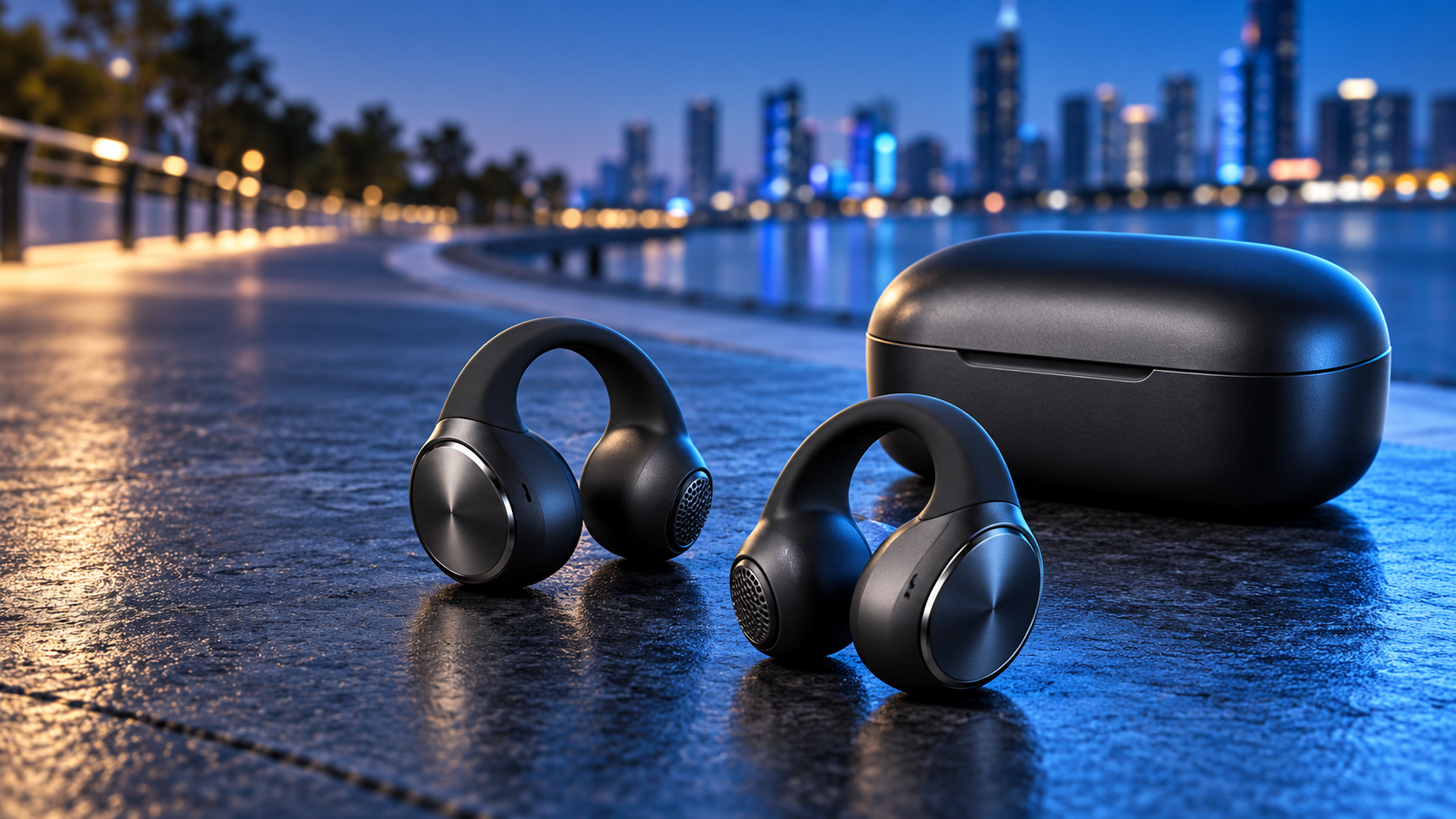
Black clip-on open-ear earbuds and charging case beside a blue-lit city running path

Samsung is bringing its first clip-on, fully open-ear earbuds to the United States at $229, with availability beginning in early November 2026. Galaxy Buds On are designed for listeners who want music, podcasts and calls without sealing the ear canal, so traffic, announcements and nearby conversations remain audible.

That benefit is also the central tradeoff. Galaxy Buds On do not provide the isolation or traditional active noise cancellation of sealed earbuds such as Galaxy Buds4 Pro. Samsung is instead selling comfort, awareness and hands-free Galaxy features. The practical question is whether those advantages justify a premium price before independent reviews have tested fit, sound leakage, call quality and battery life.

The quick take

  • U.S. price: $229 in black, with availability beginning in early November 2026.
  • Design: 6.65-gram clip-on open-ear earbuds that leave the ear canal uncovered.
  • Battery claim: up to 9.5 hours per charge and up to 38 hours with the case.
  • Durability: IP54 for the earbuds only; the charging case is not water resistant.
  • Compatibility: Android 12 or later with more than 1.5 GB of memory, although some features require a Galaxy device.
  • Best fit: runners, commuters and office users who prioritize awareness over isolation.

Galaxy Buds On keep the ear open for awareness

Galaxy Buds On keep the ear open for awareness

The clip-on bridge holds the speaker near the ear instead of pushing a tip into the ear canal. Samsung says it used more than 119 million ear data points, AI-assisted optimization and physics simulations to spread pressure and improve stability across different ear shapes. Each earbud weighs 6.65 grams.

An open design can be useful for outdoor running, walking, shared offices and travel situations where hearing the environment matters. It is not a substitute for situational judgment, and users should still keep playback at a level that allows them to notice vehicles, warnings and people nearby.

The same openness makes these a weaker match for airplanes, loud trains or anyone who wants to block background noise. Samsung itself positions Galaxy Buds4 Pro for focused listening and noise cancellation, while Galaxy Buds On are intended for awareness and all-day convenience.

Sound and call claims still need independent testing

Samsung equips Galaxy Buds On with an 11.3 mm TwinBoost speaker, three digital microphones and a voice pickup unit in each earbud. The company says automatic volume adjustment reacts to changing ambient noise, while an Audio Leakage Reduction system is intended to reduce how much nearby people can hear.

Those are manufacturer claims, not ReaderSpice test results. Open-ear products often trade sub-bass impact and isolation for comfort and awareness, and performance can change with ear shape, placement and ambient volume. Buyers should wait for independent measurements if bass extension, microphone performance or leakage at a desk is a priority.

The codec list includes Samsung Seamless Codec, SSC UHQ, AAC, SBC and LC3. The highest-quality Samsung options are most relevant inside the Galaxy ecosystem; non-Samsung Android users should not assume every advertised audio or AI feature will be available.

Battery life, charging and water resistance

Samsung rates the earbuds for up to 9.5 hours of music playback and up to 38 hours total with the fully charged case. Claimed talk time is up to 5.5 hours per charge and 25 hours total. These figures come from internal tests with pre-production hardware and default settings, so real results will depend on volume, calls, signal strength and enabled features.

The case supports wireless charging, but Samsung says charging cables and wireless chargers are sold separately. The earbuds carry an IP54 rating for dust and freshwater splashes for up to five minutes. The case is not water resistant, and Samsung specifically advises against beach or pool use.

Galaxy features are the strongest reason to pay the premium

On a compatible Galaxy phone or tablet, opening the case starts pairing without requiring the Galaxy Wearable app, and controls can appear in Quick Panel. Samsung also advertises hands-free Gemini Live access, Quick Voice Memo, Bixby search, voice commands and head gestures for actions such as accepting a call or dismissing an alarm.

Several of those features carry device, account, language or software requirements. Samsung says head gestures require One UI 8.5 or later, while Gemini Live needs a compatible Google account, device, region and internet connection. Some functions are unavailable on non-Samsung devices.

Samsung lists Bluetooth 6.2 and Auto Switch across compatible Galaxy devices. Its product page says Galaxy Connect can extend switching to non-Samsung Windows PCs, but Samsung does not advertise conventional two-device Bluetooth multipoint. SoundGuys also flags the absence of true multipoint, which matters if you regularly move between an Android phone and an iPad or a non-Galaxy computer.

How the $229 price compares

The launch price puts Galaxy Buds On near the top of the open-ear category. SoundGuys notes that they cost more than many established clip-on rivals, while the specification sheet is broadly competitive rather than obviously dominant. The strongest differentiators are the Galaxy integration, hands-free controls and Samsung’s claimed fit work.

For a cross-platform comparison, the Shokz OpenFit 2 on Amazon (ASIN B0DN11MTZ6) uses an ear-hook design, supports Bluetooth multipoint and is rated for up to 11 hours per charge and 48 hours with its case. Prices, seller, warranty and availability can change, so compare the exact listing before buying.

Disclosure: ReaderSpice may earn a commission from qualifying Amazon purchases made through the link above, at no additional cost to you.

Who should buy Galaxy Buds On and who should wait

Consider Galaxy Buds On if you already use a recent Galaxy phone, want to keep your ears open during runs or work, dislike pressure inside the ear canal and value hands-free Samsung features more than conventional multipoint or noise isolation.

Wait for reviews if sound leakage, bass response, microphone quality or long-session comfort will decide the purchase. Skip them if your main listening happens on planes or loud public transit, if you need active noise cancellation, or if your devices span multiple ecosystems and seamless two-device multipoint is essential.

At $229, the feature set makes the most sense as a Galaxy accessory rather than a universal open-ear bargain. Samsung’s 9.5-hour battery claim and light weight are promising, but the price is high enough that fit and independent performance testing should carry more weight than launch-day specifications.

Sources

Samsung U.S. Newsroom – Galaxy Buds On U.S. launch, price and availability

Samsung Mobile Press – official specifications and compatibility notes

Samsung – Galaxy Buds On product page and feature requirements

SoundGuys – launch analysis and open-ear market comparison

Engadget – Galaxy Buds On design and feature overview

Amazon – Shokz OpenFit 2 black (ASIN B0DN11MTZ6)

Inline image alt text: Runner wearing a black open-ear clip-on earbud on a city park path at sunrise

TDM Neo Review Roundup: The $249 Headphone-Speaker Hybrid’s Tradeoffs

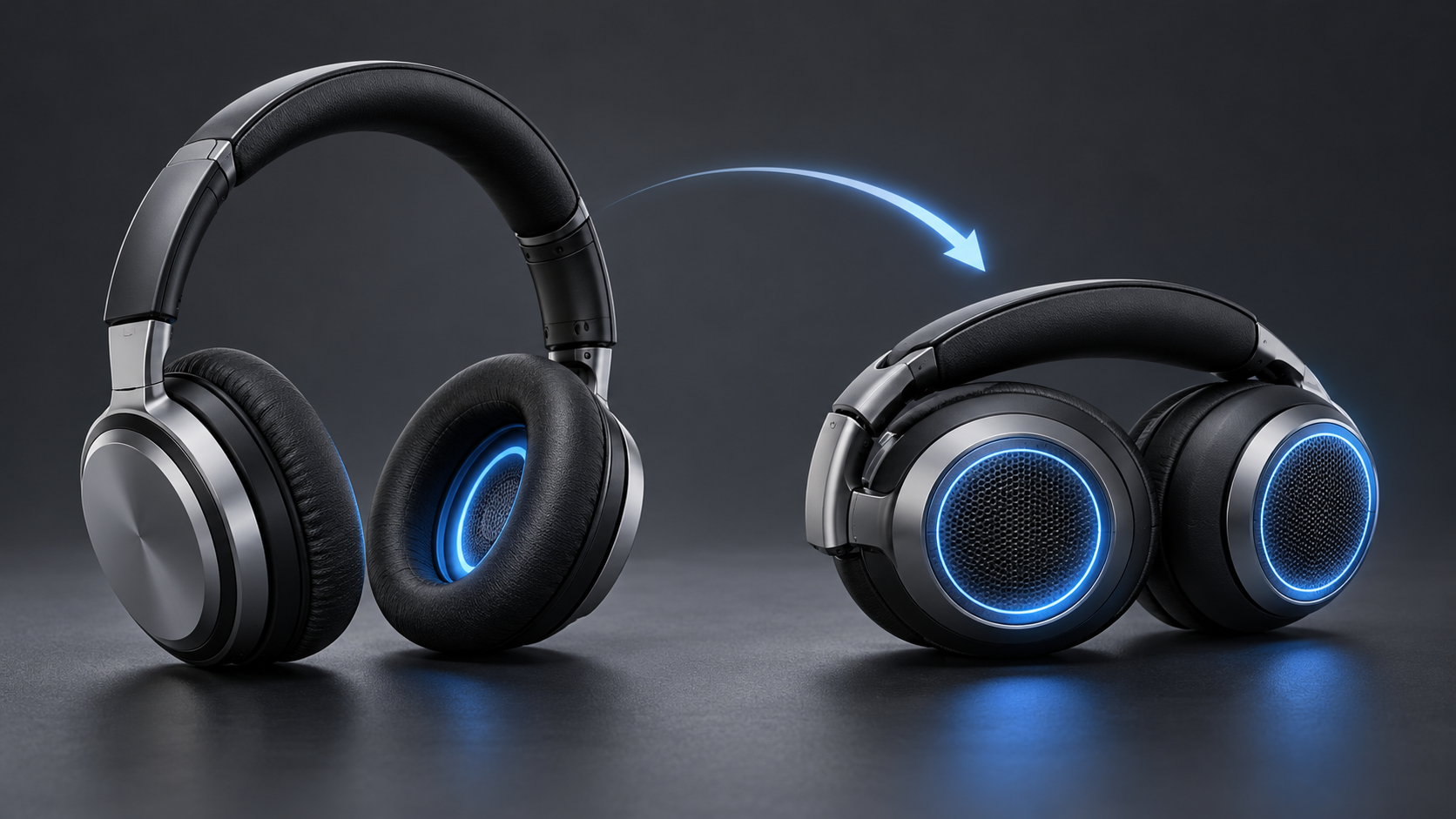
Editorial illustration of flexible hybrid headphones folded into a compact portable speaker on a modern desk

The TDM Neo solves an unusually specific problem: it is a pair of on-ear wireless headphones that physically twists into a compact Bluetooth speaker. After debuting at CES and raising more than $154,000 on Kickstarter, the $249 hybrid is now available in the United States—and independent reviews finally show where the clever engineering helps and where it forces compromises.

This is a review roundup, not a ReaderSpice hands-on test. TDM’s specifications are identified as manufacturer claims, while comfort, sound and usability observations are attributed to reviewers who used production hardware.

The short version is that the transformation mechanism appears dependable and the headphone-mode battery estimate is exceptional. The less flattering consensus is that buyers sacrifice active noise cancellation, comfort and sound quality to avoid carrying two separate devices.

Disclosure: ReaderSpice may earn a commission from qualifying purchases made through Amazon links, at no additional cost to you.

The quick take

  • TDM Neo costs $249 and is available in Onyx Black or Cool White through TDM and U.S. retailers.
  • Four 40mm drivers are split between private headphone playback and two outward-facing 5W speaker channels.
  • The flexible headband and magnetic closure make the switch between modes simple, and multiple reviewers found the mechanism convincing.
  • TDM claims more than 200 hours in headphone mode and about 16 hours in speaker mode, with up to eight hours from a five-minute charge.
  • There is no active noise cancellation and no published water-resistance rating.
  • Independent reviews broadly agree that the design is more impressive than the sound, especially in speaker mode.

What TDM Neo is and what comes in the box

TDM—short for Tomorrow Doesn’t Matter—describes Neo as a hybrid headphone-speaker. Each earcup contains an inward-facing 40mm driver for normal listening and an outward-facing 40mm driver for shared playback. Twist the flexible band, bring the magnetic sections together and the electronics route audio to the external pair.

The official package includes the headphones, a carrying case, a USB-C charging cable and a 3.5mm auxiliary cable. Bluetooth 6.0 multipoint is listed for wireless connections, while the analog input offers a useful fallback for airplane screens, older laptops and other sources that lack Bluetooth.

The Verge reported U.S. availability at $249 through TDM, Amazon and Walmart. Stock, color choice and return terms can vary by seller, so buyers should verify the exact offer at checkout. TDM’s own store currently advertises free shipping and a 30-day return window.

How the twist design changes modes

How the twist design changes modes

The transformation is the strongest part of the product. WIRED found that the headband rolls smoothly, the magnets meet securely and playback switches reliably. The folded unit rests on two rubberized sections, keeping the active speaker surfaces aimed outward instead of buried against a table.

That engineering is more meaningful than a software shortcut. Neo carries two distinct driver pairs so the room-facing speakers do not blast through the ear cushions. The physical position tells the device which set to use, and the companion app can customize what the twisting action does.

The design still creates ergonomic costs. Four full-size drivers, the flexible structure and the magnets bring the weight to about 340 grams, or 11.9 ounces. WIRED measured it as noticeably heavier than several conventional over-ear alternatives, even though Neo sits on the ear rather than surrounding it.

Speaker mode also changes the orientation of controls and ports. WIRED noted that the volume control feels reversed after folding and the USB-C cable exits upward. TechRadar found the folded speaker could feel less stable than a purpose-built portable speaker. Those are small details, but they matter on a hotel nightstand or crowded desk.

Headphone mode: long battery life, no ANC

Neo’s headline battery figure is more than 200 hours in headphone mode. Even if real-world use falls short, the claim is far beyond the 30-to-60-hour range common among mainstream wireless headphones. A five-minute charge is rated for up to eight hours, and a full charge takes roughly three hours.

The tradeoff is that Neo omits active noise cancellation. Passive isolation from the firm on-ear cushions can reduce some outside sound, but it cannot counter steady aircraft, train or HVAC noise the way a good ANC system can. For travel—the exact situation where carrying one device instead of two sounds useful—that omission is especially important.

WIRED described headphone playback as detailed and pleasant but confined, with clear bass and vocals yet less openness than strong competitors. TechRadar reached a harsher conclusion, praising the battery life while calling the overall tuning imprecise. These are subjective judgments, but both reviews place the sound below the best choices near the price.

Comfort may be equally decisive. The memory-foam pads and adjustable band are replaceable, but the combination of weight, clamp and on-ear pressure will not suit every head. A buyer considering Neo should plan a long continuous listening test during the return window, not just a five-minute demo.

Speaker mode: convenient, but not a Flip 7 replacement

Folded into speaker mode, Neo activates two outward-facing 5W drivers for 10W total output. The concept is useful in a hotel room, kitchen or small gathering because the speaker is already attached to something a traveler planned to carry.

The independent audio verdict is the main problem. WIRED found enough volume for casual listening but described the sound as thin and underwhelming beside the JBL Flip 7. TechRadar likewise reported weak bass and limited balance compared with inexpensive dedicated speakers.

That does not make speaker mode worthless. Voice audio, background music and quick sharing can be practical, and the 16-hour estimate is competitive for a compact secondary function. But buyers expecting the punch, weather resistance and stable tabletop behavior of a purpose-built outdoor speaker should lower expectations.

There is no published IP rating. The upward-facing USB-C port in folded mode reinforces that Neo should stay away from rain, pool edges, sand and dusty outdoor use. A hybrid that replaces two products only saves space when its limitations fit the destination.

Battery, charging and replaceable parts

The unusually long headphone endurance is the clearest specification win. Speaker playback consumes far more power, which explains the drop from 200-plus hours to about 16 hours. Actual results will vary with volume, Bluetooth conditions, call use and app settings.

TDM sells a replacement-battery kit and says the ear cushions can be replaced. The Verge also reported that both the battery and memory-foam pads are removable. That gives the hardware a better chance of surviving beyond the original cell’s useful life, provided replacement parts remain available.

Repairability claims should still be evaluated practically. Buyers should check the price, shipping region, tools and warranty implications of a battery swap before treating it as a guaranteed long-term advantage. A replaceable component is useful only if the part can still be purchased when it is needed.

USB-C handles charging, while the included 3.5mm cable can carry audio. TDM’s materials do not position USB-C as a digital wired-audio connection, so shoppers who want lossless playback from a laptop or phone should not assume charging support also means USB audio.

App, EQ and account requirements

The TDM app exposes battery status, separate equalizer settings for headphone and speaker modes, low-latency gaming, device finding, battery-saving options and customizable twist behavior. Separate EQ profiles are sensible because the two driver pairs behave differently.

TechRadar found that editing the custom five-band EQ and using the find-device feature required an account. That requirement may be acceptable to some buyers, but it adds another credential and data relationship to an audio product whose basic listening functions do not inherently need cloud identity.

Before signing in, review the app’s permissions and privacy policy. Test that the hardware buttons, analog cable and basic Bluetooth playback remain useful without an account. Features that matter should be verified during the return period rather than assumed from a store-page checklist.

The $249 value question and a verified alternative

Neo’s value depends almost entirely on how much one-device convenience is worth. The engineering is distinctive, and buying one object means one case, one battery and one charging routine. But the product competes simultaneously with conventional headphones and mature portable speakers.

WIRED’s comparison is instructive: it recommends considering the Soundcore Space One Pro for comfortable folding ANC headphones, then adding a dedicated speaker such as the JBL Flip 7. The pair costs more at list price but is often close to Neo’s total when discounted, and each device is designed around a single job.

Readers who prioritize noise cancellation can check the Soundcore Space One Pro on Amazon (ASIN B0CZDHS41T). It is a genuine alternative rather than the featured product, so compare the current price and seller before deciding. ReaderSpice may earn a commission from qualifying purchases made through this tracked link.

The other cost is packing volume. Two dedicated products may sound better, but they take more room and require separate charging. Neo is strongest for a traveler who genuinely uses both modes, accepts on-ear comfort and values instant switching more than maximum fidelity.

Consider TDM Neo if:

  • You regularly want private headphones and a small room speaker on the same trip.
  • More than 200 hours of claimed headphone battery life matters more than active noise cancellation.
  • The physical transformation and replaceable parts are worth paying for.
  • You mainly use speaker mode for podcasts, background listening or quick sharing.

Skip it if:

  • You need strong ANC for flights, commuting or an open office.
  • You want the sound, bass and weather resistance of a dedicated portable speaker.
  • Heavy on-ear headphones become uncomfortable during long sessions.
  • You expect water resistance, USB-C digital audio or premium sound at $249.

What to test during the return window

  • Wear Neo continuously for at least an hour and check clamp pressure, heat and soreness.
  • Compare headphone sound with a familiar pair using the same songs and volume.
  • Fold and unfold the mechanism repeatedly, confirming reliable driver switching and magnet alignment.
  • Test speaker mode at the real distance and volume you expect to use.
  • Check whether the upward-facing ports and control orientation work in the intended location.
  • Verify multipoint switching, analog input, microphone quality and any app features you consider essential.
  • Confirm seller, warranty, return shipping and replacement-part availability before the return deadline.

Verdict

TDM Neo is a real piece of engineering, not a cosmetic gimmick. The flexible band, magnets, automatic routing and separate driver pairs turn a strange CES idea into hardware that reviewers say transforms smoothly and reliably.

The product is nevertheless easier to admire than to recommend broadly. Independent tests agree that the $249 hybrid gives up ANC, comfort and sound quality, while speaker mode cannot match strong dedicated models. Its extraordinary headphone battery life and replaceable components soften that judgment but do not erase it.

Neo makes sense for a narrow buyer: someone who repeatedly carries both headphones and a speaker, wants one object instead, and accepts the acoustic compromise. Everyone else should compare two separate devices before paying for the twist.

Sources

TDM official Neo product page and specifications

WIRED TDM Neo review — October 23, 2026

The Verge U.S. availability and hardware report — October 6, 2026

TechRadar TDM Neo review — October 17, 2026

Kickstarter TDM Neo campaign and updates

Sonos Ace Ultra and Beam Ultra Launch September 29: Price, Specs and Buying Advice

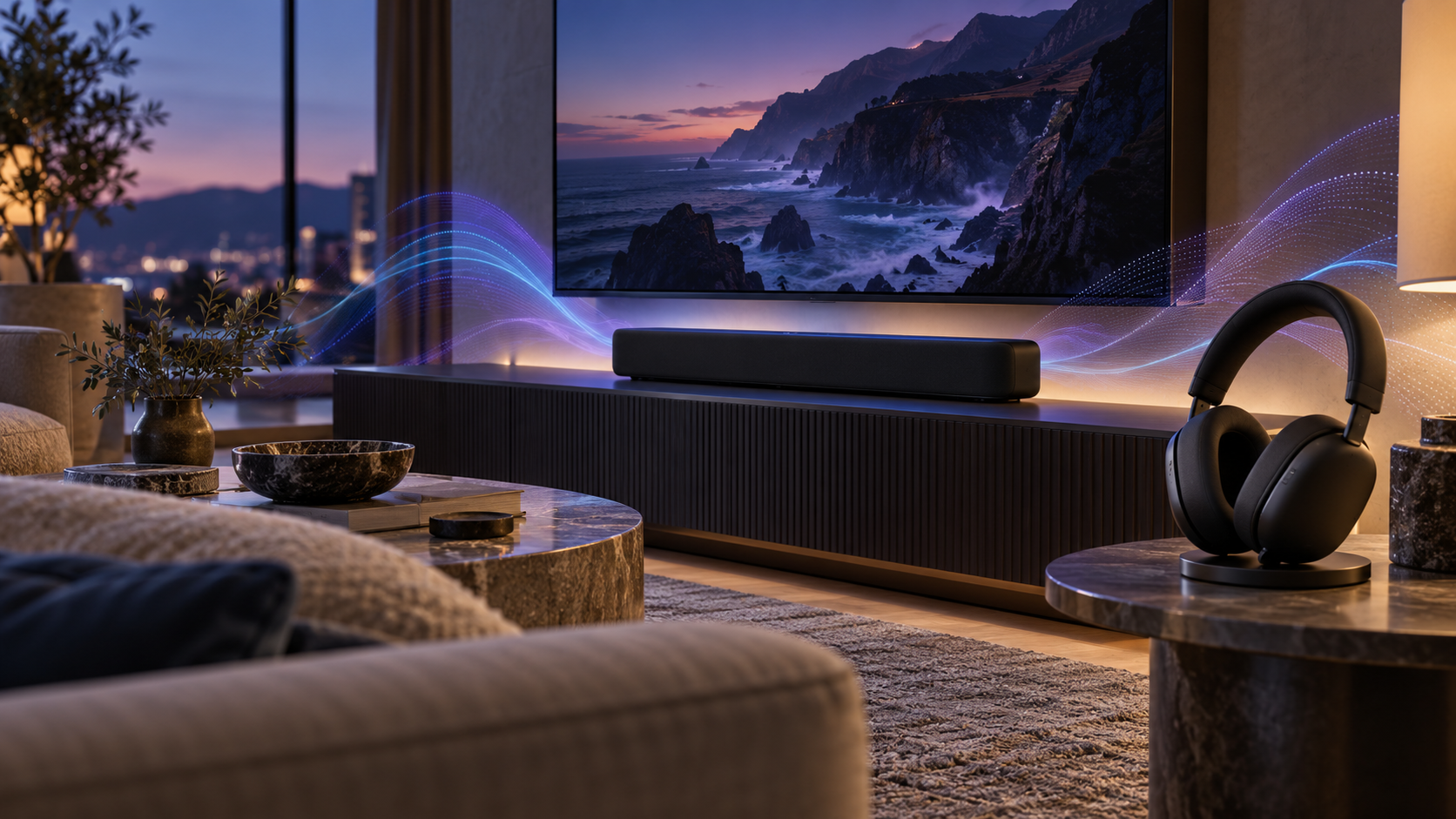
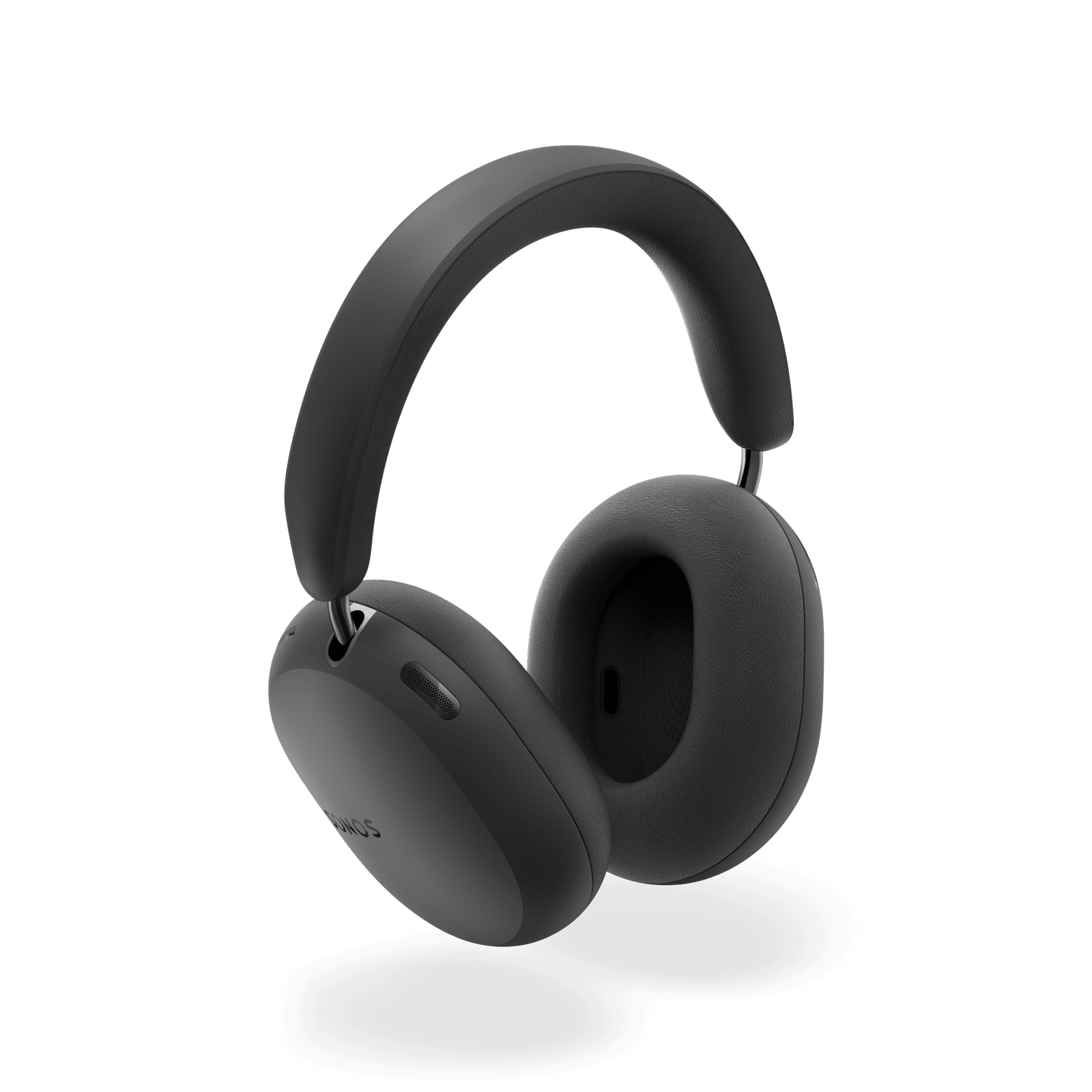
Premium over-ear headphones beside a compact soundbar in a modern living room

Sonos is putting two new premium audio products on sale September 29, 2026: the $449 Ace Ultra over-ear headphones and the $699 Beam Ultra compact soundbar. Both are available to preorder now, but the bigger story is how tightly they plug into the company’s Sonos 27 platform.

The hardware upgrades are substantial on paper. Beam Ultra adds real upward-firing drivers and a 7.1.2-channel Dolby Atmos layout, while Ace Ultra brings stronger adaptive noise cancellation, longer battery life and direct system-to-headphone handoff. Neither product has completed ReaderSpice’s independent review process, so performance claims below are identified as manufacturer claims or early hands-on impressions.

ReaderSpice may earn a commission from purchases made through links in this article. As an Amazon Associate, we earn from qualifying purchases.

Price and September 29 release date

  • Sonos Ace Ultra costs $449 in the United States and comes in black, soft white, agave and sand.
  • Sonos Beam Ultra costs $699 in the United States and comes in matte black or white.
  • Preorders are open now, with Sonos estimating shipments beginning September 29, 2026.
  • Ace Ultra includes a travel case, USB-C cable and USB-C-to-3.5mm cable. Beam Ultra includes its power and HDMI cables.

Sonos Beam Ultra: true 7.1.2 Atmos in a compact bar

Sonos Beam Ultra: true 7.1.2 Atmos in a compact bar

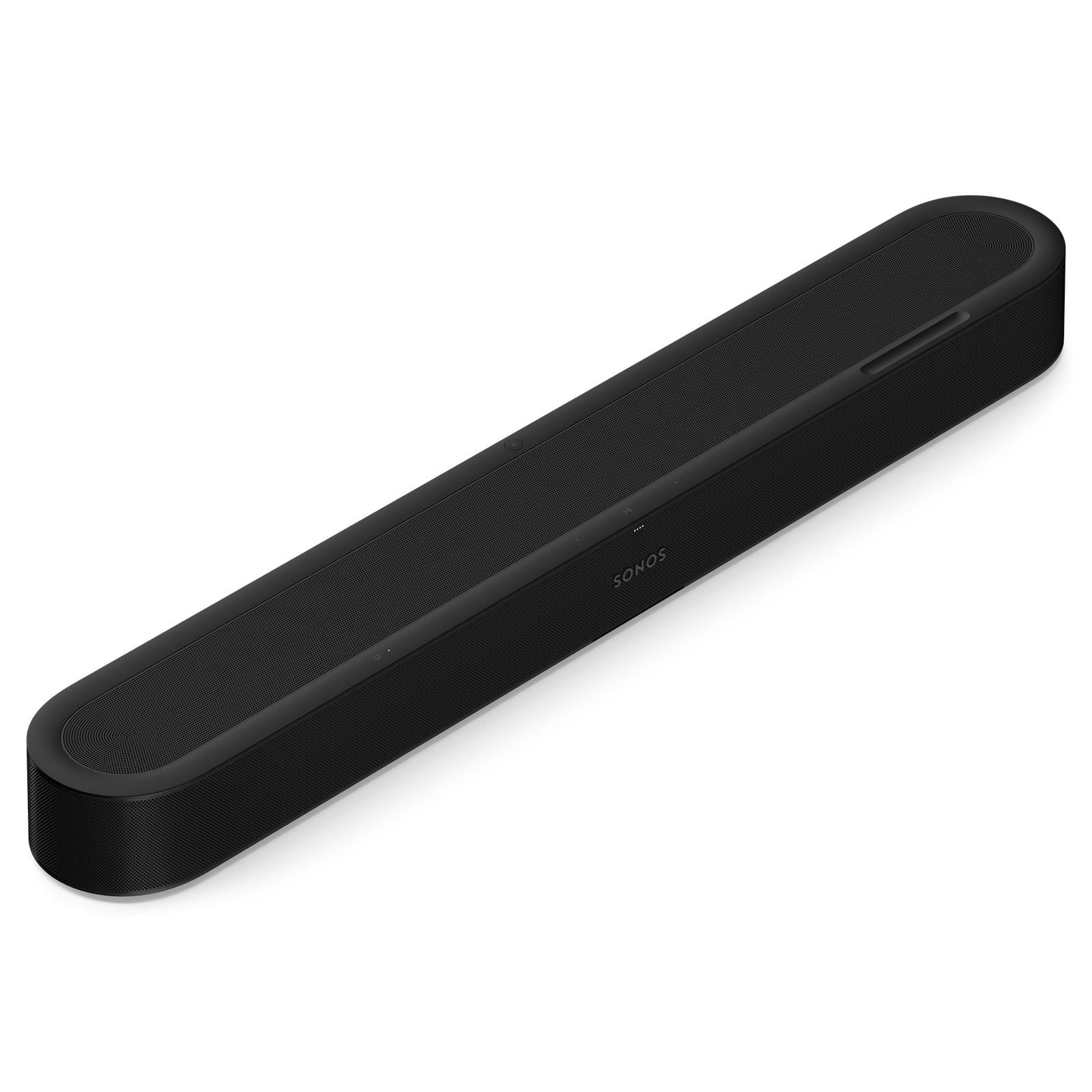
Beam Ultra sits between the $499 Beam (Gen 2) and the $1,099 Arc Ultra. Its nine-driver architecture includes five tweeters and four low-profile woofers. Two of the tweeters fire upward through directional horns, giving Dolby Atmos content physical height channels instead of relying only on virtualization.

The soundbar measures 29.53 inches wide, 2.56 inches tall and 4.13 inches deep, so it remains much easier to place than many flagship bars. It supports HDMI eARC/ARC, Wi-Fi 6, Bluetooth 5.3, AirPlay 2 and Sonos Trueplay room tuning on both iOS and Android.

Dialogue is another focus. Sonos says its redesigned center channel and four adjustable levels of AI Speech Enhancement can bring voices forward when effects or room noise make them difficult to hear. Night Sound compresses loud moments and lifts quieter detail for late viewing.

Early demonstrations reported wider, more separated Atmos effects, stronger mid-bass and clearer dialogue than Beam (Gen 2), but a controlled review will still need to test bass extension, overhead precision, music balance and performance in rooms with difficult ceilings.

Who should consider Beam Ultra?

  • Choose Beam Ultra if you want real upward-firing Atmos channels in a soundbar that is still under 30 inches wide.
  • Keep Beam (Gen 2) on your shortlist if $699 is too high or your room and content will not benefit from height channels.
  • Consider Arc Ultra instead for a large room or when maximum scale matters more than size and price.

Sonos Ace Ultra: stronger ANC and whole-home linking

Sonos Ace Ultra: stronger ANC and whole-home linking

Ace Ultra uses a new Sonos-designed 40mm driver in each ear cup and ten microphones for noise control, calls, Aware mode and TrueCinema. Sonos claims up to twice the active noise cancellation of the original Ace, while adaptive EQ compensates for acoustic leaks caused by glasses, hair or fit.

Battery life rises from 30 to as much as 35 hours with ANC enabled. A three-minute charge is rated for up to three hours of playback. Lossless audio is available over compatible Qualcomm aptX Bluetooth devices or a USB-C connection, and listeners can choose a simpler three-band EQ or a more precise eight-band EQ.

The defining feature is Headphone Linking. In early access, pressing the Content Key can pull music or TV audio from a nearby compatible Sonos product to the headphones, then send it back without opening the phone app. TV Audio Swap, Dolby Atmos, TrueCinema room calibration and dynamic head tracking remain part of the private-listening pitch.

Sonos also designed the ear cushions and battery to be replaceable, a welcome durability improvement for headphones expected to last several years. Replacement pricing and long-term parts availability will matter as much as the design promise.

Who should consider Ace Ultra?

  • Ace Ultra makes the most sense for an existing Sonos household that will use Headphone Linking and TV Audio Swap.
  • Frequent travelers may value the 35-hour ANC rating, fast charging and four color choices.
  • Buyers who only need Bluetooth headphones should wait for full comparative reviews against Sony, Bose and Apple models.

How the new models compare with what you can buy today

The original Sonos Ace remains listed at $349, while Beam (Gen 2) remains $499. That creates a clear $100 headphone step and a $200 soundbar step. The Ultras justify those premiums mainly through deeper Sonos-system integration and hardware that directly addresses limitations in the older products.

If you need a compact Sonos soundbar immediately and do not require upward-firing speakers, the current Sonos Beam (Gen 2) on Amazon remains the lower-cost route. Waiting until independent reviews publish could also reveal launch promotions or discounts on the outgoing models.

What to verify before ordering

  • Check that your television has HDMI ARC or eARC; eARC is required for the highest-bandwidth formats listed by Sonos.
  • Measure the available width and depth on your console, and leave the top of Beam Ultra unobstructed so its height drivers can work properly.
  • Confirm which Sonos products support the specific linking, surround and TV Audio Swap features you want.
  • Treat the two-times-stronger ANC figure, 35-hour battery claim and sound-quality promises as claims until independent tests confirm them.
  • Remember that Headphone Linking is launching in early access, so features and reliability may change.

Early verdict

Beam Ultra looks like the more consequential upgrade because physical upward-firing drivers change what a compact Beam can reproduce. Ace Ultra is a more targeted proposition: its improvements are meaningful, but its strongest advantage appears only when paired with the wider Sonos ecosystem.

For current Sonos owners, both products deserve attention. Everyone else should compare the full system cost, wait for measured reviews and decide whether Sonos-only conveniences are worth paying more for. Preorders are not necessary for shoppers who want verified performance rather than launch-day availability.

Sources

Sonos Beam Ultra official product page

Sonos Ace Ultra official product page

Sonos newsroom announcement for Beam Ultra and Ace Ultra

The Verge launch report and specification breakdown

TechRadar interview and early Beam Ultra listening impressions

Beats 360 Headphones Cost $349.99: Features, Release Date and Early Verdict

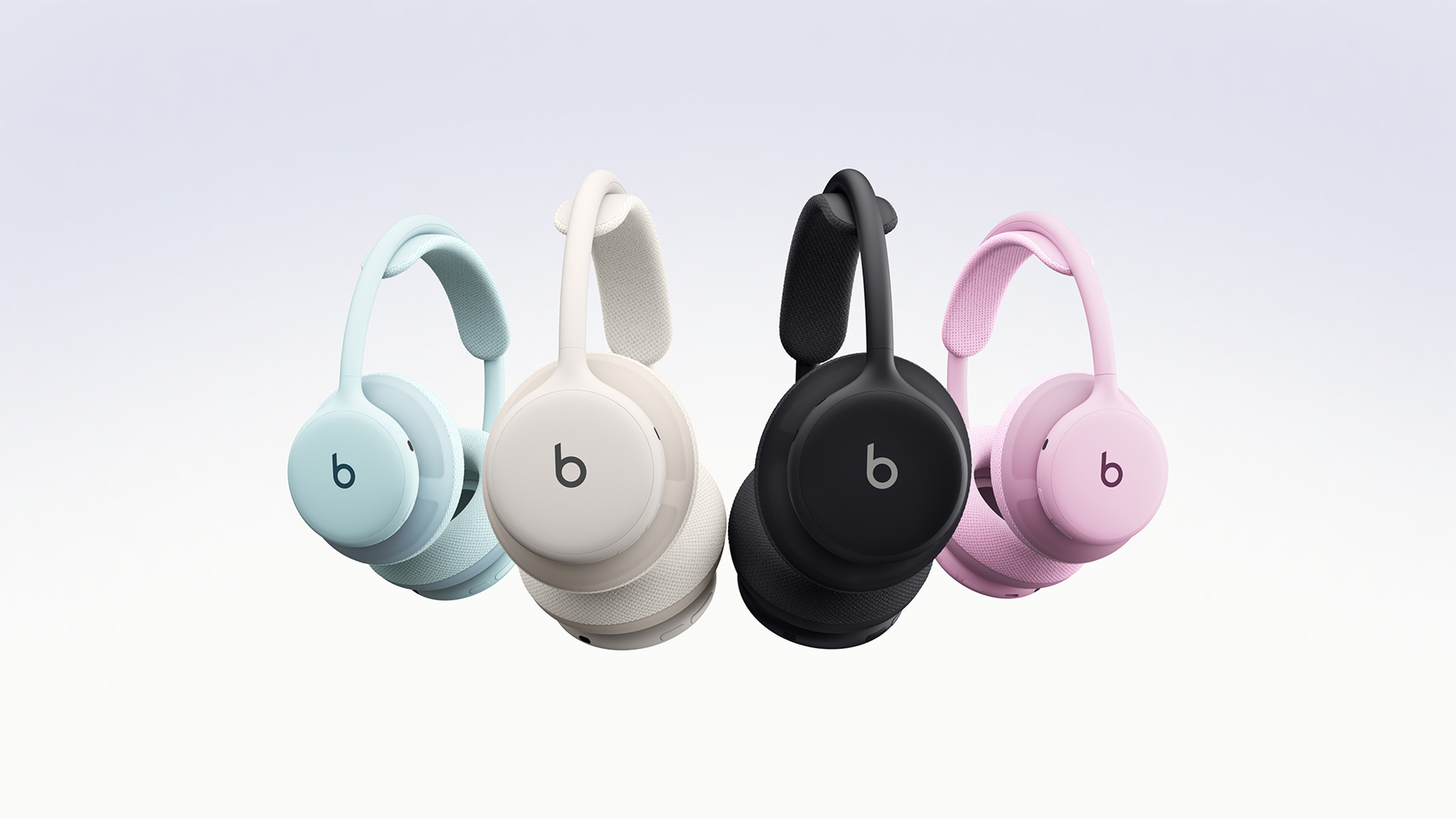
Beats 360 headphones in black, cloud, sky and pink with interchangeable knit cushions

Beats has launched its first customizable over-ear headphones. The Beats 360 cost $349.99, are available to order now, and reach stores on September 24, 2026. Their pitch is unusually specific: a premium noise-canceling headphone that can handle sweat, swap between workout and everyday cushions, and work deeply with both Apple and Android devices.

That makes the Beats 360 more interesting than a routine flagship refresh. They are IPX4 rated, use removable ear and headband cushions, and promise up to 32 hours of listening even with active noise cancellation and Personalized Spatial Audio enabled. But early reviews also identify meaningful tradeoffs, including no wired listening, no wear detection and a fit that may feel tight on larger heads.

Beats 360 price and release date

Beats 360 headphones in Black, Cloud, Pink and Sky with interchangeable cushions

Beats 360 orders opened on September 22 for $349.99 in the United States. The headphones go on sale in stores on September 24 in Black, Cloud, Pink and Sky. Each pair includes matching Performance Knit cushions and a woven ripstop carrying case.

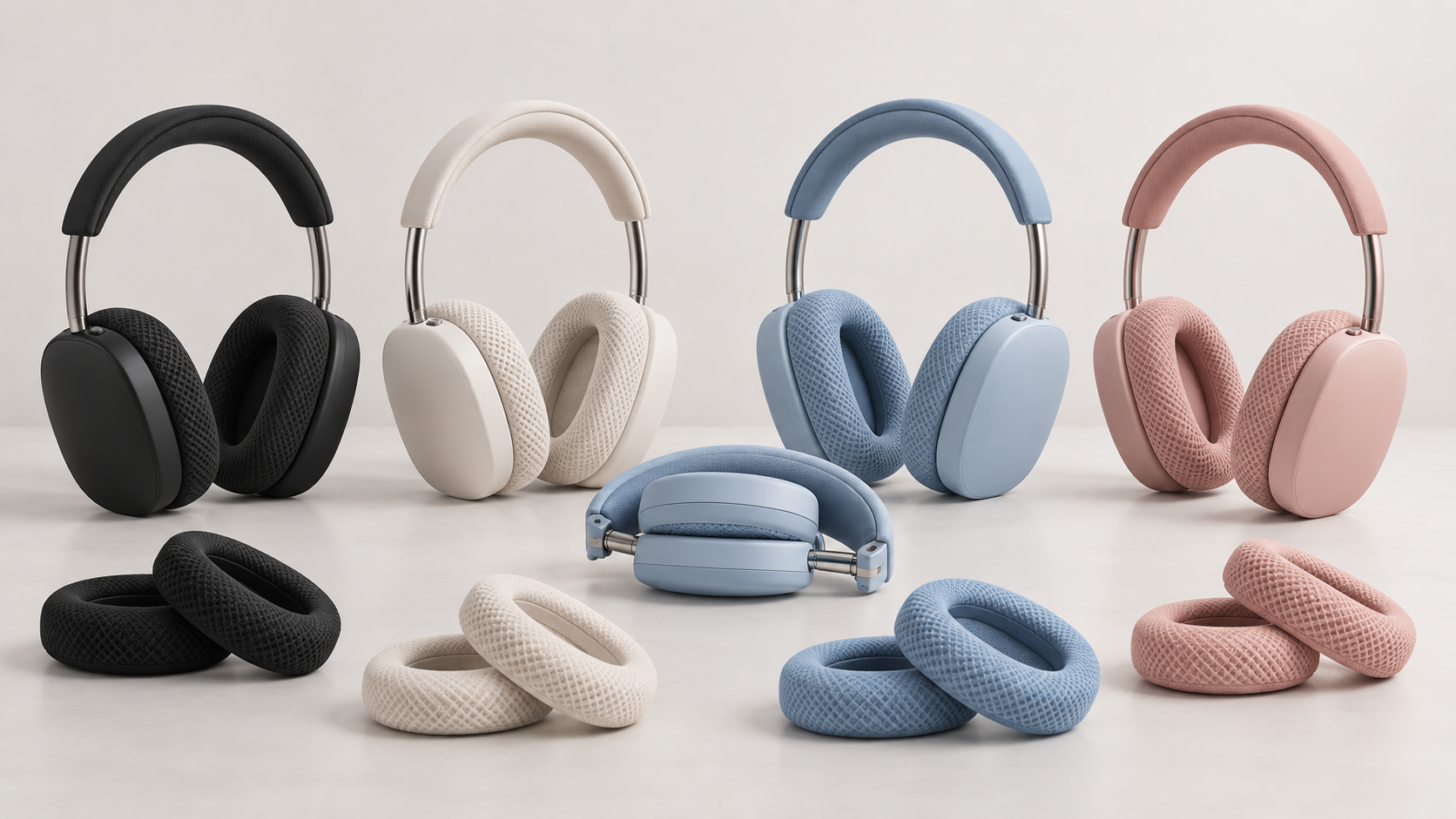
Extra Cushion Kits include both earcup and headband cushions. Performance Knit versions come in Black, Cloud, Pink, Sky, Navy and Volt, while the softer UltraPlush version comes in Black and Cloud. Beats is offering the kits for $9.99 in select markets through October 31, 2026, while supplies last; the normal price is $49.99.

What makes Beats 360 different

The defining feature is not a new codec or another AI mode. It is the modular physical design. Both the ear cushions and headband cushion detach, letting owners change color, replace worn material or keep a clean set ready after exercise. The two materials serve different purposes: breathable Performance Knit ships with the headphones and targets workouts, while engineered-leather UltraPlush aims for longer everyday sessions.

Key confirmed specifications include:

  • IPX4 sweat and water resistance for non-water exercise
  • Custom dual-magnet drivers with three-layer diaphragms
  • Adaptive active noise cancellation, Transparency mode and Adaptive EQ
  • Personalized Spatial Audio with dynamic head tracking and Dolby Atmos
  • Nine microphones for noise cancellation and voice pickup
  • Bluetooth 5.3 with native Apple and Android features
  • 294.5-gram weight and a fold-flat design
  • USB-C charging with up to one hour of playback from a five-minute charge

Sound, ANC and battery life

Beats says its adaptive system provides up to 1.75 times more combined active and passive noise cancellation than Beats Studio Pro under its stated test method. Independent impressions are encouraging but more nuanced. The Verge found good noise cancellation, strong bass and clear highs, while noting that the midrange could sound muddled. Engadget described the tuning as energetic and bass-forward and reported that its review unit was tracking ahead of the official battery estimate.

The official claim is up to 32 hours with ANC and Personalized Spatial Audio enabled, or with Adaptive EQ active. Transparency mode lowers the figure to 24 hours. Those are strong numbers for a premium over-ear model, but battery life will vary with volume, settings and wireless conditions.

Apple and Android support

The custom Beats chip provides one-touch pairing, always-on Hey Siri, automatic switching, Audio Sharing, FaceTime Spatial Audio and Apple’s Find My on compatible Apple hardware. Network location in Find My requires iOS 27 or later.

Android users get Fast Pair, Audio Switch and Find Hub. The Beats app requires Android 15 or later. This balanced platform support is a practical advantage for households that mix iPhones, Android phones and tablets.

What early reviews say

The workout focus is real, but the design will not suit everyone. The Verge found the headphones stable for moderate exercise, though they could shift during sprints or sit-ups. Its reviewer also found the knit cushions somewhat itchy during long sessions. Engadget praised the customization and sound, but found the clamp uncomfortable on a larger head and said the similar-feeling controls take time to learn.

Several omissions matter at $349.99. There is no 3.5mm input, no wired USB-C audio, no lossless USB-C playback and no automatic pause when the headphones are removed. Buyers who routinely plug headphones into an airplane seat, game controller, audio interface or laptop should treat the wireless-only design as a dealbreaker rather than a footnote.

Beats 360 versus Beats Studio Pro

Beats has cut the official Studio Pro price to $299.99. The older model lacks the Beats 360’s IPX4 rating, removable headband cushion and workout-focused knit pads, but it supports 3.5mm audio and lossless listening over USB-C. It also offers up to 40 hours with ANC off, compared with the Beats 360’s 32-hour headline figure.

The decision is therefore straightforward. Choose Beats 360 if sweat resistance, replaceable cushions and a secure active-use design are the priority. Choose Studio Pro if wired flexibility, USB-C lossless audio or a lower list price matters more. Readers considering the older model can check the current price for Beats Studio Pro on Amazon.

Who should buy Beats 360?

  • Best fit: people who prefer over-ear headphones at the gym, want an official sweat-resistance rating and value replaceable cushions.
  • Consider carefully: listeners with larger heads, runners doing high-impact training and anyone sensitive to textured knit material.
  • Skip them: travelers and creators who need a wired connection, listeners who want lossless USB-C audio, or buyers who expect automatic pause at this price.

Early verdict

Beats 360 fills a real gap: premium over-ear noise-canceling headphones designed to survive sweat instead of merely appearing at the gym. The modular cushions are useful for hygiene and longevity, not just color matching, and the cross-platform support is unusually complete.

The $349.99 price is easier to justify for workout-focused buyers than for general listeners. Bose and Sony remain strong alternatives for maximum noise cancellation, while Beats Studio Pro is more versatile for wired use. For the right person, however, the combination of IPX4 protection, long battery life and replaceable contact surfaces makes the Beats 360 genuinely distinct.

Disclosure: ReaderSpice may earn a commission from qualifying purchases made through Amazon links, at no additional cost to you.

Sources

Beats official Beats 360 announcement

Beats 360 official product page

The Verge Beats 360 hands-on review

Engadget Beats 360 review

Bose Ultra Open Earbuds 2nd Gen and Sport Open Earbuds: Price, Features and Release Date

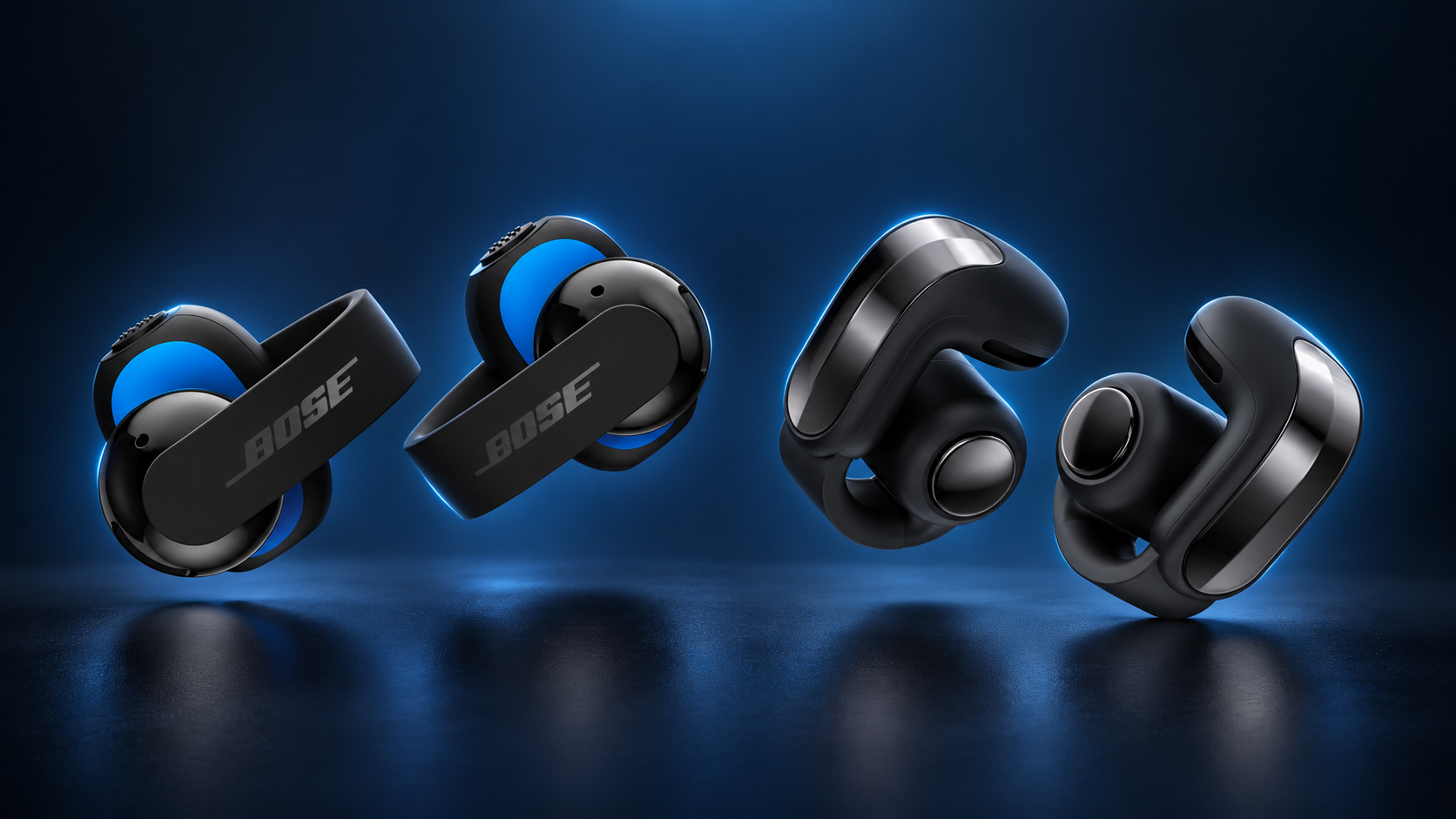
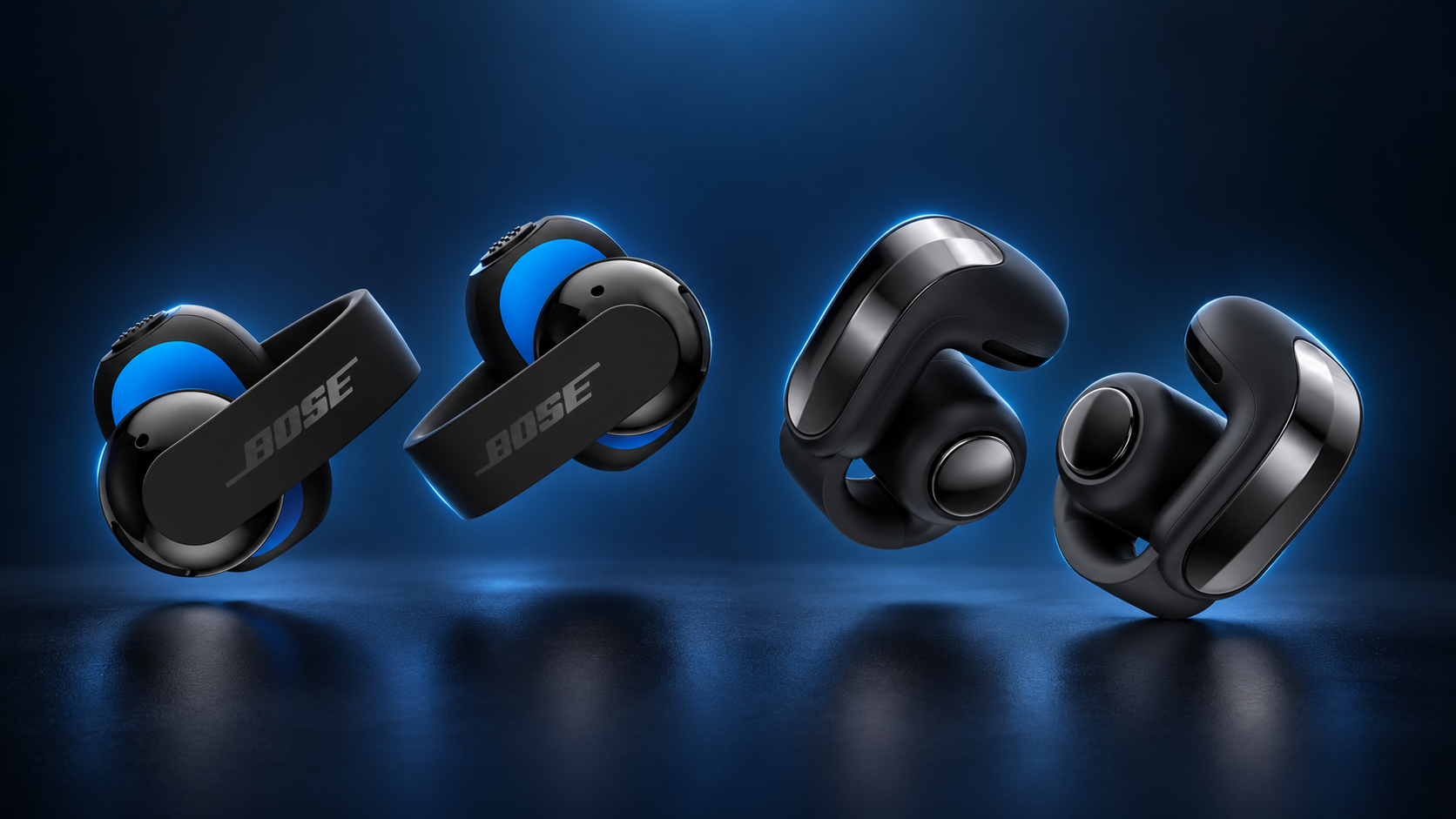
Bose Sport Open Earbuds and Bose Ultra Open Earbuds 2nd Gen shown side by side on a blue studio background

Bose is expanding its open-ear lineup with two new clip-on models aimed at very different buyers. The $299 Bose Ultra Open Earbuds (2nd Gen) upgrade the company’s premium everyday design, while the $199 Bose Sport Open Earbuds prioritize stability, durability and physical controls for workouts. Preorders opened September 19, 2026, and both models are scheduled to reach U.S. buyers on October 1.

The important distinction is simple: these are not noise-canceling earbuds. Both models leave the ear canal open so users can hear traffic, announcements and conversations around them. Bose is betting that improved bass, smarter volume control, clearer calls and longer battery life can make that tradeoff more appealing.

Bose now has two open-ear options for different buyers

Bose now has two open-ear options for different buyers

The Ultra Open Earbuds (2nd Gen) retain the sculpted cuff shape of the original model and are designed for commuting, work and all-day listening. The Sport Open Earbuds use a slimmer C-arm cuff with soft silicone, a grippier finish and textured buttons intended to remain easy to press during a sweaty workout.

Both use Bose OpenAudio technology, which sends sound through the air near the ear instead of using bone conduction. Because the design remains open, neither model offers active noise cancellation. That makes them most attractive to runners, walkers, cyclists and office users who prefer environmental awareness over isolation.

Price, preorder date and release date

Bose confirmed the following U.S. launch details:

  • Bose Ultra Open Earbuds (2nd Gen): $299
  • Bose Sport Open Earbuds: $199
  • Preorders: opened September 19, 2026
  • U.S. availability: October 1, 2026

Both models come in Black and White Smoke. The Sport model also gets a limited-edition Eucalyptus Green finish, while the Ultra model adds Cherry Chocolate, Olive Green and Sky Pink limited colors.

What is new in the Ultra Open Earbuds 2nd Gen?

The flagship model’s headline upgrades focus on sound, calls, battery life and convenience rather than a dramatic redesign. Bose says a newly engineered driver produces deeper bass and higher maximum volume than the first generation. SpeechClarity uses a dedicated microphone and voice pickup unit in each earbud to separate the wearer’s voice from background noise during calls.

A new Cinema Mode uses Bose TrueSpatial processing to widen the soundstage for movies, videos and podcasts while keeping dialogue centered. It works with any content source, so it does not depend on a particular streaming service or a special audio mix.

Battery life rises to up to nine hours per charge, with another 19.5 hours stored in the case. The redesigned case can stand upright and finally supports wireless charging. Compatible Android devices can also use Snapdragon Sound and aptX Adaptive for higher-quality audio, lower latency and more reliable connectivity.

What makes the Sport Open Earbuds different?

The $199 Sport model is the more practical choice for exercise. Its soft silicone cuff is designed to stay secure during running and energetic movement, while physical textured buttons control music, calls and volume without relying on touch gestures.

The Sport Open Earbuds carry an IP54 rating for sweat, splashes and dust. Auto Volume adjusts playback as environmental noise changes, which could help when a route moves from a quiet trail to a busy street. Bose rates the earbuds for up to seven hours per charge, and the wireless charging case stores up to 22 additional hours.

Shared connectivity and features

Both models use Bluetooth Core 5.4, support multipoint connections with two devices, and include SBC and AAC codecs. Google Fast Pair simplifies setup with Android phones. Users can configure shortcuts for Spotify Tap and their phone’s native voice assistant through the Bose app.

Bose says a post-launch firmware update will add Google Find Hub, Alexa+ and an Apple Music shortcut. Those features should be treated as planned rather than available on day one. The company has not provided a precise date for that update.

Which model looks like the better value?

The Sport Open Earbuds are likely the better fit for runners and gym users who want a secure open design, IP54 protection and tactile controls without paying flagship pricing. The Ultra model asks $100 more for stronger audio ambitions, longer earbud battery life, Cinema Mode, aptX Adaptive support and a more premium finish.

People who regularly fly, commute on loud trains or want maximum isolation should remember that neither model includes active noise cancellation. Traditional sealed earbuds remain a better match for blocking outside noise. Open-ear earbuds are designed to keep the outside world audible, not make it disappear.

It is also worth waiting for independent testing before assuming the claimed bass, call quality and battery improvements translate perfectly to real use. Bose’s specifications are confirmed, but comfort, sound leakage and fit can vary considerably from one person to another.

Buying options and affiliate disclosure

Disclosure: ReaderSpice may earn a commission from qualifying purchases made through affiliate links, at no extra cost to you.

The new models are currently available for preorder through Bose. Readers who want the established predecessor can check the current Bose Ultra Open Earbuds on Amazon while comparing pricing and availability.

Sources

Bose — official Sport Open Earbuds and Ultra Open Earbuds (2nd Gen) announcement

Bose — Sport Open Earbuds product page

Bose — Ultra Open Earbuds (2nd Gen) product page

The Verge — Bose’s next open earbuds have more bass, volume and battery life