
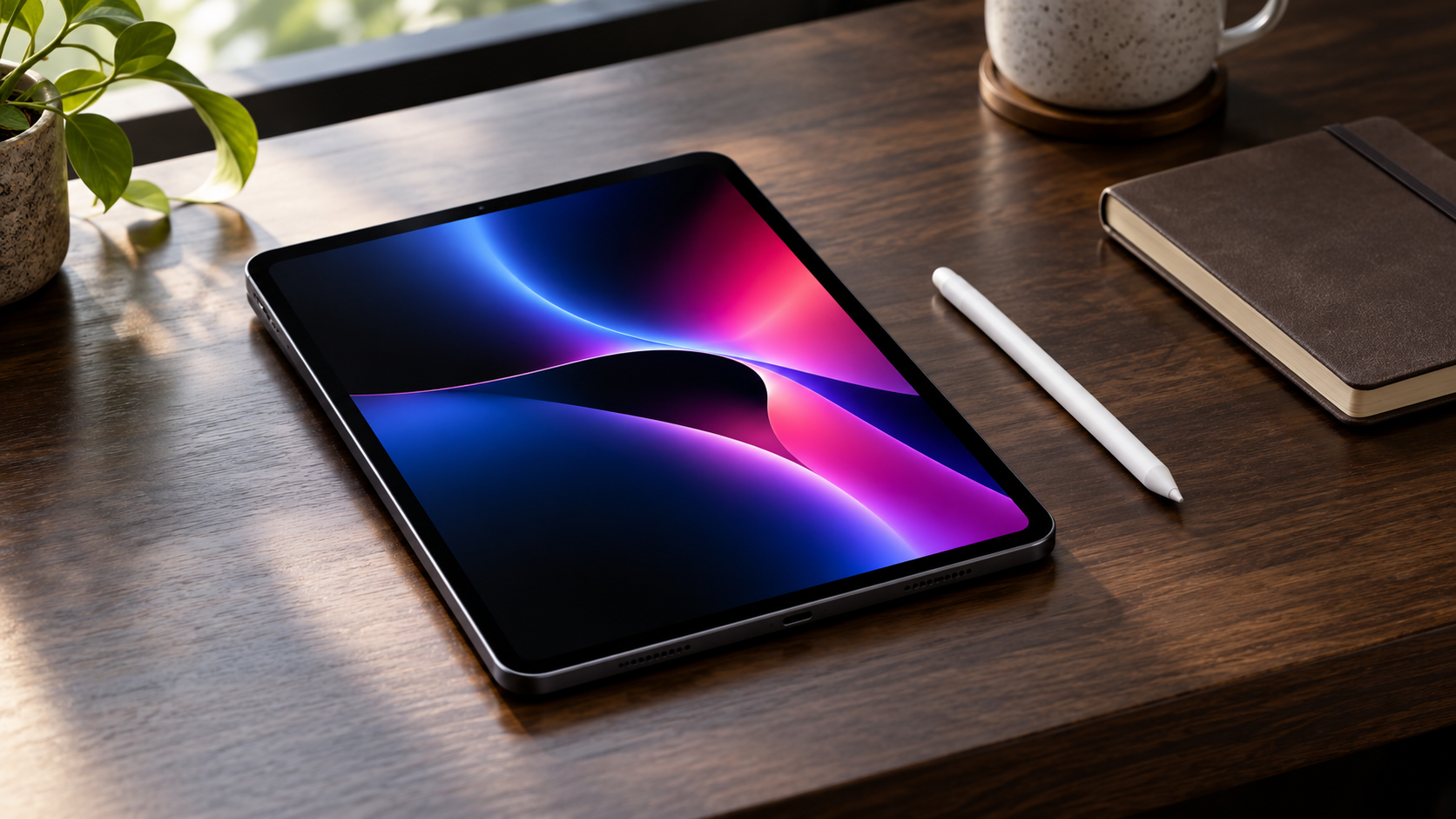
Apple has given the iPad mini its biggest redesign in years. Announced October 26, 2026, the new compact tablet moves to an 8.5-inch OLED display, gains the A20 Pro chip, adds IP67 water and dust resistance and becomes thinner even as the screen grows.
The redesign also changes the buying equation. The Wi-Fi model starts at $699 in the United States, while Wi-Fi + Cellular starts at $849. Preorders open October 28 and availability begins November 6. That is a significant premium over the previous A17 Pro model, so the important question is not simply whether the new mini is better. It is whether its display, durability and portability upgrades are worth the extra money for the way you use a tablet.
New iPad mini price and release date
Apple will sell the redesigned iPad mini in midnight and starlight finishes, with 128GB, 256GB and 512GB storage options. The key launch details are:
- Wi-Fi models start at $699.
- Wi-Fi + Cellular models start at $849.
- Preorders begin Wednesday, October 28, 2026.
- Retail availability begins Friday, November 6, 2026.
- A nano-texture display option is offered on 256GB and 512GB configurations.
Those prices put the mini closer to larger, more capable iPads than its size might suggest. Cellular adds $150 before service costs, while storage and the nano-texture option can push the total higher. Buyers should price the exact configuration they want rather than treating $699 as the likely final cost.
The OLED display is the biggest upgrade

The new 8.5-inch Super Retina XDR display is slightly larger than the previous generation’s 8.3-inch panel, but the body remains compact because Apple reduced the bezels by 24 percent. OLED gives each pixel its own light source, producing deeper blacks and much higher contrast than the older LCD screen. Apple specifies a 2,000,000:1 contrast ratio, up to 1,200 nits of peak HDR brightness and a one-nit minimum brightness for dim rooms.
That combination should matter most for reading at night, viewing HDR video, editing photos and using dark interfaces. The optional nano-texture finish on higher-capacity models is aimed at users who work under glare, although it adds cost and requires more careful cleaning.
There is an important limitation: this is still a 60Hz display. Apple has not added ProMotion, so scrolling and Pencil strokes will not look as fluid as they do on a 120Hz iPad Pro. OLED improves contrast and response, but it does not turn the mini into a miniature iPad Pro. Anyone who prioritizes animation smoothness should try the display in person before ordering.
A20 Pro performance has an unusual storage catch
Every new iPad mini uses Apple’s A20 Pro chip and a 16-core Neural Engine. The chip is designed for demanding games, creative apps and on-device Apple Intelligence features, while keeping the small tablet responsive for years of software updates.
The CPU configuration changes with storage, however. The 128GB and 256GB models have a five-core CPU with two performance-focused cores and three efficiency cores. The 512GB model gets a six-core CPU by adding a fourth efficiency core. This is not a reason for most people to buy more storage by itself: an efficiency core typically helps sustained multitasking and background work more than short bursts of speed. It is still a real specification difference, and Apple shoppers should know it exists.
For reading, streaming, note-taking and ordinary photo work, the base model should have ample performance. People exporting large creative projects or keeping the tablet for many years may value the higher storage tier for capacity first and the extra CPU core second.
A thinner, tougher design for travel
At 5.4mm thick, the new iPad mini is substantially slimmer than the previous model and also lighter. The narrower bezels preserve the one-hand-friendly footprint despite the larger screen. That makes it unusually well suited to airplanes, trains, small bags, field notes and handheld reading.
IP67 water and dust resistance is the more practical redesign feature. It does not make the tablet indestructible or appropriate for underwater use, but it gives travelers and field workers useful protection against spills, rain and dust. As with any rated device, damage from liquids may not be covered in every circumstance, so a protective case remains sensible.
Apple still promises up to 10 hours of web browsing or video playback over Wi-Fi. Real battery life will vary with brightness, cellular use, games and creative workloads. The thin enclosure therefore appears to preserve the familiar all-day target rather than extend it.
Cameras, audio and connectivity improve
Apple moved the 12-megapixel front camera to the long edge, a better position for video calls when the tablet is in landscape orientation. The rear camera is also 12 megapixels and can record 4K video. The change fixes one of the previous mini’s awkward compromises for people who use it with a stand or keyboard.
The new Acoustic Display audio system uses specially designed woofers paired through the display, with tweeters placed between the glass and aluminum enclosure. Apple’s goal is stronger bass, more volume and clearer high frequencies without giving up the thin design. Audio quality will need independent testing, but the approach is more ambitious than a routine speaker update.
Apple’s N1 networking chip adds Wi-Fi 7, Bluetooth 6 and Thread. Cellular models use the C2 modem and eSIM. Those upgrades improve the mini’s usefulness as a travel device, a connected field terminal and a potential controller for Thread-based smart-home accessories. Benefits will depend on compatible routers, accessories, carriers and local networks.
What the new iPad mini is best at
The new mini remains a specialist tablet rather than a cheaper iPad Air. Its strongest uses are the ones where a full-size screen becomes a burden:
- Reading books, comics, news and research while holding the device for long periods.
- Taking handwritten notes or marking documents in tight spaces.
- Viewing maps, checklists, camera controls and reference material while traveling.
- Running games and creative apps that benefit from a powerful chip but not a large canvas.
- Using a portable video-call or media screen that fits in a small bag.
It is less convincing as a laptop replacement. An 8.5-inch display limits side-by-side work, timelines, spreadsheets and long writing sessions. The 60Hz refresh rate also weakens the value proposition for artists who are sensitive to stylus latency. Portability is the reason to choose this size; buyers who mostly work at a desk should compare a larger iPad Air before committing.
Should existing iPad mini owners upgrade?
Owners of the 2024 iPad mini with A17 Pro already have a fast, lightweight tablet with 128GB base storage and support for modern iPadOS features. They should upgrade only if OLED, water resistance, the landscape camera or the thinner design solves a specific problem. The new model is a substantial redesign, but it does not make the A17 Pro version obsolete.
Owners of older mini models have a clearer case. They gain a brighter, higher-contrast screen, much faster silicon, more base storage, current wireless standards and a modern accessory ecosystem. Battery health may be as important as processor speed for devices several years old.
There is also a value argument for waiting. The outgoing A17 Pro model may be discounted as retailers clear inventory. Readers who mainly want a compact device for books, streaming and light note-taking can compare the 128GB iPad mini with A17 Pro on Amazon. The verified listing is ASIN B0DK3YM6KP; prices and availability can change, and that linked configuration includes cellular connectivity, so confirm the seller, color and network model before checkout.
Disclosure: ReaderSpice may earn a commission from qualifying Amazon purchases made through the link above, at no additional cost to you.
Buying advice: who should order and who should wait
Order the new iPad mini if compact size is non-negotiable and you will benefit from OLED contrast, IP67 protection or the improved landscape camera. Travelers, pilots, photographers, field technicians, medical professionals and committed digital readers are the audience most likely to appreciate the redesign every day.
Wait for reviews if display smoothness is important, because the 60Hz limit is unusual at this price. It is also worth waiting for independent battery, thermal and Acoustic Display testing. Creative professionals should compare the mini with an iPad Air once storage and accessories are added.
Choose the 128GB Wi-Fi model if your library is mostly streamed or cloud-based. Move to 256GB for a larger local media library, offline maps, games or photo work. Buy 512GB only if you know you need the space; the extra efficiency core is a bonus, not a strong reason to spend more on its own.
The bottom line
Apple has made the iPad mini more distinctive at the same time it has made it more expensive. The 8.5-inch OLED screen, A20 Pro, IP67 rating, thinner design, landscape camera and modern connectivity address many of the old model’s weaknesses. The lack of 120Hz remains the biggest compromise.
For buyers who want the smallest capable iPad, this is the most complete version yet. For everyone else, the $699 starting price makes comparison shopping essential. The best purchase will depend less on benchmark numbers than on whether an 8.5-inch tablet genuinely fits places and routines where a larger iPad does not.
Sources
Apple: Apple gives iPad mini its biggest update ever
The Verge: Apple updates the iPad mini with a larger OLED display
Amazon: Apple iPad mini with A17 Pro, 128GB cellular listing