Apple HomeView, HomePod mini 2 and New Apple TV 4K: Prices, Features and Release Dates

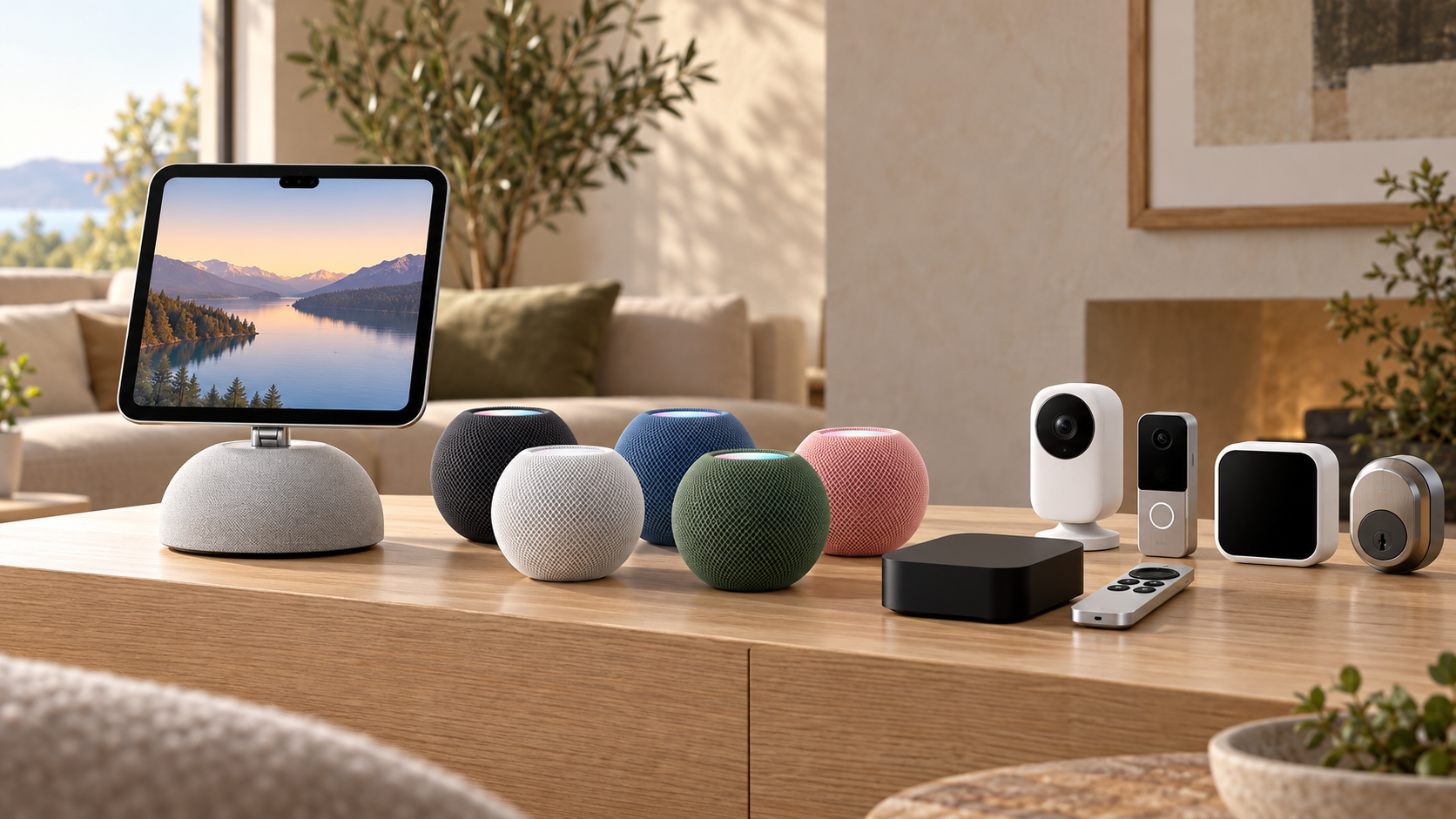
Apple HomeView, HomePod mini 2, Apple TV 4K and smart-home accessories arranged in a modern living room

Apple has turned its long-rumored smart-home push into a real product lineup. On October 13, 2026, the company introduced the $299 Apple HomeView smart display, the $149 HomePod mini 2, a $299 fourth-generation Apple TV 4K and Apple Home Collection accessories built with LG Electronics and Schneider Electric.

The announcements replace months of speculation with firm prices, specifications and release windows. They also create a more complicated buying decision: the least expensive new device arrives first, while some of the most ambitious Siri AI features will still depend on software updates, compatible Apple Intelligence devices or an eligible iCloud+ plan.

Prices and release dates at a glance

  • Apple HomeView: $299; preorders open October 13; available November 13.
  • Apple HomeView (Wall Mounted): $299; preorders open October 13; available November 13. Mounts cost extra.
  • HomePod mini 2: $149; preorders open October 13; available October 30.
  • Apple TV 4K (4th generation): $299; preorders open October 13; available November 13.
  • Apple Home Collection: accessories start arriving in December, with selected products following in early 2027.

Apple HomeView: a $299 screen for the center of the home
Apple HomeView: a $299 screen for the center of the home

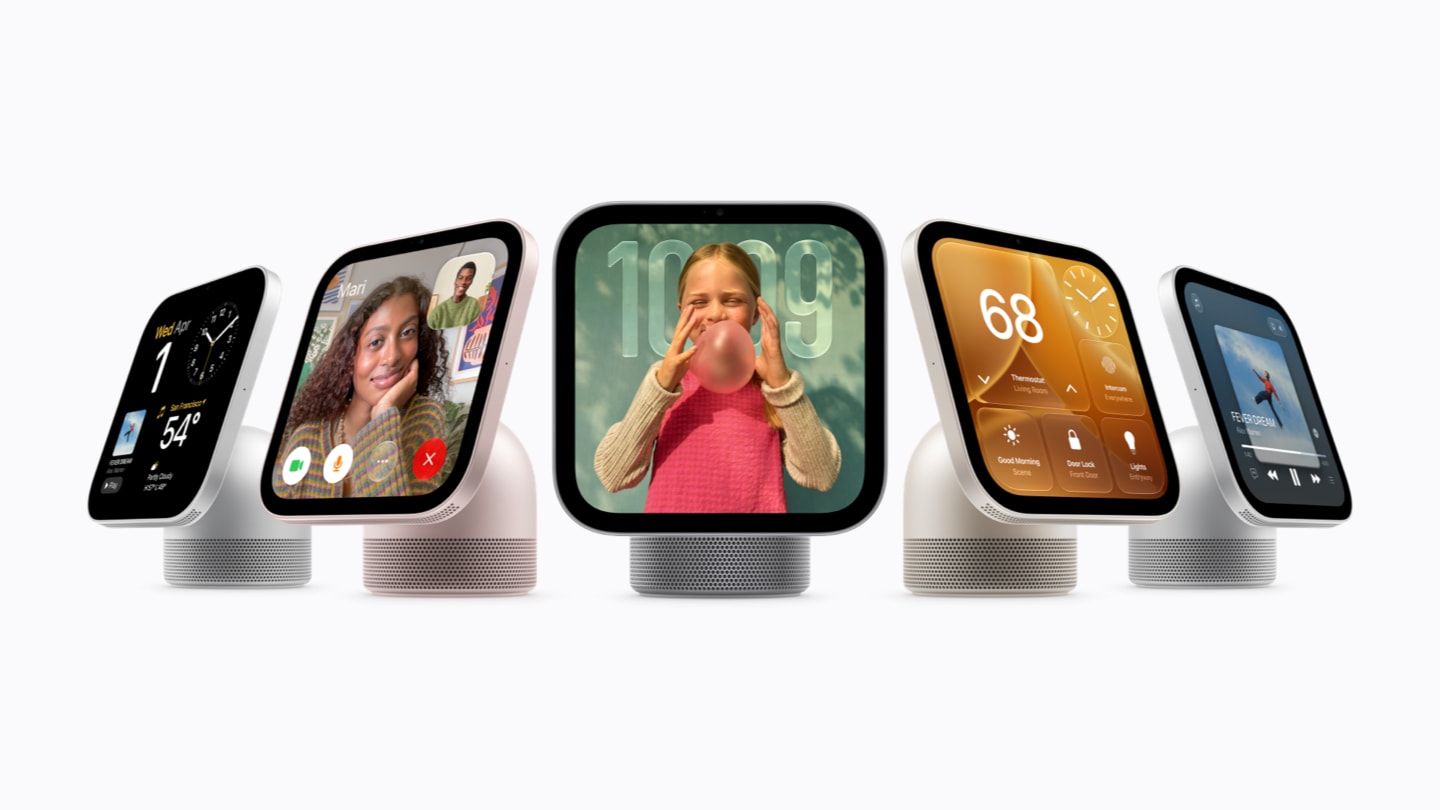
HomeView is Apple’s new shared household screen. The tabletop model combines a 7-inch Liquid Retina display, a tilting stainless-steel hinge and a domed speaker base. It comes in silver, starlight, rose pink and space gray. A separate wall-mounted model uses the same 7-inch display and sells for the same $299 starting price in silver or space gray.

The display automatically adjusts from 500 nits down to 0.3 nits and changes the amount of information shown based on how far away a user is. It can recognize up to six household members by their faces, then present each person’s own Home Screen, widgets and private information. Personal content in apps such as Messages and Calendar appears only when the recognized person’s paired iPhone or iPad is nearby and was recently unlocked.

HomeView is also a FaceTime device, digital photo frame, music player, recipe assistant and smart-home dashboard. Its camera uses Center Stage during calls, while the Home Camera face can show as many as nine live camera feeds. With supported cameras and an eligible iCloud+ subscription, Apple says it can recognize people, pets, packages and vehicles and produce descriptions of HomeKit Secure Video clips.

The tabletop model has two full-range drivers in the display, a down-firing woofer and two force-cancelling passive radiators. The wall model uses two drivers tuned for on-wall placement. Both go on sale November 13 in the United States, United Kingdom, Canada, Australia, India and New Zealand, while Singapore preorders begin October 15. Apple says HomeView will not initially be sold in the European Union because Siri AI is not available in iOS there.

Wall buyers should include the mount in their budget. Schneider Home’s USB-C wall connector starts at $59.95, the AC-wired mount starts at $79.95 and a $129.95 Power over Ethernet mount is scheduled for early 2027.

HomePod mini 2: better audio, new colors and Siri AI later
HomePod mini 2: better audio, new colors and Siri AI later

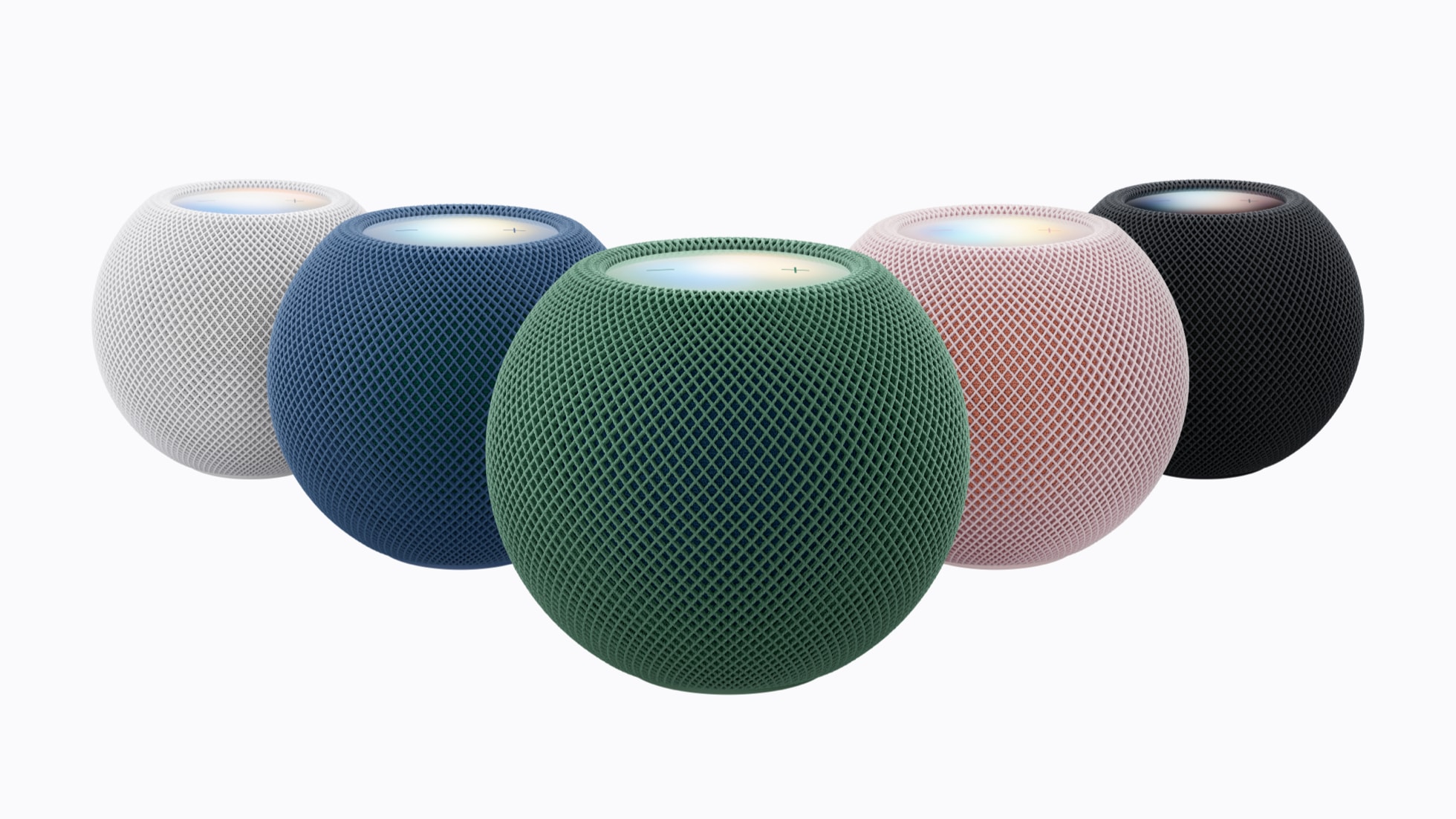
HomePod mini 2 is the first major hardware refresh of Apple’s compact speaker. It keeps the familiar spherical shape but moves to the S10 chip, adds new pink, green, blue, white and midnight finishes, and introduces Sound Glow: the top surface can pulse in colors derived from album artwork and react to bass and treble.

Apple says the speaker uses computational audio to optimize dynamic range, loudness and acoustic performance in real time. A single unit can fill a room, two can form a stereo pair and multiple units can join a multiroom setup. It can also act as a Mac speaker on compatible Macs with Wi-Fi 6E or later.

The biggest new home-theater feature requires more hardware. Four HomePod mini 2 speakers—matching front and rear pairs—can work with the new Apple TV 4K to create a calibrated surround setup. The devices determine speaker position and automatically adjust timing and levels for the room.

Siri AI is a key part of the pitch, but it will not be available on HomePod mini 2 at launch. Apple says it is coming in a free future software update. Personal-context requests will require the home owner to use a compatible Apple Intelligence-enabled iPhone or iPad with Siri AI turned on.

New Apple TV 4K: A19, hands-free Siri and a smarter remote
New Apple TV 4K: A19, hands-free Siri and a smarter remote

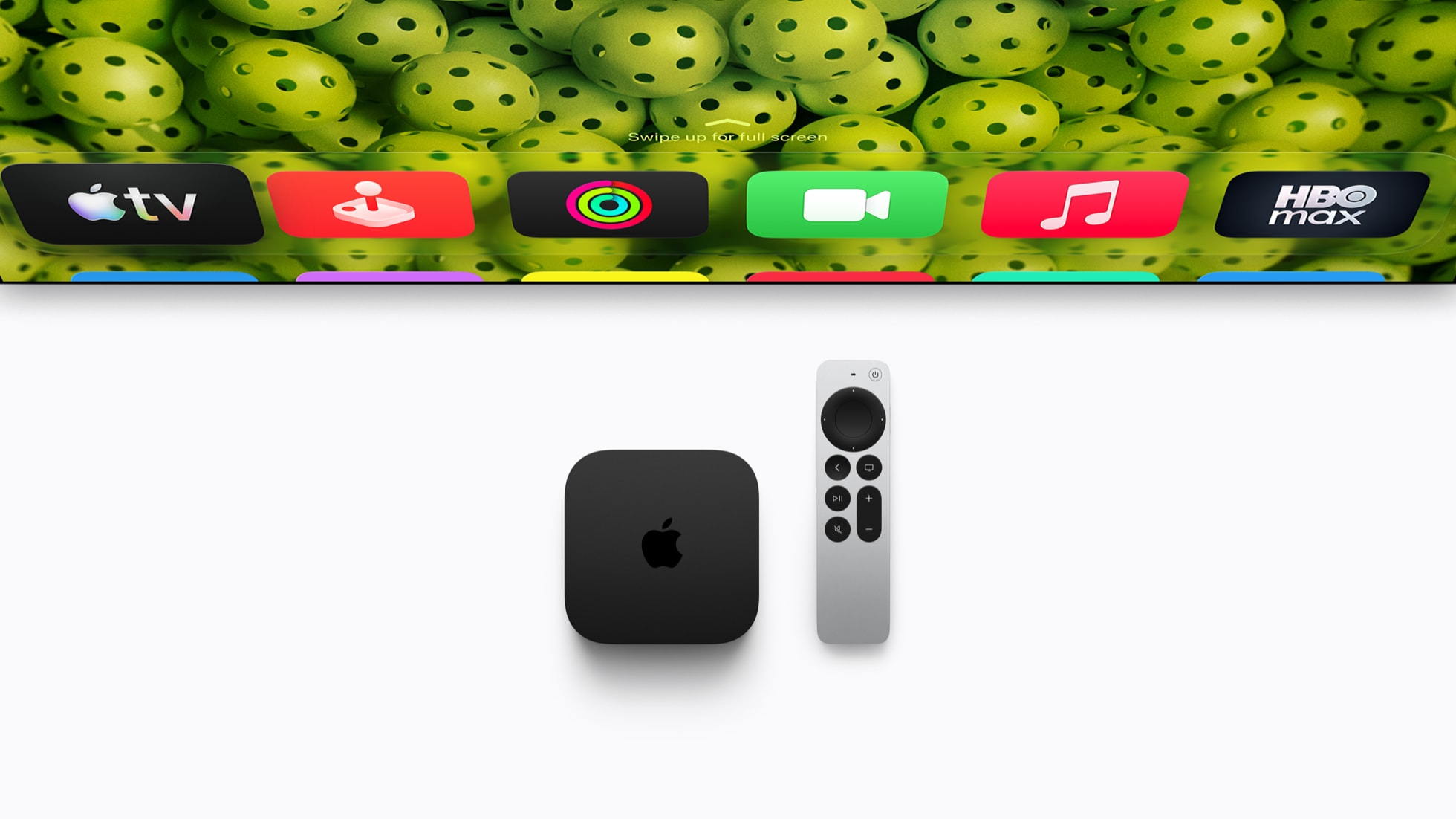
The fourth-generation Apple TV 4K is a larger performance upgrade than its unchanged exterior suggests. Apple says the A19 chip delivers up to 50 percent faster CPU performance and up to twice the GPU performance of the previous model. A dedicated AV1 decoder should make high-quality streams more efficient and reduce bandwidth use for services that support the format.

Three built-in far-field microphones let viewers speak to Siri without holding the remote. Apple says echo cancellation can isolate a voice while audio is playing. Siri AI appears in a full-screen discovery interface, can answer follow-up questions about a show and can draw on personal context from a compatible iPhone for requests such as playing a recommendation mentioned in a message.

The Siri Remote keeps its established shape but adds stronger Find My features. Precision Finding can guide users to the remote when paired with supported recent iPhones, and the newest remote can play a sound. Apple says the remote remains compatible with Apple TV HD and earlier Apple TV 4K models.

For smart-home use, the box includes Wi-Fi and Thread, runs automations, supports guest access and processes HomeKit Secure Video locally. With compatible cameras and iCloud+, Apple Intelligence can generate camera activity descriptions and summarize notifications. The new Apple TV 4K costs $299 and arrives November 13.

Apple Home Collection: cameras, locks and climate controls
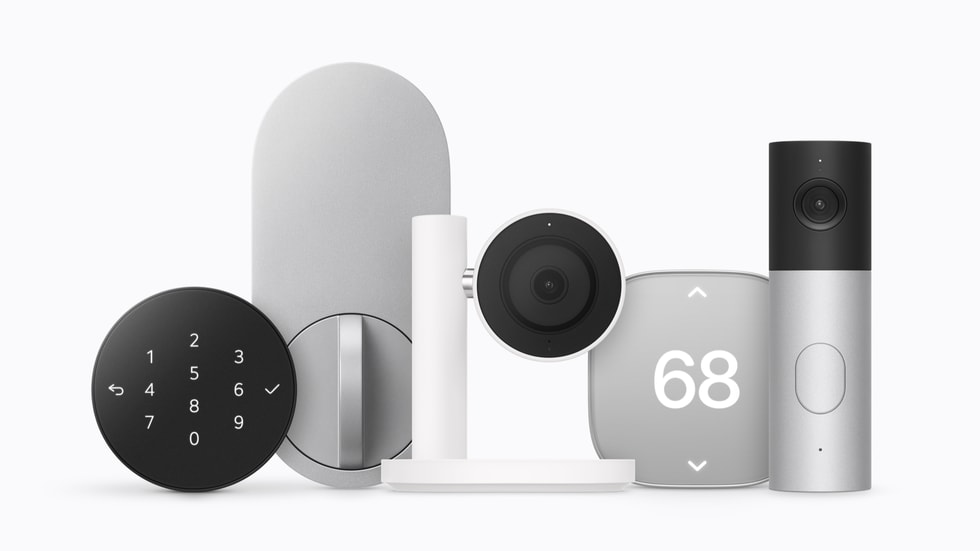
Apple Home Collection: cameras, locks and climate controls

Apple Home Collection is not a set of Apple-manufactured accessories. The products are designed with LG Electronics and Schneider Electric, sold through Apple and built for one-tap iPhone setup, Home app control and Siri. No separate manufacturer account or companion app is required, and Apple says Home app data remains end-to-end encrypted.

The first wave includes four LG cameras with video up to 2.5K, a smart deadbolt, thermostats and room sensors. Each accessory supports Thread, can receive updated network credentials when home Wi-Fi changes and can work alone or as part of an Apple Home scene.

  • LG Video Doorbell Wired starts at $249.95; LG Floodlight Cam starts at $399.95; LG Outdoor Cam Plug-In starts at $299.95; and LG Indoor Cam Plug-In starts at $199.95.
  • LG Smart Deadbolt Lock starts at $349.95 and supports hands-free unlocking with Ultra Wideband, Home Key, a PIN pad and a hidden backup key slot.
  • LG Smart Thermostat and Schneider Home Smart Thermostat each start at $199.95. Compatible temperature and room sensors start at $39.95.

Camera footage can be processed locally on a compatible Apple home hub or through Private Cloud Compute. Eligible iCloud+ plans store event video history for 10 days and add natural-language search and automatic video descriptions. Availability starts in December, although Apple says selected accessories will not arrive until early 2027.

Siri AI is not identical across the new lineup

The shared Siri AI branding hides important differences. HomeView launches with Siri AI in beta in HomeView software 27.2. Apple TV 4K launches with the beta in supported English-language markets, and Apple says second-generation and newer Apple TV 4K models can also receive access. HomePod mini 2 owners must wait for a future update.

Broad world-knowledge answers and more conversational exchanges can work without each person owning an Apple Intelligence device. Personalized requests that use messages, calendars or other private context require a paired compatible iPhone or iPad. Apple also notes that some server-based Apple Intelligence features have daily limits and that expanded access may carry a fee in the future.

What should buyers do?

HomeView is the most distinctive new product, and $299 is competitive for a display, speaker, FaceTime terminal and home hub in one device. Its value will depend on whether a household already uses Apple Home, iCloud+, Apple Music and compatible iPhones. Buyers in mixed Android and Apple households should study the setup and personalization requirements before ordering.

HomePod mini 2 is easier to recommend for new Apple households than as an automatic upgrade for every existing owner. The S10 chip, Sound Glow and four-speaker home theater support are meaningful additions, but the headline Siri AI feature arrives later. Existing HomePod users should wait for final software compatibility details before replacing multiple speakers.

The new Apple TV 4K has the clearest performance story, yet its $299 price is unusually high for a streaming box. The A19 chip, microphones, smarter remote and home-hub features may justify the cost for committed Apple users, but casual streamers should compare it with less expensive alternatives. Readers who need a streamer now can compare the current Apple TV 4K on Amazon while checking Apple’s new-model preorder terms and return policy.

Disclosure: ReaderSpice may earn a commission from qualifying Amazon purchases made through the link above, at no additional cost to you.

Sources

Apple announces Apple HomeView

Apple unveils the fourth-generation Apple TV 4K
Apple announces HomePod mini 2

Apple introduces Apple Home Collection

Apple Smart Home Hub Reportedly Nears Launch: What to Expect From J490

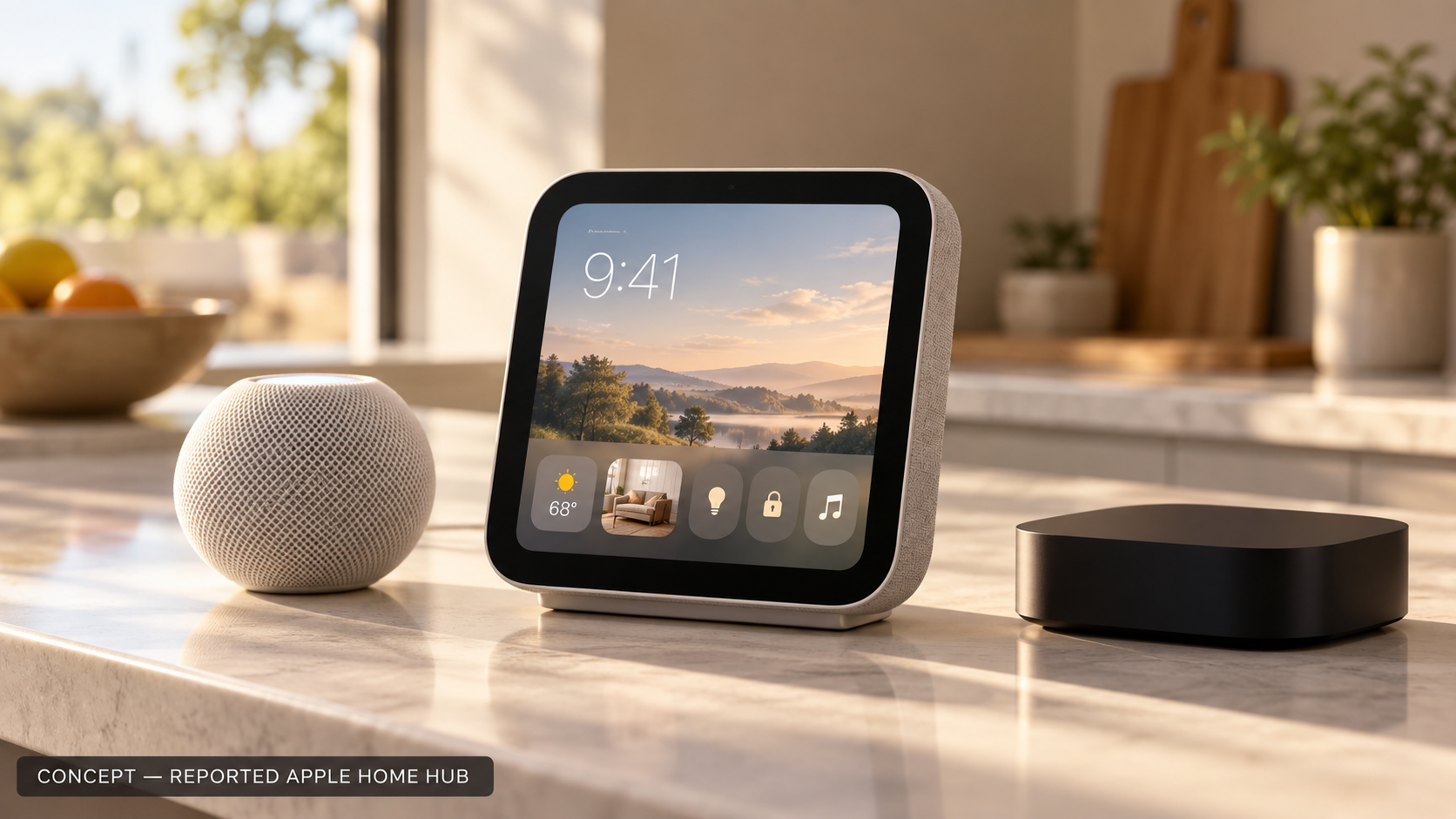
Concept image of a reported Apple smart-home display beside a small speaker and streaming box

Apple may be preparing its biggest smart-home push yet. Reuters, citing Bloomberg News and people familiar with the matter, reports that Apple plans to introduce a new smart-home hub code-named J490, an updated HomePod mini and a refreshed Apple TV at an event on October 13, 2026.

The report is credible enough to watch closely, but it is not an Apple announcement. Apple has not confirmed the event, the J490 name, pricing, availability or final specifications. That distinction matters: the useful takeaway today is what the reported lineup could change for Apple households—not a promise that every detail will arrive exactly as described.

Apple’s reported launch lineup

According to the report, the event could include three connected-home products:

  • A roughly six-inch square smart display code-named J490, designed for either wall mounting or countertop use.
  • The first HomePod mini hardware update since the original model debuted in 2020.
  • The first new Apple TV set-top box since 2022.

All three reportedly share a theme: making Apple’s home platform more visible, more personal and better prepared for newer Siri AI models. The display would be the genuinely new category; HomePod mini and Apple TV would remain familiar products with faster processors.

What the J490 hub could be

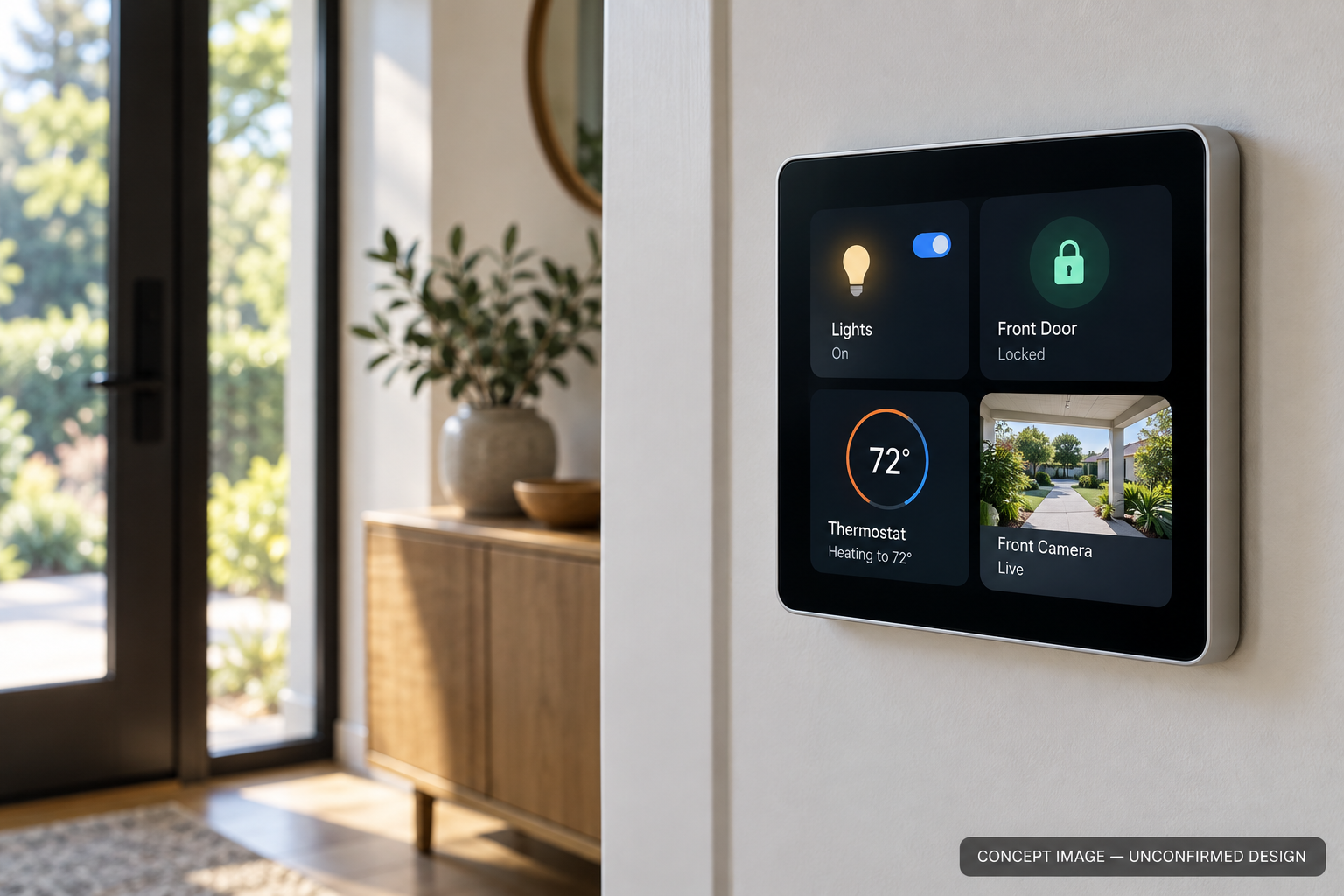
Concept image of a reported Apple J490 smart-home display mounted near an entryway

Bloomberg’s reported description points to a compact, roughly six-inch square display rather than a tablet-sized kitchen screen. Versions may attach to a wall or sit on a counter. The device is also said to recognize individual household members and surface personalized content and responses from their own accounts.

That could make J490 a dedicated dashboard for the Home app: glanceable controls for lights, locks, cameras, climate, scenes and household information without requiring someone to pick up an iPhone or turn on a television. A wall version could work near an entryway; a countertop version could serve kitchens, desks or bedside tables.

Those uses are a reasoned interpretation of the reported form factor, not confirmed features. Apple has not published a product page, interface preview or compatibility list. The concept image above is editorial artwork based only on the broad reported description and does not show a leaked or official design.

What Apple’s current products already do

Apple already treats HomePod mini and Apple TV 4K as home hubs. Apple says HomePod mini can provide remote control of HomeKit and Matter accessories through the Home app, while Apple TV 4K can automate accessories, provide remote access and manage connected devices through Control Center.

HomePod mini also supports voice recognition for up to six family members, personalized requests, Intercom and smart-home scenes. Apple TV 4K similarly recognizes up to six voices for personalized recommendations and can show connected cameras and accessories on a television.

J490 would therefore not create Apple’s home-hub function from scratch. Its value would be a dedicated always-available screen, a form factor Apple does not currently sell for the home.

What the reported companion updates could change

HomePod mini: a faster brain in the same shape

Reuters says the new HomePod mini is expected to retain the current design while gaining a faster processor for more capable Siri models. That would be a meaningful internal change because today’s HomePod mini still uses Apple’s S5 chip and was introduced in 2020.

Buyers should not assume a major speaker redesign, larger display or dramatic acoustic change. The current report emphasizes processing rather than new physical controls or audio hardware. If Apple keeps the existing exterior, the practical upgrade case may depend on responsiveness, on-device intelligence and how broadly new Siri features reach older speakers.

Apple TV: performance and smart-home potential

The reported Apple TV refresh is also expected to keep its current design while moving to a faster processor. The current Apple TV 4K uses the A15 Bionic chip, offers 64GB or 128GB storage, and adds Thread support and Gigabit Ethernet on the 128GB model.

A newer chip could improve app and game performance, extend software support and handle richer Siri features. But the report does not confirm a new remote, added ports, storage tiers, price or a Thread radio on every model. Anyone buying specifically for Matter-over-Thread accessories should wait for Apple’s final technical specifications.

Why household recognition matters

Personalization is the most consequential reported feature. A shared home screen has to know whose calendar, reminders, media, messages and recommendations it should show. Apple’s existing speakers and set-top box already recognize multiple voices, so the company has a foundation for account-aware experiences.

A camera or other sensing system could make a display more immediate, but the report does not specify how recognition works. It also does not explain whether household data is processed on the device, how guests are handled, what appears when nobody is recognized or which information can be hidden. Those privacy details will matter as much as hardware specifications.

What remains unconfirmed

  • Apple has not confirmed the event or any of the products in the report.
  • No price has been reported for the J490 hub.
  • No final product name, colors, storage capacity or accessory support has been confirmed.
  • There is no confirmed ship date, preorder date or country list.
  • Apple has not detailed J490’s cameras, microphones, speakers, sensors or privacy controls.

Treat renders, accessory listings and feature lists that go beyond the Reuters/Bloomberg report as speculation until Apple provides product pages or technical documentation.

Should you wait before buying?

If you want a dedicated Apple Home screen, waiting is sensible. The reported event is close enough that a short delay could reveal whether J490 fits your room, accessories and budget.

If you only need a streaming box, the current Apple TV 4K remains a capable option with 4K HDR, Dolby Vision, HDR10+, Dolby Atmos, HomeKit and Matter support. Still, buyers who keep streaming boxes for several years may prefer to see whether a faster model changes price, storage or connectivity.

HomePod mini buyers face a similar decision. The current speaker already supports whole-home audio, Intercom, Siri, HomeKit and Matter, but a processor refresh could determine which future Siri capabilities it receives. Existing owners should wait for compatibility details before replacing anything.

Buying advice and the sensible next step

Do not preorder accessories for J490 based on reported dimensions. Wall mounts, stands and power arrangements depend on final measurements and port placement. Also avoid paying inflated prices for products described as compatible before Apple confirms the hardware.

If you need a streaming device immediately, compare the current Apple TV 4K on Amazon with Apple’s direct pricing and return policy. Otherwise, wait for Apple to confirm the event and publish technical specifications. ReaderSpice will update the buying advice when official details arrive.

Disclosure: ReaderSpice may earn a commission from qualifying Amazon purchases made through the link above, at no additional cost to you.

Sources

Reuters report on Apple’s reported October smart-home launch

Apple HomePod mini product page

Apple TV 4K product page

Apple Home privacy and smart-home information

Final Cut Camera 2.4 Adds Variable Aperture to iPhone 18 Pro: What It Changes

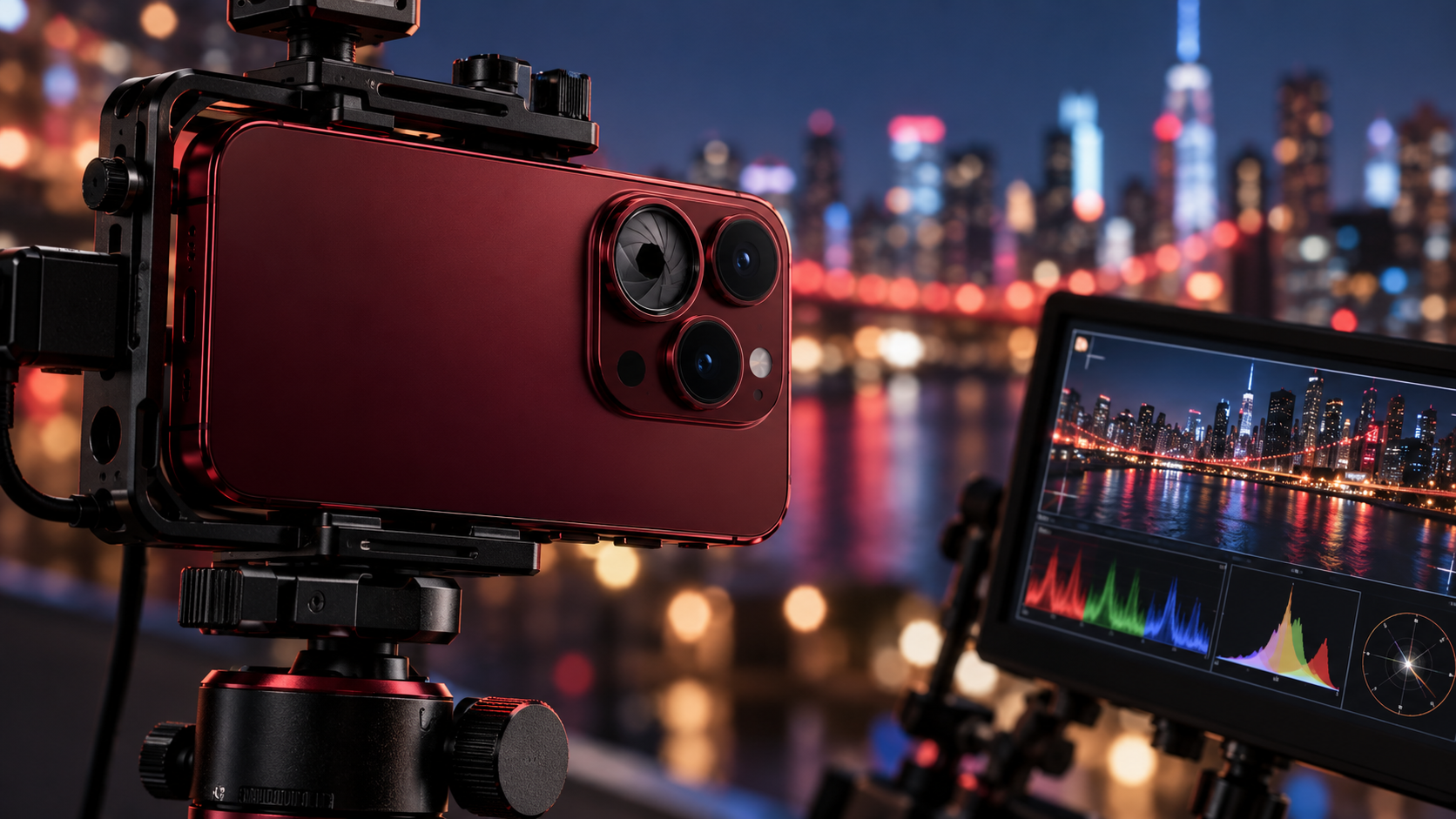
iPhone 18 Pro on a video rig with an adjustable aperture lens and professional monitoring scopes

Apple’s Final Cut Camera has received its most important update yet for mobile filmmakers. The new Final Cut Camera 2.4 brings direct variable-aperture control to iPhone 18 Pro, a redesigned interface, better exposure tools, and professional monitoring features that move the free app closer to a compact cinema-camera control center.

According to Apple’s announcement, the update is available now as a free download for supported iPhones. Some features work broadly with iOS 27, but physical aperture control is exclusive to the iPhone 18 Pro and iPhone 18 Pro Max because those models have Apple’s new variable-aperture Fusion Main camera.

Quick take

  • Final Cut Camera 2.4 is a free update.
  • Variable-aperture control requires an iPhone 18 Pro or iPhone 18 Pro Max.
  • The app adds shutter-priority and aperture-priority shooting modes.
  • New scopes, clean SDI output, and genlock offset target serious productions.
  • Regular ProRes and Apple Log footage can now carry editable Cinematic mode data.

How variable aperture changes iPhone video

How variable aperture changes iPhone video

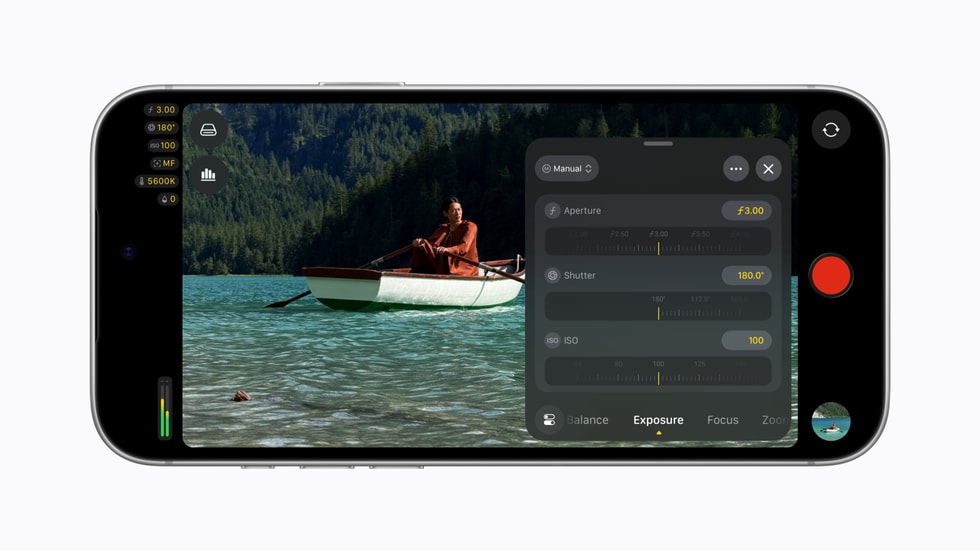
A conventional phone camera usually has a fixed aperture, so exposure is managed mainly through shutter speed, ISO, filters, and software processing. The iPhone 18 Pro’s Fusion Main camera can physically change its aperture. In Final Cut Camera 2.4, creators can select an aperture directly or let the app balance aperture and shutter behavior through priority modes.

That matters in three practical ways. A wider aperture lets in more light and can create shallower depth of field. A narrower aperture admits less light and keeps more of a scene in focus. Most importantly for video, aperture control gives filmmakers another way to hold a preferred shutter angle without immediately reaching for a stronger neutral-density filter or raising ISO.

The effect is not magic. A phone sensor and short focal length still produce more depth of field than a large-sensor cinema camera at comparable framing. But direct aperture control is a meaningful step because it gives creators a real optical choice rather than relying entirely on simulated background blur.

Aperture priority and shutter priority

Final Cut Camera now lets iPhone 18 Pro users choose aperture-priority or shutter-priority operation. Aperture priority is useful when depth of field or low-light performance is the creative priority. Shutter priority is better when motion rendering must remain consistent, such as maintaining a cinematic shutter angle while walking, panning, or filming action.

For controlled productions, manual aperture remains the most predictable option. Auto or priority modes are more convenient when light changes quickly, but creators should watch for visible exposure shifts during a take.

What else is new in Final Cut Camera 2.4

Apple redesigned the app around faster access to common controls and a cleaner viewfinder. The update includes:

  • Direct access to shutter angle, ISO, white balance, and aperture controls.
  • Customizable overlays with false color and clipping indicators.
  • Improved focus peaking with adjustable sensitivity.
  • A recording tally light and a two-finger gesture that clears the viewfinder.
  • A refreshed interface intended to reduce menu hunting while shooting.

False color and clipping indicators are particularly useful because they make exposure problems easier to spot before recording. Focus-peaking sensitivity should also help when working with detailed scenes or shallow depth of field, where an overly aggressive overlay can become distracting.

Professional scopes, clean SDI output, and genlock offset

Video scopes for more reliable exposure

With iOS 27, the app gains an RGB Parade and histogram. The RGB Parade separates red, green, and blue channel information, making color casts and channel clipping easier to diagnose. The histogram provides a fast overview of tonal distribution. Neither replaces a calibrated monitor, but both are valuable when shooting in Apple Log or under mixed lighting.

Clean SDI output for broadcast workflows

Final Cut Camera can now send a clean video signal through an HDMI-to-SDI converter. “Clean” means the outgoing feed omits the app’s controls and overlays, which makes the signal suitable for external recorders, switchers, monitors, and broadcast streaming systems. The feature is most relevant to multicamera crews and event producers; casual shooters are unlikely to need it.

Genlock offset solves a specialized timing problem

Genlock keeps multiple cameras synchronized to a common timing reference. The new offset control can compensate for latency differences between an iPhone and other genlocked cameras. Apple also says it can help reduce artifacts when recording displays. This is a niche addition, but it signals that Apple expects iPhones to appear in more professional multicamera rigs.

Cinematic effects now work with ProRes and Apple Log

The update also changes how creators can use Cinematic mode. Regular video recorded with Final Cut Camera can carry focus and depth information that remains adjustable in Final Cut Pro, including footage captured in ProRes and Apple Log. Editors can change focus points and depth of field after the shoot instead of committing to every focus decision on location.

Apple’s Creator Studio update says Final Cut Pro and Motion on Mac can apply these effects to native iPhone 18 Pro footage. For creators who prefer to capture a high-quality Log master and make aesthetic choices later, that is more useful than being locked into a separate Cinematic capture mode.

Who should install it

Every Final Cut Camera user benefits from the redesigned controls, exposure overlays, focus-peaking improvements, and monitoring tools. The update is most compelling for iPhone 18 Pro owners who shoot interviews, short films, product videos, live events, or multicamera projects.

Owners of older iPhones will not gain a physical variable aperture through software, but the interface and iOS 27 monitoring features can still improve their workflow. If your production depends on external monitoring or synchronization, confirm that every adapter, converter, cable, and destination device supports the required signal before a live shoot.

How to get started

  • Update the iPhone to iOS 27.
  • Install or update to new Final Cut Camera 2.4 from the App Store.
  • On iPhone 18 Pro, open the exposure controls and test manual aperture, aperture priority, and shutter priority.
  • Enable false color, clipping indicators, or scopes one at a time so the viewfinder stays readable.
  • Run a short recording test before using clean SDI output, genlock, ProRes, or Apple Log on a paid production.

A stable support is still one of the simplest upgrades for phone video. You can compare iPhone video tripod and rig options on Amazon. As an Amazon Associate, ReaderSpice earns from qualifying purchases.

Bottom line

Final Cut Camera 2.4 makes the iPhone 18 Pro’s variable aperture genuinely useful instead of leaving it as a hardware specification. Direct aperture control, priority modes, exposure overlays, scopes, clean SDI output, and genlock offset create a more coherent professional workflow from capture through Final Cut Pro. Most people will use only a fraction of these tools, but filmmakers now have more control over exposure, focus, motion, and monitoring without paying for the camera app itself.

Sources

Apple Newsroom: Final Cut Camera 2.4 update

Apple Newsroom: Apple Creator Studio updates

Beats 360 Headphones Cost $349.99: Features, Release Date and Early Verdict

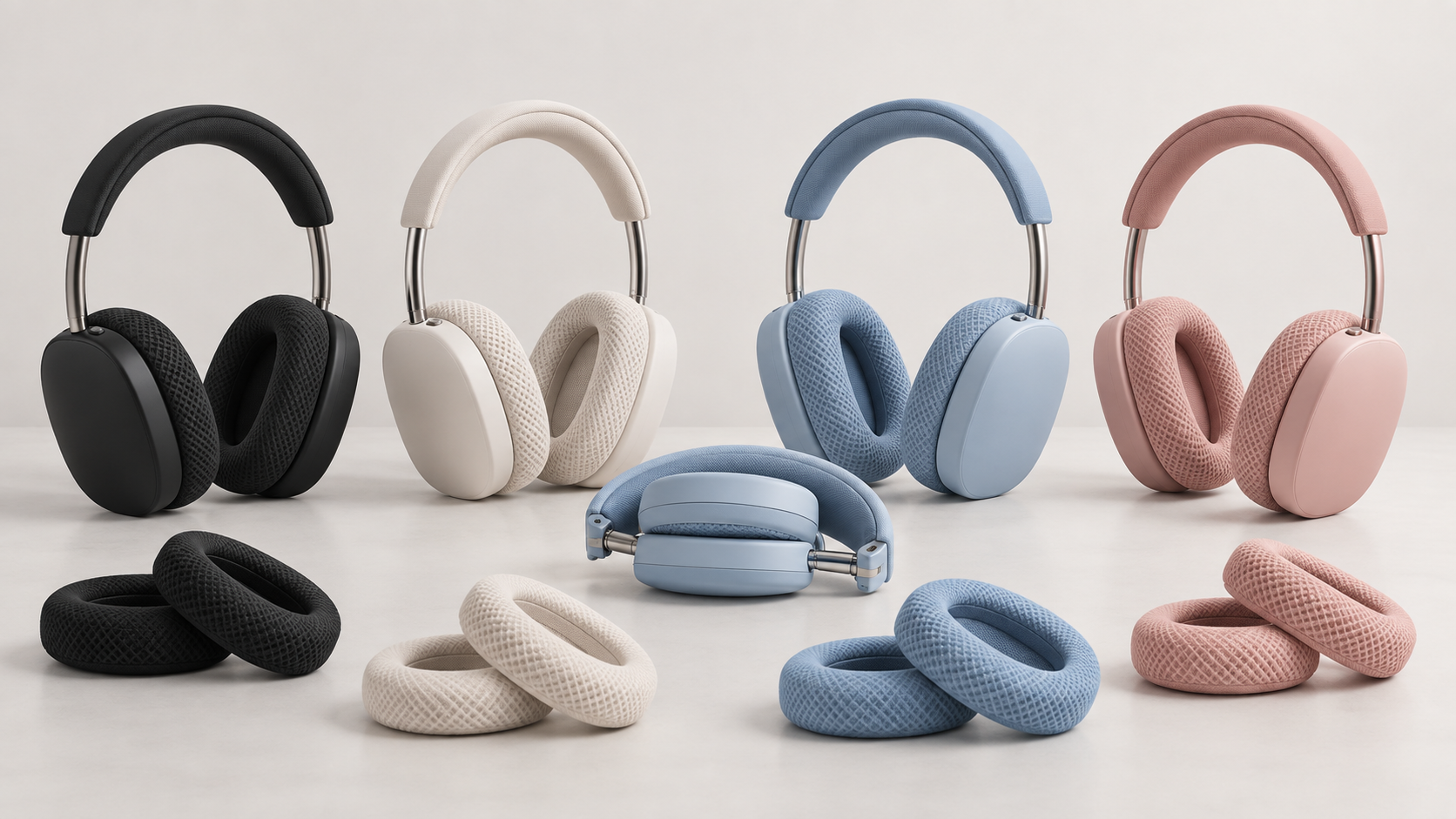
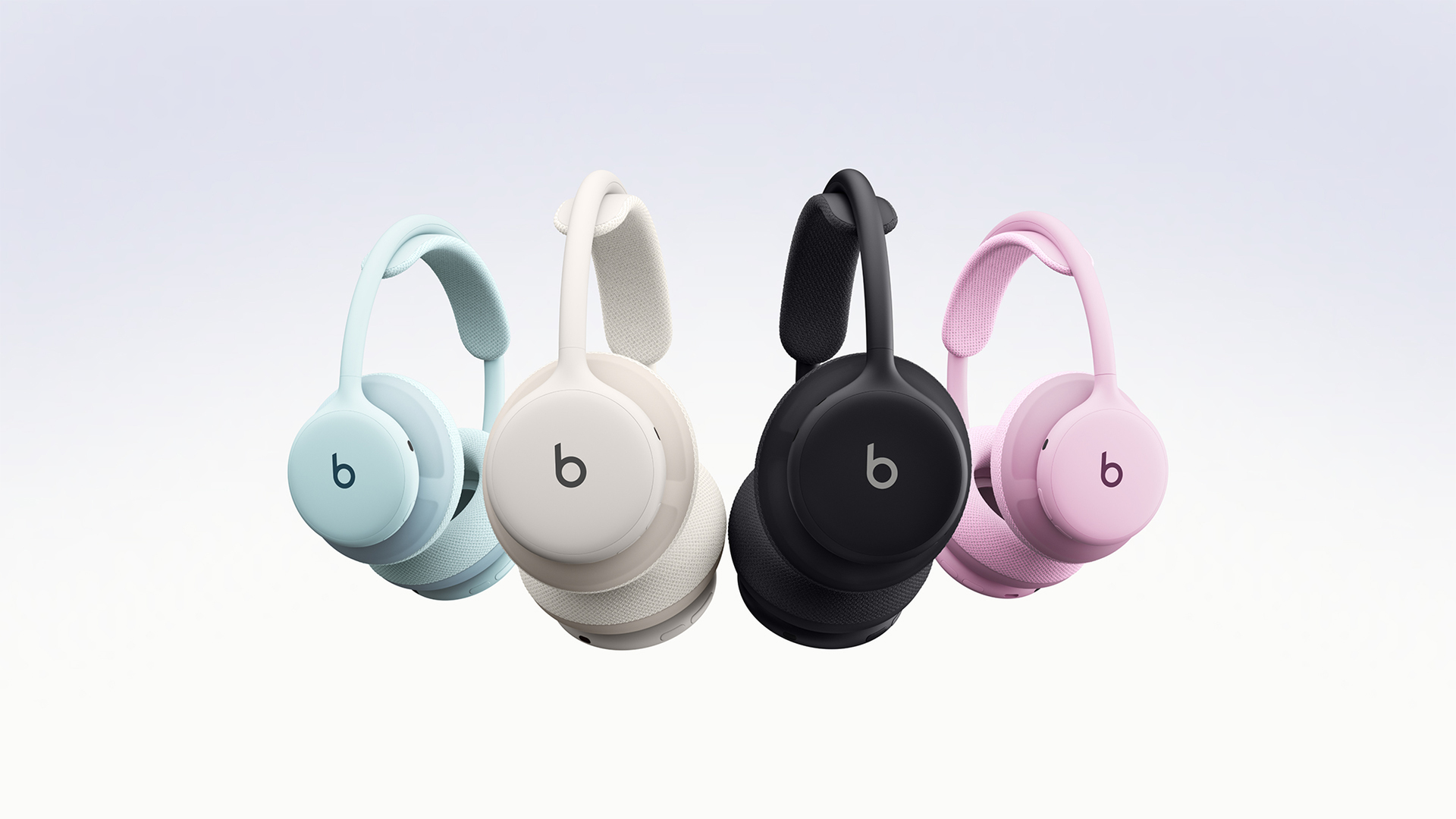
Beats 360 headphones in black, cloud, sky and pink with interchangeable knit cushions

Beats has launched its first customizable over-ear headphones. The Beats 360 cost $349.99, are available to order now, and reach stores on September 24, 2026. Their pitch is unusually specific: a premium noise-canceling headphone that can handle sweat, swap between workout and everyday cushions, and work deeply with both Apple and Android devices.

That makes the Beats 360 more interesting than a routine flagship refresh. They are IPX4 rated, use removable ear and headband cushions, and promise up to 32 hours of listening even with active noise cancellation and Personalized Spatial Audio enabled. But early reviews also identify meaningful tradeoffs, including no wired listening, no wear detection and a fit that may feel tight on larger heads.

Beats 360 price and release date

Beats 360 headphones in Black, Cloud, Pink and Sky with interchangeable cushions

Beats 360 orders opened on September 22 for $349.99 in the United States. The headphones go on sale in stores on September 24 in Black, Cloud, Pink and Sky. Each pair includes matching Performance Knit cushions and a woven ripstop carrying case.

Extra Cushion Kits include both earcup and headband cushions. Performance Knit versions come in Black, Cloud, Pink, Sky, Navy and Volt, while the softer UltraPlush version comes in Black and Cloud. Beats is offering the kits for $9.99 in select markets through October 31, 2026, while supplies last; the normal price is $49.99.

What makes Beats 360 different

The defining feature is not a new codec or another AI mode. It is the modular physical design. Both the ear cushions and headband cushion detach, letting owners change color, replace worn material or keep a clean set ready after exercise. The two materials serve different purposes: breathable Performance Knit ships with the headphones and targets workouts, while engineered-leather UltraPlush aims for longer everyday sessions.

Key confirmed specifications include:

  • IPX4 sweat and water resistance for non-water exercise
  • Custom dual-magnet drivers with three-layer diaphragms
  • Adaptive active noise cancellation, Transparency mode and Adaptive EQ
  • Personalized Spatial Audio with dynamic head tracking and Dolby Atmos
  • Nine microphones for noise cancellation and voice pickup
  • Bluetooth 5.3 with native Apple and Android features
  • 294.5-gram weight and a fold-flat design
  • USB-C charging with up to one hour of playback from a five-minute charge

Sound, ANC and battery life

Beats says its adaptive system provides up to 1.75 times more combined active and passive noise cancellation than Beats Studio Pro under its stated test method. Independent impressions are encouraging but more nuanced. The Verge found good noise cancellation, strong bass and clear highs, while noting that the midrange could sound muddled. Engadget described the tuning as energetic and bass-forward and reported that its review unit was tracking ahead of the official battery estimate.

The official claim is up to 32 hours with ANC and Personalized Spatial Audio enabled, or with Adaptive EQ active. Transparency mode lowers the figure to 24 hours. Those are strong numbers for a premium over-ear model, but battery life will vary with volume, settings and wireless conditions.

Apple and Android support

The custom Beats chip provides one-touch pairing, always-on Hey Siri, automatic switching, Audio Sharing, FaceTime Spatial Audio and Apple’s Find My on compatible Apple hardware. Network location in Find My requires iOS 27 or later.

Android users get Fast Pair, Audio Switch and Find Hub. The Beats app requires Android 15 or later. This balanced platform support is a practical advantage for households that mix iPhones, Android phones and tablets.

What early reviews say

The workout focus is real, but the design will not suit everyone. The Verge found the headphones stable for moderate exercise, though they could shift during sprints or sit-ups. Its reviewer also found the knit cushions somewhat itchy during long sessions. Engadget praised the customization and sound, but found the clamp uncomfortable on a larger head and said the similar-feeling controls take time to learn.

Several omissions matter at $349.99. There is no 3.5mm input, no wired USB-C audio, no lossless USB-C playback and no automatic pause when the headphones are removed. Buyers who routinely plug headphones into an airplane seat, game controller, audio interface or laptop should treat the wireless-only design as a dealbreaker rather than a footnote.

Beats 360 versus Beats Studio Pro

Beats has cut the official Studio Pro price to $299.99. The older model lacks the Beats 360’s IPX4 rating, removable headband cushion and workout-focused knit pads, but it supports 3.5mm audio and lossless listening over USB-C. It also offers up to 40 hours with ANC off, compared with the Beats 360’s 32-hour headline figure.

The decision is therefore straightforward. Choose Beats 360 if sweat resistance, replaceable cushions and a secure active-use design are the priority. Choose Studio Pro if wired flexibility, USB-C lossless audio or a lower list price matters more. Readers considering the older model can check the current price for Beats Studio Pro on Amazon.

Who should buy Beats 360?

  • Best fit: people who prefer over-ear headphones at the gym, want an official sweat-resistance rating and value replaceable cushions.
  • Consider carefully: listeners with larger heads, runners doing high-impact training and anyone sensitive to textured knit material.
  • Skip them: travelers and creators who need a wired connection, listeners who want lossless USB-C audio, or buyers who expect automatic pause at this price.

Early verdict

Beats 360 fills a real gap: premium over-ear noise-canceling headphones designed to survive sweat instead of merely appearing at the gym. The modular cushions are useful for hygiene and longevity, not just color matching, and the cross-platform support is unusually complete.

The $349.99 price is easier to justify for workout-focused buyers than for general listeners. Bose and Sony remain strong alternatives for maximum noise cancellation, while Beats Studio Pro is more versatile for wired use. For the right person, however, the combination of IPX4 protection, long battery life and replaceable contact surfaces makes the Beats 360 genuinely distinct.

Disclosure: ReaderSpice may earn a commission from qualifying purchases made through Amazon links, at no additional cost to you.

Sources

Beats official Beats 360 announcement

Beats 360 official product page

The Verge Beats 360 hands-on review

Engadget Beats 360 review

Apple iPhone Duo vs Samsung Galaxy Z Fold8: Which Foldable Is Right for You?

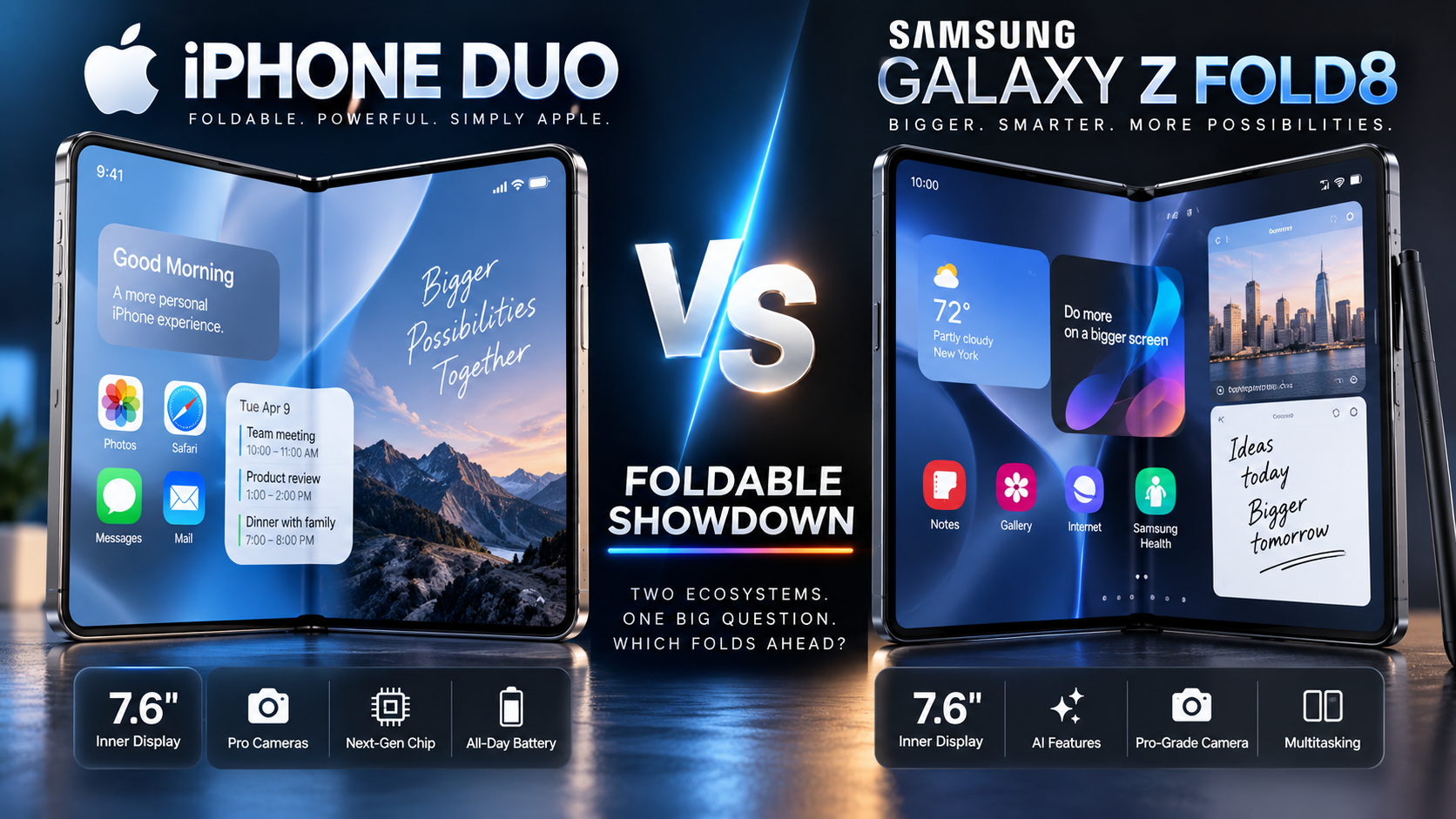
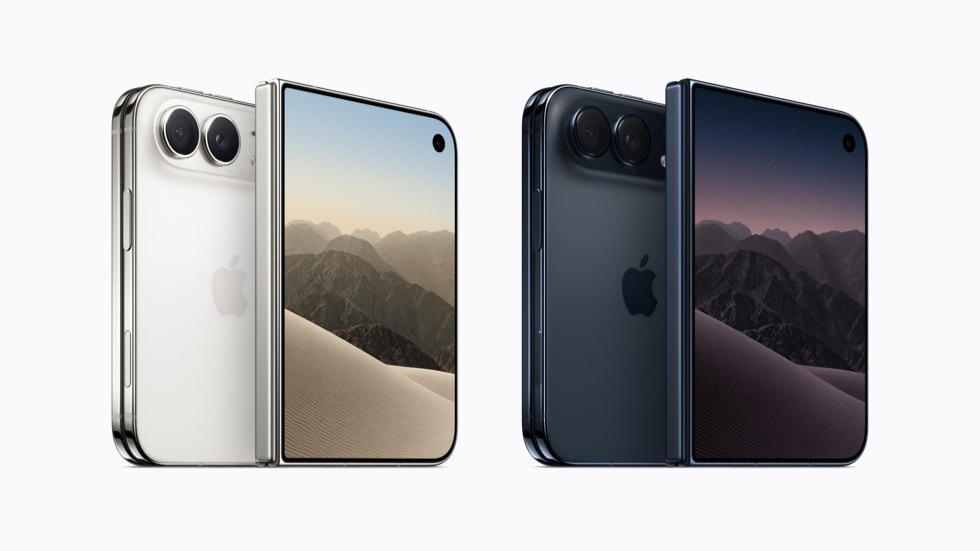
Apple has officially entered the foldable-phone market with the iPhone Duo, putting its first folding iPhone directly against Samsung’s Galaxy Z Fold8. Both use a passport-style book design, both open to a 7.6-inch display, and both target buyers willing to spend flagship-level money for a phone that can become a small tablet.

But these two foldables take noticeably different approaches. Apple emphasizes iOS integration, its A20 Pro chip, Apple Intelligence, Apple Pencil support and continuity between the two displays. Samsung’s Fold8 is dramatically lighter, thinner when unfolded, built around Galaxy AI and Android multitasking, and comes from a company with years of foldable-phone experience.

Here is how the iPhone Duo and Galaxy Z Fold8 compare based on their official specifications and announced features.

Design: Similar Idea, Very Different Weight

The biggest surprise is how similar the basic form factors are. Apple’s iPhone Duo has a 5.4-inch outer display and a 7.6-inch inner folding display. Samsung gives the Galaxy Z Fold8 a 5.5-inch cover display and the same 7.6-inch main-screen size.

The difference becomes much more obvious when you pick up the spec sheet. Samsung says the Galaxy Z Fold8 weighs just 201 grams and measures 4.5 mm thick when unfolded. Apple lists the iPhone Duo at 254 grams and 5.2 mm unfolded.

That makes the Fold8 53 grams lighter. For a device designed to be carried every day, that difference could be meaningful. Apple counters with a grade 5 titanium construction and a precision hinge, while Samsung uses Armor Aluminum, Gorilla Glass, an Armor FlexHinge and its Flex Titanium display reinforcement.

Displays: Both Give You a 7.6-Inch Canvas

Both phones open to a 7.6-inch OLED display with adaptive refresh rates up to 120Hz. Apple’s inner Super Retina XDR panel has a 2670-by-1878 resolution at 430 ppi, while Samsung’s Fold8 uses a 7.6-inch main display designed around a wider 4:3 aspect ratio.

Apple also applies a nano-texture finish to the inner screen to reduce glare. The iPhone Duo supports Apple Pencil (USB-C), which gives Apple an interesting productivity angle for handwritten notes, markup and creative work.

Samsung focuses heavily on side-by-side productivity. Its wide main screen supports Multi Window, and Samsung has spent several generations refining Android apps, drag-and-drop workflows and multitasking for Galaxy Fold devices.

iOS 27 vs Android and Galaxy AI

Software may be the biggest reason to choose one device over the other.

The iPhone Duo ships with iOS 27.1, with Apple redesigning parts of iOS specifically for the foldable form factor. When opened, the Duo can show two Home Screen pages, and Apple has adapted the Dock, navigation controls, Dynamic Island and Live Activities for the larger folding canvas. Content can react as the phone folds, rotates or switches displays.

The Duo also combines Apple Intelligence and Siri AI with the foldable interface. For people already using Macs, iPads, Apple Watches and AirPods, the broader Apple ecosystem may be one of its strongest advantages.

Samsung approaches productivity from the Android side. Galaxy Z Fold8 combines Galaxy AI with Google’s Gemini experiences and Samsung’s mature Multi Window system. Samsung specifically highlights side-by-side productivity and AI workflows on the Fold8’s larger display.

Performance: A20 Pro vs Snapdragon 8 Elite Gen 5 for Galaxy

Apple powers the iPhone Duo with its A20 Pro chip, along with a custom vapor chamber and dual-battery architecture. Samsung uses the Snapdragon 8 Elite Gen 5 for Galaxy, a customized Qualcomm platform with upgraded CPU, GPU and NPU performance.

Raw benchmark numbers will matter once the devices can be tested side by side, but both are positioned as premium flagship processors. In day-to-day use, the larger difference may come from how iOS and Android use the folding display rather than from processor speed alone.

Cameras: Two Different Takes on Foldable Photography

The iPhone Duo includes a 48MP Fusion Main camera and a 48MP Ultra Wide camera, with 2x optical-quality zoom. Apple also uses the folding design for new shooting options, including ways to use the outer display while taking photos and video.

Samsung’s Galaxy Z Fold8 has a 50MP Wide camera and a 50MP Ultra Wide camera, with up to 10x digital zoom. Samsung describes it as a camera system aimed at social-media creators and also takes advantage of the foldable body for flexible shooting positions.

Neither phone should automatically be judged by megapixel count alone. Image processing, video quality, low-light performance and consistency will require real-world testing.

Battery and Charging

Samsung lists a 4,800 mAh typical battery for the Galaxy Z Fold8 and rates it for up to 26 hours of video playback under its test conditions.

Apple does not market the iPhone Duo around a conventional mAh figure on its main product page. Instead, Apple uses a dual-battery architecture and describes the device as delivering all-day battery life. Real-world comparisons will be especially important because foldable battery life can vary significantly depending on how often the large inner screen is used.

Price and Availability

Apple’s iPhone Duo starts at $1,999 in the United States with 256GB of storage. Apple says pre-orders begin October 16, 2026, with availability beginning October 23.

Samsung launched the Galaxy Z Fold8 earlier, with general U.S. availability beginning August 7, 2026. Retail pricing and promotions can change, so buyers should compare current offers rather than relying only on launch pricing.

Amazon Shopping Links

ReaderSpice may earn a commission from qualifying purchases made through affiliate links, at no additional cost to you.

Shop Samsung Galaxy Z Fold8 on Amazon

Shop Apple iPhone models on Amazon

These are standard Amazon links for now and can be replaced with ReaderSpice affiliate links.

Where the iPhone Duo Stands Out

The iPhone Duo is particularly notable for bringing Apple’s ecosystem to a foldable for the first time. It combines the A20 Pro, iOS 27.1, Apple Intelligence, Apple Pencil support, a nano-texture 7.6-inch display and Apple’s familiar app ecosystem in a completely new iPhone form factor.

It is also Apple’s first generation of foldable hardware, which makes independent durability and long-term hinge testing worth watching once the phone reaches customers.

Where the Galaxy Z Fold8 Stands Out

Samsung’s Fold8 has a substantial portability advantage on paper. At 201 grams and 4.5 mm unfolded, it is considerably lighter and thinner than the iPhone Duo. Samsung also brings years of experience developing foldable software, Multi Window workflows and hinge designs.

For users who frequently run multiple apps at once or already use Galaxy and Google services, the Fold8’s Android-based multitasking environment offers a different experience from Apple’s approach.

Which One Fits Your Needs?

The specifications point to two distinct priorities rather than a universal winner. The iPhone Duo brings foldable hardware into Apple’s ecosystem, with iOS 27.1, Apple Intelligence, Apple Pencil support and tight integration with other Apple products. The Galaxy Z Fold8 emphasizes lower weight, a thinner unfolded design, established foldable multitasking and Galaxy AI.

People already invested in either ecosystem may find that software, apps, accessories and connected devices matter more than small differences in specifications. Buyers who are flexible between iOS and Android should also consider portability, multitasking style, cameras, durability and current pricing before deciding.

Sources

Apple Newsroom — Apple unveils iPhone Duo

Apple — iPhone Duo Technical Specifications

Samsung — Galaxy Z Fold8 Features

Samsung Newsroom — Making the Most of Your New Galaxy Z Fold8

9to5Mac — iPhone Duo vs Galaxy Z Fold8 specification comparison

iOS 27 Is Here: The Biggest New iPhone Features You Should Try First

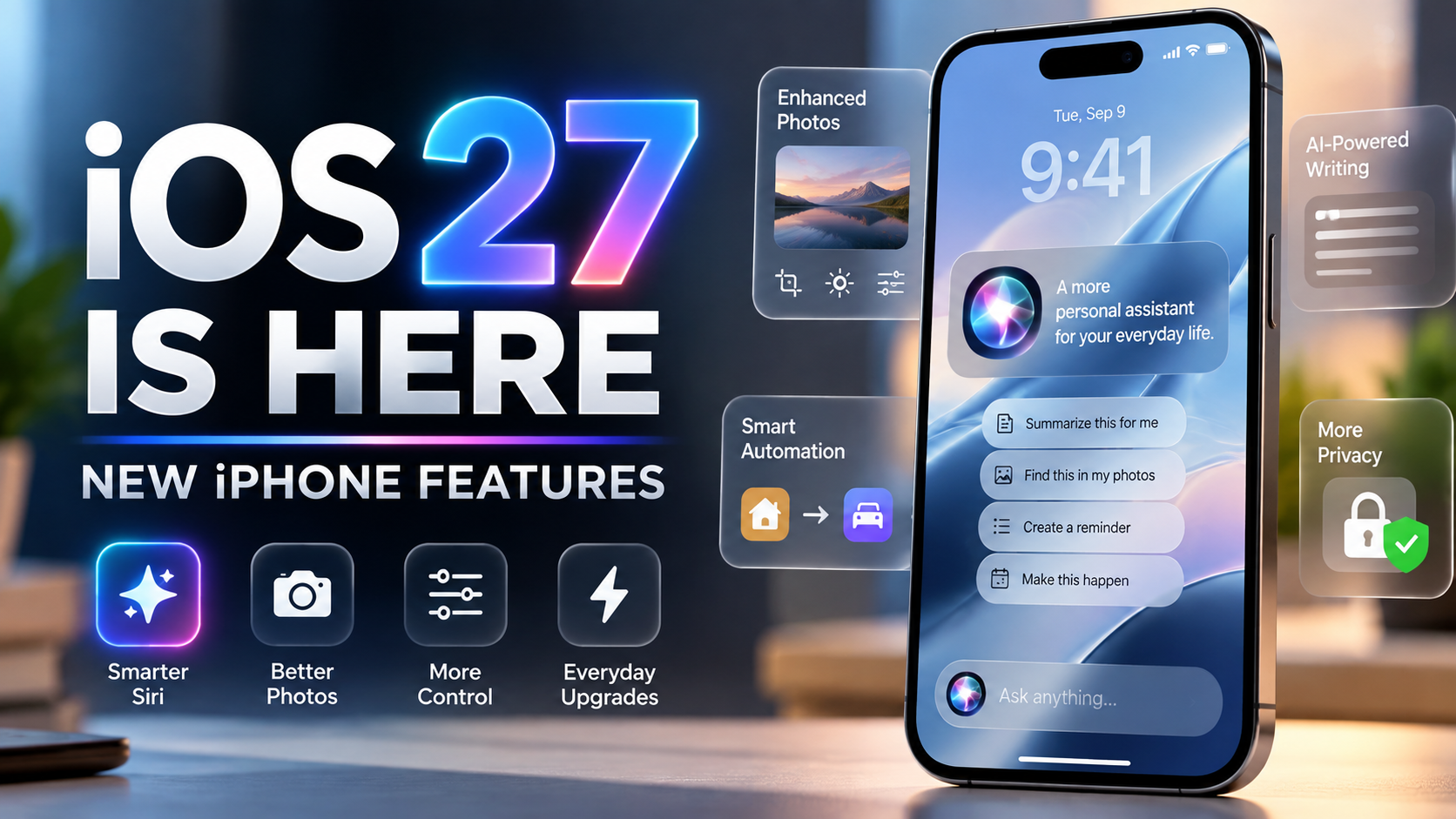
Apple has officially released iOS 27, bringing one of the biggest Siri upgrades in years alongside new Apple Intelligence features, photo-editing tools, design controls, parental protections, and performance improvements. The update began rolling out September 14, 2026, and is available for supported iPhones.

The headline feature is Siri AI, Apple’s reimagined assistant. But iOS 27 is more than an AI update. There are useful changes throughout the system that can make an iPhone feel smarter, more customizable, and easier to use.

Here are the iOS 27 features worth trying first, plus what you need to know about compatibility.

Siri AI Is the Star of iOS 27

Apple describes Siri AI as a more capable and conversational assistant built on the next generation of Apple Intelligence. Instead of handling only simple commands, the new Siri is designed to understand personal context, what is currently on your screen, and follow-up questions.

For example, Siri can surface relevant information from messages, emails, photos, and other personal content when responding to a request. Apple also says Siri can perform more actions across apps, such as helping draft an email or working with information already visible on the screen.

A dedicated Siri app is another major change. It gives users a place to revisit conversations, while iCloud can privately sync Siri conversation history across supported Apple devices.

Siri AI is initially rolling out in beta in English. Apple says French, Japanese, Korean, Portuguese, and Spanish support is coming next.

Try the New Photo Editing Tools

iOS 27 expands Apple Intelligence inside Photos. New tools include Spatial Reframing and improvements to Clean Up, giving compatible iPhones additional ways to adjust images after they have been captured.

Spatial Reframing can intelligently extend or reposition a photo to better fit a composition or wallpaper. This could be particularly useful when a favorite image does not naturally fit the iPhone Lock Screen.

Clean Up has also been improved for removing distracting objects or elements from an image. These features make the Photos app increasingly capable without requiring a separate editing app for quick fixes.

Siri Can Understand What’s on Your Screen

Onscreen awareness is one of the most practical parts of Siri AI. When something is displayed on your iPhone, you can ask Siri questions about it or request an action related to that content.

That could reduce the need to copy information between apps manually. Apple’s examples show Siri using information from webpages and personal content to answer questions and perform tasks.

This is one of the features that could make the new Siri feel substantially different from the older voice assistant, especially once more third-party apps support Siri’s expanded app actions.

More Control Over the Liquid Glass Look

iOS 27 continues Apple’s Liquid Glass design while giving users more control over its appearance. One notable addition is the ability to adjust the visual effect, making the interface easier to personalize.

For anyone who liked the overall design direction but wanted more control over transparency and readability, this is a small but welcome improvement.

Shortcuts Gets Smarter With Natural Language

Apple is also making automation easier. iOS 27 expands intelligence in Shortcuts, allowing users to create and work with automations using more natural language.

This has the potential to make Shortcuts more approachable for people who previously found building multi-step automations complicated. Instead of understanding every action in advance, users can describe more of what they want to accomplish and let the system help construct the workflow.

Better Writing Assistance Across iPhone

Apple Intelligence is more deeply integrated into everyday apps in iOS 27. Writing tools can help users compose, rewrite, and proofread text in places such as Mail and Messages.

The goal is not simply to generate text, but to make assistance available within the apps where people are already communicating. That can be useful for polishing an email, changing tone, or quickly improving a message without switching to another application.

New Parental Controls and Child Safety Features

iOS 27 also includes expanded tools for families. Apple has added stronger parental controls, including more options around age-appropriate apps, web browsing approvals, Screen Time, and communication safety.

These improvements are designed to give parents more control over what younger users can access while making those controls easier to manage from Apple devices.

Performance Improvements Matter Too

Not every meaningful upgrade needs to be flashy. Apple says its latest software releases include broader platform improvements intended to make devices more responsive and easier to use.

Apple highlights broad performance improvements in iOS 27, including up to 30% faster app launches, up to 70% faster loading of new captures in Photos, and up to 80% faster AirDrop transfers. Apple also lists more seamless switching between Wi‑Fi and cellular networks. Actual gains can vary by device and task.

Which iPhones Support iOS 27?

iOS 27 is available for iPhone 11 and later, as well as iPhone SE (2nd generation and later). However, installing iOS 27 does not mean every device receives every feature.

Apple Intelligence has stricter hardware requirements. Apple lists iPhone 15 Pro and iPhone 15 Pro Max, all iPhone 16 models, and later compatible iPhones among the supported devices for Apple Intelligence. Siri AI also requires an Apple Intelligence-capable device and is beginning its public rollout as a beta.

That distinction is important for owners of older supported iPhones: they can still receive iOS 27 and many of its system improvements, but the biggest AI features require newer hardware.

Should You Install iOS 27 Now?

For most users with a supported iPhone, iOS 27 is a significant update worth considering, especially if you own a device capable of running Apple Intelligence. Siri AI is the biggest reason to explore the release, but the photo tools, customization changes, family features, and system refinements make the update broader than Siri alone.

As with any major operating-system release, users who depend on critical work apps may prefer to verify app compatibility first. It is also sensible to back up important data before installing a major iOS update.

For compatible iPhones, the update can be found under Settings > General > Software Update.

The Bottom Line

iOS 27 marks a major step in Apple’s effort to make the iPhone more context-aware and useful through Apple Intelligence. Siri AI finally moves Siri toward richer conversations, personal context, onscreen understanding, and deeper app actions, while Apple has also added improvements that benefit users outside the AI experience.

If you have an Apple Intelligence-compatible iPhone, Siri AI and the new Photos features should be near the top of your list to try. On older supported iPhones, the design, safety, and performance changes still give iOS 27 plenty to explore.

Sources

Apple Newsroom — Major updates for Apple’s software platforms are now available

Apple — iOS 27 features, compatibility, and availability

Apple Support — Apple security releases and iOS 27 compatibility

The Verge — Apple releases iOS 27 with Siri AI

Apple Watch Series 12 and Ultra 4 Announced: New Health Tracking, Apple Silicon and Prices

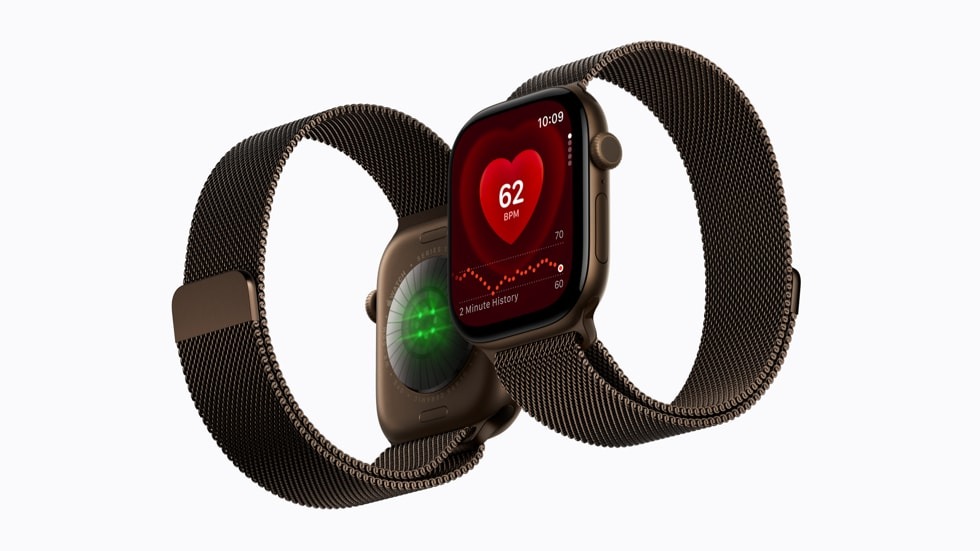
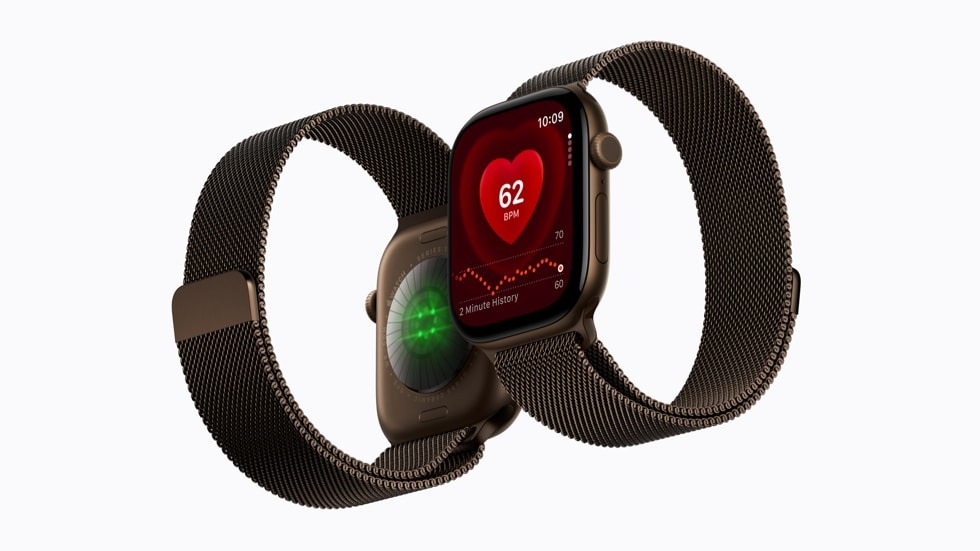
Apple Watch Series 12
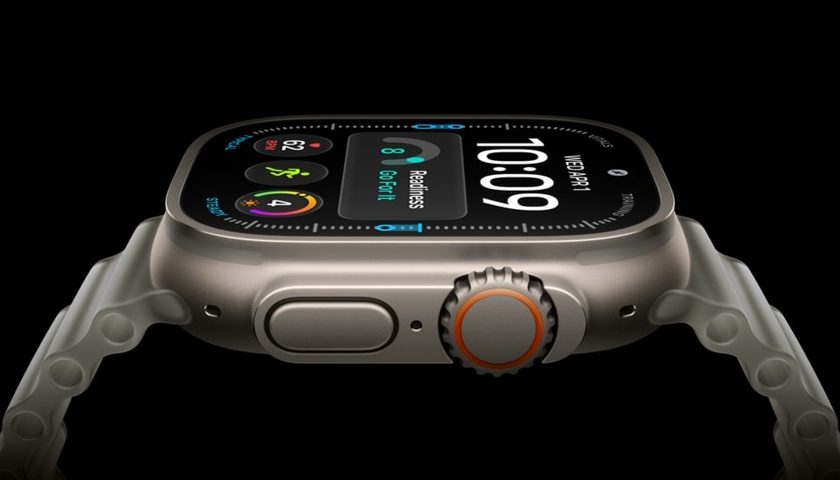
Apple Watch Series 12 and Ultra 4
Official Apple Watch Series 12 featured-image candidate — Source: Apple Newsroom
Apple’s September 2026 event wasn’t only about iPhone. Apple also unveiled Apple Watch Series 12 and Apple Watch Ultra 4, positioning both devices around improved health and fitness tracking, new Apple silicon and a more intelligent watch experience.

Apple Watch Series 12

Series 12 remains Apple’s mainstream smartwatch, but the new generation puts additional emphasis on health data and recovery. Apple introduced a redesigned sensor system that can collect heart-rate information more frequently, supporting improved fitness and wellness insights.

The new watch also benefits from updated Apple silicon. Combined with watchOS 27 and Apple’s expanding intelligence features, the hardware is designed to provide faster processing and more useful summaries without turning the Watch into a miniature iPhone.

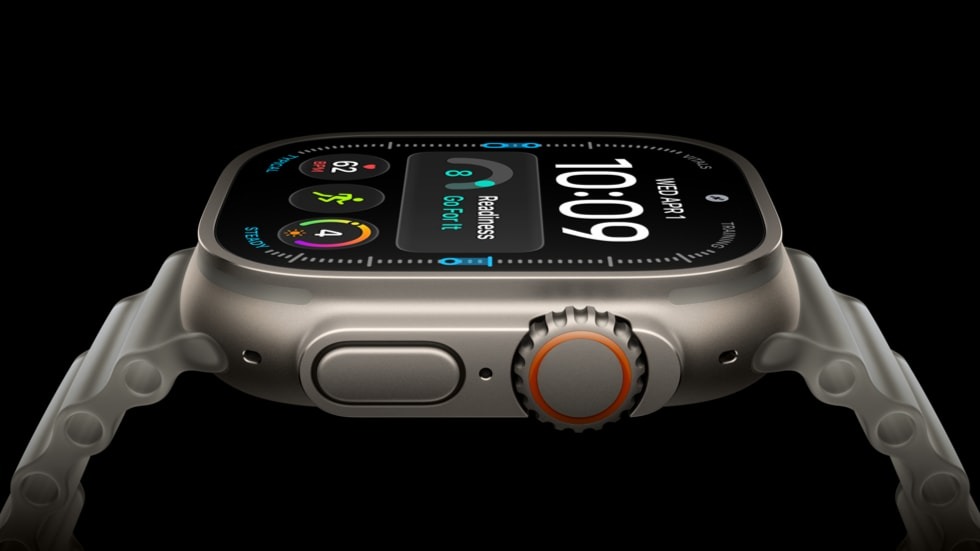
Apple Watch Ultra 4

Ultra 4 continues as Apple’s rugged premium model for athletes, adventurers and users who want the company’s most capable watch. Apple is emphasizing improved sensors, health tracking and battery endurance while retaining the Ultra line’s outdoor-focused identity.

Apple Watch Ultra 4
Official Apple Watch Ultra 4 image — Source: Apple Newsroom

Health and Recovery Become More Important

One of the clearest themes of the new Watch generation is Apple’s attempt to turn the device from a passive activity tracker into a more useful interpretation layer for health and fitness data. More frequent heart-rate measurements can feed recovery and fitness features, helping users understand not only what they did but how their body is responding.

New Intelligence Features

Apple’s broader AI strategy also extends to the wrist. Launch coverage highlighted new summary and intelligence capabilities designed to surface useful information without requiring users to dig through multiple apps and metrics.

Pricing

Apple Watch Series 12 starts at $399, while Apple Watch Ultra 4 starts at $799, according to launch coverage. Those prices keep the new models in the familiar mainstream and premium positions of Apple’s Watch lineup.

Who Should Upgrade?

Series 12 will make the most sense for users with older Apple Watches who want improved health tracking and newer software capabilities. Ultra 4 is aimed at users who prioritize battery life, rugged construction, outdoor use and Apple’s most advanced Watch hardware.

Bottom Line

Apple Watch Series 12 and Ultra 4 are evolutionary upgrades, but Apple’s direction is clear: better sensors, more frequent health data, stronger on-device processing and software that turns raw measurements into information people can actually use.

SOURCES

  • Apple September 9, 2026 event / Apple Events
  • Reuters — Apple September 9 launch coverage
  • The Verge — Apple September 2026 event announcements
  • Axios — Apple event live coverage

Apple September 2026 Event: Everything Announced — iPhone Duo, iPhone 18 Pro, Apple Watch and AirPods 5

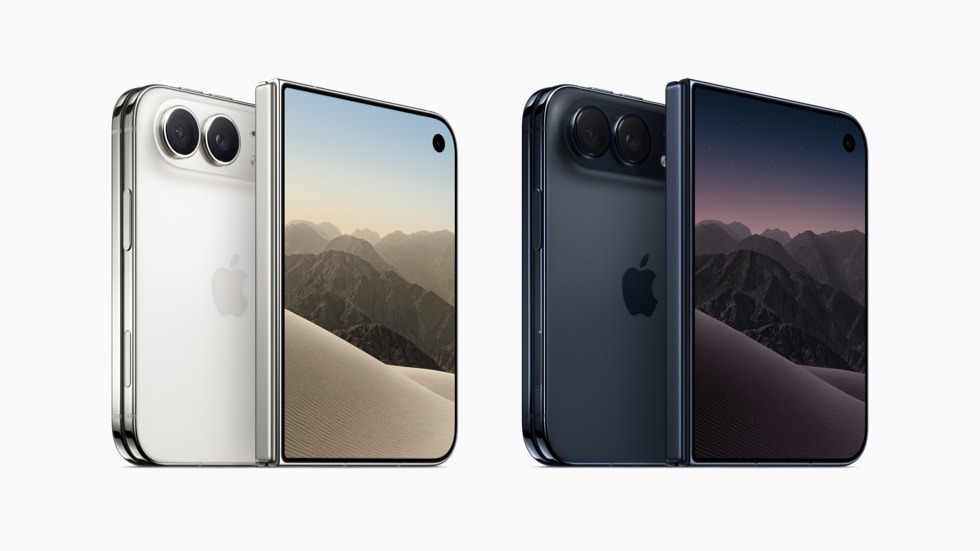
official Apple iPhone Duo launch image — Source: Apple Newsroom
Apple’s September 9, 2026 event delivered one of the company’s most consequential hardware launches in years. The headline was Apple’s first foldable iPhone, the iPhone Duo, but the company also introduced iPhone 18 Pro and Pro Max, Apple Watch Series 12, Apple Watch Ultra 4 and a new generation of AirPods.
official Apple iPhone Duo launch image — Source: Apple Newsroom
Apple’s September 9, 2026 event delivered one of the company’s most consequential hardware launches in years. The headline was Apple’s first foldable iPhone, the iPhone Duo, but the company also introduced iPhone 18 Pro and Pro Max, Apple Watch Series 12, Apple Watch Ultra 4 and a new generation of AirPods.

Here are the biggest confirmed announcements

iPhone Duo: Apple Enters the Foldable Era

The biggest surprise — and the long-awaited “one more thing” — was iPhone Duo. Apple’s first foldable iPhone opens to a 7.6-inch display and includes a 5.4-inch outer screen. It supports multitasking, adapts iOS 27 to multiple orientations and folding positions, and will support Apple Pencil.

The Duo starts at $1,999 and is scheduled for availability October 23. Apple is positioning it as both a premium smartphone and a productivity device, effectively bringing some iPad-style use cases into a pocketable iPhone.

iPhone 18 Pro and Pro Max

iphone 18 Pro and iPhone 18 Pro Max

Apple also introduced iPhone 18 Pro and iPhone 18 Pro Max. The new models start at $1,199 and $1,299 respectively, with preorders beginning September 12 and availability September 18.

The Pro lineup introduces A20 Pro, stronger on-device AI capabilities and significant camera improvements. A 48-megapixel main camera with variable-aperture capability gives photographers more control over light and depth of field, while Apple is also expanding computational photography and video features.

Apple Reference Image

Apple introduced a new authenticity initiative called Apple Reference Image. The feature is designed to help prove the authenticity of images captured with supported iPhones at a time when AI-generated and manipulated photos are becoming increasingly difficult to identify. Apple also said it will support the emerging SynthID standard for identifying AI-created or edited imagery. Regional availability will vary.

Apple Watch Series 12 and Ultra 4

Apple Watch Series 12 and Ultra 4

Apple Watch Series 12 and Apple Watch Ultra 4 were also announced. Apple highlighted redesigned sensing and more frequent heart-rate measurements, alongside new Apple silicon and software features focused on health, recovery, fitness and intelligent summaries.

Apple Watch Ultra 4

Series 12 starts at $399, while Ultra 4 starts at $799 according to launch coverage.

New AirPods

Apple refreshed its entry AirPods line as well. The new generation brings active noise cancellation to a lower-priced AirPods tier. Launch coverage lists a $129 starting model and a $149 version with additional features including wireless charging and on-stem volume controls.

iOS 27 and Siri AI

The hardware announcements build on iOS 27 and Apple’s next generation of Siri AI. Apple emphasized that its intelligence system runs on-device whenever possible and demonstrated deeper app integration. The larger iPhone Duo display is one of the clearest examples of hardware and iOS 27 being designed together, with side-by-side apps and adaptive layouts.

What Was the Biggest Announcement?

The iPhone Duo is easily the defining product of this event. Apple is entering a foldable market that competitors have been developing for years, but it is doing so at the very top of the price range. Whether the $1,999 Duo becomes a mainstream success or remains a premium niche product will be one of the most important Apple stories to watch over the next year.

For traditional iPhone buyers, however, the iPhone 18 Pro and Pro Max remain the products likely to ship at much greater scale. Their camera and AI upgrades could matter more to Apple’s overall business even if the Duo receives most of the attention.

SOURCES

  • Apple Events / Apple Newsroom
  • Reuters — Apple September 9, 2026 launch coverage
  • Associated Press — Apple September 9 launch coverage
  • The Verge — Apple event biggest announcements
  • Axios — Apple live event coverage

Apple iPhone Duo Official: First Foldable iPhone Starts at $1,999

Apple iPhone Duo official foldable image.
Official Apple featured-image candidate — Source: Apple Newsroom

Apple’s foldable iPhone is no longer a rumor. The company has officially unveiled the iPhone Duo, a passport-shaped foldable that represents one of the biggest changes to the iPhone since the removal of the Home button.

The headline feature is a 7.6-inch inner display that opens into a tablet-like workspace while the phone retains a 5.4-inch outer display for normal one-handed use. Apple says the unfolded screen is its largest-ever iPhone display while the device remains pocketable when closed.

Price and Release Date

The iPhone Duo starts at $1,999 in the United States. Apple says the device will become available October 23, placing it above the iPhone 18 Pro Max as the company’s new ultra-premium iPhone option.

Two Displays, One iPhone

Apple has designed the Duo around a wider, passport-like shape rather than an unusually tall folding display. The inner screen supports multiple apps at once, allowing users to work with split-screen layouts and take advantage of apps optimized for the larger canvas. Apple demonstrated productivity scenarios involving apps such as Zoom and Slack.

Apple Pencil Support

In another first for iPhone, the iPhone Duo supports Apple Pencil. That pushes the Duo closer to the iPad experience and could make the device especially interesting for note-taking, annotation and creative work.

Touch ID Instead of Face ID

Apple is using Touch ID integrated into the side button rather than Face ID. Users can also unlock the Duo with Apple Watch. This is one of the clearest examples of Apple adapting familiar technologies to the engineering constraints of a foldable design.

Apple Silicon and Connectivity

The Duo uses Apple’s A20-class silicon and the company’s C2 cellular modem, continuing Apple’s move toward controlling more of the critical chips inside its devices. Apple is also emphasizing on-device AI and privacy across the new iPhone generation.

Cameras

The foldable includes dual rear cameras, with launch reporting describing two 48-megapixel cameras. The emphasis appears to be on keeping the device thin while still delivering a flagship-level camera experience, rather than matching every lens available on the Pro Max.

Built for iOS 27

The hardware story is only half of the Duo. Apple adapted iOS 27 to respond to different orientations and folding positions. Users can place apps side by side, pin video while using another portion of the display, and take advantage of layouts that change as the device is folded or rotated.

Why iPhone Duo Matters

Samsung, Google and Chinese manufacturers have spent years developing the foldable category, but Apple’s entry could push foldables further into the mainstream. At $1,999, this is clearly not a mass-market iPhone. It is a premium first-generation product designed to establish Apple’s approach to the category.

Bottom Line

The iPhone Duo is the most important new iPhone form factor in years. Its combination of a 7.6-inch inner display, Apple Pencil support, multitasking, Apple silicon and iOS 27 creates something closer to a pocketable iPhone-iPad hybrid than a conventional smartphone.

SOURCES

  • Apple September 9, 2026 event / Apple Events
  • Reuters — Apple debuts $1,999 foldable iPhone Duo
  • Associated Press — Apple unveils iPhone Duo
  • TechCrunch — Apple unveils its first foldable, the iPhone Duo
  • 9to5Mac — Apple unveils foldable iPhone Duo

VIDEO / MEDIA

Official Apple iPhone Duo launch page

Apple September 9, 2026 event video

iPhone 18 Pro and iPhone 18 Pro Max Official: A20 Pro, Variable-Aperture Camera, New Colors and Everything Apple Announced

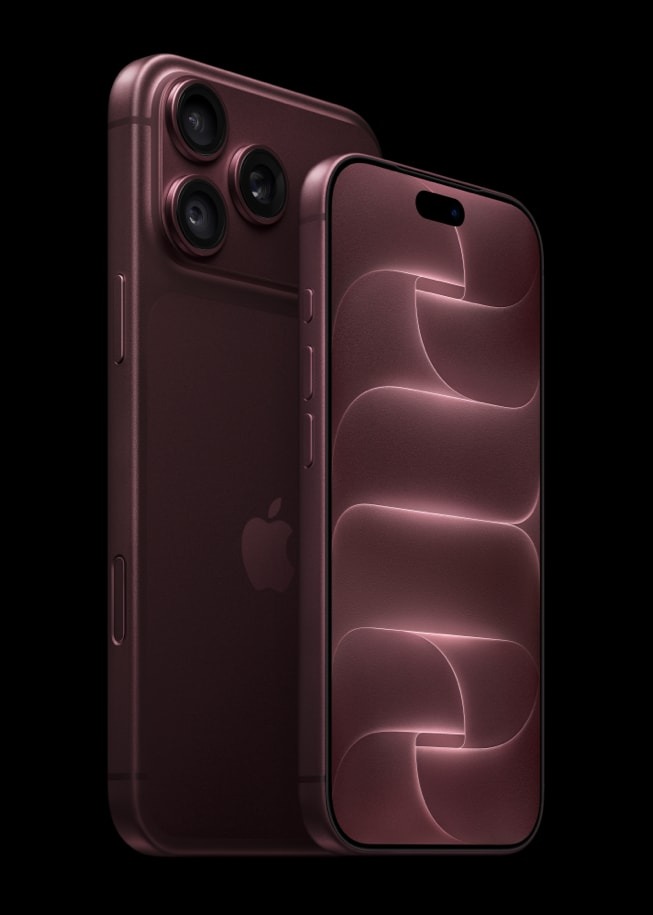
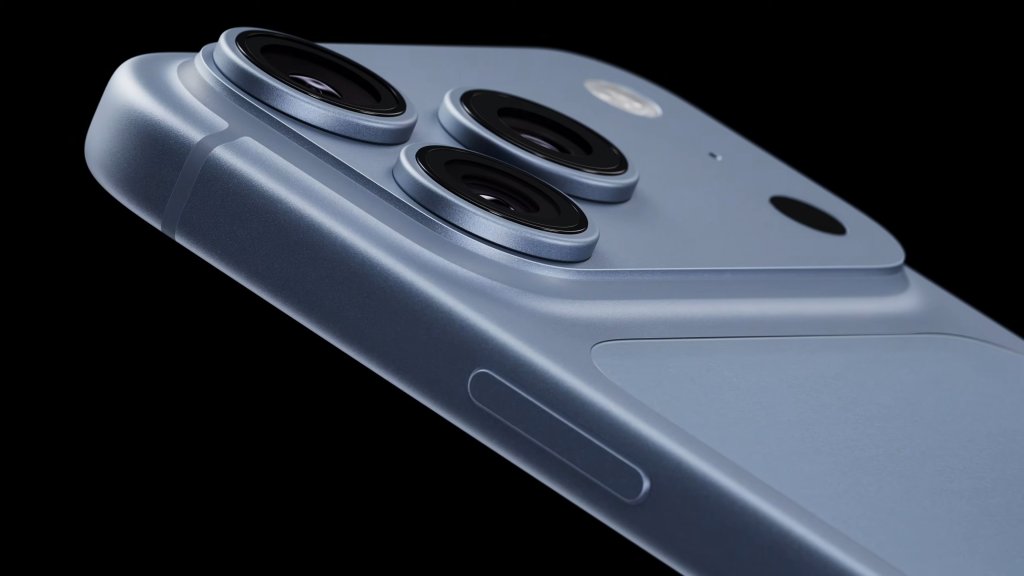
Apple iPhone 18 Pro official product image shown during the September 9 2026 event

Updated: September 9, 2026

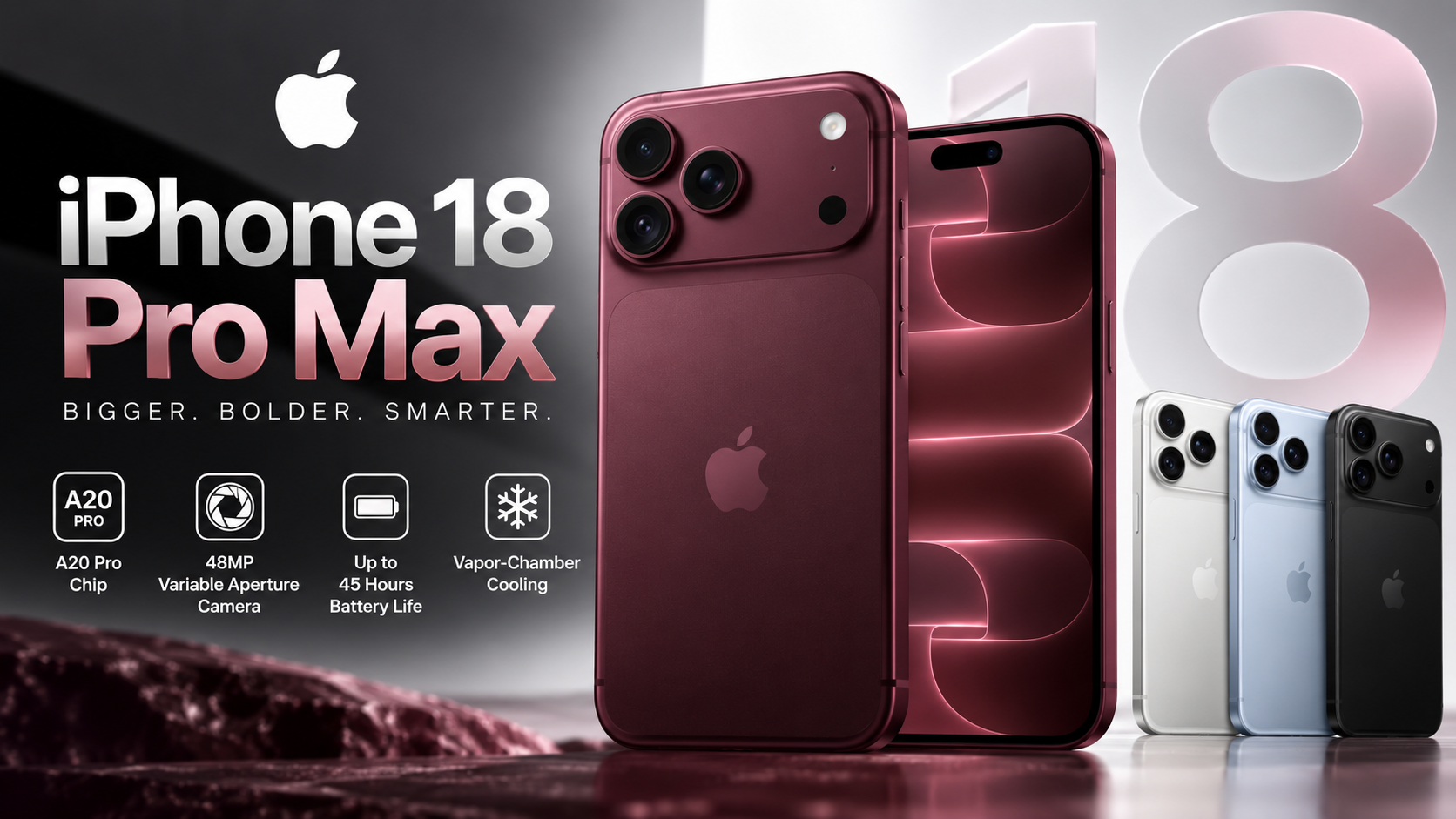
Apple has officially unveiled the iPhone 18 Pro and iPhone 18 Pro Max at its September 9 “Surprise and Shine” event. After months of leaks, the final hardware confirms several of the biggest rumors — including Apple’s new A20 Pro chip, a 48-megapixel variable-aperture main camera, a smaller Dynamic Island and new Pro color options.

The iPhone 18 Pro starts at $1,199 with 256GB of storage, while the iPhone 18 Pro Max starts at $1,299. Preorders open Saturday, September 12, with availability beginning Friday, September 18.

iPhone 18 Pro and Pro Max: What Apple Announced

Apple’s new Pro phones retain the overall design direction introduced with the iPhone 17 Pro generation, but the changes inside are substantial. Both models are powered by the A20 Pro, Apple’s first iPhone chip built using a 2nm process. The six-core CPU combines two high-performance “super” cores with four efficiency cores, while the architecture is designed to push Apple Intelligence and demanding mobile workloads further.

Apple also redesigned the vapor-chamber cooling system and says the new phones deliver longer battery life. Reported figures from Apple’s presentation put video playback at up to 36 hours on iPhone 18 Pro and 45 hours on iPhone 18 Pro Max.

Update: Exact Battery Capacities Revealed in EU Labels

Updated September 13, 2026: Apple’s European energy-label disclosures list the physical-SIM versions of the iPhone 18 Pro at 4,056 mAh and the iPhone 18 Pro Max at 5,391 mAh. These are confirmed figures for EU-style models, not estimates.

  • iPhone 18 Pro: 4,056 mAh, about 1.7% larger than the comparable iPhone 17 Pro physical-SIM battery.
  • iPhone 18 Pro Max: 5,391 mAh, about 11.7% larger than the comparable iPhone 17 Pro Max physical-SIM battery.
  • EU endurance rating: 52 hours for iPhone 18 Pro and 62 hours for iPhone 18 Pro Max under the standardized label test.

The EU capacities should not automatically be applied to U.S. models. Apple sells eSIM-only versions in the United States and other markets, where the space otherwise occupied by a physical SIM tray can accommodate a larger battery. Exact capacities for those versions had not been confirmed as of September 13.

The Pro Max’s larger cell is the most notable hardware change. The smaller Pro’s endurance gain appears to depend more heavily on A20 Pro and software efficiency, though real-world tests after the September 18 release will be more useful than laboratory ratings.

Battery-update sources: Apple’s iPhone 18 Pro technical specifications, MacRumors’ battery-capacity report, and Tom’s Guide’s EU-label comparison.

Apple iPhone 18 Pro official product image shown during the September 9 2026 event
iPhone 18 Pro official Apple product imagery. Image source: Apple, via TechCrunch event coverage.

The Biggest Camera Upgrade: Variable Aperture

The headline camera feature is a new 48MP Fusion main camera with variable aperture. Apple says the aperture mechanism uses six extremely thin blades and can automatically change based on the scene. In darker conditions, the aperture can open wider to capture substantially more light.

This also gives photographers and video creators more creative control. Apple is adding expanded Pro camera controls including manual adjustments such as shutter speed, white balance and aperture, along with tools such as a histogram. The camera can also record 4K Dolby Vision HDR video and apply cinematic effects after capture.

A20 Pro and a Smaller Dynamic Island

The A20 Pro is one of the most important generational upgrades. Beyond raw CPU and GPU performance, Apple is emphasizing on-device intelligence and its new Siri AI capabilities. The Pro models also introduce a smaller Dynamic Island, creating more usable display space while allowing multiple Live Activities to remain visible.

Apple’s new C2 cellular modem is also making its way into the Pro lineup, with support for mmWave 5G and improved efficiency compared with the previous generation.

Four Official iPhone 18 Pro Colors

Apple confirmed four finishes: Deep Black, Silver, Glacier Blue and Burgundy. Burgundy becomes the bold signature color this year, replacing the Cosmic Orange option from the iPhone 17 Pro generation. The rear aluminum and Ceramic Shield glass are also more closely color-matched for a more uniform appearance.

Price, Storage, Preorders and Release Date

Both Pro models now start with 256GB of storage. The iPhone 18 Pro begins at $1,199 and the Pro Max at $1,299, representing a $100 increase over their predecessors. Storage configurations include 256GB, 512GB, 1TB and, for the first time on these models, 2TB.

Preorders: September 12, 2026 at 5 a.m. PT / 8 a.m. ET
Release date: September 18, 2026

What Happened to the Regular iPhone 18?

Apple did not announce the standard iPhone 18 during the September event. The fall launch instead centers on the premium iPhone 18 Pro family and Apple’s newly announced foldable iPhone Duo. Reports point to the standard iPhone 18 arriving later rather than being part of today’s launch.

ReaderSpice Take

The variable-aperture camera is the standout upgrade because it changes more than a specification on a chart: it gives the iPhone camera new physical control over incoming light while Apple simultaneously expands manual software controls. Combined with the 2nm A20 Pro, longer battery life and new Burgundy finish, the iPhone 18 Pro generation is clearly aimed at creators and power users.

ReaderSpice will cover Apple’s other September 9 announcements separately, including the company’s first foldable iPhone, rather than mixing every major product into one article.

Sources

Apple — September 9 “Surprise and Shine” event
TechCrunch — Apple launches iPhone 18 Pro with upgraded camera
The Verge — iPhone 18 Pro and Pro Max announcement
MacRumors — Apple announces iPhone 18 Pro and iPhone 18 Pro Max