

Samsung Wallet is adding built-in access to USDC stablecoin transfers for eligible Galaxy users in the United States during the last week of October 2026. The feature is designed for cross-border payments rather than speculative trading: users will be able to send USDC to compatible crypto wallets or route money to eligible bank accounts in more than 60 countries.
The convenience comes with important limits. Users must be at least 18, complete identity verification and use an eligible Galaxy device with Android 13 or later. Fees, delivery times and recipient eligibility depend on the transfer method, and the USDC balance is a digital asset rather than an FDIC-insured bank deposit.
Samsung Wallet USDC rollout quick take
- Launch window: the last week of October 2026 for eligible users in the United States.
- Eligibility: U.S. residents age 18 or older with a Samsung Account, a compatible Galaxy device running Android 13 or later, identity verification and biometric authentication.
- Supported asset: USDC, a dollar-denominated stablecoin issued by Circle.
- External-wallet transfers: Samsung says it will not charge a transfer fee, but a receiving wallet, exchange or blockchain network may impose costs.
- Bank transfers: eligible bank accounts in more than 60 countries can receive local currency; destination-based fees apply and are shown before confirmation.
- Custody and infrastructure: Bastion operates the stablecoin accounts and transfer framework, while Coinbase Prime Vault is the USDC sub-custodian.
How the new Samsung Wallet transfer flow works
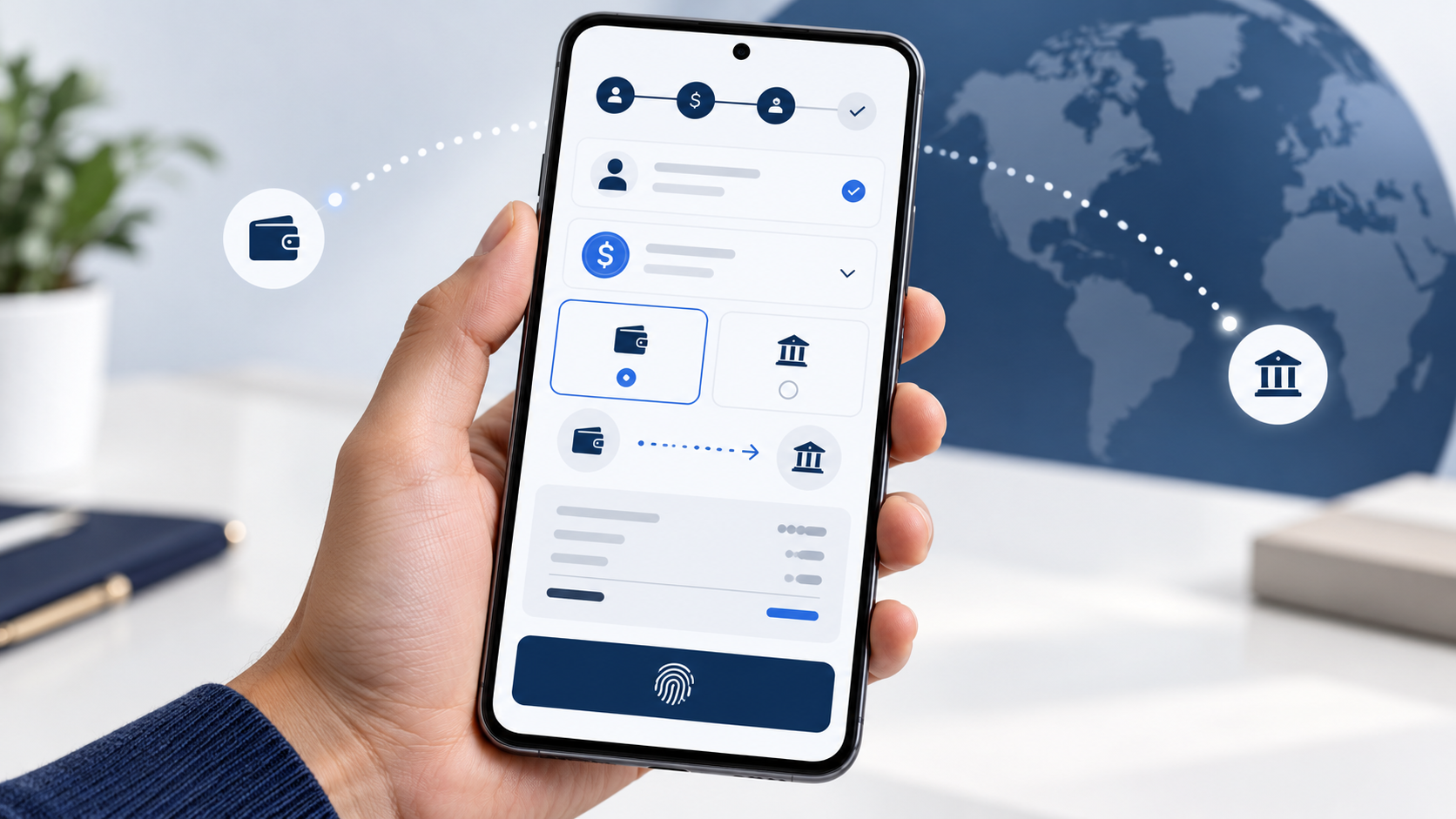
Samsung is placing the stablecoin experience inside the existing Wallet app instead of requiring a separate crypto wallet. When an eligible user selects Buy Stablecoin, USDC will appear as the default dollar stablecoin. The account setup includes identity verification, device registration and biometric authentication.
For a transfer to an external wallet, the sender chooses a compatible destination that supports USDC on a blockchain network supported by Samsung Wallet. Samsung says transfers can arrive in seconds, but timing depends on network conditions. A recipient exchange or wallet provider may charge a fee even when Samsung does not.
For a bank transfer, the user chooses an eligible recipient account in a supported country. The system converts the USDC and routes the payout through local partners so the recipient can receive local currency without operating a crypto wallet. The app will show the fee and estimated delivery time before the sender confirms.
Who is eligible—and who is not
The service is limited at launch to eligible U.S. residents who are at least 18 years old. A Samsung Account, a Galaxy device compatible with Samsung Wallet and Android 13 or newer are required. Users must also complete account registration, identity verification and biometric setup on the registered device.
Samsung says the compatible installed base covers about 82 million U.S. Galaxy devices, but that number is not a promise that every phone, carrier, account or resident will qualify. The stablecoin option can depend on device model, software version, account status and compliance checks.
Transfers to sanctioned jurisdictions are prohibited. Bank-account support also varies by country, bank and account type. The final country list and eligibility details will appear inside Samsung Wallet, so users should verify the destination in the app instead of assuming that every bank in a listed country is supported.
External-wallet transfers and bank transfers have different fees
Samsung’s no-fee statement applies specifically to the fee Samsung charges for sending USDC to a compatible external wallet. It does not guarantee that the entire transaction is free. The recipient’s wallet or exchange can impose a deposit, conversion or withdrawal fee, and supported blockchain conditions can affect timing or cost.
Transfers to bank accounts are different. Samsung says fees apply, vary by destination and amount, and will be displayed with an estimated delivery time before confirmation. Users should compare the final amount the recipient is expected to receive with a bank remittance, card transfer or another money-transfer service.
Exchange rates also matter. A recipient may receive local currency, so the useful comparison is not only the displayed fee but the delivered amount after conversion. The cheapest headline fee can still produce a worse result if the exchange rate is less favorable.
Who holds the USDC
Samsung is not the bank, money transmitter or digital-asset custodian for this service and does not hold customer funds. Samsung says regulated partners provide the stablecoin accounts, custody and money movement.
Bastion supplies the stablecoin account, compliance and cross-border payment framework. Coinbase acts as Bastion’s official sub-custodian, with USDC safeguarded through Coinbase Prime Vault. Solana and Sui are among the partners providing blockchain-network support.
That structure removes the need for most users to manage private keys directly, but it also means access and transactions are subject to partner terms, identity screening, sanctions controls and service availability. Users should review the final in-app disclosures before depositing money.
USDC is designed to track the dollar, but it is not a bank deposit
USDC is intended to be redeemable one-for-one for U.S. dollars. Circle says the circulating tokens are backed by cash and short-term, highly liquid dollar assets, with reserve disclosures and monthly third-party assurance reports.
A stable value target does not make the asset risk-free. USDC is a digital asset, not legal tender, and should not be treated as a checking or savings balance. Coinbase states that USDC balances are not FDIC- or SIPC-insured. Users also face operational risks such as service outages, account restrictions, network congestion and sending funds to an incompatible address or network.
Before confirming an external-wallet transfer, check the exact network, recipient address and wallet support. Blockchain transfers can be difficult or impossible to reverse. For a bank payout, confirm the recipient name, bank details, delivered currency, fee and estimated arrival time.
What may come later
Samsung says future capabilities may include online stablecoin payments and tap-to-pay purchases using an eligible Galaxy device. Those are future possibilities, not launch-day promises. Samsung also points to potential expansion into additional markets as local regulations develop.
At launch, the practical use case is moving USDC or sending money abroad. Users should wait for the live app flow and published partner terms before assuming that Samsung Wallet can replace a payment card, checking account or conventional remittance service.
A relevant Galaxy phone for Samsung Wallet
The current Galaxy S26 Ultra is compatible with Samsung Wallet and remains Samsung’s flagship option for buyers who want the feature on a large-screen device. Check the Samsung Galaxy S26 Ultra on Amazon and verify the storage, color, seller, carrier compatibility and return policy before ordering. A new phone is not automatically required if an existing Galaxy model already meets Samsung Wallet’s compatibility and Android-version requirements.
As an Amazon Associate, ReaderSpice earns from qualifying purchases.
The bottom line
Samsung Wallet’s USDC rollout could make cross-border stablecoin transfers easier for eligible Galaxy users because the app handles account setup, custody integration, compliance checks and biometric authorization without requiring direct private-key management.
The limits are just as important. Eligibility is restricted, bank-transfer fees vary, external providers may charge costs, USDC is not an insured bank deposit, and destination or network mistakes can be costly. Compare the final delivered amount, review every confirmation screen and start with a small test transfer when using a new wallet or recipient.
Sources
Samsung Newsroom U.S.: Samsung Wallet stablecoin announcement
Coinbase: USDC in Samsung Wallet and custody details
Bastion: Samsung Wallet stablecoin infrastructure and compliance
Samsung: Samsung Wallet eligibility and digital-asset FAQ
Circle: USDC reserves and transparency
Coinbase: USDC rewards and deposit-insurance disclosure