
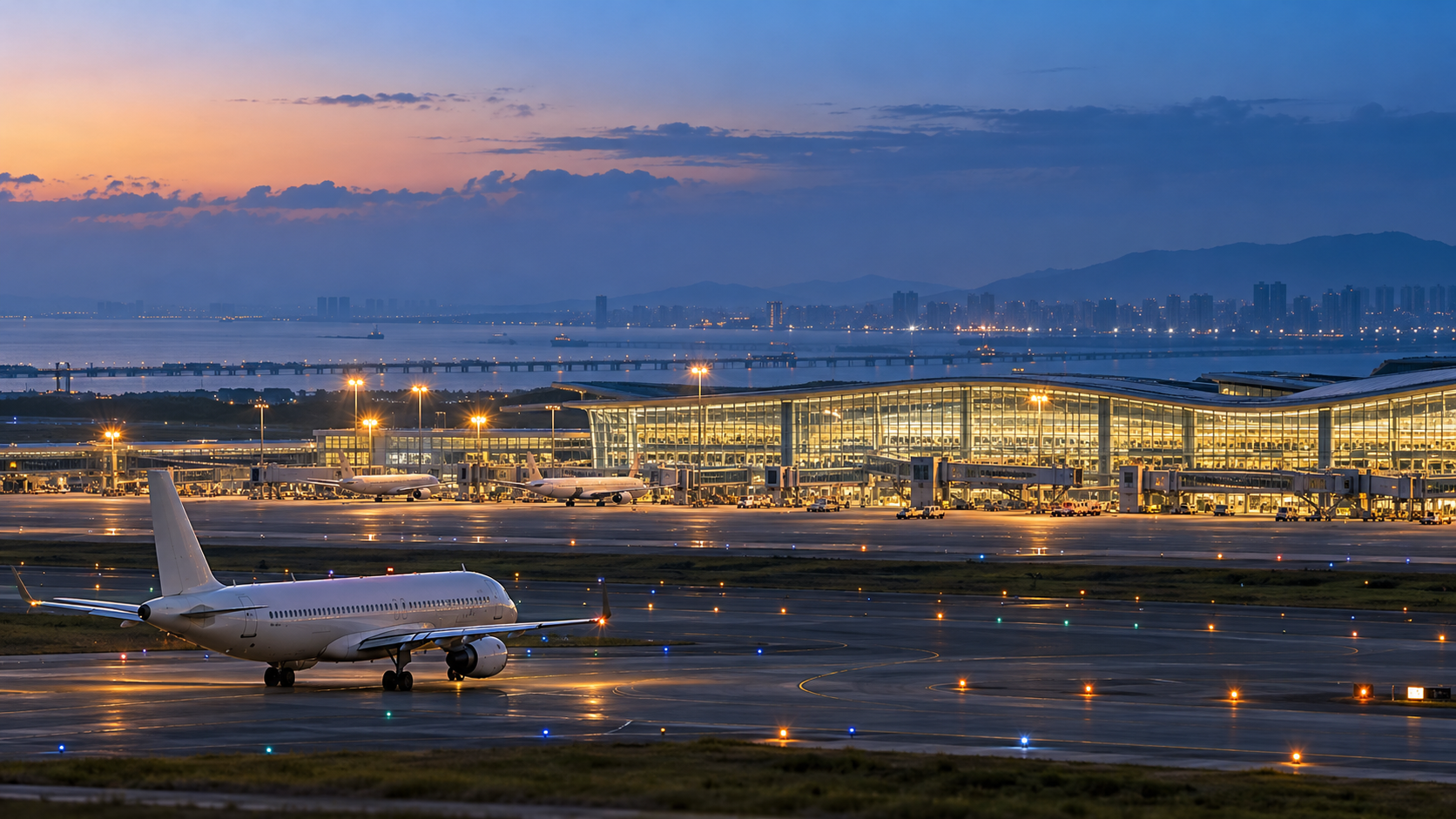
Mumbai’s two-airport system is entering a more complicated phase. IndiGo, Air India Express and Akasa Air have now outlined separate plans to move selected flights from Chhatrapati Shivaji Maharaj International Airport to Navi Mumbai International Airport, with changes beginning in December 2026 and continuing through 2027.
The shift can create more capacity for the Mumbai region, but it also creates a simple travel risk: a ticket described as “Mumbai” may use either BOM or NMI. Those are different airports in different parts of the metropolitan region. Travelers who assume the wrong terminal—or the wrong airport—could face an expensive road transfer and a missed flight.
This guide separates the announced phases from routes that are still subject to approval or schedule changes. The operating airline’s current booking record remains the final authority for the airport, date, terminal and check-in deadline.
Mumbai’s two-airport transition at a glance
- Navi Mumbai International Airport uses the IATA code NMI.
- Chhatrapati Shivaji Maharaj International Airport uses BOM.
- Air India Express plans four daily domestic departures from NMI beginning in December 2026, followed by a phased international expansion.
- Akasa Air says its Mumbai–Jeddah operation will move to NMI in December 2026.
- IndiGo plans to begin its new international phase at NMI in February 2027 and progressively transfer selected departures through the summer schedule.
- Most Mumbai traffic will continue using BOM while Terminal 1 is redeveloped.
- Airline, airport and regulatory approvals can change dates, frequencies and exact routes.
This is not a wholesale overnight closure of Mumbai’s established airport. It is a phased redistribution. A traveler should therefore check the airport code for every trip instead of relying on what the airline used last month or what a previous itinerary showed.
What IndiGo is moving and when
IndiGo and Adani Airports announced a phased expansion of international operations at Navi Mumbai on October 25. ETTravelWorld reports that IndiGo plans to begin the new phase in February 2027, progressively transferring 12 daily international departures from BOM while adding a daily Kathmandu service from NMI.
Reported destination plans include Bahrain, Riyadh, Jeddah, Kuwait, Muscat, Dhaka and Jakarta. The important word is progressively: not every route moves on the same day, and an announced city does not guarantee that every frequency to that city will use NMI.
IndiGo may also adjust domestic flights to support international connections at the new airport. That can make NMI more useful as a connecting point, but travelers should not assume that separate domestic and international bookings will connect automatically. Through-checked baggage and disruption protection depend on the ticket and airline rules.
For any IndiGo booking in the transition period, confirm the three-letter airport code in the itinerary and Manage Booking page. Recheck after a schedule-change email because the departure time may remain similar even when the airport changes.
What Air India Express plans
Air India Express is taking a different path. The published transition plan starts with four daily domestic flights from NMI in December 2026. International expansion is expected to follow, including Kuwait service from January 2027 and a progressive transfer of selected West Asian operations.
The airline’s current Navi Mumbai booking page already treats NMI as a distinct origin and lists domestic and international options. That page is useful for checking live availability, but it also warns that routes, fares and frequency can vary by season and demand.
Travelers should distinguish Air India Express from full-service Air India when reading an itinerary or news report. The carriers are part of the same group, but a flight number, fare bundle, baggage allowance and operating carrier still determine the actual rules. If a booking was sold by another airline, look for the “operated by” line as well as the marketing brand.
Akasa moves the Jeddah route in December
Akasa Air has announced one especially clear change: its Mumbai–Jeddah operation is scheduled to move from BOM to NMI in December 2026. The Indian Express reported the change on October 27, citing the airline and Adani Airport Holdings.
That does not mean every Akasa flight serving the Mumbai region is moving. It means passengers on the affected Jeddah service should verify the airport on their specific date. A round trip can also use different airports if the change occurs between the outbound and return journeys.
Anyone with a hotel transfer, family pickup, religious-tour package or separate domestic connection should update the ground plan as soon as the airline confirms NMI. A transfer arranged for BOM will not automatically redirect to Navi Mumbai.
Why flights are shifting from BOM
The airline moves support the redevelopment of Terminal 1 at Chhatrapati Shivaji Maharaj International Airport. Financial Express reports that the project is intended to raise Terminal 1’s annual passenger capacity from 15 million to 20 million while modernizing safety, passenger and operational facilities.
The current plan does not remove most traffic from BOM. Reporting on the redevelopment says roughly 9% of CSMIA’s annual passenger volume is expected to relocate during the first phase, leaving about 91% at the existing airport. Those percentages explain why airport-code checking matters: both airports will remain active, and the same airline may operate from both.
Navi Mumbai’s first terminal is designed for 20 million passengers a year, with long-term expansion planned. The broader goal is a dual-airport market that can add capacity without forcing every traveler through one congested site.
How to check whether your ticket uses NMI or BOM
Do not rely on a city name alone. Use the itinerary, airline account and airport’s live flight-status page together.
- Open the airline’s official app or website and retrieve the booking with the PNR.
- Find the airport code beside every departure and arrival: NMI means Navi Mumbai; BOM means Chhatrapati Shivaji Maharaj International.
- Check the operating carrier and flight number, especially on a codeshare.
- Confirm the travel date, local departure time and terminal.
- Review every segment separately; one connection can use BOM while another uses NMI.
- Open the official airport flight-status page close to departure and compare the flight number.
- Save the corrected itinerary offline and update whoever is providing transport.
- Recheck after any airline schedule-change message.
If an email says only that the schedule changed, compare the old and new airport codes before accepting the revision. A small time adjustment can hide a much larger ground-transport change.
Changing airports can break a connection
NMI and BOM are not two terminals in one complex. A traveler changing between them must leave one airport, collect any checked baggage that is not through-tagged, travel by road and complete check-in and security again.
Traffic can make a cross-airport journey unpredictable. Immigration, customs, delayed baggage and road congestion can consume a large buffer before the second airline’s cutoff. A booking engine may display separate tickets next to each other without protecting the passenger if the first flight is late.
Before accepting a split-airport itinerary:
- Confirm whether all flights are on one protected ticket.
- Ask whether baggage is checked to the final destination.
- Price the road transfer, tolls and possible overnight stay.
- Check the second airline’s missed-flight policy.
- Avoid a tight same-day connection, especially after an international arrival.
- Keep essential medicine, documents and one change of clothes in hand baggage.
If the airlines will not guarantee the connection, treat it as two separate journeys. A cheaper fare is not necessarily cheaper after a transfer, hotel or replacement ticket.
Ground transport and arrival planning
Navi Mumbai International Airport is in the Ulwe area, while BOM serves the established airport complex closer to central Mumbai. The practical choice depends on the traveler’s origin, destination, time of day and road conditions.
Use the official NMI website for the current airport address, passenger services and flight status. Do not ask a driver simply for “Mumbai airport.” Send the airport code and terminal from the booking. If a pickup is being arranged by family, a hotel or a tour company, share a screenshot of the confirmed itinerary.
Allow more time during the transition period. Drivers, hotel desks and even repeat travelers may default to BOM from habit. Confirm the destination before the vehicle leaves, and keep the airline’s contact details available in case a late airport change appears.
Baggage and check-in deadlines still come from the airline
Moving to a new airport does not create one universal check-in rule. Domestic and international deadlines, baggage allowances, document requirements and boarding-gate closure times remain airline- and fare-specific.
Air India Express advises travelers to select NMI explicitly when booking and to verify the live timetable. Its published guidance recommends arriving earlier for international travel than for domestic travel, but passengers should use the deadline shown for their own flight and fare.
Check baggage allowance before packing because a route move can coincide with an aircraft, schedule or fare change. If the airline reissues the ticket, verify that paid seats, meals, extra baggage and assistance requests remain attached to the booking.
A small luggage scale can prevent check-in surprises
Airport changes are stressful enough without discovering an overweight suitcase at the counter. Amazon lists the Etekcity Digital Luggage Scale, ASIN B00NW62PCA, as a compact handheld scale with a claimed capacity of up to 110 pounds or 50 kilograms.
Travelers can compare the Etekcity luggage scale on Amazon before departure. Confirm the exact seller, current model, battery inclusion and return terms. A home scale is a planning aid; the airline’s calibrated airport scale and the baggage allowance on the ticket determine the final result.
Disclosure: ReaderSpice may earn a commission from qualifying Amazon purchases made through the link above, at no additional cost to you.
Practical checklist before departure
- Confirm NMI or BOM on every flight segment.
- Recheck the airport after schedule-change emails.
- Verify the operating carrier and flight number.
- Update taxi, hotel, family pickup and tour arrangements.
- Download the itinerary and airport address for offline access.
- Confirm baggage, passport, visa and check-in rules with the airline.
- Add a large buffer for any NMI–BOM ground transfer.
- Use the official airport flight-status page on the travel day.
- Keep documents, medicine, chargers and essentials in hand baggage.
The bottom line
The Navi Mumbai transition is becoming real, but it is deliberately gradual. Air India Express begins a new domestic phase in December 2026, Akasa moves its Jeddah service in December, and IndiGo’s expanded international phase is scheduled from February 2027. Exact routes and frequencies can still change.
For passengers, the most important habit is simple: read the airport code, not just the city. NMI and BOM are separate airports. Confirm the code at booking, after every schedule update and again before leaving for the terminal.
Sources
Financial Express: Mumbai Terminal 1 redevelopment and passenger-capacity plan — October 26, 2026
Navi Mumbai International Airport: Official flight-status page
Navi Mumbai International Airport: Official traveler information
Air India Express: Flights from Navi Mumbai (NMI)
Amazon: Etekcity Digital Luggage Scale (ASIN B00NW62PCA)