Visions: Essence and Types in Business

SHAILESH SAPKOTA | KATHMANDU | 2020-10-30 | 7:10PM

A new business is started with an idea to achieve specific goals. There are visions behind the idea to achieve that goal. Visions are the mission statement that is future-oriented that a business is likely to achieve in 5 or 10 or 20 years. It defines the ambition of an organization and the position it would like to achieve relative to its competitors. Businesses define their vision generally in one statement that would strategically inspire the organization to overcome obstructions. We can also say that vision statements are the key driver for the organization to innovate, to commit, to motivate, and success in the market (Bowen, 2018).

The vision statements are vital for the business because it defines the purpose of an organization and makes the sense of belongings to the employee. It acts as a direction for the organization, as well as helps to align the optimal utilization of the resources.  Mostly it will assist high-level management to take decisions without being diverted from their main goals (Suranga, 2014). It also increases efficiency and productivity by aligning employee, board, and resources into one purposeful objective. Therefore, every business must develop a clear vision statement.

Developing effective vision statements:

A vision statement should be strategic, brief, widely acceptable, integrable, stable, and motivating. The first stage to develop a positive vision statement is to determine the role to craft it. In a small business, it is easier to gather insights from their employee as well as associates but in large corporations, it is possible to gather insights and ideas from the stakeholders (Kantabutra, 2008). Mainly, the board of directors and majority shareholders decides the vision statement with common attributes. The common attributes of positive vision statements are:

  1. Clarity & Stability: Unclear vision statements can bring lots of confusion among the employee and stakeholders because in an organization there are a wide variety of works and employee. The main objective is to create a clear and precise vision so that every stakeholder, employee, and associates can be inline and clear the confusion. Vision statements are created taking longevity into account. It should be stable enough to withstand any external and internal changes.
  2. Brevity: Usually people tend to catch short, sweet, and catchy statements but it is also not possible to communicate too short vision statements. Many organizations have longer than average vision statements to understand it they provide employees and stakeholders with indexes and clue cards. It brings too many hassles and customers might not be able to interpret them. So, a vision statement should incorporate brief sentences.
  3. Future orientation: A vision statement should forecast the organization’s future goals and accomplishments. Effective vision statements should describe on-going actions as well as their future orientations.
  4. Inspirational: An effective vision statements should be inspirational for the employee and stakeholders. The vision statements should motivate existing employees as well as be able to drive talents to the company (Abuachi, 2015). An employee tends to work efficiently in an inspirational environment. With a motivational vision statement, businesses can increase their productivity as well as improve the working environment.
  5. Abstract and challenging: Vision statements should be able to provide a general idea and abstract picture of the organizational goals. Abstractness means the vision statements should not be focused on one goal. The statement should be that the organization has moved closer to achieve a goal but should not be attained once and for all because it will be inappropriate to move on to another vision. So, to maintain consistency the vision statement should be abstract. It should also be in a challenging way so that employees and other stakeholders feel motivated to accomplish the challenge.

The above-mentioned attributes help us to incorporate effective vision statements. This will help us to create an organization’s culture, goals, output, positive perspectives, and great organizational structures. We can take the above attributes and develop vision statements for a company “Refurbstuffs”. The main objective of Refurbstuffs is to provide refurbished electronic products at an exclusive lower price. Keeping the objective and above mentioned attributes in mind, we have created a vision statement for our business.

Vision: “To achieve 100% customer satisfaction for every product by providing relentless service, quality, and value”

In the above vision statement, we can see our effort to provide customer satisfaction and focusing on the after-sales service of our products. Usually refurbished products are re-made and fixed out of manufacturing error. The company sells repaired manufacturing defective electronic gadgets of different brands including Apple, Samsung, Sony, etc. Refurbished products are a new concept in the market and customers are in doubt to buy the product. So, we assure them that the products are 100% genuine by providing exceptional after-sales support so that they can trust our products. So using “100% satisfaction” and “relentless service, quality, and value” in our vision statements can help us achieve the trust we need. Also, another reason for us to choose the above statement is because of its clarity, brevity, and abstractness.

References

Suranga, M. (2014, January). Mission and vision of the organization. Importance of Corporate Vision, 1-4. Retrieved May 30, 2020, from https://www.researchgate.net/publication/331684763_Importance_of_Corporate_Vision

Kantabutra, S. (2008). The Journal of Applied Business Research. What Do We Know About Vision?, 24(2), 1-10. Retrieved May 20, 2020, from https://www.researchgate.net/publication/282715988_What_Do_We_Know_About_Vision

Abuachi, J. (2015, June). Importance of vision. Mission and Vision Statements, 1-5. Retrieved May 30, 2020, from https://www.researchgate.net/publication/277775744_Mission_and_Vision_Statements

Leadership concepts and skills

SHAILESH SAPKOTA | KATHMANDU | 2020-10-29 | 9:10PM

Leadership is a skill of motivating a group of followers towards the achievement of specific goals. In a business setting, leadership helps to enhance the personal, social, and professional growth of the employee. Effective leadership can express and communicate the vision, and target of the organization to the employee (Khan, Nawaz, & Khan, 2016). Therefore, successful leaders are those that inspire and can encourage others towards the share aspiration.

There are different types of leadership characteristics that we experienced in the history of mankind. It is truly an ability to put together the right traits, characteristics, and ability to communicate the path to their followers. There are also different principles and styles of leadership that had been in practice. In the context of business, leadership is directly associated with performance. If an appointed leader cannot fulfill the objective and doesn’t meet the profit expectations they may be terminated by the board (Surji, 2015). Achieving all these skills and techniques can provide us with effective leadership ability.

Leadership qualities:

Leadership definition is being changed according to the demand of time. Previously, there was the popularity of the traditional type of leadership. In this approach, leaders were considered effective because of their personality, traits, and behavior. It is an interpersonal influence attended through the communication process. Successful leaders are those that successfully collaborate to achieve common goals. Leadership qualities revolve around these concepts. The quality in leadership is the ability a leader should possess to effectively lead an organization or group of people. Often, these qualities depend upon the intrinsic and extrinsic behavior of the leader. Quality in leadership is discussed mostly on the concept of total quality management (TQM). The leadership quality depends on strategic leadership, visionary leadership, integral leadership, fostering innovation, empowerment, and teamwork. Among the different styles of leadership, transformational leadership has the highest quality to lead the organization effectively. It is because leaders following transformational leadership are influencers, trust creators, communicators, initiators, and developers.

As leading an organization, I have been able to practice transformational leadership. Some of the qualities that can be reflected in me are:

  1. Vision and Purpose: According to Jack Welch, former CEO of General Electric, “Business leaders should create a vision and relentlessly drive others to achieve it”. To run the organization smoothly, it should be future driven. Being a leader, I know that it is important to visualize the future for not only me but also for the welfare of employees and organizations. It is important to set the direction and be able to see the bigger picture. I believe that a leader should go above and beyond expectations to achieve the vision and purpose of the organization.
  2. Honesty and Integrity: I believe that successful effective leadership can be derived from honesty and integrity. It is a leader’s responsibility to maintain honesty in the organization. Influencing others with high positive moral and honest behavior can be done with honesty and integrity in leadership. I believe that a leader should lead the organization with honesty and integrity to build credibility, create a trustworthy atmosphere, for the commitment of success, and to prepare themselves ahead of future challenges.
  3. Decision-making capabilities: It is one of the vital qualities of effective leadership. It is important to make the right decisions on time. Being a leader, it is my responsibility to make a decision and make a stand by it. Mostly, in our organization, I have a responsibility to make direct decisions regarding the operation of the business. But, if we need to spend a high amount of money on assets or in marketing, it is compulsory to consult the board first. Fluctuating decisions might show that leadership is immature. So, a leader needs to take a timely and right decision.
  4. Accountability: A good leader should not only be accountable for his decision but for his sub-ordinates too. According to Arnold H Glasow, a US businessman, “leaders are those that take little more than the share of the blame and little less than the share of credit”. To be efficient it is necessary to pat the back of sub-ordinates if mistakes occur. It is also necessary to back them up and make them realize the mistake and move on.
  5. Empathy and Emotional Intelligence: A leader should have influencing characteristics to be efficient. To make a person liable to the leader they should focus by connecting emotionally. Being an emotionally intelligent being, I have been able to understand the feeling of the employee. In my experience, employee sometimes feels low and emotionally affected due to their family and other external affairs. It is important to understand their feeling and act accordingly to keep them motivated and aspiring.

Except for these qualities, a leader needs to understand and act according to the scenarios.

Visions and values:

Visions define the ambition and future orientation of an organization. The organization creates their vision statement that directs the board and employee to innovate, commit, and motivate all in one perspective. A vision statement will be effective only if it has qualities like strategic, brief, widely accepted, and motivating. Some of the most significant attributes of effective vision statements are clarity, stability, brevity, future orientation, inspirational, abstract, and challenging (Kantabutra, 2008). Visions also play an important role in personal life, with a forward and positive vision one can be future-orientated. The visions should always be in line with the personal values of the leader.

Role of ethics in effective leadership:

Effective leadership focuses on achieving organizational vision. It helps in setting the organizational culture and values. Leadership is all about inspiring followers and motivate them. Effective leadership comes with making timely decisions, leading by examples, problem solver, believer, accountable, trustworthy, effective communication, confident, and innovation. This all can be achieved if the leader has ethics in themselves.

Ethical leadership demonstrates the ability to look towards common welfare that is acceptable. It can help to establish a positive organizational environment. Leaders that lead by example influence others to maintain a positive working environment. Ethical leadership can also manage employee behavior and conduct so that they can work in a team with harmony. When leaders carry a positive ethical attitude the organizational atmosphere automatically tends towards the philosophy of leaders.  Some of the important role of ethics in leadership includes:

  • Shows justices.
  • Builds community,
  • Serves others.
  • Manifests Honesty.
  • Respect others.

Leadership style:

Leadership has a long history and has seen changes in its approach. We have seen different types of leadership styles in human history. The first-ever study on leadership style was conducted by Kurt Lewin in 1939. The major leadership styles can be categorized as:

a. Autocratic/Authoritative: In this style of leadership one man that leads takes control over all the decisions with little input from their sub-ordinates. They make choices based on their judgments and accept decisions rarely. Some of the primary characteristics of autocratic leadership styles are:

  • Leaders make their own decision.
  • Dictates sub-ordinates according to their working methods.
  • Creates a high organizational structure and a rigid environment.
  • Establish non-flexible rules.

b. Democratic/participative leadership: With democratic leadership, sub-ordinates voices are heard by the leaders. Leaders also include the idea and perspective of others. Everyone in a team is allowed to participate and discuss the issue. Yet leaders take the decision authority, the view of sub-ordinates is also considered. Some of the characteristics of democratic leadership styles are:

  • Team members are encouraged to share their ideas and opinions.
  • Team members feel more participatory.
  • Creativity and out-of-box thinking are encouraged and rewarded.

c. Delegate or Laissez-faire leadership: In this style, the sub-ordinates are allowed to take decisions on behave of the group leader. This type of leadership has both cons and pros and should be used according to the business. We can see the Laissez-faire leadership model used in the IT business. The characteristics of Laissez-faire leadership styles are:

  • Sub-ordinates have complete freedom to make decisions.
  • Group members are encouraged to solve problems on their own.
  • The main objective of leaders will be to provide resources.
  • Little guidance from leaders.


References

Cherry, K. (2018, January 08). What’s Your Leadership Style? Retrieved June 23, 2020, from verywellmind.com: https://www.verywellmind.com/whats-your-leadership-style-3866929?quizResult=705ec57c

Fowlie, J., & Wood, M. (2009, January). Journal of European Industrial Training. The Emotional Impact of Leaders’ Behaviours, 33(6), 1. Retrieved June 23, 2020, from https://www.researchgate.net/publication/234608863_The_Emotional_Impact_of_Leaders’_Behaviours

Kantabutra, S. (2008). The Journal of Applied Business Research. What Do We Know About Vision?, 24(2), 1-10. Retrieved May 20, 2020, from https://www.researchgate.net/publication/282715988_What_Do_We_Know_About_Vision

Khan, Z. A., Nawaz, A., & Khan, I. D. (2016). Journal of Resources Development and Management. Leadership Theories and Styles: A Literature Review, 16, 1-6. Retrieved June 04, 2020, from https://www.researchgate.net/publication/293885908_Leadership_Theories_and_Styles_A_Literature_Review

Manning, G., & Curtis, K. (2014). The art of leadership,. New York: McGraw Hill. Retrieved 2020

Stringfellow, A. (2012, August 31). Building team. 5 Strategies for Managing Workplace Conflicts, 1. Retrieved June 23, 2020, from https://www.americanexpress.com/en-us/business/trends-and-insights/articles/5-strategies-for-managing-workplace-conflicts/

Surji, K. (2015, January). Leadership ability. Understanding Leadership and Factors that Influence Leaders’ Effectiveness, 1-5. Retrieved June 19, 2020, from https://www.researchgate.net/publication/313636384_Understanding_Leadership_and_Factors_that_Influence_Leaders’_Effectiveness

Urbancova, H., Cermakova, H., & Vostrovská, H. (2016, January).  Acta Universitatis Agriculturae et Silviculturae Mendelianae Brunensis. Diversity Management in the Workplace, 64(3), 1083-1092. Retrieved June 23, 2020, from https://www.researchgate.net/publication/304813364_Diversity_Management_in_the_Workplace


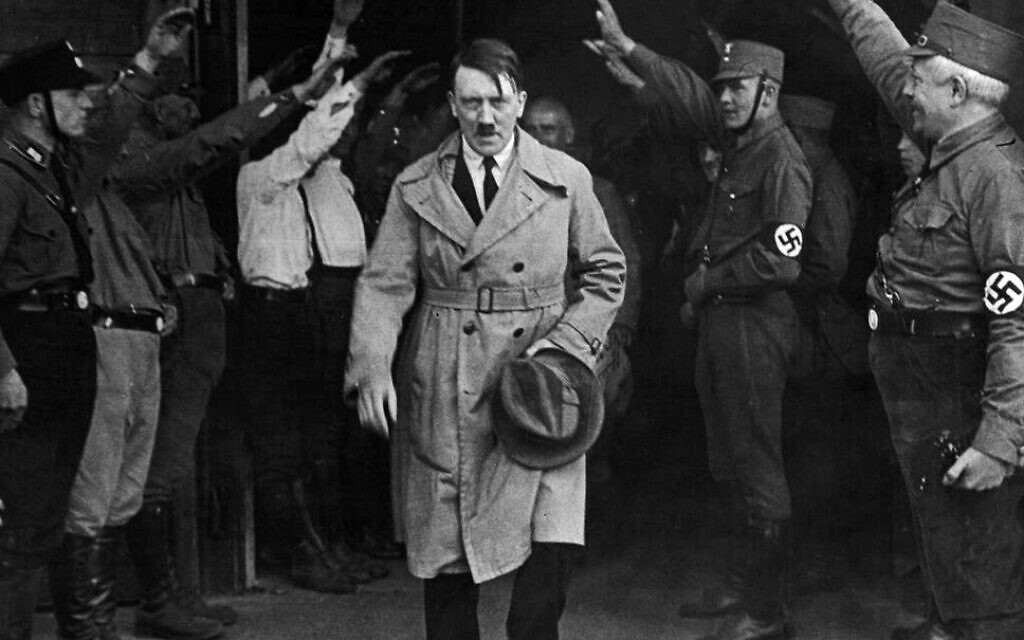
Adolf Hitler: The Leadership according to the time

Shailesh Sapkota | Kathmandu | 2020-10-28 | 9:16pm

Ralph Waldo Emerson, an American philosopher quotes, “Leaders should not follow the path that may lead somewhere instead they should go where there is no path and leave a trail”. Leadership is an abstract term and can be defined explicitly only. But in general, effective leadership is an art of motivation. It is a position that can influence, guide, and direct the behavior of a certain group of people to accomplish a common goal (Manning & Curtis, 2014). Leader of either public organization or private enterprise, they should have the charisma and essential attributes to provide direction for their followers.

Leaders pave away and create an environment for nation-building. To do so, they formulate their leadership skills in four dimensions such as promoting right national values, being living models, formulating nation development goals, and defining a national vision. Achieving success in the above dimensions require co-operative effort from the powerful people. Leaders chose anyone that can implement and mobilize the vision and strategies. To do so, leaders should put forward their agenda as clearly, effectively, and credibly. Effective leaders develop the national capacity and unite all together to achieve the chosen goals. By bringing changes through a series of phases and minimizing mistakes as one critical mistake can have a devastating impact on the country as well as their position (Gebrekidan, 2009).

An effective leader of a nation should pose developmental and legacy building characteristics. There should three elements quality, justice, and legitimacy on an effective leader in terms of shaping a nation. Quality refers to the leadership skills, competence, and attributes while justice means the feeling of having harmony, peace, and unity among the people. Likewise, legitimacy is must-have essence in a national leader it is obtained through the support of the public. Although it can be achieved by force it will take time for the leaders to sustain their leadership.

From the history of mankind, we can observe the concept of leadership and the evolution of the concept. We have seen many leaders leading the nation with their positive and negative attributes. Leaders make their stand either forcefully or by being elected democratically. Some leaders made history by saving mankind while others neutralized innocents to take power. Among such leaders, there is one such leader that showed humanity the extreme interpretation of power a leader can have in Adolf Hitler.
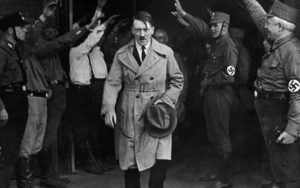
Background:

Born in 1889, April 20 in Austria world saw the powerful leader of the 20th century in Adolf Hitler. After the retirement of his father, Alois Hitler migrated to Linz where Adolf Hitler spent his childhood. His childhood shaped his personality later in his life. The atmosphere and family he was growing was dysfunctional. He constantly suffered the violence expressed by his father. He feared his father a lot and no longer could control the domineering characteristics of him. He went to school in his hometown, he was a bright and well behavior student at his primary level but after changing school his study went downstairs and left school with no degree at the age of six. But he was a fabulous artist of his time. Hitler dreamt of himself as an art graduate but his father was against him. After the death of his mother in 1907 he finally decided and applied to the Vienna Academy of Fine arts but was rejected. He moved to Vienna and started painting postcards for a living. He began to develop his perspective and understood society which later assisted him to get his adult personality.  Hitler didn’t like the multi-ethnic composition of Austria’s Habsburg Empire and left Austria for Germany (Hyland & Boduszek, 2011).

Rise to power:

In Germany, he was keen to prove loyalty towards German chancellor and joined the army. In the military, he found his purpose and cause. Germany lost the war at that time and was forced to sign the treaty of Versailles. As a result, Germany lost a huge territory and was forced to bear a large number of reparations. From defeated Germany, Hitler couldn’t face the Versailles humiliation and agreed to join the German Worker’s party because of their nationalist, and anti-Semitic beliefs. Due to his powerful oratory skills, he moved above the rank rapidly. He became a popular figure at the time when Germany suffered hyperinflation. Taking this as a chance, Hitler promised revolution for the German people. According to him, a nation is not an economy rather a gathering of the same races. He prioritized the rights of the white Aryan race and viewed Jews as parasites. Hitler saw his unpopularity during the election when his party Nazi won only 2.6% of the vote. But, after four years of his political dedication, Nazis became the largest party in Germany and won the election with a 37% vote. By overthrowing the then German president Von Hindenburg he took the dictatorial powers and disbanded all the political parties unassociated with the Nazis. After taking full control of the German Army and nation he planned to expand the territory of Germany first to Austria. This idea of dominating the world with one race and expansion of German territory began World War II (Daniel & Sterphone, 2019).

Adolf Hitler: A fascist leader

            Adolf Hitler had the personality as a man with destiny and having an infallible vision. He possessed the vision to restore the glory of Germany. He had the willpower, inspiring self-confidence, and the root understanding of Germany within himself. These qualities were developed in Hitler from his childhood and his empathy towards the normal people. The most harmful drawbacks in Hitler’s personality was his inability to accept criticism. He was a master at public speaking and a propaganda artist. His words could appeal to the subconscious and irrational part of the public that made him a formidable politician of his time. His appearance in public made a crowd full of emotional and overwhelming feelings. The development of mass broadcasting media such as radio, air transportation, mike, and speaker made him able to keep the public constantly aware of his propaganda.  He constantly made German people aware that he was the chosen one to restore Germany into world power (Braunbeck, 1997). During his tenure, he clearly showed his fascism by using his authoritarian ultra-nationalism principle.

Positive attributes of Adolf Hitler’s leadership style:

            After coming into power Hitler showed his authoritarian personality by forming an autocratic government. He suppressed his opponents and took absolute power to lead Germany. Germany at that time had only one party, the Nazis. Autocratic leadership is also called authoritarian leadership because this style characterizes individual control over the power and decisions with little input from the group members. Germany was at the active participant of World War II, so Adolf Hitler included his autocratic personality over the military leadership style. He showed good military leadership for Germany at that time. His ability to remember precise details such as historical information, personal experience, facts, and economic statistics made him a good military leader. His lack of education gave him the ability to read everything presented in front of him. He had also great military understanding because of his knowledge about guns, tanks, weapons, and tactics (Pavlovska & Hrytsiuk, 2018). His military leadership was inspired by his experience as a common soldier in World War I. He had the quality of empathy the soldiers fighting in the front line. As a military leader, he had all the qualities such as strong will power, intelligence, and nerves of steel.  He prepared himself to present without feeling intimidating in front of well-educated technicians, businessmen, and military experts.

Negative attributes of Adolf Hitler’s leadership style:

His ability to remember specific details also backfired him throughout his tenure as leader of Germany. His power to remember every detail and briefing presented by his officer made them liable to build sequence from their past message to present the message inline. If any deviations in briefing occurred Hitler took it as deception. Hitler’s assumptions to not trust anyone except him took away the major attribute of effective leadership. The essence to allow subordinates to make decisions based on their knowledge and experience from the battlefield. His distrust for his commanding officers was based upon the betrayal he experienced while coming into power. He thought that he alone can lead others his over-confidence began to view himself as a great military leader. The commanders didn’t know the planning and were not allow for any type of input. Though, his military strategy was good but was not enough to lead the World War II that differ completely from the war he fought. His principle of “no retreat policy” was the wrong strategy, often his army established a defense line rather than continuing expansion. Another negative attribute of his leadership skills was the overestimation of his willpower. When he faced difficulties he often procrastinated to resolve the issue. His ill-tempered and changing mood made him think alone without discussing anything with anyone. His approach to decision-making went illogical and well-thought-out manner. The logical approach of decision making involves developing alternatives, gathering facts, comparing advantages and disadvantages, and selecting the best alternatives. Hitler’s approach was opposite to that of the above quality, once he was comfortable and convinced he would call in his sub-ordinates and presented his decisions. It was impossible to change the decisions, no one could challenge the decisions made by Hitler. Not only that, his standpoint against the Jews and making a world full of White- Aryan made it his leadership worst for mankind.

Conflict resolution and management:

            The leadership style possessed by Adolf Hitler made him self-centric, and overconfident. He didn’t listen to any of his sub-ordinates and made each decision through his willpower. Whenever the conflict occurred he took it on his own without listening to others. In November 1942, the soviet launched an offensive against Germany troops. The then army chief of the German army tried to convince Hitler to withdraw the troops to overcome the offensive. But, Hitler didn’t listen to the army chief and decided to hold their ground. This affected the Sixth division of the German army and faced huge casualties. The expansion from Austria to Czechoslovakia and USSR made Hitler powerful enough to dominate the world but his lack of conflict management ability made German back to their beginning and lost World War II.

Effectiveness Analysis:

            Adolf Hitler’s leadership style made him the most dreadful man of his time. His authoritarian leadership style made him over-confident of his willpower. He didn’t like others to intervene in his life. For German people, his style of leadership was needed at that time. He promised Germany to overcome the economic situation as well as make them one of the powerful nations to dominate the world. His leadership was effective for Germany and his followers at that time. But his dream of ethical cleansing and overconfident made him struggle with his power to dominate the world. His autocratic leadership style was not effective for him to land the outcome he wanted. Also, his violence and exaggeration of innocent Jews made the world against him. Autocratic leadership style can have an effect for a limited time but in the long run, it doesn’t work. We can see various examples of failed autocratic leadership in Joesph Stalin, Benito Mussolini, Saddam Hussian, etc. So, we can conclude that in the 21st century where the literacy of the public is high the autocratic leadership is not effective.


References

Braunbeck, P. A. (1997, March). Graduation Requirements of ACSC. A Military Leadership Analysis of Adolf Hitler, 1-10. Retrieved June 7, 2020, from https://pdfs.semanticscholar.org/8060/d978da4b5a9a7290ab59d76d7a7423b83de6.pdf?_ga=2.250802703.821974690.1591420601-210292605.1591420601

Daniel, R., & Sterphone, J. (2019, May). Rise of Hitler. Shame, Anti-Semitism, and Hitler’s Rise to Power in Germany, 1-5. Retrieved June 07, 2020, from https://www.researchgate.net/publication/332780424_Shame_Anti-Semitism_and_Hitler’s_Rise_to_Power_in_Germany

Gebrekidan, D. A. (2009, May). 10th International Academy of African Business and Development. Leadership Crises and Nation Building in a Politically Turbulent Environment — The Case of Eritrea, 1-5. Retrieved June 6, 2020, from https://www.researchgate.net/publication/308749342_Leadership_Crises_and_Nation_Building_in_a_Politically_Turbulent_Environment_–_The_Case_of_Eritrea

Hyland, P., & Boduszek, D. (2011, January). Psychology, Society, & Education . A psycho-historical analysis of Adolf Hitler: The role of personality, psychopathology, and development, 4(2), 58-63. Retrieved June 7, 2020, from https://www.researchgate.net/publication/263077121_A_psycho-historical_analysis_of_Adolf_Hitler_The_role_of_personality_psychopathology_and_development

Leonard, D. (2010, March). ASQ Quality Management Division Conference. The Characteristics of Quality Leadership, 1-10. Retrieved June 7, 2020, from https://www.researchgate.net/publication/273141772_The_Characteristics_of_Quality_Leadership

Manning, G., & Curtis, K. (2014). The art of leadership,. New York: McGraw Hill. Retrieved 2020

Pavlovska, S., & Hrytsiuk, V. (2018, December). Codrul Cosminului. Some Aspects of Organisation of the Military-Political Leadership of Ideological Work in the Armed Forces of Nazi Germany During the Second World War, 303-322. Retrieved June 07, 2020, from https://www.researchgate.net/publication/330686862_Some_Aspects_of_Organisation_of_the_Military-Political_Leadership_of_Ideological_Work_in_the_Armed_Forces_of_Nazi_Germany_During_the_Second_World_War


 

Global Culture and Football Fandom

Culture is the customs and beliefs of a particular community who shares the same ideological values and are bounded with certain norms to run the society smoothly. Wendell Pierce an American Actor mentioned culture as the intersection of people and life itself. He has viewed culture as the way to deal with everyday emotions in life (Pierce, n.d.). Cultures are the way of life which distinguish community with each other. It is the sum of learned behavior of people which are transferred from generation to generation.

culture-1

People within the same culture can carry different traits. The perspective of people to see certain things can differ within an individual so different culture can be concealed within a community. There can be sub-culture and counter-culture within a society. Sub-culture is a practice which exists within the mainstream culture. Whereas a counter culture is a perspective which sees mainstream culture as pure opposition. In this subculture, people go against the norms and traits created by mainstream culture. We can also say that sub-culture and counter culture are the subcategory of culture and exist as a minority.

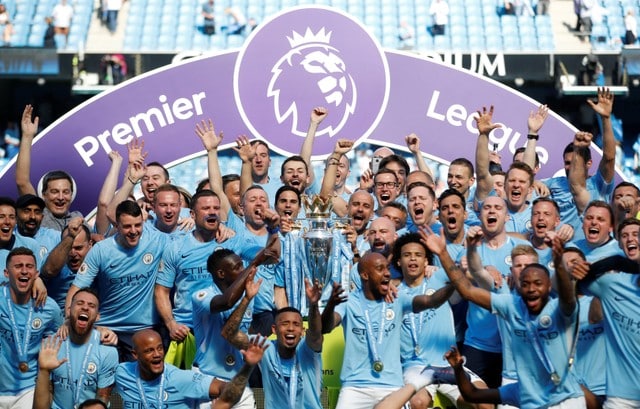
Being said I categories myself into vocational sub-culture. To further simplify, I am into “Football (Soccer) Fan Culture”.  This culture drives me to follow Premier League giant Manchester City. From the early days of soccer fan culture, people have divided it into two groups i.e. Traditional Fans and Consumer Fans. Traditional Fans are the fans who support one particular team based on Bloodline, Geographical Location, Ethnicity and Nationality, Religion and Socioeconomic Standings. Consumer Fans further have been classified into Direct and Indirect form. Direct fans are those fans who attend games physically whereas indirect fans are those who support their teams through online media and from the source of information (Jenkins, 2018).

MAN-CITY

I started following Manchester City since 2008. Although historical giant clubs like Chelsea and Manchester United dominated the domestic league and world football. I was fascinated by the home kit color of Manchester City. The transfer of my favorite player at that time Carlos Tevez from Manchester United to Manchester City was cheery on top for me to get attract with this club. With all these interest and passion, I got myself engaged with like-minded people. Ultimately we formed a group named “MCFC NEPAL” which is now officially recognized group. To utilize our free time doing what interests us we organized an official screening of the game. By viewing our responsibility for society, we also organized different social events like Football Workshop in “Melamchi Village of Nepal” targeting local youths. I feel that “MCFC Nepal” gave us the platform to connect with different people. Getting to know each other, wishing for a particular team to success, contributing our time on same ideology empower us to further grow as a group or as an individual.

download

Typical footballing fan culture considers us global fans as “Consumer Fans”. Although the definition of traditional fans doesn’t consider global fans as “Real Fans” I think the subculture I follow is counter culture. Though there is no physical presence, we global fans are as passionate as local traditional fans. I think we global fans are more enthusiast than them, due to different time zone we are compelled to watch games at midnight. We global fans don’t hesitate to support our team under any circumstances. So, under the view of typical footballing fan culture the subculture I follow is counter-culture but in my view, we fans of football across the world are under one culture.


WORKS CITED

Jenkins, R. (2018, March 19). The isthmus. Fan, Culture, Pride, Passion, and Money in UK Football, 1. Retrieved Jan 13, 2019, from http://www.theisthmus.com.au/2018/03/fan-culture-pride-passion-and-money-in-uk-football/

Pierce, W. (n.d.). Wendell Pierce Quotes. Retrieved January 11, 2019, from Brainy Quote: https://www.brainyquote.com/quotes/wendell_pierce_488898

All the Pictures used are from Google.com

Women’s Objectification in Pop Culutre

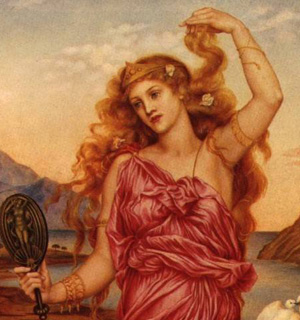
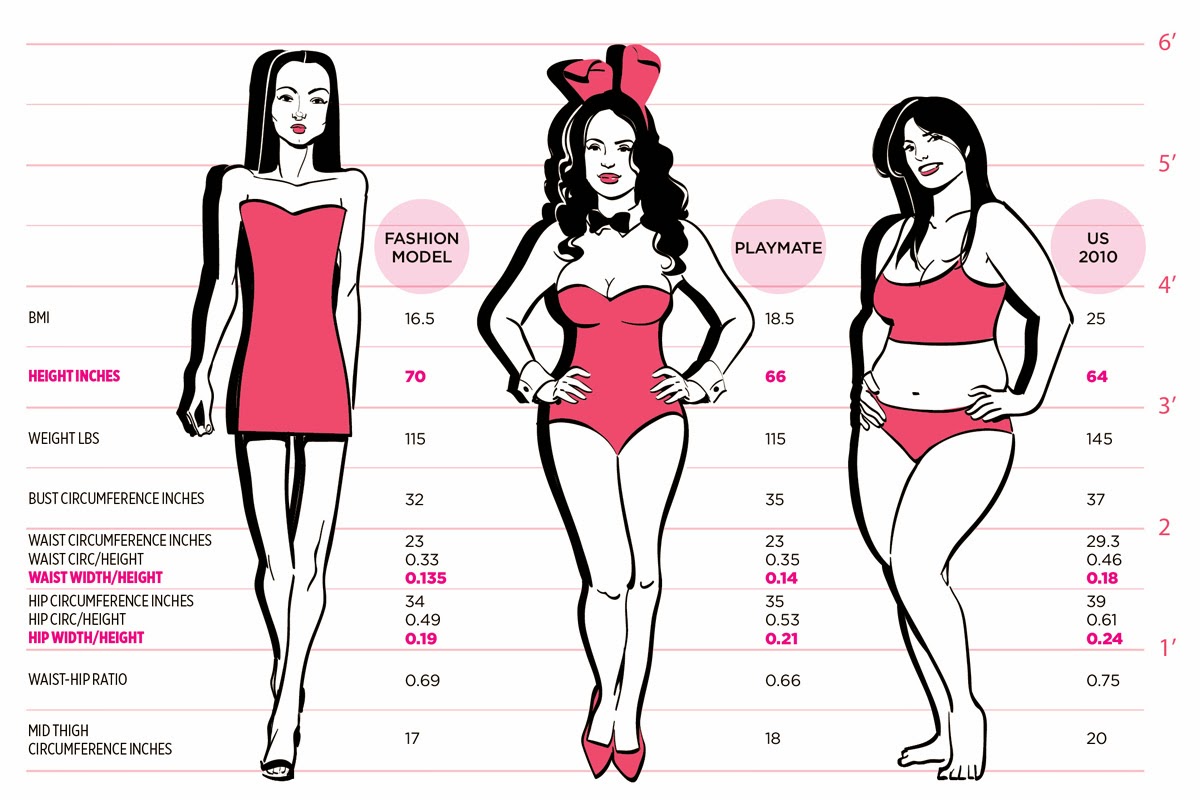
Society has always valued beauty from the period of ancient civilization. The ancient Greeks believed that beauty consisted of three major components including Symmetry, Proportion, and Harmony (Winwood, 2016). This component was modernized into the certain standard as propounded by today’s society. During the period of 1950s-The Golden Age of Hollywood the terms “Curvy-hourglass figure”, “Large Busts” and “Slim waist” worked as the default standard for women’s body shape (Holla, 2018).

women-beauty-history-helen-of-troy_tsx87t

In popular culture, media and advertisement have a large impact on how we see and feel about things around us. In past, Women’s were portrayed as a sex symbol, housewives, unintelligent and conformist. Although, things are changing now in the name of women empowerment the underlying meaning has been the same. Women in popular culture have been objectified more than ever.

We are exposed to the objectification of women on the TV, Internets, Apps, Magazines, and News. They are being used as sexual objects; to grab the attention of men, to help sell a product. Also, big busted, thin, young and blonde is the ideal image for many females. Advertisements are trying to sell these ideal women as a product that any average women can transform into.

In 2008, famous celebrity Lady Gaga reviled her trauma of being bullied. The reason was she didn’t look like the “Ideal Image” of a woman. She was teased for being ugly, having a big nose, being annoying. During one interview in 2008, she said that she used to be called sh*t (Hiatt, 2011). But she stood against all these criticism and did the hard work to get into the “Ideal Shape” to reach into the level from where her voice can be heard. Now she is going against this and advocating against women objectification.

ladygagaVeniceFilmFestivalphotosastarisborn

The effects of objectifying women have been seen more in the last 50 years. According to NEDA, to gain the “Ideal Body” women are forcing themselves for “Crash Diet” which has caused Eating Disorder which is becoming large within the American Population. From the survey done in 2015 by NEDA, it is concluded that 80% of 10 years olds fear to be fat (Grefe & Beale, 2012). This survey raises a modern-day issue of an individual’s interest to portray themselves as the “ideal person” rather than accepting natural growth.

temp

From the beginning of Modern Civilization till now women are being objectified. Although, if women are tested intelligent, possessed strong arms they are advised to follow the sexist rule created by society.  At present, all forms of media ranging from traditional to nontraditional generate an ideal image of what is beautiful. This is evident through the cult of beauty propelled by today’s society.

To change the overall perspective of society it is necessary for women to accept that beauty lies in the eye of beholders and they should feel mentally beautiful and accept the traits given by nature to them (Official Channel & Dove, 2013).

Works Cited
Grefe, L., & Beale, R. J. (2012, October). Summary of Key Findings. Retrieved January 11, 2019, from National Eating Disorders Association: https://www.nationaleatingdisorders.org/blog/summary-key-findings-nedaoptum-survey

Hiatt, B. (2011, June 9). Rolling Stone. Retrieved from Rolling Stone: https://www.rollingstone.com/music/music-news/deep-inside-the-unreal-world-of-lady-gaga-86008/

Holla, S. (2018, January 22). Objectification of Women. Retrieved from Prezi: https://prezi.com/4rsirxealrom/objectification-of-women-in-pop-culture/

Official Channel, D., & Dove, O. (2013, April 14). Dove US official Channel on Youtube. Retrieved from Youtube: https://www.youtube.com/watch?v=XpaOjMXyJGk&gt=

Winwood, A. (2016, April). The cult of beauty in Ancient Greece and Modern media. Battler Columns, 1. Retrieved January 11, 2019, from http://ab.edu/wp-content/uploads/2016/05/April-Edition-Battler-Columns.pdf

All Pictures are derived from the internet