Insta360 Luna Ultra Ultimate Zoom Update Adds 15x Zoom, Stage Mode and 4K Vertical Video

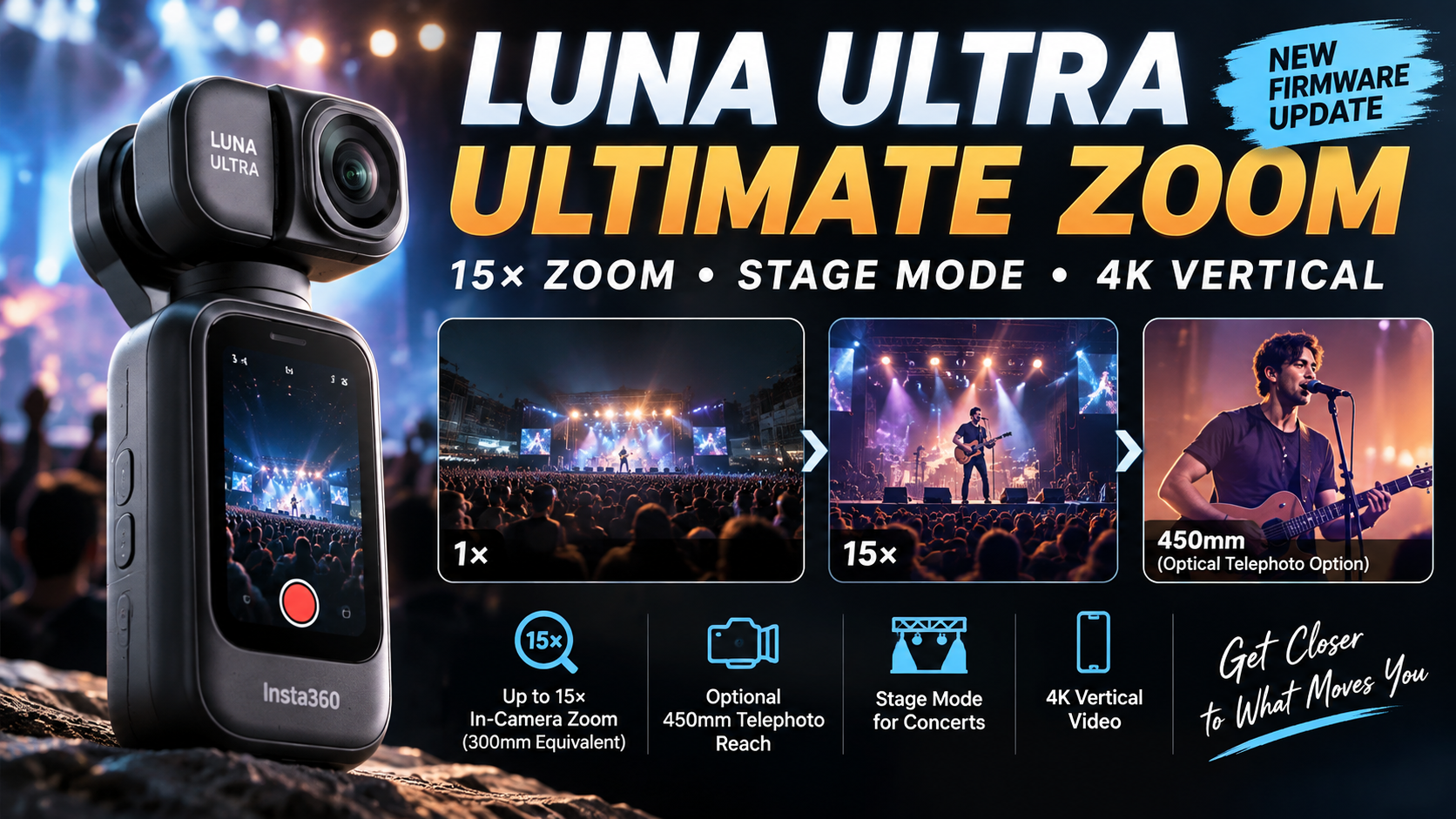
Insta360 Luna Ultra Ultimate Zoom update showing 15x zoom, Stage Mode, 4K vertical video and optional 450mm telephoto reach

Insta360 has released its “Ultimate Zoom” update for the Luna Ultra, and it is a much bigger upgrade than a simple zoom tweak. The free firmware update raises the camera’s maximum in-camera zoom from 12x to 15x, adds a dedicated Stage Mode for concerts and live performances, brings 4K30 vertical video to Luna Ultra, and introduces several new creative shooting features.

Insta360 is also launching a new magnetic Ultra Telephoto Lens that extends the Luna Ultra’s reach to a 450mm-equivalent focal length. For existing Luna Ultra owners, however, the headline 15x zoom and Stage Mode arrive through the firmware update without requiring the new lens.
Inline Image 1Luna Ultra Zoom Jumps From 12x to 15x

The biggest change is the expanded in-camera zoom. Luna Ultra previously topped out at 12x, while the new firmware increases that limit to 15x, which Insta360 describes as a 300mm-equivalent field of view.

Insta360 says its dual professional imaging chips work with AI Remosaic processing to reconstruct details that can be lost during digital cropping. The goal is to keep distant people, text, buildings and landscapes clearer at high magnification.

The new 15x setting is available in Video, PureVideo, Stage Mode and Photo. Insta360 recommends 4K30fps when users want the best telephoto shooting experience.

A New Ultra Telephoto Lens Reaches 450mm Equivalent

The software update is only part of the Ultimate Zoom announcement. Insta360 has introduced an optional Ultra Telephoto Lens that magnetically attaches to Luna Ultra and extends the optical range by 1.5x.

With the accessory attached, the shooting range extends from 90mm to 450mm equivalent. The main camera is covered while the Ultra Telephoto Lens is being used, so this is an accessory specifically designed around the Luna Ultra’s telephoto camera rather than an add-on for the wide main lens.

That could make the camera considerably more useful for concerts, wildlife, travel details, architecture and other situations where creators cannot physically move closer to the subject.
A New Ultra Telephoto Lens Reaches 450mm EquivalentStage Mode Is Designed Specifically for Concerts

The new Stage Mode may be just as important as the extra zoom. Insta360 says it was developed for long-distance shooting at concerts, music festivals, theaters and other live events where lighting, moving performers and foreground obstructions can make normal tracking difficult.

Stage Mode uses dedicated image processing to maintain focus and exposure around performers. Face-specific filtering and adjusted focusing sensitivity are designed to reduce interference from objects such as glow sticks, while exposure processing suppresses harsh highlights and attempts to preserve dynamic range under stage lighting.

Insta360 also says the tracking model has been trained on concert footage to improve recognition, tracking and reacquisition of performers at high zoom levels and in low light.

Stage Audio and Ambient Audio Give Creators More Control

The update also introduces audio options intended for live events. Stage Audio emphasizes sound coming from the stage, while Ambient Audio retains more of the surrounding venue atmosphere.

This gives creators a choice between concentrating on the performance itself or preserving more of the feeling of being inside the crowd.

Luna Ultra Now Gets 4K Vertical Video

Another major addition is native 4K30fps vertical video. Luna Ultra can now use its rotating screen to switch into portrait-oriented recording, producing footage designed for TikTok, Instagram Reels and YouTube Shorts without requiring a horizontal-to-vertical crop in editing.

Insta360 says the feature uses 6K oversampling and supports zoom up to 6x. The company currently recommends staying at up to 3x for the best experience because image quality from the telephoto camera between 3x and 6x is still being optimized.

Zoom Live and Live Frame Get New Creative Options

The firmware adds Zoom Live, a shooting style that creates a smooth zoom-in effect during Live Frame capture. Insta360 is positioning it for portrait and lifestyle shots where creators want to add motion and emphasis without manually performing a complicated zoom.

Live Frame photos can also combine Beauty Mode effects with cinematic filters, providing more options for creating stylized images directly in-camera.

How to Get the Luna Ultra Ultimate Zoom Update

The new firmware is available free to Luna Ultra owners through the Insta360 app. Connect Luna Ultra to the app and follow the firmware-update prompt when it appears.

Insta360’s support documentation recommends having at least 20 percent battery remaining before updating and warns users not to power off the camera or remove the detachable touchscreen remote during installation.

What About the New Luna Ultra Zoom Bundle?

Insta360 is also introducing a Luna Ultra Zoom Bundle for $889.99 in the United States. It includes everything in the Standard Bundle along with a Carry Bag and the new Ultra Telephoto Lens.

Existing Luna Ultra owners do not need to buy the Zoom Bundle to receive the 15x in-camera zoom, Stage Mode or the other firmware features. The additional hardware is specifically for users who want the longer 450mm-equivalent reach.

Why This Is a Meaningful Luna Ultra Upgrade

At launch, Luna Ultra already stood out because of its dual-camera design, 1-inch main sensor, Leica optics and dedicated telephoto camera. The Ultimate Zoom update puts more emphasis on that second camera and gives it new use cases rather than simply increasing a specification on paper.

The combination of 15x in-camera zoom, AI Remosaic, concert-oriented tracking, dedicated stage audio processing and the optional 450mm-equivalent lens makes long-distance shooting a much bigger part of the Luna Ultra experience.

For creators, native 4K vertical video is another substantial addition because it makes the camera more practical for producing horizontal YouTube footage and vertical social content with the same device.

Sources

Insta360 — Luna Ultra firmware update announcement via PR Newswire

Insta360 Support — Luna Series Zoom Feature

Insta360 Support — Firmware Update Guide

RedShark News — Insta360 Luna Ultra Ultra Telephoto Lens, Stage Mode and firmware update

T3 — Hands-on with the Insta360 Luna Ultra Ultra Telephoto Lens
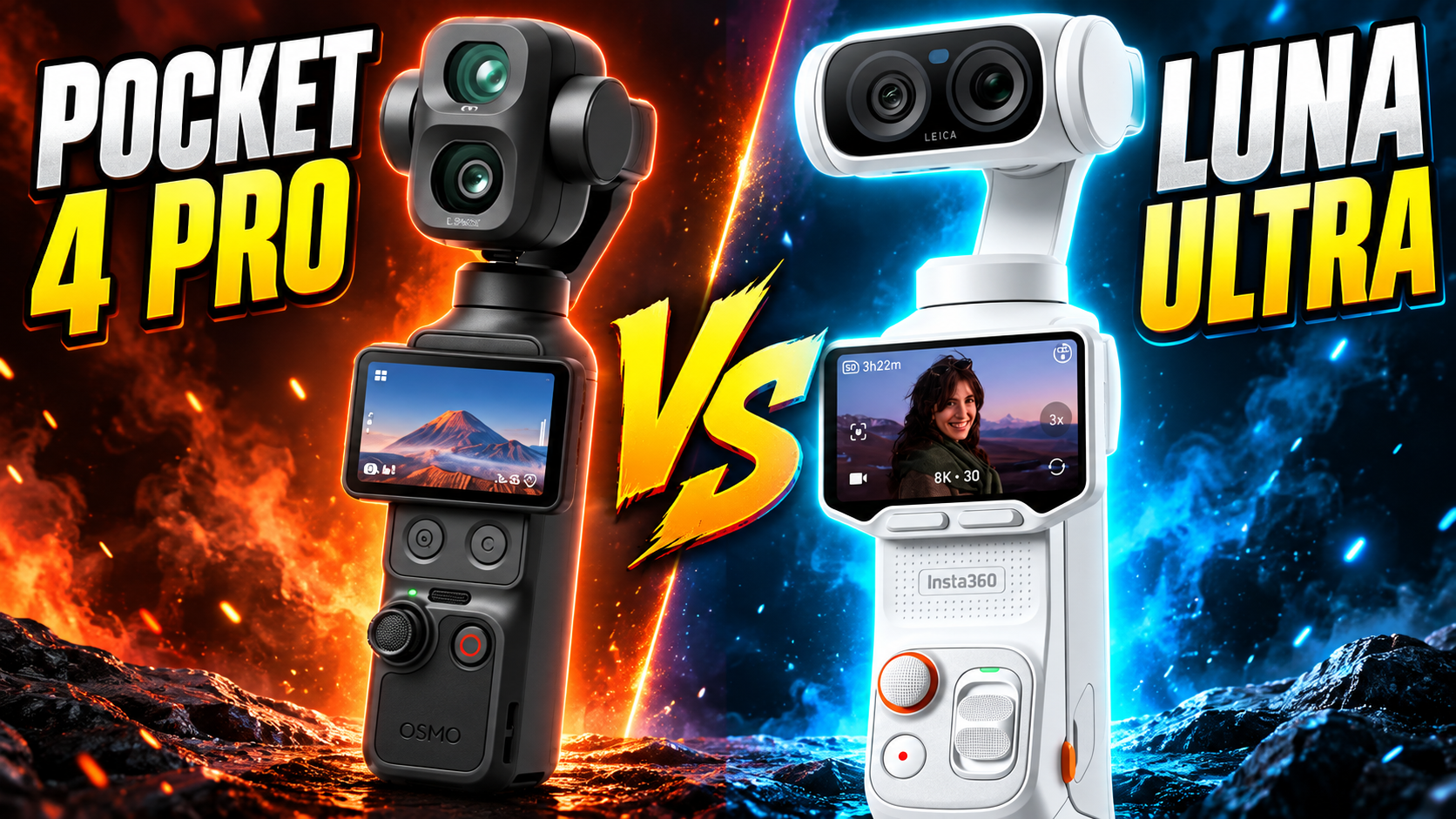
DJI Osmo Pocket 4P vs Insta360 Luna Ultra: The Dual-Lens Pocket Camera War Is Here

DJI and Insta360 are now fighting for the same creator with two of the most ambitious pocket gimbal cameras yet. The DJI Osmo Pocket 4P doubles down on cinematic 4K, extreme dynamic range, fast slow motion and DJI’s tracking ecosystem, while the Insta360 Luna Ultra pushes the category toward 8K, Leica optics, a detachable monitoring screen and a more flexible remote-shooting workflow.

Both cameras use a 1-inch main sensor, both add a dedicated 60mm-class telephoto camera, both have three-axis mechanical stabilization, and both are built for creators who want more than a phone without carrying a mirrorless camera and separate gimbal.

The similarities stop there. DJI and Insta360 made very different choices around resolution, color workflow, storage, screen design and creator features. Here is how the Osmo Pocket 4P and Luna Ultra compare based on current official specifications and announced features.

Quick Comparison: Two Dual-Lens Cameras, Two Different Priorities

DJI Osmo Pocket 4P: 1-inch wide camera, 1/1.28-inch 60mm med-tele camera, up to 17 stops of dynamic range in supported D-Log 2 shooting, 4K up to 240fps on the wide camera, ActiveTrack 8.0, 103GB built-in storage and up to 210 minutes of rated operating time.

Insta360 Luna Ultra: 1-inch 8K main camera, 1/1.3-inch 60mm telephoto camera, Leica Summicron optics, 8K30, 4K120, 10-bit I-Log, detachable 2-inch OLED monitoring screen, 47GB internal storage plus microSD expansion up to 2TB, and up to 240 minutes of rated battery life under Insta360’s laboratory conditions.

Camera Hardware: Surprisingly Similar on Paper

Image: DJI Osmo Pocket 4P official Cannes preview image. Source: DJI.

The basic camera layouts are remarkably close. DJI uses an all-new 1-inch CMOS wide-angle camera with a 20mm-equivalent f/2.0 lens and pairs it with a 1/1.28-inch 60mm-equivalent med-tele camera with an f/1.8 aperture. DJI says the wide camera can deliver up to 17 stops of dynamic range in its supported D-Log 2 workflow.

Luna Ultra also uses a 1-inch main camera, but its main Leica Summicron lens is slightly faster at f/1.8. Its secondary 60mm-equivalent telephoto camera uses a 1/1.3-inch sensor and an f/2.0 aperture. The difference in telephoto sensor size is small on paper, so real-world image processing, autofocus, highlight handling and low-light performance will matter more than the fractionally different sensor dimensions.

Both systems give creators a true wide-to-telephoto jump without swapping lenses. That is a major change for pocket gimbal cameras, which historically relied heavily on digital cropping once users wanted a tighter frame.

Resolution and Slow Motion: 8K vs Extreme 4K Frame Rates

This is one of the clearest differences. Luna Ultra can record 8K 16:9 video at up to 30fps and 4K at up to 120fps. It also supports 10-bit I-Log and Dolby Vision, giving creators both high-resolution capture and a professional grading option.

DJI takes a different route. The Osmo Pocket 4P tops out at 4K rather than 8K, but the wide camera can record 4K slow motion up to 240fps, while the med-tele camera can reach 4K up to 200fps in supported modes. For creators who film sports, action, product sequences or cinematic slow-motion inserts, those frame rates are a major advantage.

So the tradeoff is straightforward: Luna Ultra gives you more resolution for reframing and cropping, while Pocket 4P puts more emphasis on high-frame-rate 4K capture.

Dynamic Range and Color: DJI D-Log 2 vs Insta360 I-Log

DJI is heavily promoting the Osmo Pocket 4P’s new D-Log 2 workflow. DJI says the wide camera can reach up to 17 stops of dynamic range under its stated test conditions, which is unusually ambitious for a camera this small. The goal is to preserve more highlight and shadow information for color grading, especially in high-contrast scenes.

Insta360 counters with 10-bit I-Log on Luna Ultra, along with Dolby Vision and Leica color options. Insta360 lists a maximum video bitrate of 150Mbps and supports 10-bit video across its professional modes. Luna Ultra’s Leica partnership also gives it a distinctive color-science story that may appeal to creators who want attractive footage without always doing a heavy grade.

The important detail is that spec-sheet dynamic range and real usable dynamic range are not always the same thing. Independent side-by-side testing will still matter for skin tones, highlight roll-off, shadow noise and matching the wide and telephoto cameras.

Zoom and Telephoto: Both Reach 12x, but Differ in Approach

Both cameras are built around a 20mm wide view and a 60mm telephoto view, giving a natural 1x-to-3x optical jump. DJI advertises up to 12x zoom and ActiveTrack support at high zoom levels. The dedicated 60mm f/1.8 camera is particularly aimed at portraits and compressed-background shots.

Luna Ultra also reaches up to 12x in supported 4K modes and offers up to 6x Clarity Zoom. Its 8K mode supports zoom from 1x to 6x, and the second camera is central to Insta360’s five-focal-length shooting concept.

For creators who regularly film people, stages, street scenes or distant travel details, both cameras are far more flexible than a traditional single-lens pocket gimbal.

Screen and Solo-Creator Workflow: Luna Ultra Has the More Radical Design

Image: Insta360 Luna Ultra product configuration. Source: Metapod product listing (manufacturer product image).

DJI keeps a conventional integrated 2-inch OLED display on the Pocket 4P. That should feel familiar to anyone coming from the Pocket 3 or Pocket 4, and it keeps the camera simple and self-contained.

Luna Ultra does something much more unusual: its 2-inch OLED touchscreen can detach from the camera and operate as a remote monitor and controller. The detachable screen also has its own microphone. For a one-person production setup, that can be extremely useful when the camera is across the room, on a tripod, attached to a rig or positioned somewhere that makes a fixed screen hard to see.

For travel vlogging and handheld shooting, DJI’s simpler integrated design may be more straightforward. For solo creators who frequently film themselves from a distance, Insta360’s detachable screen can fundamentally change the workflow.

Tracking and Stabilization

Both cameras use three-axis mechanical gimbals, so neither relies only on electronic stabilization. DJI combines its gimbal with ActiveTrack 8.0 and specifically promotes subject tracking even at longer zoom settings.

Insta360 also provides intelligent tracking and framing features on Luna Ultra, including multi-person tracking and remote monitoring through the detachable display. Both are clearly designed for creators who work without a second camera operator.

Storage: DJI Gives More Built In, Insta360 Gives More Expansion

Osmo Pocket 4P includes 103GB of built-in storage according to DJI’s current product comparison information. That is a major convenience when you want to start recording immediately without relying on a memory card.

Luna Ultra includes 47GB of internal storage, but it also supports microSD cards up to 2TB. That makes Luna Ultra considerably more expandable for long trips, extended shoots and large 8K projects.

The better approach depends on your workflow: DJI gives you more usable space inside the camera from day one, while Insta360 gives you far more potential capacity through removable media.

Battery and Charging

DJI rates the Osmo Pocket 4P for up to 210 minutes of operation when recording 1080p/24fps under its specified laboratory conditions. DJI also states that the camera can reach 80% charge in about 18 minutes and 100% in about 32 minutes with a compatible PD charger.

Insta360 rates Luna Ultra for up to 240 minutes at 1080p/24fps with the screen and Wi-Fi off under laboratory conditions. It lists about 23 minutes to reach 80% and around 38 minutes for a full charge using a compatible 45W USB-C setup.

These battery numbers are not directly representative of demanding 4K120, 4K240 or 8K recording, so creators should expect shorter real-world endurance in high-resolution, high-frame-rate modes.

Size and Weight

DJI lists the Osmo Pocket 4P at about 230 grams. Insta360 lists Luna Ultra at approximately 233 grams in Cosmic Black and 235 grams in Stellar White. In practical terms, they are in the same weight class.

That makes this comparison especially interesting: both companies have managed to fit two cameras, a mechanical gimbal and a touchscreen into a device that still weighs well under a typical mirrorless camera body before adding a lens.

Price and Availability

Pricing varies by region. DJI’s regional stores currently list the Osmo Pocket 4P from roughly USD $609 in some markets, while availability and pricing differ by country. Insta360 lists Luna Ultra in the United States at $769.99.

That gives DJI a lower entry price in markets where both are officially sold, but regional availability is important and buyers should check the current local store before comparing purely on price.

Shop Insta360 Luna Ultra on Amazon

ReaderSpice may earn a commission from qualifying purchases made through this affiliate link, at no additional cost to you.

Which One Fits Your Workflow?

The Osmo Pocket 4P makes the strongest case for creators who prioritize high-frame-rate 4K, maximum dynamic-range potential, DJI’s tracking ecosystem, substantial built-in storage and a more conventional pocket-camera workflow.

Luna Ultra stands out for creators who want 8K capture, Leica optics, a detachable monitoring screen, expandable storage and a remote-shooting design built around solo production. Its 8K resolution also gives more room for reframing in post, while the detachable screen is genuinely different from DJI’s approach.

Neither camera is simply a copy of the other. DJI is leaning toward compact cinematic performance and speed; Insta360 is leaning toward resolution, flexible monitoring and creator-oriented hardware experimentation. That makes this one of the most interesting pocket-camera matchups of 2026.

Sources

DJI — Osmo Pocket 4P Product Page

DJI — Osmo Pocket 4P Official Cannes Announcement

DJI — Osmo Pocket 4P / Pocket Series Comparison

DJI Support — Osmo Pocket 4P Charging and Battery Information

Insta360 — Luna Ultra Hardware Specifications

Insta360 — Luna Ultra Photo & Video Specifications

Insta360 — Luna Ultra Official Announcement

Digital Camera World — DJI Osmo Pocket 4P vs Insta360 Luna Ultra Comparison

Insta360 Luna Ultra: Dual-Lens Leica Gimbal Camera Brings 8K, Telephoto Zoom and a Detachable Screen

Insta360 has entered the premium pocket-gimbal camera fight with the Luna Ultra, a Leica co-engineered dual-lens camera aimed at creators who want stabilized video, serious zoom flexibility, and high-resolution recording without carrying a mirrorless camera and separate gimbal.

Announced on June 10, 2026, the Luna Ultra combines a 1-inch main camera with a 1/1.3-inch telephoto camera, Leica Summicron optics, 8K recording, a detachable OLED touchscreen and three-axis mechanical stabilization. U.S. pricing starts at $769.99.

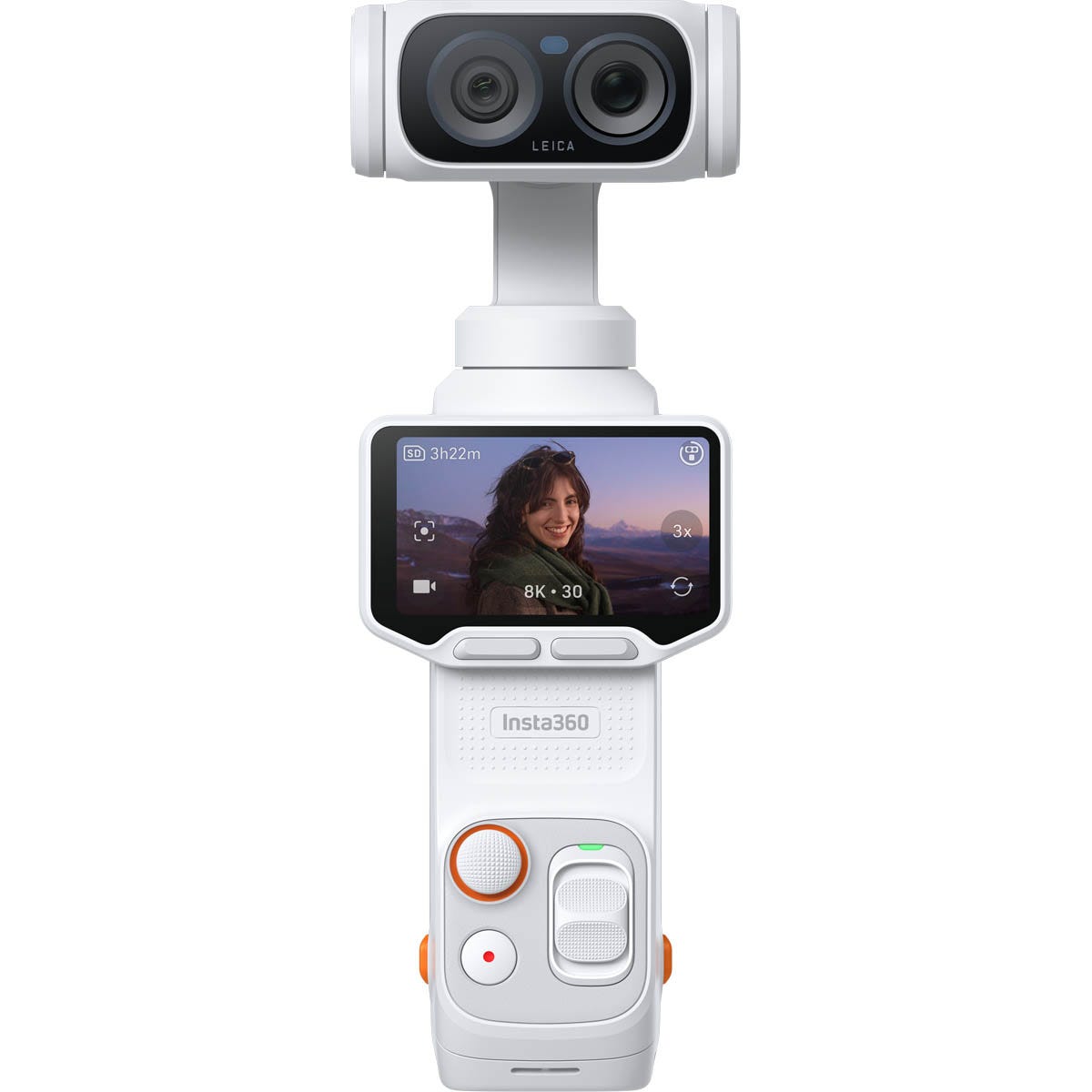
Image: Insta360 Luna Ultra in Stellar White. Source: CANEX product listing (manufacturer product image).

Why the Dual-Camera Design Matters

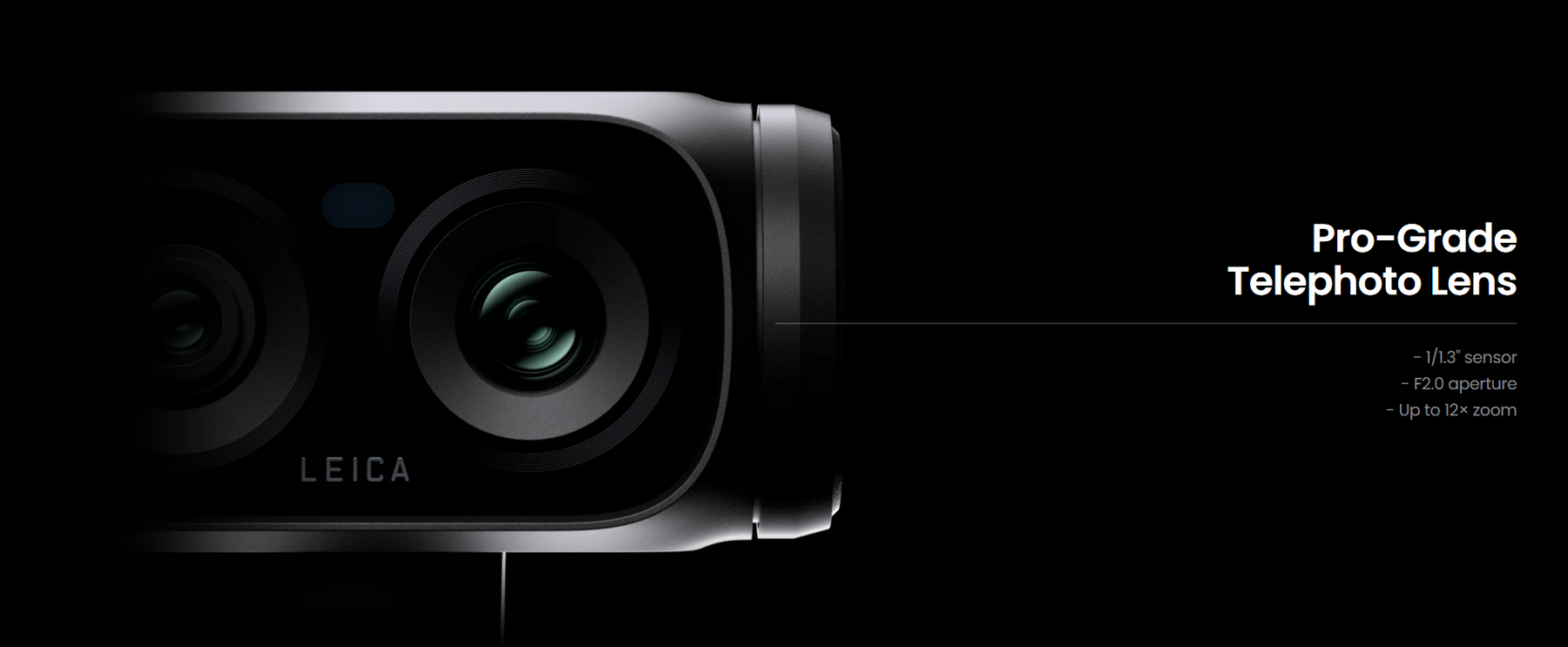
The Luna Ultra’s biggest distinction is its two-camera system. The main camera uses a 1-inch sensor with an f/1.8 lens and a 20mm-equivalent focal length, while the telephoto camera uses a 1/1.3-inch sensor with an f/2.0 lens and a 60mm-equivalent focal length.

That second camera gives creators more framing flexibility than a typical single-lens pocket gimbal. Insta360 lists up to 12x zoom for supported photo and video modes, including up to 6x Clarity Zoom. In 8K video, zoom is available from 1x to 6x, while supported 4K modes can extend to 12x.

8K Video, 4K120 and 10-Bit Recording

The Luna Ultra can record 8K 16:9 video at up to 30fps and 4K 16:9 video at up to 120fps. It also supports 10-bit video, Dolby Vision and I-Log, giving more flexibility to creators who want either ready-to-share footage or additional latitude for color work in post-production.

For slow motion, the camera supports 4K at up to 120fps and 1080p at up to 240fps. Maximum video bitrate is listed at 150Mbps, with H.265 encoding.

A Detachable Screen Changes How You Can Shoot

Image: Insta360 Luna Ultra Cosmic Black standard bundle and accessories. Source: Metapod product listing (manufacturer product image).

Another standout feature is the detachable 2-inch OLED touchscreen. The screen has a 318 x 564 resolution, 1,000-nit brightness and 60Hz refresh rate. Because it can operate away from the main camera body, it opens up more flexible monitoring and framing possibilities when the camera is positioned somewhere that would normally make its built-in display difficult to see.

The camera includes four microphones in total—three on the main unit and one on the detachable touchscreen remote. That design could be especially useful for solo creators, vloggers and people filming themselves.

Three-Axis Gimbal Stabilization and Creator-Focused Tracking

Unlike electronic-only stabilization, Luna Ultra uses a three-axis mechanical gimbal. Insta360 also pairs the hardware with intelligent tracking features designed to keep a subject framed while the camera moves.

This combination is particularly relevant for walking vlogs, product demonstrations, travel videos and solo creator setups where keeping a subject centered without a second camera operator can make shooting considerably easier.

Storage, Battery and Charging

Luna Ultra includes 47GB of internal storage and also supports microSD cards up to 2TB. USB-C uses USB 3.0 for transfers.

The main unit has a 1,550mAh battery, while the detachable touchscreen remote has its own 210mAh battery. Insta360 rates battery life at up to 240 minutes under its laboratory test conditions at 1080p/24fps with the screen and Wi-Fi turned off. The company lists approximately 23 minutes to reach 80% charge and about 38 minutes for a full charge when using a compatible 45W USB-C charging setup under its test conditions.

One limitation worth noting is environmental protection: Insta360 states that Luna Ultra is not waterproof, splashproof or dustproof. Creators planning beach, rain or dusty outdoor shoots will need to take additional precautions.

Who Is the Insta360 Luna Ultra For?

At $769.99, Luna Ultra is positioned as a premium creator camera rather than an inexpensive pocket camera. Its strongest appeal is likely to be the combination of a large 1-inch main sensor, dedicated telephoto camera, mechanical stabilization, high-resolution video and detachable monitoring screen in one relatively compact system.

For travel creators, vloggers and one-person production setups, the ability to move between wide framing and tighter telephoto shots without changing lenses could be especially useful. The detachable display and tracking tools also address a common problem for solo shooters: monitoring composition while standing away from the camera.

The bigger question for buyers is whether those features justify the premium over simpler single-lens gimbal cameras. For creators who expect to use the telephoto camera, 8K capture and remote-screen workflow regularly, Luna Ultra offers a notably different toolset rather than simply adding incremental specifications.

Price and Availability

Insta360 announced Luna Ultra on June 10, 2026. U.S. pricing starts at $769.99, with availability through the Insta360 Store and other retailers. Configurations and bundle pricing can vary by market.

Shop Insta360 Luna Ultra on Amazon

ReaderSpice may earn a commission from qualifying purchases made through this affiliate link, at no additional cost to you.

Sources

Insta360 — Luna Ultra Hardware Specifications

Insta360 — Luna Ultra Photo & Video Specifications

Insta360 — Luna Ultra Official Announcement

PR Newswire / Insta360 — Luna Ultra Launch Announcement