Galaxy S27 Ultra Charging Leak: Samsung May Make 60W Faster Without Raising Wattage

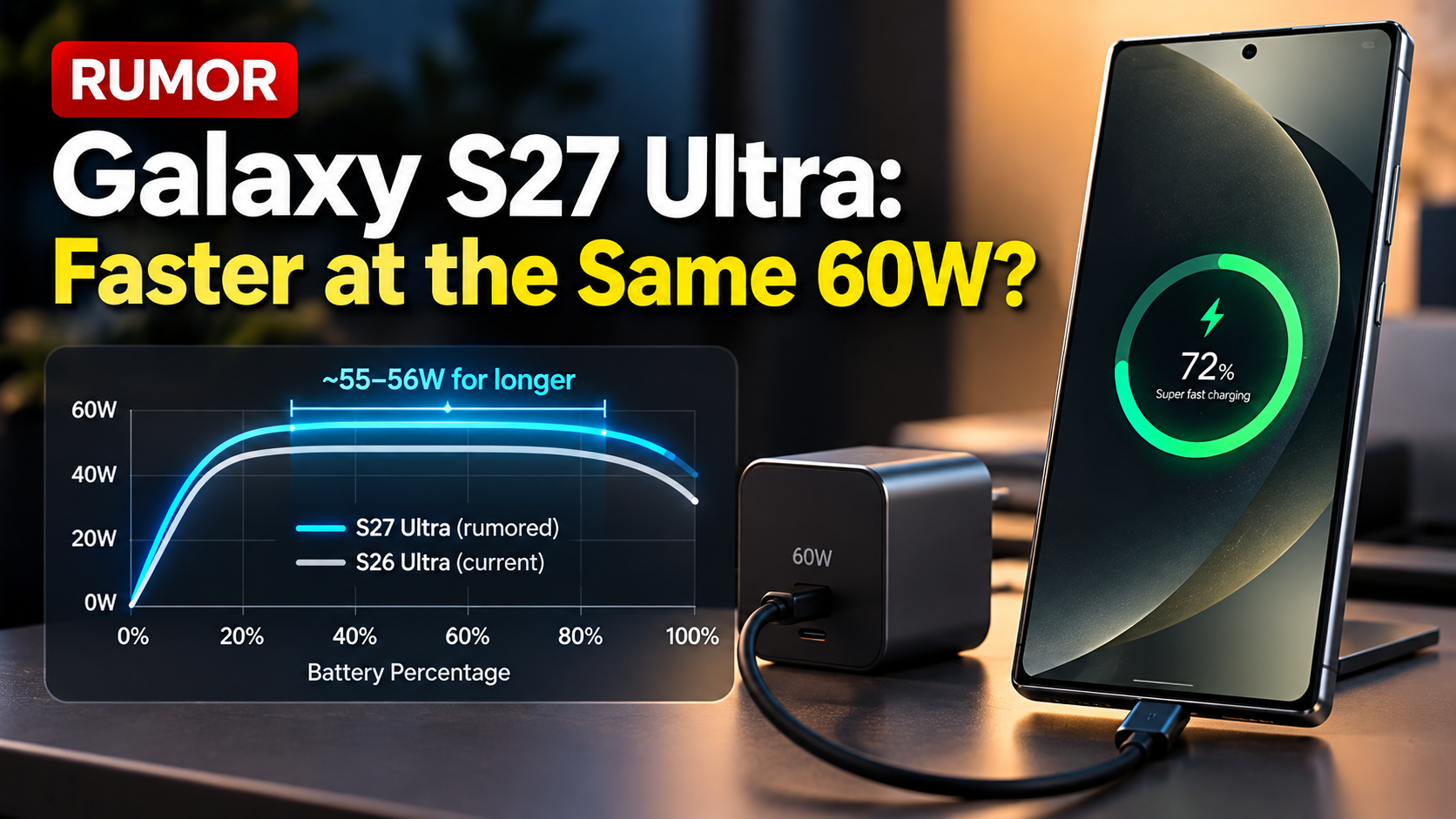
Galaxy S27 Ultra charging concept showing rumored sustained 55W to 56W charging at the same 60W peak

Samsung may be preparing a subtler charging upgrade for the Galaxy S27 Ultra than simply increasing the number printed on the charger. A new leak claims the upcoming Ultra will keep the same 60W wired charging ceiling as the Galaxy S26 Ultra, but could hold near-peak power for longer during the early part of a charge.

If accurate, that would mean the S27 Ultra could finish charging slightly faster even with its rumored larger 5,700mAh battery. Samsung has not announced the Galaxy S27 Ultra or confirmed these charging changes, so the details remain pre-release rumors.

The New Leak Is About the Charging Curve, Not a Higher Wattage
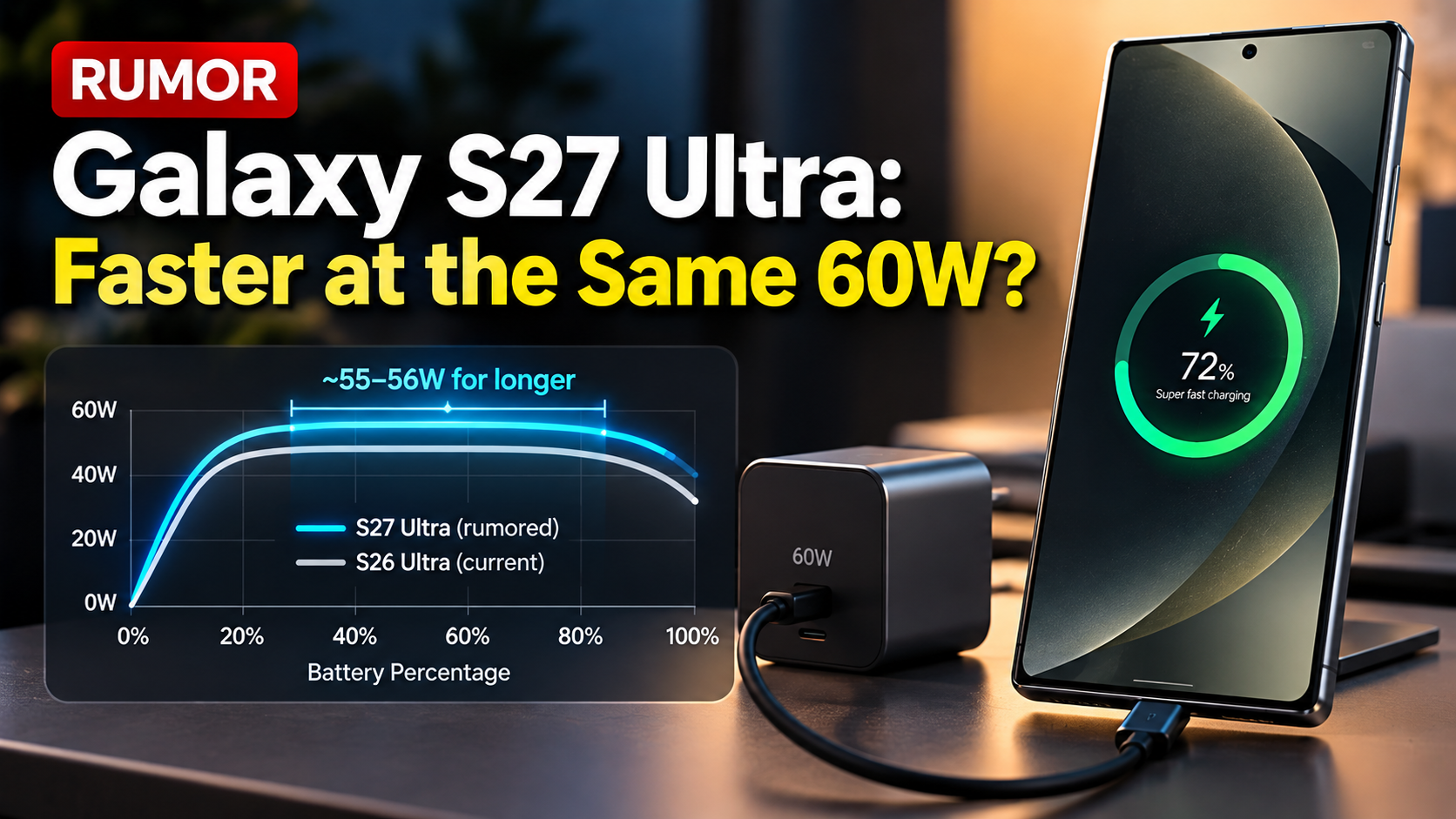
The New Leak Is About the Charging Curve, Not a Higher WattageAccording to a report from Android Authority citing leaker WalleGalaxy, Samsung is testing charging optimizations that may allow the Galaxy S27 Ultra to sustain roughly 55W to 56W for longer at the beginning of a charging session. The phone is still rumored to top out at 60W.

That distinction matters. A phone’s advertised maximum charging wattage is only the peak. Real charging speed depends on how long the device can remain near that peak before heat, battery state of charge and power-management rules force the wattage down. If Samsung can extend the high-power portion of the curve, the same 60W rating can deliver a shorter overall charging time.

How Much Faster Could the S27 Ultra Actually Be?

The leak claims the change could make a full charge around 2% to 3% faster than the Galaxy S26 Ultra. That would be a modest improvement rather than a dramatic leap, and it should be treated cautiously until independent testing is possible.

The interesting part is that the rumored S27 Ultra is also expected to use a larger battery. Previous reports have pointed to a 5,700mAh cell, compared with the 5,000mAh battery in the S26 Ultra. If Samsung can charge a larger battery in roughly the same—or slightly less—time, that would represent a meaningful efficiency improvement even though the headline wattage remains unchanged.

Why Sustained Power Can Matter More Than Peak Power

Charging systems rarely sit at their maximum rating from empty to full. Phones typically pull more power when the battery is low, then reduce power as temperature rises and the battery fills. This tapering protects battery health and manages heat.

That is why two phones with the same maximum wattage can have noticeably different charging times. Thermal design, voltage and current management, charger communication, battery chemistry and software all influence the curve. A longer 55W-to-56W window could therefore matter more in daily use than a brief higher peak that lasts only a few minutes.

The Rumored 5,700mAh Battery Changes the Context

The charging rumor becomes more important when paired with reports of a 5,700mAh battery for the Galaxy S27 Ultra. A larger battery could improve endurance, but without charging optimization it could also take longer to refill.

Samsung appears to be pursuing both sides of that equation: more capacity for runtime and a refined charging curve to keep refill times competitive. That approach would fit Samsung’s historically conservative charging strategy, which has generally emphasized thermal control and battery longevity rather than chasing the highest wattage numbers used by some rivals.

What Galaxy S26 Ultra Owners Should Expect

For Galaxy S26 Ultra owners, this rumor alone would not justify an upgrade. The S26 Ultra already introduced 60W wired charging, and a 2% to 3% improvement would be difficult to notice without side-by-side timing.

The bigger question is whether the charging optimization combines with the rumored 5,700mAh battery to deliver a better overall experience: longer battery life without a charging-time penalty. That combination would be much more meaningful than the charging percentage improvement by itself.

What Is Confirmed and What Is Still Rumor?

Samsung has not officially announced the Galaxy S27 Ultra, its battery capacity, charging curve or final wired charging specification. The sustained 55W-to-56W figure comes from a leak and should not be treated as a confirmed Samsung specification.

Multiple publications have now reported the claim, but they trace back to the same underlying leak. Independent certification data and Samsung’s eventual product specifications will be more important. Real-world charging tests will also be necessary because laboratory or internal test conditions can differ from everyday charging with cases, warm rooms and active phone use.

ReaderSpice Take

Keeping 60W while making 60W work harder would be a sensible Samsung upgrade. Peak wattage is easy to market, but sustained power is what determines whether a phone actually spends less time plugged in.

If the Galaxy S27 Ultra really pairs a 5,700mAh battery with a stronger early charging curve, Samsung could improve both endurance and charging convenience without entering a 100W-plus specification race. For now, the claimed 2% to 3% gain is too small to celebrate on its own, but the larger battery plus improved charging behavior is worth watching.

If you are shopping now rather than waiting for an unannounced phone, the current Samsung Galaxy S26 Ultra remains the relevant available Ultra model on Amazon.

Disclosure: As an Amazon Associate, ReaderSpice earns from qualifying purchases.

Sources

Android Authority — Samsung may have found a smart way to speed up Galaxy S27 Ultra charging

Tech Advisor — Samsung could get clever to achieve faster Galaxy S27 Ultra charging
Tom’s Guide — Galaxy S27 series price and battery reporting

Galaxy S27 Ultra Camera Leak: Samsung May Drop 3x Zoom but Make a Big Photography Upgrade

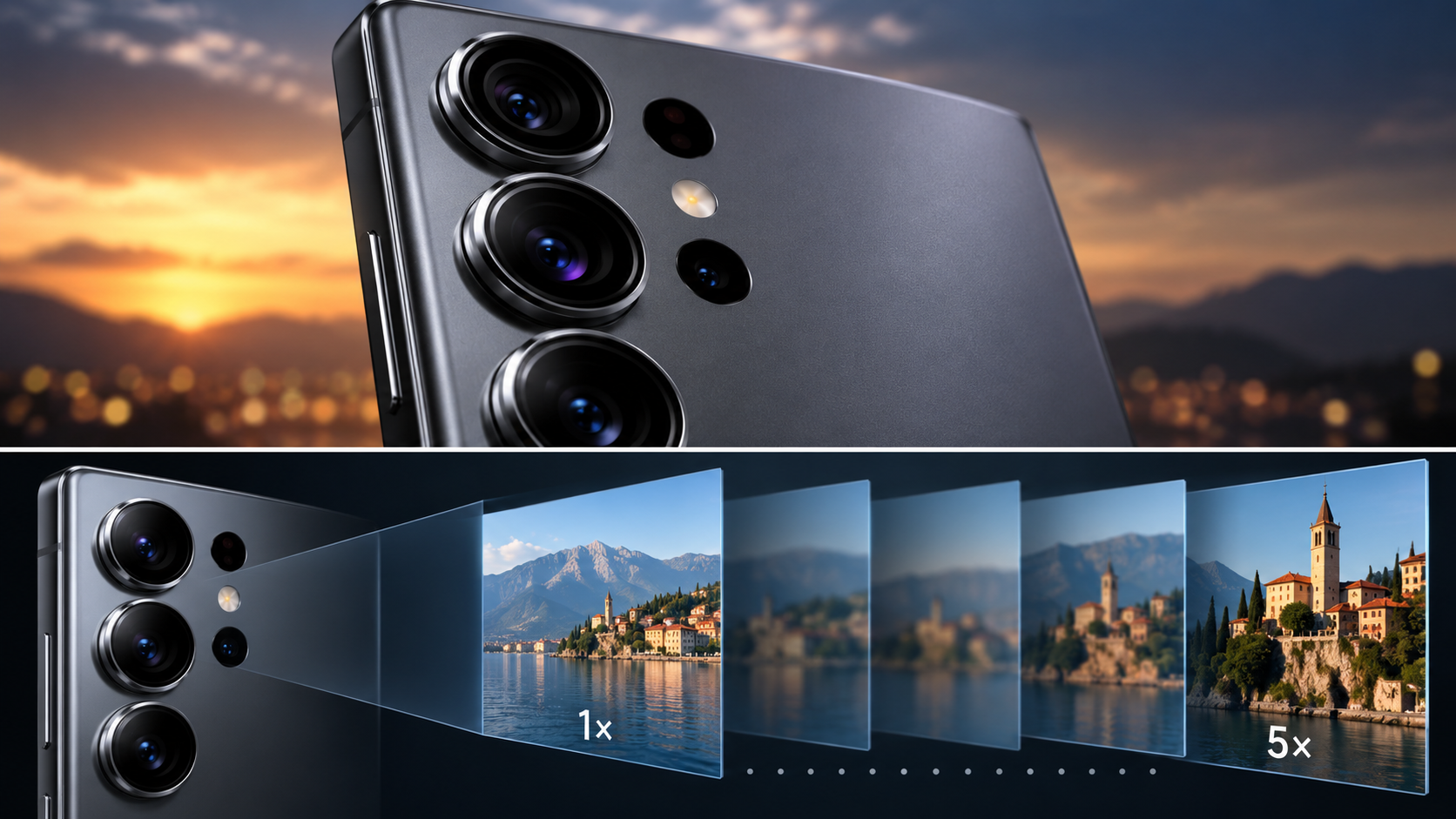
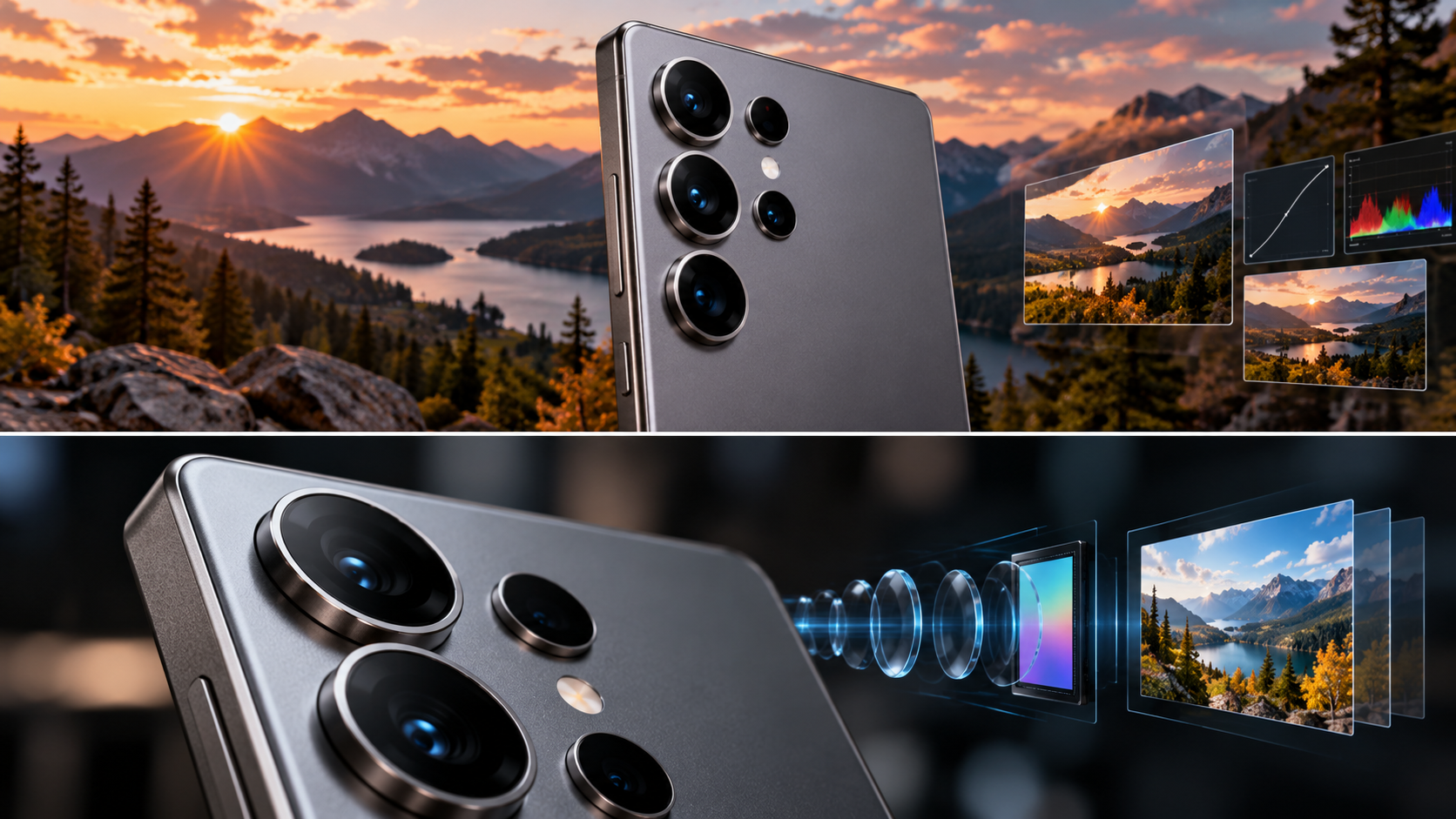
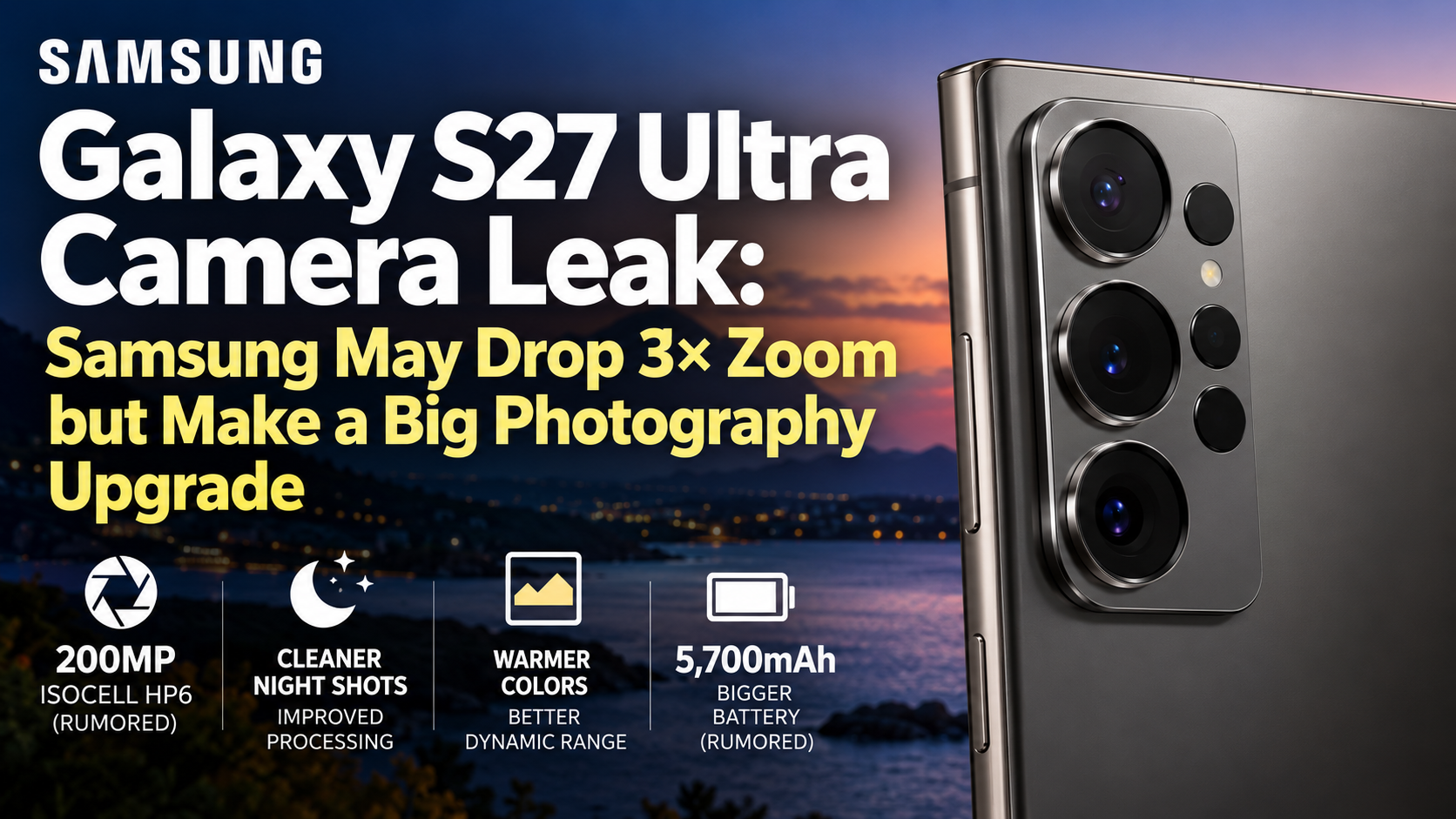
Galaxy S27 Ultra concept showing rumored three-camera layout, 200MP HP6 sensor and removal of dedicated 3x telephoto

Samsung’s next Ultra flagship could make one of its most controversial camera changes in years. A new leak from long-time Samsung tipster Ice Universe says the Galaxy S27 Ultra will drop the dedicated 3x telephoto camera, leaving the phone to move from its main 1x camera directly to a 5x periscope telephoto. At the same time, the main camera is now rumored to use a new 200MP ISOCELL HP6 sensor designed to shoulder more of the zoom work.

That combination matters more than simply reducing the rear camera count from four lenses to three. If the leak is accurate, Samsung is betting that a higher-quality main sensor, in-sensor cropping and better computational photography can cover the everyday 2x-to-4x range well enough to replace a dedicated optical camera. Samsung has not announced the Galaxy S27 Ultra, so all S27-specific details below remain unconfirmed.

The New Leak Says the 3x Camera Is Going Away

The New Leak Says the 3x Camera Is Going Away

On September 29, Ice Universe said the Galaxy S27 Ultra will no longer use a dedicated 3x telephoto camera. 9to5Google reported the same claim while noting that leaked renders now show a three-camera rear arrangement rather than the four-camera setup used by the Galaxy S26 Ultra.

Under the rumored configuration, the S27 Ultra would use its main camera for the lower zoom range and then switch to the dedicated 5x periscope camera for longer reach. The 5x module itself is not expected to receive the previously rumored large-sensor 4x replacement; Ice Universe has instead said the 5x camera will retain a 1/2.52-inch sensor and f/2.9 aperture.

Why Losing 3x Zoom Could Be a Big Deal

Three-times zoom is useful because it sits in a natural range for portraits, pets, food, street photography and everyday subjects where 5x can feel too tight. A dedicated optical module also avoids asking the main camera to crop aggressively when light levels fall.

Removing that camera therefore creates a real question: can Samsung deliver consistent detail, texture and noise control from roughly 2x through 4x using the main sensor alone? In bright daylight, a 200MP sensor has substantial resolution available for cropping. Indoors or at night, however, computational processing and sensor efficiency become much more important.

The Rumored 200MP ISOCELL HP6 Is the Key

The same Ice Universe leak says the S27 Ultra will use a 200MP ISOCELL HP6 main sensor described as a Galaxy-customized relative of Samsung’s newer high-resolution sensor technology. Android Authority reports that the rumored HP6 could inherit ideas aimed at cleaner shadows, stronger dynamic range and better handling of difficult highlights.

Samsung has not officially announced an HP6 for the S27 Ultra, so those capabilities cannot yet be treated as confirmed specifications. But Samsung has publicly demonstrated why high-resolution sensors can help bridge focal-length gaps. Its ISOCELL Zoom Anyplace technology uses in-sensor remosaic processing to maintain high resolution while zooming into a selected area, and Samsung has previously described 200MP sensors as capable of seamless 2x and 4x in-sensor zoom.

That does not automatically mean a crop from the S27 Ultra’s main camera will equal a dedicated 3x telephoto in every condition. Lens characteristics, sensor readout, processing, shutter speed and available light all affect the result. The HP6 rumor is important because Samsung would need the main camera to do more work than before.

Samsung’s Camera Processing May Change Too

The hardware rumor is accompanied by a newer processing claim. Ice Universe says S27 Ultra photos currently show a warmer overall color tone than the Galaxy S26 Ultra, better control of small bright highlights and less visible noise in dark areas. Android Authority and other outlets have reported the same three claimed changes.

Those improvements could directly support Samsung’s three-camera strategy. Better highlight control would help with signs, streetlights and bright details in night scenes, while cleaner shadows could make cropped 2x-to-4x images more usable when the main camera has less light to work with. A warmer color profile could also make the difference between S26 Ultra and S27 Ultra photos immediately visible even when resolution looks similar.

What This Means for Galaxy S26 Ultra Owners

For Galaxy S26 Ultra owners, the rumored change is not a simple upgrade on paper. The S26 Ultra gives users dedicated 3x and 5x optical options. The S27 Ultra may instead simplify the hardware while asking a new main sensor and updated processing to fill the middle of the zoom range.

That could produce a better overall camera if Samsung’s main-sensor crop is cleaner and more consistent than the current 3x module. It could also be a downgrade for users who frequently shoot portraits or low-light subjects around 3x if the crop cannot match dedicated optics. The deciding factor will be real image quality, not the number of lenses on the back.

The Earlier 4x Super-Telephoto Rumor Now Looks Less Likely

ReaderSpice previously covered reports that Samsung was testing a larger 50MP 4x telephoto sensor. The latest Ice Universe information pushes strongly against that configuration for the retail S27 Ultra, saying the familiar 5x periscope remains while the 3x module disappears.

This is a good example of why pre-release hardware leaks need to be treated as moving targets. Samsung can test multiple prototypes before settling on a production design, and a configuration seen during development does not guarantee the final phone will ship that way.

How Credible Is the Latest Information?

Ice Universe has a long track record of Samsung-related leaks, and the new 3x claim lines up with recent CAD-based renders showing three rear cameras. That makes the report more notable than an isolated anonymous rumor. Even so, the word “confirmed” in a leaker’s post is not the same as confirmation from Samsung.

Samsung has not announced the Galaxy S27 Ultra, the HP6 sensor, the removal of the 3x camera or the final 5x specifications. Until Samsung publishes specifications—or multiple independent sources produce stronger production-stage evidence—the safest description is that these are increasingly consistent leaks rather than official facts.

ReaderSpice Take

The rumored removal of the 3x camera is risky, but it is not automatically a downgrade. Samsung has spent years developing high-resolution sensors and in-sensor zoom techniques specifically to extract useful detail from a main camera at intermediate focal lengths. If HP6 delivers better dynamic range, lower noise and strong crop quality, simplifying the camera array could make sense.

The test will be portraits and low-light zoom. Those are the situations where a dedicated optical camera has the clearest theoretical advantage. If Samsung can make 3x photos from the HP6 look cleaner than the S26 Ultra’s dedicated 3x camera while also improving 1x and night photography, the S27 Ultra could end up with fewer cameras but a stronger camera system.

If you are shopping now rather than waiting for an unannounced phone, the current Samsung Galaxy S26 Ultra remains the relevant available Ultra model on Amazon.

Disclosure: As an Amazon Associate, ReaderSpice earns from qualifying purchases.

Sources

9to5Google — Galaxy S27 Ultra’s missing camera shown in leaks is its 3x zoom

Android Authority — Latest Galaxy S27 Ultra leak brings good news for low-light shots, bad news for zoom

Samsung Global Newsroom — ISOCELL Zoom Anyplace and E2E AI Remosaic for 200MP sensors

Tom’s Guide — Galaxy S27 Ultra may scrap the 10MP telephoto lens

Samsung Galaxy S27 Ultra Camera Leak Points to More Natural Photos and Better Pro Video

Samsung’s Galaxy S27 Ultra may be getting a camera upgrade that is less about headline resolution and more about how photos and video actually look. A fresh leak claims Samsung is revising its image-processing pipeline to produce warmer, more natural-looking photos while also updating Samsung Log and the APV professional video codec for improved dynamic range.

The claims are interesting because they suggest Samsung could focus on computational photography and professional video tools even as some familiar camera hardware remains in place. However, the newest processing details come from a relatively unknown source, so they should be treated as an early rumor rather than a finalized specification.

A New Image-Processing Direction for the Galaxy S27 Ultra

A New Image-Processing Direction for the Galaxy S27 Ultra

According to reporting from Android Authority and SamMobile, the Galaxy S27 Ultra is rumored to use a revised image-processing pipeline aimed at warmer and more natural color rendering. The current Galaxy S26 Ultra can lean cooler in some scenes, so a deliberate shift in color science could be noticeable even without a dramatic change in megapixel counts.

The leak also points to wider dynamic range. That could matter in difficult scenes such as sunsets, bright windows, backlit portraits, and landscapes where a phone has to preserve highlight detail without crushing darker areas. If Samsung combines improved processing with the other rumored sensor changes, the result could be a more meaningful camera upgrade than the specification sheet alone suggests.

Samsung Log and APV Could Get Better Too

Video is another part of the rumor. Samsung is said to be updating both Samsung Log and APV, or Advanced Professional Video. The goal is reportedly improved dynamic range rather than higher headline recording resolutions. Current reporting still points to 4K recording at up to 120 frames per second and 8K at 30 frames per second.

That would fit Samsung’s recent direction. Samsung Log gives creators a flatter image with more flexibility for color grading, while APV is designed for higher-quality professional workflows. Better dynamic range in those formats could be particularly useful for creators who want more control over highlights, shadows, and color in post-production.

For users who simply record family videos or quick clips, these changes may not be as obvious as a new zoom lens. For creators, however, improvements to Log, codec quality, and dynamic range can have a much larger effect on how far footage can be pushed during editing.

The 5x Telephoto Rumor Has Changed Again

This processing leak arrives while the Galaxy S27 Ultra’s zoom-camera story is also changing. Earlier rumors suggested Samsung was testing a larger 50MP 4x telephoto camera that could potentially replace the familiar 5x unit. More recent information from long-time Samsung leaker Ice Universe disputes that claim.

According to that newer report, Samsung is expected to retain a 5x periscope telephoto camera using a 1/2.52-inch sensor. Android Authority notes that this would be similar in size to the 5x hardware used in recent Galaxy Ultra models. The dedicated 3x telephoto is still rumored to be at risk of disappearing, although Samsung has not confirmed the final camera configuration.

That distinction matters. If Samsung keeps familiar 5x hardware, improvements to processing, color, HDR, and computational zoom become even more important. A camera system does not have to replace every sensor to improve, but Samsung would need its software pipeline to deliver visible gains.

How Credible Is This Leak?

The safest way to read the latest information is to separate the claims by source. The warmer color processing and updated Log/APV details were attributed to WalleGalaxy, an account Android Authority describes as relatively unknown. That makes those specific claims lower-confidence for now.

The 5x telephoto information has somewhat stronger sourcing because it comes from Ice Universe, who has a long history of Samsung-related leaks. Even so, it remains unofficial information about an unreleased phone, and Samsung could still change hardware or software before mass production.

There is also disagreement among current reports about the broader rear-camera layout. Some reports describe a move from four rear cameras to three, while others continue to reference a four-camera setup. Until multiple reliable sources converge—or Samsung announces the device—those details should not be treated as settled.

Why This Could Matter More Than Another Megapixel Increase

Smartphone cameras increasingly depend on the entire imaging pipeline: sensor data, HDR capture, noise reduction, sharpening, white balance, color mapping, and computational fusion. A phone can use excellent hardware and still produce disappointing results if the processing is too aggressive or inconsistent.

That is why the rumored move toward warmer, more natural color could be important. Samsung does not necessarily need every image to look warmer; consistency and believable skin tones are more valuable than simply changing the color temperature. The real question will be whether the company can preserve its punchy Galaxy look while producing more natural results when a scene calls for it.

For video, expanded dynamic range in Log and APV could similarly be more useful than another resolution increase. Many creators already have enough resolution at 4K. What they often need is cleaner tonal information, better highlight retention, and footage that grades predictably.

What We’re Watching Next

The next meaningful evidence would be corroboration from established Samsung sources, firmware or camera-app findings, supply-chain information, or early hardware samples. We will also be watching whether the rumored three-camera layout gains stronger support and whether Samsung really removes the dedicated 3x telephoto.

For now, the most interesting possibility is that the Galaxy S27 Ultra camera upgrade may be as much about image quality and creator tools as it is about new hardware. If the processing leak proves accurate, Samsung could be preparing a more natural photo style and a stronger professional-video workflow for its next Ultra flagship.

Sources

Android Authority — Samsung could give the Galaxy S27 Ultra a major camera processing upgrade

SamMobile — Galaxy S27 Ultra camera could have warmer colors and a wider dynamic range

Android Authority — Could Galaxy S27 Ultra bring zoom camera upgrades? New leak has bad news

Gadgets 360 — Samsung Galaxy S27 Ultra Could Get New Image Processing for More Natural Photos

Galaxy S27 Ultra May Skip Polar ID Face Unlock as Samsung Reconsiders Its 2027 Flagship Upgrades

Samsung’s Galaxy S27 Ultra may not receive one of the biometric upgrades previously rumored for the 2027 flagship. A fresh report says Samsung currently has no plans to introduce Metalenz’s Polar ID face-authentication technology on the Galaxy S27 Ultra, potentially leaving the ultrasonic fingerprint reader as the phone’s primary secure biometric option.

The claim is not an official Samsung announcement, so it should be treated as a leak rather than a confirmed specification. Still, it is notable because earlier S27 Ultra coverage had pointed toward Polar ID as a possible major authentication upgrade.

What the New Galaxy S27 Ultra Leak Says

Tipster kro (@kro_roe) claimed on X on September 9 that Samsung currently shows no indication of bringing Polar ID to the Galaxy S27 Ultra. Gadgets 360 reported that Samsung’s earlier Metalenz testing remained experimental. If accurate, Samsung could continue using its established ultrasonic fingerprint system while retaining conventional camera-based face unlock for convenience.

That would make this less of a new feature story and more of a reversal: a previously discussed S27 Ultra upgrade may no longer be part of Samsung’s current plan.

What Is Polar ID?

Polar ID is an advanced facial-recognition approach associated with Metalenz that uses polarization information rather than relying only on a conventional RGB selfie image. The attraction for a flagship phone is stronger authentication without necessarily copying the exact hardware arrangement used by Apple’s Face ID.

However, Samsung has not announced Polar ID for the Galaxy S27 series, and reports that the company experimented with the technology do not mean it was ever guaranteed for a commercial device.

The Bigger Galaxy S27 Picture Is Getting More Interesting

This biometric report arrives as other S27-family leaks continue to build a picture of Samsung’s 2027 lineup. Recent reporting points to a possible Galaxy S27 Pro joining the regular S27, S27+ and S27 Ultra. One UI 9.5 firmware entries associated with the S27 family have also reportedly appeared on Samsung servers, with the sightings attributed to Samsung-focused leaker Tarun Vats.

Charging could be another important upgrade. Ice Universe recently posted information indicating 60W wired charging for both the rumored Galaxy S27 Pro and Galaxy S27 Ultra. That claim remains unofficial until Samsung confirms the devices and specifications, but it would represent a meaningful change if it reaches the final hardware.

These leaks should not be treated equally to an official product announcement. Firmware sightings and regulatory information can provide useful clues, while final hardware, names, features and regional configurations can still change before launch.

Why Samsung Might Skip the Feature

Cost and product priorities may be part of the explanation. Flagship development requires balancing camera hardware, displays, processors, batteries, thermal systems, connectivity and other components. Adding a new biometric system only makes sense if Samsung believes the security and user-experience gains justify the hardware and development cost.

If Polar ID has indeed been dropped from the current S27 Ultra plan, Samsung could redirect resources toward upgrades users interact with more frequently, such as cameras, battery life, charging, performance or display technology. That is an interpretation, however, not something Samsung has confirmed.

What Is Actually Confirmed?

Very little about the Galaxy S27 Ultra is official at this stage. Samsung has not announced the Galaxy S27 lineup, its final specifications, pricing or launch date. Reports currently point toward an early-2027 flagship window, but exact timing remains unconfirmed.

For now, the safest takeaway is straightforward: Polar ID was rumored, but the newest reporting says it may not be coming to the Galaxy S27 Ultra after all.

ReaderSpice Take

The most interesting part of early flagship leak season is watching specifications change as development progresses. The Polar ID story is a good example of why early rumors should never be presented as finished specifications.

The Galaxy S27 Ultra still has plenty of time before an expected 2027 introduction, and Samsung’s final priorities could change again. ReaderSpice will continue tracking Samsung’s development, while separating credible leaks from specifications Samsung actually confirms.

SOURCES

EDITORIAL NOTE

All Galaxy S27 specifications discussed above are leaks, reports or expectations unless explicitly identified as confirmed by Samsung.

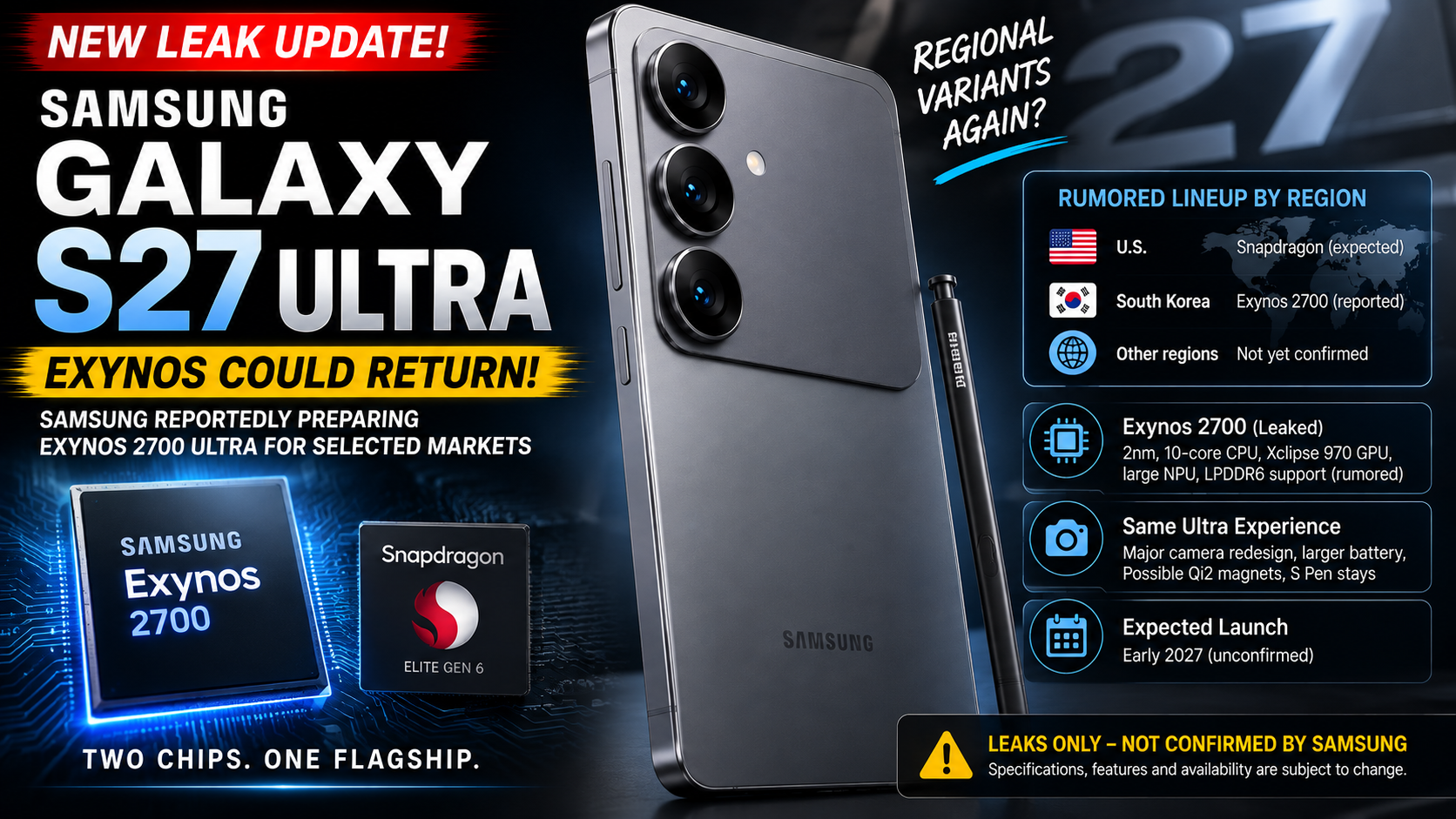
Galaxy S27 Ultra Snapdragon leak: Samsung is already testing Qualcomm’s next flagship chip in the U.S., Korea and Asia-Pacific

Galaxy S27 Ultra Snapdragon leak and Qualcomm flagship chip testing

A meaningful new Samsung Galaxy S27-series processor leak surfaced on September 5, and it adds an important twist to the recent Exynos 2700 story.

According to a leaked Qualcomm project-portal screenshot obtained by Notebookcheck, Samsung Electronics is already validating Galaxy S27 hardware using Qualcomm’s unreleased SM8975 flagship processor across at least three regional builds: Asia-Pacific, South Korea and Verizon in the United States.

Snapdragon testing is further along than we knew

The leaked project entries are reportedly:

SS_SM8975_GS27_AP — Asia-Pacific
SS_SM8975_GS27_KOR — South Korea
SS_SM8975_GS27_VZW — Verizon/U.S.

All three reportedly use Qualcomm’s internal “Snapdragon_Premium_High_2026” software distribution. The existence of a Verizon-specific build is particularly interesting because it suggests Samsung is already doing carrier-specific RF/software validation for the upcoming Galaxy generation.

The SM8975 is expected to become Qualcomm’s highest-end next-generation Snapdragon chip, currently reported under the Snapdragon 8 Elite Extreme Gen 6 name. Qualcomm is expected to formally introduce its next Snapdragon flagship family at Snapdragon Summit, scheduled for September 22–24, 2026.

What does this mean for the Exynos 2700 S27 Ultra leak?

This is where today’s leak becomes particularly important.

Earlier reports said Samsung had begun preparing an Exynos 2700 Galaxy S27 Ultra motherboard for South Korea, potentially bringing Exynos back to an Ultra phone after a five-year absence. Those reports do not necessarily conflict with today’s information.

The new evidence shows that Samsung is simultaneously testing an SM8975 Snapdragon Galaxy S27 build for Korea.

That suggests Samsung may currently be evaluating multiple chipset configurations rather than having finalized which processor every S27 Ultra market will receive.

So claims that the South Korean S27 Ultra is definitely getting Exynos 2700 are premature.

What we can say with higher confidence

The strongest new evidence is that real Galaxy S27 development builds using SM8975 now appear to exist for the U.S./Verizon, Korea and Asia-Pacific regions. That’s more substantial than a generic rumor saying Samsung “plans to use Snapdragon,” although the leaked portal screenshot is still unofficial information.

It also strengthens the likelihood that the U.S. Galaxy S27 Ultra will continue using Qualcomm silicon, particularly given the presence of a dedicated Verizon project.

What it does not establish is whether every Galaxy S27 model represented by those projects uses SM8975, whether Samsung will ultimately ship both Snapdragon and Exynos S27 Ultras, or which regions would receive each processor.

Where the rest of the S27 Ultra leaks stand

There is no comparably strong new development today concerning the S27 Ultra’s cameras, battery, S Pen, Qi2 magnets, display or pricing.

Recent reporting still points toward the dramatic camera-plateau redesign, an integrated S Pen, potential native Qi2 magnets, a possible larger battery, and a reduced three-camera configuration. Those remain leaks rather than confirmed specifications.

Likewise, the experimental 50MP 4x telephoto with a roughly 1/1.9-inch sensor remains something Samsung is reportedly evaluating rather than a finalized retail camera configuration.

Current expectations still place the Galaxy S27 family in early 2027, but Samsung has not announced an Unpacked date or retail launch date.

Confirmed vs. leaked

Confirmed: Samsung has not officially announced the Galaxy S27 Ultra, its processor, specifications, price, cameras, battery capacity or release date.

Leaked: Qualcomm project information reportedly shows Samsung testing SM8975-powered Galaxy S27 hardware in Asia-Pacific, Korea and on Verizon.

Still uncertain: whether the S27 Ultra will ship with Snapdragon everywhere, return to a Snapdragon/Exynos regional split, or whether Samsung is simply evaluating both platforms before making its final decision.

For now, the most interesting takeaway is that Samsung appears to have both Snapdragon and Exynos options in development—and Snapdragon testing is already occurring even in Korea.

Read the September 5 Notebookcheck report

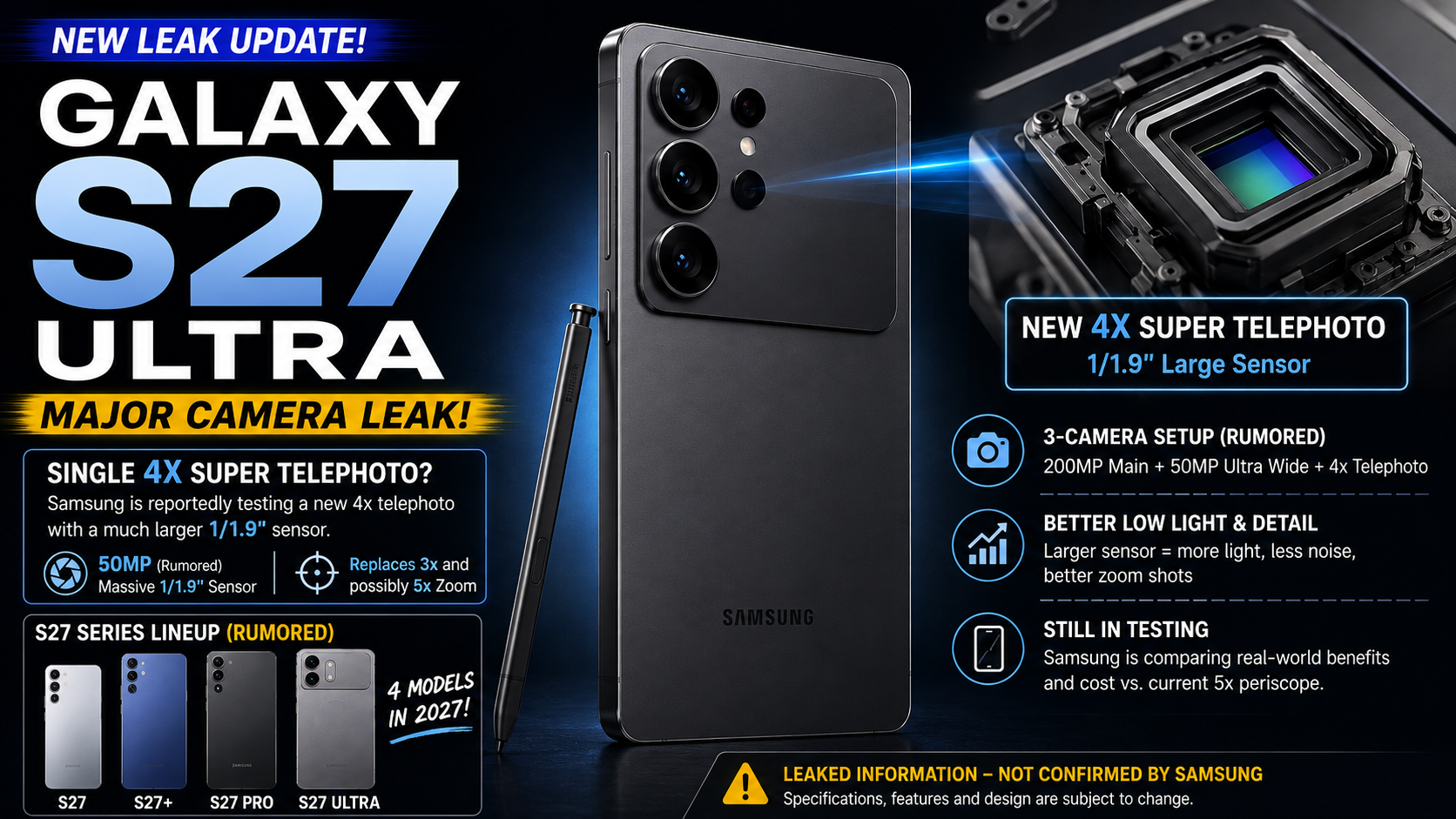
Meaningful new Galaxy S27 Ultra camera leak

Samsung Galaxy S27 Ultra camera leak and rumored rear camera redesign

Samsung is reportedly testing a major change to the S27 Ultra zoom system: a single 4x “super telephoto” camera with a much larger 1/1.9-inch sensor. This could replace not only the rumored-to-be-removed 3x telephoto, but potentially the existing 5x periscope as well.

The new 4x sensor is reportedly 50MP in some reports and substantially larger than the current 5x telephoto’s roughly 1/2.52-inch sensor. The idea would be fewer dedicated zoom cameras but a significantly larger sensor capable of gathering more light, potentially improving low-light zoom, portraits, detail and noise.

This also fits the recently leaked CAD design surprisingly well: those renders appear to provide space for three rear cameras total, supporting the possibility of a 200MP main + ultrawide + single high-quality telephoto architecture.

Important: this configuration is not finalized. The originating leak says Samsung is testing the 4x solution and comparing its real-world benefit and cost against retaining the existing 5x design. Reports claim multiple S27 Ultra prototypes are still being evaluated.

There is no new official confirmation from Samsung, and I found no meaningful new Ice Universe disclosure today that supersedes his recent design/battery information. So I would currently label the 4x super-telephoto as a notable new leak, but medium confidence rather than a near-final specification.

A meaningful new Galaxy S27 Ultra battery/S Pen leak surfaced

Samsung Galaxy S27 Ultra battery and S Pen leak

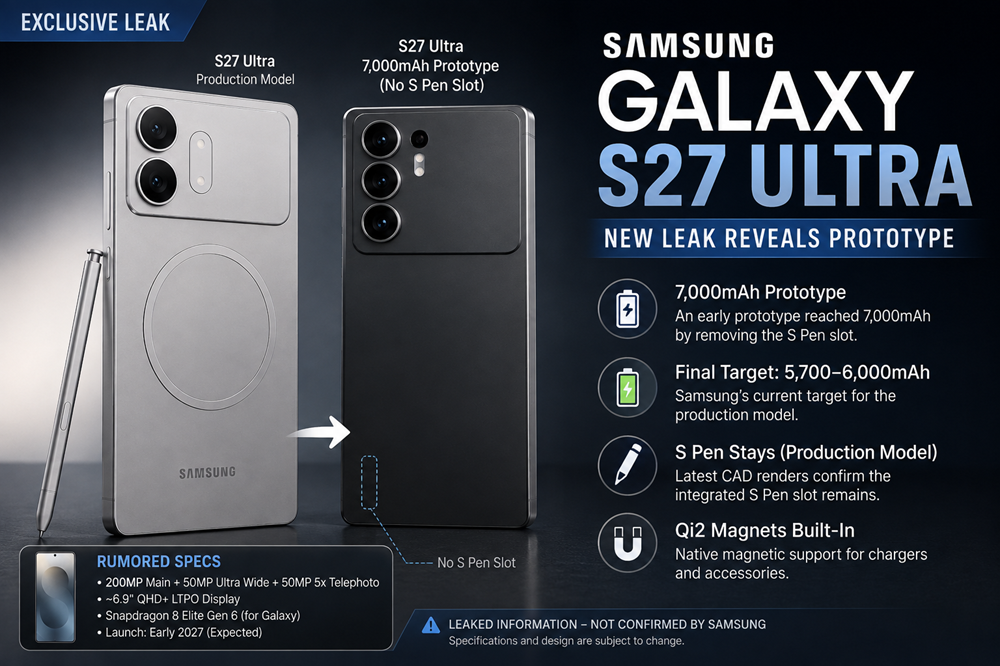
Samsung reportedly tested several S27 Ultra prototypes, including an extreme version with a 7,000mAh battery that removed the built-in S Pen slot to create additional internal space. More importantly for the likely production phone, the same leak says Samsung’s current battery target has settled around 5,700–6,000mAh, potentially using silicon-carbon technology. Android Authority

This does not mean Samsung is removing the S Pen. In fact, the latest CAD renders still show an integrated S Pen slot, suggesting the 7,000mAh/S-Pen-less configuration was an experimental prototype that Samsung decided against.

There is also newer CAD information putting the S27 Ultra at roughly 163.76 × 78.25 × 7.97 mm, with the substantial new camera plateau reaching approximately 12.53 mm thick at its highest point. That means the main body could remain around 8mm despite the rumored battery increase, but the camera bump would become noticeably thicker.

The other major leaks remain consistent with the previous update: a three-camera arrangement potentially consisting of 200MP main + 50MP ultrawide + 50MP 5x telephoto, removal of the dedicated 3x camera, native Qi2 magnetic support, approximately 6.9-inch display, and an early-2027 launch.

Confirmed by Samsung: none of these S27 Ultra specifications yet. The 7,000mAh prototype in particular should be treated as an interesting development-history leak—not the expected retail specification.