
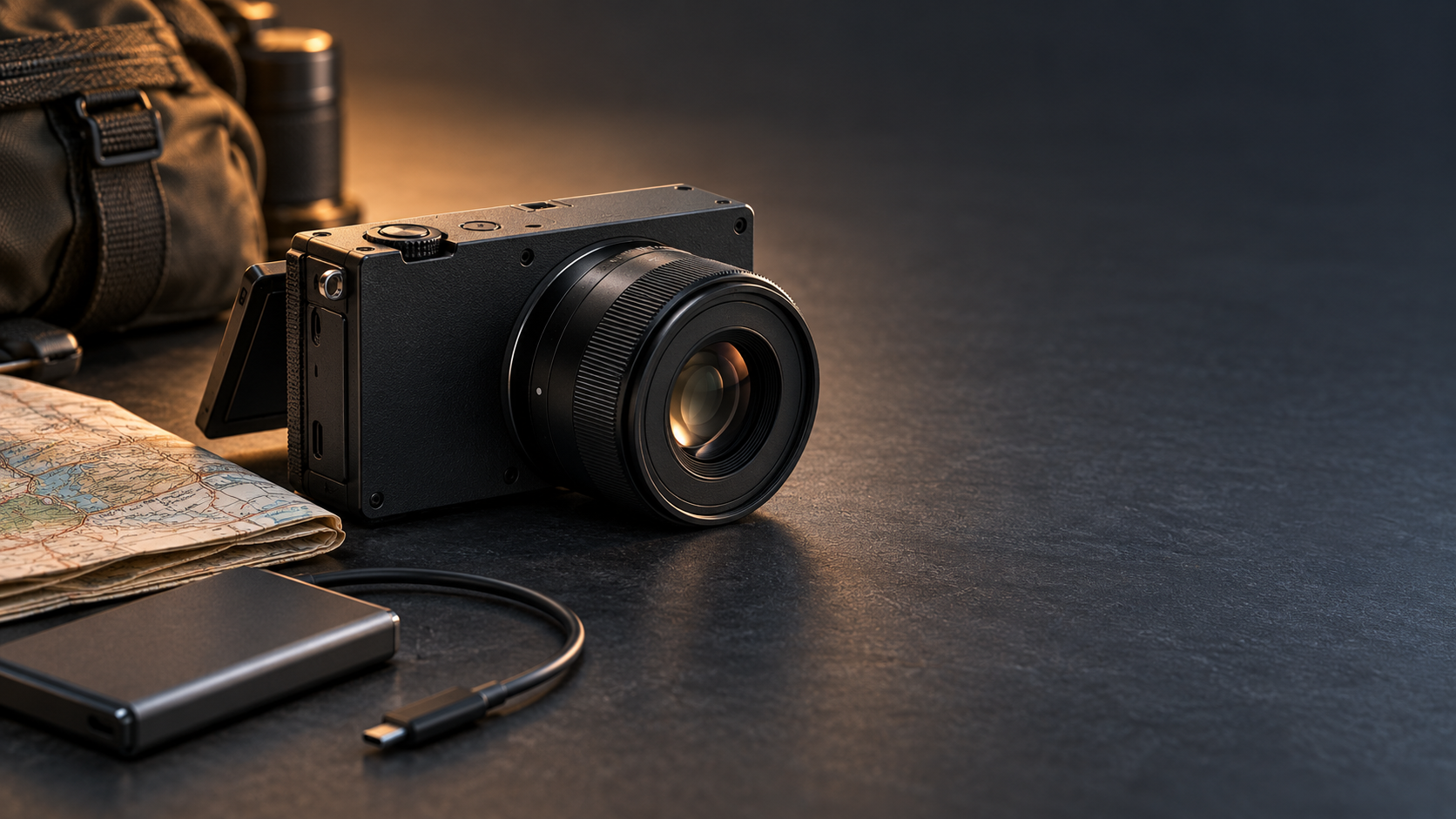
Sigma has revived its smallest full-frame camera concept with the FP2, a $2,199 modular hybrid that arrives November 11, 2026. The headline upgrades are substantial: a 24.5-megapixel partially stacked sensor, phase-detection autofocus, 6K open-gate video, a tilting screen, 70GB of built-in storage and much longer burst depth.
The appeal is easy to understand. The FP2 puts serious stills and cinema tools in a body small enough to build into a lightweight travel or gimbal rig. The catch is just as important: there is no in-body image stabilization, built-in viewfinder or conventional handgrip. The camera is deliberately incomplete until each buyer decides what to attach.
Sigma FP2 price, release date and key specifications
Sigma says the FP2 will be available on Wednesday, November 11, 2026. U.S. pricing starts at $2,199 for the body, while review coverage lists a $2,749 kit with either Sigma’s new EVF-21 electronic viewfinder or the compact 50mm F2 DG DN Contemporary lens.
The essentials at a glance:
- 24.5MP partially stacked full-frame CMOS sensor
- L-Mount lens system with separate STILL and CINE interfaces
- Up to 20 frames per second for stills and a buffer rated for roughly 200 images
- 6K open-gate recording at up to 59.94p in supported compressed formats
- ProRes RAW recording to an external SSD, plus L-Log and 13 color modes
- Hybrid phase- and contrast-detection autofocus with people, dog, cat and bird recognition
- 70GB of internal storage, one SD card slot, two USB-C ports and full-size HDMI
- Tilting 3.2-inch rear display; optional 5.76-million-dot EVF-21
- Approximately 370-shot battery rating and 460g operating weight with battery and card
These numbers place the FP2 closer to a compact production tool than a conventional entry-level mirrorless camera. Its price makes the missing viewfinder and stabilization impossible to ignore, but the connectivity and recording options are unusually ambitious for the body size.
What the partially stacked sensor changes
The original Sigma fp was admired for its size but limited by slow sensor readout and contrast-detection autofocus. The FP2’s partially stacked sensor is designed to read data faster, helping reduce rolling-shutter distortion and supporting quicker bursts, higher frame-rate video and more responsive subject tracking.
Resolution remains around 24.5 megapixels. That is enough for large prints and most professional web work, but it offers less room for aggressive cropping than 40MP or 60MP rivals. The payoff is speed: Sigma now quotes up to 20fps and a buffer of about 200 frames, a major change from the original fp’s very shallow high-speed burst.
Early hands-on reports broadly agree that image quality is excellent and autofocus is much more dependable. Reviewers also note that subject selection can still be inconsistent. This is a meaningful upgrade, not proof that Sigma has surpassed the most mature sports and wildlife autofocus systems.
Why the FP2 is more video-first than it looks
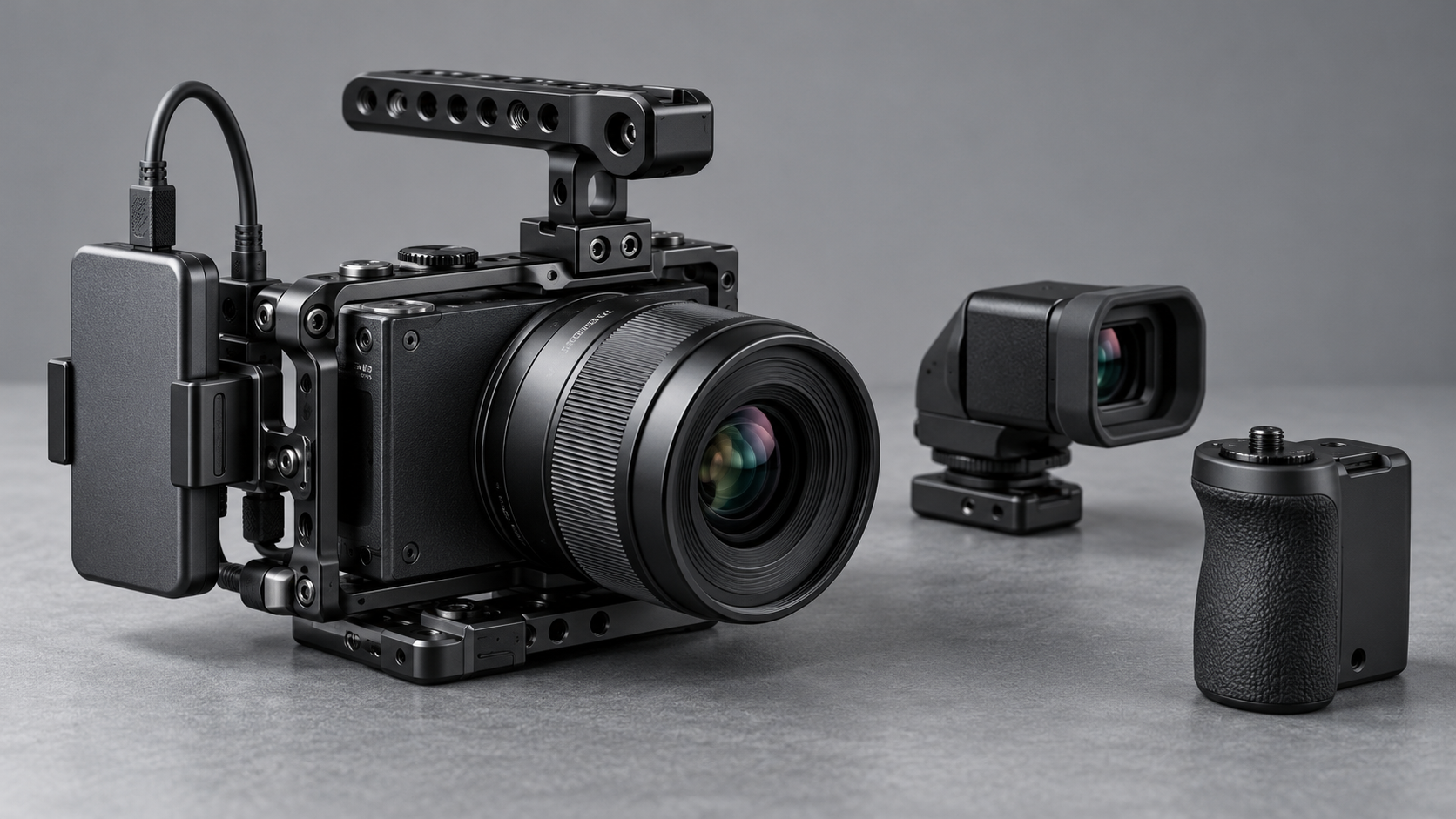
The small body hides a serious video toolset. Open-gate recording uses the full 3:2 sensor area, giving editors extra room to create widescreen and vertical crops from the same take. Supported compressed modes reach 6K/59.94p, while ProRes RAW is available to an external SSD at lower maximum frame rates. Cropped 4K can reach roughly 120p.
Sigma also includes monitoring tools, L-Log, gyro data for stabilization in post and dedicated CINE controls. Two USB-C ports matter here: one can handle high-speed storage while the other supports power or accessories. Full-size HDMI is a welcome choice on a camera likely to be connected to monitors and recorders.
That flexibility makes the FP2 especially interesting for solo filmmakers, travel crews and gimbal operators. A compact body can be easier to balance and can leave more payload capacity for a lens, cage, microphone or monitor. The built-in 70GB of storage is also a useful emergency reserve when a memory card is full or unavailable.
The biggest compromise: no in-body stabilization
The FP2 does not have mechanical in-body image stabilization. For stills, that means slower shutter speeds require steadier technique, a tripod or a stabilized lens. For handheld video, the limitation is more obvious: small camera movements remain visible, and electronic or post-production correction cannot fully reproduce sensor-shift stabilization.
Gyro metadata can help compatible software smooth footage later, but stabilization in post crops the frame and adds another processing step. Reviewers found handheld video challenging even with careful technique. Anyone imagining the FP2 as an all-in-one walkaround video camera should budget for a gimbal, rig support or stabilized L-Mount lens.
The limitation is less serious when the camera is locked to a tripod, mounted on a vehicle, placed on a motorized stabilizer or used in a controlled studio. In those jobs, removing the stabilization mechanism helps Sigma preserve the camera’s small dimensions. The design makes sense—but only for buyers whose workflow already solves camera shake.
A modular body means accessories can erase the size advantage
Sigma’s philosophy is to start with a clean rectangular body and let the owner add only what the job requires. That is attractive for specialized rigs, but less convenient for photographers who expect a camera to feel complete out of the box.
There is no built-in electronic viewfinder. The optional EVF-21 adds a high-resolution tilting OLED finder and an eye sensor, but it also adds cost and bulk. The flat body has no substantial grip, and larger lenses can make it front-heavy. A grip or cage improves handling while making the overall package less pocketable.
The same tradeoff applies to the hot shoe. Sigma offers a separate HU-21 hot-shoe unit for users who need flash or accessory mounting. Photographers should price the body, viewfinder, grip, hot shoe, spare battery and preferred lens as a system rather than treating $2,199 as the finished cost.
How the FP2 fits into an L-Mount kit
The FP2 uses the L-Mount shared by Sigma, Panasonic and Leica, so buyers can choose from compact primes, fast professional zooms and specialized cine glass. Small lenses are the natural match. Sigma’s 50mm F2 Contemporary kit option preserves the camera’s minimalist character while providing a general-purpose normal field of view.
Larger lenses are fully usable, but they shift the balance away from the body. A 24–70mm F2.8 zoom, for example, may be optically versatile yet demand a grip, cage or lens support. The FP2 is most convincing when the complete rig is designed around its size rather than when it is treated as a tiny body for any lens.
Who should consider the Sigma FP2?
The FP2 makes the most sense for:
- Filmmakers who want 6K open-gate capture in a very small L-Mount body
- Gimbal and drone operators who value low body volume and flexible mounting
- Travel creators who can work with compact primes, an external SSD and planned stabilization
- Studio shooters who prefer tethered, tripod-based or modular production setups
- Existing L-Mount owners who already have lenses and accessories
It is a harder recommendation for photographers who rely on a viewfinder, shoot long handheld sessions or want stabilized stills and video without extra equipment. A larger conventional hybrid can deliver a more comfortable grip, built-in EVF and IBIS for less total system cost.
A relevant lens for the FP2
The compact Sigma 50mm F2 DG DN Contemporary for L-Mount is one of the FP2’s official kit-lens options and is a natural match for its small body. Check the Sigma 50mm F2 DG DN Contemporary for L-Mount on Amazon.
Disclosure: ReaderSpice may earn a commission from qualifying purchases made through the Amazon link above, at no additional cost to you.
Amazon prices, sellers and availability can change. Confirm that the listing is the L-Mount version—not the Sony E-mount version—and verify the seller and return policy before ordering.
Bottom line
The Sigma FP2 is not trying to be the safest all-round mirrorless camera. It is a compact full-frame imaging core that becomes a stills camera, cinema rig or travel kit depending on what surrounds it. The faster sensor, improved autofocus, deep burst, tilting display, internal storage and 6K open-gate recording address many weaknesses of the original fp.
Its omissions are equally defining. No IBIS, no built-in EVF and minimal ergonomics mean the smallest body can lead to a larger, more expensive complete setup. Buyers who need a modular 6K platform may find that trade worthwhile. Everyone else should compare the cost and size of the finished rig, not the body alone.
Sources
Sigma — FP2 launch schedule and official announcement
DPReview — Sigma FP2 review and full specifications
TechRadar — Sigma FP2 hands-on review
The Verge — Sigma FP2 launch, pricing and connectivity overview
Digital Camera World — Sigma FP2 hands-on video assessment