
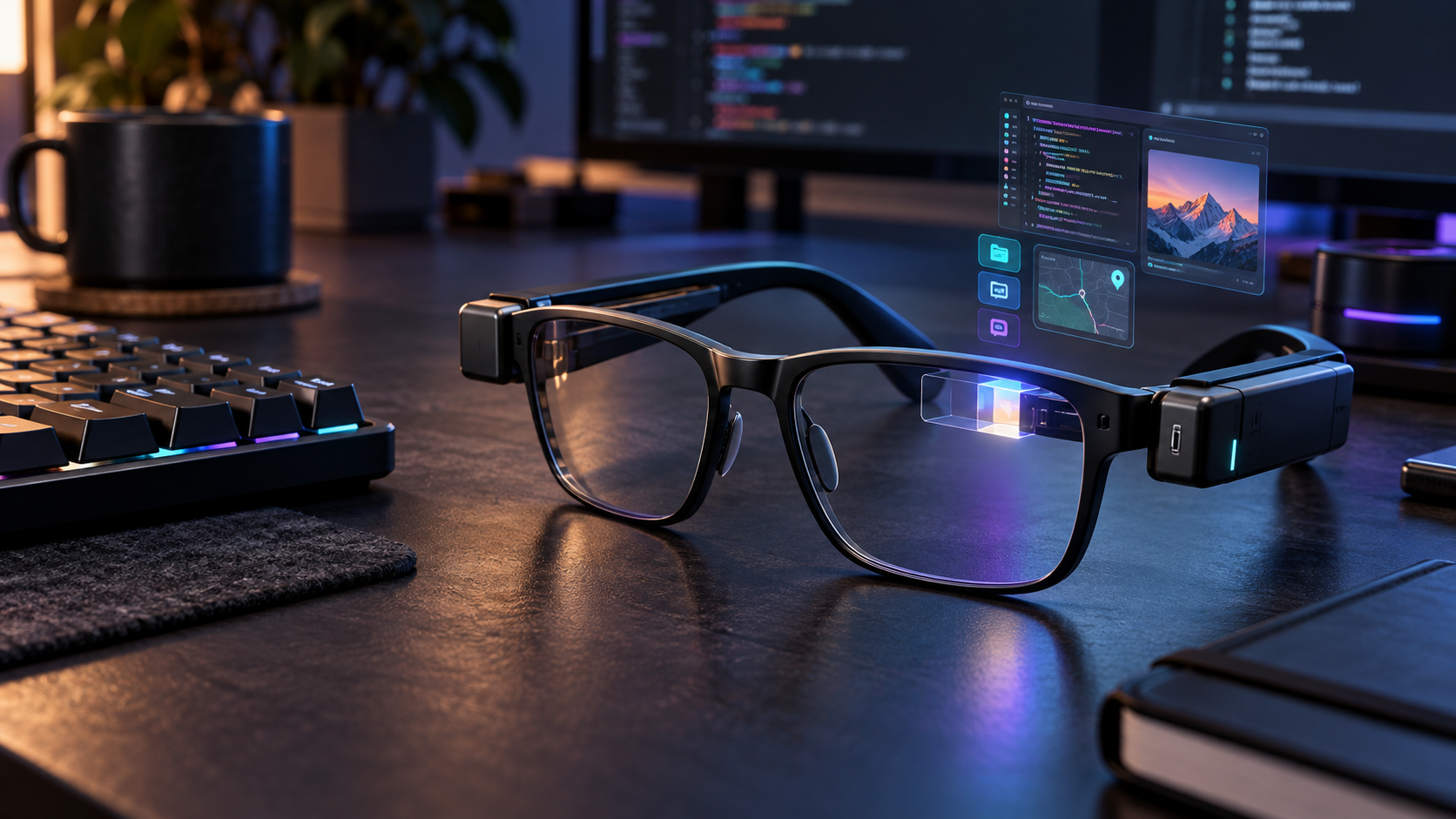
Raven Prism is a $1,499 pair of standalone smart glasses that puts a 64-bit Linux computer, a full-color display and gaze-based controls into a frame designed for everyday wear. Reservations opened October 29, 2026, with a refundable $49 deposit, and Raven Resonance says the first units are expected to ship in January 2027.
The premise is more ambitious than a phone-connected notification display: Prism can run compatible ARM64 Linux software without a smartphone, expose hardware to developers and keep working while its modular batteries are swapped. The tradeoffs are equally important. Its view is monocular and relatively narrow, the launch is limited to early production batches, and key claims about comfort, endurance, software quality and long-session usability have not yet been independently tested.
Raven Prism at a glance
- Price: $1,499 for Raven Prism 1; a fully refundable $49 reservation holds a place in the next available production batch.
- Shipping: Raven says initial shipments begin in January 2027, but the current reservation page assigns later buyers to a later batch; buyers should rely on the date shown at checkout.
- Availability: U.S. shipping first, with European Union availability promised later but no firm EU launch date.
- Display: a right-eye, full-color 30-degree diffractive waveguide using an LCoS light engine, rated above 1,500 nits.
- Compute: quad-core 64-bit ARM processor, up to 4GB of RAM and at least 32GB of storage running the Linux-based Raven OS.
- Interaction: eye control, voice, Bluetooth keyboards, mice and other peripherals, plus four microphones and two downward-facing speakers.
- Camera and sensors: 13-megapixel world-facing camera, physical camera cover, visible activity lights, motion, ambient-light and proximity sensors.
- Power: two pairs of hot-swappable Raven Wings battery modules and a charging Wing Case are listed in the box.
This article separates Raven’s and its partners’ launch claims from facts independently observed by other publications. ReaderSpice has not tested Prism. Display clarity, prescription accuracy, eye-control reliability, battery endurance, heat, audio leakage, camera indicators and the maturity of Raven OS still need independent review testing.
The $49 deposit is not the full purchase price
Raven’s reservation page asks for $49 today, says that amount is fully refundable and lists the complete device at $1,499. The deposit secures a place in a production batch rather than a finished retail unit ready to ship immediately. The company says frame color, memory and storage choices will be selected later.
That distinction matters because early batches can fill. At the time of research, the reservation page displayed a specific next-batch assignment rather than guaranteeing January delivery for every new customer. Anyone considering the deposit should save the displayed batch, shipping region, refund language and final configuration terms before paying.
The price puts Prism above many premium laptops and far above simple wearable displays. What buyers are paying for is the combination of self-contained compute, open Linux access, prescription integration, gaze control, a color waveguide and modular power. Those features make sense only if they serve a defined workflow.
Hardware: monocular display, Linux compute and modular power
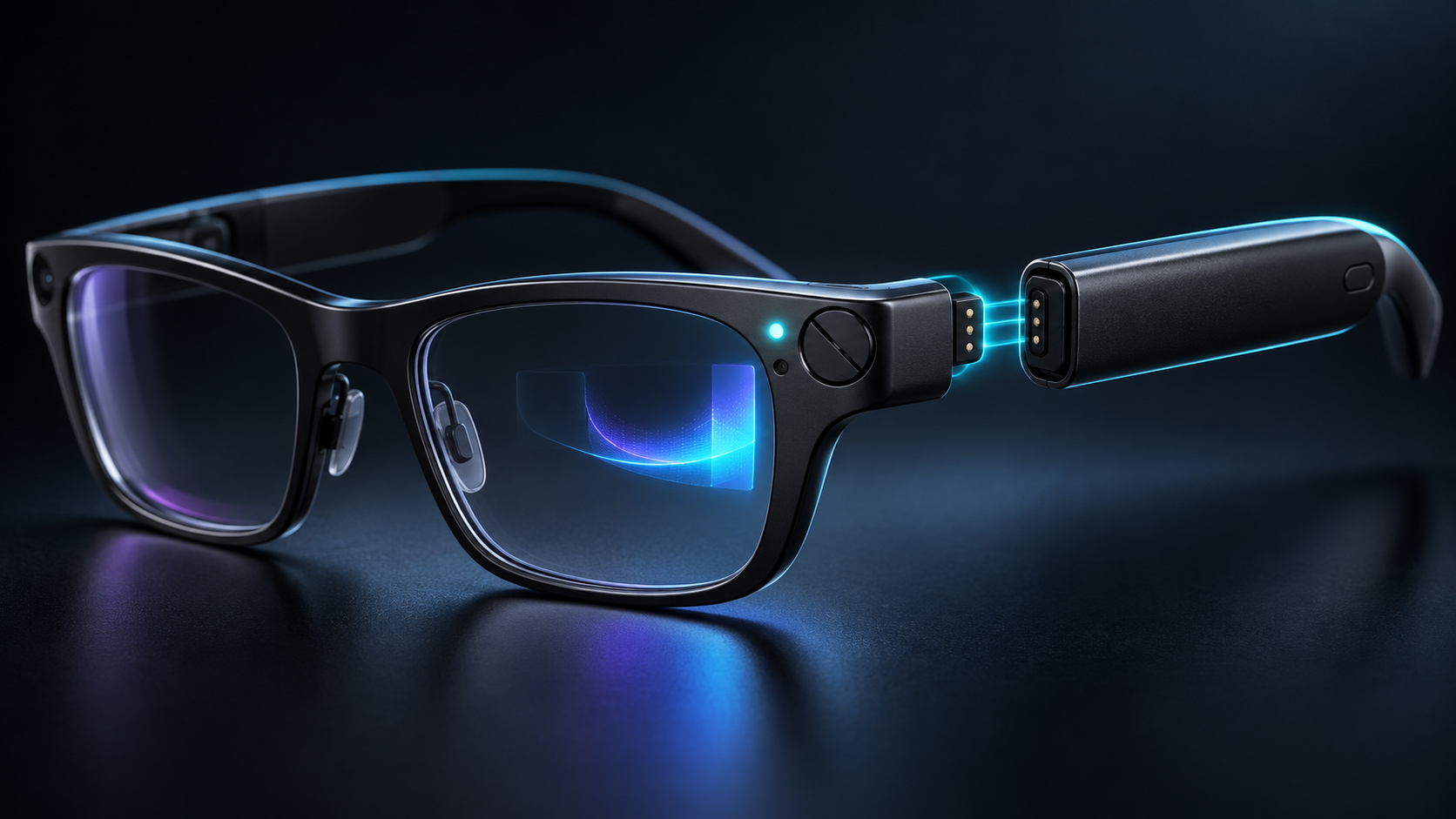
The glasses use one full-color optical display in front of the right eye. Raven and display partner Avegant describe a 30-degree diagonal field of view and compare the virtual image with a 16-inch screen viewed at arm’s length. The display sits toward the wearer’s periphery so information can be checked with a glance rather than blocking the whole scene.
A monocular design reduces hardware compared with dual-display glasses, but it is not equivalent to a wide binocular workspace. A 30-degree view is better suited to compact dashboards, instructions, messages, navigation or a small application window than to filling the user’s vision with several large virtual monitors. People with vision differences should be especially cautious until qualified testing and return details are available.
Inside the frame is a quad-core 64-bit ARM processor, up to 4GB of memory, at least 32GB of storage and a dedicated FPGA for on-device models and audio processing. Connectivity includes dual-band Wi-Fi and Bluetooth 5. The 13-megapixel camera has an 84-degree horizontal field of view, while four beamforming microphones and two speakers handle voice and audio.
Linux is the feature that makes Prism unusual
It is a standalone ARM64 computer
Raven OS is a custom Linux distribution rather than a closed phone accessory platform. Raven says owners can use SSH, run native ARM64 Linux applications and work with a Wayland compositor and OpenGL ES. That could make Prism useful for developers who want a hands-free terminal, field instructions, equipment status or custom sensor workflows without carrying a phone as the primary computer.
The launch material says more than 25 applications will be available and mentions categories such as navigation, media and AI. A headline app count does not establish quality, accessibility or long-term support. Buyers should ask whether their specific tool exists, whether it works without a cloud subscription and whether it remains usable with the small monocular view.
Open access is powerful—and adds responsibility
Low-level access is attractive for experimentation because Raven says developers can reach the camera, audio, sensors, eye controls and framebuffer. It also means a poorly secured or untrusted application could reach unusually sensitive hardware. The planned Raven App Store is supposed to use an entitlement system, but launch buyers should not assume desktop Linux software is automatically safe or well adapted to glasses.
Treat Prism like a computer worn on the face: install software from sources you trust, review permissions, keep Raven OS updated, use strong account security and separate experimental projects from confidential work. Organizations should evaluate device management, logging, incident response and camera policies before field deployment.
Eye control and voice need real-world testing
Prism’s primary interface combines dedicated eye-tracking sensors with gaze models from Pupil Labs and Raven, then adds voice and optional Bluetooth peripherals. In theory, a glance can move focus and a spoken command can act without touching the frame. In practice, eye control must be judged across different eyes, glasses prescriptions, lighting conditions, fatigue levels and accessibility needs.
A keyboard or mouse can make Linux applications more practical at a desk, but carrying peripherals weakens the all-day, hands-free pitch. Voice input also raises social and privacy questions in an office, train or shared home. Buyers should wait for demonstrations of text entry, focus errors, calibration time and recovery when gaze selection goes wrong.
Hot-swappable Raven Wings solve one problem, not every battery question
Raven Wings attach magnetically to expansion points on the frame. The company says one set can be removed and replaced while the system stays on, with applications resuming where the user left them. Two pairs and a charging case are listed as included, which could reduce downtime compared with glasses that must stop for wired charging.
Raven has not published a single independent, workload-specific endurance figure that proves all-day use. Camera recording, outdoor display brightness, Wi-Fi, AI workloads and continuous eye tracking can draw very different amounts of power. Battery-module weight, heat, charging speed, cycle life, replacement pricing and how long the internal buffer lasts during a swap all deserve testing.
The modular connector may eventually support GPS, cellular or AI-acceleration modules, according to the company. Those are future possibilities, not included launch capabilities. Do not value a reservation on accessories that have not been priced, dated or independently demonstrated.
Privacy protections are visible, but consent still matters
Hardware safeguards are a meaningful start
Prism places a physical cover over its 13-megapixel camera. Raven says the cover must be manually moved before the camera can operate, and illuminated Beakon indicators on the frame are designed to show nearby people when the camera is active. Eye-control processing is described as local, with core AI work intended to run on the device when possible.
Physical barriers and visible indicators are stronger signals than a software icon alone, but they do not answer every question. Independent reviewers should confirm whether the cover fully blocks capture, whether the activity lights are hard-wired to camera power, what microphones can record, which functions use cloud services and how logs, backups and app permissions are handled.
Wearers must account for other people
A camera-equipped computer at eye level can be uncomfortable in workplaces, classrooms, clinics, homes and public venues even when it is not recording. Follow local recording laws, obtain consent where required, obey employer and venue policies and remove the device in sensitive spaces. A visible light is not a substitute for a clear conversation with the people around you.
Prescription support, fit and shipping limits
Raven’s current reservation page says built-in prescriptions from -4.5 to +4.5 diopters are supported for the advertised batch, with wider ranges and progressive lenses planned later. That is a narrower promise than universal prescription support. Buyers should confirm whether astigmatism, prism correction, pupillary distance, lens material, remakes and refunds are covered before providing a prescription.
The company and Avegant describe the glasses as under 70 grams. That is light for a self-contained computer but still much heavier than many ordinary prescription frames, and the removable temple modules may affect balance. Fit, nose pressure, temple pressure, display alignment and comfort after several hours remain open questions.
U.S. shipping is the only firm initial region listed. The reservation page says European Union availability is coming, without a confirmed date. International buyers should not infer taxes, warranty coverage, radio approvals or support from the U.S. price.
How Prism differs from XREAL AURA and simpler display glasses
XREAL AURA, covered separately by ReaderSpice, uses Android XR and shifts most compute and battery hardware into a cable-connected puck. Its 70-degree binocular view is far wider, while Prism puts a narrower 30-degree monocular display and the computer into the glasses themselves. AURA favors a larger spatial workspace; Prism favors a self-contained, Linux-accessible form factor.
Simpler display glasses such as XREAL One Pro connect to a compatible phone, laptop or gaming handheld. They can cost less and may be better for movies or a private virtual monitor, but they do not offer Prism’s standalone Linux computer, gaze-first interface, camera, sensor access or modular batteries.
That comparison should begin with the job, not the novelty. Choose a standalone developer platform only if custom software and hands-free context matter. Choose a wider XR system if spatial windows and immersive apps matter. Choose basic display glasses if the goal is mainly a portable screen.
Who should reserve—and who should wait
Consider reserving if
- You are an AR, Linux or wearable-computing developer with a specific ARM64 project and can tolerate early-platform changes.
- A standalone, hands-free computer is materially more useful to your work than a phone-tethered display.
- The refundable deposit, batch timing, prescription range and U.S.-first support are acceptable after you read the current terms.
- You are prepared to test privacy, permissions, security and comfort rather than assuming the launch claims are settled.
Wait if
- You need proven battery endurance, all-day comfort, mature apps or dependable enterprise support.
- A narrow right-eye display, voice interaction or gaze control does not fit your vision or accessibility needs.
- You expect a wide binocular workspace, immersive gaming or a replacement for several desktop monitors.
- You live outside the United States or need progressive lenses, a wider prescription range or confirmed local warranty service.
- You would be buying because of future GPS, cellular or AI modules that are not yet priced or scheduled.
A lower-cost display-glasses alternative
Readers who mainly want a wearable screen rather than a standalone Linux computer can compare the XREAL One Pro on Amazon. The verified U.S. listing is ASIN B0FDPGHVCB. One Pro connects to compatible phones, laptops and gaming handhelds and uses XREAL’s X1 chip for spatial display modes, but it does not reproduce Prism’s ARM64 computer, camera, eye-control sensors or modular power. Confirm the selected fit, seller, compatibility and return terms before ordering.
Affiliate disclosure: ReaderSpice may earn a commission from qualifying Amazon purchases made through the link above, at no additional cost to you.
Bottom line
Raven Prism is one of the more technically interesting smart-glasses launches of 2026 because it is not merely an accessory. A standalone Linux computer, local developer access, a color waveguide, gaze input, physical camera cover and hot-swappable batteries create possibilities that closed phone companions cannot match.
Those same ambitions make it an early-adopter product. The $1,499 price, narrow monocular view, limited initial shipping, batch-based reservation, prescription constraints and missing independent endurance data are serious qualifications. Developers with a defined hands-free use case can justify a refundable reservation after reading the current terms. Most consumers should wait for shipping units, full app details and independent comfort, battery and privacy testing.
Sources
Raven Resonance: Raven Prism hardware, display, camera, sensors and Raven OS
Raven Resonance: reservation price, refundable deposit, shipping regions and included accessories
Raven Resonance: developer access, Linux stack, eye control and application permissions
PR Newswire: October 29 launch announcement, preorder terms and privacy claims
Avegant: LCoS waveguide partnership, weight, field of view and launch specifications
Notebookcheck: independent launch summary, limitations and batch availability context
Amazon: XREAL One Pro (ASIN B0FDPGHVCB)