
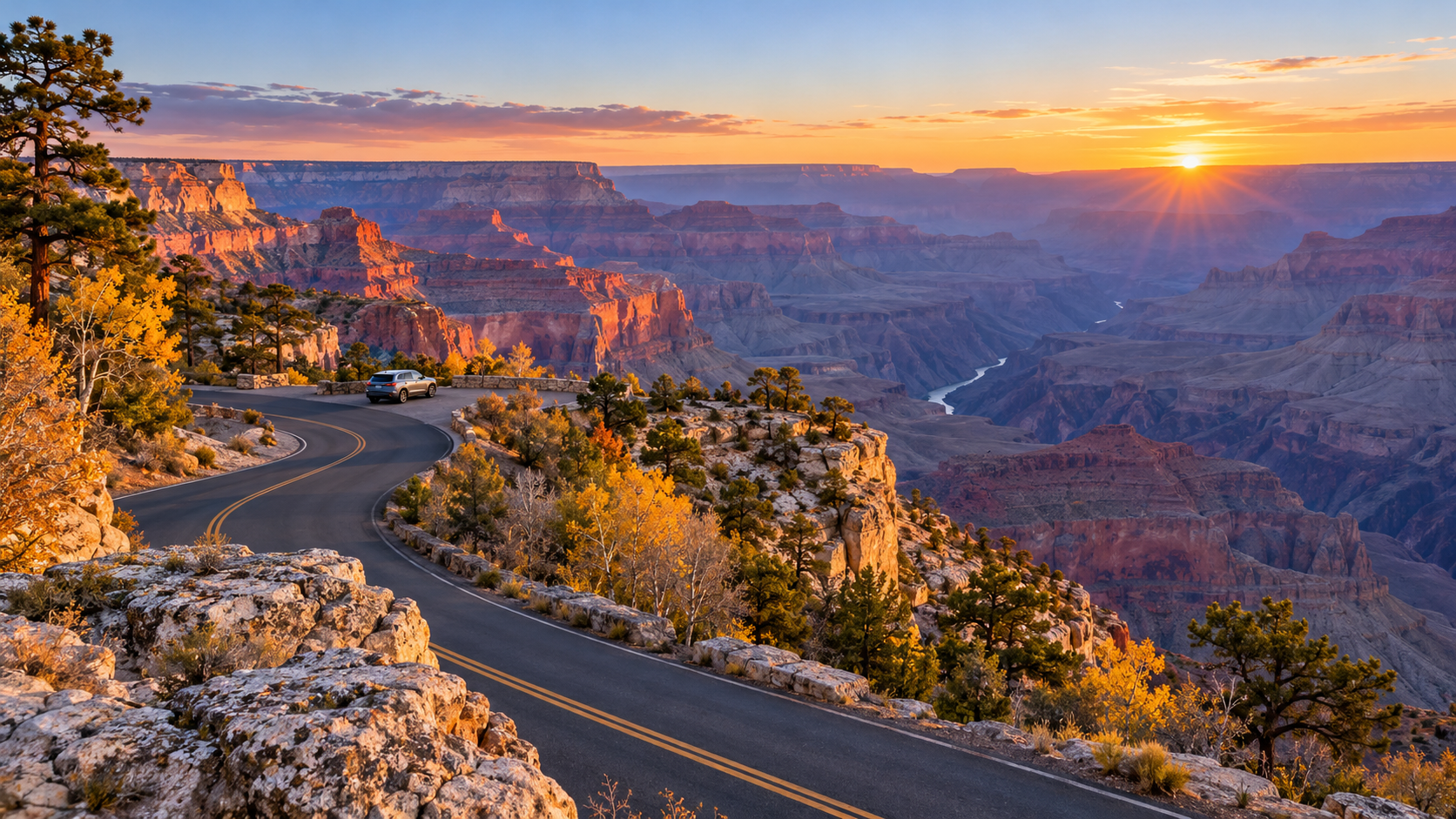
Grand Canyon’s November shoulder season is unusually complicated in 2026. The South Rim remains open for day visits, but Stage 4 water restrictions have closed in-park lodging and shut off water at campgrounds and along inner-canyon trails. On the North Rim, two major scenic roads are scheduled to reopen at sunrise on November 3 after repair work, even as the campground, gas station and most visitor services remain closed.
The practical takeaway is not that the park is closed. It is that access, water and services now vary sharply by rim, road and trail. Travelers who arrive with an old summer itinerary could find a legal road but no fuel, an open trailhead but no drinking water, or an available campsite that operates as dry camping.
This update uses the Arizona Office of Tourism’s October 30 access bulletin and current National Park Service road and North Rim planning pages. Weather, repairs and water-system work can change conditions quickly, so verify the NPS alerts page and road line immediately before leaving a gateway town.
Grand Canyon November 2026 at a glance
- South Rim day access: open, including overlooks, museums, visitor centers and the paved Rim Trail, subject to current alerts.
- South Rim lodging: in-park lodging is closed while the park conserves water; gateway lodging remains available in Tusayan, Williams and Flagstaff.
- North Rim season: limited day-use access is planned through November 30 or the first major snowstorm, whichever comes first.
- Cape Royal and Point Imperial roads: scheduled to reopen at sunrise on November 3 after temporary repair closures.
- North Rim services: no campground, gas station, general store, drinking water or food service inside the park.
- Water status: Stage 4 restrictions remain in effect; visitors must carry adequate drinking water and should not depend on trail taps.
- Trail access: several corridor sections are open, but rim-to-rim travel and multiple damaged routes remain closed or impassable.
- Fire restrictions: the October 30 bulletin lists Stage 2 restrictions on both rims; check for a newer notice before using any flame or stove.
North Rim roads reopen November 3—but services do not
Cape Royal Road and Point Imperial Road were temporarily closed from sunset October 15 through sunrise November 3 for critical road repair and rehabilitation. The NPS road page lists the scenic roads as open after that window, but the reopening remains subject to weather and work conditions. Call the park road line at 928-638-7496 before making the long drive from Jacob Lake.
Reopening those roads restores access to two of the North Rim’s most dramatic viewpoints, but it does not restore the summer visitor network. The North Rim Campground, gas station, general store and backcountry information office are closed for the season. Drinking water and food are unavailable inside the North Rim area. Fuel, lodging and supplies are available outside the park around Jacob Lake, and additional services are farther away in Fredonia and Kanab.
Vehicle length also matters. NPS warns that RVs over 22 feet and vehicle-trailer combinations longer than 22 feet are not permitted on Cape Royal Road and the scenic drive because of narrow lanes, tight curves and blind corners. A road being open does not make it suitable for every rental RV or tow setup.
The North Rim is a limited day-use destination
The North Rim entrance is roughly 30 miles south of Jacob Lake on State Route 67, followed by another 14 miles to the rim. The park expects limited fall day use through November 30 unless a major snowstorm closes the route earlier. This is a remote, self-supported visit: arrive with a full tank, food, drinking water, warm layers, a downloaded map and a winter emergency kit.
Do not use a summer service schedule or an old map as proof that a facility is operating. Mobile coverage is unreliable, road conditions can change rapidly and emergency response is more limited after seasonal services close. If the forecast or road line does not support the trip, treat the South Rim as a separate alternative rather than attempting to improvise a cross-canyon route.
Stage 4 water restrictions change South Rim planning
The South Rim remains open to day visitors, but the water shortage is affecting nearly every overnight plan inside the park. The October 30 access update says in-park lodging is closed to conserve water. Mather and Desert View campgrounds are available for dry camping by reservation, which means travelers must bring or buy all the water they need and cannot assume normal campground taps are operating.
Temporary bulk-water tanks are available at the South Kaibab and Bright Angel trailheads, according to the joint visitor update. Water is off at campgrounds, along inner-canyon trails and across the North Rim. Availability at one trailhead does not guarantee water farther down a trail, and a full container at the start should be treated as essential equipment rather than an optional convenience.
The park expects to begin pumping water again around mid-November if repairs stay on schedule, potentially allowing lodging to return in phases near Thanksgiving. That is an estimate, not a reservation guarantee. Do not book a trip around an anticipated reopening until the concessioner and NPS confirm the specific property and date.
What is open on the South Rim
- South Entrance and Desert View Drive for normal access, unless weather creates a temporary closure.
- Overlooks, museums, visitor centers and the paved Rim Trail for day use.
- Free shuttle service where listed on the current park schedule.
- Mather and Desert View campgrounds as dry camping with reservations.
- Selected grab-and-go and limited dining inside the park, with broader dining and lodging in gateway communities.
- Grand Canyon Railway service and activities in Tusayan, Williams and Flagstaff.
Hours can be shorter than summer schedules, and an open park does not mean every restaurant, restroom or shuttle stop is operating. Build the day around one confirmed route, carry food and water, and keep a backup plan in a gateway community.
Trail closures and water limits require conservative hiking
The October 30 bulletin lists Bright Angel Trail as open from the South Rim trailhead to River Resthouse and South Kaibab Trail as open to Black Bridge. The River Trail is open between River Resthouse and South Kaibab Trail, while Plateau Point Trail and part of the Tonto Trail are also listed open. Other routes—including rim-to-rim travel—are closed or impassable.
These openings are not permission to build a long canyon itinerary from an old guidebook. Water is off along the corridor, daylight is shorter, temperatures can swing dramatically between rim and river, and flash floods can occur without warning. Confirm the exact route and turnaround point with current NPS alerts. Turn around early if the group’s water use, pace or weather exposure is worse than planned.
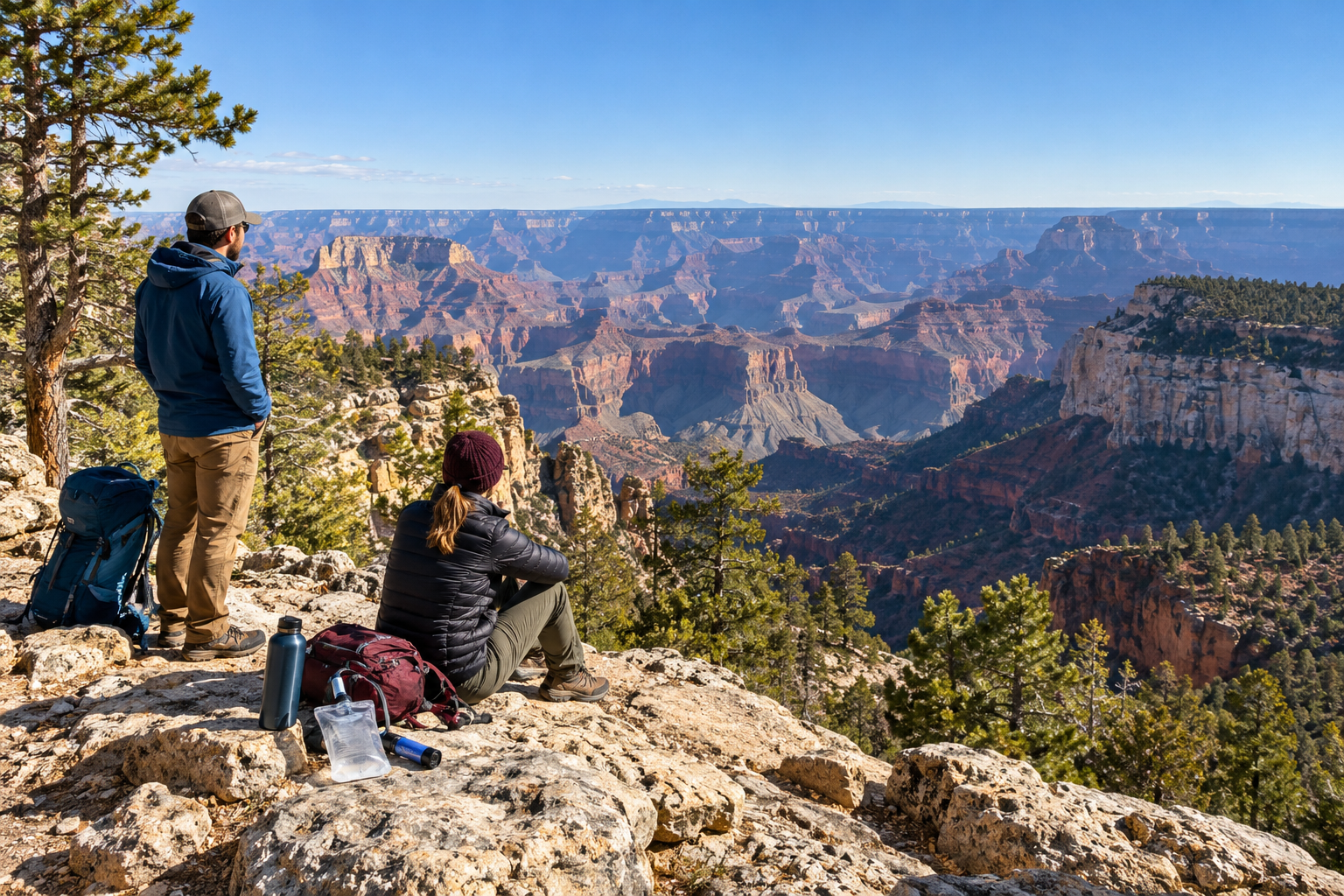
A portable filter can be a useful emergency backup only where a reachable, permitted water source actually exists. It does not create water, remove every chemical or heavy metal, or replace the amount NPS tells visitors to carry. The Sawyer Squeeze Water Filtration System (ASIN B005EHPVQW) is one verified option for treating compatible backcountry water sources, but buyers should confirm the current kit, seller and instructions before ordering.
Affiliate disclosure: ReaderSpice may earn a commission from qualifying Amazon purchases made through the link above, at no additional cost to you.
A practical November visit plan
- Check NPS alerts, the road page and the recorded road line on the morning of travel.
- Choose one rim. Driving between the North and South rims takes roughly 4.5 hours each way in normal conditions.
- Fill fuel and water containers in a gateway town; do not count on North Rim services.
- Carry tire chains where required, warm layers, food, a first-aid kit, a flashlight and a power bank.
- Download the NPS app content and maps for offline use before losing mobile service.
- Use a short, conservative day hike that matches the current open-trail list and available daylight.
- Keep lodging and dining reservations outside the park flexible until water-service restoration is confirmed.
For the North Rim after November 3, the most realistic plan is an early day trip to Point Imperial or Cape Royal only after confirming the scenic roads are open. For the South Rim, use the year-round entrance, park outside lodging in Tusayan, Williams or Flagstaff, and treat the park as a day-use destination while Stage 4 water restrictions remain in force.
The bottom line
Grand Canyon is accessible in November 2026, but it is not operating like a normal fall season. The North Rim gains important scenic-road access on November 3 while losing nearly all visitor services. The South Rim stays open for day use, but water restrictions close in-park lodging, turn campgrounds into dry-camping sites and remove dependable trail water.
The safest plan is simple: verify the exact road and trail on the day of travel, carry more water and emergency supplies than a summer visit would require, and never treat a projected reopening as confirmed. The canyon will still be there if conditions make a particular route unwise.
Sources
Arizona Office of Tourism — Grand Canyon Area Biweekly Visitor Access Update, October 30, 2026
National Park Service — North Rim status and closures
National Park Service — Directions and travel to the North Rim
National Park Service — Weather, webcams, road conditions and closures
National Park Service — Grand Canyon alerts and conditions
Sawyer Products — Squeeze Water Filtration System
Amazon — Sawyer Squeeze Water Filtration System, ASIN B005EHPVQW
Inline image alt text: Two prepared hikers with water containers and a compact filter look across the Grand Canyon from a North Rim overlook.