M6 iMac Starts at $1,499: What Changed and Who Should Upgrade

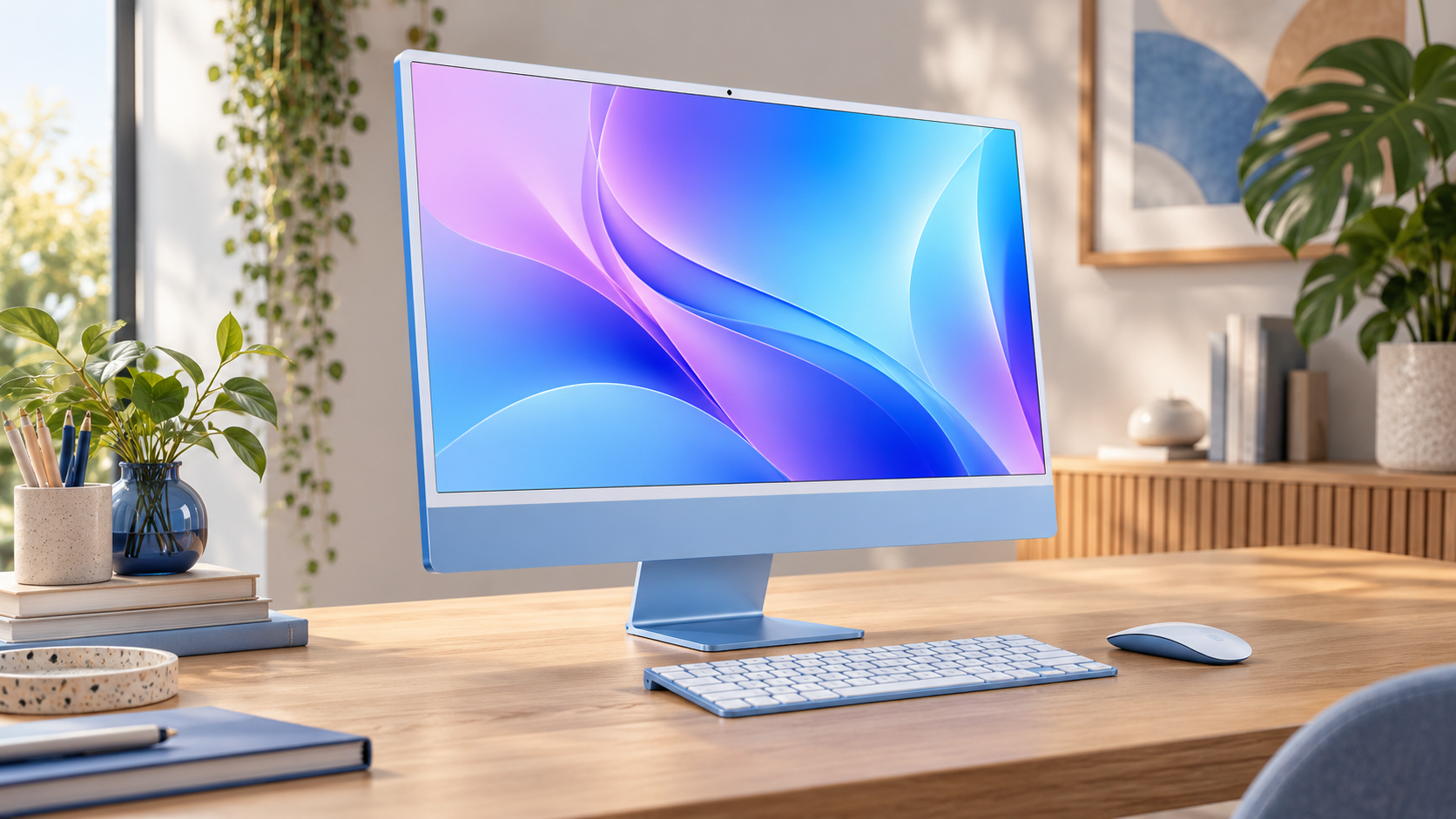
Slim blue all-in-one desktop with colorful abstract display, matching keyboard and mouse on a light wood desk

Apple has updated the 24-inch iMac with its M6 chip, faster storage and newer wireless connectivity. The desktop starts at $1,499 in the United States, opens for preorder on October 28 and reaches customers and stores on November 6.

This is a performance and connectivity refresh rather than a redesign. The colorful enclosure, 24-inch 4.5K display, camera, speakers and basic desk-friendly concept remain familiar. That makes the buying decision unusually straightforward: the M6 iMac is most compelling for people replacing an Intel model or building an all-in-one workspace, while recent M4 owners have fewer reasons to move.

M6 iMac price and release date

Apple is selling two main processor and port configurations. Memory, storage, nano-texture glass and accessories can raise the final price, so the starting figure should not be treated as the likely total for every buyer.

  • The 10-core CPU and 10-core GPU model starts at $1,499.
  • The 12-core CPU and 12-core GPU model starts at $1,699.
  • Preorders begin Wednesday, October 28, 2026.
  • Retail availability begins Friday, November 6, 2026.
  • Seven colors remain available: blue, green, pink, yellow, purple, orange and silver.
  • Both starting configurations include 16GB of unified memory and a 256GB SSD.

The entry model can be configured with up to 24GB of memory and 1TB of storage. The higher configuration can reach 32GB and 2TB. Anyone planning to edit large photo libraries, keep local video projects or run on-device models should price the memory and storage they actually need before comparing the iMac with a Mac mini and separate display.

What the M6 chip changes

The new chip is the center of the update. Apple offers a 10-core CPU and GPU in the entry version and a 12-core CPU and GPU in the higher model. Both include a dual 16-core Neural Engine, Neural Accelerators in the GPU cores, hardware ray tracing and a media engine for H.264, HEVC, ProRes, ProRes RAW and AV1 playback.

Apple claims up to twice the graphics performance of the M4 iMac and up to five times faster on-device AI performance in selected tests. Those figures come from Apple-controlled comparisons and will not translate evenly to every app. Short office tasks may feel only modestly different, while GPU-heavy editing, games and local AI workloads have more opportunity to benefit.

The company also says SSD read and write performance can be up to twice as fast as the previous generation. Faster storage can improve app launches, large project loading and swap-heavy work, but capacity still matters. A fast 256GB drive can fill quickly when a machine is used for video, RAW photos or local model files.

The display and design barely change

The 24-inch 4.5K Retina display remains one of the iMac’s strongest reasons to exist. Apple lists a 4480-by-2520 resolution, 500 nits of brightness, P3 color and True Tone. The actual diagonal measurement is 23.5 inches. Nano-texture glass is available only on the higher processor configuration.

The limitation is that buyers do not get a larger screen, mini-LED, OLED or higher refresh rate. The enclosure, colors and most exterior hardware are also essentially unchanged from the M4 generation. That is good for a clean desk and predictable accessories, but it means the M6 model does not solve requests for a 27-inch Apple all-in-one.

The 12-megapixel Center Stage camera, six-speaker system and three-microphone array continue. Those integrated parts are useful for family calls, remote work and a simple office setup, yet they are not a new reason for an M4 owner to upgrade.

Port count matters more than the color
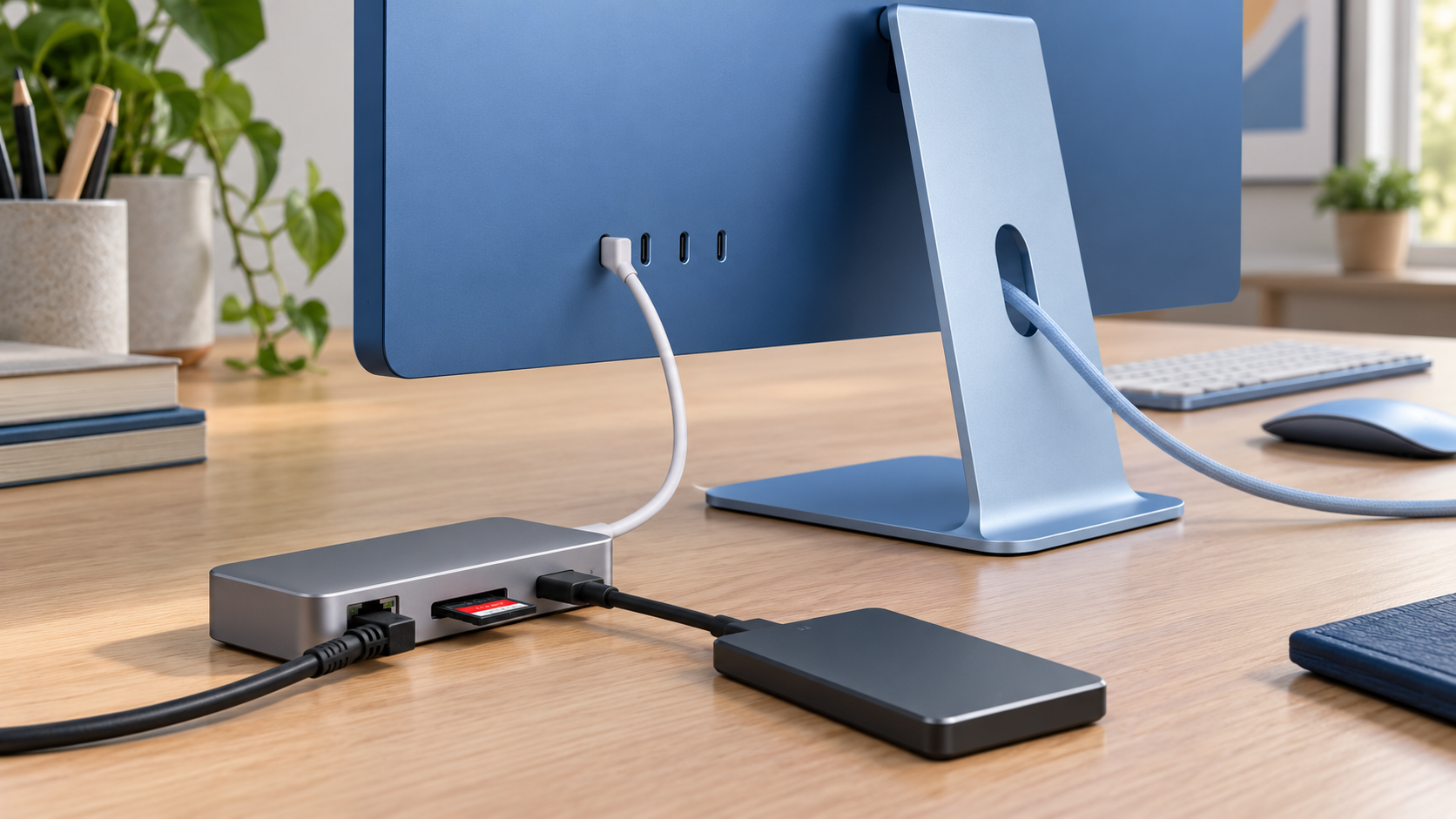
Port count matters more than the color

The entry configuration has two Thunderbolt ports. The higher model has four Thunderbolt 4 ports and is the more flexible choice for external storage, capture hardware, docks and multiple displays. Both keep a 3.5mm headphone jack.

Apple also adds its N1 wireless chip with Wi-Fi 7, Bluetooth 6 and Thread. The practical value depends on compatible routers, accessories and network conditions. A Wi-Fi 7 label cannot make an older router faster, and Thread support matters mainly when the iMac is used around compatible smart-home devices.

Apple lists 2.5 Gigabit Ethernet as available in the lineup. Verify the exact store configuration because wired networking and port count differ by model. Creators moving large files to a NAS should confirm that the computer, switch, cabling and storage system all support the intended speed; one slower component can cap the connection.

The inline image above is an editorial illustration of a multi-port desktop using a hub, Ethernet, SD card and external storage. It is not a manufacturer diagram, and actual accessories are sold separately.

Who should upgrade from an Intel iMac

Intel-based owners receive the clearest benefit. Apple claims performance can be up to 18 times faster than its comparison Intel system, but the more dependable reasons to upgrade are broader: current macOS support, Apple silicon efficiency, faster media engines, modern wireless standards and a quieter integrated workspace.

Before replacing an Intel iMac, audit software and peripherals. Older plug-ins, drivers, printers, audio interfaces and specialized business tools may need updates or replacements. Rosetta can help with many Intel applications, but it does not guarantee compatibility with every driver or workflow.

Move to the M6 iMac if the old machine no longer receives required updates, struggles with current creative work or has become unreliable. If it still handles the workload and remains secure, the new model is an upgrade opportunity rather than an emergency.

Should M1 or M3 iMac owners upgrade?

An M1 owner can expect a meaningful jump in CPU, graphics, connectivity and supported memory. The case becomes stronger when 8GB of memory or limited storage is already constraining the machine. The unchanged display and enclosure mean the experience will still feel familiar, so performance needs should drive the decision.

M3 owners should be more selective. M6 is faster, but ordinary browsing, documents, streaming and video calls may not expose enough difference to justify replacing a relatively recent computer. Upgrade when a specific workload, memory limit or network requirement is costing time.

Why most M4 owners should wait

The M4 iMac already has the same overall design, display size, camera concept and color choices. The M6 improves processor performance, storage speed and wireless connectivity, but it does not transform the everyday all-in-one experience.

An M4 owner should upgrade only when independent testing shows a meaningful gain in a workload that is already slow, or when a required configuration such as faster wired networking, additional external-display capability or more memory changes the job. Otherwise, keeping the M4 avoids spending $1,499 or more for improvements that may be difficult to notice in routine use.

Magic Mouse and accessory costs

Apple includes color-matched input devices, but configuration choices can change the total. A buyer who prefers a trackpad, needs more USB-A ports, imports SD cards or keeps large local media libraries should budget for those accessories before ordering.

The current white Apple Magic Mouse with USB-C charging is available on Amazon under ASIN B0DL72PK1P. It is compatible with Mac and uses a rechargeable battery and Multi-Touch surface. Confirm the seller, model number and return terms because pricing and availability can change, and do not buy it merely because an iMac already includes a mouse.

Disclosure: ReaderSpice may earn a commission from qualifying Amazon purchases made through the link above, at no additional cost to you.

Which configuration makes sense

  • Choose the $1,499 model for family use, schoolwork, office apps, streaming and light photo editing when two Thunderbolt ports are enough.
  • Choose the $1,699 model when four ports, higher CPU and GPU counts, more memory or larger storage ceilings matter.
  • Add memory before storage when long-term multitasking and creative workloads are the priority, but remember that neither can be upgraded internally later.
  • Budget for external storage if 256GB will not hold the local library; a fast external SSD can be more economical than a large internal upgrade.
  • Verify Ethernet and display support in the exact configuration before checkout rather than assuming every M6 iMac has the same connections.
  • Wait for independent tests if sustained performance, fan noise, gaming or local AI speed is central to the purchase.

The bottom line

The M6 iMac keeps the all-in-one formula intact and improves the parts that affect heavy work: processor speed, graphics, AI acceleration, storage and networking. The $1,499 starting price is unchanged from the prior entry point, but the base 256GB storage and two-port layout still require careful configuration.

For Intel owners, small businesses and families that want one clean desktop package, the M6 iMac is a strong modern replacement. M1 and M3 owners should upgrade for a specific bottleneck. Most M4 owners can wait, because the screen, enclosure and everyday experience remain too similar to make this an automatic purchase.

Sources

Apple Newsroom: Apple unveils new iMac with M6 — October 27, 2026

Apple: iMac technical specifications

The Verge: Apple refreshes the iMac with M6 chips — October 27, 2026

Ars Technica: Apple refreshes the iMac and entry-level MacBook Pro with M6 — October 27, 2026

Macworld: iMac gains M6 performance boost but little else changes — October 27, 2026
Amazon: Apple Magic Mouse USB-C (ASIN B0DL72PK1P)

iOS 27.2 Fixes 160+ Security Flaws: How to Update Safely

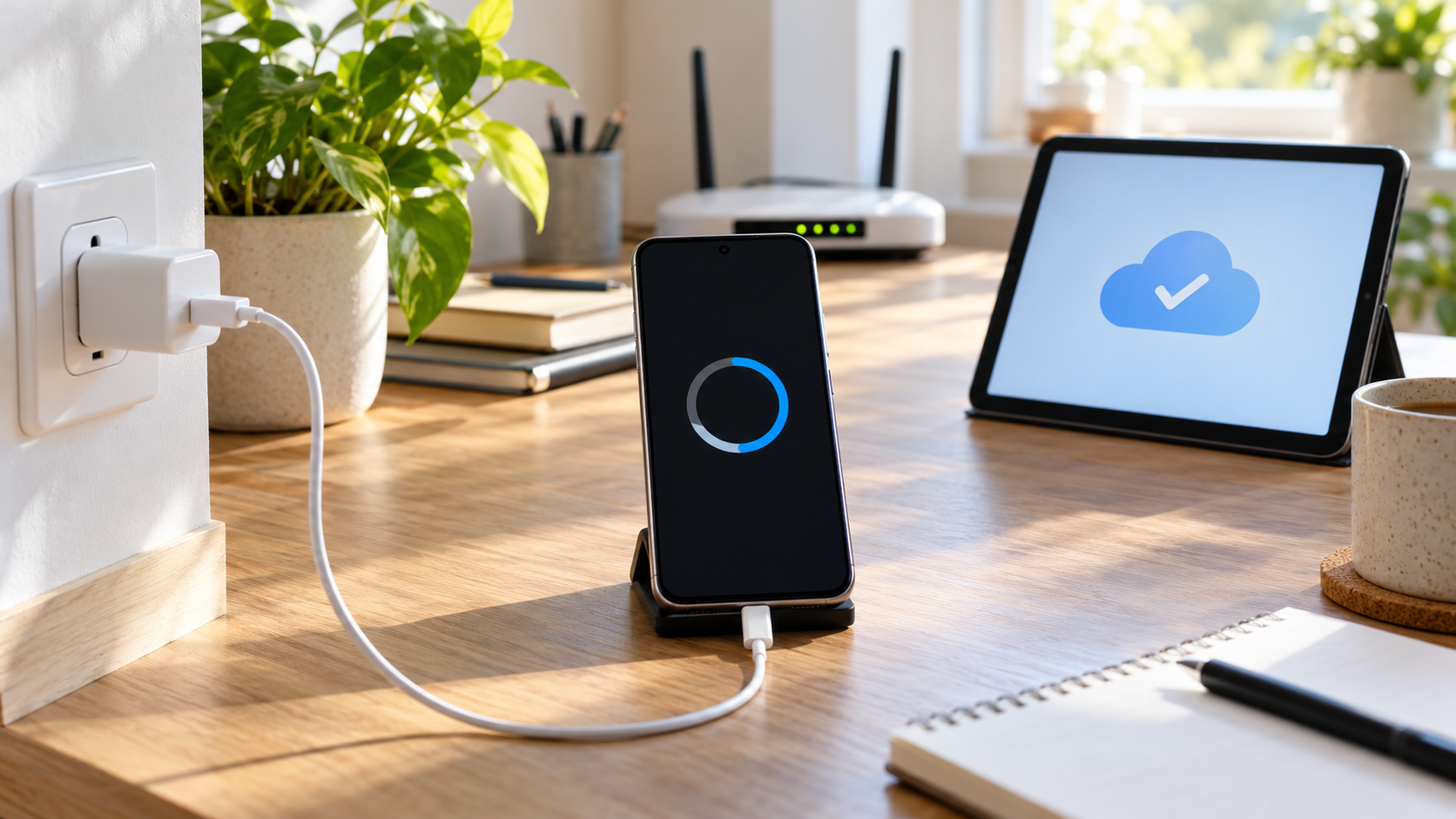
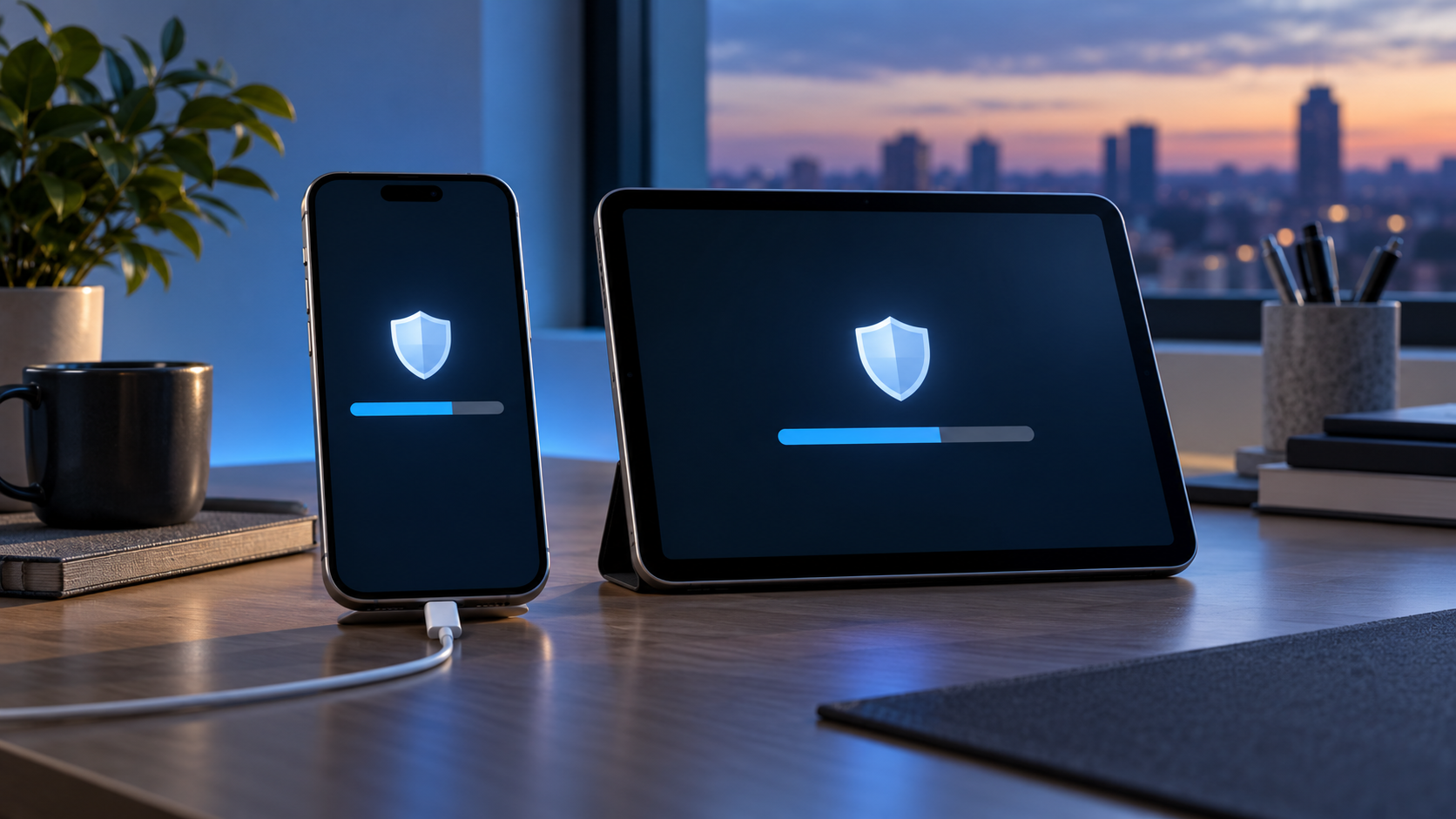
Smartphone and tablet installing a security update beside a charging cable on a blue-lit desk

Apple released iOS 27.2 and iPadOS 27.2 on October 26, 2026, with a large security package for supported iPhones and iPads. Independent reporting counted more than 160 addressed vulnerabilities, while Apple’s advisory documents risks involving images, fonts, web content, privacy permissions, Mail, Siri, HomeKit, the kernel and other system components.

This is not an update to postpone for a cosmetic reason. Many of the listed issues concern files or content that a person could receive during ordinary use, and several could expose sensitive information, corrupt memory or let an application cross a privacy boundary. Apple has not flagged the iOS 27.2 entries as actively exploited, but that does not make the update optional. Installing a supported release closes known paths before attackers have more time to study them.

Why the iOS 27.2 security update matters

Apple’s security notes describe a broad maintenance release rather than one single headline bug. The practical risks fall into several groups:

  • Malicious images, fonts, 3D models and other files could trigger crashes, memory disclosure or memory corruption.
  • Applications could access sensitive user data, bypass certain privacy preferences or learn information about other installed apps.
  • Web content could expose sensitive information, while certificate-validation and cross-site protections received fixes.
  • Mail, Messages, HomeKit, Shortcuts, Siri, Spotlight, Photos Storage and Safety Check all appear in the advisory.
  • Kernel and low-level storage issues could cause unexpected termination, reveal system information or corrupt memory.
  • Nearby or local-network attackers could affect Thread, media or networking components in specific circumstances.

A security bulletin lists possible impact, not proof that every flaw is easy to exploit. Some entries require a malicious app, crafted content, local access, physical proximity or a privileged network position. The breadth still matters because an iPhone or iPad handles all of those inputs during normal life.

What Apple fixed in images, fonts and files

Media parsers are prominent in the advisory. Apple lists multiple ImageIO fixes for out-of-bounds reads and writes, buffer overflows, uninitialized memory and integer handling. A maliciously crafted image could cause an application to terminate, disclose process memory or corrupt memory.

Font handling also received numerous fixes. CoreText and FontParser entries describe crafted fonts that could disclose memory, crash a process, corrupt memory or expose sensitive data. These are meaningful because fonts and images can arrive inside webpages, messages, documents and other content rather than through a traditional app installation.

Other file-processing components are included as well. Apple’s notes identify problems involving archives, disk images, 3D models and webarchive files. The important lesson is simple: avoiding unfamiliar apps is useful, but it cannot replace an operating-system patch when the vulnerable code sits inside system frameworks used by many apps.

Privacy and account protections also changed

Several fixes focus on privacy boundaries instead of conventional code execution. Apple says applications could have accessed sensitive information through components including HomeKit, MediaAnalysis, Shortcuts, Siri and Safety Check. Photos Storage received a fix for bypassing certain privacy preferences, while Spotlight entries include privacy bypass and data-access issues.

Mail received a particularly understandable correction: Apple’s advisory says a user’s original email address could be exposed while using Hide My Email. Another entry addresses a remote denial-of-service risk, and a third concerns a maliciously crafted message. Updating is the only supported way to receive these system-level fixes.

The release also repairs an issue that could let an app identify other installed applications and another that could fingerprint a user. Individually, those problems may sound less dramatic than memory corruption. Together, they show why point releases matter even when a device appears to work normally.

Which iPhones and iPads can install it?

Apple lists iOS 27.2 for iPhone 11 and later. iPadOS 27.2 is available for iPad Pro 12.9-inch (4th generation and later), iPad Pro 11-inch (2nd generation and later), iPad Air (4th generation and later), iPad (9th generation and later), and iPad mini (6th generation and later).

Apple also released iOS 26.7.2 and iPadOS 26.7.2 on October 26 for devices or installations staying on that branch. The listed iPad support reaches some earlier models, including iPad Pro 12.9-inch (3rd generation), iPad Pro 11-inch (1st generation), iPad Air (3rd generation), iPad (8th generation) and iPad mini (5th generation).

For still-older hardware, iOS 18.7.11 and iPadOS 18.7.11 cover iPhone XS, iPhone XS Max, iPhone XR and iPad (7th generation). Do not choose a version by copying someone else’s screen. Open Software Update on the device and install the newest supported release Apple offers for that exact model and current software branch.

How to update iPhone or iPad safely

How to update iPhone or iPad safely

Before starting, allow enough time for a backup, download, installation and restart. Avoid beginning just before travel, a work call or another moment when the device must remain available.

  • Connect the iPhone or iPad to reliable Wi-Fi.
  • Connect it to power or confirm that the battery has a comfortable charge.
  • Open Settings, tap your name, choose iCloud and open iCloud Backup.
  • Select Back Up Now and wait for the latest-backup time to update.
  • Return to Settings, choose General and select Software Update.
  • Review the exact version offered for the device, then choose Download and Install.
  • Keep the device connected to power and do not force it to restart during installation.
  • After the device restarts, return to Software Update and confirm that it reports the current version.

A backup is protection against an interrupted installation, storage failure or an unrelated device problem; it is not a substitute for the update. People who cannot update wirelessly can use Finder on a trusted Mac or Apple Devices/iTunes on a trusted Windows PC, following Apple’s supported instructions.

What to do if the update will not install

A failed download does not mean a device is unsupported. Work through the likely causes in order:

  • Check available storage under Settings, General, iPhone Storage or iPad Storage.
  • Restart the device and check Software Update again.
  • Use a stable private Wi-Fi connection rather than an unreliable public hotspot.
  • Disable a VPN temporarily only if its provider documents an update conflict, then re-enable it afterward.
  • Confirm that Apple’s system-status page does not show a current update-service outage.
  • If the update file appears under device storage, remove that downloaded update and request it again.
  • Use Finder or Apple Devices on a trusted computer if wireless updating continues to fail.

Do not download unsigned firmware or configuration profiles from unfamiliar sites. A security update should not require disabling core protections or trusting an unknown certificate. Managed work or school devices may follow an administrator’s deployment schedule; contact the administrator rather than attempting to bypass management.

Security fixes are separate from the new features

iOS 27.2 is not only a security package. Apple’s release notes also describe Siri AI improvements that can retain useful context from previous interactions and use a wider range of personal context on compatible devices. Messages gains suggestions that can offer quick actions in apps such as Calendar and Reminders based on conversation context.

Apple also lists changes across apps and experiences, while Shortcuts receives new automations and updated actions. Those features vary by hardware, language, region and account configuration. An eligible phone can receive the security fixes even when a particular Siri AI feature is unavailable.

That distinction matters during troubleshooting. If Software Update shows iOS 27.2 but a promoted AI feature does not appear, the security installation may still be complete. Confirm the installed version first, then check Apple’s feature-availability requirements separately.

Are any of these vulnerabilities already being exploited?

Apple normally adds explicit wording when it is aware that a vulnerability may have been exploited. The iOS 27.2 security page does not include that warning, and independent reporting says Apple had not identified active exploitation for the listed fixes at publication time.

That is reassuring but should be interpreted narrowly. It does not prove that exploitation is impossible, and public disclosure gives researchers and attackers more information to study. The safer response is to install promptly rather than wait for evidence of attacks.

Users at elevated risk—including journalists, activists, public officials, executives and people who believe they may be individually targeted—should also review Lockdown Mode and Apple’s security-notification guidance. Most people do not need Lockdown Mode, but everyone benefits from current software, a strong device passcode and two-factor authentication on the Apple Account.

Power and charging considerations

The update is safest when the device has stable power. Apple’s compact 20W USB-C adapter is a straightforward option for compatible iPhones and iPads, but it does not make the update faster and it is not required if another reputable USB-C Power Delivery charger already works correctly.

Amazon’s Apple 20W USB-C Compact Power Adapter listing uses ASIN B0DJFW7PNM. Readers who need a spare can compare the Apple 20W USB-C power adapter on Amazon, checking the seller, plug style, compatibility and return policy before ordering. The adapter does not include a charging cable, so verify what is already in the box or available at home.

Disclosure: ReaderSpice may earn a commission from qualifying Amazon purchases made through the link above, at no additional cost to you.

How to verify protection after the restart

Open Settings, choose General and select About. Confirm that the iOS Version or iPadOS Version field shows 27.2, or the newest security release offered for the device’s supported branch. Then return to Software Update and check once more.

Update apps from the App Store as a separate step. Operating-system patches repair Apple components, while app updates repair third-party code and compatibility issues. Review important permissions under Privacy & Security if the update prompts an app to request access again.

A security update should not erase normal data. If something appears missing, allow Photos, Messages and iCloud time to finish syncing before assuming data is lost. Check the recent backup and avoid repeated restores until the issue is understood.

Bottom line

iOS 27.2 and iPadOS 27.2 are substantial security releases. The more-than-160-fix count is notable, but the more useful detail is the range: images, fonts, files, web content, Mail, Siri, HomeKit, privacy permissions, the kernel and networking components all received corrections.

Back up the device, connect to reliable Wi-Fi and power, install the newest release Apple offers, and verify the version after the restart. There is no confirmed active-exploitation warning in Apple’s iOS 27.2 advisory, but known vulnerabilities should still be closed promptly.

Sources

Apple Support: About the security content of iOS 27.2 and iPadOS 27.2

Apple Support: Apple security releases

Apple Support: About iOS 27 updates

Apple iPhone User Guide: Update iOS on iPhone

Apple Support: Back up iPhone or iPad with iCloud

The Times of India: iOS 27.2 fixes more than 160 security vulnerabilities

Amazon: Apple 20W USB-C Compact Power Adapter

Surface Laptop Ultra Firmware Fixes Flicker and Restarts: How to Install It Safely

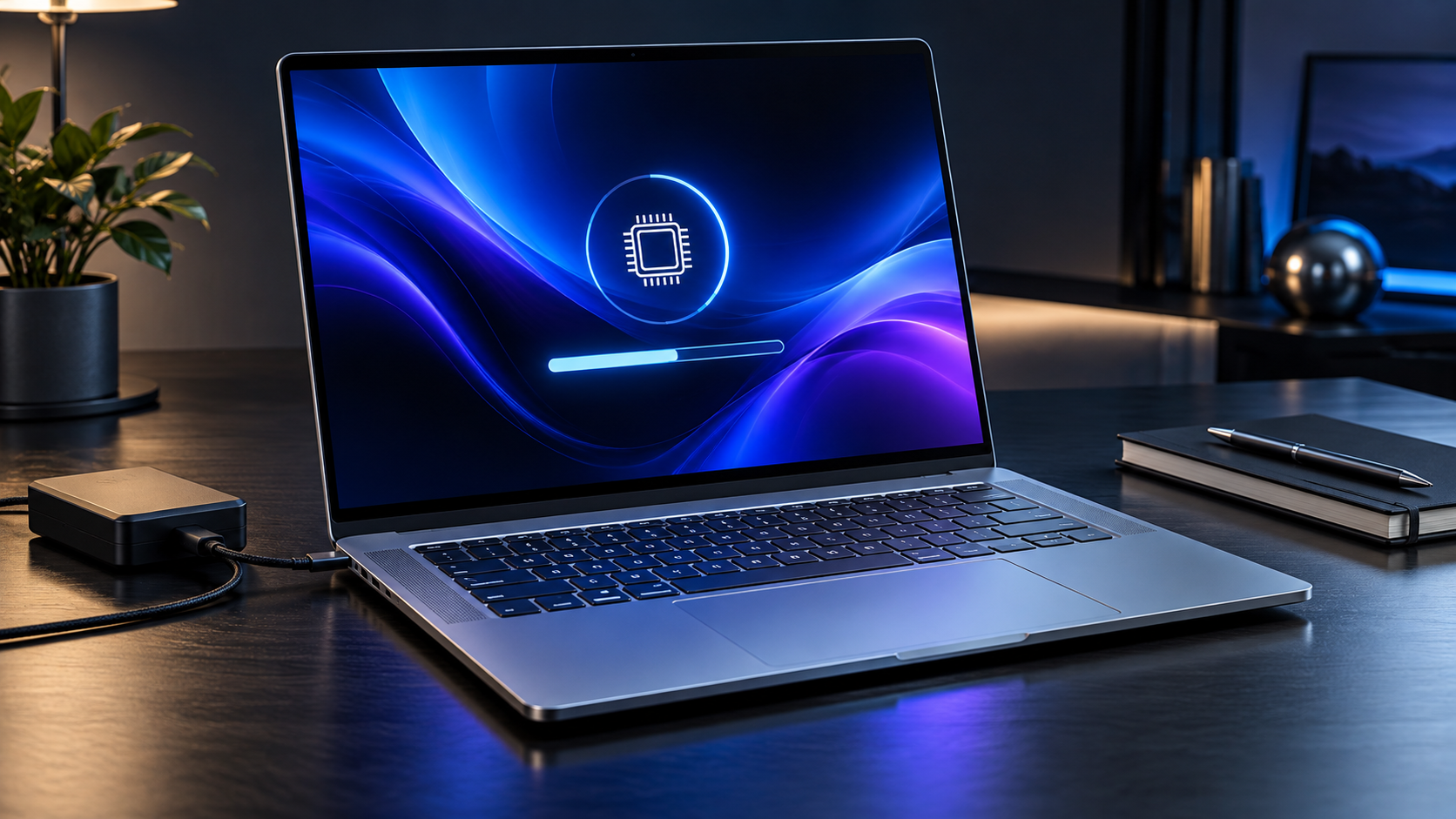
Premium silver workstation laptop installing a firmware update on a dark professional desk

Microsoft has released the first substantial firmware update for Surface Laptop Ultra after early owners and reviewers reported display and reboot problems. The October 22, 2026 release targets screen flickering, unexpected restarts and unusually long reboot times, while also adding unspecified bug fixes and general performance improvements.

The update is important because Surface firmware cannot be uninstalled or rolled back to an earlier version. Owners should install it through Microsoft’s supported process, keep the laptop connected to power and complete the required restart rather than treating it like an ordinary app update. The fixes are welcome, but Microsoft has not said that every launch issue—including separately reported speaker interference—is resolved.

What the October 22 firmware fixes

Microsoft’s official Surface Laptop Ultra update history lists three specific corrections:

  • Extended reboot times that could make a normal restart take much longer than expected.
  • Screen flickering that could interrupt work or make the display appear unstable.
  • Unexpected restarts that could close applications and risk unsaved work.

Microsoft also lists additional bug fixes and general performance improvements without identifying every change. That wording should not be interpreted as confirmation that any unlisted problem has been fixed. The practical claim is narrower: the company has acknowledged and addressed the three problems above.

The release appears in Windows Update as Microsoft Corporation System Hardware Update (200.0.7.0). Microsoft says distribution is staged, so two otherwise identical laptops may not receive it at the same time. Delayed availability does not necessarily mean a device is unsupported or that Windows Update is broken.

Which firmware and drivers are included

The package contains several components, and the exact set installed depends on the laptop’s configuration. Microsoft’s October 22 release notes identify:

  • Surface TCON Firmware version 161.32.1.42.
  • Surface UEFI Firmware version 7.3.0.0.
  • Surface Integration system-device driver version 142.0.8.0.
  • Surface Panel Driver V2 version 3.7.434.0.

The TCON and panel-driver changes are especially relevant to display behavior, while UEFI and Surface Integration updates can affect startup, power management and communication between Windows and the hardware. Owners should not download individual driver files from third-party driver sites. Windows Update and Microsoft’s official Surface packages are the authoritative sources.

A version number missing from Device Manager does not automatically mean the update failed. Microsoft notes that components are installed according to the device configuration, and some firmware versions may be shown in the Surface app, Windows Update history or a different Device Manager category.

What the update does not confirm

The Verge reported slow reboots, visual trails while moving windows and intermittent speaker interference on its review unit. The October 22 notes explicitly mention long reboots and screen flicker, but they do not mention speakers, audio crackling or interference.

That distinction matters. A restart may temporarily clear an audio problem without proving that the cause has been corrected. Owners who still hear loud pops, crackling or other abnormal speaker noise after installing the update should document when it happens, which application was active, whether the laptop was charging and whether headphones or external displays were connected.

Microsoft has also not published new battery-life, thermal or application-compatibility claims with this release. The firmware is a reliability update, not a performance upgrade for the RTX Spark processor. Readers evaluating the machine can revisit ReaderSpice’s Surface Laptop Ultra launch guide for the hardware, ports, battery claims and Windows-on-Arm considerations.

How to install the Surface Laptop Ultra update safely

How to install the Surface Laptop Ultra update safely

Before starting, save open work and allow enough time for at least one restart. Firmware installation should not be interrupted.

  • Connect Surface Laptop Ultra to its charger.
  • Confirm that the battery is at least 40 percent charged.
  • Use a stable internet connection and disconnect unnecessary storage devices.
  • Open Settings, select Windows Update and choose Check for updates.
  • Install Microsoft Corporation System Hardware Update (200.0.7.0) and any applicable Surface driver updates.
  • Open Advanced options and check Optional updates for additional Surface items.
  • When installation finishes, select Start, Power and Restart.
  • Return to Windows Update after the restart and check again until no applicable Surface updates remain.

Microsoft recommends keeping Surface accessories connected while updating so compatible keyboards, docks or pens can receive their own updates. For this laptop, the most important rule is to maintain power and avoid forcing a shutdown while firmware is being written.

Windows Update is the recommended method for most people. IT administrators and experienced users can obtain model-specific driver and firmware packages from Microsoft’s Download Center, but the manual package must match the exact Surface model. Using a package intended for another Surface device is not a sensible troubleshooting shortcut.

How to verify the update installed

Start with Windows Update history. Open Settings, Windows Update, Update history and look for Microsoft Corporation System Hardware Update (200.0.7.0). A successful entry is the clearest general confirmation.

The Surface app provides another check. Open the app, expand Help & support and review the update status. Microsoft uses the app to identify the device and route owners to the correct support information.

Advanced users can inspect Device Manager, although the names do not always mirror the marketing name of the laptop. Depending on the installed components, the relevant versions may include Surface TCON Firmware 161.32.1.42, Surface UEFI 7.3.0.0, Surface Integration 142.0.8.0 and Surface Panel Driver V2 3.7.434.0.

After confirming installation, reproduce only the ordinary actions that previously caused trouble. Restart the laptop normally, move windows across the display and use the system for a regular work session. Do not repeatedly force restarts or stress the system merely to test it. The useful question is whether the original symptom returns under normal conditions.

What to do if flickering or restarts continue

Because Surface firmware cannot be rolled back, troubleshooting should focus on evidence and supported recovery steps rather than attempting to downgrade it.

  • Install all remaining Windows and optional Surface updates, then restart once more.
  • Record the time, application and connected accessories when the problem appears.
  • Disconnect nonessential docks, monitors and USB devices to test whether a peripheral is involved.
  • Check the Surface app’s Help & support section for device-specific diagnostics.
  • Contact Microsoft Surface support if flickering, unexpected restarts or unusually long boots continue.

If the computer restarts unexpectedly, save critical work more frequently until the cause is resolved. Organizations should also check Windows reliability history and event logs before reimaging a device, since those records can distinguish a driver failure from an application crash or power interruption.

A Windows restore point or operating-system recovery image does not provide a reliable way to reverse firmware. Microsoft’s release notes are explicit that the firmware update cannot be uninstalled or reverted. Do not follow unofficial instructions that promise a simple downgrade.

What owners and prospective buyers should do

Current owners should install the update, particularly if they have seen one of the three named problems. The combination of display, UEFI and integration changes suggests this is a foundational reliability package rather than a cosmetic revision. Back up important files as part of normal practice, keep the laptop powered and complete the restart.

Prospective buyers should view the update as evidence that Microsoft is responding to launch problems, not proof that every issue is finished. Surface Laptop Ultra is a premium workstation starting at $2,599.99, and early firmware maintenance is normal for new hardware. At that price, however, buyers are justified in waiting for follow-up testing of display stability, audio behavior, battery life and application compatibility.

Amazon’s Surface Laptop Ultra listing for the 15-inch NVIDIA N1X model uses ASIN B0HFQVF89X. Readers comparing availability can check the Surface Laptop Ultra on Amazon, but should verify the processor, memory, storage, seller and return policy because the product page may group multiple configurations.

Disclosure: ReaderSpice may earn a commission from qualifying Amazon purchases made through the link above, at no additional cost to you.

Bottom line

Microsoft’s October 22 firmware is a necessary early fix for Surface Laptop Ultra. It directly addresses extended reboot times, screen flickering and unexpected restarts, and it updates the display, UEFI and Surface integration stack.

Install it through Windows Update, keep the laptop connected to power, restart when prompted and verify update 200.0.7.0 in history. If a named problem remains—or if speaker interference continues—record the circumstances and use Microsoft support rather than looking for an unsupported firmware downgrade. The update improves the ownership picture, but independent follow-up testing is still needed before the laptop’s launch issues can be considered fully settled.

Sources

Microsoft Support: Surface Laptop Ultra update history

Microsoft Support: Download Surface drivers and firmware

The Verge: Surface Laptop Ultra update fixes reboot and display bugs

ReaderSpice: Surface Laptop Ultra launch guide

Amazon: Surface Laptop Ultra 15-inch NVIDIA N1X listing

New iPad mini Gets OLED and A20 Pro: Price, Release Date and Buying Advice

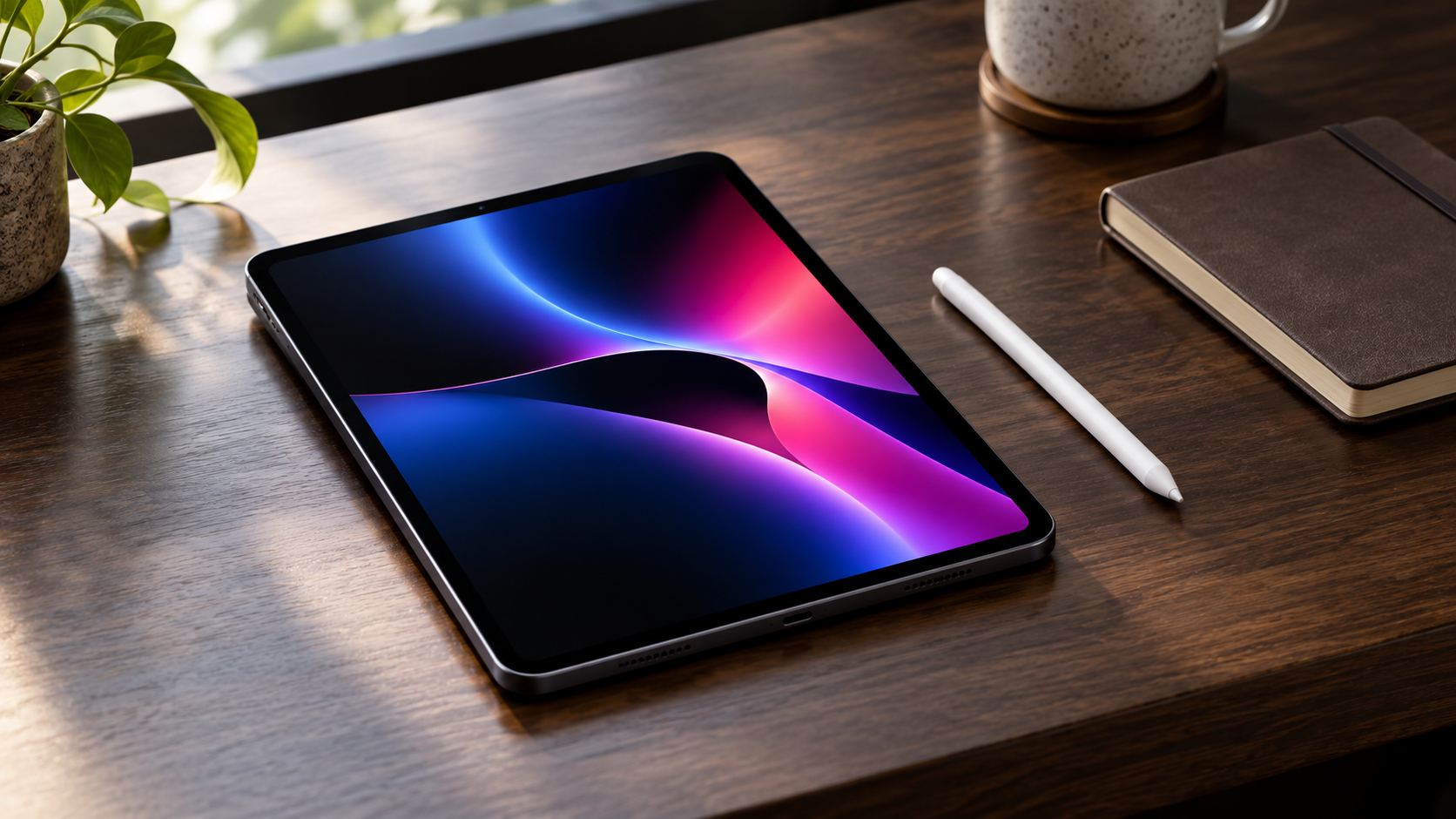
Compact midnight-colored tablet with vivid OLED display and white stylus on a wooden desk

Apple has given the iPad mini its biggest redesign in years. Announced October 26, 2026, the new compact tablet moves to an 8.5-inch OLED display, gains the A20 Pro chip, adds IP67 water and dust resistance and becomes thinner even as the screen grows.

The redesign also changes the buying equation. The Wi-Fi model starts at $699 in the United States, while Wi-Fi + Cellular starts at $849. Preorders open October 28 and availability begins November 6. That is a significant premium over the previous A17 Pro model, so the important question is not simply whether the new mini is better. It is whether its display, durability and portability upgrades are worth the extra money for the way you use a tablet.

New iPad mini price and release date

Apple will sell the redesigned iPad mini in midnight and starlight finishes, with 128GB, 256GB and 512GB storage options. The key launch details are:

  • Wi-Fi models start at $699.
  • Wi-Fi + Cellular models start at $849.
  • Preorders begin Wednesday, October 28, 2026.
  • Retail availability begins Friday, November 6, 2026.
  • A nano-texture display option is offered on 256GB and 512GB configurations.

Those prices put the mini closer to larger, more capable iPads than its size might suggest. Cellular adds $150 before service costs, while storage and the nano-texture option can push the total higher. Buyers should price the exact configuration they want rather than treating $699 as the likely final cost.

The OLED display is the biggest upgrade

The OLED display is the biggest upgrade

The new 8.5-inch Super Retina XDR display is slightly larger than the previous generation’s 8.3-inch panel, but the body remains compact because Apple reduced the bezels by 24 percent. OLED gives each pixel its own light source, producing deeper blacks and much higher contrast than the older LCD screen. Apple specifies a 2,000,000:1 contrast ratio, up to 1,200 nits of peak HDR brightness and a one-nit minimum brightness for dim rooms.

That combination should matter most for reading at night, viewing HDR video, editing photos and using dark interfaces. The optional nano-texture finish on higher-capacity models is aimed at users who work under glare, although it adds cost and requires more careful cleaning.

There is an important limitation: this is still a 60Hz display. Apple has not added ProMotion, so scrolling and Pencil strokes will not look as fluid as they do on a 120Hz iPad Pro. OLED improves contrast and response, but it does not turn the mini into a miniature iPad Pro. Anyone who prioritizes animation smoothness should try the display in person before ordering.

A20 Pro performance has an unusual storage catch

Every new iPad mini uses Apple’s A20 Pro chip and a 16-core Neural Engine. The chip is designed for demanding games, creative apps and on-device Apple Intelligence features, while keeping the small tablet responsive for years of software updates.

The CPU configuration changes with storage, however. The 128GB and 256GB models have a five-core CPU with two performance-focused cores and three efficiency cores. The 512GB model gets a six-core CPU by adding a fourth efficiency core. This is not a reason for most people to buy more storage by itself: an efficiency core typically helps sustained multitasking and background work more than short bursts of speed. It is still a real specification difference, and Apple shoppers should know it exists.

For reading, streaming, note-taking and ordinary photo work, the base model should have ample performance. People exporting large creative projects or keeping the tablet for many years may value the higher storage tier for capacity first and the extra CPU core second.

A thinner, tougher design for travel

At 5.4mm thick, the new iPad mini is substantially slimmer than the previous model and also lighter. The narrower bezels preserve the one-hand-friendly footprint despite the larger screen. That makes it unusually well suited to airplanes, trains, small bags, field notes and handheld reading.

IP67 water and dust resistance is the more practical redesign feature. It does not make the tablet indestructible or appropriate for underwater use, but it gives travelers and field workers useful protection against spills, rain and dust. As with any rated device, damage from liquids may not be covered in every circumstance, so a protective case remains sensible.

Apple still promises up to 10 hours of web browsing or video playback over Wi-Fi. Real battery life will vary with brightness, cellular use, games and creative workloads. The thin enclosure therefore appears to preserve the familiar all-day target rather than extend it.

Cameras, audio and connectivity improve

Apple moved the 12-megapixel front camera to the long edge, a better position for video calls when the tablet is in landscape orientation. The rear camera is also 12 megapixels and can record 4K video. The change fixes one of the previous mini’s awkward compromises for people who use it with a stand or keyboard.

The new Acoustic Display audio system uses specially designed woofers paired through the display, with tweeters placed between the glass and aluminum enclosure. Apple’s goal is stronger bass, more volume and clearer high frequencies without giving up the thin design. Audio quality will need independent testing, but the approach is more ambitious than a routine speaker update.

Apple’s N1 networking chip adds Wi-Fi 7, Bluetooth 6 and Thread. Cellular models use the C2 modem and eSIM. Those upgrades improve the mini’s usefulness as a travel device, a connected field terminal and a potential controller for Thread-based smart-home accessories. Benefits will depend on compatible routers, accessories, carriers and local networks.

What the new iPad mini is best at

The new mini remains a specialist tablet rather than a cheaper iPad Air. Its strongest uses are the ones where a full-size screen becomes a burden:

  • Reading books, comics, news and research while holding the device for long periods.
  • Taking handwritten notes or marking documents in tight spaces.
  • Viewing maps, checklists, camera controls and reference material while traveling.
  • Running games and creative apps that benefit from a powerful chip but not a large canvas.
  • Using a portable video-call or media screen that fits in a small bag.

It is less convincing as a laptop replacement. An 8.5-inch display limits side-by-side work, timelines, spreadsheets and long writing sessions. The 60Hz refresh rate also weakens the value proposition for artists who are sensitive to stylus latency. Portability is the reason to choose this size; buyers who mostly work at a desk should compare a larger iPad Air before committing.

Should existing iPad mini owners upgrade?

Owners of the 2024 iPad mini with A17 Pro already have a fast, lightweight tablet with 128GB base storage and support for modern iPadOS features. They should upgrade only if OLED, water resistance, the landscape camera or the thinner design solves a specific problem. The new model is a substantial redesign, but it does not make the A17 Pro version obsolete.

Owners of older mini models have a clearer case. They gain a brighter, higher-contrast screen, much faster silicon, more base storage, current wireless standards and a modern accessory ecosystem. Battery health may be as important as processor speed for devices several years old.

There is also a value argument for waiting. The outgoing A17 Pro model may be discounted as retailers clear inventory. Readers who mainly want a compact device for books, streaming and light note-taking can compare the 128GB iPad mini with A17 Pro on Amazon. The verified listing is ASIN B0DK3YM6KP; prices and availability can change, and that linked configuration includes cellular connectivity, so confirm the seller, color and network model before checkout.

Disclosure: ReaderSpice may earn a commission from qualifying Amazon purchases made through the link above, at no additional cost to you.

Buying advice: who should order and who should wait

Order the new iPad mini if compact size is non-negotiable and you will benefit from OLED contrast, IP67 protection or the improved landscape camera. Travelers, pilots, photographers, field technicians, medical professionals and committed digital readers are the audience most likely to appreciate the redesign every day.

Wait for reviews if display smoothness is important, because the 60Hz limit is unusual at this price. It is also worth waiting for independent battery, thermal and Acoustic Display testing. Creative professionals should compare the mini with an iPad Air once storage and accessories are added.

Choose the 128GB Wi-Fi model if your library is mostly streamed or cloud-based. Move to 256GB for a larger local media library, offline maps, games or photo work. Buy 512GB only if you know you need the space; the extra efficiency core is a bonus, not a strong reason to spend more on its own.

The bottom line

Apple has made the iPad mini more distinctive at the same time it has made it more expensive. The 8.5-inch OLED screen, A20 Pro, IP67 rating, thinner design, landscape camera and modern connectivity address many of the old model’s weaknesses. The lack of 120Hz remains the biggest compromise.

For buyers who want the smallest capable iPad, this is the most complete version yet. For everyone else, the $699 starting price makes comparison shopping essential. The best purchase will depend less on benchmark numbers than on whether an 8.5-inch tablet genuinely fits places and routines where a larger iPad does not.

Sources

Apple: Apple gives iPad mini its biggest update ever

The Verge: Apple updates the iPad mini with a larger OLED display

Amazon: Apple iPad mini with A17 Pro, 128GB cellular listing

Meeting Owl 5 Is a $1,499 4K Conference Camera: The Upgrade and the Gaps

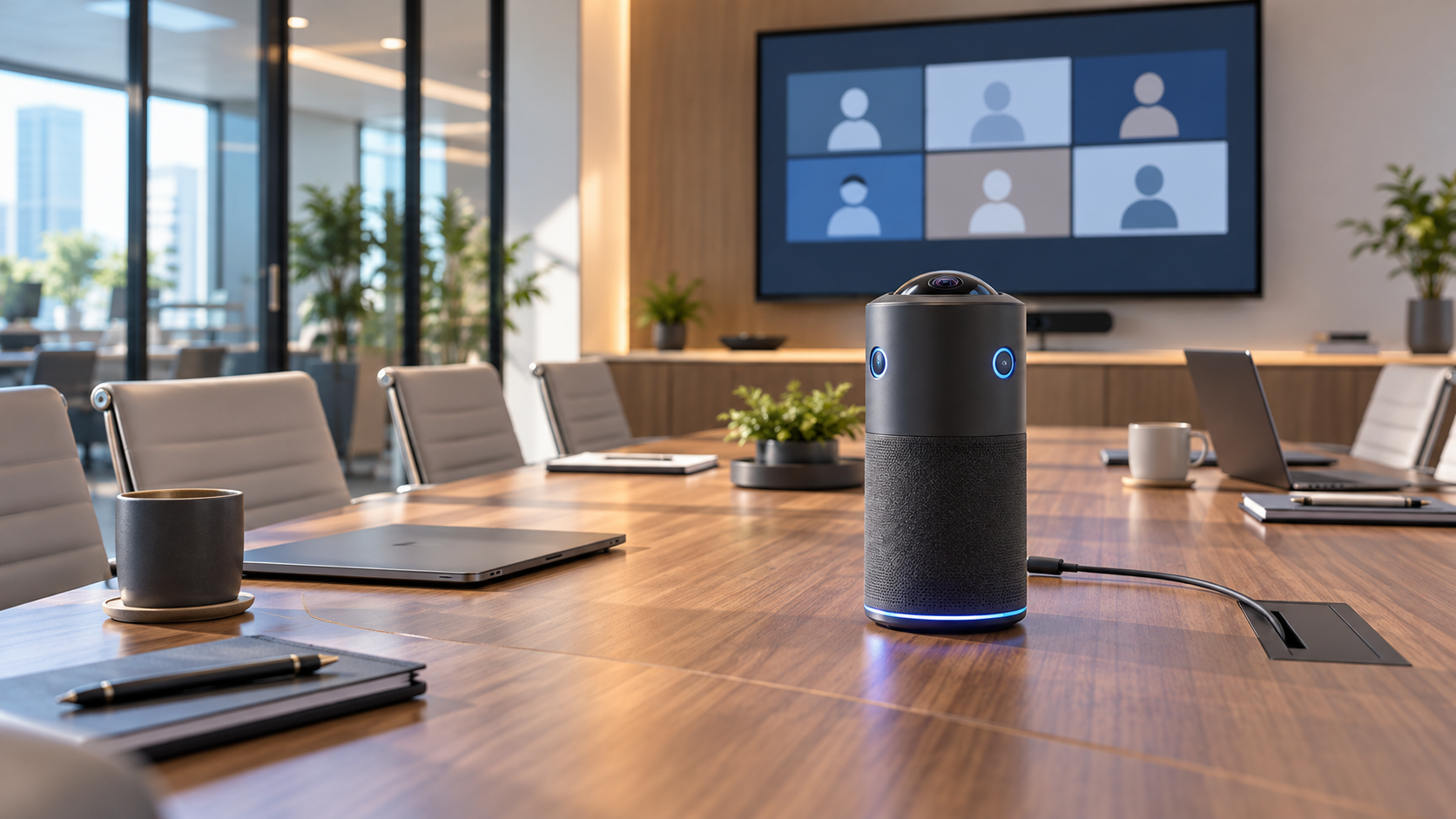
Generic 360-degree conference camera centered on a small hybrid meeting room table

Owl Labs has released the Meeting Owl 5, a $1,499 all-in-one conferencing camera for small hybrid meeting rooms. The new model combines 360-degree 4K output, a 20-megapixel sensor, eight beamforming microphones, a built-in speaker and USB-C connectivity in a redesigned device that sits in the center of a table.

It is cheaper than the $2,599 Meeting Owl 5 Pro and much sharper on paper than the 1080p Meeting Owl 3. That makes the standard Meeting Owl 5 look like the obvious middle choice. The buying decision is more complicated: Owl Labs recommends it for rooms with up to eight people, and several enterprise features are either absent or promised for a 2027 software update.

This is a launch analysis, not a hands-on review. Specifications and compatibility claims come from Owl Labs, while independent reporting is used to frame the tradeoffs. Teams should test the camera in their own room, lighting and conferencing platform before standardizing on it.

Meeting Owl 5 quick take

  • Price and availability: $1,499 in the United States from October 20, 2026; European availability is expected in early November.
  • Video: 360-degree field of view, 4K UHD output, 20-megapixel fisheye sensor and a stated 10-foot video pickup radius.
  • Audio: eight top-mounted beamforming microphones with an 18-foot pickup radius, plus one downward-firing speaker rated at 84 dB SPL RMS.
  • Room target: small rooms with up to eight people.
  • Connection: USB-C, Wi-Fi 6E and HDMI passthrough; Ethernet requires an adapter.
  • Important limits: no Microsoft Teams certification, no Expansion Mic support at launch and no wired or wireless multi-device pairing until a planned 2027 update.

What the new hardware changes

The headline improvement is 4K output. Older mainstream Meeting Owl models made the center-of-table format easy to deploy, but the Meeting Owl 3 is limited to 1080p. The Meeting Owl 5 uses a 20-megapixel fisheye sensor and Owl Labs’ AI-powered Owl Intelligence System to create a panoramic room view and cropped views of active speakers.

Audio receives an equally important overhaul. Owl Labs says the eight-microphone adaptive beamformer uses Fraunhofer upHear processing for voice tracking, dereverberation, echo cancellation and background-noise reduction. The microphones are now top-mounted, which should give them a clearer path to people around the table. Those claims still need independent room testing, especially in glass-walled spaces and rooms with hard surfaces.

The system runs on Qualcomm’s Dragonwing QCS6490 and Android 15. Owl Labs says that combination supports 4K video, voice tracking and enterprise-grade security. The chassis uses up to 45 percent post-consumer recycled plastic, while the company says 99 percent of the packaging is recyclable.

The small-room limit matters more than the 4K label

The small-room limit matters more than the 4K label

Owl Labs recommends the Meeting Owl 5 for small rooms with up to eight people. Its 10-foot video pickup radius describes how far the camera is intended to see useful detail; the microphones reach farther, to 18 feet. A long boardroom can therefore be audible without producing equally useful close-up video.

Placement is central to the design. A 360-degree camera works best near the middle of the group, where it can see faces around the table and use audio cues to frame the person speaking. Put it at one end of a long table and the farthest participants become smaller, while people nearest the camera can dominate the fisheye view.

The standard model cannot pair with another Meeting Owl at launch. Owl Labs plans wired and wireless pairing, plus Expansion Mic support, for 2027. Those are future features, not part of the product buyers receive today. Organizations equipping large or oddly shaped rooms should buy for the current capability and treat the update as a bonus only after it ships and passes testing.

Meeting Owl 5 versus Meeting Owl 5 Pro

Both current-generation models output 4K video, offer native HDMI passthrough and use the familiar 360-degree center-of-table concept. The $1,100 price gap reflects more than sensor resolution.

What the $2,599 Pro adds

  • A 64-megapixel fisheye sensor instead of 20 megapixels.
  • Native Ethernet rather than Ethernet through an adapter.
  • Wired and wireless multi-device pairing now, rather than a planned 2027 update.
  • Microsoft Teams certification and support for more standardized enterprise room deployments.
  • A Qualcomm Snapdragon 8250 processor rather than the QCS6490 used by the standard model.

What the standard model keeps

The Meeting Owl 5 retains 4K output, HDMI passthrough, Wi-Fi 6E, eight microphones, an 18-foot audio radius and broad UVC compatibility. It works as a USB camera, microphone and speaker with major web conferencing services, including Microsoft Teams, Zoom, Google Meet, Webex, GoToMeeting and Slack.

Compatibility is not the same as certification. Owl Labs lists Teams as supported, but its comparison page explicitly marks the standard Meeting Owl 5 as not Microsoft Teams certified. Companies with certified-device policies should check with IT before purchasing.

What 4K means for a 360-degree meeting camera

A 4K output specification does not mean every remote participant receives a full 4K close-up. The fisheye sensor captures the entire room, then software creates a panoramic strip and cropped speaker views from that shared image. Detail depends on distance, crop size, lighting, platform compression and the layout selected in the meeting app.

The 20-megapixel sensor provides enough source resolution for a 4K stream, but the standard model has less cropping headroom than the 64-megapixel Pro. Independent launch coverage identifies that difference as one of the clearest hardware compromises. Buyers should judge faces at the farthest planned seat, not the sharpness of the static panorama shown in a demo.

Setup and compatibility checklist

  • Measure the room. Confirm that every chair is within roughly 10 feet of the camera and that the camera can sit near the group’s center.
  • Check the host computer. Owl Labs lists Windows 7 or later, macOS 10.8 or later, ChromeOS and limited Ubuntu 16.04-or-later support, but a current supported operating system is the safer baseline.
  • Confirm the cable path. The box includes a 6.5-foot USB-C-to-USB-C SuperSpeed cable, a 16-foot USB-C-to-USB-A HighSpeed cable and a 10-foot power cable.
  • Plan display sharing. Native HDMI passthrough can send laptop content to the room display, but Owl Labs says the HDMI cable is not included.
  • Decide whether wired networking is mandatory. The standard model supports Wi-Fi 6E; Ethernet needs an adapter, while the Pro has native Ethernet.
  • Run a real meeting. Test active-speaker switching, far-seat detail, echo control, maximum speaker volume, screen sharing and account sign-in on every conferencing service the room uses.

Security, privacy and management questions

A center-of-room camera and microphone can capture everyone around a table, so deployment needs more than a technical check. Meeting owners should disclose recording, transcription and AI-summary features, follow local consent rules and make it obvious when video or audio is live.

The Meeting Owl 5 uses Owl Labs’ Nest management platform for device controls and analytics. Before a fleet purchase, administrators should review account roles, update policy, network requirements, device inventory, retention settings and whether the organization permits a Wi-Fi-connected Android-based conferencing appliance.

The product’s glowing owl eyes or alternate LED can act as a streaming indicator. That is helpful, but it should not replace clear meeting-room signage or a documented process for disabling recording when sensitive discussions begin.

Who should buy it

Good fit

The Meeting Owl 5 makes the most sense for small huddle rooms where teams want one portable device for camera, microphones and speaker, use a bring-your-own-device workflow and value 360-degree speaker framing. It is also the more defensible choice when $2,599 per room is difficult to justify and native Ethernet, certification and immediate camera pairing are not requirements.

Consider another option

Skip or postpone the purchase if the room regularly holds more than eight people, needs multiple synchronized cameras now, requires Microsoft Teams-certified hardware or mandates wired Ethernet without adapters. A conventional front-of-room camera may also be better when everyone faces the same display and the room does not need a panoramic table view.

Buying note and Amazon alternative

Meeting Owl 5 is sold directly by Owl Labs and authorized retailers. If you need a 4K Meeting Owl that is already established in the market, the previous-generation Meeting Owl 4+ is listed on Amazon under ASIN B0D4FB77HG. Compare current pricing, seller, warranty and return terms before ordering; it is not the new Meeting Owl 5.

Affiliate disclosure: ReaderSpice may earn a commission from qualifying purchases made through the Amazon link, at no additional cost to you.

Bottom line

Meeting Owl 5 brings the company’s mainstream conference camera into the 4K era while undercutting the Pro by $1,100. Its single-cable BYOD setup, HDMI passthrough, eight-microphone array and broad platform compatibility should make it attractive for small hybrid rooms.

The gaps define the product just as clearly. The standard model is not Teams certified, lacks native Ethernet, targets no more than eight people and depends on a future update for pairing and Expansion Mic support. Buy it for a room that fits today’s limits, not for the larger-room system Owl Labs says it may become in 2027.

Sources

Owl Labs: Meeting Owl 5 product page and technical specifications

Business Wire: Owl Labs Meeting Owl 5 launch announcement, October 20, 2026

Digital Camera World: Independent launch analysis and Meeting Owl 5 comparison

Arc Browser Shuts Down December 22: How to Export Your Spaces, Tabs and Passwords

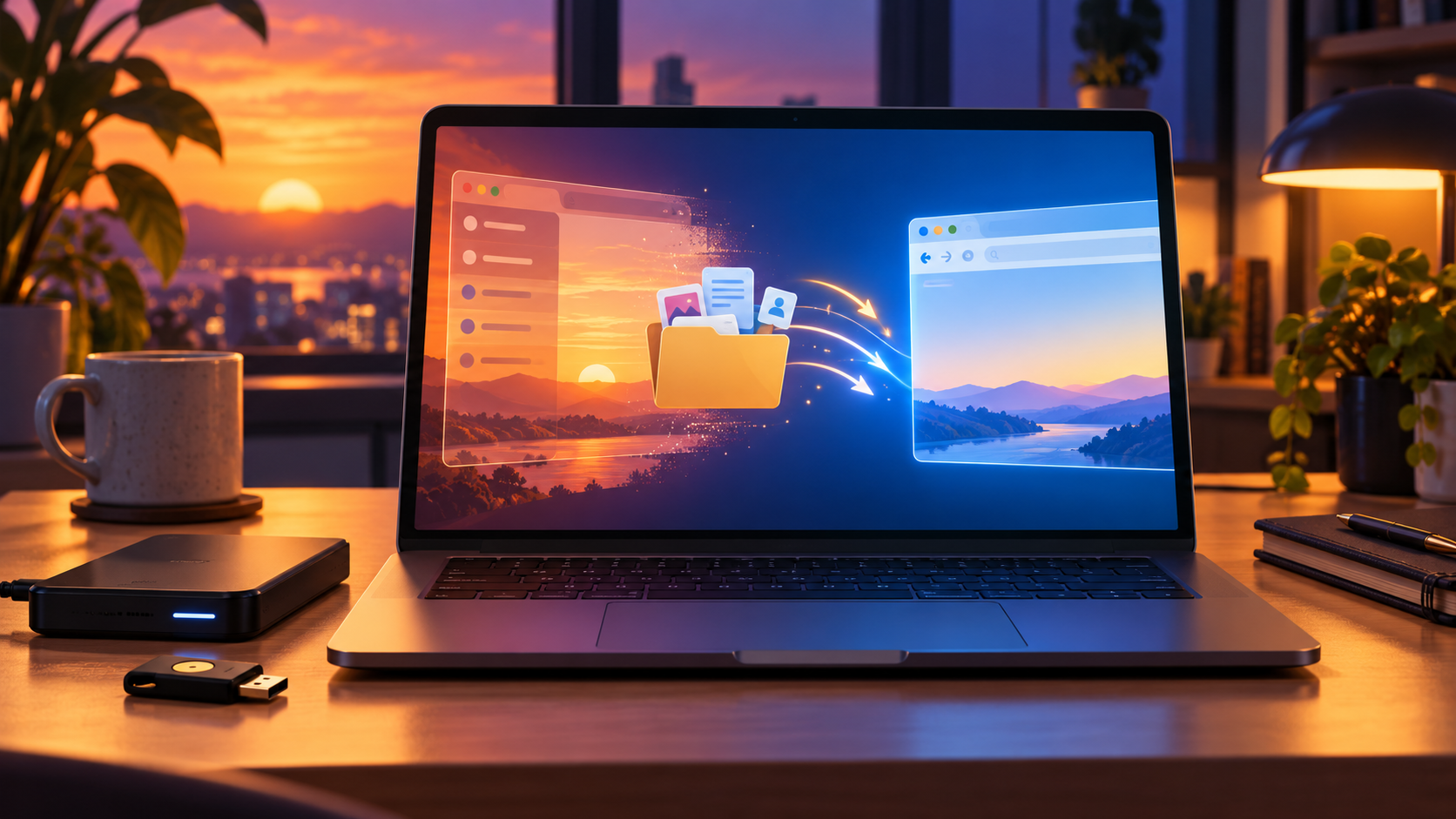
Editorial illustration of a browser window fading into sunset while tabs, files and credentials move securely to a new browser

The Browser Company will switch off Arc’s desktop browser on December 22, 2026. On that date, Arc for macOS and Windows will stop working, Arc accounts will be deactivated and the company will begin deleting associated personal data. Existing desktop users have less than two months to preserve what matters and test a replacement.

The important detail is that Arc has several different kinds of data. Spaces and tabs use one export path; account-level personal data uses another; passwords, history and extensions require a browser-to-browser import or a separate export. Treating those as one backup can leave gaps.

This guide follows The Browser Company’s current shutdown documentation and separates confirmed steps from browser-specific caveats. Complete the migration early enough to verify everyday sites before Arc’s final day.

Shutdown timeline at a glance

  • October 22, 2026: The shutdown was announced and new Arc account creation ended.
  • November 23, 2026: Arc Search for iOS and Android loses AI features, sign-in and account sync; desktop Arc begins showing migration reminders.
  • December 15, 2026: Last day to request a copy of Arc account personal data or ask The Browser Company to delete it early.
  • December 22, 2026: Arc for macOS and Windows stops working, Arc accounts are deactivated, services are switched off and the Android app is removed from devices and Google Play.
  • Within 30 days after December 22: The Browser Company says remaining Arc personal data will be deleted. Arc Search on iOS can continue basic browsing, but its Arc account and AI services will already be gone.

What will stop working

The desktop cutoff is not merely the end of feature development. The official timeline says Arc on macOS and Windows will stop working on December 22. Until then, the desktop apps are expected to receive only basic updates and critical fixes, not new features.

Arc Search changes earlier. On November 23, the iOS and Android apps lose AI features, sign-in and sync. On December 22, the Android app is removed from Google Play and from installed Android devices. The iOS app remains a basic browser, but it should not be treated as a safe archive for synced Arc data.

If a work or school profile depends on Arc, involve the organization’s administrator now. Managed passwords, passkeys, certificates, extensions and single-sign-on sessions may not be portable through a personal browser import.

Back up first: Arc has two different exports

1. Export Spaces and tabs

Arc’s built-in Export Data command creates a file containing Spaces and tabs. It is useful as a reference and fallback, but The Browser Company says it is not a complete profile backup.

  • On macOS, open Arc > Settings > Advanced > Export Data.
  • On Windows, press Ctrl+, or open the Arc menu, choose Settings > Advanced, then select Export Spaces and tabs > Export Data.

Save the export outside Arc—ideally in a backed-up folder—and open it before moving on. Make sure the file lists the Spaces and tabs you expect.

2. Request account-level personal data

The Browser Company offers a separate request for a copy of personal data associated with an Arc account. The deadline is December 15, one week before desktop shutdown. The company warns that this account export does not include information stored only on a device, including browsing history and passwords.

Use the shutdown support page’s data-request link while you can still access the email address attached to the Arc account. Keep the delivered archive with your other migration records.

3. Move passwords, history and extensions

For the most complete assisted move, Dia can import Arc passwords, bookmarks, extensions and history. Other destination browsers may offer their own importers, but support varies by platform and version. If you use a separate password manager, confirm that its vault is fully synchronized and that its browser extension works in the destination browser.

Before deleting anything, sign in to several important accounts in the new browser, verify two-factor authentication and test at least one saved passkey. A visible bookmark is not proof that credentials or local history moved.

Move to Dia: the easiest complete migration

Move to Dia: the easiest complete migration

Dia is The Browser Company’s replacement browser and the path with the most explicit Arc import support. It uses a separate account, so an Arc login does not automatically become a Dia login.

  • Install Dia on the Mac or Windows PC that still has Arc and create or sign in to a Dia account.
  • When prompted during setup, choose the Arc import. In an existing Dia installation, open the import command for another browser and select Arc.
  • Select the available categories—such as passwords, bookmarks, extensions and history—and complete the import before December 22.
  • Check several Spaces after import. Dia converts Arc Spaces into Profiles and Arc Favorites into pinned tabs.
  • Open representative sites from every Profile, confirm extensions are enabled and test autofill, downloads, video calls and any work authentication.
  • Keep Arc and the independent export file until the new setup has worked for several days.

The import is a one-time copy, not ongoing synchronization. Changes made later in Arc will not automatically appear in Dia. If you continue using Arc after the first import, repeat any manual checks before the cutoff.

What will not survive in Dia

The Browser Company’s FAQ says Dia can reproduce much of Arc’s sidebar organization, but several Arc-specific features have no direct equivalent. These include Air Traffic Control, Boosts, Easels, Little Arc, Peek, TypeTravel and Instant Links.

That makes the export file important even for people who choose Dia. Save text or screenshots of custom Boosts, Easels and routing rules you want to rebuild. If a workflow relies on one of those tools, test the replacement behavior instead of assuming the visual migration preserved it.

Alternatives if you do not want Dia

Zen Browser: the closest visual idea

Zen is a Firefox-based browser with vertical tabs, workspaces and a layout that will feel familiar to many Arc users. Its biggest caveat is media compatibility: Zen’s official FAQ says it does not ship Google Widevine DRM, so services including Netflix, Disney+, Prime Video, Spotify and Apple Music may not play protected content in the browser. Test the exact services you use before committing.

Chrome, Edge or Firefox: conventional and well-supported

A mainstream browser is less visually similar to Arc but may be easier for managed work accounts, streaming services, extension compatibility and long-term support. Chrome and Edge accept Chromium extensions; Firefox has its own extension ecosystem. Import what each browser supports, then rebuild Spaces as profiles, tab groups, containers or bookmark folders.

Do not choose solely by how closely a sidebar resembles Arc. Verify password import, passkeys, video conferencing, protected media, printing, downloads, accessibility tools and every extension that is essential to your daily work.

Account-security checklist before switching

Browser migrations are a good time to remove credentials that should never be the only copy. Export or synchronize passwords through a trusted password manager, save recovery codes offline and add a second authentication method to high-value accounts.

For phishing-resistant two-factor authentication, the USB-C and NFC Yubico YubiKey 5C NFC (ASIN B08DHL1YDL) is available on Amazon. A hardware key is optional and does not replace a password manager or backup key, but it can keep account recovery independent of one browser installation.

Affiliate disclosure: ReaderSpice may earn a commission from qualifying purchases made through the Amazon link above, at no additional cost to you.

  • Add at least two sign-in methods to critical accounts before removing Arc.
  • Store recovery codes somewhere that does not depend on the old browser.
  • Keep a second hardware security key in a secure location if a key protects your primary email or password manager.
  • Confirm passkeys appear on the device or password manager where you expect them.
  • Sign out and back in to one noncritical account to test the new recovery path.

Final verification checklist

  • Open the independent Spaces-and-tabs export and confirm it is readable.
  • Request Arc account data no later than December 15 if you want a copy.
  • Verify passwords, history, extensions and bookmarks in the destination browser.
  • Test every Profile or workspace and rebuild any Arc-only feature you still need.
  • Check work logins, passkeys, protected media, video calls, printing and downloads.
  • Keep Arc installed until the replacement has worked reliably, but finish before December 22.
  • Delete old local exports securely after you have a verified backup and no longer need them.

The bottom line

Arc’s December 22 desktop shutdown is a hard deadline, not a routine end-of-support notice. The safest plan is to make both official exports, move browser-local data through a supported importer and spend several days validating the replacement.

Dia offers the cleanest official migration and translates Spaces into Profiles, but it does not carry every Arc feature. Zen is visually closer than most conventional browsers, yet its DRM limitation can be decisive. Chrome, Edge and Firefox are less Arc-like but may be more predictable for work, extensions and media. The right choice is the one that passes your real workflow tests before Arc can no longer open.

Sources

The Browser Company: Arc sunset key dates and what to expect — October 22, 2026

The Browser Company: Arc sunset frequently asked questions

The Browser Company: Move from Arc to Dia

The Browser Company: How to export data from Arc

Arc: Farewell and migration overview

The Verge: The Arc browser is shutting down — October 22, 2026

The Verge: Zen Browser review as an Arc replacement — October 25, 2026

Zen Browser documentation: Frequently asked questions and DRM limitation

Yubico: YubiKey 5C NFC specifications

Amazon: Yubico YubiKey 5C NFC (ASIN B08DHL1YDL)

Birdbuddy Home vs Nook: The $99 Smart Feeder May Be the Better Buy

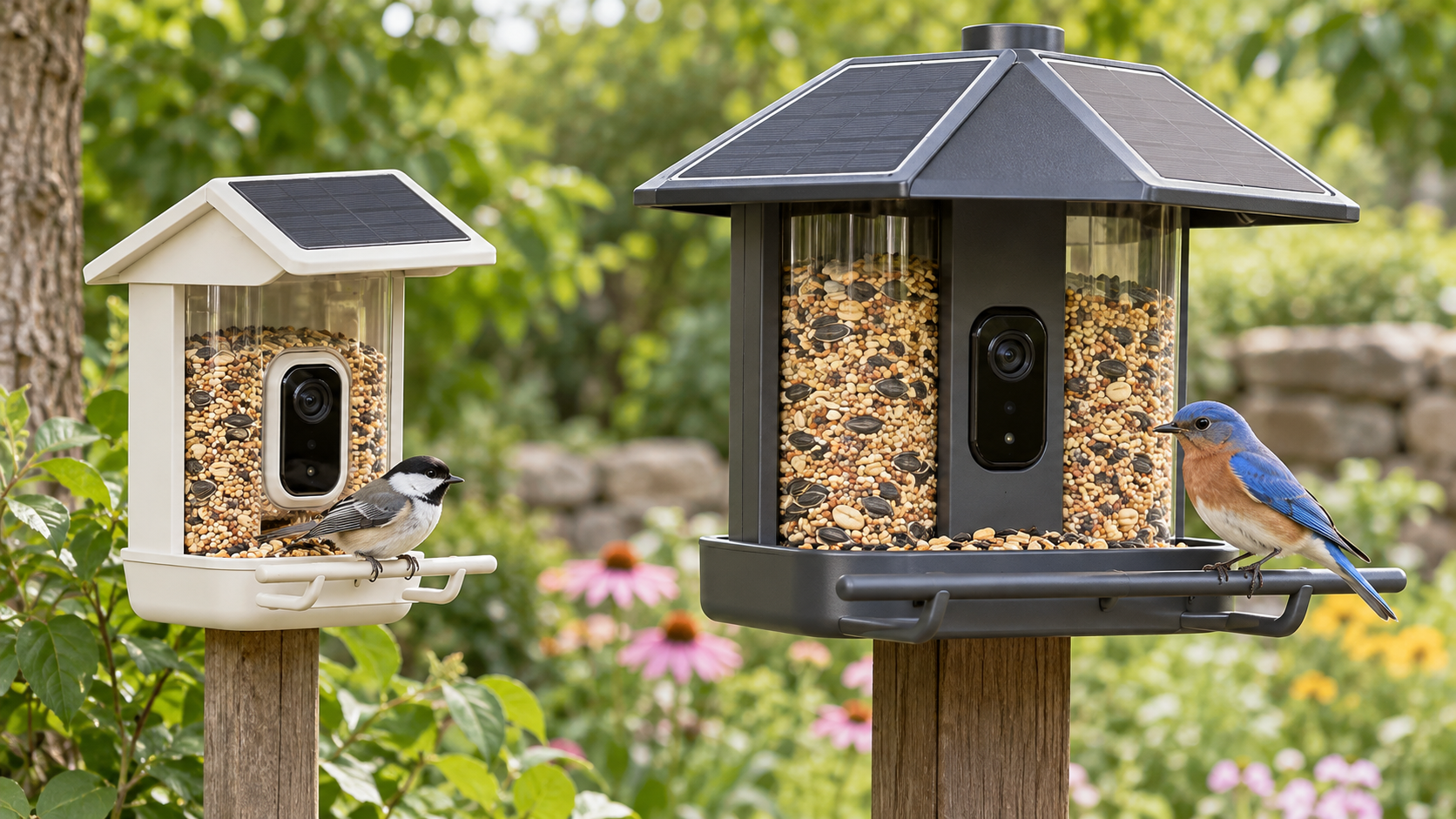
A modern smart bird feeder with an integrated camera and solar roof attracting a colorful backyard bird

Birdbuddy expanded its smart-feeder lineup on October 22, 2026, with two products built around the same new 2K HDR camera: the $99 Nook and the $219 Home. That shared camera makes the cheaper model unusually compelling. Most buyers are paying the extra $120 for a larger seed reservoir, integrated solar charging, tougher weather protection and a few convenience upgrades—not a better core bird-identification experience.

After comparing the specifications with early hands-on coverage and a long-term Home test, the value case is straightforward: buy Nook if you want Birdbuddy’s current camera and app at the lowest price; buy Home if minimizing refills and charging matters more than the upfront cost.

Quick verdict

  • Best value: Nook at $99. It gets the 2K HDR camera, 135-degree field of view, fast wake-up and Birdbuddy’s AI-assisted species recognition.
  • Best for lower maintenance: Home at $219. Its six-cup reservoir, dual integrated solar panels and longer perch are designed for less frequent attention.
  • Best middle ground: Nook Solar at $159, although the $60 solar premium narrows the gap to Home.
  • Existing Pro owners: do not assume either new model is an automatic image-quality upgrade. Independent hands-on testing found tradeoffs as well as speed improvements.

Price and configurations

Nook starts at $99 with a 3.8-cup seed reservoir and no built-in solar charging. Nook Solar costs $159 and adds the matching solar roof. Home costs $219 and includes a six-cup reservoir, dual integrated solar panels, a perch extender, dual-band Wi-Fi and an IP67 rating.

Those prices position Nook as the entry point, but it is not a stripped-down camera. Birdbuddy says both new feeders use the same 2K HDR imaging system, 135-degree view, instant wake-up and continuous capture. Both can record in portrait or landscape orientation, and both work with the same Birdbuddy app.

What both feeders share

The common camera is the most important detail in this comparison. It can capture higher-resolution clips than the previous generation, while the wider framing gives a bird more room to move without immediately leaving the shot. Birdbuddy’s app turns visits into notifications and uses computer vision to suggest the species it sees.

The hardware is also modular. The camera can be removed from the feeder body, which helps with charging, cleaning and future accessories. Neither model requires a paid plan just to receive visits, but some advanced identification and cloud features sit behind Birdbuddy’s membership tiers.

Nook vs Home: the hardware differences

Nook vs Home: the hardware differences

Nook keeps the essentials small

Nook is the simpler design. Its 3.8-cup reservoir should be sufficient for a modest backyard setup, and the smaller body is easier to place where a bulky feeder would look intrusive. The base $99 package relies on periodic wired charging. If the location receives dependable sun, the $159 Nook Solar package can reduce that chore.

The key compromise is capacity. Active feeders can empty quickly, particularly in colder weather or where several species visit. Nook owners should expect to refill more often than Home owners. That may be an acceptable exchange for a lower price and a smaller visual footprint.

Home is built around fewer interventions

Home’s six-cup reservoir holds roughly 58 percent more seed than Nook’s 3.8 cups. Its dual solar panels are integrated rather than optional, and its perch extender offers more room for larger birds. Dual-band Wi-Fi adds 5GHz support alongside 2.4GHz, which can be useful close to a modern router, while the IP67 rating gives Home the clearest on-paper weather-resistance advantage.

Home therefore makes the most sense when the feeder will be inconvenient to reach, when bird traffic is heavy, or when the owner simply values fewer refills and charging sessions. The camera experience alone does not justify the price difference; the maintenance savings might.

Why Nook is the better value for most yards

At $99, Nook costs less than half as much as Home while preserving the features that make a smart feeder interesting: a capable camera, fast capture, visit notifications and species suggestions. For a first-time buyer who does not yet know how much use a backyard feeder will get, the lower entry price reduces the risk.

The Verge’s hands-on testing also found that a Nook livestream opened in under eight seconds, compared with roughly 30 seconds for the older Bird Buddy Pro. That is a practical improvement: a slow live view often means the bird has already flown away when the video appears.

Nook Solar is a less obvious bargain. Its $159 price is still $60 below Home, but buyers who already know they want solar power should decide whether another $60 is worth the larger reservoir, integrated dual-panel roof, longer perch, IP67 rating and dual-band Wi-Fi. In a busy yard, Home can earn back that difference in convenience.

When Home is worth $219

Choose Home when access is awkward or bird traffic is consistently high. A six-cup reservoir can materially extend the interval between refills, and built-in solar charging avoids the decision of whether to add an accessory later. Home is also the safer specification choice for exposed locations because Birdbuddy lists an IP67 rating.

The premium is harder to defend for a feeder mounted near a door or window, where refilling and charging are easy. In that setting, Home’s main benefits become comfort rather than necessity. Nook delivers the same generation of camera for substantially less.

Real-world issues the spec sheet does not solve

Squirrels remain the first adversary

Tom’s Guide used an early Home unit for about 10 months and found that squirrels still required active countermeasures. A smart camera does not make a feeder squirrel-proof. Placement, pole guards and seed choice can matter as much as the feeder body, so budget for a baffle if squirrels are common.

Weather resistance and lens moisture deserve attention

The same long-term test reported moisture inside the removable lens cover after rain. The reviewer noted that the issue may have been specific to an early unit, but it is worth inspecting the camera after storms. Home’s IP67 specification is reassuring, yet no outdoor camera should be treated as maintenance-free.

The new camera is faster, not unambiguously better

The Verge praised the speed of the new platform but found the image more distorted near the edges than on the outgoing Pro, with a viewpoint that can feel more like looking down on the bird. That does not erase the value of 2K HDR capture, but existing Pro owners should compare real samples before replacing a working feeder.

What the Birdbuddy membership costs

Birdbuddy’s current membership page lists Premium at $69.99 per year. The Verge also reports a $7.99 monthly option. Paid features include automatic species identification and additional cloud or app capabilities; availability can change by plan and region.

Treat that fee as part of the total cost if automatic identification is a must-have. Over two years, a $99 Nook plus two annual Premium renewals reaches about $239 before tax—already more than the Home hardware by itself. Buyers who are comfortable reviewing visits without every premium feature can keep the ownership cost lower.

A relevant Amazon alternative for existing inventory

Birdbuddy says the outgoing Pro is being removed from its own store, with remaining inventory expected to continue through Amazon through the end of 2026. That makes the Birdbuddy Pro Solar a relevant price-check for shoppers who prefer the older camera perspective or find it discounted.

Check the current Birdbuddy Pro Solar price on Amazon. This is an affiliate link; ReaderSpice may earn a commission from qualifying purchases at no extra cost to you. Prices and availability can change.

Bottom line

Nook is the smarter default. It preserves the new 2K HDR camera and app experience at $99, leaving enough room in the budget for seed, a squirrel baffle or a membership. Home is the better tool for a specific buyer: someone with a busy feeder, an exposed installation or a strong preference for fewer refills and charging sessions.

The most important buying question is not which feeder takes better pictures—they share the same camera. It is how often you are willing to service the feeder. If the answer is “whenever needed,” choose Nook. If the answer is “as little as possible,” Home’s larger, solar-equipped body can justify the premium.

Sources

Inline image: Side-by-side comparison of a compact smart bird feeder and a larger solar smart bird feeder

Inline alt text: Compact smart bird feeder beside a larger model with dual solar panels, a bigger seed reservoir and a longer perch

Sigma FP2: A Tiny 6K Full-Frame Camera With Big Tradeoffs

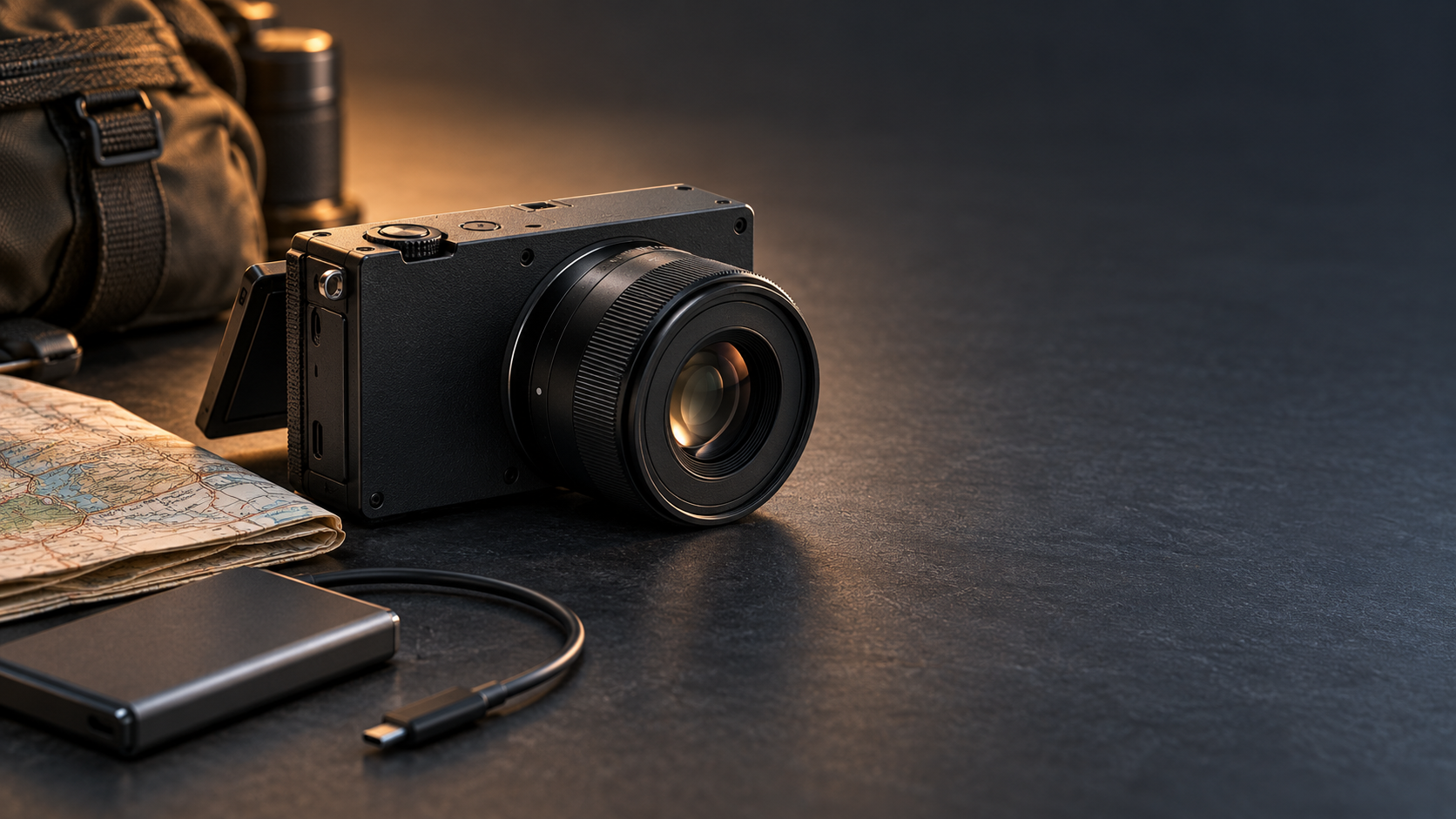
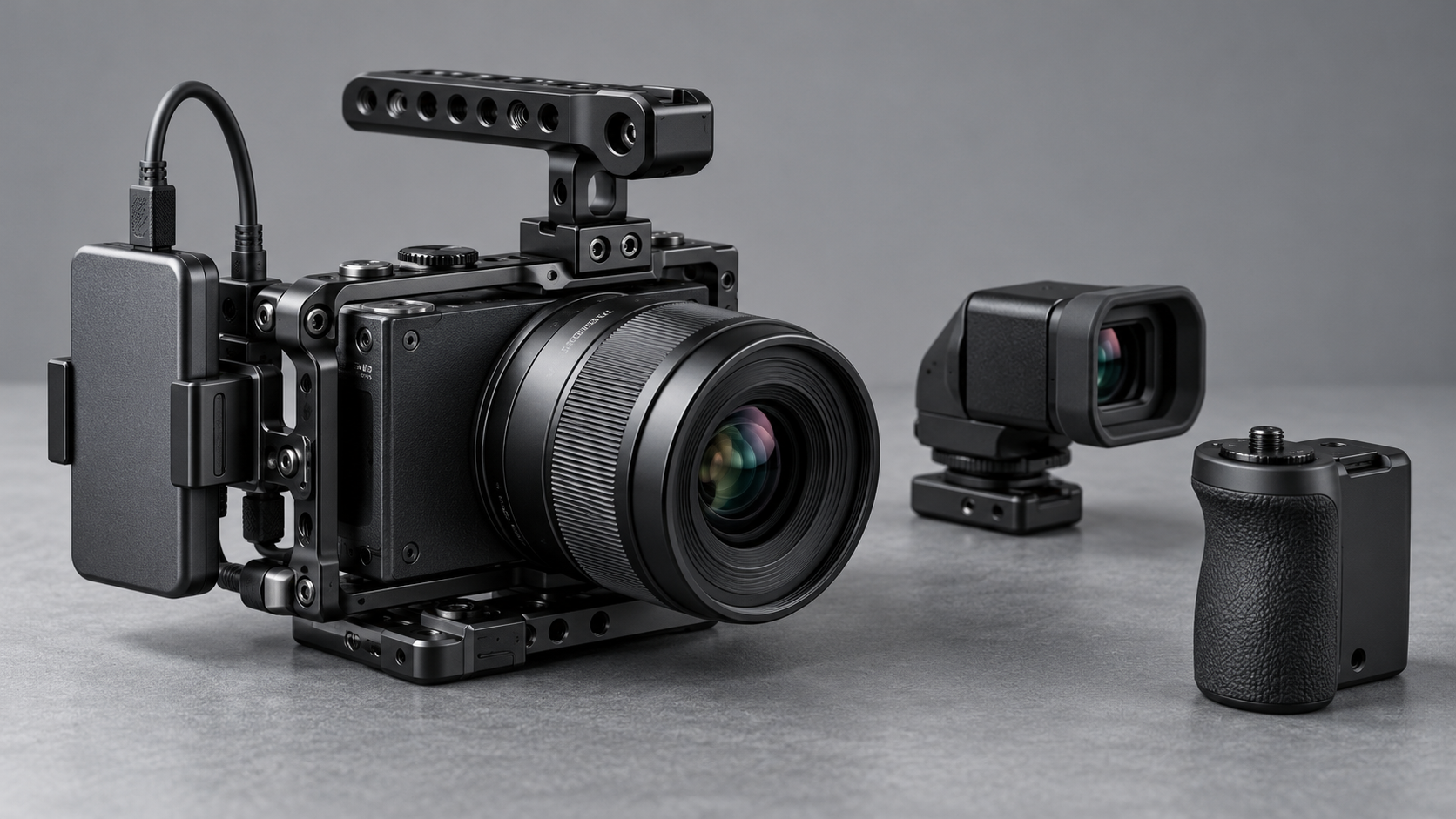
Compact black full-frame mirrorless camera with a small prime lens, travel map and external SSD cable

Sigma has revived its smallest full-frame camera concept with the FP2, a $2,199 modular hybrid that arrives November 11, 2026. The headline upgrades are substantial: a 24.5-megapixel partially stacked sensor, phase-detection autofocus, 6K open-gate video, a tilting screen, 70GB of built-in storage and much longer burst depth.

The appeal is easy to understand. The FP2 puts serious stills and cinema tools in a body small enough to build into a lightweight travel or gimbal rig. The catch is just as important: there is no in-body image stabilization, built-in viewfinder or conventional handgrip. The camera is deliberately incomplete until each buyer decides what to attach.

Sigma FP2 price, release date and key specifications

Sigma says the FP2 will be available on Wednesday, November 11, 2026. U.S. pricing starts at $2,199 for the body, while review coverage lists a $2,749 kit with either Sigma’s new EVF-21 electronic viewfinder or the compact 50mm F2 DG DN Contemporary lens.

The essentials at a glance:

  • 24.5MP partially stacked full-frame CMOS sensor
  • L-Mount lens system with separate STILL and CINE interfaces
  • Up to 20 frames per second for stills and a buffer rated for roughly 200 images
  • 6K open-gate recording at up to 59.94p in supported compressed formats
  • ProRes RAW recording to an external SSD, plus L-Log and 13 color modes
  • Hybrid phase- and contrast-detection autofocus with people, dog, cat and bird recognition
  • 70GB of internal storage, one SD card slot, two USB-C ports and full-size HDMI
  • Tilting 3.2-inch rear display; optional 5.76-million-dot EVF-21
  • Approximately 370-shot battery rating and 460g operating weight with battery and card

These numbers place the FP2 closer to a compact production tool than a conventional entry-level mirrorless camera. Its price makes the missing viewfinder and stabilization impossible to ignore, but the connectivity and recording options are unusually ambitious for the body size.

What the partially stacked sensor changes

The original Sigma fp was admired for its size but limited by slow sensor readout and contrast-detection autofocus. The FP2’s partially stacked sensor is designed to read data faster, helping reduce rolling-shutter distortion and supporting quicker bursts, higher frame-rate video and more responsive subject tracking.

Resolution remains around 24.5 megapixels. That is enough for large prints and most professional web work, but it offers less room for aggressive cropping than 40MP or 60MP rivals. The payoff is speed: Sigma now quotes up to 20fps and a buffer of about 200 frames, a major change from the original fp’s very shallow high-speed burst.

Early hands-on reports broadly agree that image quality is excellent and autofocus is much more dependable. Reviewers also note that subject selection can still be inconsistent. This is a meaningful upgrade, not proof that Sigma has surpassed the most mature sports and wildlife autofocus systems.

Why the FP2 is more video-first than it looks

Why the FP2 is more video-first than it looks

The small body hides a serious video toolset. Open-gate recording uses the full 3:2 sensor area, giving editors extra room to create widescreen and vertical crops from the same take. Supported compressed modes reach 6K/59.94p, while ProRes RAW is available to an external SSD at lower maximum frame rates. Cropped 4K can reach roughly 120p.

Sigma also includes monitoring tools, L-Log, gyro data for stabilization in post and dedicated CINE controls. Two USB-C ports matter here: one can handle high-speed storage while the other supports power or accessories. Full-size HDMI is a welcome choice on a camera likely to be connected to monitors and recorders.

That flexibility makes the FP2 especially interesting for solo filmmakers, travel crews and gimbal operators. A compact body can be easier to balance and can leave more payload capacity for a lens, cage, microphone or monitor. The built-in 70GB of storage is also a useful emergency reserve when a memory card is full or unavailable.

The biggest compromise: no in-body stabilization

The FP2 does not have mechanical in-body image stabilization. For stills, that means slower shutter speeds require steadier technique, a tripod or a stabilized lens. For handheld video, the limitation is more obvious: small camera movements remain visible, and electronic or post-production correction cannot fully reproduce sensor-shift stabilization.

Gyro metadata can help compatible software smooth footage later, but stabilization in post crops the frame and adds another processing step. Reviewers found handheld video challenging even with careful technique. Anyone imagining the FP2 as an all-in-one walkaround video camera should budget for a gimbal, rig support or stabilized L-Mount lens.

The limitation is less serious when the camera is locked to a tripod, mounted on a vehicle, placed on a motorized stabilizer or used in a controlled studio. In those jobs, removing the stabilization mechanism helps Sigma preserve the camera’s small dimensions. The design makes sense—but only for buyers whose workflow already solves camera shake.

A modular body means accessories can erase the size advantage

Sigma’s philosophy is to start with a clean rectangular body and let the owner add only what the job requires. That is attractive for specialized rigs, but less convenient for photographers who expect a camera to feel complete out of the box.

There is no built-in electronic viewfinder. The optional EVF-21 adds a high-resolution tilting OLED finder and an eye sensor, but it also adds cost and bulk. The flat body has no substantial grip, and larger lenses can make it front-heavy. A grip or cage improves handling while making the overall package less pocketable.

The same tradeoff applies to the hot shoe. Sigma offers a separate HU-21 hot-shoe unit for users who need flash or accessory mounting. Photographers should price the body, viewfinder, grip, hot shoe, spare battery and preferred lens as a system rather than treating $2,199 as the finished cost.

How the FP2 fits into an L-Mount kit

The FP2 uses the L-Mount shared by Sigma, Panasonic and Leica, so buyers can choose from compact primes, fast professional zooms and specialized cine glass. Small lenses are the natural match. Sigma’s 50mm F2 Contemporary kit option preserves the camera’s minimalist character while providing a general-purpose normal field of view.

Larger lenses are fully usable, but they shift the balance away from the body. A 24–70mm F2.8 zoom, for example, may be optically versatile yet demand a grip, cage or lens support. The FP2 is most convincing when the complete rig is designed around its size rather than when it is treated as a tiny body for any lens.

Who should consider the Sigma FP2?

The FP2 makes the most sense for:

  • Filmmakers who want 6K open-gate capture in a very small L-Mount body
  • Gimbal and drone operators who value low body volume and flexible mounting
  • Travel creators who can work with compact primes, an external SSD and planned stabilization
  • Studio shooters who prefer tethered, tripod-based or modular production setups
  • Existing L-Mount owners who already have lenses and accessories

It is a harder recommendation for photographers who rely on a viewfinder, shoot long handheld sessions or want stabilized stills and video without extra equipment. A larger conventional hybrid can deliver a more comfortable grip, built-in EVF and IBIS for less total system cost.

A relevant lens for the FP2

The compact Sigma 50mm F2 DG DN Contemporary for L-Mount is one of the FP2’s official kit-lens options and is a natural match for its small body. Check the Sigma 50mm F2 DG DN Contemporary for L-Mount on Amazon.

Disclosure: ReaderSpice may earn a commission from qualifying purchases made through the Amazon link above, at no additional cost to you.

Amazon prices, sellers and availability can change. Confirm that the listing is the L-Mount version—not the Sony E-mount version—and verify the seller and return policy before ordering.

Bottom line

The Sigma FP2 is not trying to be the safest all-round mirrorless camera. It is a compact full-frame imaging core that becomes a stills camera, cinema rig or travel kit depending on what surrounds it. The faster sensor, improved autofocus, deep burst, tilting display, internal storage and 6K open-gate recording address many weaknesses of the original fp.

Its omissions are equally defining. No IBIS, no built-in EVF and minimal ergonomics mean the smallest body can lead to a larger, more expensive complete setup. Buyers who need a modular 6K platform may find that trade worthwhile. Everyone else should compare the cost and size of the finished rig, not the body alone.

Sources

Sigma — FP2 launch schedule and official announcement

DPReview — Sigma FP2 review and full specifications

TechRadar — Sigma FP2 hands-on review

The Verge — Sigma FP2 launch, pricing and connectivity overview

Digital Camera World — Sigma FP2 hands-on video assessment

TDM Neo Review Roundup: The $249 Headphone-Speaker Hybrid’s Tradeoffs

Editorial illustration of flexible hybrid headphones folded into a compact portable speaker on a modern desk

The TDM Neo solves an unusually specific problem: it is a pair of on-ear wireless headphones that physically twists into a compact Bluetooth speaker. After debuting at CES and raising more than $154,000 on Kickstarter, the $249 hybrid is now available in the United States—and independent reviews finally show where the clever engineering helps and where it forces compromises.

This is a review roundup, not a ReaderSpice hands-on test. TDM’s specifications are identified as manufacturer claims, while comfort, sound and usability observations are attributed to reviewers who used production hardware.

The short version is that the transformation mechanism appears dependable and the headphone-mode battery estimate is exceptional. The less flattering consensus is that buyers sacrifice active noise cancellation, comfort and sound quality to avoid carrying two separate devices.

Disclosure: ReaderSpice may earn a commission from qualifying purchases made through Amazon links, at no additional cost to you.

The quick take

  • TDM Neo costs $249 and is available in Onyx Black or Cool White through TDM and U.S. retailers.
  • Four 40mm drivers are split between private headphone playback and two outward-facing 5W speaker channels.
  • The flexible headband and magnetic closure make the switch between modes simple, and multiple reviewers found the mechanism convincing.
  • TDM claims more than 200 hours in headphone mode and about 16 hours in speaker mode, with up to eight hours from a five-minute charge.
  • There is no active noise cancellation and no published water-resistance rating.
  • Independent reviews broadly agree that the design is more impressive than the sound, especially in speaker mode.

What TDM Neo is and what comes in the box

TDM—short for Tomorrow Doesn’t Matter—describes Neo as a hybrid headphone-speaker. Each earcup contains an inward-facing 40mm driver for normal listening and an outward-facing 40mm driver for shared playback. Twist the flexible band, bring the magnetic sections together and the electronics route audio to the external pair.

The official package includes the headphones, a carrying case, a USB-C charging cable and a 3.5mm auxiliary cable. Bluetooth 6.0 multipoint is listed for wireless connections, while the analog input offers a useful fallback for airplane screens, older laptops and other sources that lack Bluetooth.

The Verge reported U.S. availability at $249 through TDM, Amazon and Walmart. Stock, color choice and return terms can vary by seller, so buyers should verify the exact offer at checkout. TDM’s own store currently advertises free shipping and a 30-day return window.

How the twist design changes modes

How the twist design changes modes

The transformation is the strongest part of the product. WIRED found that the headband rolls smoothly, the magnets meet securely and playback switches reliably. The folded unit rests on two rubberized sections, keeping the active speaker surfaces aimed outward instead of buried against a table.

That engineering is more meaningful than a software shortcut. Neo carries two distinct driver pairs so the room-facing speakers do not blast through the ear cushions. The physical position tells the device which set to use, and the companion app can customize what the twisting action does.

The design still creates ergonomic costs. Four full-size drivers, the flexible structure and the magnets bring the weight to about 340 grams, or 11.9 ounces. WIRED measured it as noticeably heavier than several conventional over-ear alternatives, even though Neo sits on the ear rather than surrounding it.

Speaker mode also changes the orientation of controls and ports. WIRED noted that the volume control feels reversed after folding and the USB-C cable exits upward. TechRadar found the folded speaker could feel less stable than a purpose-built portable speaker. Those are small details, but they matter on a hotel nightstand or crowded desk.

Headphone mode: long battery life, no ANC

Neo’s headline battery figure is more than 200 hours in headphone mode. Even if real-world use falls short, the claim is far beyond the 30-to-60-hour range common among mainstream wireless headphones. A five-minute charge is rated for up to eight hours, and a full charge takes roughly three hours.

The tradeoff is that Neo omits active noise cancellation. Passive isolation from the firm on-ear cushions can reduce some outside sound, but it cannot counter steady aircraft, train or HVAC noise the way a good ANC system can. For travel—the exact situation where carrying one device instead of two sounds useful—that omission is especially important.

WIRED described headphone playback as detailed and pleasant but confined, with clear bass and vocals yet less openness than strong competitors. TechRadar reached a harsher conclusion, praising the battery life while calling the overall tuning imprecise. These are subjective judgments, but both reviews place the sound below the best choices near the price.

Comfort may be equally decisive. The memory-foam pads and adjustable band are replaceable, but the combination of weight, clamp and on-ear pressure will not suit every head. A buyer considering Neo should plan a long continuous listening test during the return window, not just a five-minute demo.

Speaker mode: convenient, but not a Flip 7 replacement

Folded into speaker mode, Neo activates two outward-facing 5W drivers for 10W total output. The concept is useful in a hotel room, kitchen or small gathering because the speaker is already attached to something a traveler planned to carry.

The independent audio verdict is the main problem. WIRED found enough volume for casual listening but described the sound as thin and underwhelming beside the JBL Flip 7. TechRadar likewise reported weak bass and limited balance compared with inexpensive dedicated speakers.

That does not make speaker mode worthless. Voice audio, background music and quick sharing can be practical, and the 16-hour estimate is competitive for a compact secondary function. But buyers expecting the punch, weather resistance and stable tabletop behavior of a purpose-built outdoor speaker should lower expectations.

There is no published IP rating. The upward-facing USB-C port in folded mode reinforces that Neo should stay away from rain, pool edges, sand and dusty outdoor use. A hybrid that replaces two products only saves space when its limitations fit the destination.

Battery, charging and replaceable parts

The unusually long headphone endurance is the clearest specification win. Speaker playback consumes far more power, which explains the drop from 200-plus hours to about 16 hours. Actual results will vary with volume, Bluetooth conditions, call use and app settings.

TDM sells a replacement-battery kit and says the ear cushions can be replaced. The Verge also reported that both the battery and memory-foam pads are removable. That gives the hardware a better chance of surviving beyond the original cell’s useful life, provided replacement parts remain available.

Repairability claims should still be evaluated practically. Buyers should check the price, shipping region, tools and warranty implications of a battery swap before treating it as a guaranteed long-term advantage. A replaceable component is useful only if the part can still be purchased when it is needed.

USB-C handles charging, while the included 3.5mm cable can carry audio. TDM’s materials do not position USB-C as a digital wired-audio connection, so shoppers who want lossless playback from a laptop or phone should not assume charging support also means USB audio.

App, EQ and account requirements

The TDM app exposes battery status, separate equalizer settings for headphone and speaker modes, low-latency gaming, device finding, battery-saving options and customizable twist behavior. Separate EQ profiles are sensible because the two driver pairs behave differently.

TechRadar found that editing the custom five-band EQ and using the find-device feature required an account. That requirement may be acceptable to some buyers, but it adds another credential and data relationship to an audio product whose basic listening functions do not inherently need cloud identity.

Before signing in, review the app’s permissions and privacy policy. Test that the hardware buttons, analog cable and basic Bluetooth playback remain useful without an account. Features that matter should be verified during the return period rather than assumed from a store-page checklist.

The $249 value question and a verified alternative

Neo’s value depends almost entirely on how much one-device convenience is worth. The engineering is distinctive, and buying one object means one case, one battery and one charging routine. But the product competes simultaneously with conventional headphones and mature portable speakers.

WIRED’s comparison is instructive: it recommends considering the Soundcore Space One Pro for comfortable folding ANC headphones, then adding a dedicated speaker such as the JBL Flip 7. The pair costs more at list price but is often close to Neo’s total when discounted, and each device is designed around a single job.

Readers who prioritize noise cancellation can check the Soundcore Space One Pro on Amazon (ASIN B0CZDHS41T). It is a genuine alternative rather than the featured product, so compare the current price and seller before deciding. ReaderSpice may earn a commission from qualifying purchases made through this tracked link.

The other cost is packing volume. Two dedicated products may sound better, but they take more room and require separate charging. Neo is strongest for a traveler who genuinely uses both modes, accepts on-ear comfort and values instant switching more than maximum fidelity.

Consider TDM Neo if:

  • You regularly want private headphones and a small room speaker on the same trip.
  • More than 200 hours of claimed headphone battery life matters more than active noise cancellation.
  • The physical transformation and replaceable parts are worth paying for.
  • You mainly use speaker mode for podcasts, background listening or quick sharing.

Skip it if:

  • You need strong ANC for flights, commuting or an open office.
  • You want the sound, bass and weather resistance of a dedicated portable speaker.
  • Heavy on-ear headphones become uncomfortable during long sessions.
  • You expect water resistance, USB-C digital audio or premium sound at $249.

What to test during the return window

  • Wear Neo continuously for at least an hour and check clamp pressure, heat and soreness.
  • Compare headphone sound with a familiar pair using the same songs and volume.
  • Fold and unfold the mechanism repeatedly, confirming reliable driver switching and magnet alignment.
  • Test speaker mode at the real distance and volume you expect to use.
  • Check whether the upward-facing ports and control orientation work in the intended location.
  • Verify multipoint switching, analog input, microphone quality and any app features you consider essential.
  • Confirm seller, warranty, return shipping and replacement-part availability before the return deadline.

Verdict

TDM Neo is a real piece of engineering, not a cosmetic gimmick. The flexible band, magnets, automatic routing and separate driver pairs turn a strange CES idea into hardware that reviewers say transforms smoothly and reliably.

The product is nevertheless easier to admire than to recommend broadly. Independent tests agree that the $249 hybrid gives up ANC, comfort and sound quality, while speaker mode cannot match strong dedicated models. Its extraordinary headphone battery life and replaceable components soften that judgment but do not erase it.

Neo makes sense for a narrow buyer: someone who repeatedly carries both headphones and a speaker, wants one object instead, and accepts the acoustic compromise. Everyone else should compare two separate devices before paying for the twist.

Sources

TDM official Neo product page and specifications

WIRED TDM Neo review — October 23, 2026

The Verge U.S. availability and hardware report — October 6, 2026

TechRadar TDM Neo review — October 17, 2026

Kickstarter TDM Neo campaign and updates

Baseus PrimeSentinel U2 Pro Tracks Intruders With a Spotlight: Specs, Privacy and Buying Risks

Editorial illustration of a dual-lens outdoor security camera using a focused spotlight to track a person approaching a home

Baseus has launched an outdoor security camera with a deliberately conspicuous idea: instead of flooding an entire yard with light, the PrimeSentinel U2 Pro aims a narrow motorized spotlight at a detected person and follows that person as they move.

The $269.99 camera pairs two 3K views, local storage, a rechargeable battery and a small solar panel. Its tracking light could make a visitor or intruder immediately aware that the property is watching, but buyers should understand the feature’s range, privacy implications and subscription questions before treating it as a replacement for a mature wired surveillance system.

This launch guide separates Baseus’s performance claims from the practical decisions that determine whether the U2 Pro will work at a particular front door, driveway or side yard.

The quick take

  • The PrimeSentinel U2 Pro launched in the United States on October 20, 2026, with Amazon availability around $270.
  • A fixed 3K camera watches the main scene while a second 3K motorized camera pans and tilts through 360 degrees.
  • Its signature feature is a focused spotlight beam that follows detected people rather than illuminating the entire area.
  • Baseus says tracking is processed on the camera, while recorded video can be stored on a microSD card up to 512GB.
  • Battery life is advertised at up to 150 days, but frequent detection, cold weather, weak Wi-Fi and limited sunlight can shorten that estimate.
  • The main risks are placement-dependent tracking, uncertain long-term software support, possible cloud-AI charges and the privacy impact of aiming a visible beam at people near the property boundary.

What launched and what it costs

The full product name is Baseus Security PrimeSentinel U2 Pro Outdoor 3K Dual Camera. The Verge reported U.S. Amazon availability at $269.99 on October 20, while other launch coverage rounded the preorder price to $280 and pointed to early-November shipping. Prices, stock and delivery windows can change, so the Amazon checkout page—not a launch headline—should be treated as the current offer.

The retail package is reported to include the battery-powered camera and a 3W solar panel. A microSD card is not included. Buyers should also confirm whether the mounting hardware, charging cable and any extended warranty shown on the product page are part of the exact seller’s package.

The verified listing is the Baseus U2 Pro (ASIN B0HHCGXDZ4) on Amazon. ReaderSpice may earn a commission from qualifying purchases made through this link, at no additional cost to you.

How the dual-camera system covers the scene

How the dual-camera system covers the scene

The upper camera is a fixed 3K view intended to keep a doorway, gate or driveway continuously framed. Launch coverage lists a 130-degree field of view and 8x digital zoom. The lower 3K camera is motorized, allowing it to pan and tilt while following activity outside the fixed frame.

That two-camera layout matters because a moving camera can otherwise abandon the original scene while tracking. The fixed lens preserves a wide reference view, while the lower lens can concentrate on a person or vehicle. The arrangement should still be tested from the final mounting position; a wide specification does not eliminate blind corners created by walls, eaves, trees or parked vehicles.

Reported hardware and platform features include:

  • Dual 3K cameras with a fixed upper view and a motorized lower view.
  • A 130-degree primary field of view and up to 8x digital zoom.
  • Full-color night vision, a built-in siren and two-way audio.
  • Dual passive infrared sensors plus AI-assisted person, pet and vehicle detection.
  • 2.4GHz and 5GHz Wi-Fi support, according to the product listing and launch coverage.
  • Live-view support on compatible Alexa and Google Home displays.
  • A weather-resistant IP65 enclosure for outdoor placement.

What the target-tracking spotlight actually changes

Most outdoor cameras either use infrared illumination that people cannot see or switch on a broad floodlight after motion is detected. The U2 Pro instead projects a sharply defined beam and steers it with the motorized lower camera. The person being followed can see that the system has noticed them.

That visibility is the deterrence argument. A broad floodlight may look like ordinary porch lighting, while a moving beam feels intentional. The same light may also improve color and subject detail in nighttime footage because illumination is concentrated where the camera is looking.

The feature is not a guarantee that an intruder will leave, and it should not be described as a substitute for locks, alarms or professional monitoring. A person can move behind an obstruction, outside the motor’s range or beyond the detection zone. Heavy rain, insects, reflective surfaces and backlighting can also affect any camera’s detection and image quality.

Owners should decide whether the spotlight activates for every detected person, only during certain hours or only inside selected zones. A delivery driver approaching a marked front door is different from someone crossing a private side yard, and the automation should reflect that distinction.

Tracking limits matter more than the headline claim

Baseus’s published test figures, as reported by Gizmodo and T3, describe person tracking from roughly three to eight meters. The company says the system can follow someone moving about 1.8 meters per second within that range, while faster subjects require more distance for the mechanism to keep up.

Those numbers are controlled test results, not a promise for every property. Camera height, downward angle, Wi-Fi quality, detection sensitivity and the direction of travel all matter. A person moving directly toward the camera may be easier to keep centered than someone cutting quickly across the edge of the frame.

The reported vehicle-tracking figure—close to 19 mph at about eight meters—should be interpreted carefully. It does not turn the camera into a traffic-monitoring system, and digital zoom does not create optical detail that was never captured. License-plate legibility will depend on distance, lighting, shutter behavior and motion blur.

Before relying on the feature for a long driveway, buyers should measure the real distance from the proposed mounting point to the detection area and compare it with the three-to-eight-meter person-tracking range.

What runs on-device and what may reach the cloud

Gizmodo asked Baseus directly whether the tracking feature depends on cloud processing. The company said moving-object detection and pan-and-tilt control run on the device, that tracking data does not need to be sent to the cloud and that no tracking-related data is stored; only recorded video is saved.

That answer is useful but narrow. A camera can process motion locally while still using the internet for remote viewing, notifications, account authentication, firmware updates or optional AI summaries. Users should distinguish the mechanics of following a person from every other data flow in the app.

Launch reports describe AI alerts that can differentiate people, pets and vehicles and can generate contextual event summaries. T3 reports that cloud-based AI analysis and summaries require a subscription. Before buying, confirm which classifications run locally, which features remain free and whether a paid plan is required for package-related descriptions or extended history.

Privacy-conscious owners should review the Baseus Security app’s permissions, account-security options, retention settings and any cloud toggle during setup. A local microSD card does not prevent remote access if the account itself is compromised.

Storage, encryption and subscriptions

The U2 Pro supports microSD cards up to 512GB, according to multiple launch reports. Footage is motion-triggered rather than described as continuous 24/7 recording. Actual retention will vary with event frequency, clip length, resolution, audio settings and the card’s endurance.

T3 reports AES and RSA protections for stored footage and communications. Those terms indicate that encryption is part of the design, but they do not answer every operational question. Buyers should still ask whether the card can be read outside the camera, how encryption keys are recovered after a reset and whether exported clips remain protected.

Use a high-endurance card rated for security-camera workloads if the manufacturer allows it. Consumer cards can wear out under repeated writes. Format the card through the official app, test playback after setup and check periodically for recording gaps or card-health warnings.

Because launch coverage is not fully consistent about free cloud video versus paid cloud AI, do not assume “no subscription required” means every feature is free forever. Confirm the current plan table for remote history, downloads, detection categories and AI summaries in the user’s country.

Battery and solar claims need real-world context

Baseus advertises a 7,800mAh battery and up to 150 days of operation without solar assistance. That is a best-case estimate. A busy sidewalk, frequent live viewing, long clips, repeated spotlight use, weak signal strength and cold temperatures can materially increase power consumption.

The included 3W solar panel is claimed to generate roughly one day of power from about 40 minutes of suitable sunlight. That does not mean forty minutes of shade, winter sun or indirect light will deliver the same energy. Rooflines, trees and seasonal sun angles should be checked before drilling the mount.

Place the panel where it can receive direct sun while keeping the camera at the height and angle needed for detection. If those goals conflict, use the panel’s extension placement rather than compromising the camera view.

Owners should watch the battery trend during the first two weeks instead of trusting a single percentage reading. If charge declines daily, shorten recordings, reduce unnecessary zones, improve Wi-Fi coverage or reposition the panel before bad weather makes the deficit worse.

Installation and coverage planning

Baseus says the U2 Pro can be installed quickly, but the physical mounting may be the easiest part. A useful setup begins with a coverage plan: identify the approach path, expected detection distance, property boundary, Wi-Fi signal and available sunlight.

Mount high enough to discourage tampering but not so high that faces become the tops of heads. Avoid pointing the fixed lens directly at the rising or setting sun, and leave enough clearance for the lower camera and spotlight to rotate without hitting a wall, gutter or eave.

Use the live view to walk every important path at daytime and night. Test a slow approach, a brisk cross-frame movement and a vehicle entering the driveway. Check whether the fixed lens keeps the whole scene while the lower lens tracks.

A wireless camera still depends on the home network. Test both Wi-Fi bands at the installation point and do not assume the faster 5GHz band will be stronger outdoors. A stable 2.4GHz connection may be more reliable through exterior walls.

After setup, confirm that alerts arrive when the phone is locked, clips are actually written to the card and two-way audio is understandable. A camera that looks connected in the app but misses recordings is not ready for security duty.

Privacy and neighbor considerations

A visible beam that follows people is more intrusive than a stationary porch light. Aim the camera and spotlight inside the property boundary whenever possible. Avoid tracking public sidewalks, neighboring windows, shared driveways or areas where people reasonably expect privacy.

Local laws can regulate audio recording, video surveillance, notice requirements and the use of cameras in rental or shared properties. Homeowner-association and landlord rules may impose additional limits. ReaderSpice is not offering legal advice; owners should check the rules that apply where the camera is installed.

If the app offers activity zones, privacy masks or spotlight zones, configure them before enabling aggressive tracking. Test from the neighbor’s perspective at night to see whether the beam reaches beyond the intended area.

Do not enable audio simply because the microphone exists. Two-way talk can be useful at a door, but continuous audio capture may raise different consent questions than video. Use the least intrusive setting that still meets the security goal.

Tell household members how the camera works, who can access it and how long clips are retained. Remove old phones and shared accounts promptly, use a unique password and enable multi-factor authentication if Baseus offers it.

How it compares with a conventional floodlight camera

The U2 Pro’s focused beam may draw a subject’s attention more effectively than a broad floodlight, and the dual-camera layout keeps a reference view while the lower lens moves. Its battery-and-solar design also avoids running mains power to the installation point.

A hardwired floodlight camera can provide brighter area lighting and continuous power. It may be better for a driveway that doubles as a work area, a high-traffic entrance or a location where winter sunlight is unreliable. Some wired models also support continuous recording through a compatible recorder.

The U2 Pro is more compelling where active visual deterrence, flexible placement and local microSD storage matter more than maximum illumination. It is less compelling for buyers who want optical zoom, verified 24/7 recording, PoE networking or integration with an existing network video recorder.

Compare total ownership cost rather than launch price alone: add a high-endurance microSD card, any cloud plan, a Wi-Fi extender if needed and the possibility of replacing the battery-powered unit earlier than a wired camera.

Who should buy—and who should wait?

Consider the U2 Pro if:

  • You want a visible deterrent that clearly signals when a person has been detected.
  • A dual-camera view is more useful than a single pan-and-tilt camera for the property layout.
  • Battery and solar power solve a real installation problem.
  • Local microSD storage is sufficient and you are comfortable checking card health.
  • The three-to-eight-meter reported tracking range matches the area you need to protect.

Wait or choose another system if:

  • You need continuous 24/7 recording, PoE, optical zoom or guaranteed NVR compatibility.
  • The camera must cover a public sidewalk or shared space where a tracking beam could create privacy conflicts.
  • Your installation point has weak Wi-Fi, heavy shade or extreme winter weather.
  • You need a mature, independently tested ecosystem with a clearly documented long-term support policy.
  • You are unwilling to pay for cloud AI if the free detection features prove too limited.

Checklist before ordering

  • Verify that ASIN B0HHCGXDZ4 is sold by an authorized seller and matches the U.S. warranty.
  • Confirm the current price, shipping date, return window and exact package contents.
  • Measure the distance from the mounting point to every intended tracking zone.
  • Check that the camera can be aimed inside the property boundary.
  • Identify a solar-panel location with direct sun across different seasons.
  • Review the current Baseus subscription table for AI summaries and cloud history.
  • Budget for a compatible high-endurance microSD card up to 512GB.
  • Confirm Wi-Fi signal, alert delivery, clip recording and battery trend during the return period.

The bottom line

The Baseus PrimeSentinel U2 Pro is a distinctive outdoor camera because its light behaves like part of the tracking system rather than a simple motion-triggered floodlight. Two 3K views, local storage and solar-assisted power make the $269.99 package attractive for a front entrance or compact driveway where the reported tracking range fits.

Its most important feature is also its biggest responsibility. A spotlight that follows people must be aimed carefully, configured with sensible zones and evaluated against privacy rules. Buyers should treat the battery, solar and AI claims as starting points to test during the return window—not as guarantees for every property.

Sources

The Verge: Baseus U2 Pro launch, pricing and core specifications — October 20, 2026

Gizmodo: On-device tracking, data handling and preorder details — October 20, 2026

T3: Tracking range, storage encryption and cloud-AI notes — October 21, 2026

Digital Camera World: Battery, weather rating and launch specifications — October 20, 2026

Amazon: Baseus U2 Pro 3K dual-lens outdoor security camera (ASIN B0HHCGXDZ4)

Inline image 1: Editorial illustration of dual fixed-and-moving camera coverage with a solar panel and local microSD storage