
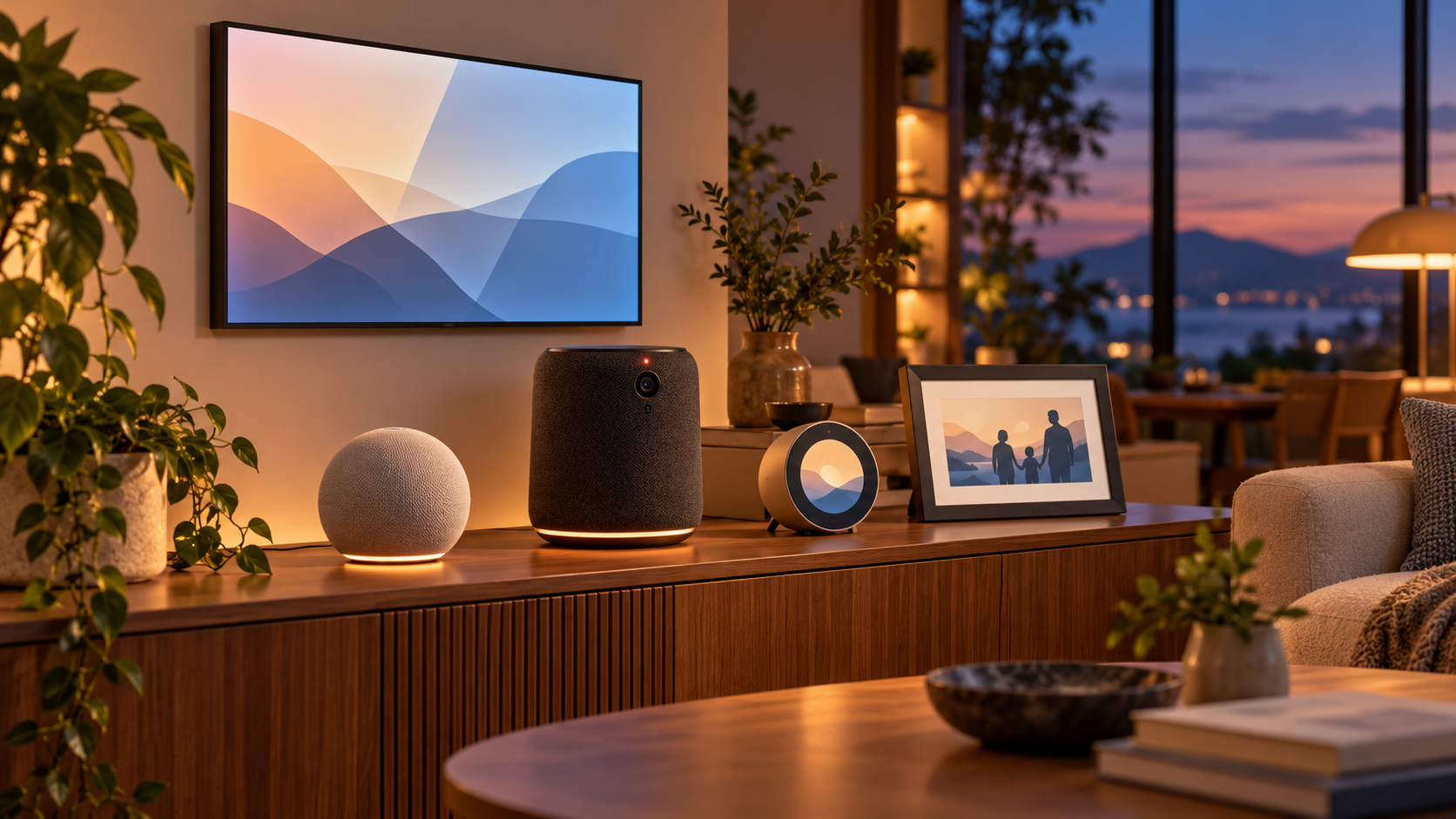
Amazon has launched five Alexa devices that cover very different jobs: a $99.99 Echo Dot, a $249.99 Echo Studio with Home Camera, a $199.99 Echo Time bedside clock, a $199.99 Alexa Photo Frame and a $499.99 Echo Show 16. Four are on sale in the United States now; the Echo Show 16 is available for preorder and is due later in 2026.
The useful story is not simply that Amazon made Alexa hardware faster. The company is turning entry-level speakers into smart-home infrastructure, putting cameras into premium audio products, using ultrasound for sleep sensing and moving its largest display closer to a wall-mounted family dashboard. Those changes make the buying decision more practical—and more privacy-sensitive—than a list of specifications suggests.
Amazon’s five new Alexa devices at a glance
- Echo Dot — $99.99; on sale now. Adds a built-in Zigbee, Matter and Thread smart-home hub, an eero Wi-Fi extender, AZ3 silicon, four microphones and 50 percent more bass than the previous generation.
- Echo Studio with Home Camera — $249.99; on sale now. Combines Dolby Atmos audio, room adaptation, Live View and visual intelligence. The camera-free Echo Studio remains available for $219.99.
- Echo Time — $199.99; on sale now. A camera-free 3.2-inch circular smart clock with optional sleep sensing, sunrise-style wake-up lighting and a smart alarm window of 10 to 60 minutes.
- Alexa Photo Frame — $199.99 in black or $229 in birch or walnut; on sale now. Uses a 10-inch anti-glare touchscreen, Amazon Photos sync and Alexa-assisted photo search and selection.
- Echo Show 16 — $499.99, or $569.99 with a Nanomatte display; preorder now with a $100 launch discount. Adds a 16-inch screen, Fire TV, night vision, a 13-megapixel camera and new family, photo and smart-home Screen Styles.
Amazon’s U.S. announcements say certain functions require Alexa+, which is included with Prime. International availability and pricing were not announced consistently across the launch pages, so buyers outside the United States should wait for a local listing rather than convert U.S. prices.
Which new Alexa device fits your room?
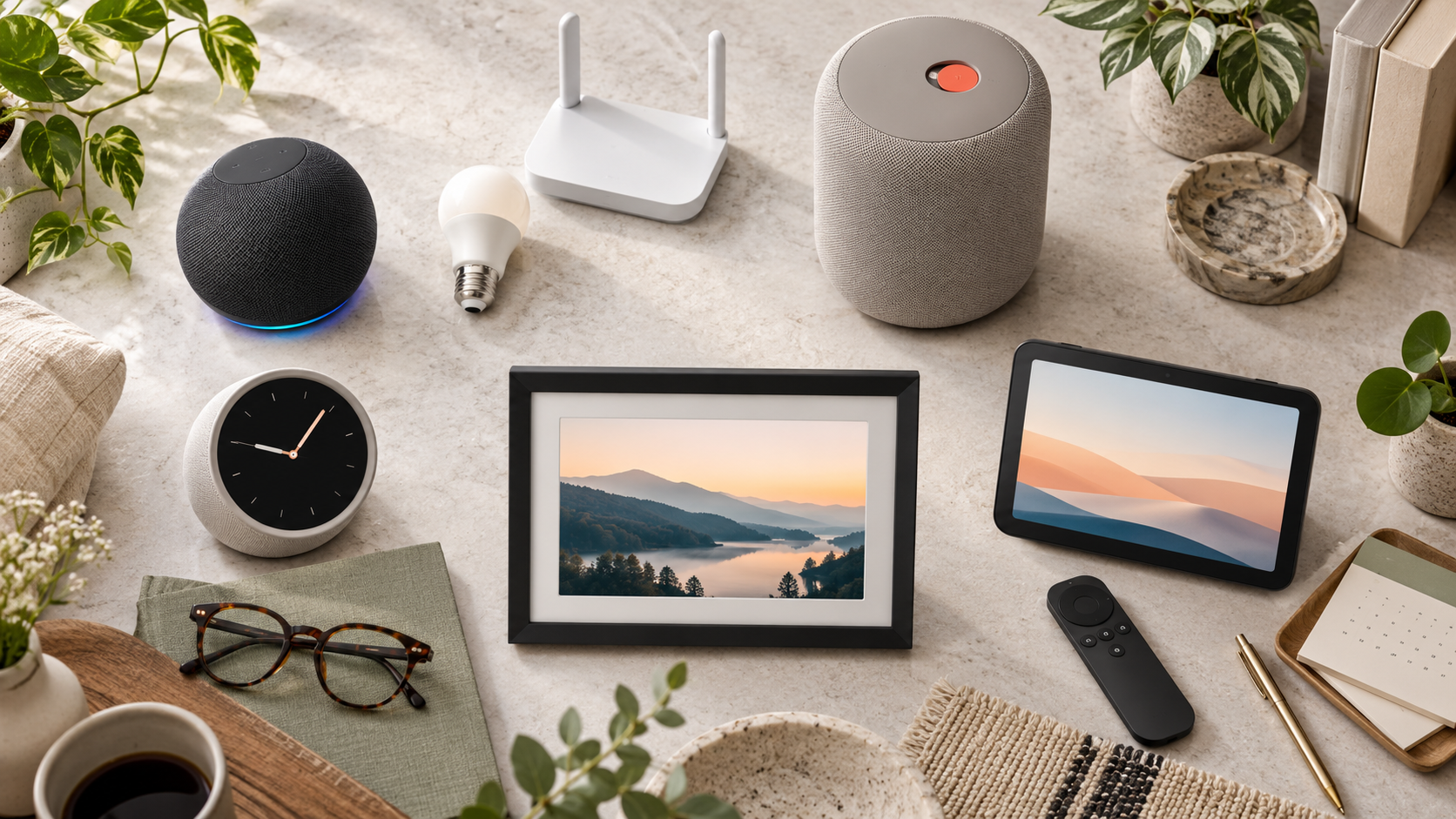
Echo Dot: the best value if you are building a smart home
The new Echo Dot is the most consequential upgrade for the broadest group of buyers. Its built-in hub supports Zigbee, Matter and Thread, which can reduce the need for a separate bridge when adding compatible bulbs, plugs, locks and sensors. The built-in eero extender can add up to 1,000 square feet of coverage, but that benefit applies to an existing compatible eero network—not every Wi-Fi setup.
At twice the traditional $50 entry price of many older Dots, it is no longer an impulse speaker. It makes the strongest case when the hub or eero function replaces something you would otherwise buy. If you only want timers, weather and background music, compare sale prices on earlier Echo models before paying $99.99.
Echo Studio with Home Camera: premium audio with a bigger trust decision
The camera-equipped Studio is the most unusual product in the lineup. Amazon says the camera enables Live View, object recognition, visual questions and future Fire TV video calling. Advanced Room Adaptation continuously tunes audio for the space, while Adaptive Volume adjusts playback as a listener moves around the room.
That combination may make sense in a living room where one device can serve as a music system, room monitor and Alexa interface. It is a poor fit for anyone who is uncomfortable with an always-present camera in an audio-first product. Amazon keeps the standard $219.99 Echo Studio in the range, so camera-free buyers do not need to accept the sensor to get the premium speaker.
Echo Time: a bedside choice for people who want no camera
Echo Time is deliberately camera-free and uses Omnisense sensors plus ultrasound to estimate sleep and breathing patterns. Its optional smart alarm can wake a user during lighter sleep within a selected 10- to 60-minute window before the target time. The screen can dim below typical daytime brightness and gradually brighten like a sunrise alarm.
The limitation is fundamental: sleep-stage estimation from a nightstand is not the same thing as a clinical sleep study. Treat it as a convenience feature, not a diagnosis or medical measurement. Couples and people with pets should also wait for independent testing to see how reliably it distinguishes the intended sleeper from movement nearby.
Alexa Photo Frame: best for households already using Amazon Photos
The Photo Frame is the simplest device to understand. It syncs with Amazon Photos, can surface images based on people, time and context, and accepts voice requests for a person, pet or trip. Prime members receive unlimited full-resolution photo storage, while every frame includes 90 days of Alexa+ according to Amazon.
Its value depends on the photo library you already maintain. A household using Google Photos, Apple Photos or a local server should consider the work and lock-in involved before switching. Because facial and contextual search touches personal memories, owners should review shared albums, household access and voice-note permissions before gifting a preconfigured frame.
Echo Show 16: the family dashboard and Fire TV option
Echo Show 16 is the most capable—and most expensive—device. The 16-inch display is larger than the Echo Show 15, while the redesigned chassis is nearly 40 percent thinner. Its 13-megapixel camera adds night vision and a wider field of view, and the audio system uses eight micro woofers and two tweeters. Fire TV and a remote are included.
The new Screen Styles are the reason to buy it: a family organizer, a photo display or a smart-home dashboard with Alexa Home Map. Amazon says Home Map can show connected devices in their rooms and, with compatible cameras, surface activity around a property. Some camera-map functions require additional Ring subscriptions, and the map preview is scheduled to roll out later rather than arrive fully formed on day one.
At $499.99 before stands, this is closer to a small TV or household control panel than a countertop assistant. The $100 preorder discount is meaningful, but independent testing of the Nanomatte screen, night vision and Home Map would be more useful than buying simply to secure the discount.
What Alexa+ changes—and what still costs extra
Amazon says the latest Alexa can hold more natural conversations, reason across several sources, ask clarifying questions and organize ongoing topics into Cards. The Echo Show 16 can generate visual layouts during a conversation, while the speaker products rely on voice responses. Alexa+ is included with Prime, but Amazon repeatedly notes that only certain features require it.
That wording matters because the hardware purchase does not guarantee every advertised experience forever or in every country. Prime membership, Ring plans, Kids+ and optional accessories can all change the real cost. Before ordering, list the functions you expect to use and confirm which subscription, account and compatible hardware each one needs.
Camera and sleep-sensing privacy questions to answer first
Amazon says camera-equipped Echo devices include a button that disables microphones and cameras, plus visible indicators when a camera stream is active. Echo Time sleep sensing is opt-in and can be disabled in the Alexa app or by muting the microphones. Those controls are useful, but they do not replace household consent and account security.
- Decide whether every person using the room is comfortable with the camera, Live View, Visual ID or sleep sensing before enabling it.
- Review every phone and household profile that can access the Alexa account, and remove devices that no longer need control.
- Use a unique Amazon password and multi-factor authentication, then audit voice history, camera settings and saved profiles.
- For Echo Time, start with the shortest acceptable alarm window and verify that ultrasound sensing works reliably in the actual bedroom.
- For Echo Show 16 and Studio, place the device so the camera does not cover private areas or neighboring property.
- Prefer the camera-free Echo Studio or Echo Time when the visual features do not solve a problem you actually have.
A verified Amazon option
The new Echo Dot is the most broadly useful entry in this lineup because its hub and networking functions may replace separate hardware. Readers can check the 2026 Echo Dot on Amazon (ASIN B0FXN2JWST) for current color, stock and shipping details. Confirm that the listing identifies the 2026 model before ordering.
Affiliate disclosure: ReaderSpice may earn a commission from qualifying Amazon purchases made through the link above, at no additional cost to you.
Should you buy now?
The Echo Dot is the clearest day-one recommendation for households that need a smart-home hub or already use eero. Echo Time is a reasonable camera-free bedside option for people who value a smart wake-up window and accept that consumer sleep sensing needs real-world validation. The Alexa Photo Frame is strongest for families already committed to Amazon Photos.
The Echo Studio with Home Camera and Echo Show 16 deserve more caution. Both add cameras to rooms where people may not expect them, and their most ambitious functions depend on Alexa+, account permissions or future software. Buy either for the audio, display and controls available now—not for a promised feature you cannot test yet.
Sources
- Amazon Devices: 2026 Alexa device lineup
- Amazon Devices: Echo Dot and Echo Studio with Home Camera
- Amazon Devices: Echo Show 16 specifications, pricing and availability
- Amazon Devices: Echo Time sleep sensing and privacy controls
- Amazon Devices: Alexa Photo Frame features and pricing
- Amazon Devices: Alexa Home Map preview and subscription notes
- Reuters: Amazon launches five new Alexa devices
- WIRED: Amazon’s new Echo hardware and pricing context
- Amazon: 2026 Echo Dot product listing (ASIN B0FXN2JWST)