
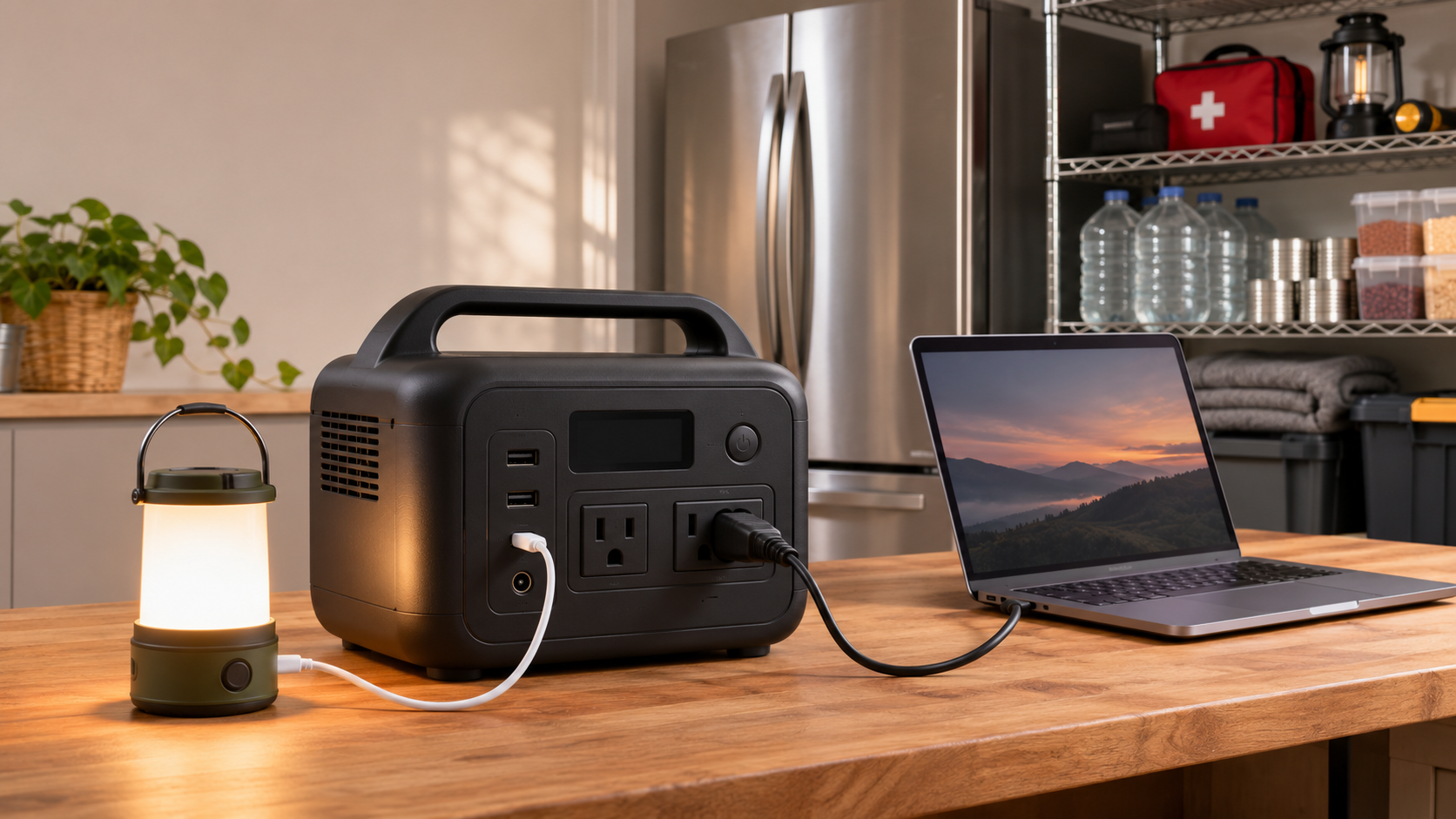
EcoFlow opened U.S. preorders for the RIVER 260 Gen4 and RIVER 520 Gen4 on November 24, 2026. The smaller 256Wh model has an early price of $219 through December 3, while the 512Wh model is listed at $309 through December 31. Those prices are useful, but the more important choice is what each unit can safely and realistically power.
Both models use lithium iron phosphate cells, add a bidirectional 140W USB-C port, switch to battery in under 10 milliseconds when used as backup power, and include app-controlled emergency reserve and refrigerator modes. They are still compact power stations, not whole-home batteries: AC output is 300W on the 260 and 500W on the 520, and refrigerator startup loads require more care than a simple wattage label suggests.
This is a launch analysis based on EcoFlow’s published specifications, support guidance and preorder pages—not a hands-on review. ReaderSpice has not independently measured usable capacity, inverter efficiency, noise, charge speed, refrigerator runtime or UPS compatibility.
EcoFlow RIVER Gen4 at a glance
- RIVER 260 Gen4: 256Wh, 300W rated AC output, 600W surge/X-Boost, 6.6 lb and $219 early price through December 3.
- RIVER 520 Gen4: 512Wh, 500W rated AC output, 1,000W surge/X-Boost, about 10.1 lb and $309 early price through December 31.
- Maximum combined output: 505W on the 260 and 740W on the 520 when AC and compatible USB-C outputs are used together.
- Fastest wall charging: EcoFlow claims 0–80% in about 42 minutes for the 260 and 50 minutes for the 520.
- Solar input: up to 110W through USB-C3; panels with XT60 connectors require EcoFlow’s XT60-to-USB-C cable.
- Backup switching: under 10ms, but EcoFlow advises testing the exact computer, router, NAS or other load before relying on it.
- Warranty: three years when the extra year is registered through EcoFlow’s app or official website.
RIVER 260 Gen4 or RIVER 520 Gen4?
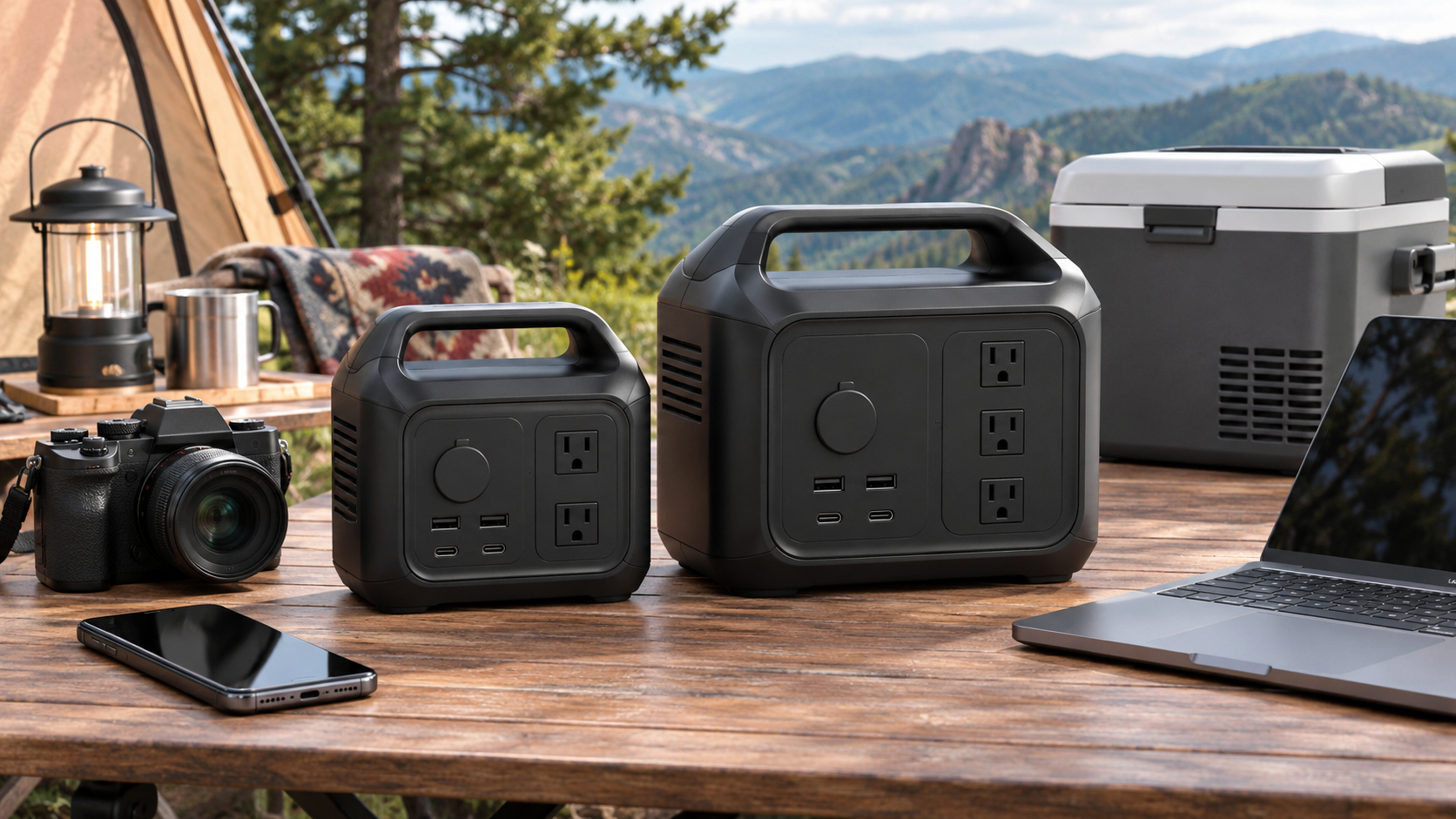
The two sizes target different jobs: light devices and short trips for the 260, longer runtimes and more demanding compact loads for the 520. Original ReaderSpice illustration.
Choose the 260 for laptops, cameras and short outages
The RIVER 260 Gen4 is the carry-first option. Its 256Wh battery and 300W AC ceiling suit phones, tablets, camera batteries, many laptop chargers, a router and small lights. Its strongest USB-C port can deliver or accept up to 140W, so a compatible laptop can charge without using the AC inverter.
The 260 is not a general appliance backup. A heater, kettle, microwave, hair dryer or most coffee makers will exceed its rated AC output. EcoFlow’s X-Boost mode may run selected resistive loads by reducing voltage, but that is not equivalent to a clean 600W continuous supply and should not be used for voltage-sensitive electronics.
Choose the 520 for overnight use and a larger safety margin
The RIVER 520 Gen4 doubles capacity to 512Wh and raises rated AC output to 500W. That makes it more appropriate for overnight camping, a small compressor refrigerator, multiple devices, or a router-and-laptop setup that needs more time. Its 740W maximum combined output depends on using the independent 140W USB-C channel plus other outputs; it does not turn the AC outlets into a 740W circuit.
A larger battery is not automatically the better buy. If the job is charging phones and a laptop for a few hours, the 520 adds cost and weight without changing the 140W USB-C ceiling. For outage planning, list each load, its running watts and any startup surge before choosing capacity.
Fridge Runtime Boost has strict load limits
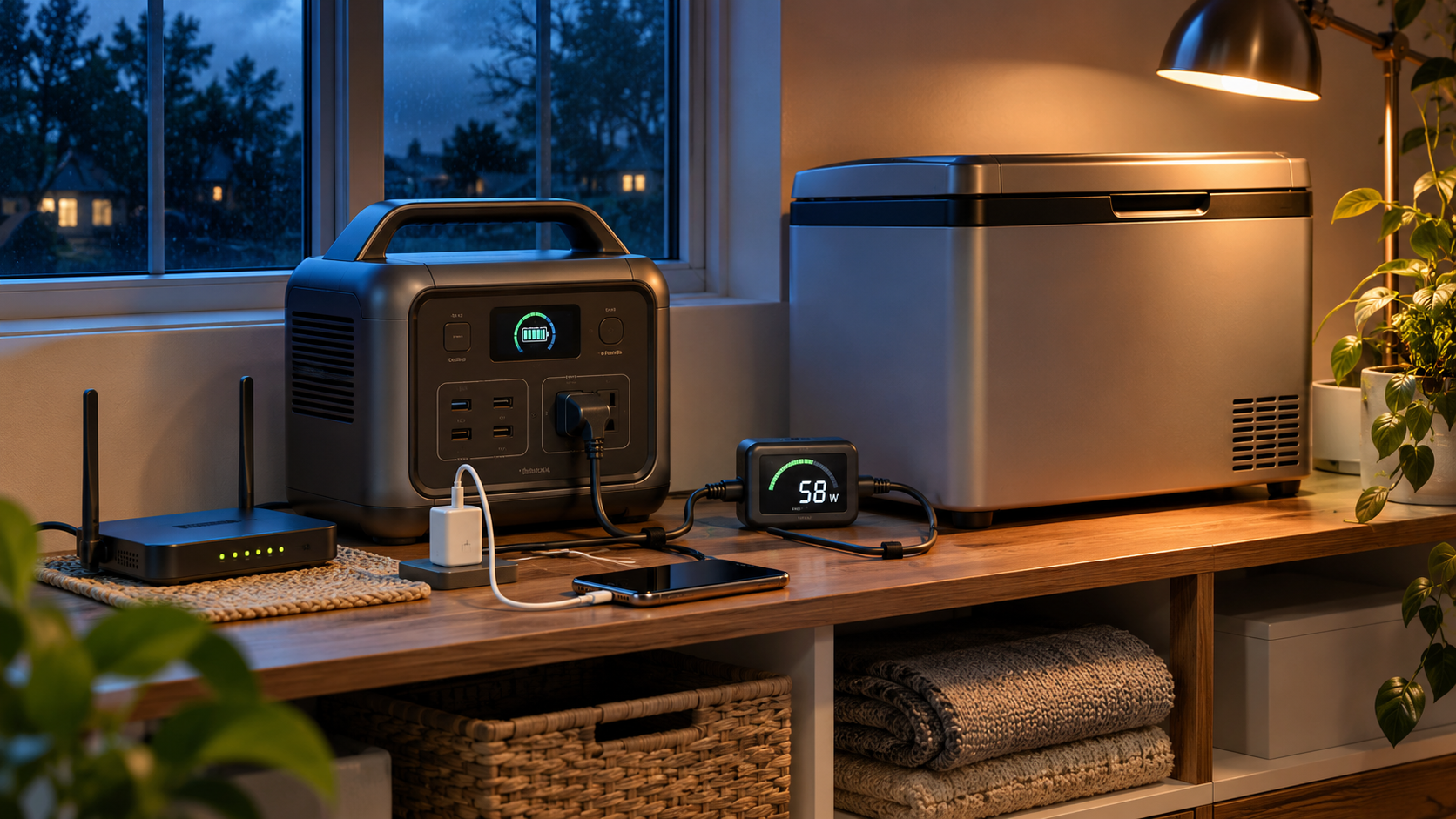
A compressor refrigerator cycles on and off, so startup surge and average energy use matter more than the label’s running watts alone. Original ReaderSpice illustration.
EcoFlow says Fridge Runtime Boost can extend runtime by about 15% for compatible refrigerators by optimizing power delivery around compressor cycles. That figure is a manufacturer claim and does not promise a fixed number of hours. Room temperature, thermostat setting, door openings, insulation, battery age and inverter losses all change the result.
The company recommends a refrigerator rated up to 80W with the RIVER 260 Gen4 and up to 150W with the RIVER 520 Gen4. The reason is startup current: a compressor can briefly draw several times its running power. A refrigerator that averages 60W may still trip a small inverter when its compressor starts.
- Check the refrigerator’s rated running watts and, when available, locked-rotor or startup current.
- Test the complete setup while grid power is available; do not discover incompatibility during an outage.
- Keep the power station dry, ventilated and away from refrigerator exhaust heat.
- Use AC output only when needed because the inverter consumes power even when the appliance is between cycles.
- Do not connect a power station to household wiring without an approved transfer system installed by a qualified professional.
Emergency reserve at 0% is not extra capacity
Emergency Power Mode keeps a small protected reserve available after the display reaches 0%. EcoFlow says it can provide roughly a 5–10% phone charge under its test conditions. The mode must be enabled in the EcoFlow app before first use, and the unit should be recharged to at least 30% soon after the reserve is used.
Treat the reserve as a last-call feature for a phone, message or navigation—not as hidden energy for a refrigerator or laptop. Using it frequently leaves less buffer for the battery-management system and may make outage planning less predictable.
Charging, ports and the missing car socket
The Gen4 design puts more emphasis on USB-C. Both models include one 140W bidirectional USB-C port plus two additional USB-C ports and USB-A. On the RIVER 260 Gen4, two ports can each supply up to 65W; on the 520, the secondary high-power USB-C path reaches 100W. Shared-port limits apply when several low-power ports are used together.
Neither unit has a built-in 12V car-style outlet. EcoFlow instead uses an optional USB-C-to-12V adapter rated up to 126W. The company lists the adapter as a launch gift, but buyers should confirm the current bundle because promotional inclusions can change.
Solar charging is also routed through USB-C3 and tops out at about 110W. A common XT60 solar cable does not plug directly into the station; EcoFlow’s compatible XT60-to-USB-C cable is required. That cable and the panel’s open-circuit voltage should be checked before connecting anything.
What the launch prices do—and do not—mean
EcoFlow’s U.S. preorder announcement lists $219 for the RIVER 260 Gen4 through December 3 and $309 for the RIVER 520 Gen4 through December 31. The product pages show higher reference prices, but preorder inventory, shipping dates, bundles and regional availability can change. The 520 page also says the offer includes 60-day price protection on eligible RIVER Gen4 purchases.
Do not buy only because a countdown is running. A 256Wh station cannot replace a 512Wh one for long refrigerator duty, and the 520 cannot power appliances above its 500W rated AC output simply because it has more battery capacity. Compare the actual load list, expected outage length, cable needs and return policy first.
A practical buying and setup checklist
- Write down every device’s running watts, startup surge and hours of use.
- Choose the 260 for light electronics and portability; choose the 520 when runtime or compressor headroom matters more than weight.
- Confirm whether the launch bundle still includes the USB-C-to-12V adapter and whether a solar cable is included.
- Install the EcoFlow app, update firmware and configure reserve, charging and AC-timeout behavior before an outage.
- Test UPS switchover with the exact router, computer or NAS; a sub-10ms rating is not a compatibility guarantee.
- Run a refrigerator test from full charge and note the real runtime under normal room conditions.
- Store the station partly charged, dry and within the temperature range in the manual; recharge it on a calendar.
A relevant predecessor on Amazon
For shoppers who need a model with an established U.S. Amazon listing now, the EcoFlow RIVER 3 Plus portable power station (ASIN B0DCCB657J) is a relevant predecessor, not a Gen4 unit. The indexed listing is for a 286Wh model with higher rated AC output and expansion-battery support, so it should not be treated as an equivalent substitute without comparing weight, ports, capacity and current seller details.
Amazon listings can change by seller, bundle and price. Confirm the ASIN, included cables, warranty eligibility and whether the offer is sold by EcoFlow or an authorized seller before ordering.
Affiliate disclosure: ReaderSpice may earn a commission from qualifying purchases made through the Amazon link above, at no additional cost to you.
Who should consider RIVER Gen4
- Travelers, photographers and remote workers who want 140W USB-C charging in a compact LFP station.
- Apartment or home users who need tested backup for a router, phone, laptop, lights or a small compatible refrigerator.
- Buyers who value low standby draw, app controls and fast wall charging more than expansion batteries or high AC output.
Who should wait or choose a larger system
- Anyone who needs to power heating appliances, cooking equipment, a large refrigerator or several AC loads together.
- Buyers who want independent runtime, noise and thermal testing before relying on a new generation during outages.
- Users who require a built-in 12V car socket, higher solar input, expansion batteries or whole-home integration.
What ReaderSpice has not verified
ReaderSpice has not tested production RIVER Gen4 hardware. The 42- and 50-minute charging figures, 30dB noise claim, 15% refrigerator-runtime improvement, 99% one-year storage retention, sub-10ms switching, 4,000-cycle rating and emergency phone-charge estimate are EcoFlow claims or specifications. Real results vary with firmware, temperature, load, cables, battery condition and settings.
Prices, inventory, shipping dates, price protection, promotional adapters and Amazon availability can change after publication. Verify the live EcoFlow and Amazon pages before paying.
The bottom line
At $219, the RIVER 260 Gen4 is the more compelling compact option for USB-C devices and short backup jobs. The $309 RIVER 520 Gen4 is the safer choice for longer runtime, several devices or a small compatible compressor refrigerator. Neither model should be sized from battery capacity alone: its rated AC output, startup-surge limits and cable requirements decide whether a load will run at all.
Sources
- EcoFlow official RIVER Gen4 series overview
- EcoFlow official RIVER Gen4 specifications
- EcoFlow official RIVER Gen4 support and FAQ
- EcoFlow official RIVER 520 Gen4 preorder page
- EcoFlow launch announcement and U.S. early-price deadlines
- Amazon listing: EcoFlow RIVER 3 Plus (ASIN B0DCCB657J)
Inline image 1 metadata: Original ReaderSpice editorial illustration; 1672 × 941 pixels; 16:9 landscape; generic power-station size comparison with camera, laptop and cooler.
Inline image 2 metadata: Original ReaderSpice editorial illustration; 1672 × 941 pixels; 16:9 landscape; compact power station supporting a refrigerator, router and phone during an outage.