

Google’s Universal Cart is now rolling out in the United States across Search and the Gemini app, giving shoppers one place to save products from multiple retailers, watch for price changes and move toward checkout. Google announced the launch on October 15, 2026, after previewing the system at Google I/O earlier this year.
The useful part is not simply another cart icon. Universal Cart can keep a cross-store list synchronized across Google, notify users about price drops or restocks, surface promo codes and consider eligible card perks in Google Wallet. It can also send products to a merchant’s cart or support Google Pay checkout with participating stores. Those conveniences do not replace the need to verify the seller, return policy and final total before buying.
Google Universal Cart at a glance
- The rollout began October 15 for U.S. users across Google Search and the Gemini app.
- Products from several retailers can stay together in one persistent cart instead of separate tabs, screenshots or wish lists.
- Google can alert users when a saved item drops in price or returns to stock.
- The cart can surface promo codes and use Google Wallet information to help compare eligible payment-method perks.
- Participating merchants can support Google Pay checkout in the cart; users can also transfer items to the retailer’s own checkout.
- The merchant remains the seller of record and handles the order confirmation and customer support.
How Universal Cart works across Search and Gemini
A product saved while shopping in Search or AI Mode can appear later in the Gemini app, and an item added during a Gemini conversation can remain available when the user returns to Google. The goal is continuity: a shopper can research in one place, save the result and resume later without rebuilding the list.
Google says the cart is powered by its Shopping Graph, which contains more than 60 billion continually refreshed product listings. That gives the system inventory and price signals across many merchants, but it does not guarantee that every listing is current at the exact moment you buy. A price, shipping date or stock notice should still be confirmed on the final checkout page.
The May preview also described future integration with YouTube and Gmail. Google’s October launch announcement names Search and Gemini as the services rolling out now, so YouTube and Gmail should be treated as planned expansion rather than assumed launch-day availability.
Price-drop, restock and promo-code alerts
Universal Cart can monitor the collection rather than forcing shoppers to track each store separately. Google says it can notify users when a saved product gets cheaper or comes back in stock, and it can display relevant promo codes inside the cart.
That can reduce repetitive checking during holiday sales, but alerts are best used as a signal, not proof of a bargain. Compare the current price with recent history, check shipping and membership fees, and make sure the discounted item is the same size, color, storage capacity or model you intended to buy. A promo code can also have exclusions or a short expiration window.
Google Wallet can help compare card perks
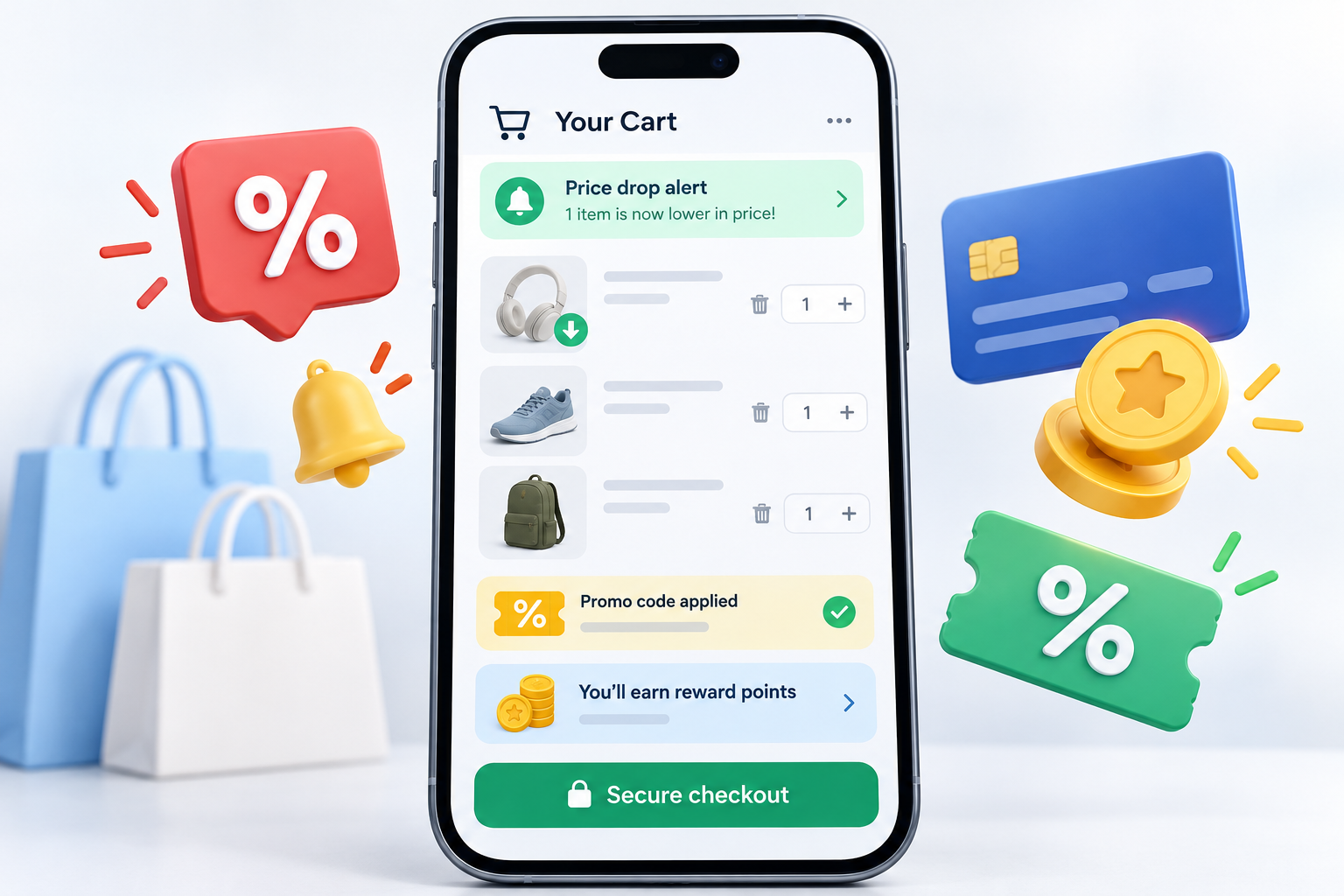
Google says Universal Cart can use Google Wallet to understand eligible card benefits and merchant offers, then help identify a payment method that may provide better rewards or savings. The cart can show a useful reminder when a particular card includes cash back, points or another relevant perk.
This feature deserves a careful final check. Reward categories, spending caps, activation requirements and excluded merchants can change, and the card issuer’s terms remain authoritative. Never choose a payment method solely because an AI-generated suggestion says it is best; verify the offer in the issuer’s app or website first.
Checkout keeps the merchant in charge of the order
When a participating store supports the experience, a shopper can use Google Pay in the cart. The other option is to transfer the product to the merchant’s own cart and finish on the retailer’s website. Google lists merchants including Nike, Sephora, Target, Ulta Beauty, Walmart, Wayfair and many Shopify stores, but support can differ by item and account.
Google explicitly says the retailer remains the seller of record. That means the merchant—not Google’s shopping assistant—sends the confirmation and handles fulfillment, returns and customer support. Before authorizing payment, confirm the merchant name, exact product, quantity, delivery address, shipping cost, taxes, subscription status and return window.
What Universal Cart does not guarantee
A universal cart can organize shopping information, but it cannot make every retailer equally trustworthy or every recommendation correct. Listings can be stale, marketplace sellers can differ from the brand shown in a product image, and a low headline price can hide shipping charges, used condition or a restrictive return policy.
Payment convenience also does not erase the privacy tradeoff. Google Pay documentation explains that transaction data may be used to facilitate purchases, show history, resolve problems and provide other Pay features. Users should review Google Wallet and payments privacy settings, keep account security protections enabled and avoid saving more payment methods than they actually need.
Five checks before buying through Universal Cart
- Open the final product page and verify the seller, condition, model number, size, color and warranty.
- Compare the all-in total, including shipping, taxes, memberships and any recurring subscription.
- Confirm a promo code or card reward in the merchant or issuer terms before relying on the savings.
- Use a unique Google Account password, two-step verification and device screen lock before storing payment methods.
- Keep the human approval step: review every detail before tapping the final purchase button.
ReaderSpice’s earlier guide to AI shopping agents has a broader eight-point checklist for fraud, privacy and authorization risks.
Who can use Universal Cart now
Google says the launch is rolling out in the United States across Search and the Gemini app. As with many account-based features, appearance may vary by account, app version and rollout stage. If the cart is missing, update the Google app or Gemini app, sign in to the intended Google Account and check again later rather than assuming the device is unsupported.
Google has not announced a complete international schedule for Universal Cart itself in the October launch post. The company has separately discussed expanding parts of its Universal Commerce Protocol checkout experience to Canada, Australia and later the United Kingdom, but that is not the same as confirming the full cart in every market.
Should you use Google Universal Cart?
Universal Cart is most useful for a deliberate purchase spread across several retailers: holiday gifts, a home-office setup, travel gear or components for a PC build. Centralizing price and stock alerts can save time, and the merchant-transfer option lets cautious shoppers finish on the retailer’s own site.
It is less compelling when the purchase is simple, privacy is the top priority or the shopper already uses a retailer-specific wish list with reliable alerts. The best default is to let Google organize and surface savings while keeping the final decision manual.
If you want a current device for using Gemini and Google shopping tools on the go, you can browse Google Pixel phones and tablets on Amazon, then compare the seller, storage, warranty and return policy before ordering.
As an Amazon Associate, ReaderSpice earns from qualifying purchases.
Bottom line
Google Universal Cart turns Search and Gemini into a shared shopping workspace rather than two separate discovery tools. Cross-store saving, price and restock alerts, promo codes and Wallet-based perk suggestions can be genuinely useful during a busy sale season.
The value depends on discipline at the last step. Treat alerts and AI recommendations as assistance, not authority; verify the seller, total, terms and card benefit yourself. Used that way, Universal Cart can cut shopping friction without surrendering control of the purchase.
Sources
Google: An intelligent new shopping cart
Google: Introducing the Universal Cart and more ways to help you shop
Google Pay Help: Keep your payment info safe
The Verge: Google launches its universal online shopping cart
ReaderSpice: AI shopping agents raise fraud and privacy risks