
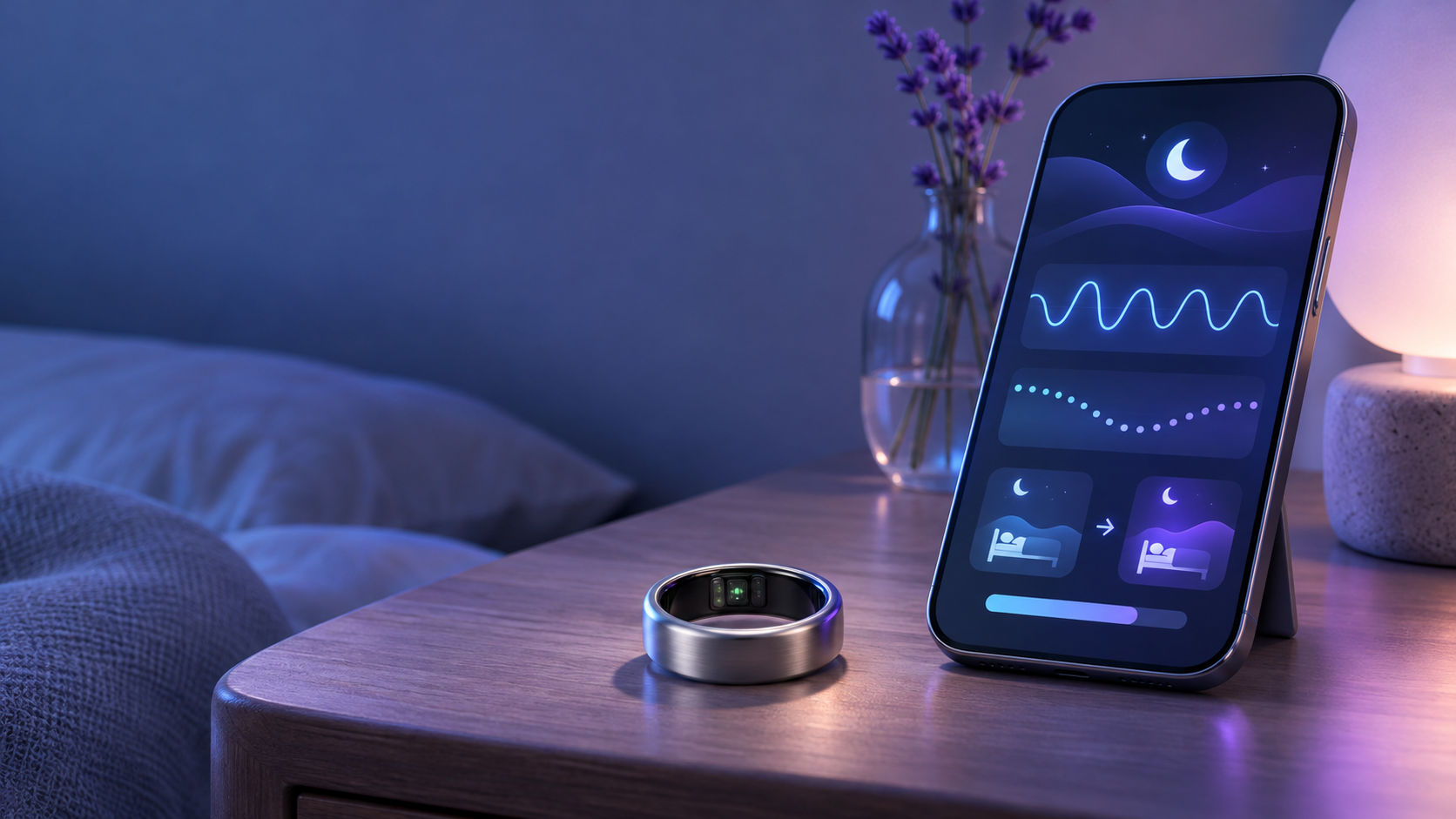
Samsung expanded its Sleep Apnea feature to Galaxy Ring on November 3, 2026, after the updated software received U.S. Food and Drug Administration clearance in July and Korean regulatory approval in October. The change gives eligible adults another way to screen for signs associated with moderate-to-severe obstructive sleep apnea while they sleep.
The important word is screen. The Galaxy Ring does not diagnose sleep apnea, replace a sleep study or tell a user to start or stop treatment. It analyzes two qualifying nights and returns a risk result that may justify a conversation with a clinician. That distinction should guide both setup and interpretation.
What changed on November 3
Samsung’s updated software brings the company’s existing wrist-based Sleep Apnea feature to a compatible Galaxy Ring and Galaxy phone. Samsung calls it the first smart-ring implementation cleared in the United States for detecting signs of moderate-to-severe obstructive sleep apnea. The software remains an over-the-counter, on-demand feature inside Samsung Health Monitor rather than a continuous medical monitor.
- Galaxy Ring support is part of a staged November 2026 software rollout, so availability may not appear on every eligible device on the same day.
- The feature is intended for people age 18 or older who have not already been diagnosed with sleep apnea.
- A complete assessment requires two valid nights of data within a 10-day window.
- In the United States, the correct regulatory term is FDA-cleared—not FDA-approved.
- The result is a risk notification, not a diagnosis or treatment recommendation.
Who can use the Galaxy Ring sleep apnea feature
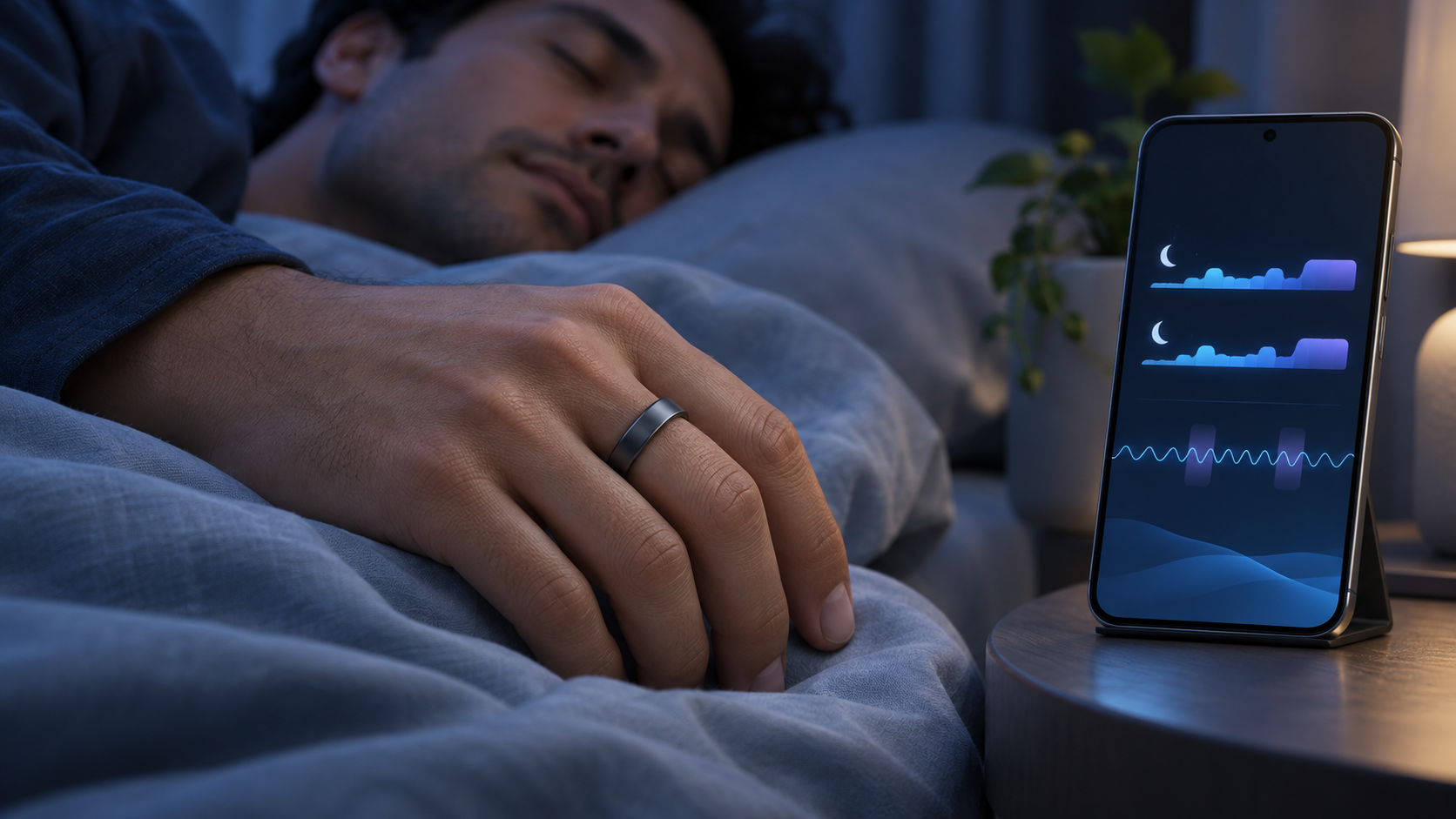
Galaxy Ring uses overnight sensor data with Samsung Health Monitor to produce an on-demand two-night risk assessment.
Samsung’s U.S. support material lists Galaxy Ring, a compatible Samsung Galaxy phone running Android 12 or later, and the latest Samsung Health Monitor app as the core requirements. The phone and wearable must be paired through Galaxy Wearable, and the service must be available in the user’s country or region. Samsung says the November update is rolling out in stages, so an eligible configuration can still show no Sleep apnea tile until the update arrives.
Samsung’s watch guidance varies by model and update status, but that does not change the Ring workflow covered here. Ring owners should use Samsung Health Monitor’s own compatibility check rather than assuming that a phone, region or account is supported.
How the two-night screening works
The FDA clearance describes software that combines signals from a compatible Samsung wearable, including photoplethysmography, motion and blood-oxygen-derived sleep information. The algorithm estimates breathing disruptions during sleep and calculates a time-weighted average across two nights. In the FDA summary, a result at or above 15 breathing disruptions per hour is treated as a positive risk assessment for moderate-to-severe obstructive sleep apnea.
Each valid night needs at least five hours of sleep data, and the two nights must be recorded within 10 days. The feature turns off after it returns a result or when the 10-day period ends. That design makes it an occasional screening tool, not a nightly trend dashboard. Users can run another assessment later when appropriate.
The Ring stores only a limited amount of data before syncing, so Samsung recommends opening the apps and syncing regularly. Poor fit, blocked sensors, loose contact or a missed sync can leave a night incomplete and force the user to repeat it.
How to set it up
- Update the Galaxy phone, Galaxy Wearable, Samsung Health and Samsung Health Monitor, then confirm that the Ring is paired over Bluetooth.
- Open Samsung Health Monitor and choose the Sleep apnea tab. Select Get started and review the education and caution screens.
- Complete the eligibility questionnaire accurately. The app may stop setup if an answer places the user outside the intended population.
- Choose the connected Galaxy Ring, grant the requested permissions and switch the feature on.
- Wear the Ring for a full night with its orientation indicator facing the palm. Repeat for a second qualifying night within the 10-day window.
- Open Samsung Health Monitor after waking and allow the Ring to sync. If a night is incomplete, check fit, sensor cleanliness, Bluetooth and app updates before trying again.
How to wear the ring for a valid reading
The Ring should be snug enough that its sensors maintain contact with the underside of the finger, but it should not cause pain, numbness or restricted circulation. Samsung instructs users to keep the orientation indicator toward the palm. A Ring that spins freely or leaves the sensors off the skin can reduce usable data.
Clean and dry the Ring and finger before bed, especially after lotion, exercise or hand washing. Keep the paired phone nearby enough to reconnect, and sync after waking. If the app repeatedly rejects a night, a different finger or Ring size may be more reliable than overtightening the device.
What a positive or negative result means
A positive result means the two-night pattern met the software’s threshold for signs associated with moderate-to-severe obstructive sleep apnea. It does not establish a diagnosis. Save or export the result if useful and discuss it with a qualified health professional, who can decide whether symptoms, history and formal testing warrant further evaluation.
A negative result does not rule out sleep apnea. Consumer wearables can miss events, and the feature is not intended to identify every form or severity of sleep-disordered breathing. Persistent loud snoring, witnessed pauses in breathing, gasping during sleep, morning headaches or excessive daytime sleepiness deserve medical attention even when the Ring reports no elevated risk.
Who should not use it
Samsung says the feature is not intended for anyone under 18 or for people who already have a sleep apnea diagnosis. It also lists conditions that can interfere with the measurement, including Parkinson’s disease, tremor, periodic limb movement syndrome, congestive heart failure, atrial fibrillation, chronic obstructive pulmonary disease, chronic bronchitis, emphysema and pulmonary fibrosis.
Pregnancy and temporary respiratory symptoms may also affect accuracy. Users should not change medication, therapy or device settings because of a Ring result. People with known sleep apnea should follow their existing clinical plan instead of using this feature to judge whether treatment is working.
FDA-cleared does not mean FDA-approved
The FDA database lists Samsung’s Sleep Apnea Feature v2.0 under 510(k) number K261011, with a decision dated July 20, 2026. A 510(k) clearance means the agency found the Class II device substantially equivalent to a legally marketed predicate for its intended use. It is not the same pathway or claim as FDA approval.
The clearance covers the software’s specified use with compatible Samsung devices and does not turn Galaxy Ring into a general-purpose pulse oximeter or a standalone diagnostic tool. Marketing shorthand can blur those boundaries, but the FDA and Samsung instructions are explicit about them.
Privacy and data handling
Samsung says Sleep Apnea feature data is stored on the connected devices and can be managed in Samsung Health Monitor. Users can review the app’s permissions, clear app data and export or share selected records. Clearing or reinstalling apps can erase local history, so anyone who wants to show a result to a clinician should save it first.
The app still requires connectivity for setup, activation, updates and synchronization. Review Samsung’s current privacy notice and phone-level permissions before enabling the feature, particularly on a shared phone or a device managed by an employer.
Optional Galaxy Ring purchase
Readers who do not already own the hardware can view the Samsung Galaxy Ring in Titanium Black, size 9 (U.S. version) on Amazon. That listing corresponds to ASIN B0D3JHKTCH. Ring sizing is not interchangeable with ordinary jewelry, so use Samsung’s sizing process and verify the exact size, color, seller, warranty and return terms before ordering. Availability and price can change, and buying a Ring is not a substitute for medical evaluation.
Affiliate disclosure: ReaderSpice may earn a commission from qualifying purchases made through the Amazon link above, at no additional cost to you.
Bottom line
Galaxy Ring makes Samsung’s sleep-apnea risk screening easier to use for people who prefer a ring to a watch. Its value is narrow but practical: two well-recorded nights can flag a pattern worth taking to a clinician. The feature is most useful when users meet the eligibility rules, wear the Ring correctly and resist treating either result as a diagnosis.
Check Samsung Health Monitor for the staged November 2026 update, follow the two-night instructions, and seek professional advice when symptoms or results raise concern. The Ring can open the conversation; it cannot finish it.
Sources
- Samsung Mobile Press — Upgraded Sleep Apnea feature on Galaxy Ring (November 3, 2026)
- Samsung Support — Use the Sleep Apnea feature in Samsung Health Monitor
- U.S. FDA 510(k) database — Sleep Apnea Feature v2.0, K261011
- U.S. FDA 510(k) summary — K261011
- Amazon — Samsung Galaxy Ring, size 9, Titanium Black, ASIN B0D3JHKTCH