
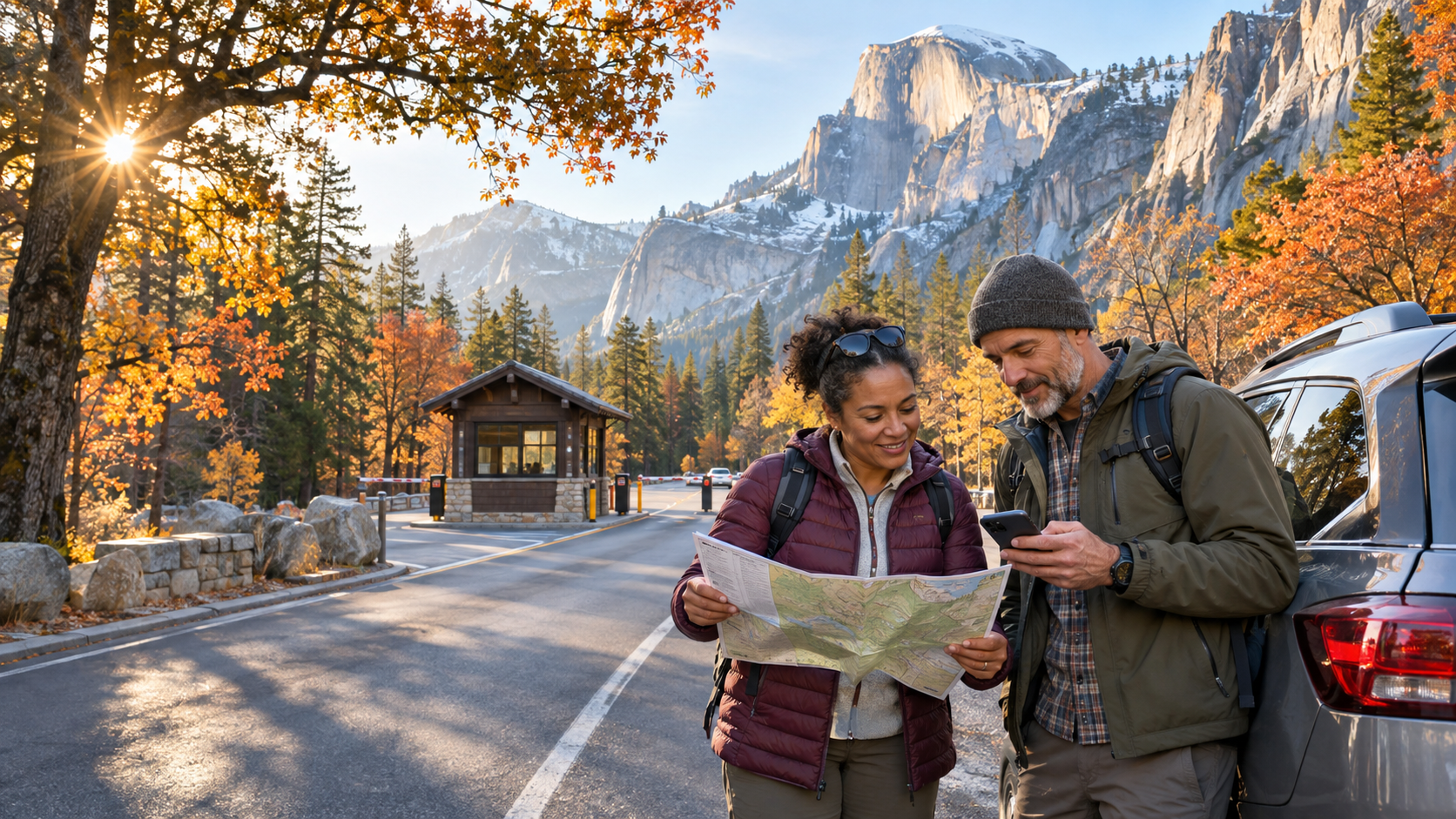
National Park Service sites that normally charge an entrance fee will waive that entrance charge for eligible visitors on Wednesday, November 11, 2026, in observance of Veterans Day. It is the final National Park Service fee-free day of the year, but it is not a blanket waiver for every visitor or every expense inside a park.
Beginning in 2026, the National Park Service limits fee-free-day admission to U.S. citizens and residents. International visitors must pay the regular entrance fee and, at 11 named parks, may also owe a separate nonresident fee unless a valid pass covers the visit. Reservations, camping, tours, permits and concession purchases can still cost money for everyone.
That distinction matters because a free entrance day can attract more traffic while removing only one line item from a trip. The practical plan is to confirm eligibility, check the destination park for reservations and closures, save proof of any booking offline, and arrive with a backup route rather than treating November 11 as unrestricted access.
Veterans Day national park free entry at a glance
- Date: Wednesday, November 11, 2026.
- Where it applies: National Park Service sites that normally collect an entrance fee.
- Who receives the waiver: U.S. citizens and residents under the National Park Service’s 2026 policy.
- Who still pays: non-U.S. residents must pay the regular entrance fee and any applicable nonresident fee unless a valid pass covers them.
- What is waived: the park entrance fee for eligible visitors.
- What is not automatically waived: timed-entry or reservation fees, camping, tours, special-use permits, transportation, parking where separately charged, and concession purchases.
- Military benefit beyond November 11: eligible current military members, dependents, veterans and Gold Star Families can obtain free annual or lifetime federal recreation passes.
- Planning rule: an entrance-fee waiver does not override road closures, capacity limits, weather restrictions or reservation requirements.
What the free day covers—and what it does not
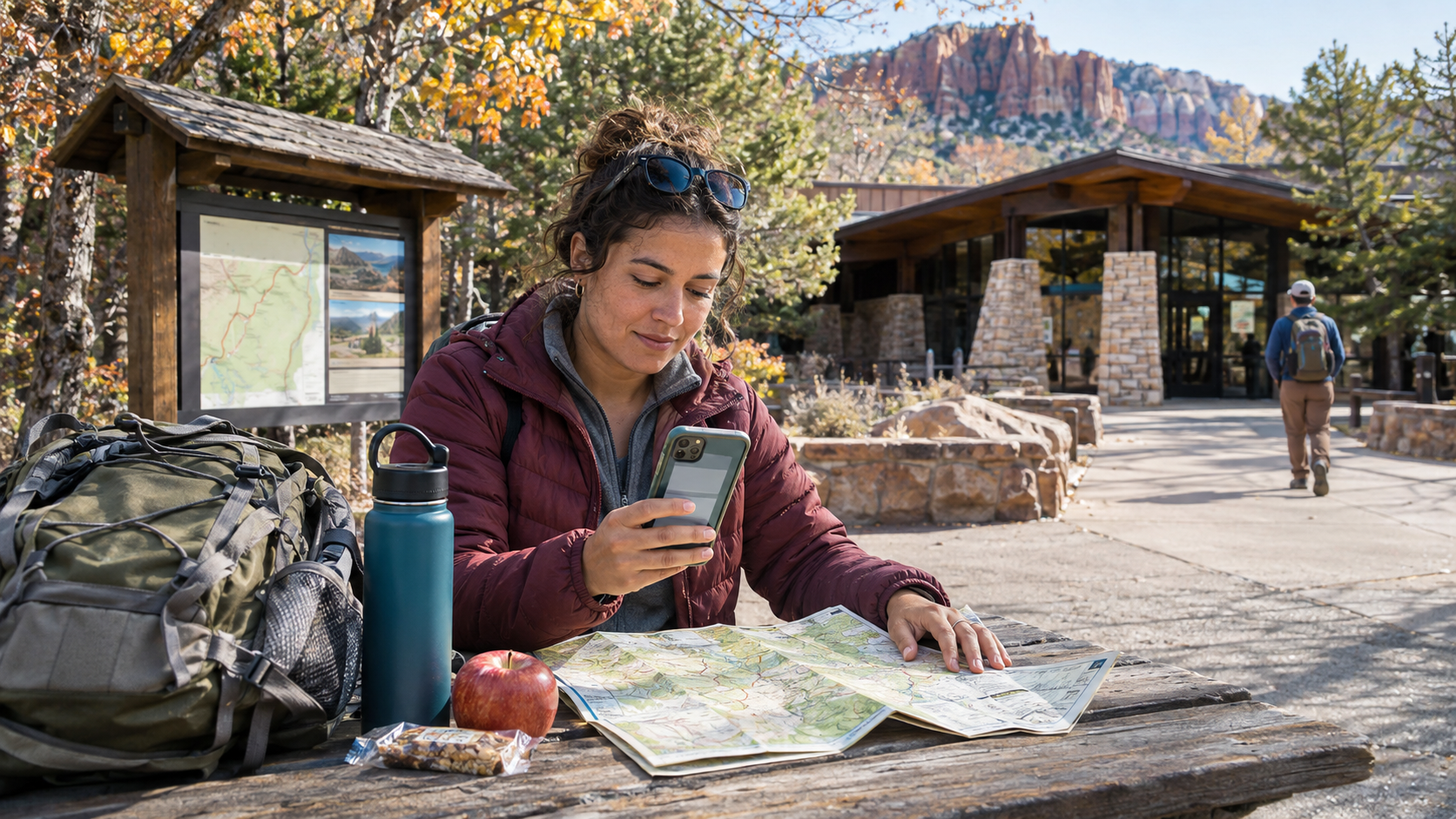
Free entrance removes one charge, but reservations, local conditions and paid activities still need a separate check before departure.
For an eligible visitor, the November 11 policy removes the ordinary entrance charge at National Park Service units that collect one. At a site that normally charges by vehicle, that means the entrance transaction is waived under the day’s rules. At a site that charges per person, eligible visitors receive the same entrance-fee benefit. Many National Park Service units never charge admission, so the holiday does not change their base entrance price.
The waiver does not turn reservations into walk-up access. The National Park Service warns that timed-entry systems and reservation fees may still apply. A reservation may control vehicle entry, a cave tour, a historic building, a ferry or another capacity-limited experience. A sold-out reservation remains sold out even when the entrance fee is zero.
Camping, lodging, guided tours, special recreation permits, organized-group fees and concession-operated activities remain separate. Food, fuel, equipment rental, shuttle or transportation charges, and purchases from private operators are not National Park Service entrance fees. Read the destination’s Fees & Passes and Current Conditions pages instead of assuming that a fee-free banner describes every service.
Who qualifies under the 2026 residency rule
The National Park Service says free entrance days beginning in 2026 are for U.S. citizens and residents. Non-U.S. residents must pay the normal entrance fee and any nonresident fee that applies. The agency’s public FAQ lists a U.S. passport, a state- or territory-issued driver’s license or state ID, and a Permanent Resident Card among the documents accepted to establish eligibility when purchasing the resident annual pass.
The fee-free-day page does not publish a separate universal document checklist for every entrance station. A sensible visitor should carry the same government-issued photo identification normally used for travel and follow instructions from the specific park. Do not invent a workaround or claim U.S. residency at the gate if it is not true; park staff apply the current federal rules.
What international visitors should expect
International visitors are not covered by the 2026 fee-free-day waiver. They must pay the normal entrance fee. At Acadia, Bryce Canyon, Everglades, Glacier, Grand Canyon, Grand Teton, Rocky Mountain, Sequoia and Kings Canyon, Yellowstone, Yosemite and Zion, non-U.S. residents age 16 and older also face a $100 nonresident fee under the current policy unless an eligible pass covers the charge.
The $250 America the Beautiful Non-Resident Annual Pass can cover entrance fees and nonresident fees for the pass holder and eligible companions under the published vehicle, motorcycle or per-person rules. Whether that pass is worthwhile depends on the itinerary. Compare the official pass terms and the specific park’s charges rather than buying from an unofficial reseller or assuming a reservation receipt acts as a pass.
Veterans and military families have a year-round option
Veterans Day is a useful reminder that eligible military visitors do not need to wait for a fee-free date. Current U.S. military members and their dependents can receive a free Military Annual Pass. U.S. military veterans and Gold Star Family members can receive a free Military Lifetime Pass. These passes cover entrance and standard amenity day-use fees at National Park Service, Bureau of Land Management, U.S. Fish and Wildlife Service, U.S. Forest Service, Bureau of Reclamation and U.S. Army Corps of Engineers sites.
Veterans seeking the lifetime pass in person can use the identification listed by the National Park Service, including an eligible Department of Defense ID, Veteran Health Identification Card, the VA’s digital Veteran ID Card, or a veteran designation on a state-issued driver’s license or ID. Gold Star Family members use the agency’s voucher process. Current service members and dependents follow the annual-pass identification rules.
The pass itself is free, but online fulfillment can carry shipping or processing charges. Recreation.gov offers a digital pass and can ship a physical version for the listed shipping fee; the USGS Store charges its published processing fee. Picking up an eligible pass in person at a participating site avoids confusing a fulfillment charge with the price of the pass.
Military passes do not cover camping, tours, special recreation permits, reservation fees, organized-group fees or concession-operated facilities. They are nontransferable. Where a site charges by vehicle, a valid pass generally admits the pass holder and occupants of one private noncommercial vehicle; where fees are charged per person, it covers the pass holder and up to three additional people age 16 or older under the current terms.
A seven-step plan for November 11
- Choose one primary park or National Park Service site and open its official Plan Your Visit, Fees & Passes, Alerts and Current Conditions pages. Do this before estimating driving time or building the rest of the day.
- Confirm whether the unit normally charges an entrance fee. If admission is already free, November 11 may not change the visit cost even though holiday crowds or special programming can still affect access.
- Check for timed entry, tour tickets, parking reservations, ferry bookings or permits. Reserve through the official park link or Recreation.gov, then note the cancellation and arrival rules.
- Verify eligibility for the resident fee-free policy or bring the valid pass that will cover the party. Keep government-issued photo identification available when a pass or reservation requires it.
- Download the reservation, park map and current alerts before leaving reliable service. Save a screenshot or PDF and keep the phone charged; do not depend on a live confirmation page at a remote entrance.
- Check weather, road status, daylight and seasonal services on the morning of the trip. A fee waiver does not reopen a snowbound road, a closed trail, a full parking lot or a building operating on reduced hours.
- Build a legal backup plan outside the most crowded corridor. If the main entrance or parking area reaches capacity, use an official alternative area or return later instead of parking on vegetation, shoulders or emergency routes.
Expect holiday traffic even in November
November is shoulder season at many parks, but the date is still a federal holiday and the final National Park Service fee-free day of 2026. Popular entrances, scenic drives, trailheads and visitor-center lots can fill. Arriving early may help, but it does not guarantee entry where a reservation, winter closure or capacity control applies.
Short daylight is the more important November constraint. Plan the return drive before sunset, carry layers for rapidly changing temperatures, and choose a route that matches the least experienced person in the group. Mountain roads can be icy when a nearby town is dry, while desert parks can swing from warm afternoons to cold evenings.
Cell coverage is inconsistent in many park units. A paper map, offline navigation, water, food, a flashlight and basic first-aid supplies are more valuable than an overpacked itinerary. Tell someone outside the group where you are going and when you expect to return, especially when visitor centers or seasonal services have reduced hours.
A practical bottle for a park day trip
A reusable bottle is useful for a fee-free day because drinking-water availability can vary by season and trailhead. The Nalgene Sustain 32-ounce Wide Mouth Water Bottle on Amazon (ASIN B0B8DXVDPM) is a simple wide-mouth option for day trips. Nalgene describes its 32-ounce bottles as BPA/BPS-free and dishwasher safe; the Amazon listing should be checked for the exact color, seller, current materials, price and return terms before purchase.
A bottle does not guarantee that safe refill water will be available. Fill it before entering, carry more capacity when the park advises it, and never drink untreated surface water. For cold conditions, keep water where it will not freeze and follow the destination’s current food-storage and wildlife rules.
Affiliate disclosure: ReaderSpice may earn a commission from qualifying Amazon purchases made through the link above, at no additional cost to you.
The bottom line
Veterans Day 2026 removes the National Park Service entrance fee for U.S. citizens and residents at fee-charging sites, but it does not create unlimited or cost-free access. International visitors remain subject to normal entrance and applicable nonresident fees, while reservations, camping, tours, permits and concession expenses stay separate for everyone.
The best use of the holiday is a focused, well-checked day trip: confirm eligibility, reserve any required entry, review same-day alerts and carry an offline backup. Eligible military members, veterans and Gold Star Families should also consider the free annual or lifetime pass that extends entrance benefits beyond November 11.
Sources
National Park Service: Entrance Passes, 2026 fee-free days and reservation guidance
National Park Service: Nonresident fees and residency FAQ
National Park Service: 2026 fee-free days announcement and costs that still apply
National Park Service: Free entrance for current military, veterans and Gold Star Families
Recreation.gov: 2026 fee-free days and planning guidance
Nalgene: Water bottle specifications and product information
Amazon: Nalgene Sustain 32-ounce Wide Mouth Water Bottle (ASIN B0B8DXVDPM)