
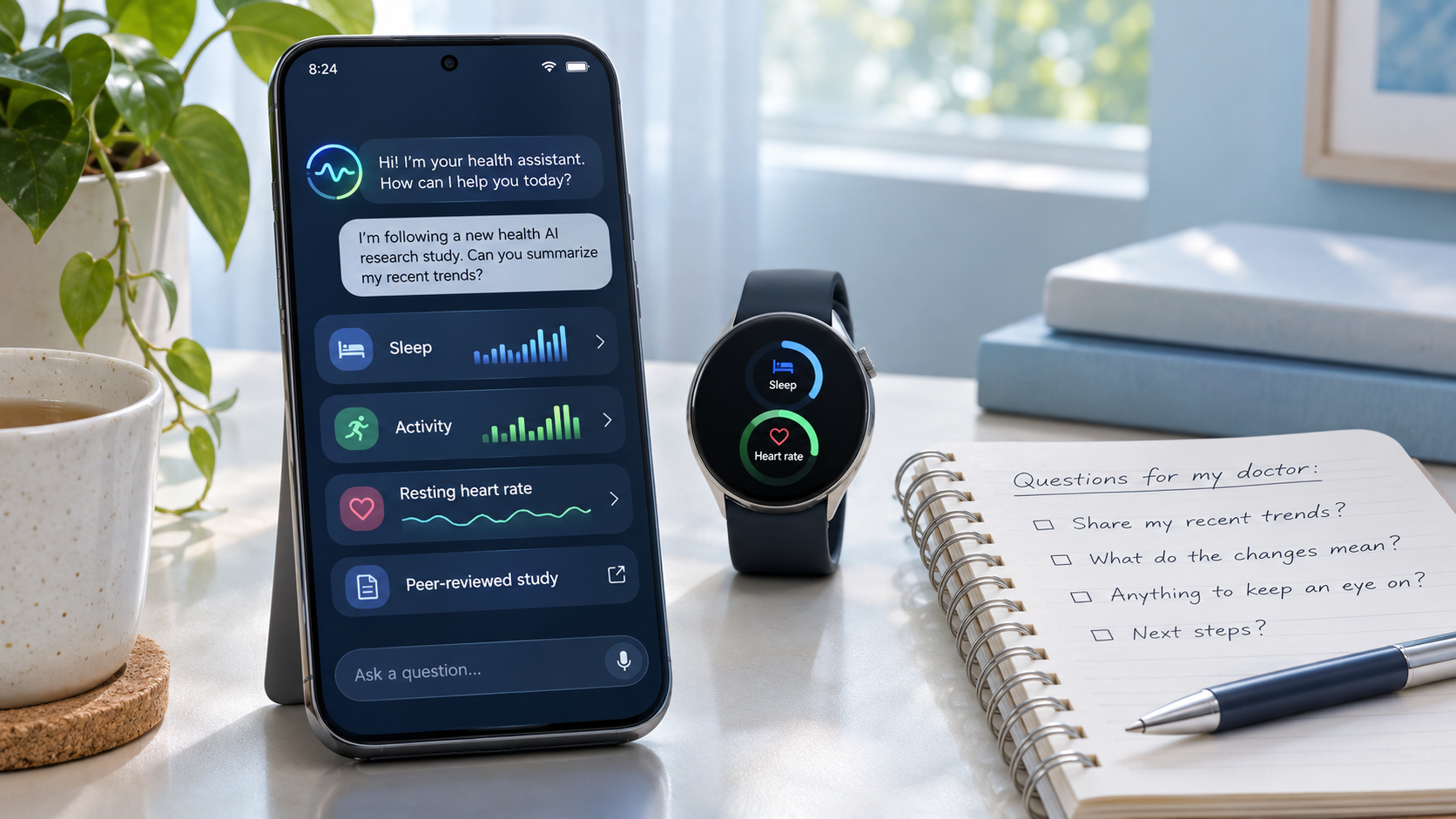
Apple launched the Apple Health AI Usage Study in the United States on November 15, 2026. The virtual study, developed with OpenEvidence, will examine how people judge conversational health AI, understand its responses, use linked medical citations and decide whether the information changes everyday health actions.
Up to 200,000 eligible adults can enroll through a separate Apple app. Participants may ask health questions and can choose whether to share HealthKit data such as resting heart rate, activity, sleep or laboratory results. The study is not a diagnostic service, and its most important decisions happen before the first question: reading the consent, choosing the smallest useful data set and understanding how withdrawal differs from simply deleting the app.
This guide explains the confirmed eligibility rules, what the app is designed to study, the privacy controls Apple describes and the medical limits participants should keep in view. It does not provide medical advice or recommend joining the research.
Apple Health AI Usage Study at a glance
- Launch: November 15, 2026, as a U.S.-only virtual research study and dedicated iPhone app.
- Scale: Apple says the study is open to as many as 200,000 eligible participants.
- Age and location: applicants must be at least 21 and located in the United States.
- Device: an Apple Intelligence-enabled iPhone, which Apple defines here as iPhone 15 Pro or later.
- Software: iOS 26 or later; the App Store listing also identifies iOS 26 as the minimum.
- Research partner: OpenEvidence provides the medically grounded conversational AI technology used in the study experience.
- Optional data: participants can choose whether to share selected HealthKit metrics or survey responses.
- Training statement: Apple says study data will not be used to train AI models.
- Medical boundary: the app is not intended to diagnose, treat or replace advice from a doctor or other clinician.
What the study is actually testing
The study is not simply a public preview of a finished Apple medical chatbot. Apple says researchers are examining trust, response quality, comprehension and real-world engagement. That includes whether people understand an answer, whether linked evidence changes confidence and whether personal Health data makes a response feel more relevant or more difficult to evaluate.
Participants can ask everyday health questions, explore complicated medical information in more approachable language and view linked, peer-reviewed citations associated with a response. The app may also help a participant prepare questions or a summary for a clinical visit. None of those functions turns the response into a diagnosis, prescription or emergency service.
OpenEvidence is the technology partner. Its public materials describe answers grounded in peer-reviewed literature and clinical guidance, while Apple emphasizes that consumer-facing large-language-model responses can still be incomplete or unclear. A citation is useful evidence to inspect; it is not a guarantee that the generated summary fits an individual case.
Eligibility and enrollment requirements
- Be 21 or older.
- Be in the United States and meet any additional criteria shown during enrollment.
- Use an Apple Intelligence-enabled iPhone: iPhone 15 Pro or a later compatible model.
- Run iOS 26 or later and install the free Apple Health AI Study App from the U.S. App Store.
- Read the study information and consent inside the app before choosing to enroll.
- Complete any eligibility questions and follow the study’s instructions for participation and withdrawal.
The App Store age rating is 18+, but Apple’s study announcement sets the participation minimum at 21. The study rule is the controlling threshold for enrollment. Owning a compatible iPhone does not guarantee acceptance if another eligibility condition is not met or enrollment has reached capacity.
How to review the study before joining
- Open Apple’s official study announcement and the App Store listing; confirm the developer is Apple and the app ID is 6800060365.
- Install the app from the App Store, not from a message, ad, configuration profile or third-party download page.
- Read the purpose, duration, procedures, potential risks, confidentiality terms, study contacts and withdrawal instructions in the consent.
- Review every requested HealthKit category separately. Decline any category that is not necessary for how you want to participate.
- Confirm what happens to information already shared if you later stop a permission or withdraw from the study.
- Save the study contact and consent details before asking questions that involve sensitive health information.
- Treat every AI response as material to discuss or verify, not as a diagnosis or instruction to change treatment.
Privacy controls matter more than the AI headline
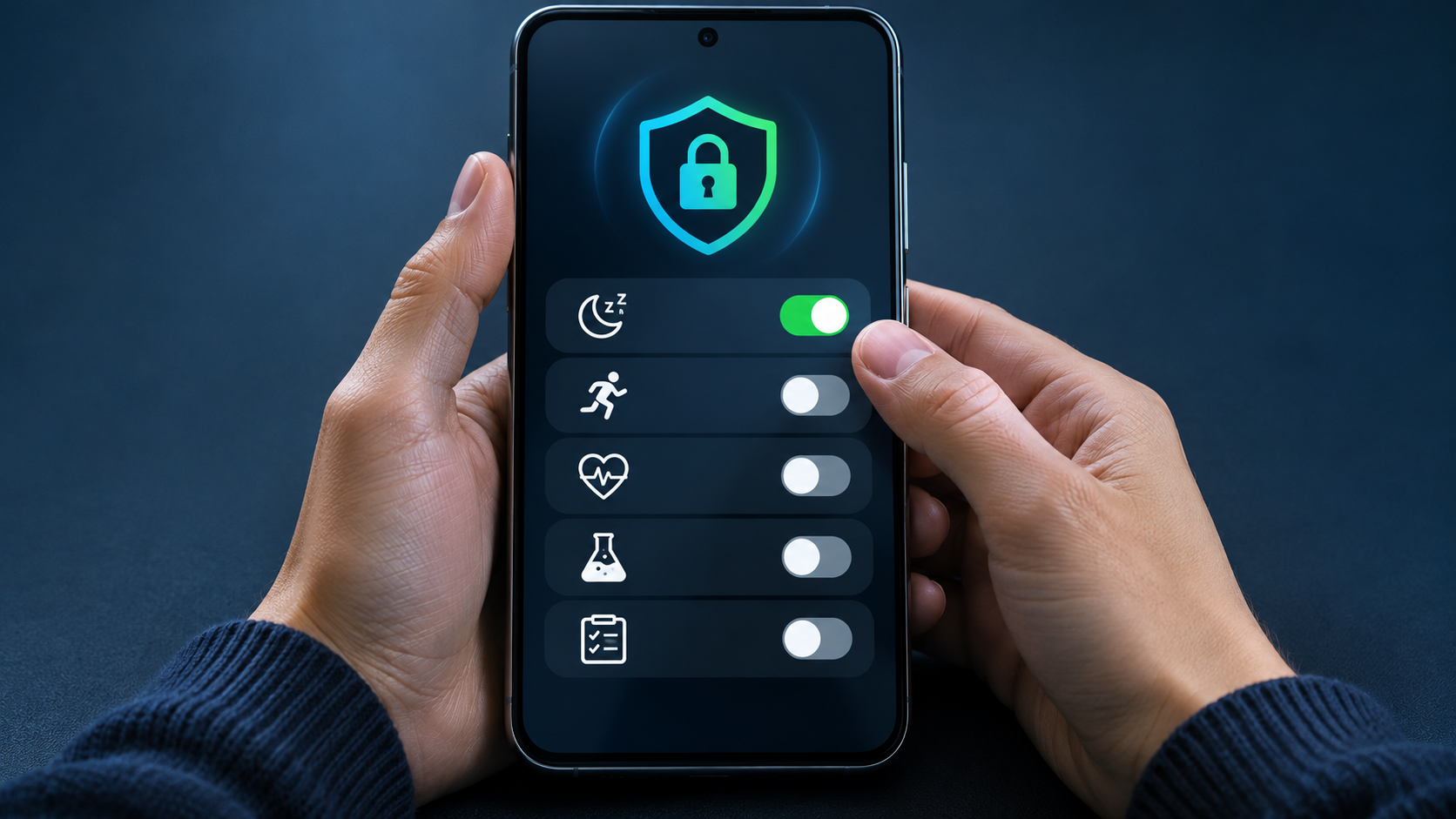
Apple says participants retain control over whether to share HealthKit metrics or survey responses, and it says study data will not be used to train AI models. The company also describes security measures and safety guardrails intended to recognize some concerning questions and direct a participant toward a provider or other resources. Those statements are meaningful, but they do not remove the need to read the study-specific consent.
- HealthKit sharing should be treated as optional and category-specific, not as a single all-or-nothing switch.
- Resting heart rate, activity, sleep, laboratory results and survey answers can reveal different levels of sensitivity and context.
- Stopping future sharing does not necessarily erase data that researchers already received.
- Deleting a research app may not automatically withdraw a participant from the study; use the withdrawal method in the consent.
- Apple’s general Sensor & Usage Data notice says approved studies can request separate categories and that people can stop future sharing in Settings.
- A passcode helps protect data stored on the iPhone, but device security does not replace careful choices about what leaves the device.
Before granting access, open Settings > Privacy & Security and review research, sensor and Health permissions available on the device. The exact controls shown can depend on the study and software version. After enrollment, revisit them rather than assuming the first choice must remain permanent.
What the app can help with and what it cannot do
Useful research interactions can include:
- Explaining unfamiliar health terms in plain language and linking the supporting medical literature.
- Helping organize questions for a doctor, especially when a person has several symptoms or test results to discuss.
- Putting an optional Health trend into context so the participant can decide what to verify with a clinician.
- Exploring how people understand uncertainty, tradeoffs and evidence quality in an AI-generated response.
The app should not be used to:
- Diagnose a symptom, confirm that a condition is harmless or rule out an emergency.
- Start, stop or change a prescription, supplement, therapy, diet or exercise plan without appropriate clinical guidance.
- Replace emergency services, a poison-control resource or a clinician who knows the person’s history.
- Upload another person’s health records or identifiable information without authority and consent.
If a response conflicts with a clinician, the medical record or an urgent symptom, stop treating the chat as the next decision-maker. Verify the information with an appropriate professional and use established emergency resources when immediate care may be needed.
Questions to ask before sharing HealthKit data
- Does this category directly support the study activity I want to complete?
- Is the data a summary, a continuous history, a laboratory result or information imported from another provider?
- Who receives it, how long is it retained and can it be linked with survey or conversation data?
- What happens to previously shared information if I turn the permission off?
- How do I withdraw from the research rather than merely uninstalling the app?
- Whom do I contact about a privacy concern, unexpected response or adverse event?
A participant does not need to maximize data sharing to make participation meaningful. The most privacy-preserving choice is the smallest data set that supports the research activity the person understands and accepts.
An optional Apple Watch note
Apple’s announcement lists an eligible iPhone as the hardware requirement; it does not require an Apple Watch. A watch can contribute optional measurements such as activity, sleep and heart-rate trends to HealthKit, but buying one solely to join the study is unnecessary. Existing measurements should be reviewed for accuracy and relevance before they are shared.
Readers who independently need a compatible wearable can review the Apple Watch Series 11 GPS 42mm listing (ASIN B0FQFPB851). Verify the exact size, band, seller, warranty and current compatibility before ordering. The watch is not a medical device for every condition, is not required for this study and should not be purchased as a substitute for clinical testing.
Affiliate disclosure: ReaderSpice may earn a commission from qualifying Amazon purchases made through the link above, at no additional cost to you.
How this differs from Apple’s redesigned Health app
ReaderSpice previously covered Apple’s broader Health app redesign, including Health Age, Insights, movement evaluations and expanded language support. The new Health AI Usage Study is separate: it is an opt-in U.S. research project with a dedicated app, an OpenEvidence-powered conversational experience and its own consent and data-sharing choices.
That distinction prevents two common misunderstandings. The study announcement does not make a medical chatbot available to every Health app user, and it does not turn optional research participation into a requirement for using ordinary Health features. Treat the study app, its consent and its permissions as a separate decision.
Bottom line
Apple’s Health AI Usage Study is a substantial real-world test of how people understand and trust conversational health AI. Its scale, linked citations, OpenEvidence collaboration and optional HealthKit integration could produce useful evidence about what helps people prepare for clinical conversations and what creates confusion.
The responsible way to approach it is slower than downloading an ordinary app: confirm eligibility, read the consent, share only the data categories you understand, keep the withdrawal instructions and verify medical information with a qualified clinician. The study app is a research tool, not a diagnosis or treatment service.
Sources
App Store: Apple Health AI Study App
Apple: Sensor & Usage Data & Privacy
Apple: Privacy features for Health, HealthKit and research
Apple Developer: App Review Guidelines for health and health research
OpenEvidence Trust Center: About OpenEvidence
Amazon: Apple Watch Series 11 GPS 42mm (ASIN B0FQFPB851)