
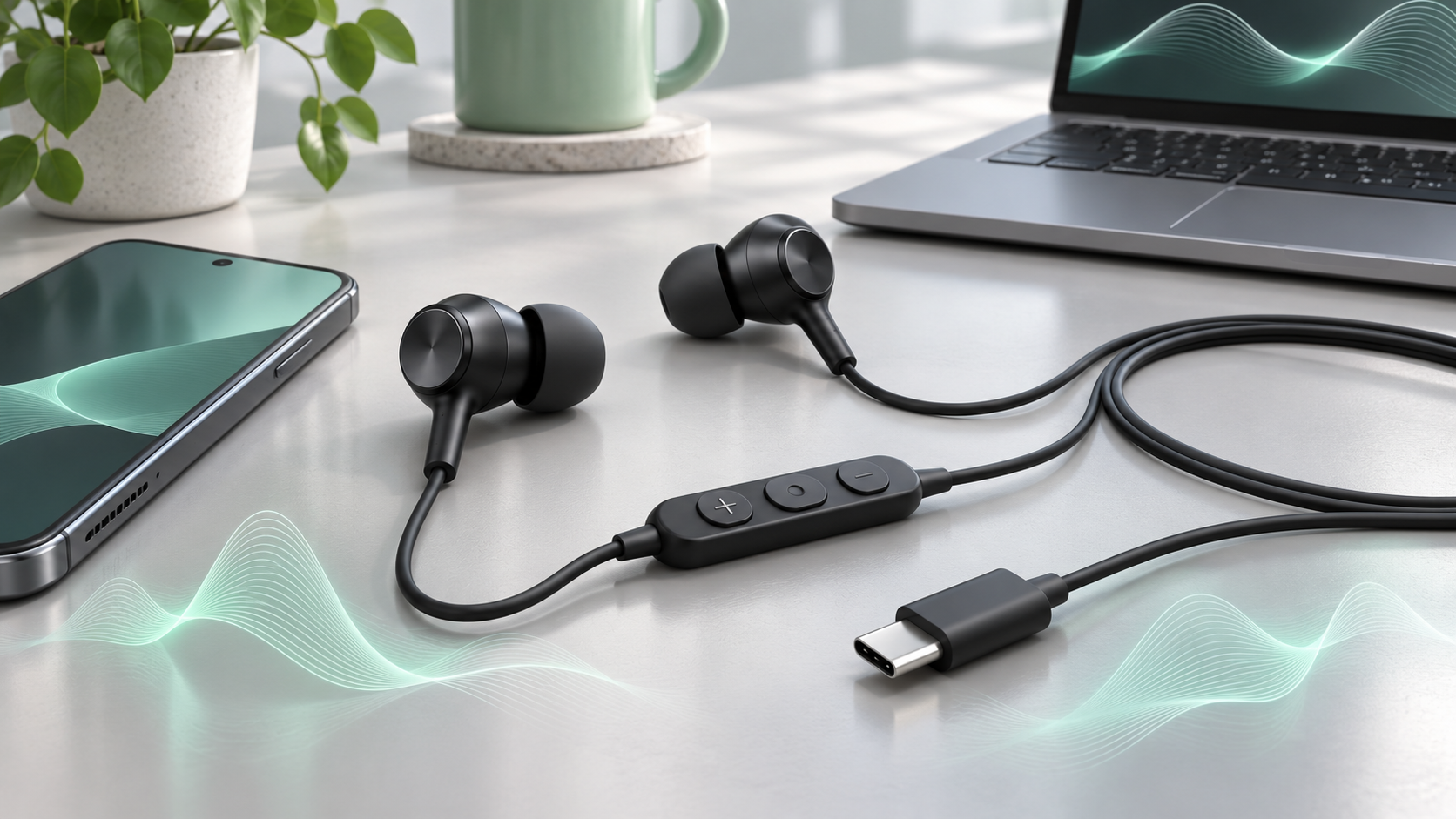
Bose’s $99 Noise Cancelling Wired Earbuds bring active noise cancellation back to a format many phones nearly abandoned. They plug into USB-C, draw power from the connected device and need no Bluetooth pairing, app account or separate charge. Bose started shipping them on October 15, 2026 in Black, White Smoke and Dewdrop Mint.
The simple pitch hides important details. This is a digital USB audio product, not a passive analog earbud with a newer connector. The fixed cable cannot be replaced, the earbuds do not connect to a 3.5mm socket, there is no companion app or custom equalizer, and the host phone or computer supplies the power used by the audio electronics and noise cancellation.
This is a ReaderSpice review roundup and buying guide, not a hands-on test. Product specifications and the $99 price come from Bose. Sound, noise cancellation, microphone and cable observations are attributed to reviewers who tested retail hardware. That distinction matters because fit, device behavior and background noise can change the experience.
Confirmed: Bose announced the earbuds on September 28, 2026 and lists them at $99 in the United States. Recent independent reviews agree that they deliver useful ANC and clean, balanced sound without charging, while also flagging cable noise, a mediocre call microphone and limited customization.
Bose wired earbuds at a glance
- U.S. price: $99 through Bose and participating retailers; price and stock can change.
- Connection: fixed 4.2-foot USB-C cable using USB Audio Class 2.0; there is no Bluetooth or 3.5mm plug.
- Noise control: Quiet, Aware and ANC Off modes selected from the in-line controller.
- Audio path: Bose says the system accepts a source at any bit depth and sample rate, then outputs at a fixed 24-bit/48kHz.
- Controls: physical volume, playback, call and mode buttons plus an in-line microphone.
- Fit kit: small, medium and large eartips, with medium and large stability wings.
- Durability: IPX4 water-resistance rating for splashes and sweat, not immersion or swimming.
- Colors: Black, White Smoke and Dewdrop Mint.
- Important limits: no app, custom EQ, wireless mode, multipoint, replaceable cable or analog adapter in the box.
USB-C ANC without a battery: how it works
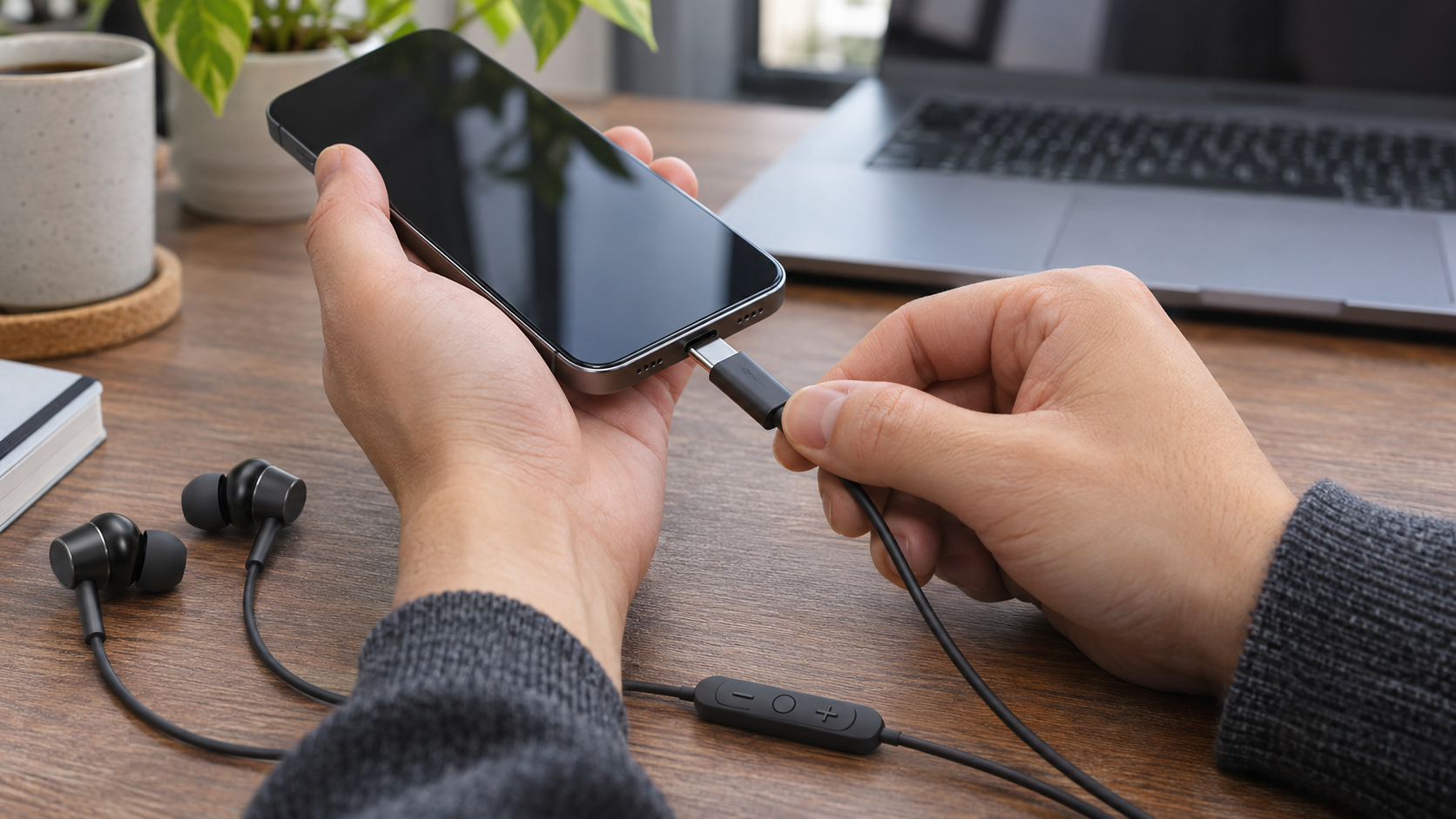
The earbuds use the connected phone, tablet or computer for both digital audio and power. Illustration: ReaderSpice.
Digital USB-C is not a 3.5mm connection
The USB-C plug carries digital audio and power into electronics built into the cable and earbuds. That lets Bose run its four-microphone QuietControl system, process the signal and power the in-line controls without a rechargeable battery inside the product. It also explains why a passive USB-C-to-3.5mm adapter does not turn these into conventional analog earbuds.
Bose identifies the connection as UAC2 and says the internal path produces 24-bit/48kHz output. A music service showing a higher sample rate does not mean the earbuds reproduce that higher rate unchanged. The fixed 48kHz output is adequate for normal music, video calls and games, but shoppers should not buy the product solely because a source app displays a high-resolution badge.
No charging shifts power use to the phone
There is no charging case, battery indicator or standby routine. The earbuds start when the host recognizes them and stop when disconnected. That is convenient for a desk, flight or game session because there is no separate device to remember to charge, and the wired path avoids Bluetooth pairing and codec negotiation.
The tradeoff is that the phone, tablet or laptop supplies the power. Bose does not publish one universal battery-drain figure because consumption depends on the host, volume and noise-control mode. Travelers should test a representative hour with the exact device they use and carry a power bank if phone endurance is critical.
Sound and ANC: what independent tests found
SoundGuys described the tuning as good overall, with a broadly agreeable balance and clear playback, while noting that Bose provides no app or equalizer for changing the response. That makes the factory tuning the whole experience. Listeners who normally correct treble, bass or channel balance in a headphone app must rely on system-level accessibility or equalizer tools, when the host platform offers them.
The same review measured an 82.3% reduction in perceived outside noise with ANC engaged and 57% from passive isolation alone in its laboratory setup. Those are SoundGuys’ results, not a Bose guarantee for every ear. Tip fit, ear shape and the type of noise matter. Low, steady sounds are generally easier for ANC to reduce than nearby voices, clattering dishes or sudden announcements.
Quiet mode applies the strongest cancellation. Aware mode keeps more surroundings audible, which is useful for an office or station platform, while ANC Off preserves the sealed-earbud fit without active processing. None of the modes should be treated as hearing protection. Keep volume moderate and use certified protection around hazardous noise.
Gizmodo likewise found the sound and cancellation solid for the category but questioned the $100 price once the bulky cable and weak calling performance were included. The useful conclusion is narrower than either a rave or dismissal: the earbuds solve charging and latency problems well, but they do not eliminate the physical compromises of a cable.
Call quality, cable noise and durability tradeoffs
The in-line remote is easier to locate by touch than a capacitive earbud surface, and physical buttons reduce accidental commands. The microphone is also positioned on the cable rather than at the ear, but recent reviews found it less convincing than the sound quality. SoundGuys reported that the microphone was not a strength, and Gizmodo called out poor calls. Buyers who spend hours in meetings should make a real call in a quiet room and outdoors before the return period ends.
Cable movement is the other recurring criticism. When a wire brushes clothing or a desk, vibration can travel into sealed earbuds as audible thumps or rustling. Routing the cable under a jacket clip or over a stable surface can help, but the product does not become cable-free. This matters most while walking, exercising or moving between devices.
The fixed cable also concentrates long-term risk. A damaged USB-C plug, split strain relief or failed in-line remote cannot be solved by replacing a detachable cord. IPX4 helps with sweat and splashes, but it does not cover immersion and does not make the connector waterproof. Dry the earbuds and cable before plugging them into another device.
Device compatibility checklist
- Confirm the device has a USB-C port that supports digital USB audio. A USB-C charging port is not automatically proof of audio support.
- Connect the earbuds directly before adding a hub, dock or extension. Then test every adapter separately because controls and microphones can behave differently through accessories.
- Play music and video, then check for delay, dropouts and channel balance. Bose markets the wired path as low latency, but the app and operating system still affect synchronization.
- Make a call and record a short voice memo. Verify that the host selects the Bose microphone instead of the device’s built-in microphone.
- Test volume, playback and mode buttons in the exact apps that matter. Operating systems can interpret remote commands differently.
- Measure host battery use during a typical hour with ANC on. Repeat with ANC off if endurance is a concern.
- Check fit with all suitable tips and wings. A poor seal weakens bass and passive isolation, forcing ANC to work against a leak it cannot fully correct.
Who should buy Bose’s wired ANC earbuds
Consider them if:
- You want active noise cancellation without another battery or charging case to manage.
- A predictable USB-C connection and low latency matter for a laptop, handheld game system, phone or tablet.
- You prefer physical controls and do not need an app, custom EQ or wireless switching.
- You mainly listen while seated, traveling or working, where cable movement can be controlled.
- You are willing to test fit, microphone behavior and battery drain with the exact host device during the return window.
Skip them if:
- You need Bluetooth, multipoint switching, a 3.5mm plug or an airplane-seat connection without a separate compatible digital adapter.
- You rely on a companion app for equalization, hearing profiles, firmware features or control remapping.
- A replaceable cable is important for repairability and long service life.
- You make frequent calls in wind, traffic or other noisy environments.
- You exercise vigorously and expect the cable to rub against clothing throughout the session.
Apple EarPods are a cheaper non-ANC reference
The Apple EarPods with USB-C (ASIN B0CHXC5ZDX) provide a useful lower-cost reference for shoppers who only need USB-C audio, a microphone and in-line controls. They do not offer active noise cancellation and use an open earbud shape rather than Bose’s sealed in-ear fit, so this is a format and price comparison rather than a like-for-like substitute.
Verify the ASIN, seller, model, return terms and current price before ordering. Platform support for buttons and microphones can vary, especially outside Apple’s published device requirements.
Affiliate disclosure: ReaderSpice may earn a commission from qualifying purchases made through the Amazon link above, at no additional cost to you.
What to test during the return window
- Wear the earbuds for at least an hour and check seal, pressure, stability and skin comfort with multiple tip sizes.
- Compare Quiet, Aware and ANC Off in a room with steady fan noise, conversation and a normal commute.
- Walk with the cable routed as you would use it and listen for rubbing, tapping or strain at the connector.
- Make calls in a quiet room and outdoors, then ask the listener about clarity, wind and background noise.
- Connect every phone, tablet, laptop, handheld and dock you expect to use; verify both playback and microphone input.
- Inspect the fixed cable, plug, remote and strain relief for manufacturing defects before discarding the packaging.
- Check the retailer’s return deadline and Bose warranty terms while there is still time to act.
The bottom line
Bose’s Noise Cancelling Wired Earbuds are a focused answer to a real problem: some listeners want useful ANC and low latency without keeping another battery charged. The $99 package provides USB-C digital audio, physical controls, three noise modes and a compact in-ear design that recent reviewers generally found good-sounding and effective at reducing steady background noise.
The purchase only makes sense if the wire is part of the solution rather than a new inconvenience. There is no app, EQ, wireless fallback, analog plug or replaceable cable, and the call microphone and cable noise are weaker points. Buy for a tested USB-C device and a mostly stationary listening routine; choose another option when repairability, calls, exercise or cross-device flexibility matters more than never charging the earbuds.
Sources
Bose — Bose Unveils New Noise Cancelling Wired Earbuds — September 28, 2026
SoundGuys — Bose Noise Cancelling Wired Earbuds review and laboratory testing — October 30, 2026
Gizmodo — Bose Noise Cancelling Wired Earbuds review — November 13, 2026
Apple — EarPods with USB-C product and compatibility details — accessed November 15, 2026
Amazon — Apple EarPods with USB-C, ASIN B0CHXC5ZDX