
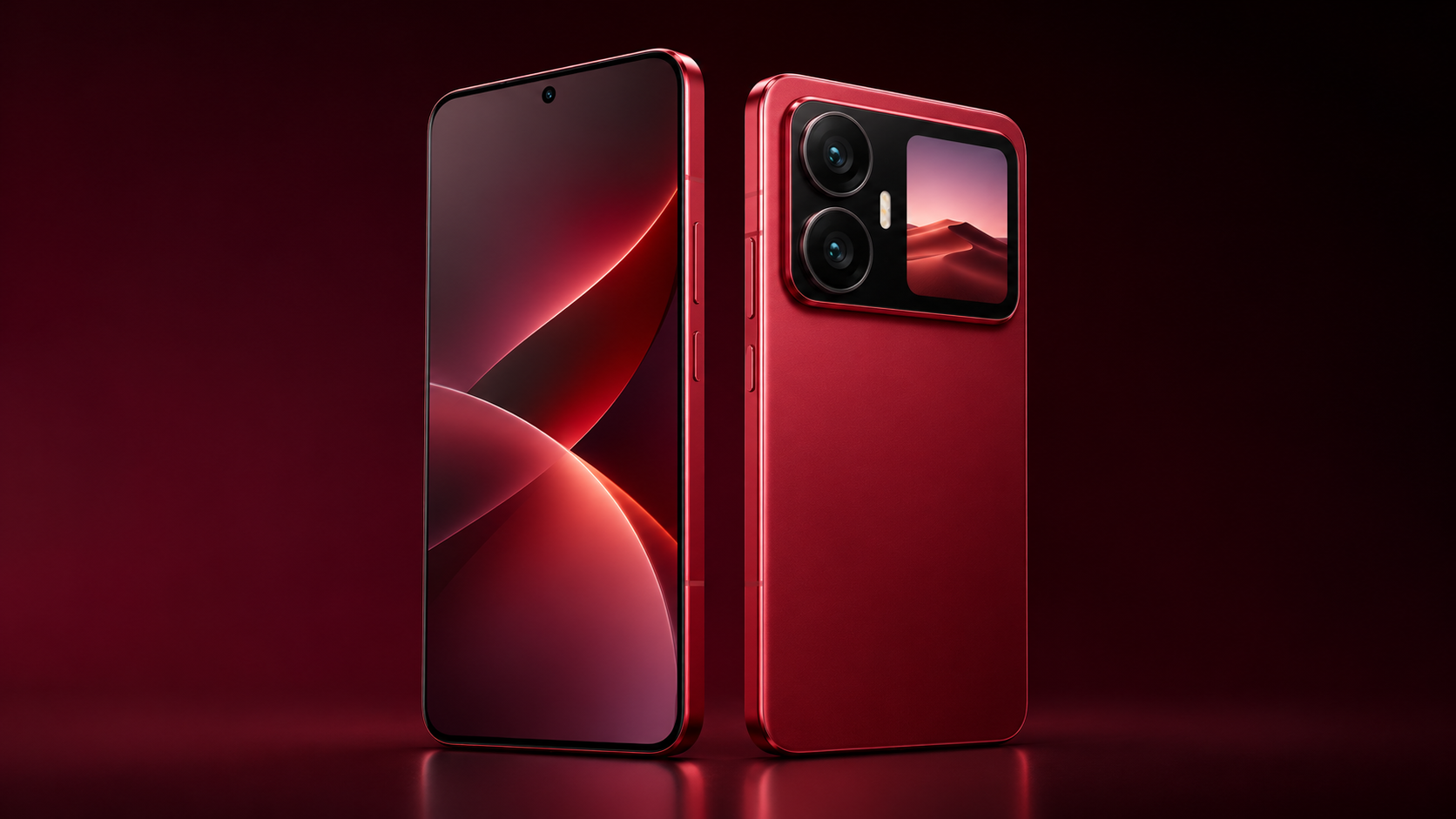
Xiaomi has taken its 18 Pro family outside China, and the official Japanese launch finally answers several questions that early international listings left open. The smaller Xiaomi 18 Pro arrives with a 6,000mAh battery, while the Xiaomi 18 Pro Max carries 7,050mAh. Both pair a 200-megapixel main camera with a second 200-megapixel telephoto camera, add a functional screen beside the rear cameras, and ship with Android 17 under HyperOS 4.
Those are not universal promises for every country. Xiaomi publishes region-specific configurations, and the firm prices below are for Japan. Europe may receive different memory, charging or promotional bundles, and Xiaomi has not announced an official U.S. retail launch. That distinction matters because the Chinese models use substantially larger batteries than the versions Xiaomi is selling in Japan.
This is a specification and buying-context analysis based on Xiaomi’s official launch material, not a hands-on review. Camera quality, battery life, thermal behavior and the usefulness of the rear screen still require independent testing.
Xiaomi 18 Pro series at a glance
- Xiaomi 18 Pro: 6.4-inch 1–120Hz display, 2.7-inch rear screen, 6,000mAh battery, 90W wired charging and a listed weight of about 198g.
- Xiaomi 18 Pro Max: 6.9-inch 1–120Hz display, 2.9-inch rear screen, 7,050mAh battery, 100W wired charging and a listed weight of about 229g.
- Both: 200MP stabilized main camera, 200MP stabilized 3.2x telephoto camera, 50MP ultrawide camera and 50MP front camera.
- Software and connectivity: Android 17, HyperOS 4, Wi-Fi 7, Bluetooth 6.0, ultrasonic fingerprint recognition and face unlock.
- Durability: Xiaomi lists IPX8 water resistance and IP6X dust resistance, the two halves commonly combined as an IP68 rating.
- Japan availability: preorders opened November 17, 2026, with general sales scheduled for November 27.
What the rear display actually changes
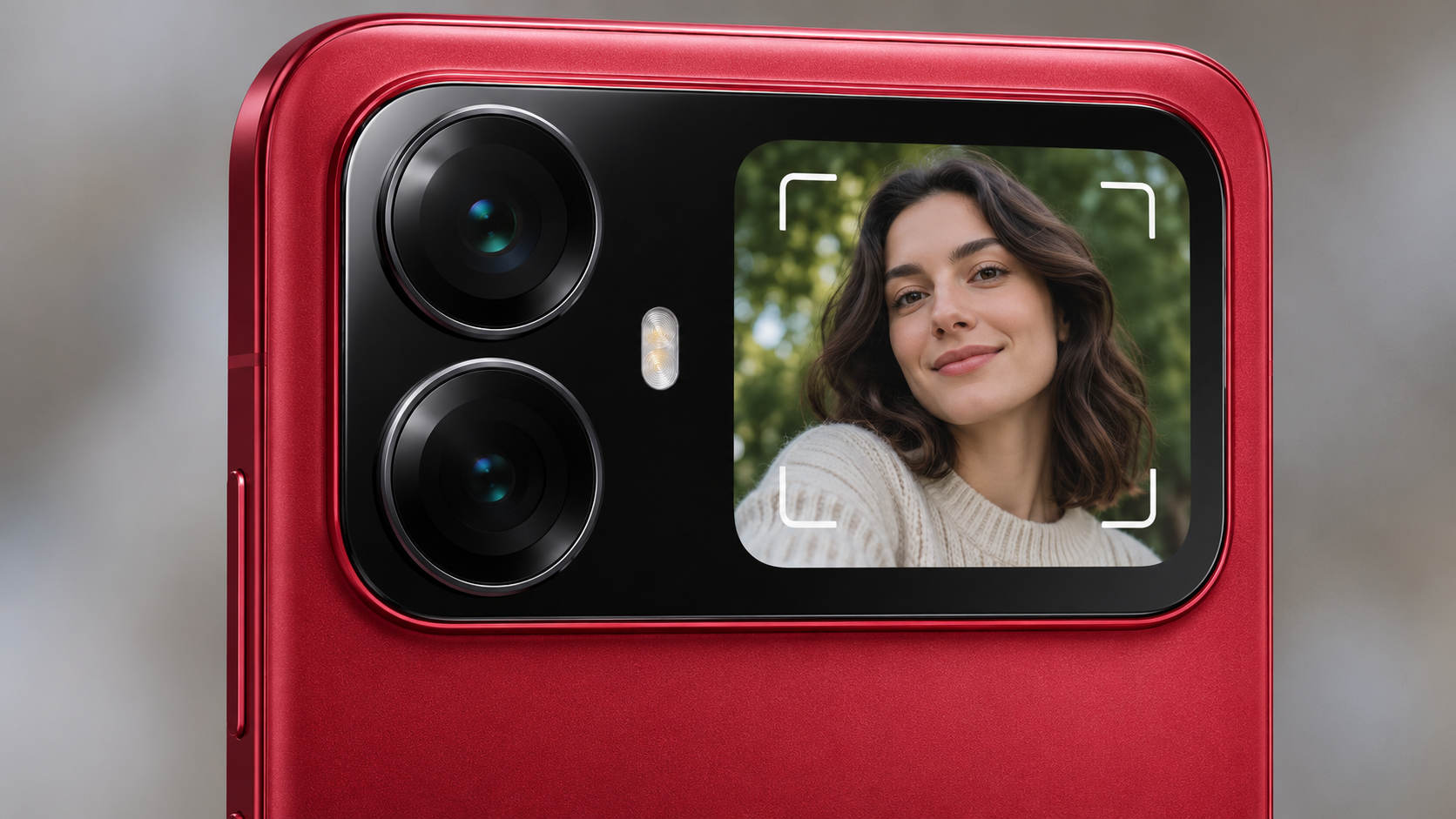
The rear screen is the feature that most clearly separates the 18 Pro family from a conventional glass slab. Xiaomi lists a 2.7-inch, 912×596 panel on the Pro and a 2.9-inch, 976×596 panel on the Pro Max. It sits beside the two large camera rings instead of occupying the full camera island.
The obvious photographic use is framing a self-portrait with the main camera system rather than relying on the 50MP front camera. That could be valuable because the stabilized 200MP main and 200MP telephoto cameras have larger sensors and more flexible optics than a typical selfie module. The rear panel can also surface glanceable information and controls, although the exact widgets and app behavior may vary by software version and market.
A second screen also creates tradeoffs. It consumes space, adds another exposed panel to protect, and gives accessory makers a more complicated camera cutout. Buyers should confirm whether their preferred case leaves the display usable and whether Xiaomi’s local warranty covers accidental damage to the rear panel.
The camera hardware is unusually symmetrical
Many flagship phones reserve their highest-resolution sensor for the main camera and make the telephoto camera a clear step down. Xiaomi instead gives both 18 Pro models a stabilized 200MP main camera and a stabilized 200MP 3.2x telephoto camera. A 50MP ultrawide and 50MP front camera complete the four-camera set.
The Pro Max uses Xiaomi’s Light Fusion 960L image sensor branding for its main camera, while the Pro uses Light Fusion 960. That naming suggests a hardware difference, but Xiaomi’s launch specification sheet does not by itself establish how large the real-world gap will be. Processing, lens behavior, stabilization and thermal limits can matter more than pixel count, so the Max should not be treated as an automatic camera winner before independent samples are available.
The rear screen makes the shared camera system more useful: either size can use its main or telephoto camera for carefully framed self-portraits. For creators, however, the missing questions are just as important as the headline numbers—continuous video limits, microphone behavior, color consistency between lenses, RAW support and how aggressively HyperOS processes faces and skies.
Which size makes sense
Choose Xiaomi 18 Pro if…
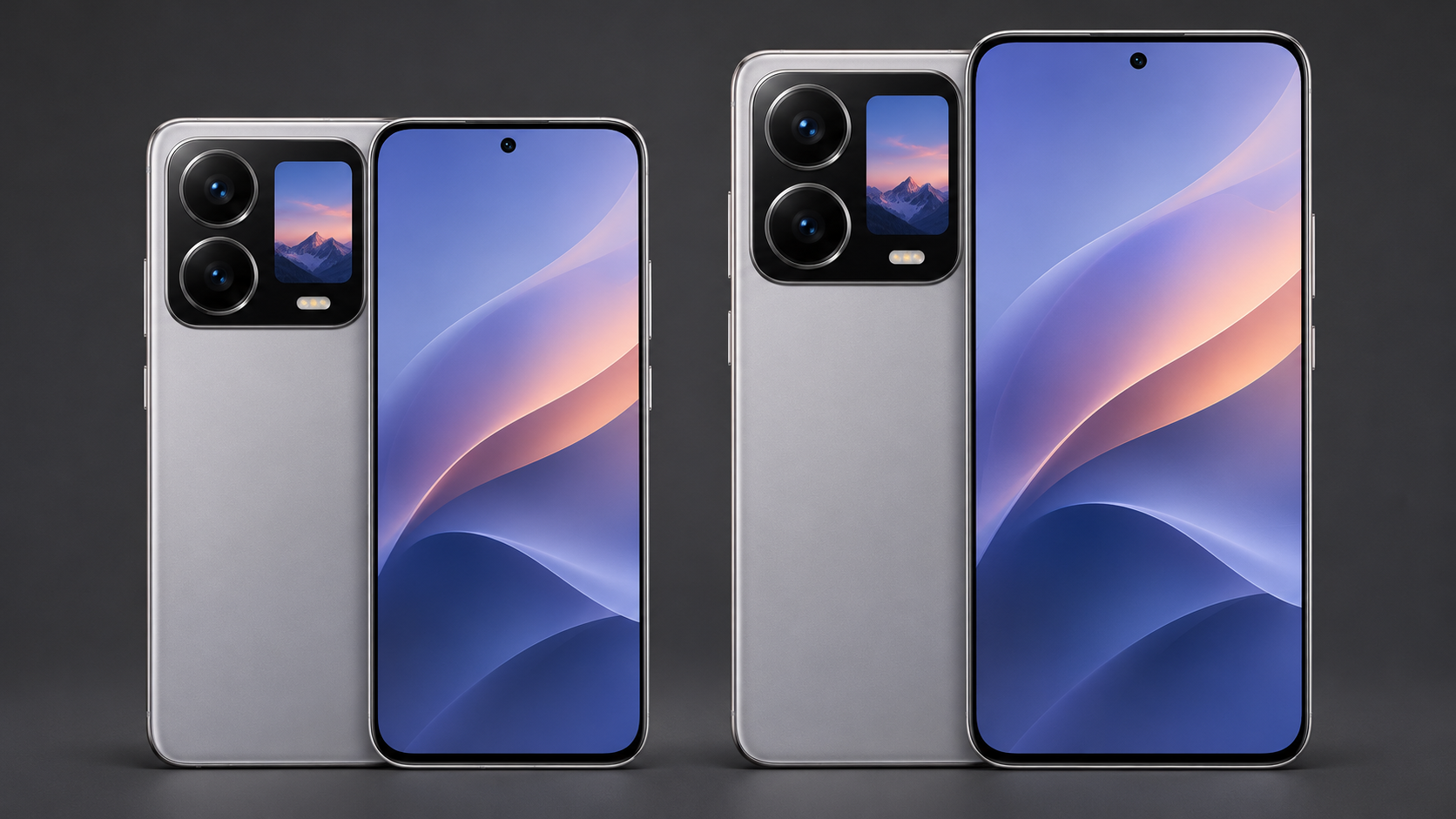
- You want the same headline camera layout in a phone that is easier to hold and about 31g lighter.
- A 6.4-inch display is large enough and you value pocketability over maximum battery capacity.
- You can accept a 6,000mAh battery and 90W wired charging in exchange for the smaller chassis.
- The lower Japanese starting price matters more than the Pro Max-exclusive conveniences.
Choose Xiaomi 18 Pro Max if…
- You want the 6.9-inch display and the largest rear screen in the family.
- A 7,050mAh battery and 100W wired charging are worth the additional size and weight.
- You are buying in Japan and need FeliCa support; Xiaomi lists it on the Pro Max, not the smaller Pro.
- You prefer the Light Fusion 960L main-camera hardware, while accepting that image-quality gains still need testing.
Why the international batteries are smaller than China’s
The sharpest regional difference is battery capacity. Xiaomi’s Chinese product pages advertise 7,000mAh for the Xiaomi 18 Pro and 8,500mAh for the Pro Max. The official Japanese models are listed at 6,000mAh and 7,050mAh respectively—1,000mAh less for the Pro and 1,450mAh less for the Pro Max.
That does not make the Japanese models small-battery phones; both capacities remain generous by current flagship standards. It does mean that reviews of a Chinese unit cannot be used to predict the endurance of a Japanese or other international configuration. Radio bands, modem tuning, display settings and local software can widen the difference further.
Xiaomi claims the Pro Max can last about a day and a half, but that is a manufacturer estimate under its own conditions. Treat it as a target, not an independent result. Buyers comparing imports should match the exact model number and battery specification rather than relying on the product name alone.
Japan pricing and release date
Xiaomi Japan opened preorders on November 17 and scheduled general sales for November 27. Its official suggested prices are:
- Xiaomi 18 Pro, 12GB/256GB: ¥209,800.
- Xiaomi 18 Pro, 12GB/512GB: ¥229,800.
- Xiaomi 18 Pro Max, 12GB/256GB: ¥239,800.
- Xiaomi 18 Pro Max, 12GB/512GB: ¥259,800.
Velvet Red, Cosmic Blue, Black and White are listed for both sizes. Promotional bundles, trade-in values and retailer stock can change, so the official price is a reference point rather than a guaranteed street price. The Japan release also includes market-specific services and, on the Pro Max, FeliCa support that an imported unit may not provide.
U.S. availability and import warnings
Xiaomi has not announced an official U.S. retail launch for the 18 Pro series. A global product announcement is not the same as U.S. carrier certification, local warranty support or nationwide band compatibility. Importers may still offer the phones, but those listings should not be mistaken for an authorized U.S. channel.
Before importing, verify the exact model’s LTE and 5G bands against your carrier, including low-band coverage and voice-over-LTE requirements. Check eSIM support, Google service certification, Android Auto behavior, call recording rules, local emergency features, the included charging plug and whether the seller—not Xiaomi—would handle returns or repairs. Taxes, customs fees and restocking costs can erase a tempting headline discount.
The same caution applies to European shoppers until Xiaomi publishes country-specific product pages and prices. A Japan or China specification sheet is excellent evidence for that model, but it is not a substitute for the final configuration sold in another market.
A verified Amazon comparison, not an 18 Pro listing
For a currently verifiable point of comparison, Amazon India lists the previous-generation Xiaomi 15 Ultra, 16GB/512GB, in Silver Chrome (ASIN B0DYV4177R). That listing is not for the Xiaomi 18 Pro or 18 Pro Max, and availability, warranty terms and shipping eligibility depend on region. It is useful only as a real listing for Xiaomi’s earlier camera-focused flagship while official 18 Pro retail pages expand.
Affiliate disclosure: ReaderSpice may earn a commission from qualifying purchases made through the Amazon link above, at no additional cost to you.
What ReaderSpice has not verified
- Independent battery life, charging time, sustained performance or thermal behavior.
- Camera quality across daylight, low light, motion, portrait, zoom and video scenarios.
- A final U.S. launch, U.S. carrier support or an official U.S. warranty.
- Whether every European market will receive the same batteries, memory tiers or charger bundle as Japan.
- Long-term app support for the rear display or repair pricing for the secondary panel.
Bottom line
Xiaomi’s 18 Pro series is more than a routine processor refresh. A functional rear display and two stabilized 200MP cameras give both sizes a distinctive identity, while the compact Pro avoids sacrificing the headline camera layout. The Pro Max adds the larger screen, larger battery, faster wired charging and Japan-only FeliCa support.
The buying decision is still regional. Japanese pricing and specifications are official; U.S. availability is not. International buyers should wait for their local model sheet or treat an import as a carefully researched enthusiast purchase. The most important number is not 200MP—it is the exact model number attached to the battery, bands, warranty and software support you will actually receive.
Sources
Xiaomi Global — Xiaomi November 2026 global launch page
Xiaomi Japan / PR Times — official Xiaomi 18 Pro series release, specifications and prices (PDF)
Xiaomi China — Xiaomi 18 Pro Max official product page
TechRepublic — Xiaomi 18 Pro Max availability and U.S. launch context
Xiaomi Global — Xiaomi 15 Ultra official specifications
Amazon India — Xiaomi 15 Ultra 16GB/512GB, ASIN B0DYV4177R