Lost in Transition

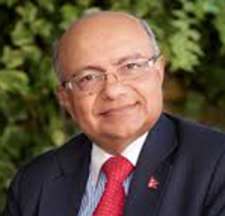
Kul Chandra Gautam print
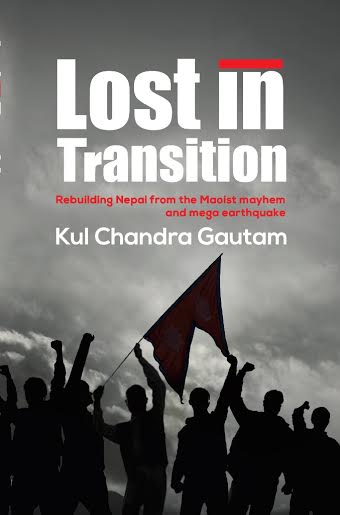
‘Lost in Transition: Rebuilding Nepal from Maoist Mayhem and Mega Earthquake’, a book penned by former senior official of the United Nations Kul Chandra Gautam, was launched at Nepalaya in the capital, on Saturday. Below are excerpts from the book.

Kofi Annan on Madi incident
Although Nepal was not a high priority among the many international crises Secretary-General Kofi Annan had to deal with, he did occasionally show some interest and concern. Among other occasions, I vividly remember meeting him at a reception on 6 June 2005. Earlier that day the UN had issued a press statement expressing deep concern about the Maoist attack the previous day (5 June 2005) on a public passenger bus in Madi in Chitwan district where a large number of innocent passengers were killed and mutilated. Although it was one of many brutal and barbaric acts committed by the Maoists against innocent civilians, I had thought that the UN press statement was probably one of those many pro-forma routine statements that are issued in the name of the Secretary-General, which the UN leader might not even personally know about.
Continue reading “Lost in Transition”

The Man Who Ate Himself To Death

Ricky Naputi
The tragic story of Ricky Naputi, one of the world’s fattest men. At nearly 65 stone, bedridden and confined to his home on the Pacific island of Guam, Ricky had limited access to obesity medical care. Even finding a doctor to give him the weight-loss surgery he so desperately needed would prove to be a massive challenge. Ricky lived with Cheryl, his wife of ten years, on a beautiful tropical island, but for the last five years of his life he never would never be able to appreciate it.
Continue reading “The Man Who Ate Himself To Death”

World’s Most Obese Man Dies After Weight-Loss Surgery

andres-moreno
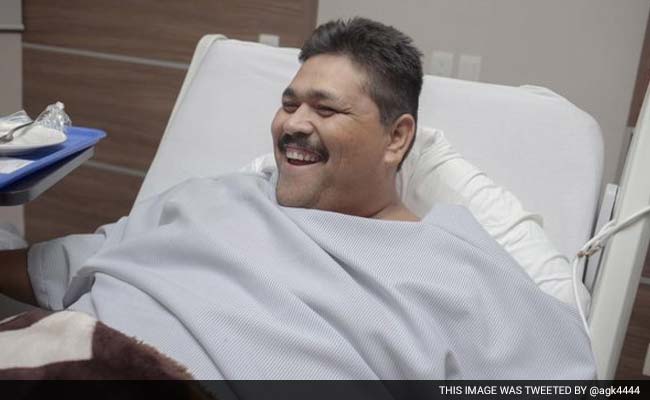
A man believed to be the world’s most obese passed away on Friday in Mexico, barely two months after undergoing a weight-loss surgery.
Andres Moreno, 38, died of a heart attack and peritonitis (inflammation of the abdominal lining) in Ciudad Obregon, in Sonora state, his family said.
Moreno, who at one time tipped the scales at 450 kilos, had bariatric surgery on October 28, in Guadalajara, Jalisco state, in hopes of shedding the excess weight and leading a normal life, Xinhua news agency reported.
Continue reading “World’s Most Obese Man Dies After Weight-Loss Surgery”

On stage, on cue

Ashant SharmaAashant Sharma is an actor, director, and teacher. He has appeared in more than two dozens plays, and a dozen films, and has begun directing plays as well. His latest directorial, Katha Express, is currently being staged at Mandala Theatre-Nepal, Anamnagar. The Post’s Timothy Aryal caught up with Sharma to talk about his career, inspirations and his latest play. Excerpts:

How did you catch the theatre bug?
It goes back a long way, to my childhood, actually. When I was growing up in Nawalparasi in the late ‘70s, I used to get involved in local cultural acts; the local Tharu community would occasionally organise the staging of Ramleela, a play that derives from the Ramayana. I would observe the shows enthusiastically. But I got into acting a bit later in around the mid ‘90s. I got my break as an actor all by chance. When the actor for the Maairam comedy said he could not do the play in the night before of staging the play, the director offered the role to me. I worked hard all night and played the role.That was the first time I appeared in a play.
Later when I came to Kathmandu, I got a chance to hone my craft and understand the basic workings of theatre through Actor’s Studio, where I have been working as a teaching assistant for some time now.

Who do you look up to for inspiration?
Anup Baral. He has an inimitable spirit of working and makes others work as well. There is a lot to learn from him.
How do you evaluate the current trend of theatre in Nepal?
The development of theatre has looked promising in recent times. Now there are five theatre houses in the city, continually producing plays, which is obviously a good thing for Nepali theatre. It can be said that currently theatre is prosperous. But then, we have a lot to consider regarding professionalism in the theatre industry.

What do you think makes a good play?
A play that evokes basic human sentiments. A play has to connect—that is artfully engage—its audience with the subject matter that it deals with.

You have also worked in a lot of movies. What do you think makes a great actor?
Empathy. It’s almost exclusively is empathy that makes a great actor great. One has to understand the emotions and motives of the character he is going to portray, if he is to embody the character well. For instance, if you watch the 1982 movie Gandhi, you will find it hard to believe that the lead actor (Ben Kingsley) is a foreigner and not Indian.

Please tell us about your latest directorial, Katha Express.
Katha Express is a stage adaptation of three stories from the story collection Chocolate, penned by Nayan Raj Panday. The first two plays—Sukmel and Khel—basically deal with the concept of sexual psychology while the latter portrays the ironies and absurdities of urban life.

Is there any reason in particular that you picked those stories?
When I first read the stories I found their dealings with sexual psychology in the Nepali context especially appealing.There are characters in our society who are not what they seem to be. There is a big irony lying undercutting it. I wanted to unearth that irony through plays.

From where do you draw your inspiration from?
There is a lot to learn from watching the performances of others. Ideas come from all sorts of things and in all sorts of ways. One day you may find a subject from books, sometimes from movies.

Source: Kathmandu Post

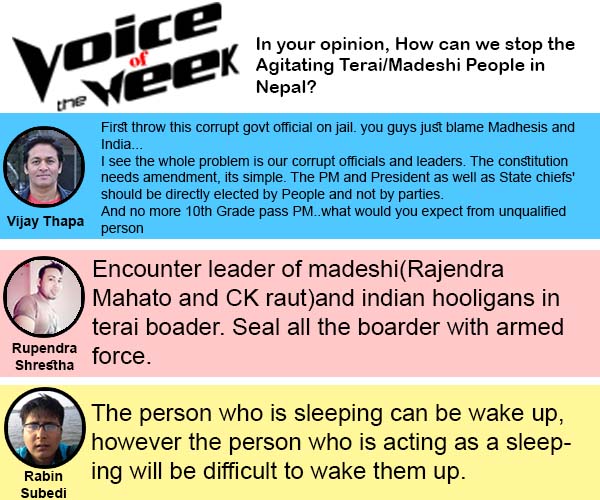
How can we stop the Agitating Terai/Madeshi People in Nepal?

We have started Voice of the Week only on readerspice.com. In this segment, we ask many current event questions to the audience and will take their answers or opinion as our response.
Voice of the Week 1 - 26 December 2015
Three audience has replied to this questions:
Vijay Thapa said that first throw this corrupt govt official on jail. you guys just blame Madhesis and India. I see the whole problem is our corrupt officials and leaders. The constitution needs amendment, its simple. The PM and President as well as State chiefs’ should be directly elected by People and not by parties. And no more 10th Grade pass PM..what would you expect from unqualified person.

Rupendra Shrestha said that Encounter leader of madeshi(Rajendra Mahato and CK raut)and indian hooligans in terai boader. Seal all the boarder with armed force.

Rabin Subedi said that The person who is sleeping can be wake up, however the person who is acting as a sleeping will be difficult to wake them up.

The above response was wonderful response from our visitor. Get ready for another Episode of the voice of the week and please participate to share your thoughts about the current events..

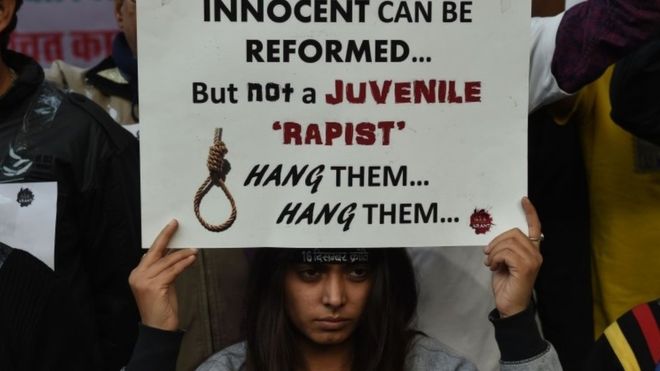
Rajya Sabha of India passes Juvenile Justice Bill; Crimes will range in age from 16 years and up

Opposition members protest in the well of the Rajya Sabha in New Delhi on Monday.(Source: PTI)

Finally, on Tuesday Juvenile Justice Bill, a long-awaited bill, has been passed at Rajya Sabha, which concluded to try the accused that are above 16 years of age as an adult in the court of law. The bill, which was first introduced by Women and Child Development Minister Maneka Gandhi in August 2014, has already been passed in Lok Sabha. Maneka has thanked everyone for supporting the passage of the bill. The Indian parliament has passed a bill which allows juveniles between 16 and 18 years of age to be tried as adults for serious crimes like rape or murder.
Continue reading “Rajya Sabha of India passes Juvenile Justice Bill; Crimes will range in age from 16 years and up”

Temporary Protected Status (TPS) Deadline to Register for Nepal has been Closed

What is TPS? Why we need this? Or what is the benefit of having TPS?
TPS Nepal
According to the USCIS (U.S. Citizenship and Immigration Services), the secretary of Homeland Security may designate a foreign country for TPS due to conditions in the country that temporary prevent the country’s nationals from returning safely, or in certain circumstances, where the country is unable to handle the return of its nationals adequately. USCIS may grant TPS to eligible nationals of certain countries (or parts of countries), who are already in the United States. Eligible individuals without nationality who last resided in the designated country may also be granted TPS.
Continue reading “Temporary Protected Status (TPS) Deadline to Register for Nepal has been Closed”

Counterparts of responsibilities

Sushmita Sapkota (JUNU)

Marriage; it is a promising social act where the two persons meet, fall in love and decide to share their life living together. Life would be easier and peaceful if there is no such thing as marriage. But let’s not forget everyone need someone to hold each others back during old time and be cane if not able to walk properly during 60s’.

I really think marriage is biased regarding the part of role we stand for either being a bride and bride-groom. It is more difficult for woman, she have to give more sacrifices; have to leave her home and should live in husband home considering that this is the real home and should change the surname for rest of her life. When this spouse turns into parent; it is a mother who has to give a full stop in her career in order to stay at home and look after how little ones grow up? And become a full time house manager. I cannot imagine keeping myself in place of my mother. From early morning to late night she even doesn’t have a time to get a life on her own.  she wakes up at 5 in the morning, prepares tea and wakes all three of us (me, brother and my sister), goes for walk and about 6, she returns and starts to prepare lunch. In the same time she manages to iron my dresses and clean the home.

Continue reading “Counterparts of responsibilities”