Graziers Raw Milk Cheese Recall: Check Every Package After 13 E. Coli Illnesses

Generic raw-milk cheese products under recall review with an E. coli warning symbol

Sierra Nevada Cheese Company is recalling all Graziers Raw Milk Cheese currently in the market after the products were linked to a multistate outbreak of E. coli O26:H11. The recall is nationwide, and it is broader than a single lot, production date or package size.

Federal investigators list 13 illnesses, eight hospitalizations and three cases of hemolytic uremic syndrome, a potentially life-threatening form of kidney failure. No deaths have been reported. More than half of the people sickened are children age 5 or younger.

The key action is simple: do not eat, serve or sell any Sierra Nevada Graziers raw-milk Monterey Jack, Jalapeño Jack, Medium Cheddar or Sharp Cheddar that may still be in a refrigerator or freezer.

What is being recalled?

The recall covers Sierra Nevada Graziers grass-fed raw milk cheeses in four varieties: Monterey Jack, Jalapeño Jack, Medium Cheddar and Sharp Cheddar. Retail packages include 8-ounce squares and a 16-ounce Medium Cheddar brick. Food-service and wholesale packages include 5-pound loaves and large Cheddar blocks.

The products were distributed nationwide through distributors, retailers and direct customers. FDA also says the recalled cheese was sold through retailers nationwide and online. Because cheese can remain refrigerated or frozen for a long time, older packages may still be in homes and businesses.

How to identify the recalled Graziers cheese
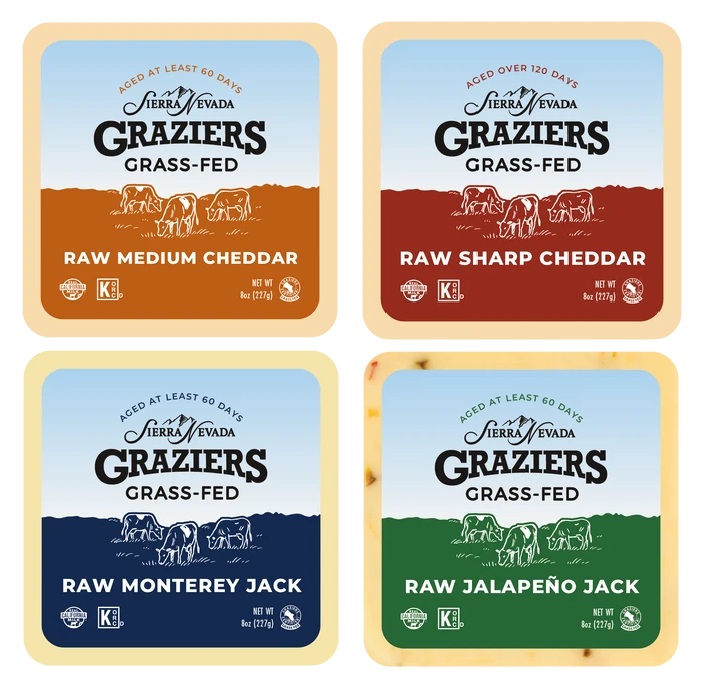
How to identify the recalled Graziers cheese

Look for the Sierra Nevada Graziers name and the words “grass-fed raw milk” on the package. The official product images show cream-colored retail wrappers with green and gold label elements, but packaging can vary by product and size. Use the brand, cheese variety, package size and code together when the original label is available.

If cheese was removed from its original packaging or frozen without a label and you cannot determine whether it is included, FDA advises throwing it away.

Recalled products, sizes and codes

  • Graziers Raw Milk Monterey Jack, 8-ounce square — UPC 6-87652-16400-9
  • Graziers Raw Milk Jalapeño Jack, 8-ounce square — UPC 6-87652-16403-0
  • Graziers Raw Milk Medium Cheddar, 8-ounce square — UPC 6-87652-16506-8
  • Graziers Raw Milk Sharp Cheddar, 8-ounce square — UPC 6-87652-16507-5
  • Graziers Raw Milk Medium Cheddar, 16-ounce brick — UPC 6-87652-16501-3
  • Monterey Jack, 5-pound loaf — item 6425
  • Jalapeño Jack, 5-pound loaf — item 6426
  • Medium Cheddar, 5-pound loaf — item 6510
  • Sharp Cheddar, 5-pound loaf — item 6511
  • Cheddar, 40-pound block — items 6515 and 6516

Retailers may also have repackaged larger loaves or blocks for individual sale. A store label may therefore look different from the original Graziers package. When in doubt, ask the retailer whether its cut cheese came from the recalled product.

Why there is no safe lot or date code

Investigators have not narrowed the problem to a specific lot, date code or production date. Sierra Nevada Cheese Company is therefore recalling all listed Graziers Raw Milk Cheese products that remain in distribution.

That means a best-by date alone cannot clear a package. Consumers should not assume a newer or older wrapper is safe, and they should not taste the cheese to test it. The recall applies to every covered product until officials publish narrower guidance.

What consumers should do now

  • Do not eat or serve recalled Graziers raw-milk cheese.
  • Check refrigerators and freezers, including cheese stored without its original box or wrapper.
  • Return a labeled product to the place of purchase for a refund, or dispose of it so no person or animal can eat it.
  • Wash and sanitize shelves, drawers, containers, cutting boards, knives and other surfaces that touched the cheese.
  • Contact a health care provider promptly if you ate the recalled cheese and develop symptoms of E. coli infection.

Consumers with recall questions can contact Sierra Nevada Cheese Company at 530-934-8662 on weekdays from 8:30 a.m. to 5 p.m. Pacific Time or email recallinfo@sierranevadacheese.com.

What the outbreak numbers show

The current federal investigation reports 13 illnesses across California, Colorado, Georgia, Kentucky, Michigan, Nevada, Oregon, Tennessee and Utah. Eight people have been hospitalized, and three developed hemolytic uremic syndrome. No deaths have been reported.

Among nine people interviewed about what they ate, all nine reported consuming Sierra Nevada Graziers grass-fed raw milk cheese. FDA and CDC continue working with state and local partners to determine the source of contamination and whether other products could be affected.

These numbers can change as investigators identify more cases. Readers should check the official FDA outbreak page for the latest status before serving any product that could be involved.

E. coli symptoms and when to seek care

Shiga toxin-producing E. coli can cause severe stomach cramps, diarrhea that may be bloody, vomiting, fever and nausea. Symptoms can begin a few days after exposure or take as long as nine days to appear.

CDC advises contacting a health care provider right away for:

  • Diarrhea with a fever higher than 102°F
  • Diarrhea lasting more than two days without improvement
  • Bloody diarrhea
  • Vomiting so frequent that liquids will not stay down
  • Signs of dehydration, such as very little urination, a dry mouth or dizziness when standing

Young children, older adults and people with weakened immune systems can face a higher risk of severe illness. More than half of the people reported sick in this outbreak are young children, which makes quick product checks especially important for families and caregivers.

Clean surfaces and prevent cross-contamination

Throwing away the cheese is only the first step. Wash hands, utensils and food-contact surfaces with hot soapy water. Clean refrigerator shelves, bins and reusable containers that held the product. Use a dishwasher for dishwasher-safe items when appropriate.

Do not rinse the cheese in an attempt to make it safe. Washing cannot reliably remove contamination from a food like cheese, and splashing water can spread bacteria to nearby surfaces.

What restaurants and retailers should do

Restaurants, retailers, distributors and food-service operators should stop selling or serving the recalled cheeses. They should identify any cut or repackaged portions made from the recalled loaves or blocks, remove them from sale and clean affected equipment and storage areas.

Businesses should retain supplier records and communicate with customers when required. Employees should not rely only on a store-generated label because repackaged products may not display the original UPC or Graziers branding.

A useful refrigerator safety tool

A refrigerator thermometer can help households confirm that cold foods are being stored at a safe temperature. It cannot make recalled cheese safe or detect E. coli, but it is useful for everyday food-storage checks.

ReaderSpice participates in the Amazon Associates program and may earn a commission from qualifying purchases made through affiliate links, at no extra cost to you.

The bottom line

This is not a one-lot recall. All listed Sierra Nevada Graziers Raw Milk Cheese products currently in the market are included because investigators have not identified a specific safe production window.

Check every refrigerator and freezer, do not eat uncertain cheese, clean anything it touched, and seek medical care for concerning symptoms. The outbreak investigation is ongoing, so the FDA and CDC advisories remain the best sources for future updates.
Sources

Mezzetta Peperoncini Recall: Check SKU 10106328 and Lot 720106

Mezzetta Golden Greek Peperoncini 32-ounce jar with a red food recall alert background

Mezzetta has recalled one specific lot of its Golden Greek Peperoncini Medium Heat after a social-media video showed a potential pest contaminant in a jar. The limited recall covers only the 32-ounce product carrying SKU 10106328 and lot 720106.

The company says it has received no reports of illness or injury. Consumers who find the affected identifiers should not eat the peppers and should contact Mezzetta for assistance.

Mezzetta recall at a glance

  • Product: Mezzetta Golden Greek Peperoncini Medium Heat.
  • Container size: 32 ounces.
  • SKU: 10106328.
  • Lot number: 720106.
  • Reason: A reported potential pest contaminant in a jar.
  • Consumer action: Do not consume the affected product; contact Mezzetta at CustomerSupport@Mezzetta.com.

How to identify the recalled jar

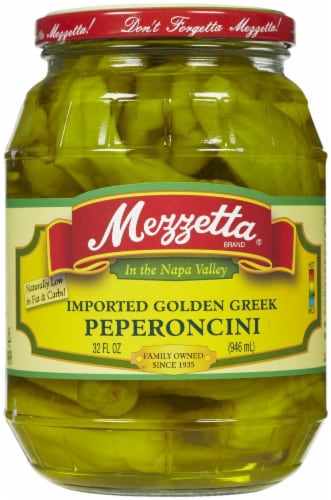
How to identify the recalled jar

Start with the front label and size. The recalled item is the Mezzetta Golden Greek Peperoncini Medium Heat product in a large 32-ounce glass jar. It contains whole yellow-green peperoncini in brine and has the familiar red-and-green Mezzetta label.

The product name and jar size alone are not enough to determine whether a jar is recalled. The company limited the action to SKU 10106328 and lot 720106. Check the printed lot information on your jar carefully and compare every digit.

If you cannot locate the lot code, do not guess based on the product photo. Set the jar aside and contact Mezzetta at CustomerSupport@Mezzetta.com. A customer-service representative can help confirm where the code is printed and whether the product is included.

Why the product was recalled

Mezzetta says it became aware of a video circulating on social media that showed a potential pest contaminant inside a jar. The company contacted the consumer, began investigating the reported product and initiated a voluntary recall.

The investigation includes reviewing the jar involved in the original report as well as production, sanitation and food-safety records. Mezzetta also says it used its production and distribution records to identify customers that received jars from the affected lot and is working with them to remove those products from sale.

The FDA notice describes the issue as a potential foreign object or pest contaminant in the jar. It does not identify a confirmed illness outbreak, bacterial pathogen or allergen problem. Readers should avoid expanding the warning beyond what regulators and the company have announced.

What consumers should do now

  • Stop using the jar if it matches all three identifiers: Golden Greek Peperoncini Medium Heat, 32 ounces, and lot 720106.
  • Do not open the jar to inspect or taste the contents.
  • Keep the jar separated from food you plan to eat and away from children.
  • Photograph the front label, SKU and lot code before contacting the company.
  • Email CustomerSupport@Mezzetta.com for assistance and follow the company’s instructions.
  • Clean any shelf or surface if the jar leaked or was opened.

Mezzetta’s notice does not direct consumers to return every size or variety of its peppers. The company says no other Mezzetta products or lots are included based on the information currently available.

If someone already ate the product

No illness or injury has been reported in connection with this recall. The company’s instruction is preventive: consumers should not eat peppers from the affected lot.

If you already consumed the product and feel unwell, contact a health professional and explain that the food came from the recalled lot. Seek urgent help for severe symptoms such as trouble breathing, loss of consciousness, persistent vomiting or signs of a serious allergic or physical reaction.

For questions about the recall itself, use Mezzetta’s published customer-support email. If you want to report a product problem to regulators, the FDA’s Safety Reporting Portal provides the appropriate reporting path.

Keep lot information when reorganizing a pantry

Transferring dry foods into clear containers can make pantry contents easier to see, but recall identification often depends on the original package, label and lot code. Photograph or retain that information whenever you decant a product.

ReaderSpice may earn a commission from qualifying purchases.

For dry pantry staples, an OXO Good Grips POP Container provides clear storage, but it should be paired with the original product label or a written lot record.

What the recall does not include

Only one identified 32-ounce product and lot is covered. The notice does not say that all Mezzetta peperoncini, all jar sizes or all Mezzetta products are unsafe. It also does not report confirmed illnesses or injuries.

That narrow scope may change if the investigation finds additional affected products. Consumers should follow the FDA recall page or Mezzetta’s official updates rather than relying on screenshots or reposts that may omit later changes.

The bottom line

Check any 32-ounce jar of Mezzetta Golden Greek Peperoncini Medium Heat for SKU 10106328 and lot 720106. If both identifiers match, do not consume the product and email Mezzetta for assistance. Other products and lots are not included in the company’s current notice.

Sources

FDA: Mezzetta Golden Greek Peperoncini recall announcement

Mezzetta: Golden Greek Peperoncini product page

Kroger: 32-ounce Mezzetta Golden Greek Peperoncini packaging reference

FDA: Safety Reporting Portal

Wholesome Pantry Applesauce Recall: Check the UPC and Best-By Date

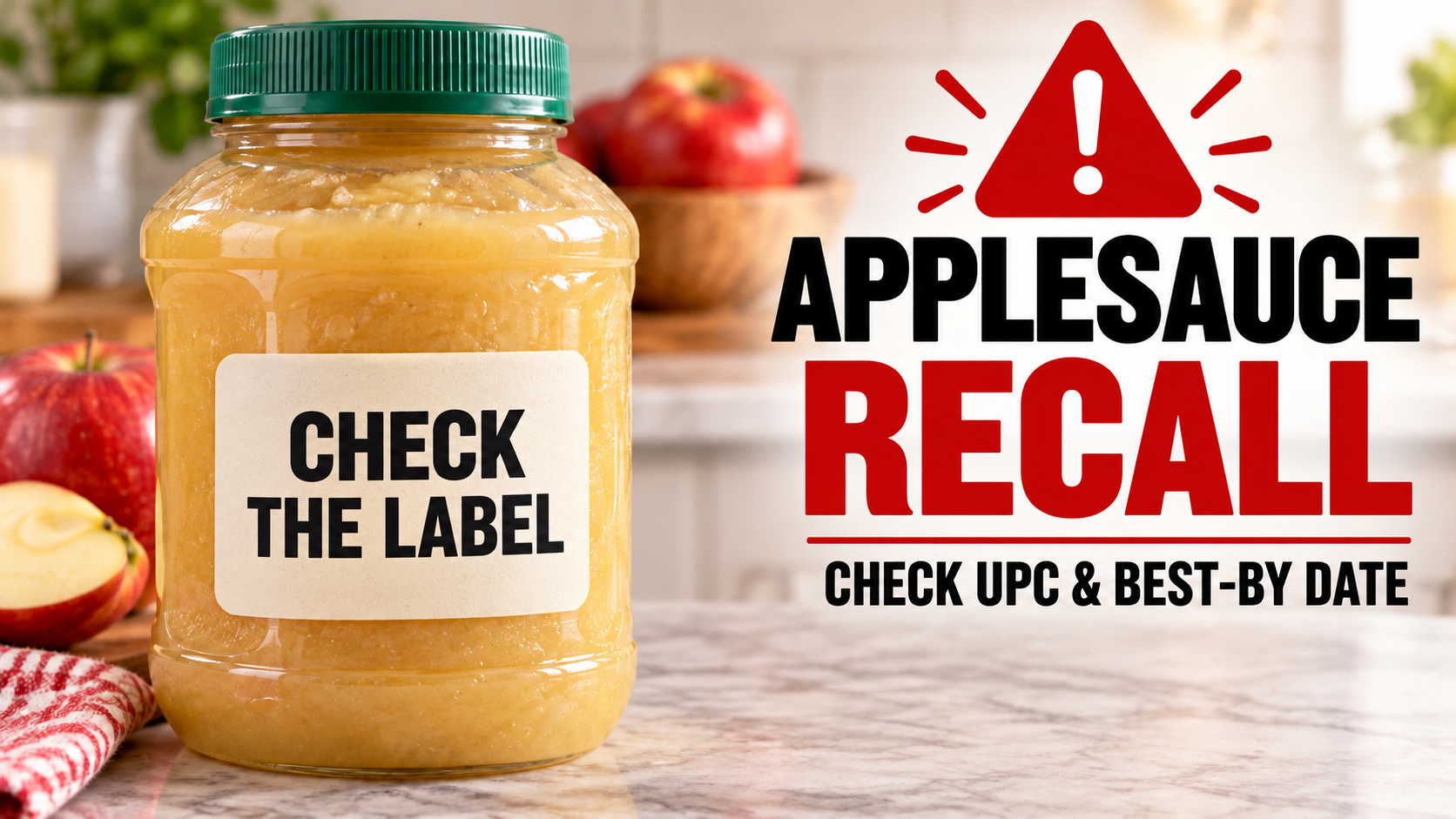
Applesauce jar beside a recall warning telling shoppers to check the UPC and best-by date

Wakefern Food Corp. has recalled select 23-ounce jars of Wholesome Pantry Organic Unsweetened Apple Sauce after routine FDA testing found elevated levels of patulin. The FDA published the notice on September 22, 2026, and consumers are being told not to eat the affected product.

The recalled jars carry one specific UPC and one best-by date. No illnesses or injuries had been reported when the announcement was posted, but shoppers should check cupboards, refrigerators and packed lunches now because applesauce can remain in a home for months.

Recall at a glance

  • Product: Wholesome Pantry Organic Unsweetened Apple Sauce
  • Container: 23-ounce plastic jar
  • UPC: 04119005677
  • Best-by date: June 16, 2027
  • Reason: Elevated patulin levels found during routine FDA testing
  • Action: Do not consume it; return it for an immediate refund or replacement
  • Illness reports: None reported in the company announcement

Wakefern’s official recall announcement says no other products sold at the affected supermarket banners are included. That means the product name, package size, UPC and best-by date all matter when deciding whether a jar is part of this recall.

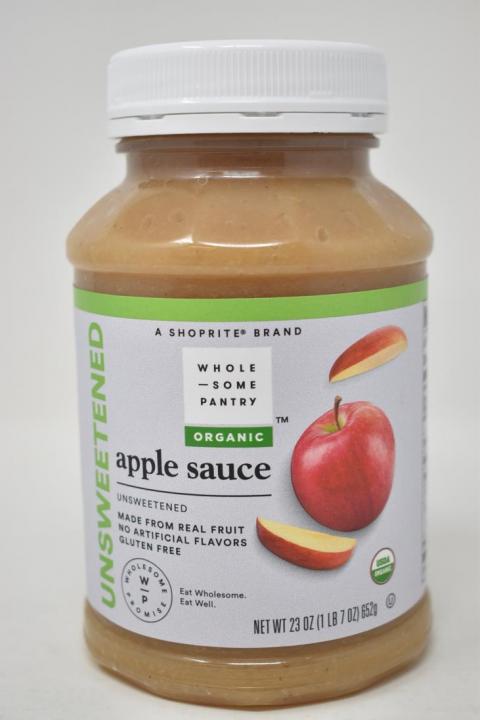
Wholesome Pantry recalled jar label

Wholesome Pantry recalled jar label

The front label identifies the product as Wholesome Pantry Organic Unsweetened Apple Sauce in a 23-ounce jar. The recalled UPC is 04119005677. Shoppers should match every identifier instead of relying only on the color or shape of the container.

If the brand, size, UPC or date differs, the jar is not the product described in this announcement. When the label is damaged or unreadable, set the product aside and ask the retailer to confirm it rather than guessing.

Where the recalled applesauce was sold

Wakefern distributed the product through ShopRite, Price Rite Marketplace, The Fresh Grocer, Gourmet Garage and Fairway Market. These banners operate across several northeastern states, so the recall is not limited to one individual store.

Wakefern’s company profile lists supermarkets in New Jersey, New York, Connecticut, Pennsylvania, Maryland, Delaware, Massachusetts, New Hampshire and Rhode Island. The recall notice does not say every location in every state sold the affected lot, so checking the jar remains more reliable than assuming it is safe based on where it was purchased.

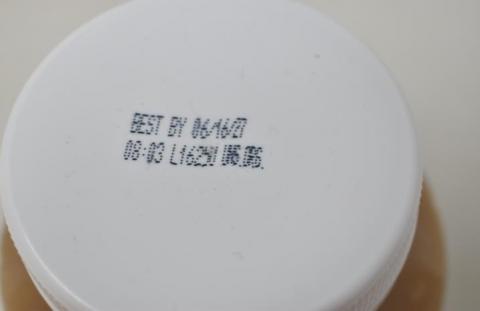
Best-by date on the recalled jar lid

Best-by date on the recalled jar lid

The affected best-by date is June 16, 2027, printed on the lid. A matching date alone is not enough: confirm that the product is the 23-ounce Wholesome Pantry Organic Unsweetened Apple Sauce and that the UPC is 04119005677.

What is patulin?

The FDA notice describes patulin as a naturally occurring substance produced by molds that can grow on damaged or bruised apples. It may be present in products made from affected fruit. Wakefern said the level detected in this applesauce exceeded food-safety limits, so the recalled product should not be consumed.

This is a product-specific recall, not a warning against applesauce generally. The practical response is to identify the listed jar accurately, stop using it and follow the retailer’s return instructions.

What shoppers should do now

  • Stop eating the applesauce immediately if every identifying detail matches.
  • Keep the jar closed and separate from food that family members may use by mistake.
  • Take a photo of the front label, UPC and lid date before returning it.
  • Return the jar to the store for an immediate refund or replacement.
  • Check lunch bags, pantry bins and secondary refrigerators for another jar from the same purchase.
  • Tell anyone who shares groceries in the household, especially caregivers or relatives who may serve the product to children.

The recall notice does not instruct consumers to taste or smell the applesauce to judge safety. Mold-related contamination is not something shoppers should try to confirm at home.

What if someone already ate it?

Wakefern reported no associated illnesses or injuries at the time of the announcement. Anyone who feels unwell or has a health concern after consuming the recalled product should contact a medical professional for individualized advice. Consumers can also report a product problem to the FDA through its safety-reporting portal.

Refund and contact information

Customers can return the recalled jar to the store for an immediate refund or replacement. Wakefern directs questions to 1-800-ShopRite (1-800-746-7748), Monday through Friday from 8 a.m. to 6 p.m., and Saturday and Sunday from 9 a.m. to 5 p.m.

If you need a replacement pantry option after returning the jar, you can compare organic unsweetened applesauce options on Amazon. Check the seller, package size and current product information before ordering.

As an Amazon Associate, ReaderSpice earns from qualifying purchases.

The bottom line

Check Wholesome Pantry Organic Unsweetened Apple Sauce in 23-ounce jars for UPC 04119005677 and a June 16, 2027 best-by date. Do not consume a matching jar. Return it to the retailer for a refund or replacement, and use the official FDA notice if you need to compare the package photos.

Sources

FDA: Wholesome Pantry Organic Unsweetened Apple Sauce recall

FDA: Current recalls, market withdrawals and safety alerts

FDA: Report a product problem

Hand Soap Recall in 15 States: Check These Six Products and UPCs

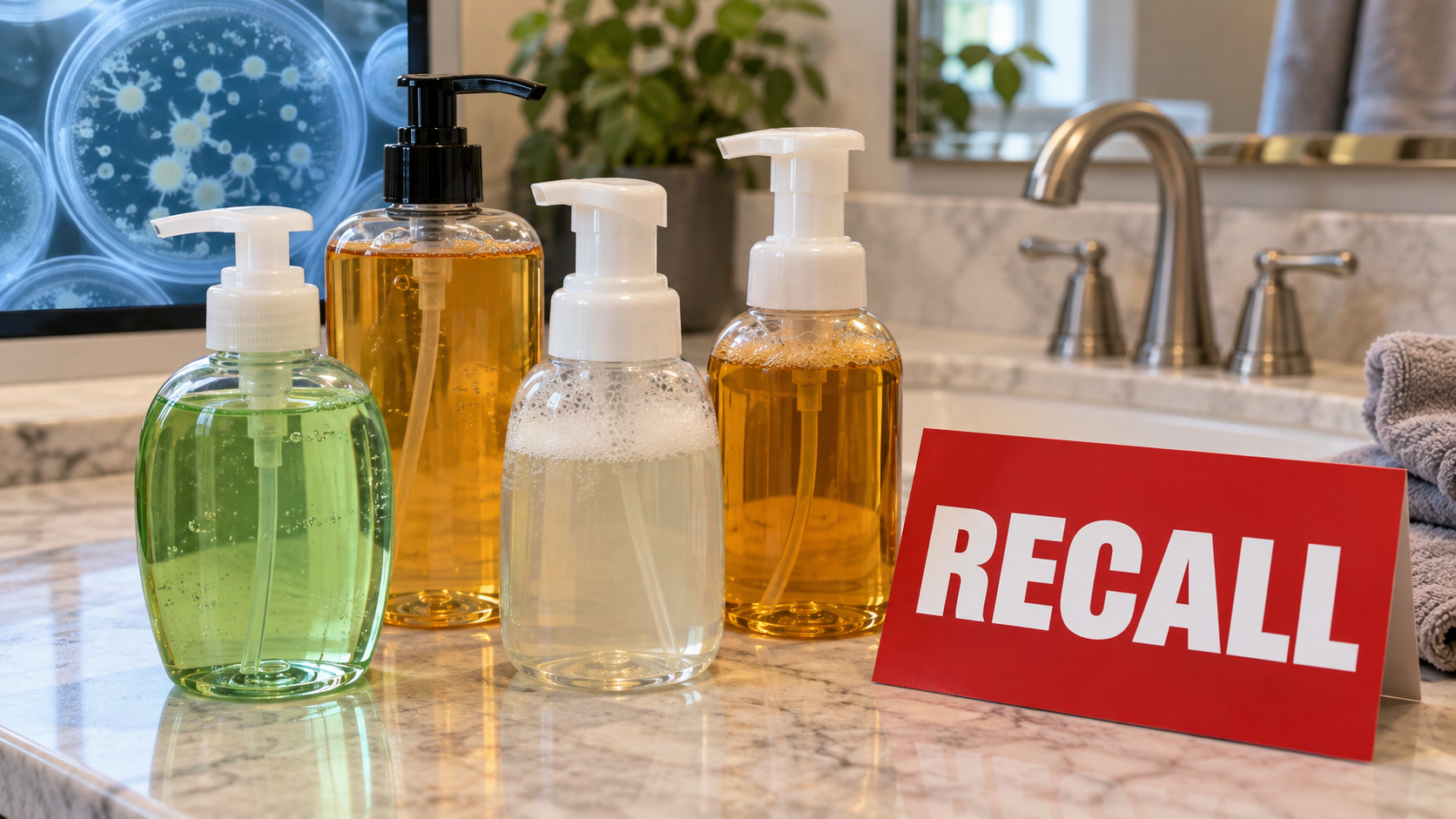
Generic hand soap bottles beside a recall warning and laboratory bacteria image

A federal recall involving nearly 2,700 cases of liquid and foaming hand soap has been classified as a Class II recall after potential bacterial contamination was identified. The products were made by Intercon Chemical Co. and distributed to 20 consignees—19 wholesalers and one retailer—across 15 states.

The recall began on June 29, 2026, and the U.S. Food and Drug Administration classified it as Class II on September 11. That classification means exposure may cause temporary or medically reversible health effects, while the probability of serious harm is considered remote. Consumers should still stop using any bottle that matches the listed product, UPC and code information.

What products are included in the hand soap recall?

Six products appear in FDA Enforcement Report event 99466. Two Laura Lynn soaps were distributed through Ingles Markets, while the other products went through wholesalers. Because wholesale soap may be placed in workplaces, healthcare facilities, restaurants or other shared restrooms, readers should check both household bottles and refill containers used outside the home.

Laura Lynn Honey Apple Crisp Liquid Hand Soap

  • Size: 8 fluid ounces
  • UPC: 086854074305
  • Manufacturing code: FIN46-HB-12X8-0921
  • Lot codes: C3576 and 26-01804
  • Best-by dates: November 5, 2026, and March 2028
  • Affected quantity: 301 cases

Laura Lynn Foaming Pear Scent Hand Soap with Moisturizers

  • Size: 7.5 fluid ounces
  • UPC reported in the FDA-derived listings: 08685407408
  • Manufacturing code: FIN46-HB-12X7-0948
  • Lot code: 26-01001
  • Best-by date: March 13, 2028
  • Affected quantity: 294 cases

Intercon Foaming Pear Hand Soap with Aloe

  • Size: 28.7 fluid ounces
  • UPC: 789745002981
  • Manufacturing code: FICCB-HB-4X28-0948
  • Lot codes: AF97312, 26-01001 and 26-01803
  • Best-by dates: January 12, 2028; March 13, 2028; and March 2028
  • Affected quantity: 693 cases

Clearly Better by Intercon Foaming Pear Hand Soap with Aloe

  • Size: 1,000 milliliters (34 fluid ounces)
  • UPC: 789745002615
  • Manufacturing code: FICCB-HB-4X1L-0948
  • Lot codes: 26-01001 and 26-01803
  • Best-by dates: March 13, 2028, and March 2028
  • Affected quantity: 143 cases

Summit 150 Foaming Hand Soap

  • Size: 28.7 fluid ounces
  • UPC: 810080570030
  • Manufacturing code: FRL01-HB-6X28-0948
  • Lot codes: BF97303, BF97304 and BF97305
  • Best-by dates: February 3, February 4 and February 5, 2028
  • Affected quantity: 1,040 cases

Vestis Foaming Hand Soap, Fresh Pear Scent

  • Size: 33.8 fluid ounces
  • UPC: 810080570405
  • Manufacturing code: FVE60-HB-6X1L-0948
  • Lot code: 26-03091
  • Best-by date: May 2028
  • Affected quantity: 225 cases

Which states received the recalled soap?

The FDA report says the products were distributed in California, Georgia, Illinois, Iowa, Maryland, Mississippi, Nebraska, New York, North Carolina, North Dakota, Pennsylvania, South Carolina, Texas, Washington and Wisconsin. The report does not identify the 19 wholesale outlets, so the state list is not a substitute for checking the actual label and codes.

Why the contamination matters

The two Intercon-branded pear soaps and the Clearly Better product were associated with possible contamination involving several Pseudomonas and Serratia species, including Pseudomonas aeruginosa and Serratia marcescens. The other four products were listed for potential bacterial contamination without the same organism-level detail.

The CDC says Pseudomonas aeruginosa can cause infections in the blood, lungs, urinary tract and other parts of the body, with the highest risk typically seen in healthcare settings and among people with open wounds or medical devices. Cleveland Clinic notes that Serratia marcescens infections are also more likely to affect people with weakened immune systems or those receiving care in hospitals or long-term facilities.

That context does not mean everyone who used the soap will become ill. The FDA’s Class II classification specifically indicates that serious consequences are unlikely. However, contaminated soap can contact cuts, cracked skin, eyes or medical equipment, so matching bottles should be removed from use.

What to do if your soap matches

  • Stop using the soap immediately.
  • Photograph the front label, UPC, lot or manufacturing code and best-by date.
  • Keep the bottle closed and separate it from other soap until the seller or recalling company provides disposal or return instructions.
  • Contact the place of purchase or Intercon Chemical Co. to ask about the available remedy.
  • Clean the dispenser area and wash your hands with an unaffected product.
  • If anyone develops signs of infection or has a weakened immune system, open wound or medical device, contact a healthcare professional for individualized advice.

Do not identify a bottle by scent or color alone. Similar-looking pear and honey soaps outside these exact product and code combinations are not automatically included. The safest check uses the brand, container size, UPC, lot or manufacturing code and best-by date together.

Replacing a recalled soap bottle

A replacement does not have to be a sensor dispenser, but a sealed, easy-to-clean pump can reduce shared contact points. One currently available option is the simplehuman touch-free rechargeable soap dispenser. Use it only with soap that is not part of this recall, and clean the reservoir according to the manufacturer’s instructions.

Disclosure: ReaderSpice may earn a commission from qualifying Amazon purchases at no extra cost to you.

The bottom line

This recall is easy to miss because four of the six products moved through wholesalers rather than a clearly named national retail chain. Check refill jugs and shared-restroom supplies as carefully as bottles at home. If the brand, size and codes match, stop use and contact the seller or manufacturer. Readers should rely on the FDA event record for any later status or remedy update.

Sources

FDA Enforcement Report: Event 99466

Health: Hand Soap Recall in 15 States

People: Nearly 2,700 Cases of Hand Soap Recalled

CDC: About Pseudomonas aeruginosa

Cleveland Clinic: Serratia marcescens