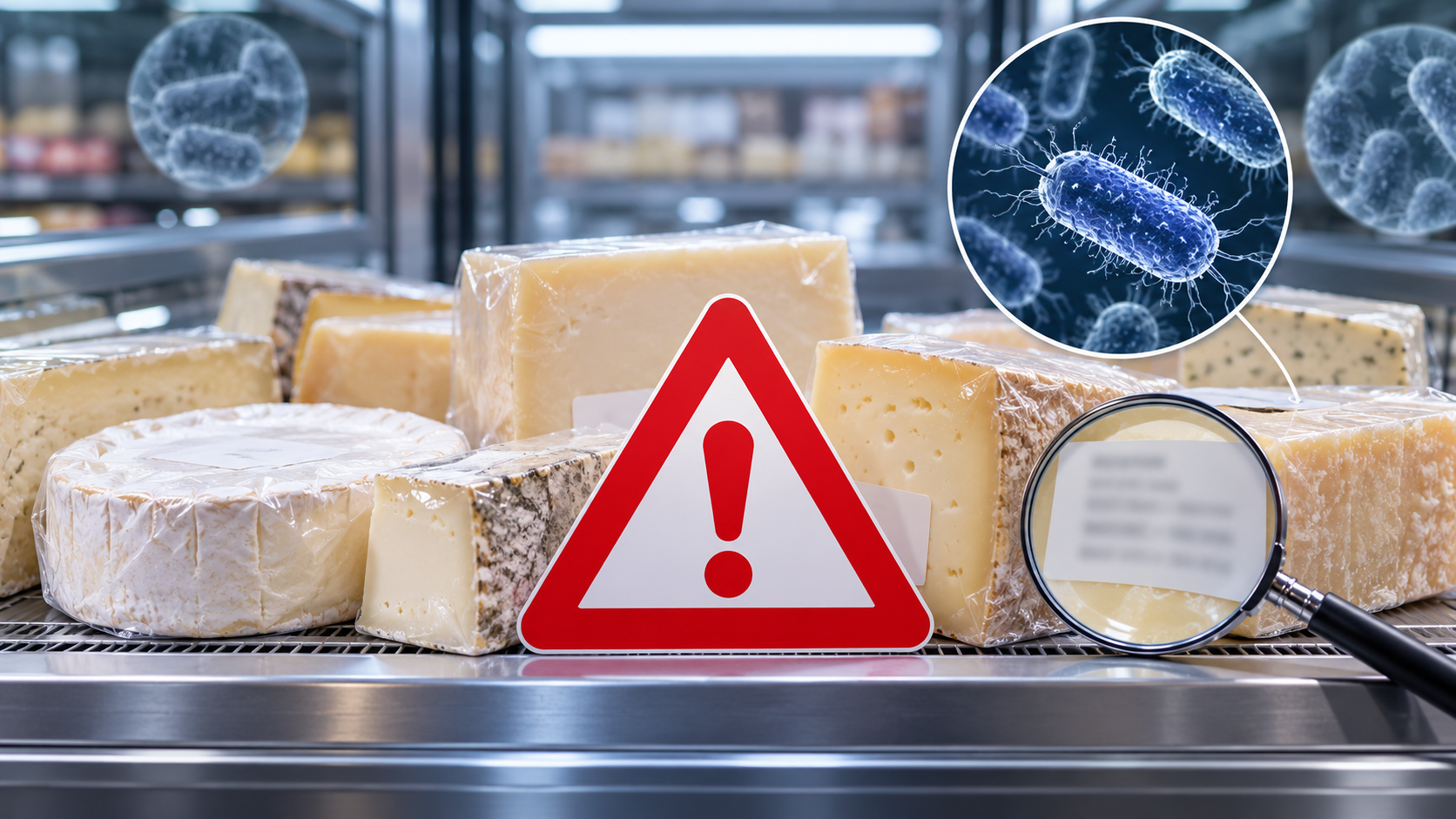
Sierra Nevada Cheese Company is recalling all Graziers Raw Milk Cheese currently in the market after the products were linked to a multistate outbreak of E. coli O26:H11. The recall is nationwide, and it is broader than a single lot, production date or package size.
Federal investigators list 13 illnesses, eight hospitalizations and three cases of hemolytic uremic syndrome, a potentially life-threatening form of kidney failure. No deaths have been reported. More than half of the people sickened are children age 5 or younger.
The key action is simple: do not eat, serve or sell any Sierra Nevada Graziers raw-milk Monterey Jack, Jalapeño Jack, Medium Cheddar or Sharp Cheddar that may still be in a refrigerator or freezer.
What is being recalled?
The recall covers Sierra Nevada Graziers grass-fed raw milk cheeses in four varieties: Monterey Jack, Jalapeño Jack, Medium Cheddar and Sharp Cheddar. Retail packages include 8-ounce squares and a 16-ounce Medium Cheddar brick. Food-service and wholesale packages include 5-pound loaves and large Cheddar blocks.
The products were distributed nationwide through distributors, retailers and direct customers. FDA also says the recalled cheese was sold through retailers nationwide and online. Because cheese can remain refrigerated or frozen for a long time, older packages may still be in homes and businesses.
How to identify the recalled Graziers cheese
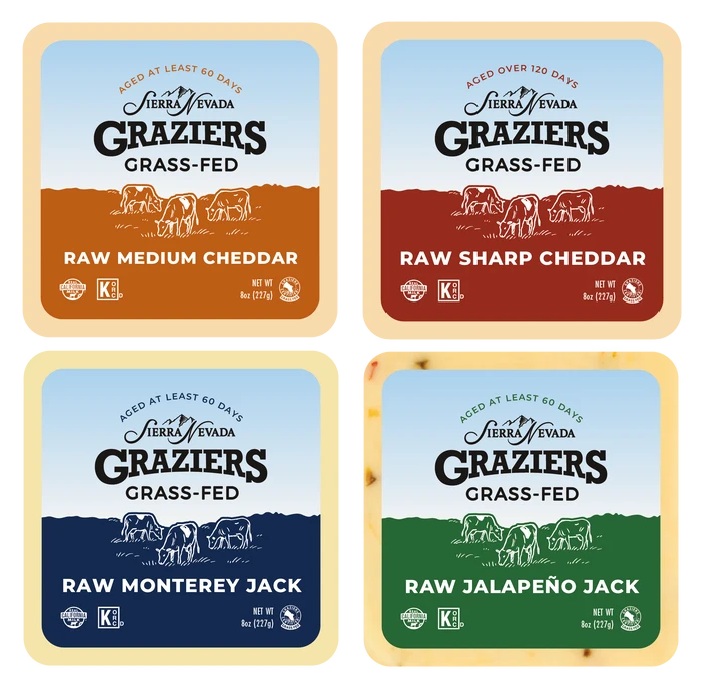
Look for the Sierra Nevada Graziers name and the words “grass-fed raw milk” on the package. The official product images show cream-colored retail wrappers with green and gold label elements, but packaging can vary by product and size. Use the brand, cheese variety, package size and code together when the original label is available.
If cheese was removed from its original packaging or frozen without a label and you cannot determine whether it is included, FDA advises throwing it away.
Recalled products, sizes and codes
- Graziers Raw Milk Monterey Jack, 8-ounce square — UPC 6-87652-16400-9
- Graziers Raw Milk Jalapeño Jack, 8-ounce square — UPC 6-87652-16403-0
- Graziers Raw Milk Medium Cheddar, 8-ounce square — UPC 6-87652-16506-8
- Graziers Raw Milk Sharp Cheddar, 8-ounce square — UPC 6-87652-16507-5
- Graziers Raw Milk Medium Cheddar, 16-ounce brick — UPC 6-87652-16501-3
- Monterey Jack, 5-pound loaf — item 6425
- Jalapeño Jack, 5-pound loaf — item 6426
- Medium Cheddar, 5-pound loaf — item 6510
- Sharp Cheddar, 5-pound loaf — item 6511
- Cheddar, 40-pound block — items 6515 and 6516
Retailers may also have repackaged larger loaves or blocks for individual sale. A store label may therefore look different from the original Graziers package. When in doubt, ask the retailer whether its cut cheese came from the recalled product.
Why there is no safe lot or date code
Investigators have not narrowed the problem to a specific lot, date code or production date. Sierra Nevada Cheese Company is therefore recalling all listed Graziers Raw Milk Cheese products that remain in distribution.
That means a best-by date alone cannot clear a package. Consumers should not assume a newer or older wrapper is safe, and they should not taste the cheese to test it. The recall applies to every covered product until officials publish narrower guidance.
What consumers should do now
- Do not eat or serve recalled Graziers raw-milk cheese.
- Check refrigerators and freezers, including cheese stored without its original box or wrapper.
- Return a labeled product to the place of purchase for a refund, or dispose of it so no person or animal can eat it.
- Wash and sanitize shelves, drawers, containers, cutting boards, knives and other surfaces that touched the cheese.
- Contact a health care provider promptly if you ate the recalled cheese and develop symptoms of E. coli infection.
Consumers with recall questions can contact Sierra Nevada Cheese Company at 530-934-8662 on weekdays from 8:30 a.m. to 5 p.m. Pacific Time or email recallinfo@sierranevadacheese.com.
What the outbreak numbers show
The current federal investigation reports 13 illnesses across California, Colorado, Georgia, Kentucky, Michigan, Nevada, Oregon, Tennessee and Utah. Eight people have been hospitalized, and three developed hemolytic uremic syndrome. No deaths have been reported.
Among nine people interviewed about what they ate, all nine reported consuming Sierra Nevada Graziers grass-fed raw milk cheese. FDA and CDC continue working with state and local partners to determine the source of contamination and whether other products could be affected.
These numbers can change as investigators identify more cases. Readers should check the official FDA outbreak page for the latest status before serving any product that could be involved.
E. coli symptoms and when to seek care
Shiga toxin-producing E. coli can cause severe stomach cramps, diarrhea that may be bloody, vomiting, fever and nausea. Symptoms can begin a few days after exposure or take as long as nine days to appear.
CDC advises contacting a health care provider right away for:
- Diarrhea with a fever higher than 102°F
- Diarrhea lasting more than two days without improvement
- Bloody diarrhea
- Vomiting so frequent that liquids will not stay down
- Signs of dehydration, such as very little urination, a dry mouth or dizziness when standing
Young children, older adults and people with weakened immune systems can face a higher risk of severe illness. More than half of the people reported sick in this outbreak are young children, which makes quick product checks especially important for families and caregivers.
Clean surfaces and prevent cross-contamination
Throwing away the cheese is only the first step. Wash hands, utensils and food-contact surfaces with hot soapy water. Clean refrigerator shelves, bins and reusable containers that held the product. Use a dishwasher for dishwasher-safe items when appropriate.
Do not rinse the cheese in an attempt to make it safe. Washing cannot reliably remove contamination from a food like cheese, and splashing water can spread bacteria to nearby surfaces.
What restaurants and retailers should do
Restaurants, retailers, distributors and food-service operators should stop selling or serving the recalled cheeses. They should identify any cut or repackaged portions made from the recalled loaves or blocks, remove them from sale and clean affected equipment and storage areas.
Businesses should retain supplier records and communicate with customers when required. Employees should not rely only on a store-generated label because repackaged products may not display the original UPC or Graziers branding.
A useful refrigerator safety tool
A refrigerator thermometer can help households confirm that cold foods are being stored at a safe temperature. It cannot make recalled cheese safe or detect E. coli, but it is useful for everyday food-storage checks.
ReaderSpice participates in the Amazon Associates program and may earn a commission from qualifying purchases made through affiliate links, at no extra cost to you.
The bottom line
This is not a one-lot recall. All listed Sierra Nevada Graziers Raw Milk Cheese products currently in the market are included because investigators have not identified a specific safe production window.
Check every refrigerator and freezer, do not eat uncertain cheese, clean anything it touched, and seek medical care for concerning symptoms. The outbreak investigation is ongoing, so the FDA and CDC advisories remain the best sources for future updates.
Sources
- FDA: Sierra Nevada Cheese Company recall announcement
- FDA: E. coli O26:H11 raw-milk cheese outbreak investigation
- CDC: E. coli outbreak linked to raw-milk cheese