
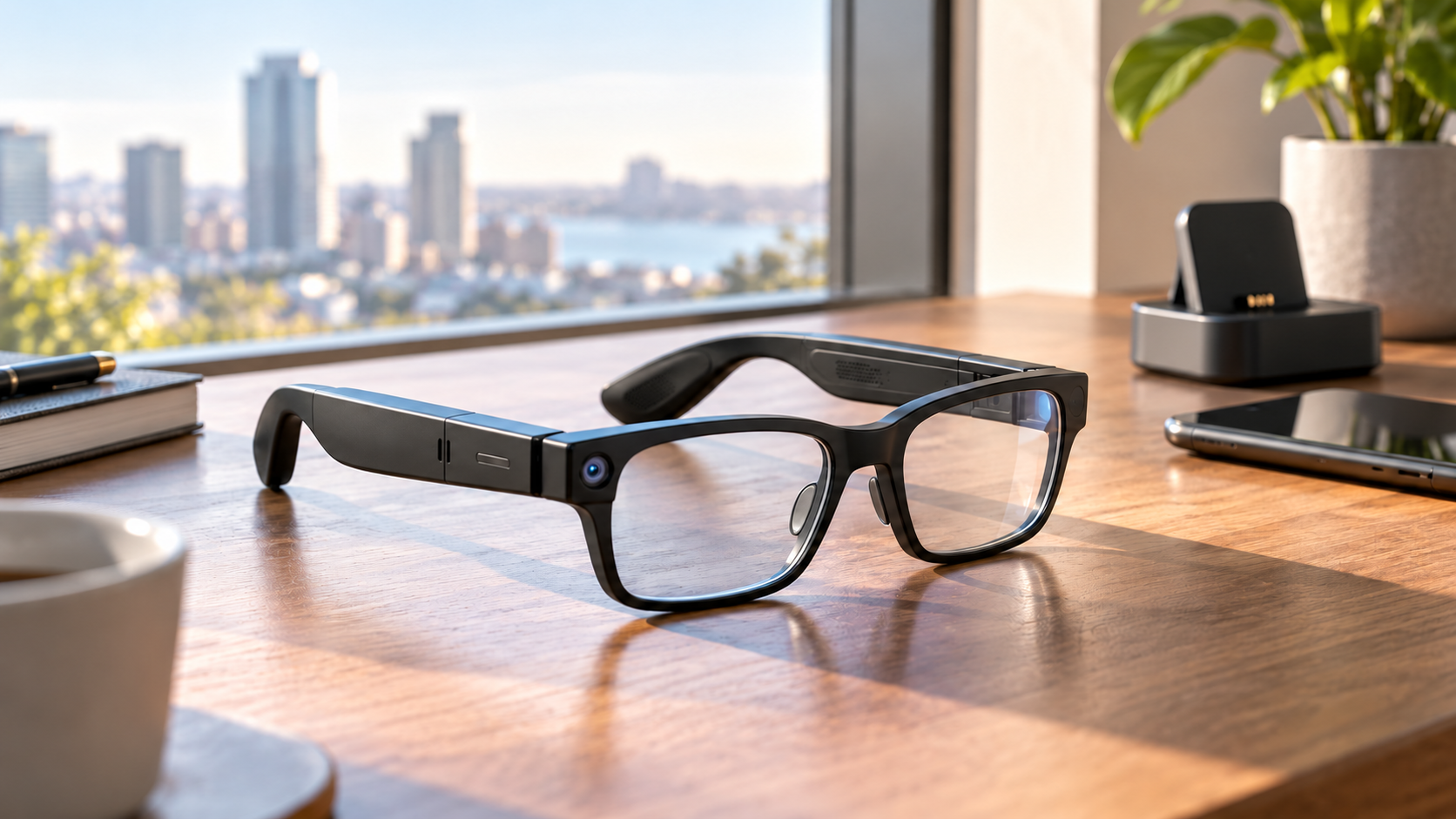
Meta’s most affordable camera-equipped AI glasses are officially on sale October 23, 2026. The Meta Adventurer starts at $249 in Classic Black with gray lenses and a plug-in charging case, putting a 12-megapixel camera, 3K video, open-ear audio and Meta AI below the price of many competing smart glasses.
The low price has an important catch: the $249 package uses a charger that must be connected to power. Configurations with Meta’s foldable charging case start higher—the currently displayed Classic Black model with clear lenses is $299—and that portable case can add up to 40 hours of battery life away from an outlet. The glasses themselves keep the same core capabilities, so buyers are mainly choosing between the lowest entry price and more convenient charging on the road.
The quick take
- The entry Meta Adventurer costs $249 and includes black frames, gray lenses and a plug-in charging case.
- A $299 configuration shown on Meta’s U.S. store includes clear lenses and the foldable charging case.
- Meta says the lower-priced version retains the same core features: Meta AI, a 12MP camera, 3K video and open-ear audio.
- Battery life is rated at more than eight hours for the glasses; the portable case provides up to 40 additional hours, while the plug-in case does not act as an unplugged battery bank.
- The rectangular frame comes in standard and large sizes, supports prescriptions and works with iOS 17 or later and Android 10 or later.
- A visible capture LED signals photo or video use, but owners still need to ask permission and follow venue rules.
What went on sale October 23
Meta announced the Adventurer in September and set October 23 as the retail date in markets where Meta Glasses are sold. The headline $249 configuration pairs a black rectangular frame and gray lenses with the company’s simpler plug-in case. Other Adventurer combinations add different lenses, colors, sizes and the portable case, so the price on the product page can be higher than the advertised starting point.
The current U.S. product page shows Classic Black with clear lenses at $299 when the foldable charging case is selected. That is not a contradiction. The $249 price belongs to the specific black-and-gray package with the plug-in case. Prescription lenses, Transitions lenses and other treatments can raise the total further.
Availability is broader than a U.S.-only launch. Meta lists online sales in the United States, Canada, the United Kingdom, Australia, much of Western Europe, Japan, Mexico, Singapore, South Korea and the United Arab Emirates, with local inventory and configurations varying. Buyers should use the regional Meta store because prescription support, returns, financing and consumer-law coverage can differ by country.
The $249 plug-in case is the real tradeoff
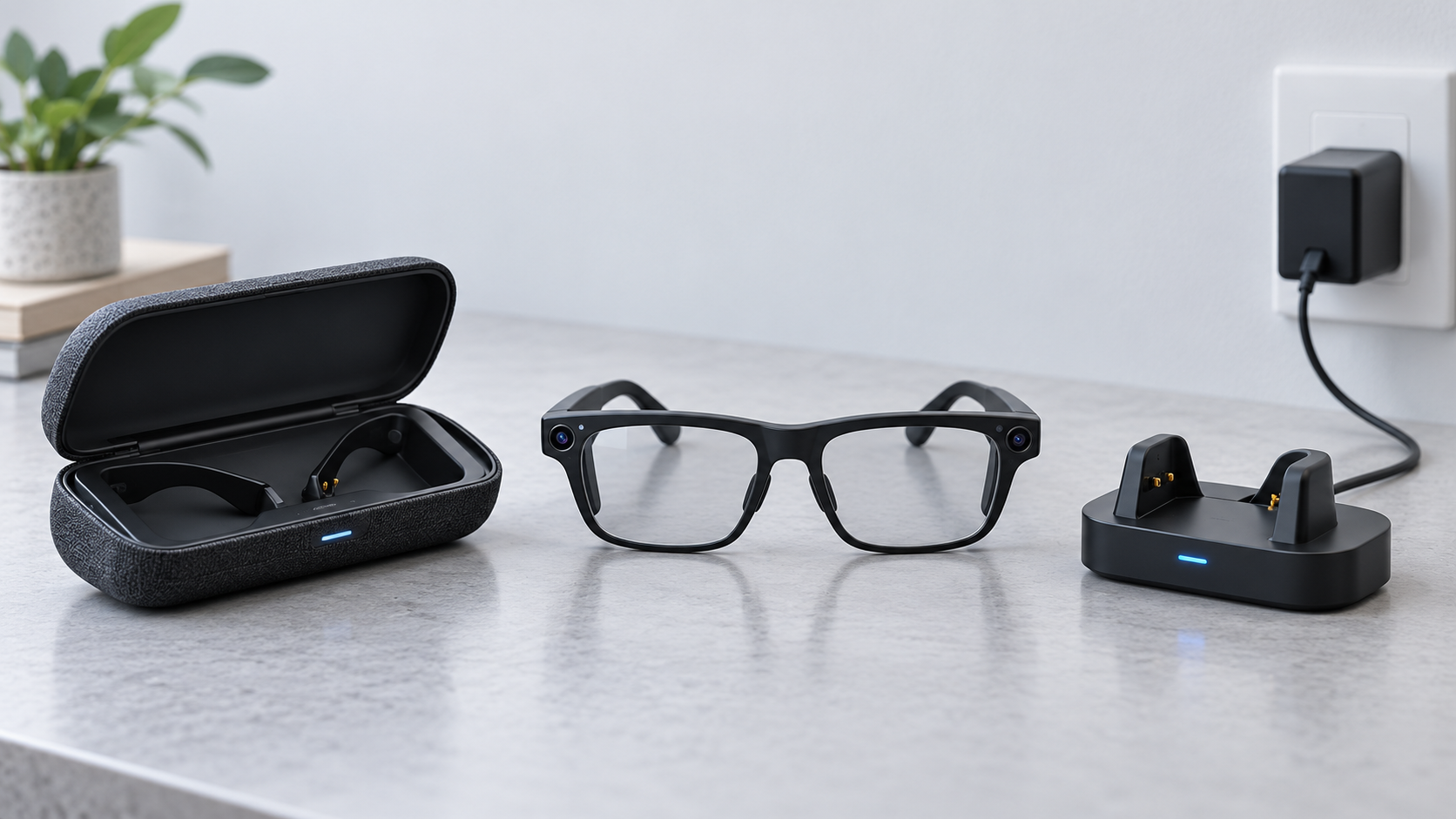
Meta says the entry Adventurer has the same standard glasses features as more expensive Meta Glasses. The distinction is the included charger. The plug-in case connects to a power source with a cable and is not sold separately. It can bring the glasses to about 90 percent charge in roughly 75 minutes, but it cannot refill them while sitting unplugged in a bag.
The foldable charging case is a portable battery. Meta rates it for up to 40 hours of additional charging, allowing the glasses to be topped up between commutes, meetings or sightseeing stops without finding an outlet. Meta also sells that portable case separately for $89, so buying the $249 model and adding a case later would cost more than choosing an appropriate package at checkout.
The practical decision is straightforward. The plug-in package makes sense when the glasses will mostly be used near home, work or a vehicle charger. Travelers, all-day event attendees and heavy camera users are more likely to benefit from the portable case because 3K video, calls and AI requests can consume the frame battery faster than light audio use.
The core hardware is not cut down
Adventurer uses a 12MP ultra-wide camera with a 100-degree field of view. Still images are captured at 3024 by 4032 pixels. Video options include 3K Ultra HD at 30 frames per second, a 1080p-plus mode at 30 or 60 fps and a 720p-plus mode at 120 fps. Hyperlapse and slow-motion capture are supported.
Six microphones are distributed across the nose pads, temple arm and front frame. The open-ear speakers use adaptive volume so audio can respond to the surrounding environment. This design keeps the ear canal open, which is useful for awareness, but it also means nearby people may hear some sound at higher volumes and strong traffic noise can compete with music or calls.
The glasses store up to 1,000 photos or more than 100 thirty-second videos in 32GB of flash storage. Wi-Fi 6 tri-band connectivity covers 2.4GHz, 5GHz and 6GHz networks, while Bluetooth 5.4 and Bluetooth Low Energy handle phone pairing and related connections.
What Meta AI can do
With a paired phone and supported services, the glasses can answer questions about what the wearer sees, provide local recommendations, translate conversations, start calls and control music. Meta also promotes dynamic photo capture, which takes multiple frames and recommends a stronger result. Some features depend on region, language, connected accounts or a data connection, so the hardware specification should not be treated as a promise that every AI function works everywhere on day one.
There is no in-lens display. Adventurer is a camera-and-audio wearable, not an augmented-reality headset. Answers arrive primarily through the speakers or the companion Meta AI app. Anyone expecting maps, messages or captions floating in front of the eye should look at display-equipped products instead.
Battery, fit and prescription details
Meta rates the frame for more than eight hours per charge. Real endurance will vary with video recording, calls, music volume, AI use, wireless conditions and temperature. The number is best read as an upper-level product claim rather than a guarantee that every user will reach a full workday.
The rectangular frame is offered in standard and large sizes. Meta lists a weight of 53.8 grams for the standard frame and 54.8 grams for the large one. Both use a 22mm bridge, with 150mm temples on the standard size and 155mm temples on the large size. Three-way nose-pad adjustment and over-extension hinges are intended to improve fit, but the frame remains heavier than ordinary eyeglasses.
Prescription-ready versions support single-vision and progressive lenses. Meta lists a total-power range from -12.00 to +2.25, with cylinder correction up to 6.00. That is a broad range, but an optician should confirm lens thickness, pupillary distance and fit before purchase. In the U.S., prescription configurations can be ordered from Meta; third-party installation should be handled by a qualified professional.
Phone requirements and what is not included
The official compatibility floor is iOS 17 or later or Android 10 or later. A compatible phone, the Meta AI app, a Meta account and wireless connectivity are necessary for setup and many smart features. An operating-system version alone does not guarantee every phone model is supported, so buyers should check Meta’s live compatibility list before opening or customizing prescription lenses.
The standard foldable-case package includes the glasses, charging case, cleaning cloth, reference guide and prescription-lens guide. Meta states that a USB-C charging cable is not included. The lower-priced plug-in package uses its dedicated wired case instead, so shoppers should examine the exact in-box list shown for the selected configuration rather than assuming all bundles contain the same accessories.
Privacy is part of the ownership cost
Adventurer’s camera makes consent and location rules as important as battery life. Meta says a capture LED illuminates when the glasses take photos or record gallery video, and camera capture is blocked if that light is covered. The company also says captures remain on the glasses until the owner chooses to move them to the phone through the Meta AI app.
Those safeguards do not replace good behavior. Owners should ask before photographing people, avoid sensitive spaces and comply with workplace, school, medical, concert and private-property policies. The LED also cannot tell a bystander what will happen to an image after it is transferred to a phone.
Visual AI requests are another reason to review settings carefully. A camera-equipped assistant can process what is in front of the wearer even when the intent is not to create a keepsake. Before using the glasses around documents, screens, children or confidential work, review the Meta AI app’s capture, voice and data controls and switch off features that are not needed.
A verified Amazon alternative
Meta Adventurer is sold through Meta and certified retailers. Buyers who prefer Amazon can compare it with the established Ray-Ban Meta Gen 2 Wayfarer Large in Matte Black with clear lenses. That model includes a 12MP camera, 3K video, open-ear audio and Meta AI in a Ray-Ban frame, but its fit, styling, battery package and price are different from Adventurer.
Check the Ray-Ban Meta Gen 2 Wayfarer Large on Amazon (ASIN B0FLYD7G7D). Confirm the generation, frame size, lens type, seller and current return terms before ordering because Amazon can group several variations on one page.
Disclosure: ReaderSpice may earn a commission from qualifying Amazon purchases made through the link above, at no additional cost to you.
Who should choose each package
Choose the $249 plug-in version if
- Your priority is the lowest purchase price.
- You normally use the glasses near a reliable outlet or USB power source.
- Gray lenses and the specific black frame fit your needs.
- You do not expect to recharge the glasses while walking, traveling or attending long events.
Pay more for the portable case if
- You travel frequently or use the camera away from power.
- You want up to 40 hours of extra charging available in a bag or pocket.
- You need clear, Transitions or prescription lenses that are not part of the entry bundle.
- The convenience is worth more than the price gap and avoids an $89 case purchase later.
Buying checklist
- Select the exact frame size, bridge fit, lens color and case type before looking at the final price.
- Confirm that your phone appears on Meta’s current compatibility list and can run the required operating system.
- Budget for prescription lenses, lens treatments, a USB-C cable or adapter, and any protection plan separately.
- Review the 30-day return window and the 12-month manufacturing-defect warranty for the country and retailer handling the sale.
- Test fit, microphone pickup, speaker leakage, battery life, camera alignment and capture LED behavior before the return period ends.
The bottom line
Meta Adventurer makes camera-equipped AI glasses more accessible without removing the camera, audio or AI features that define the category. The $249 package is real, but it is tied to one frame-and-lens combination and a plug-in charger. For buyers who stay close to power, that is a sensible way to save. For travel or heavy daily use, the $299-class portable-case configuration is likely the better value because it solves the product’s most predictable limitation: recharging away from an outlet.
Before buying, treat the glasses as both a wearable computer and a camera. Verify the selected package, check phone compatibility and prescription needs, understand the return policy, and use the capture controls in a way that respects the people around you.
Sources
Meta Newsroom: Ray-Ban Meta Audio and expanded Meta Glasses lineup
Meta Store: Adventurer price, specifications, case options and FAQs
Meta: Responsible innovation and privacy guidance for AI glasses
Amazon: Ray-Ban Meta Gen 2 Wayfarer Large (ASIN B0FLYD7G7D)