Ring Smart Lock and Five New Cameras: Prices, Release Dates and What to Know

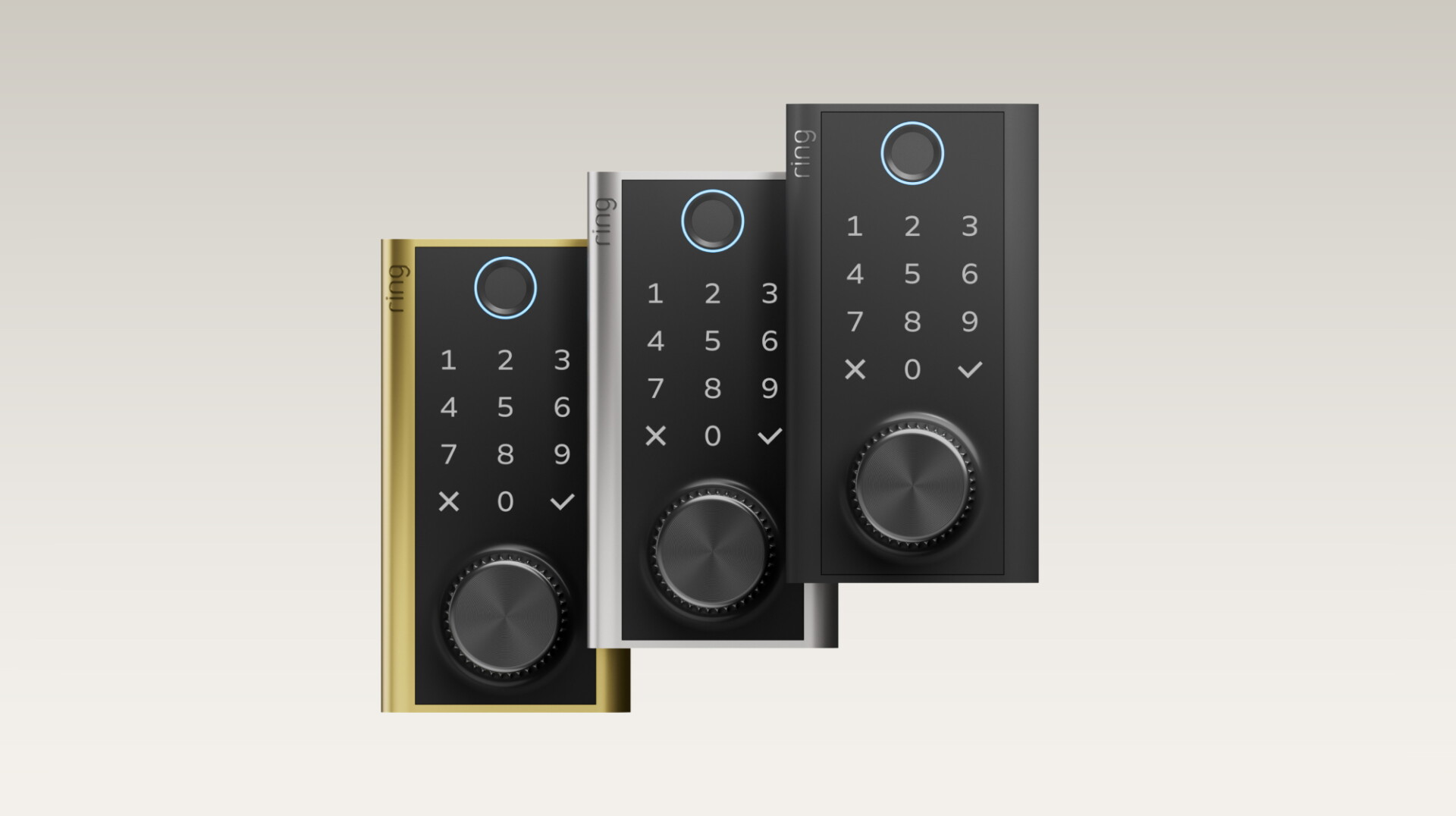
Ring Smart Lock with illuminated keypad and hand-powered backup dial

Ring has expanded its home-security lineup with its first smart lock, four new 4K cameras and a motion-tracking 2K indoor camera. The standout idea is not higher resolution: Ring Smart Lock includes a hand-powered backup dial that can generate enough power to unlock the door when its rechargeable battery is dead.

The cameras cover almost every common installation, from a $99.99 indoor model to battery, solar, wired and Power over Ethernet outdoor options. Availability is split between products you can buy now, models available for preorder and a smart lock planned for early 2027, so the details matter before you replace existing hardware.

Ring launch prices and availability

  • Ring Smart Lock: $249.99; planned for the U.S. in early 2027 in black, silver and brass.
  • Indoor Cam 4K: starts at $99.99 for the plug-in version; available now in the U.S.
  • Pan-Tilt Indoor Cam 2K: $69.99; available now in the U.S.
  • Outdoor Cam 4K Plus: starts at $149.99; available for preorder in the U.S. and several other markets.
  • Spotlight Cam 4K Plus: starts at $199.99; available for preorder in the U.S. and several other markets.
  • Floodlight Cam 4K Plus: starts at $219.99; available for preorder in the U.S. and several other markets.

Ring Smart Lock uses a hand-powered backup dial

Ring Smart Lock is designed around a simple fear: a dead battery at the worst possible moment. If the rechargeable Quick Release Ultra Battery Pack is depleted, the user can turn a built-in Backup Power Dial until the keypad wakes up, then enter a PIN. That avoids depending on a hidden physical keyhole or an external emergency battery.

There are four keyless entry methods: a fingerprint reader, a backlit touchscreen keypad, the Ring app and Alexa. The app can show lock status, lock or unlock the door and manage guest access. The lock also integrates with Ring cameras, doorbells and Ring Alarm, and activity appears in the Ring app’s event history.

Installation is intended for a standard single-cylinder deadbolt and does not require new wiring. Buyers should still compare the door’s backset, bore size, thickness and deadbolt condition with Ring’s final compatibility requirements before ordering. The product page also says the device had not yet received required FCC authorization at announcement time, so early-2027 availability remains subject to that process.

Amazon Sidewalk replaces a direct Wi-Fi connection

Ring says the lock connects through Amazon Sidewalk rather than relying on the home’s Wi-Fi range. Sidewalk can extend low-bandwidth connectivity through participating Amazon devices, but coverage varies by location and can be interrupted. That makes an address-level coverage check important before assuming every remote feature will work.

Using Sidewalk also creates a different privacy and network decision than a Wi-Fi-only lock. Owners should review Amazon Sidewalk settings, understand which compatible devices contribute to the network and decide whether the convenience fits their household. A lock must still provide dependable local entry when cloud, app or voice services are unavailable; the keypad, fingerprint reader and hand-powered backup are the practical fallbacks.

Ring’s five-camera 2026 lineup at a glance
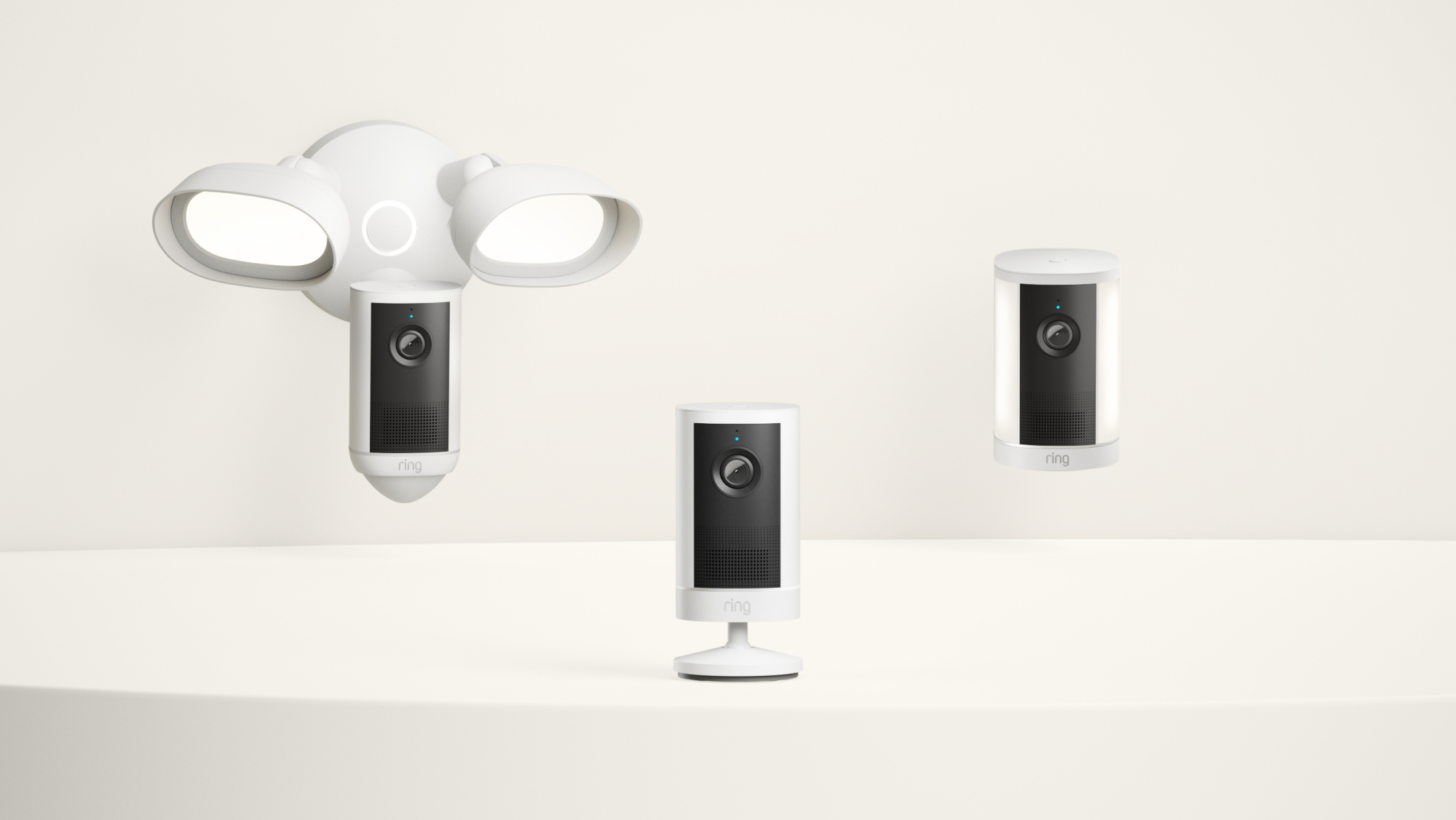
Ring’s five-camera 2026 lineup at a glance

Four of the new cameras use Ring’s Retinal Vision 4K system. Outdoor Cam 4K Plus is the most flexible: Ring lists battery, plug-in, hardwired, solar and Power over Ethernet configurations. That range is useful for renters, existing camera replacements and permanent wired installations, but each power option can change which continuous-recording or accessory features are available.

Spotlight Cam 4K Plus combines 4K video with a 550-lumen spotlight and comes in battery, plug-in and solar configurations. Floodlight Cam 4K Plus targets a brighter, permanently covered area and supports 24/7 Recording and smart detection when the setup and Ring subscription are compatible.

Indoor Cam 4K is Ring’s first 4K indoor model. The $99.99 plug-in version offers a 115-degree horizontal field of view, dual-band Wi-Fi 6, 4K video with Auto HDR, up to 10x enhanced zoom, two-way talk and a removable physical lens cover. A Power over Ethernet package costs more but can provide one cable for data and power where network wiring already exists.

Pan-Tilt Indoor Cam 2K follows motion around the room
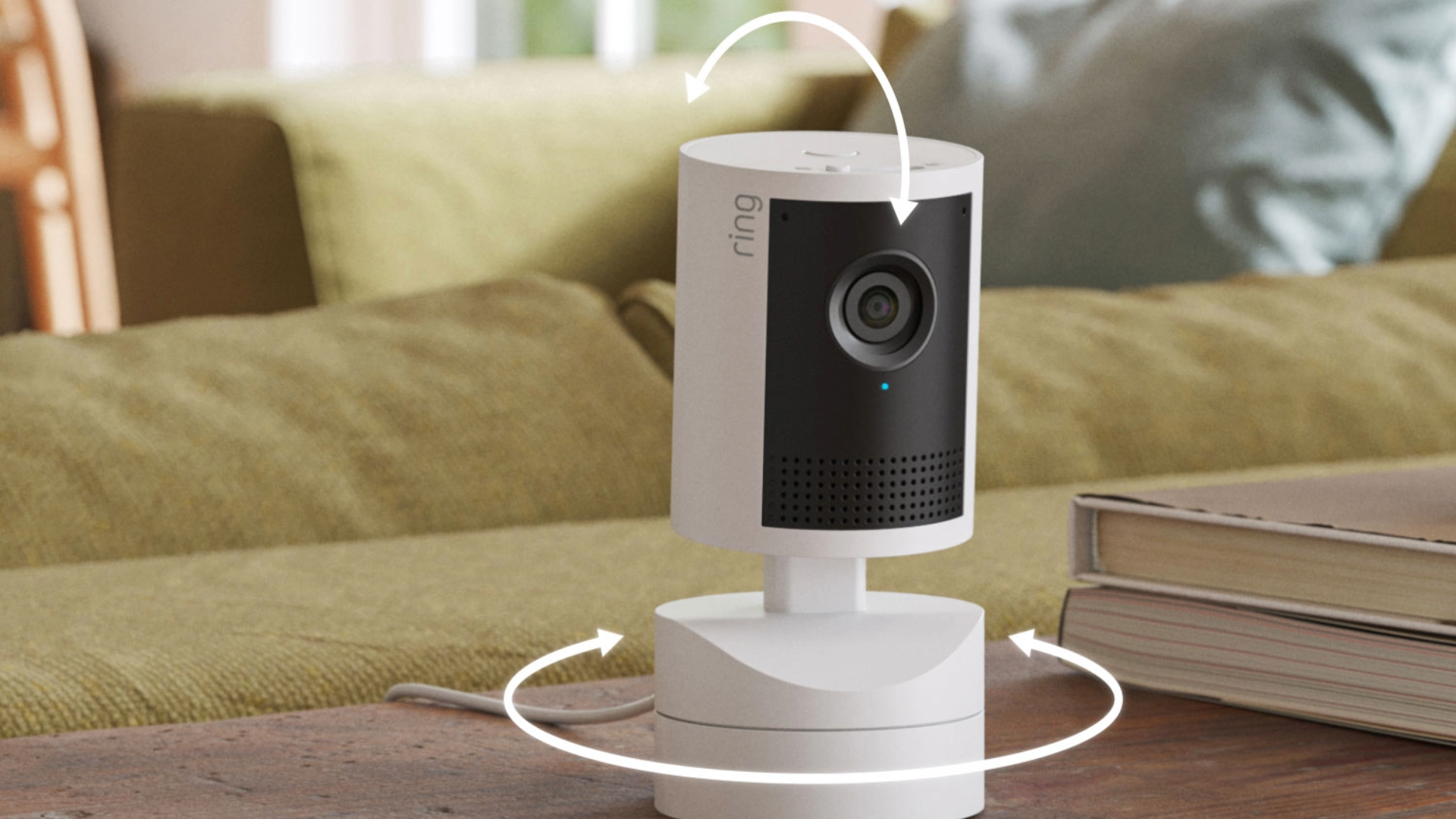
Pan-Tilt Indoor Cam 2K follows motion around the room

The $69.99 Pan-Tilt Indoor Cam 2K trades 4K resolution for coverage and movement. It can pan through 360 degrees and tilt through 175 degrees, then use computer-vision motion detection to follow activity around a room. That can make more sense than a fixed 4K view for pets, play areas or a large open living space.

A physical privacy shutter disables both the camera and microphone when closed. That is an important distinction for indoor monitoring because it gives anyone in the room a visible, mechanical privacy state rather than relying only on an app toggle.

Resolution is only one buying factor

4K can preserve more detail for digital zoom and identification, but it also increases network traffic and storage needs. Placement, lighting, field of view, power reliability, motion zones and subscription costs can matter more than the number printed on the box.

A fixed Indoor Cam 4K is best when one doorway, room or valuable area needs maximum detail. The Pan-Tilt Indoor Cam 2K is better when subjects move across a wider space and the user is comfortable with a motorized camera. Outdoors, choose the power method before the camera model: battery and solar simplify installation, while wired or PoE options can better support always-on use.

Ring subscriptions and feature limits

Ring’s announcement says a compatible subscription is required for digital arming or disarming and some other Smart Lock app features. It also says 24/7 camera recording requires a compatible plan, works only on selected devices and configurations, depends on network connectivity, and temporarily stores recordings in the cloud for up to 14 days.

That means the hardware price is not the full cost for buyers who want continuous recording, longer cloud history or advanced app features. Check Ring’s current plan comparison at purchase time, because plan names, pricing and eligibility can change. Also confirm whether a battery, solar or PoE configuration supports the specific recording feature you expect.

Which new Ring product fits which buyer?

  • Choose Ring Smart Lock if you already use Ring and Alexa, want fingerprint and PIN entry, and have confirmed Sidewalk coverage and door compatibility.
  • Choose Indoor Cam 4K for a fixed indoor view where detail and digital zoom matter more than motorized coverage.
  • Choose Pan-Tilt Indoor Cam 2K for pets or open rooms where following movement is more useful than maximum resolution.
  • Choose Outdoor Cam 4K Plus when flexible power options are the priority.
  • Choose Spotlight Cam 4K Plus for a targeted outdoor area that benefits from an integrated light; choose Floodlight Cam 4K Plus for broader, brighter perimeter coverage.

What existing Ring owners should do

There is no automatic reason to replace a working 1080p camera. Upgrade when the current view cannot capture enough detail, the installation needs a different power option, or the new privacy and tracking features solve a real problem. Before changing multiple cameras, test one unit in the intended location and compare night video, notification quality and bandwidth use.

If you need an inexpensive Ring camera now rather than the new 4K model, the current Ring Indoor Cam (2nd Gen) on Amazon remains a relevant 1080p option with color night vision, two-way talk and a manual privacy cover. Confirm the seller and generation before ordering.

As an Amazon Associate, ReaderSpice earns from qualifying purchases.

The bottom line

Ring’s October 2026 launch is broad, but the products are not interchangeable. The Smart Lock’s hand-powered backup dial is the most original idea, while the camera update is about matching 4K detail to more locations and power methods. Pan-Tilt Indoor Cam 2K fills a different role by prioritizing whole-room coverage.

The best buying decision starts with installation and ongoing cost, not resolution. Check door fit, Sidewalk coverage, power, Wi-Fi or Ethernet availability, subscription requirements and privacy controls. The two indoor cameras are available now in the U.S.; the outdoor 4K Plus models are preorder products, and Ring Smart Lock is planned for early 2027.

Sources

Ring: Smart Lock and 2026 camera lineup announcement

Ring: Smart Lock product page and availability notice

Ring: Indoor Cam 4K specifications and pricing

Ring: Current camera lineup prices
The Verge: Ring Smart Lock and camera launch report

TechRadar: Ring 4K and Pan-Tilt camera details

Samsung SmartThings Now Update Adds Offline Control and Matter 1.6: What Changed

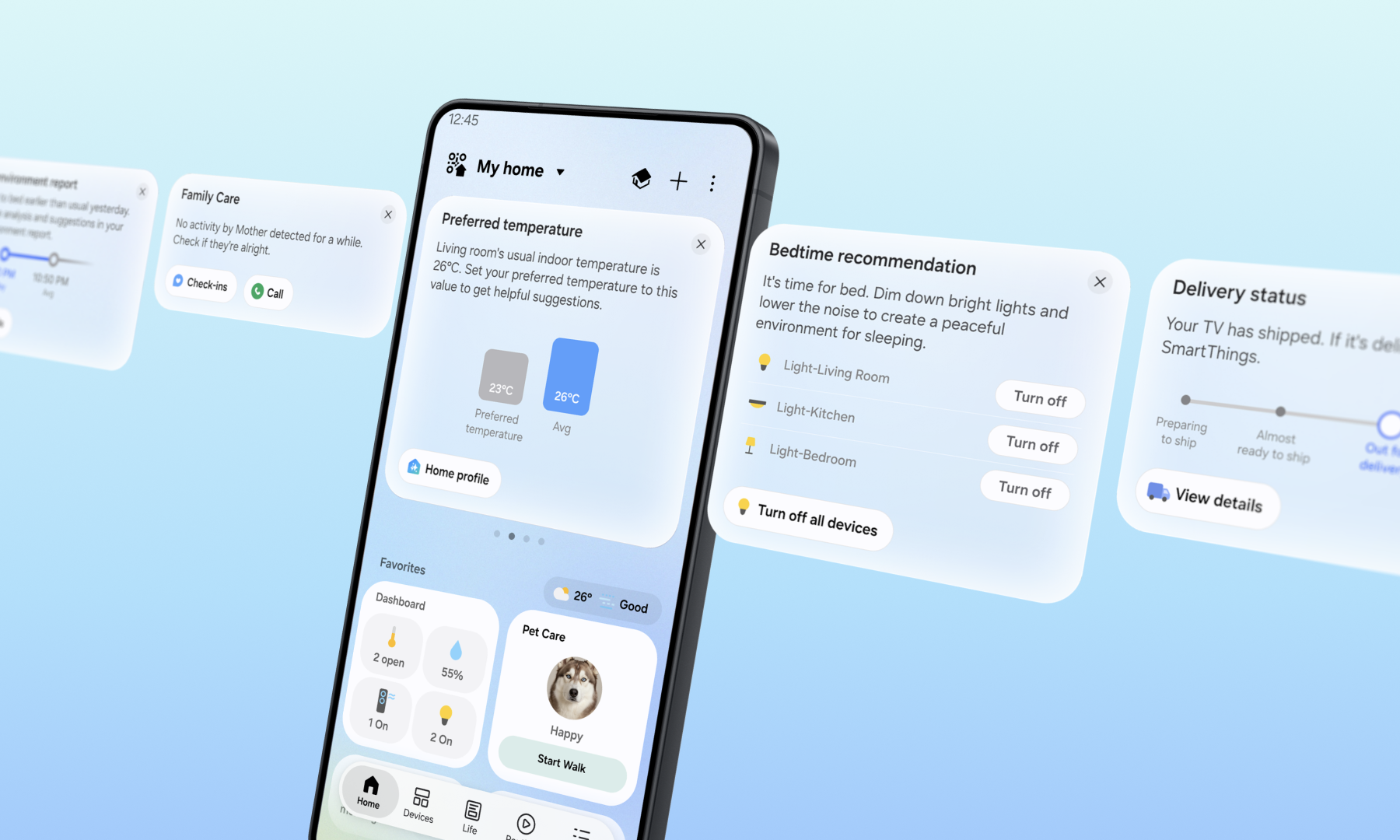
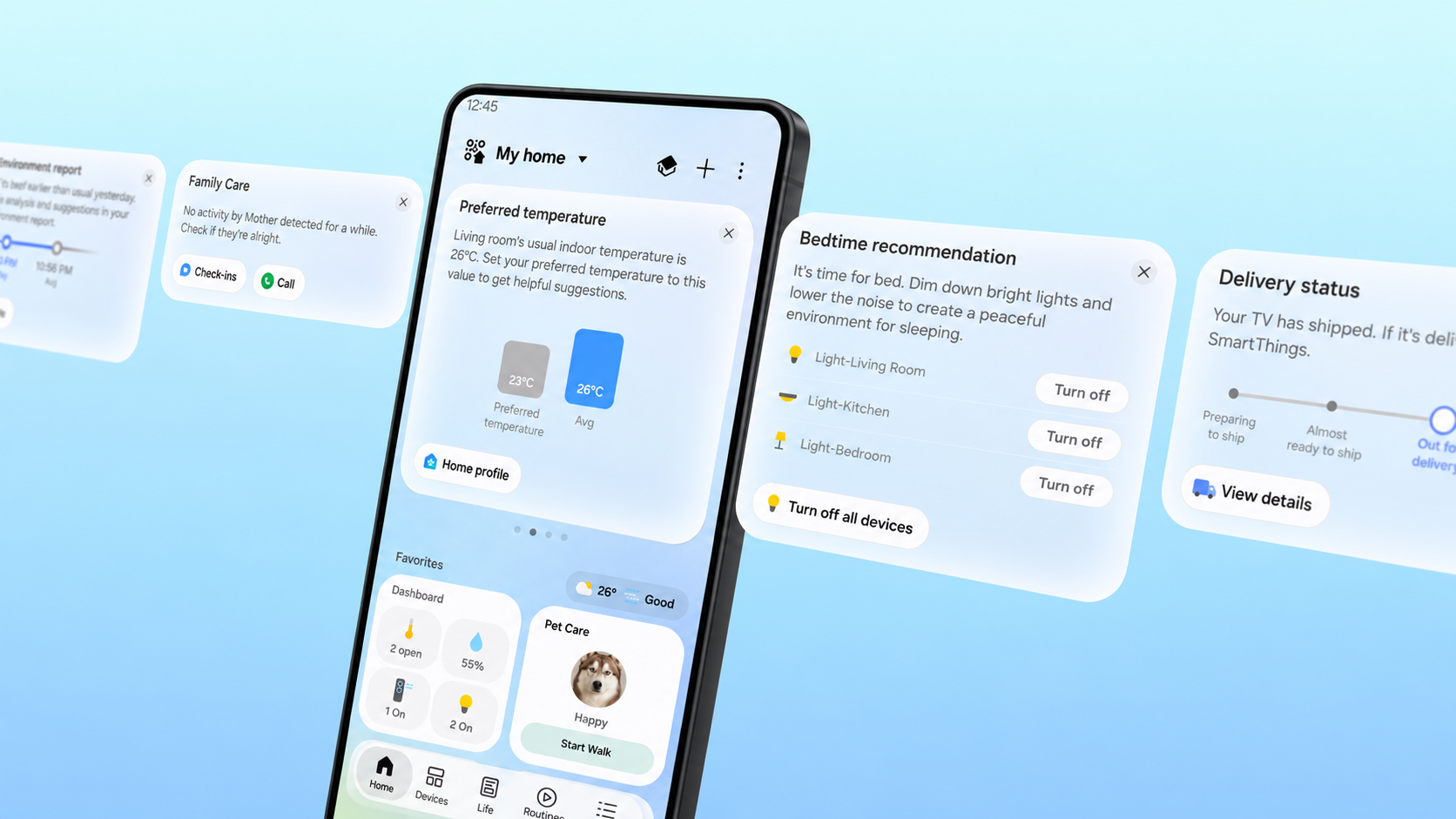
Samsung SmartThings Now cards for Family Care, temperature, bedtime and delivery status

Samsung’s latest SmartThings update is less about adding another menu and more about reducing the friction of running a connected home. SmartThings Now puts context-sensitive cards at the top of the Home tab, the redesigned app makes common controls easier to reach, and supported hubs can talk directly to a phone on the same Wi-Fi network when the internet connection is disrupted.

The most useful change is also the easiest to misunderstand: “offline control” does not mean every SmartThings device will work with the router unplugged or without a compatible hub. It means supported phones and hubs can keep communicating over the local home network when the outside internet connection is unavailable. Here is what changed, what equipment is supported and what to check before relying on it.

SmartThings update quick take

  • SmartThings Now: contextual cards surface timely information and suggested actions at the top of the Home tab.
  • Local control: a supported phone and SmartThings hub can communicate directly while connected to the same Wi-Fi network.
  • Claimed speed gain: Samsung says local control can improve response time by about 30% under its test conditions.
  • New interface: service cards, dashboards and device cards are reorganized, with a bottom Floating Bar for easier one-handed access.
  • Matter support: Samsung says the platform now supports Matter 1.6 and additional energy, closure, irrigation and soil-sensor device types.

What SmartThings Now actually does

What SmartThings Now actually does

SmartThings Now builds on Home Insight by combining information with an action the user can take immediately. Samsung’s examples include a Family Care alert when an older relative shows no device activity for an extended period, an arrival card suggesting lights and an air purifier before a user reaches home, and a bedtime recommendation that can switch off several lights at once.

The cards are intended to turn a status summary into the next useful step. After someone accepts a suggested action, SmartThings may offer to make it a routine so the same action can run automatically later. That makes the update more than a cosmetic feed, although the value will depend on which devices, services and permissions are connected to the account.

SmartThings Now also reviews the previous week of activity and can suggest changes to Home-tab Favorites. A seasonal device that is used less may be removed, while a frequently used device or routine may be promoted. Routine Insight provides a weekly view of automation activity and a place to remove routines that no longer make sense.

The redesigned Home tab should be easier to scan

The rest of the Home tab has been reorganized around dashboards, device cards and service cards. More compact service cards can show device status and numerical readings without taking over the screen, while the new Floating Bar puts frequently used controls near the bottom edge of a phone.

Samsung is also adding a Live Wallpaper that changes through the day. That is mostly visual polish; the practical improvements are denser information and controls that are easier to reach on large phones. The same general Home experience is available across supported mobile devices, Samsung smart TVs, Family Hub refrigerators, Samsung appliances with 7-inch or 9-inch screens, and Windows devices, though the exact layout and available cards will vary.

How local control works during an internet outage

Normally, a smart-home command may travel from a phone to a cloud service and then back to the hub or device. With the new local-control path, a supported SmartThings phone and hub on the same Wi-Fi network can communicate directly. Samsung says that can keep compatible controls responsive during temporary internet problems and can cut response time by roughly 30% compared with cloud routing in its controlled tests.

SmartThings automatically switches between local and cloud-based remote control depending on whether the phone is at home or away. Local control is available through the SmartThings app on Android and iOS with SmartThings Station, SmartThings V2, V3 and V4 hubs, plus hub-enabled Samsung smart TVs and Family Hub appliances.

This is not a promise that the whole smart home becomes cloud-independent. The router and local Wi-Fi still need to work, the phone must be on that network, and the command must involve compatible hardware and a locally supported path. Cloud-dependent integrations, account services, remote access and some automations may still fail when the internet is down.

What to test before you depend on offline control

  • Update the SmartThings app on every phone or tablet that manages the home.
  • Confirm the phone and hub are connected to the same local Wi-Fi network.
  • Identify which device commands and routines still work after temporarily disconnecting only the home’s internet service.
  • Keep safety-critical controls usable manually; do not treat an app or automation as the only way to operate a lock, alarm, light or medical device.
  • Use Offline Device Diagnostics if devices disappear after a router or network-name change. Samsung says the updated page can push new network information to all registered devices at once.

Matter 1.6 support needs one clarification

Samsung says its update adds Matter 1.6 support, improves stability and Group Control, and supports energy meters, specialized closures, irrigation devices and soil sensors. Those categories are useful for real-time power monitoring, gates and unusual doors, sprinkler systems and plant or lawn measurements.

There is an important standards detail. The Connectivity Standards Alliance says closures, soil sensors and expanded energy features arrived with Matter 1.5 in November 2025. Its Matter 1.6 release in June 2026 instead focuses on NFC-based commissioning, Joint Fabric for multi-ecosystem management, thermostat suggestions and several security and capability-reporting refinements. The practical interpretation is that SmartThings is expanding category support while moving its platform to Matter 1.6—not that every category first appeared in the 1.6 specification.

A standard and a platform update also do not guarantee that every product is ready on day one. Device makers still need compatible firmware and certification, and SmartThings support can vary by model, region and feature. Check a specific product in SmartThings before buying it solely for Matter 1.6.

Do you need a new SmartThings hub?

Not necessarily. Samsung explicitly lists SmartThings Station, V2, V3 and V4 hubs, along with hub-enabled Samsung TVs and Family Hub appliances, for the local-control feature. Owners of supported hardware should update the app and test their existing setup before purchasing anything.

For a new installation, the current Aeotec Smart Home Hub 2 on Amazon is a relevant SmartThings-compatible option with Zigbee, Thread and Matter support. It does not include Z-Wave, so it is not a like-for-like replacement for older SmartThings or Aeotec hubs in a home that already depends on Z-Wave switches, locks or sensors. Verify every protocol and model before replacing a working hub.

As an Amazon Associate, ReaderSpice earns from qualifying purchases.

Who will notice the update most

Households with many devices and routines should see the largest day-to-day benefit because SmartThings Now can surface the next likely action instead of forcing a search through rooms and services. Family Care users may also value actionable check-in cards, provided everyone understands what device-activity signals can and cannot indicate.

The local-control change matters most in homes with an unreliable internet connection or a supported hub serving many local devices. People using only cloud-to-cloud integrations may see less improvement. Matter 1.6 support is more future-facing: it broadens the platform’s foundation, but real value arrives only as compatible products and firmware reach users.

How to check for the new experience

Open SmartThings and look at the top of the Home tab for SmartThings Now cards, then check the app store for an available update if the redesigned screen has not appeared. Because SmartThings runs across phones, TVs, appliances and Windows PCs, rollout timing and available controls can differ by device and region.

After the update appears, review Favorites and routines rather than accepting every suggestion automatically. Delete stale routines, test arrival and bedtime actions while someone is home, and confirm that Family Care notifications are configured with the appropriate consent and expectations.

The bottom line

SmartThings Now is a thoughtful usability update because it connects information to an immediate action. The redesigned Home tab should reduce hunting, while local phone-to-hub control can make supported homes faster and more resilient during an internet outage.

The limits matter as much as the headline. Local Wi-Fi and a supported hub must remain available, cloud-dependent features may still fail, and Matter 1.6 support does not instantly make every device compatible. Update the app, test the commands that matter in your own home, and buy new hardware only after checking protocols and model support.

Sources

Samsung Newsroom U.S.: SmartThings Now and local control announcement

SmartThings Blog: SmartThings Now platform update

Samsung Support: SmartThings app and hub compatibility

Connectivity Standards Alliance: Matter 1.6 features

Connectivity Standards Alliance: Matter 1.5 device categories

Aeotec: Smart Home Hub 2 specifications

Samsung Galaxy SmartTag3: 8 Everyday Uses, iPhone Limits, Price and Release Date

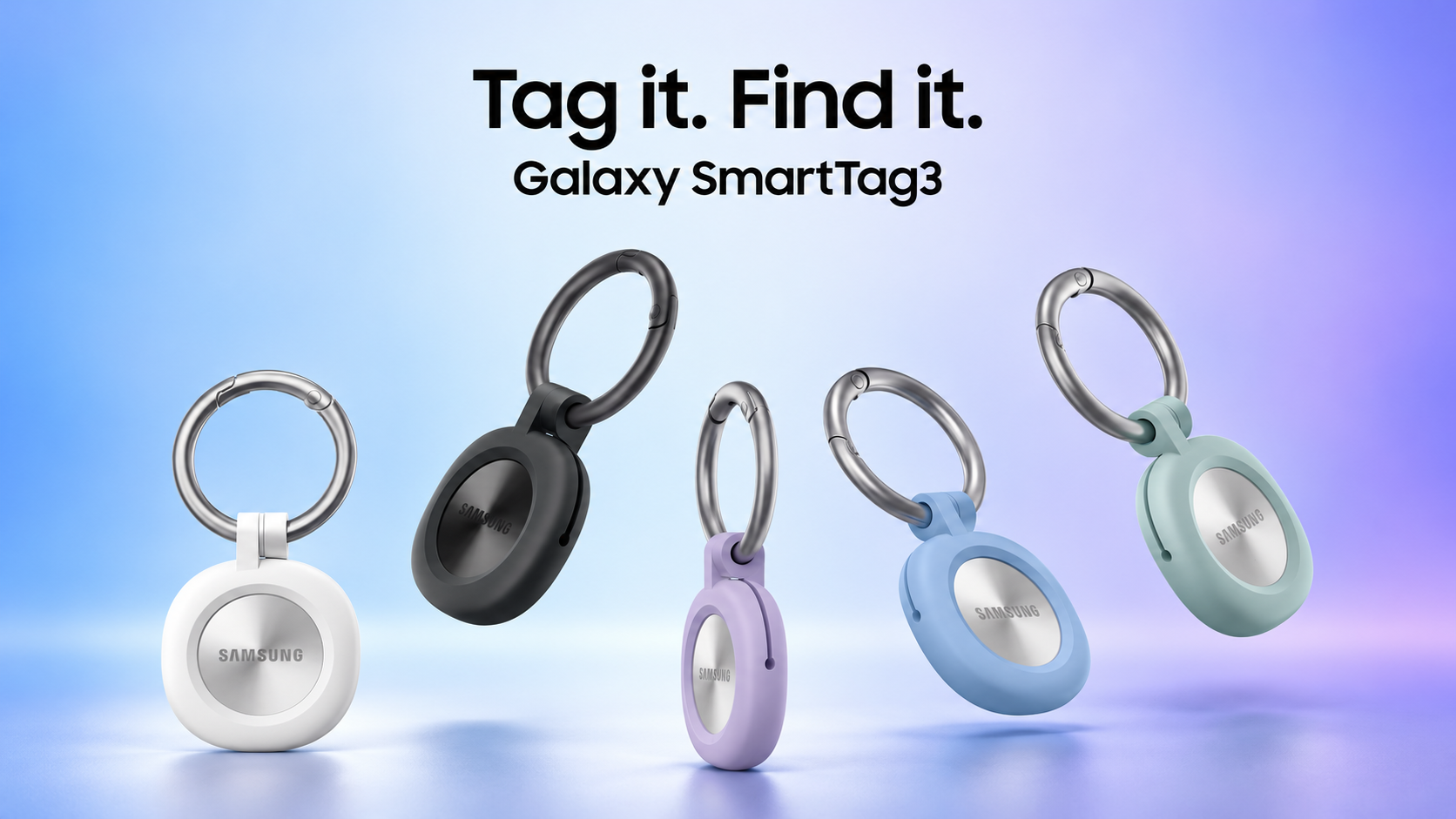
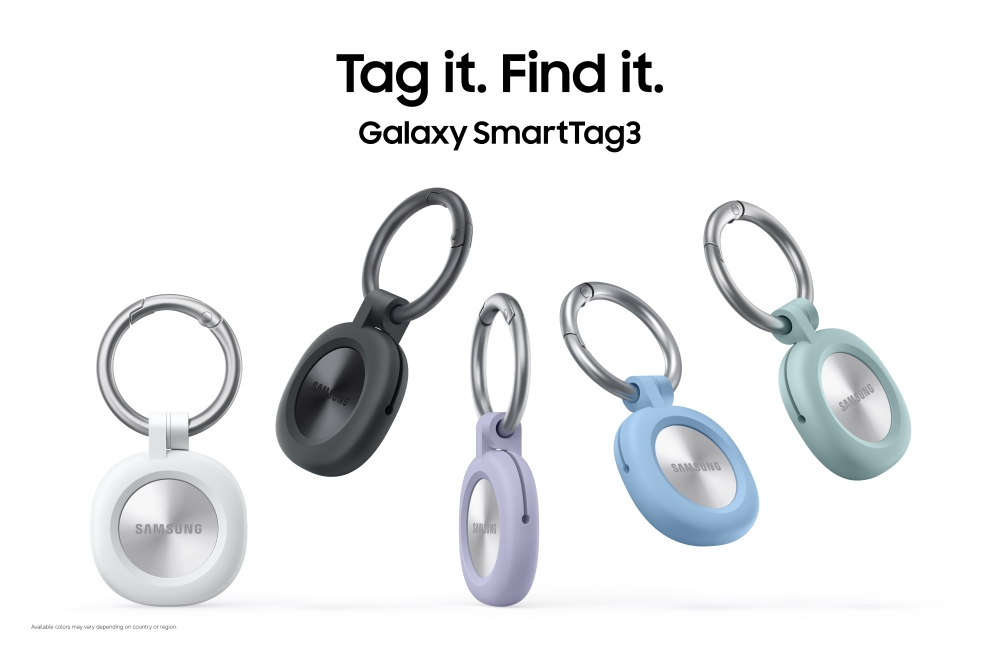
Samsung Galaxy SmartTag3 trackers in black, white, blue, purple and mint cases

Samsung’s Galaxy SmartTag3 is more than a smaller item tracker. It adds longer battery life, proactive movement and place alerts, wider close-range finding on supported Galaxy phones, and—most importantly for mixed-device households—core iPhone support for the first time in the SmartTag line.

The practical question is not simply whether the new tracker is better. It is which belongings benefit most, what an iPhone owner can actually do, and whether a current SmartTag2 owner needs to upgrade. Here is the useful breakdown before the U.S. launch.

Galaxy SmartTag3 quick take

  • U.S. price: $29.99 for one tag or $99.99 for a four-pack.
  • U.S. release: Samsung says it will be available by early November 2026.
  • Colors: Black and White; official cases and attachment accessories are sold separately.
  • Battery claim: up to 550 days in standard use or up to 790 days in Power Saving Mode.
  • Compatibility: core finding and sharing work on supported Galaxy and iOS devices, but the best precision and alert features remain Galaxy-only.

What changed with Galaxy SmartTag3

What changed with Galaxy SmartTag3

Samsung says the new tracker is about 35% smaller by volume and 33% lighter than the previous generation. The compact rounded body is designed to fit keys, smaller bags, luggage and pet collars, while separate Silicone and Loop cases add attachment options. The tag retains an IP67 water- and dust-resistance rating, although that does not make it suitable for swimming, beach use or permanent exposure to water.

Inside, a replaceable CR2032 battery powers up to 550 days of typical use, according to Samsung’s internal testing. Power Saving Mode can stretch the claim to 790 days, but it disables or reduces some features, including Compass View and ringtone settings. Real battery life will vary with alerts, finding sessions, temperature and replacement-battery quality.

The biggest technical change is the combination of Bluetooth 6.0 Channel Sounding and ultra-wideband. On compatible Galaxy phones, Compass View can provide directional guidance from up to 60 meters away under ideal line-of-sight conditions, then use UWB for more precise close-range locating. Walls, electronics and other obstacles can shorten that range.

8 practical ways to use Galaxy SmartTag3

1. Put one inside checked luggage

A tag cannot prevent an airline from misrouting a bag, but it can provide a last-seen location and help separate a baggage-system delay from a suitcase that never left the origin airport. SmartThings Find also lets supported users share the tag’s location with a family member who borrowed the suitcase.

2. Attach one securely to keys

Keys are the most obvious everyday use. Search Nearby, the audible ring and Compass View on supported Galaxy phones can narrow the search from a room or yard to the exact hiding place. Because the SmartTag3 body no longer provides the same integrated attachment opening as SmartTag2, budget for a compatible case or ring.

3. Track a backpack, purse or camera bag

Movement Detection Alert can be useful when a bag begins moving after it has disconnected from your phone. The feature depends on nearby participating Galaxy devices and network conditions, so it should be treated as an additional warning—not a real-time theft alarm or recovery guarantee.

4. Add one to a pet collar—with precautions

Location History, Movement Detection Alert and Place Notification can add another layer of awareness for a dog or other suitable pet. A SmartTag is not a GPS or cellular pet tracker, and updates depend on nearby Galaxy devices. Samsung also warns that the tag and coin-cell battery can be dangerous if detached or swallowed, so use a secure pet-specific holder, inspect it regularly and stop using damaged hardware.

5. Monitor a bicycle, toolbox or equipment case

Place Notification can alert you when a tagged item is detected moving into or out of a defined area, while Movement Detection Alert can flag motion after disconnection. Those tools may help with a bicycle, toolbox or job-site case, but alerts can be delayed or missed when no participating Galaxy device passes nearby.

6. Keep tabs on a wallet or slim daily-carry pouch

The smaller body is easier to fit into compact bags than SmartTag2, especially with a low-profile case. It may still be too thick for a traditional card slot, so check the dimensions of the wallet or organizer before buying accessories.

7. Turn the button into a smart-home shortcut

SmartThings IoT Control can trigger a preset routine from the tag button. Depending on your connected devices and setup, that could run an arrival scene, control compatible lights or start another routine without opening the phone.

8. Prepare Lost Mode before anything goes missing

NFC-powered Lost Mode can show registered contact information or a short message when someone scans the tag with a compatible NFC phone connected to the internet. Set it up in advance, include only the contact details you are comfortable sharing, and turn it off when it is no longer needed.

iPhone support is useful, but it is not feature parity

Galaxy SmartTag3 is the first model in the family to support iPhones. On supported iOS devices, users can check and share a tag’s location and use Search Nearby through SmartThings Find. That is enough for a mixed Galaxy-and-iPhone household to share luggage, keys or a pet tag without everyone carrying a Samsung phone.

Three important features are not available on iOS: Compass View, Ring Phone and Left Behind Alert. In practice, an iPhone owner gets the core network-location experience but not Samsung’s full precision-finding and separation-alert package.

Compatibility is also narrower than the phrase “cross-OS” might suggest. Samsung’s public announcement names Galaxy and iOS support. PhoneArena reported on October 7 that Samsung corrected an earlier statement and said other Android phones—including Pixel devices—are not supported, with no current plan to add them. Buyers should verify their exact phone before ordering.

Range and alerts come with conditions

Samsung’s up-to-60-meter Compass View claim applies only under clear line-of-sight conditions and only to Galaxy devices that support UWB or Bluetooth Channel Sounding. At launch, Samsung lists Bluetooth Channel Sounding support for a small group of recent Galaxy flagships, including the Galaxy S26 Ultra, S26 Plus, Z Fold8 and Z Fold8 Ultra.

Beyond direct Bluetooth range, the tag relies on the Galaxy Find Network. Samsung says more than 900 million participating Galaxy devices can serve as finding nodes, but an update still depends on a participating device being nearby, appropriate settings, connectivity and regional availability. This is a crowd-sourced finding network, not continuous satellite or cellular GPS.

Location History stores up to seven days. Place Notification is labeled a trial feature, and both movement and location alerts can be delayed or fail to arrive. Those limitations matter most for pets, high-value gear and situations where a prompt alert is essential.

U.S. price and release date

Samsung says Galaxy SmartTag3 will reach the United States by early November 2026. A single tag costs $29.99, while the four-pack costs $99.99. Black and White versions are planned, with case colors and accessory availability varying by retailer and market.

“By early November” is a launch window, not a specific store date. Shoppers should expect retailer pages and inventory to appear at different times rather than assuming every color, bundle and accessory will be available on the same day.

Should SmartTag2 owners upgrade?

If your SmartTag2 already covers your keys or luggage and its roughly year-plus battery life is sufficient, the new model is not an automatic upgrade. The strongest reasons to switch are a mixed Galaxy-and-iPhone household, the smaller body, proactive place and movement alerts, or a compatible Galaxy phone that can use the expanded Compass View range.

If you need a tracker now, the current Samsung Galaxy SmartTag2 on Amazon remains the directly relevant predecessor and works with compatible Galaxy phones and tablets. Check the seller, color and package count before buying, because listings can change as SmartTag3 approaches release.

As an Amazon Associate, ReaderSpice earns from qualifying purchases.

The bottom line

Galaxy SmartTag3 is a meaningful practical upgrade: smaller hardware, longer claimed battery life, proactive alerts and iPhone access make it easier to share across a household. Galaxy owners with the newest supported phones get the most complete experience, while iPhone users should view it as a capable shared tracker with important feature limits.

For luggage, keys and frequently shared belongings, the $29.99 price is competitive. For pets, theft recovery or anything safety-critical, use it only as an additional finding layer and plan around the limits of a nearby-device network.

Sources

Samsung Newsroom U.S.: Galaxy SmartTag3 announcement

Samsung Newsroom U.S.: Everyday uses for Galaxy SmartTag3

Samsung Global Newsroom: Galaxy SmartTag3 features and limitations

PhoneArena: SmartTag3 Android compatibility correction

Samsung: Galaxy SmartTag2 product page

DJI Osmo Pocket 3 Deal: Camera vs Creator Combo at Reported Record-Low Prices

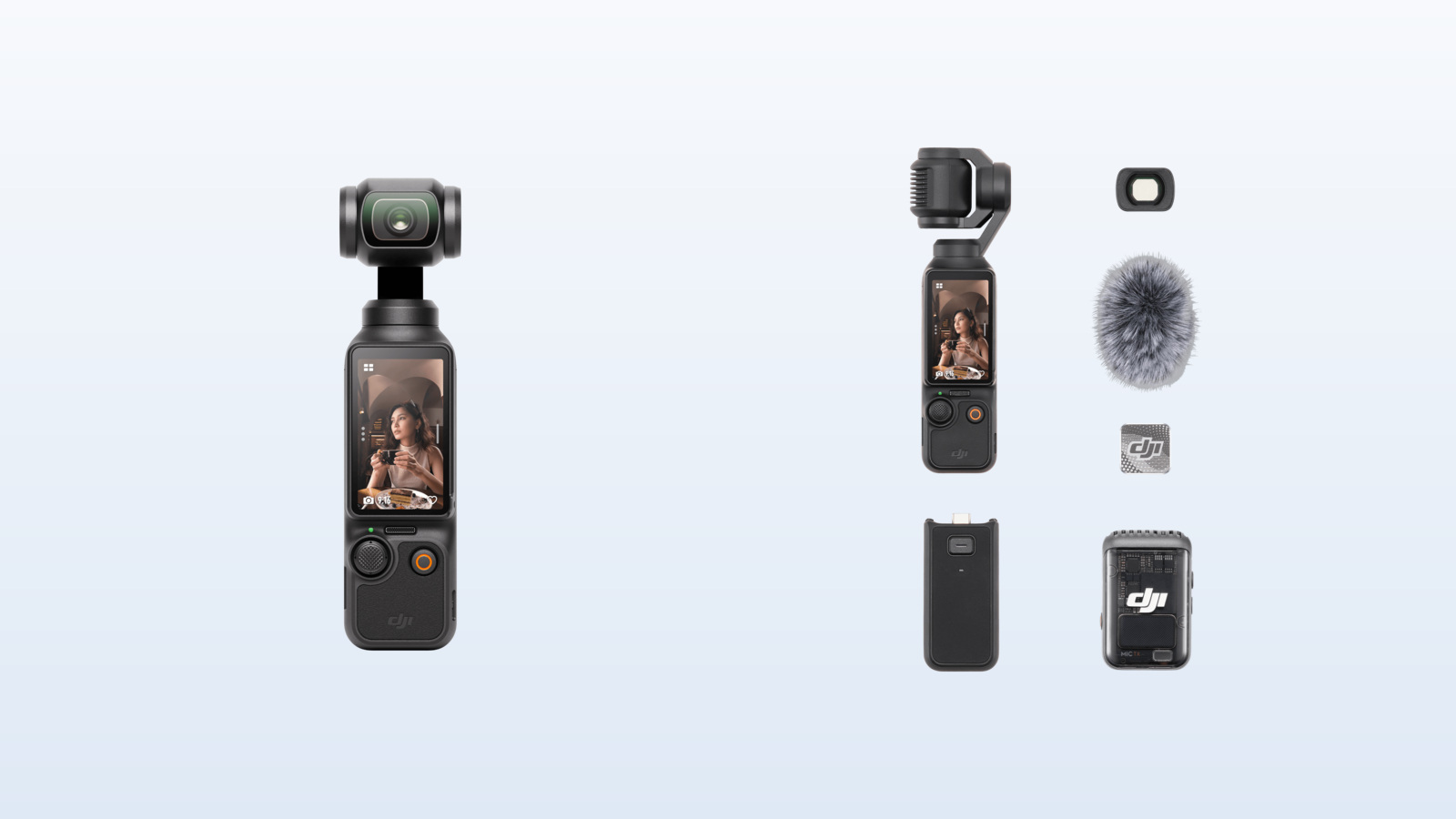
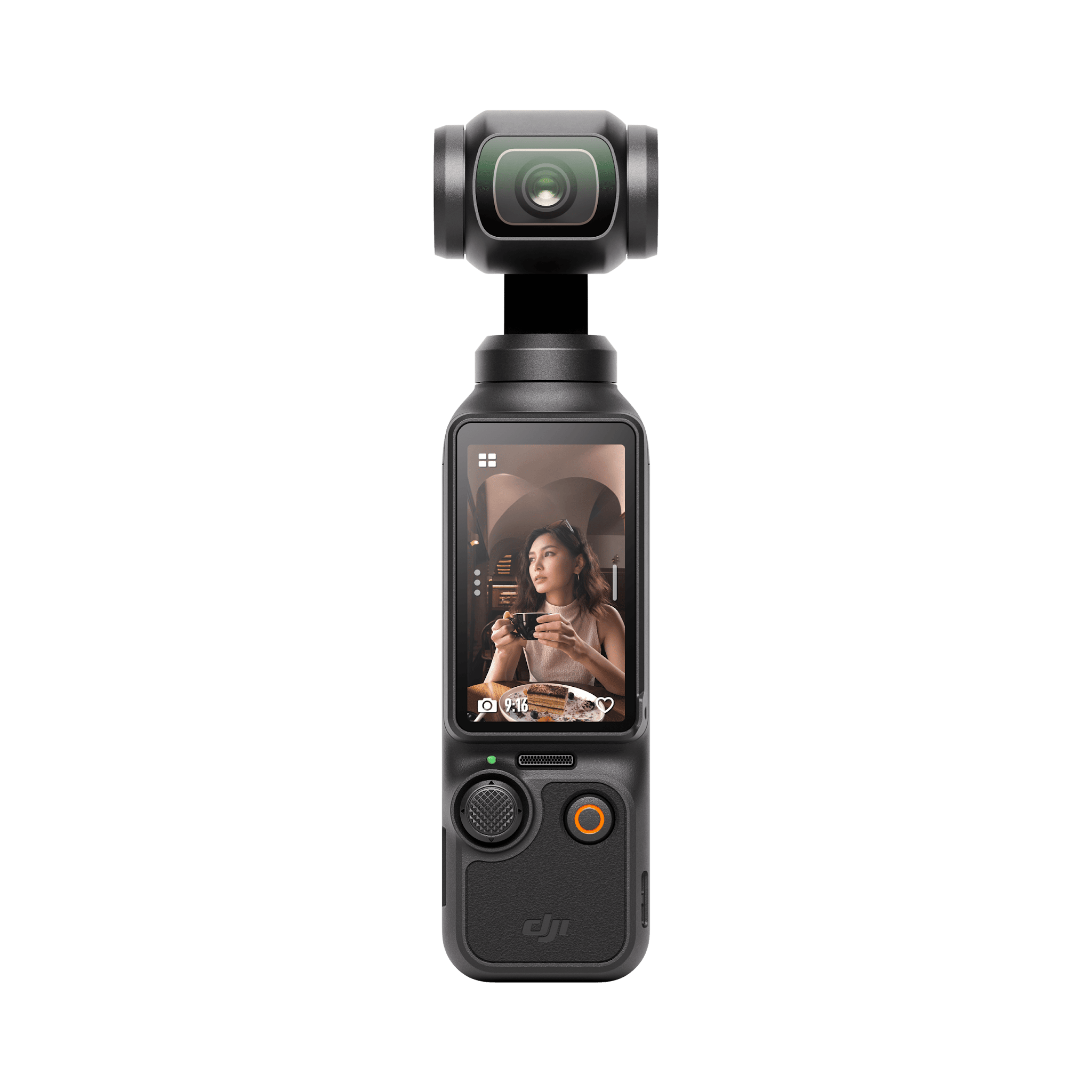
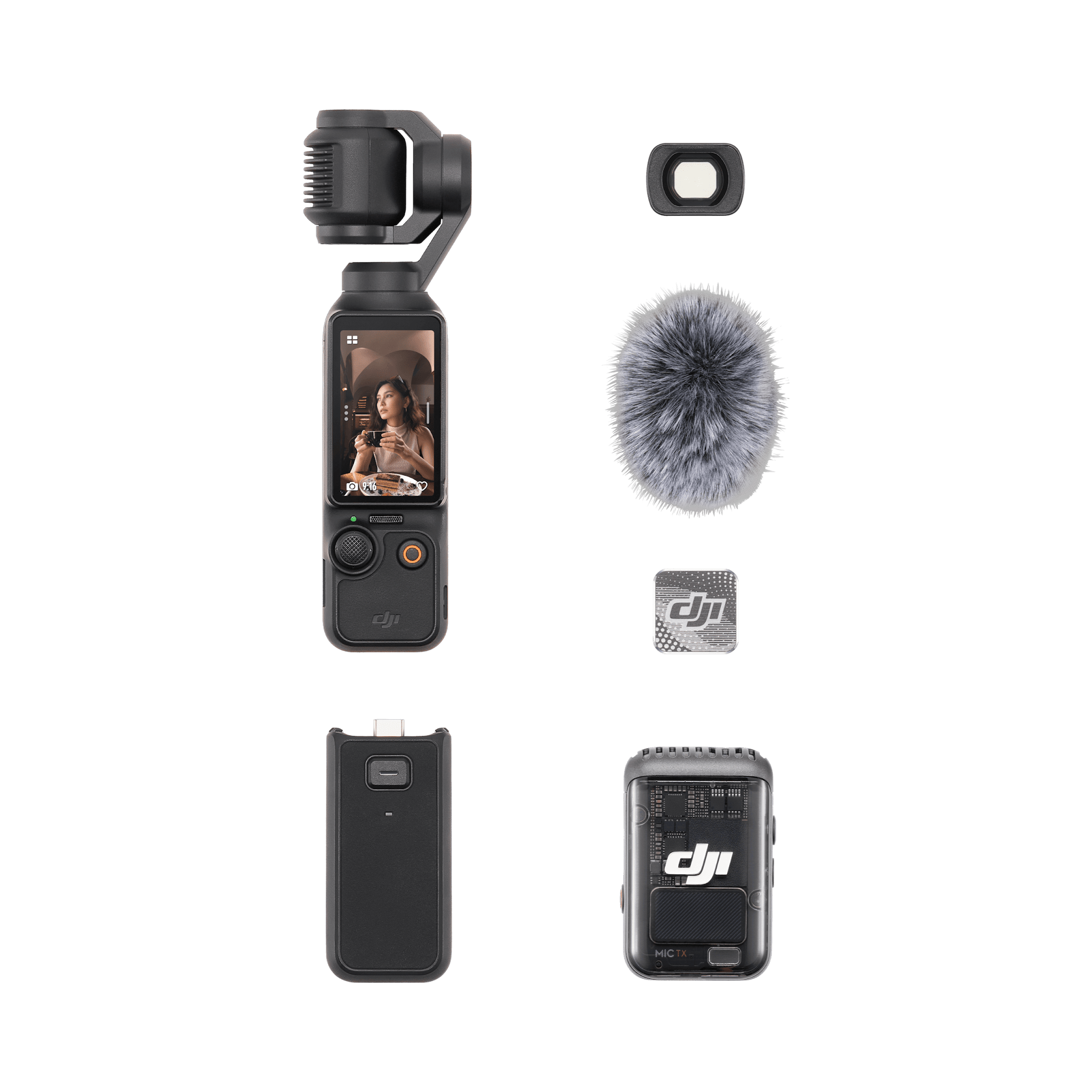
DJI Osmo Pocket 3 camera and Creator Combo accessories shown side by side

The DJI Osmo Pocket 3 is back in the deal spotlight. Amateur Photographer reported on October 7, 2026, that the pocket gimbal camera had fallen to unusually low promotional pricing, including a Creator Combo offer aimed squarely at YouTubers and solo creators. The important caveat is that retailer prices and sellers can change quickly, so the figures below are deal-report snapshots rather than a promise of today’s checkout price.

Even with newer pocket cameras on the market, the Pocket 3 remains a practical choice for people who want stabilized 4K video, reliable subject tracking and better low-light potential than a typical action camera—without carrying a mirrorless body, lens and separate gimbal.

The deal at a glance

  • Camera-only kit: deal coverage in early October cited pricing around $395, compared with DJI’s $439 store price.
  • Creator Combo: deal coverage on October 6–7 cited a $495 promotional price, compared with DJI’s $549 store price.
  • These are reported promotional prices, not a guarantee of the lowest price at every retailer or in every region.
  • Before ordering, confirm the seller, exact bundle contents, return policy and final checkout price.

The Creator Combo discount is especially notable because its accessories solve several common vlogging problems at once: wireless audio, longer operating time, a stable tabletop setup and a wider field of view. The camera-only option can still be the better buy if you already own those pieces.

Why the Pocket 3 still stands out for creators

Why the Pocket 3 still stands out for creators

The Pocket 3 combines a 1-inch CMOS sensor with a three-axis mechanical gimbal. That hardware pairing is the reason it can produce smooth walking footage while retaining more natural motion than electronic stabilization alone. Its 20mm-equivalent f/2.0 lens is wide enough for handheld vlogging, travel scenes and room interiors without creating the extremely stretched look of some action cameras.

DJI lists 4K recording up to 120 frames per second in slow-motion mode, a rotating 2-inch OLED touchscreen, fast full-pixel focusing and ActiveTrack 6.0. The display turns between horizontal and vertical orientations, which makes it easier to frame standard YouTube video and portrait-oriented clips from the same small camera.

Battery performance is also useful for travel and event coverage. DJI rates the camera for up to 166 minutes under its 1080p/24 laboratory test, with an 80% charge in about 16 minutes and a full charge in about 32 minutes when used with a compatible charger. High-resolution recording, tracking, screen brightness and temperature will affect real-world endurance.

Camera only vs Creator Combo: What changes?

Camera only vs Creator Combo: What changes?

Both packages center on the same Osmo Pocket 3 camera, so image quality and stabilization do not improve merely because you choose the Creator Combo. The decision is about accessories and workflow.

Choose the camera-only kit if…

  • You already own a wireless microphone or normally record voiceovers later.
  • You have a compact tripod, USB-C power bank and carrying case that fit your workflow.
  • You want the lowest entry price and prefer to add accessories only when needed.

For an experienced creator with an established audio and support kit, the standard package avoids paying twice for gear. It is also the simpler choice for travelers who want the smallest possible setup.

Choose the Creator Combo if…

  • You film walk-and-talk videos, interviews or pieces to camera and need wireless audio.
  • You want a battery handle and mini tripod ready for long days and static shots.
  • You expect to use the wide-angle lens for arm’s-length framing, interiors or group clips.

The Creator Combo can be the stronger value when its sale premium over the basic kit is modest. Buying a comparable wireless microphone, handle, tripod, lens and bag separately can erase the apparent savings of the camera-only deal.

What is included in the Creator Combo?

DJI’s official Creator Combo listing includes the core camera accessories below. Retailer listings can vary, so compare the exact product description before paying.

  • DJI Osmo Pocket 3 camera
  • DJI Mic 2 transmitter with windscreen and clip magnet
  • Battery handle
  • Mini tripod
  • Wide-angle lens
  • Carrying bag, protective cover, wrist strap and USB-C cable

The Mic 2 transmitter is the bundle’s most important upgrade for many creators. Clear speech usually matters more to viewers than a small difference in image quality, and wireless audio makes it easier to keep the camera far enough away for a natural composition.

Shop the two DJI Osmo Pocket 3 options

Check the DJI Osmo Pocket 3 camera-only kit on Amazon

Check the DJI Osmo Pocket 3 Creator Combo on Amazon

Disclosure: ReaderSpice may earn a commission from qualifying purchases made through the Amazon links above, at no additional cost to you.

Amazon prices, sellers and stock can change without notice. Confirm that the listing is sold by Amazon or an authorized seller you trust, and verify that the package name matches the accessories shown before ordering.

What to check before buying

The listing and seller

A low price is less attractive if it comes from an unfamiliar marketplace seller, carries an unclear warranty or omits expected accessories. Read the seller line, delivery estimate, return window and bundle description—not just the headline price.

Storage and editing needs

The Pocket 3 requires a microSD card for recording. DJI’s current specifications list support for cards up to 1TB, but speed and reliability matter as much as capacity. Choose a compatible card from DJI’s recommended list, particularly if you plan to shoot high-frame-rate 4K video.

Weather and shooting distance

This is a compact gimbal camera, not a rugged waterproof action camera. Protect it from rain, sand and impacts, and remember that its fixed wide lens is optimized for people, travel and everyday scenes rather than distant wildlife or field sports.

The accessories you already own

The Creator Combo is not automatically better. If you already have strong audio gear and a compact support setup, the basic package may deliver identical footage for less. If you are starting from scratch, the Combo is often easier to justify because it arrives as a coherent kit.

Is the DJI Osmo Pocket 3 still worth buying in 2026?

Yes—when the discount is real and the camera matches the job. The Pocket 3 remains especially useful for travel vloggers, YouTube presenters, family filmmakers and one-person crews who prioritize smooth handheld footage and fast setup. Its large sensor, mechanical stabilization, rotating screen and tracking tools still form a well-balanced package.

The limitations are equally clear. It does not replace an interchangeable-lens camera for long telephoto work, specialized photography or the highest-end production needs. It also needs more weather protection than an action camera. Buyers who understand those tradeoffs can get substantial value from either kit.

Bottom line

Choose the camera-only deal if you already own the supporting gear. Choose the Creator Combo if wireless audio, a battery handle, mini tripod and wide-angle lens would otherwise be separate purchases. In both cases, treat the reported $395 and $495 prices as reference points from October 2026 deal coverage, then compare the live Amazon price and seller before checking out.

Sources

Amateur Photographer — DJI Osmo Pocket 3 deal report (October 7, 2026)

DJI — Osmo Pocket 3 product page

DJI — Osmo Pocket 3 specifications

DJI Store — Osmo Pocket 3 Creator Combo

Inline image 1: Official DJI Osmo Pocket 3 camera product image

Inline image 1 alt text: Front view of the DJI Osmo Pocket 3 gimbal camera

Inline image 1 source: DJI official Osmo Pocket 3 product page

Inline image 2: Official DJI Osmo Pocket 3 Creator Combo product image

Inline image 2 alt text: DJI Osmo Pocket 3 Creator Combo camera, microphone and filming accessories

Inline image 2 source: DJI official Creator Combo product page

October 2026 Android Security Update: Critical Fixes and Pixel Rollout

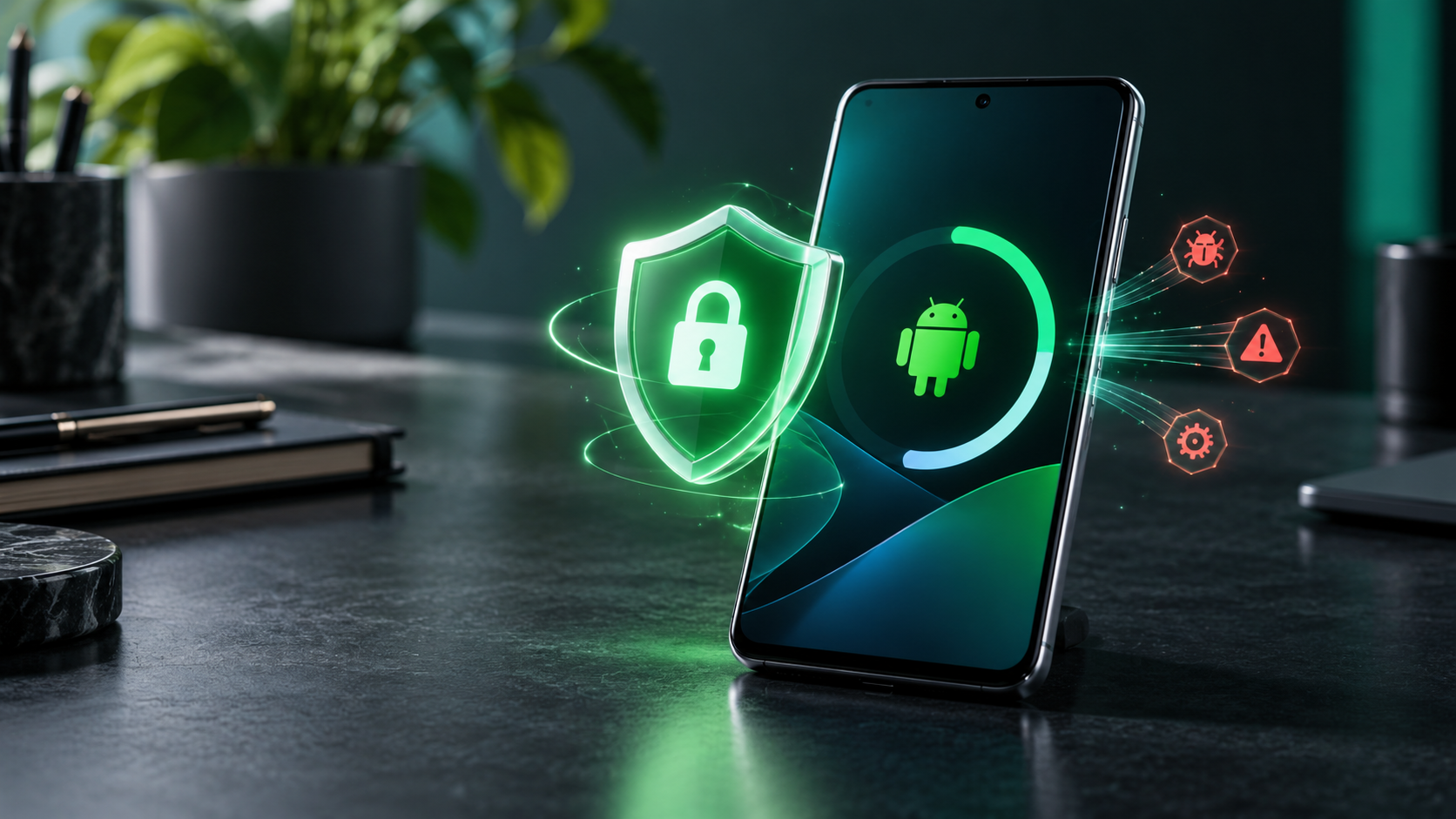
Android phone protected by a glowing security shield during the October 2026 security update

Google’s October 2026 Android security update addresses critical flaws that can be triggered without user interaction, while supported Pixel phones are receiving an additional October patch and a small set of practical bug fixes. If your phone offers the update, this is one to install promptly.

The Android Security Bulletin was published on October 5, 2026. Google’s separate Pixel bulletin followed on October 6, and the company began a phased Pixel rollout the same day. Timing still depends on the device, carrier and region, so two eligible phones may not receive the update simultaneously.

Why this October security update matters

The most serious Android issue in the October bulletin is a critical vulnerability in the System component that could allow local elevation of privilege without extra execution privileges or user interaction. In plain language, a malicious process could potentially gain access it should not have without requiring the owner to tap a link or approve a prompt.

The bulletin also lists a critical remote denial-of-service flaw in the Android Framework. Google assigns severity according to the effect a vulnerability could have on an affected device if exploited. A critical rating does not, by itself, mean Google has observed attacks in the wild, and the October bulletin does not say these flaws are being actively exploited.

The critical Android vulnerabilities

Google’s October bulletin groups the most important issues into several categories:

  • Framework: CVE-2026-58865 is rated critical for remote denial of service and requires no user interaction.
  • System privilege escalation: CVE-2026-55269, CVE-2026-55280, CVE-2026-58835 and CVE-2026-58880 are rated critical.
  • System denial of service: CVE-2026-49933 and CVE-2026-55265 are rated critical.
  • System remote code execution: CVE-2026-49878 is rated high severity.

Remote code execution is typically the most alarming label because it can allow code to run on a target device. Privilege-escalation flaws can let code that is already present gain broader permissions, while denial-of-service bugs can crash or disable a component. The exact risk depends on the vulnerable code path, device configuration and whether an attacker can reach it.

Pixel phones get additional October fixes

Supported Pixel phones receive a 2026-10-05 security patch level that incorporates the Android-wide October fixes plus Pixel-specific corrections. Google says all supported Pixel devices will receive the 2026-10-05 patch level or later.

The Pixel bulletin lists three critical Pixel-specific flaws: CVE-2026-55330 in Bluetooth, CVE-2026-56952 in GDMC and CVE-2026-55307 in GSA. It also includes high-severity kernel fixes. Google’s public bulletin identifies the affected components and severity, but it does not provide exploit instructions.

Pixel bug fixes included in the rollout

The October Pixel update also addresses several user-visible problems on supported models:

  • A keyboard that sometimes failed to appear in search fields on Pixel 8 through Pixel 11 families.
  • Distorted ringtone audio during some VoIP calls on Pixel 8 through Pixel 10 families.
  • Incorrect photo or video orientation on Pixel 11 models.

Google says the rollout is phased over roughly a week and varies by carrier and device. That means the update can be official even if the download button has not appeared on a particular phone yet.

How to check your Android security patch level

How to check your Android security patch level

Open Settings, then go to About phone or About tablet and choose Android version. Look for both Android security update and Google Play system update. To actively check for an available operating-system update, open Settings, select System, then Software updates.

For most Android devices, a security patch level of 2026-10-01 or later indicates that the core October bulletin fixes are included. Supported Pixel phones should show 2026-10-05 or later after Google’s October update is installed. Other manufacturers may use their own rollout calendars and may bundle the fixes into a later-dated patch.

Google Play system updates are worth checking separately. Android 10 and newer devices can receive some security improvements through Google Play system updates even when the phone maker’s full firmware update has not arrived.

What to do if the update is not available yet

  • Connect to Wi-Fi and charge the phone to at least 75 percent before trying again.
  • Restart the phone, then return to Settings > System > Software updates.
  • Check the Google Play system update under Settings > About phone > Android version.
  • Keep Google Play Protect enabled; it is on by default on devices with Google Mobile Services.
  • Remember that carrier approval and staged deployment can delay an otherwise eligible device.

Do not install firmware packages from unfamiliar websites just to get the patch early. Official over-the-air updates or manufacturer support tools are the safer route, because the package and model compatibility can be verified.

Which Pixel phones are still supported

Google’s current support policy gives Pixel 8 and newer phones seven years of operating-system and security updates from the date each model first became available in the Google Store. Pixel 6 and Pixel 7 families receive five years. Pixel 5a and earlier models no longer receive Android version or security updates from Google.

If an unsupported phone is still in daily use, reduce exposure by keeping apps updated, leaving Play Protect enabled and avoiding sensitive activity on the device. Replacement is the more durable fix because application updates cannot repair vulnerabilities in abandoned system components.

A practical upgrade path for unsupported phones

If you are replacing an out-of-support Pixel, compare current Google Pixel phones on Amazon before buying. Choose a model with a long remaining support window rather than focusing only on the lowest upfront price.

ReaderSpice may earn a commission from qualifying purchases made through this affiliate link, at no additional cost to you.

Should you install the update immediately?

Yes. The October package fixes multiple critical vulnerabilities, and supported Pixel phones also receive stability corrections. Back up anything irreplaceable, connect to reliable Wi-Fi, charge the battery, install the update and restart when prompted. Pixel updates become active after a restart.

Owners of other Android brands should check their manufacturer’s update page if the October patch is not yet available. Google publishes the platform fixes, but each manufacturer is responsible for packaging and distributing them to its eligible devices.

Bottom line

The October 2026 Android security release is a meaningful maintenance update, not a cosmetic one. It closes critical no-interaction vulnerabilities, adds Pixel-specific protections and resolves several everyday Pixel bugs. Check both the Android security patch and Google Play system update, and aim for 2026-10-05 or later on a supported Pixel.

Sources

Android Security Bulletin—October 2026

Pixel Update Bulletin—October 2026

Google Pixel Community: October 2026 update

Google Android Help: Check and update your Android version

Google Pixel Help: Learn when you’ll get software updates

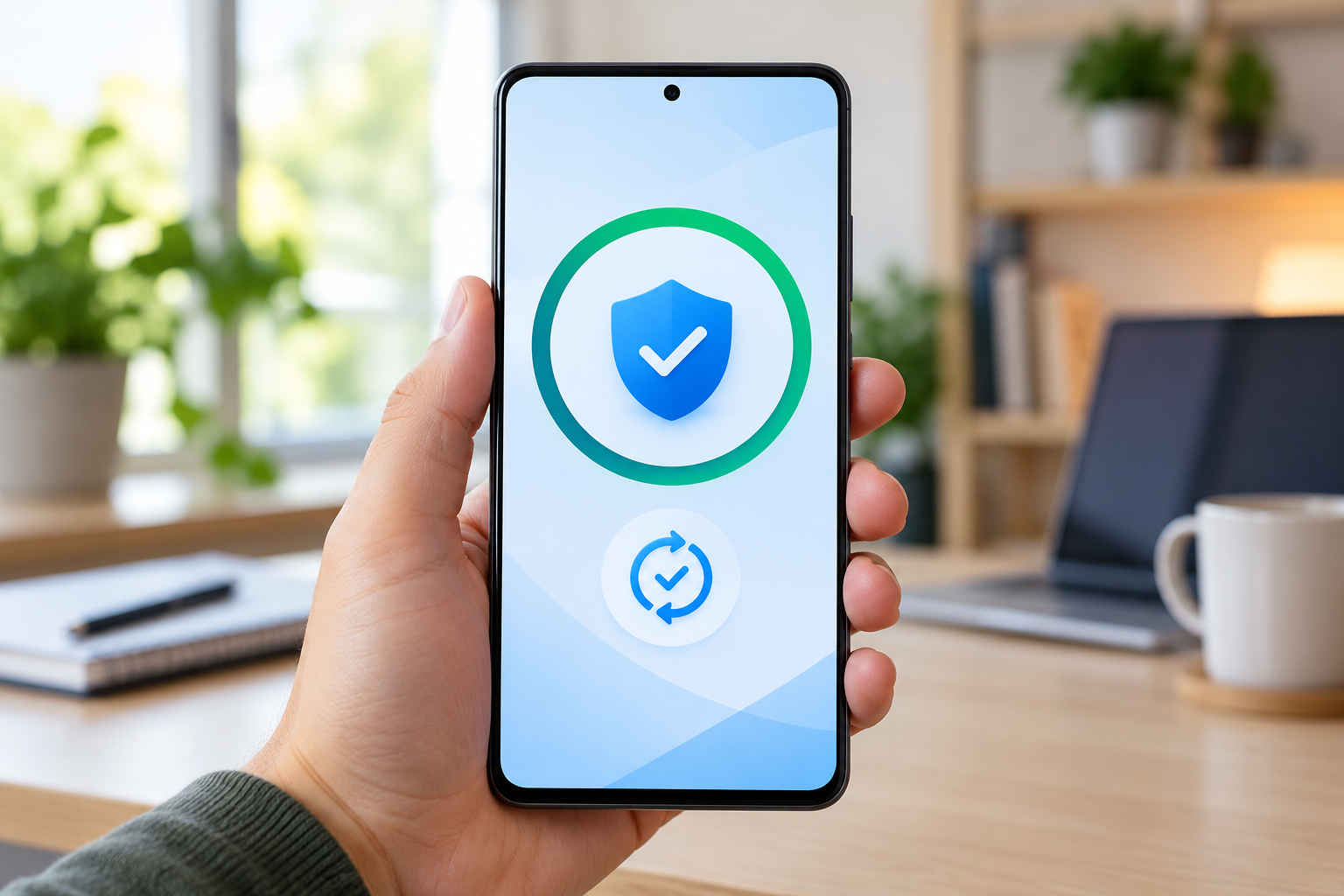
Inline image: Android phone displaying completed security and system update checks

Inline image alt text: Android phone showing completed security update and system update checks

Galaxy S27 Ultra Charging Leak: Samsung May Make 60W Faster Without Raising Wattage

Galaxy S27 Ultra charging concept showing rumored sustained 55W to 56W charging at the same 60W peak

Samsung may be preparing a subtler charging upgrade for the Galaxy S27 Ultra than simply increasing the number printed on the charger. A new leak claims the upcoming Ultra will keep the same 60W wired charging ceiling as the Galaxy S26 Ultra, but could hold near-peak power for longer during the early part of a charge.

If accurate, that would mean the S27 Ultra could finish charging slightly faster even with its rumored larger 5,700mAh battery. Samsung has not announced the Galaxy S27 Ultra or confirmed these charging changes, so the details remain pre-release rumors.

The New Leak Is About the Charging Curve, Not a Higher Wattage

The New Leak Is About the Charging Curve, Not a Higher WattageAccording to a report from Android Authority citing leaker WalleGalaxy, Samsung is testing charging optimizations that may allow the Galaxy S27 Ultra to sustain roughly 55W to 56W for longer at the beginning of a charging session. The phone is still rumored to top out at 60W.
That distinction matters. A phone’s advertised maximum charging wattage is only the peak. Real charging speed depends on how long the device can remain near that peak before heat, battery state of charge and power-management rules force the wattage down. If Samsung can extend the high-power portion of the curve, the same 60W rating can deliver a shorter overall charging time.

How Much Faster Could the S27 Ultra Actually Be?

The leak claims the change could make a full charge around 2% to 3% faster than the Galaxy S26 Ultra. That would be a modest improvement rather than a dramatic leap, and it should be treated cautiously until independent testing is possible.

The interesting part is that the rumored S27 Ultra is also expected to use a larger battery. Previous reports have pointed to a 5,700mAh cell, compared with the 5,000mAh battery in the S26 Ultra. If Samsung can charge a larger battery in roughly the same—or slightly less—time, that would represent a meaningful efficiency improvement even though the headline wattage remains unchanged.

Why Sustained Power Can Matter More Than Peak Power

Charging systems rarely sit at their maximum rating from empty to full. Phones typically pull more power when the battery is low, then reduce power as temperature rises and the battery fills. This tapering protects battery health and manages heat.

That is why two phones with the same maximum wattage can have noticeably different charging times. Thermal design, voltage and current management, charger communication, battery chemistry and software all influence the curve. A longer 55W-to-56W window could therefore matter more in daily use than a brief higher peak that lasts only a few minutes.

The Rumored 5,700mAh Battery Changes the Context

The charging rumor becomes more important when paired with reports of a 5,700mAh battery for the Galaxy S27 Ultra. A larger battery could improve endurance, but without charging optimization it could also take longer to refill.

Samsung appears to be pursuing both sides of that equation: more capacity for runtime and a refined charging curve to keep refill times competitive. That approach would fit Samsung’s historically conservative charging strategy, which has generally emphasized thermal control and battery longevity rather than chasing the highest wattage numbers used by some rivals.

What Galaxy S26 Ultra Owners Should Expect

For Galaxy S26 Ultra owners, this rumor alone would not justify an upgrade. The S26 Ultra already introduced 60W wired charging, and a 2% to 3% improvement would be difficult to notice without side-by-side timing.

The bigger question is whether the charging optimization combines with the rumored 5,700mAh battery to deliver a better overall experience: longer battery life without a charging-time penalty. That combination would be much more meaningful than the charging percentage improvement by itself.

What Is Confirmed and What Is Still Rumor?

Samsung has not officially announced the Galaxy S27 Ultra, its battery capacity, charging curve or final wired charging specification. The sustained 55W-to-56W figure comes from a leak and should not be treated as a confirmed Samsung specification.

Multiple publications have now reported the claim, but they trace back to the same underlying leak. Independent certification data and Samsung’s eventual product specifications will be more important. Real-world charging tests will also be necessary because laboratory or internal test conditions can differ from everyday charging with cases, warm rooms and active phone use.

ReaderSpice Take

Keeping 60W while making 60W work harder would be a sensible Samsung upgrade. Peak wattage is easy to market, but sustained power is what determines whether a phone actually spends less time plugged in.

If the Galaxy S27 Ultra really pairs a 5,700mAh battery with a stronger early charging curve, Samsung could improve both endurance and charging convenience without entering a 100W-plus specification race. For now, the claimed 2% to 3% gain is too small to celebrate on its own, but the larger battery plus improved charging behavior is worth watching.

If you are shopping now rather than waiting for an unannounced phone, the current Samsung Galaxy S26 Ultra remains the relevant available Ultra model on Amazon.

Disclosure: As an Amazon Associate, ReaderSpice earns from qualifying purchases.

Sources

Android Authority — Samsung may have found a smart way to speed up Galaxy S27 Ultra charging

Tech Advisor — Samsung could get clever to achieve faster Galaxy S27 Ultra charging

Tom’s Guide — Galaxy S27 series price and battery reporting

Galaxy S27 Ultra Camera Leak: Samsung May Drop 3x Zoom but Make a Big Photography Upgrade

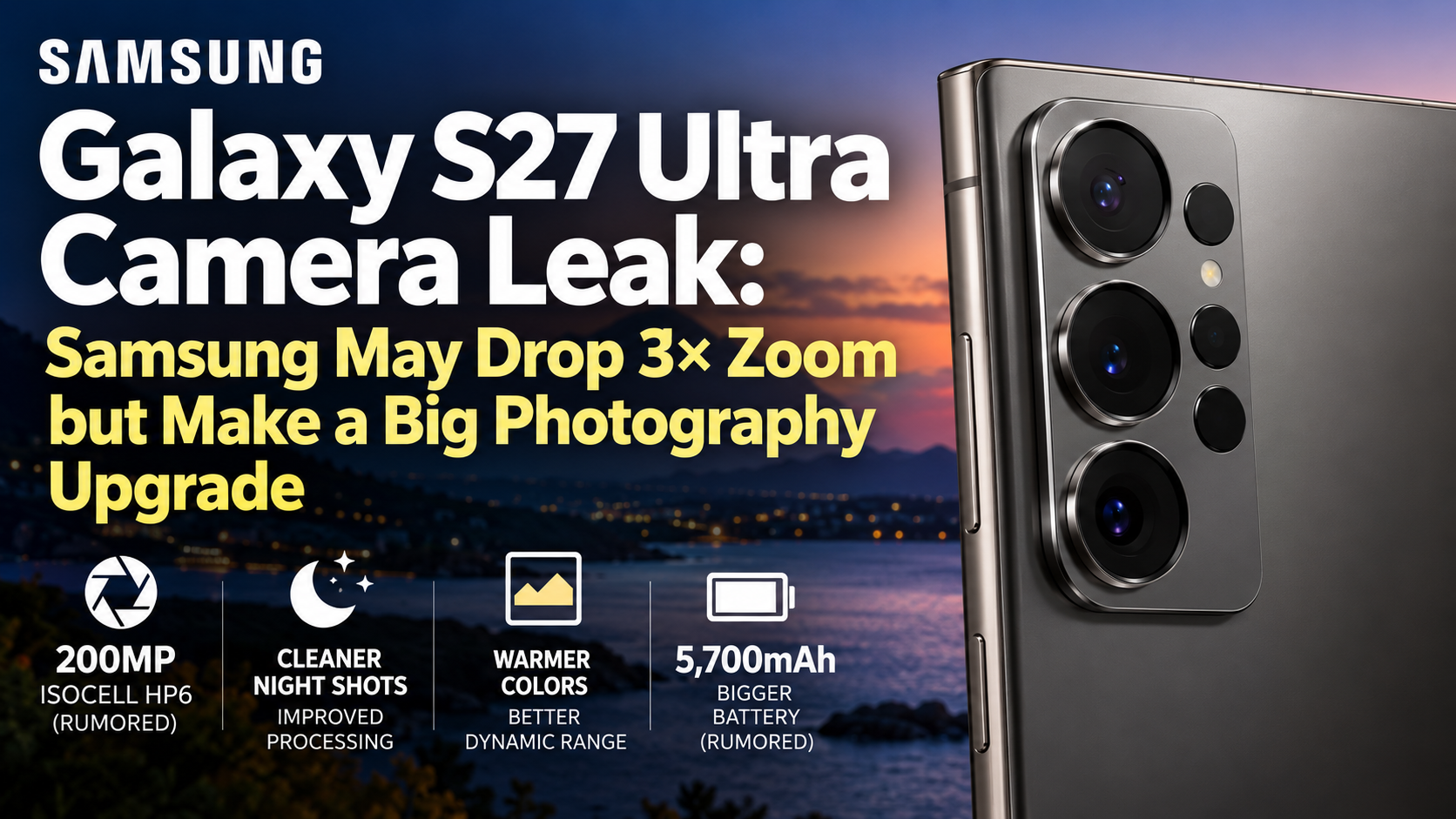
Galaxy S27 Ultra concept showing rumored three-camera layout, 200MP HP6 sensor and removal of dedicated 3x telephoto

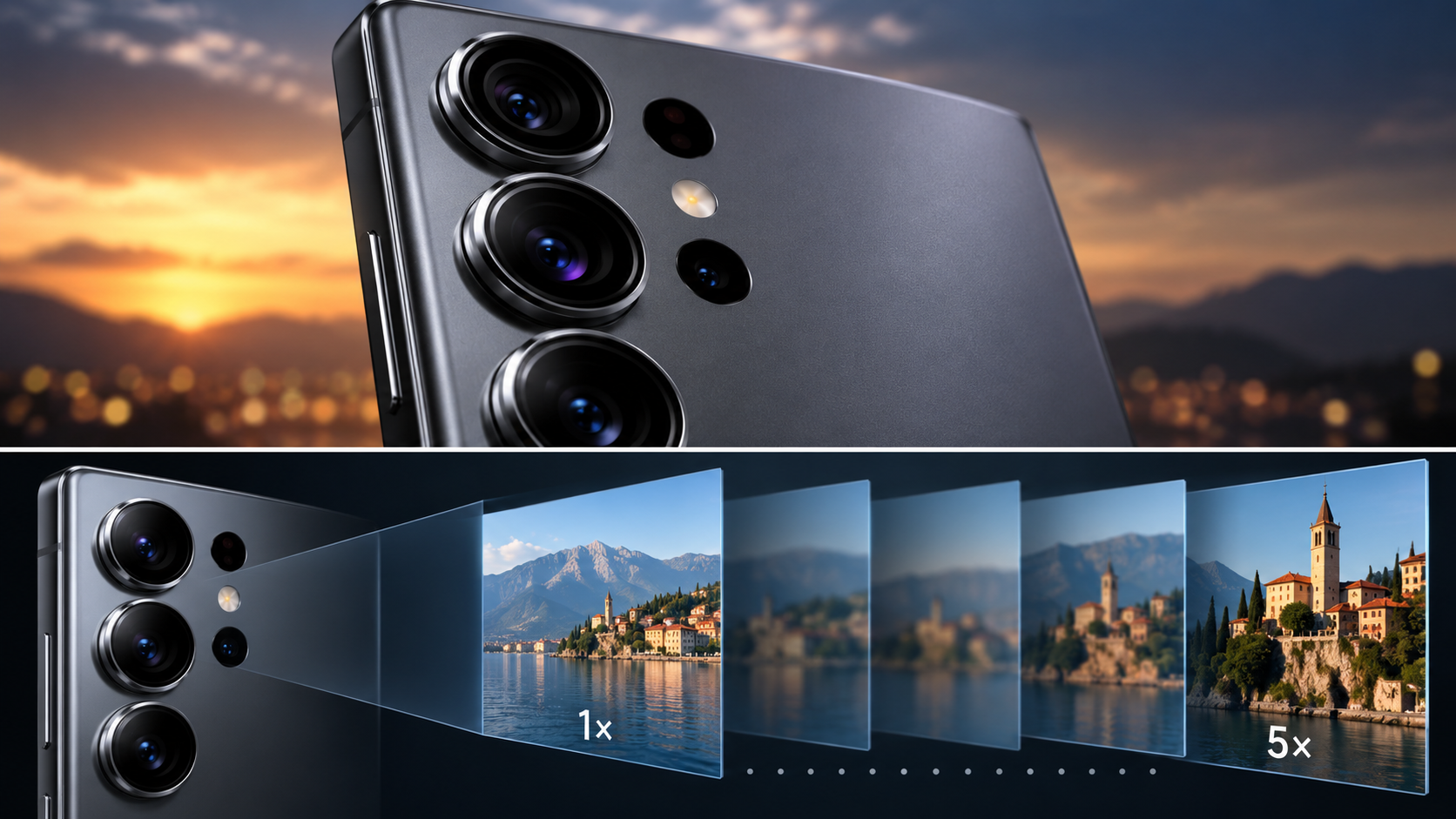
Samsung’s next Ultra flagship could make one of its most controversial camera changes in years. A new leak from long-time Samsung tipster Ice Universe says the Galaxy S27 Ultra will drop the dedicated 3x telephoto camera, leaving the phone to move from its main 1x camera directly to a 5x periscope telephoto. At the same time, the main camera is now rumored to use a new 200MP ISOCELL HP6 sensor designed to shoulder more of the zoom work.

That combination matters more than simply reducing the rear camera count from four lenses to three. If the leak is accurate, Samsung is betting that a higher-quality main sensor, in-sensor cropping and better computational photography can cover the everyday 2x-to-4x range well enough to replace a dedicated optical camera. Samsung has not announced the Galaxy S27 Ultra, so all S27-specific details below remain unconfirmed.

The New Leak Says the 3x Camera Is Going Away

The New Leak Says the 3x Camera Is Going Away

On September 29, Ice Universe said the Galaxy S27 Ultra will no longer use a dedicated 3x telephoto camera. 9to5Google reported the same claim while noting that leaked renders now show a three-camera rear arrangement rather than the four-camera setup used by the Galaxy S26 Ultra.

Under the rumored configuration, the S27 Ultra would use its main camera for the lower zoom range and then switch to the dedicated 5x periscope camera for longer reach. The 5x module itself is not expected to receive the previously rumored large-sensor 4x replacement; Ice Universe has instead said the 5x camera will retain a 1/2.52-inch sensor and f/2.9 aperture.

Why Losing 3x Zoom Could Be a Big Deal

Three-times zoom is useful because it sits in a natural range for portraits, pets, food, street photography and everyday subjects where 5x can feel too tight. A dedicated optical module also avoids asking the main camera to crop aggressively when light levels fall.

Removing that camera therefore creates a real question: can Samsung deliver consistent detail, texture and noise control from roughly 2x through 4x using the main sensor alone? In bright daylight, a 200MP sensor has substantial resolution available for cropping. Indoors or at night, however, computational processing and sensor efficiency become much more important.

The Rumored 200MP ISOCELL HP6 Is the Key

The same Ice Universe leak says the S27 Ultra will use a 200MP ISOCELL HP6 main sensor described as a Galaxy-customized relative of Samsung’s newer high-resolution sensor technology. Android Authority reports that the rumored HP6 could inherit ideas aimed at cleaner shadows, stronger dynamic range and better handling of difficult highlights.

Samsung has not officially announced an HP6 for the S27 Ultra, so those capabilities cannot yet be treated as confirmed specifications. But Samsung has publicly demonstrated why high-resolution sensors can help bridge focal-length gaps. Its ISOCELL Zoom Anyplace technology uses in-sensor remosaic processing to maintain high resolution while zooming into a selected area, and Samsung has previously described 200MP sensors as capable of seamless 2x and 4x in-sensor zoom.

That does not automatically mean a crop from the S27 Ultra’s main camera will equal a dedicated 3x telephoto in every condition. Lens characteristics, sensor readout, processing, shutter speed and available light all affect the result. The HP6 rumor is important because Samsung would need the main camera to do more work than before.

Samsung’s Camera Processing May Change Too

The hardware rumor is accompanied by a newer processing claim. Ice Universe says S27 Ultra photos currently show a warmer overall color tone than the Galaxy S26 Ultra, better control of small bright highlights and less visible noise in dark areas. Android Authority and other outlets have reported the same three claimed changes.

Those improvements could directly support Samsung’s three-camera strategy. Better highlight control would help with signs, streetlights and bright details in night scenes, while cleaner shadows could make cropped 2x-to-4x images more usable when the main camera has less light to work with. A warmer color profile could also make the difference between S26 Ultra and S27 Ultra photos immediately visible even when resolution looks similar.

What This Means for Galaxy S26 Ultra Owners

For Galaxy S26 Ultra owners, the rumored change is not a simple upgrade on paper. The S26 Ultra gives users dedicated 3x and 5x optical options. The S27 Ultra may instead simplify the hardware while asking a new main sensor and updated processing to fill the middle of the zoom range.

That could produce a better overall camera if Samsung’s main-sensor crop is cleaner and more consistent than the current 3x module. It could also be a downgrade for users who frequently shoot portraits or low-light subjects around 3x if the crop cannot match dedicated optics. The deciding factor will be real image quality, not the number of lenses on the back.

The Earlier 4x Super-Telephoto Rumor Now Looks Less Likely

ReaderSpice previously covered reports that Samsung was testing a larger 50MP 4x telephoto sensor. The latest Ice Universe information pushes strongly against that configuration for the retail S27 Ultra, saying the familiar 5x periscope remains while the 3x module disappears.

This is a good example of why pre-release hardware leaks need to be treated as moving targets. Samsung can test multiple prototypes before settling on a production design, and a configuration seen during development does not guarantee the final phone will ship that way.

How Credible Is the Latest Information?

Ice Universe has a long track record of Samsung-related leaks, and the new 3x claim lines up with recent CAD-based renders showing three rear cameras. That makes the report more notable than an isolated anonymous rumor. Even so, the word “confirmed” in a leaker’s post is not the same as confirmation from Samsung.

Samsung has not announced the Galaxy S27 Ultra, the HP6 sensor, the removal of the 3x camera or the final 5x specifications. Until Samsung publishes specifications—or multiple independent sources produce stronger production-stage evidence—the safest description is that these are increasingly consistent leaks rather than official facts.

ReaderSpice Take

The rumored removal of the 3x camera is risky, but it is not automatically a downgrade. Samsung has spent years developing high-resolution sensors and in-sensor zoom techniques specifically to extract useful detail from a main camera at intermediate focal lengths. If HP6 delivers better dynamic range, lower noise and strong crop quality, simplifying the camera array could make sense.

The test will be portraits and low-light zoom. Those are the situations where a dedicated optical camera has the clearest theoretical advantage. If Samsung can make 3x photos from the HP6 look cleaner than the S26 Ultra’s dedicated 3x camera while also improving 1x and night photography, the S27 Ultra could end up with fewer cameras but a stronger camera system.

If you are shopping now rather than waiting for an unannounced phone, the current Samsung Galaxy S26 Ultra remains the relevant available Ultra model on Amazon.

Disclosure: As an Amazon Associate, ReaderSpice earns from qualifying purchases.

Sources

9to5Google — Galaxy S27 Ultra’s missing camera shown in leaks is its 3x zoom

Android Authority — Latest Galaxy S27 Ultra leak brings good news for low-light shots, bad news for zoom

Samsung Global Newsroom — ISOCELL Zoom Anyplace and E2E AI Remosaic for 200MP sensors

Tom’s Guide — Galaxy S27 Ultra may scrap the 10MP telephoto lens

Apple Smart Home Hub Reportedly Nears Launch: What to Expect From J490

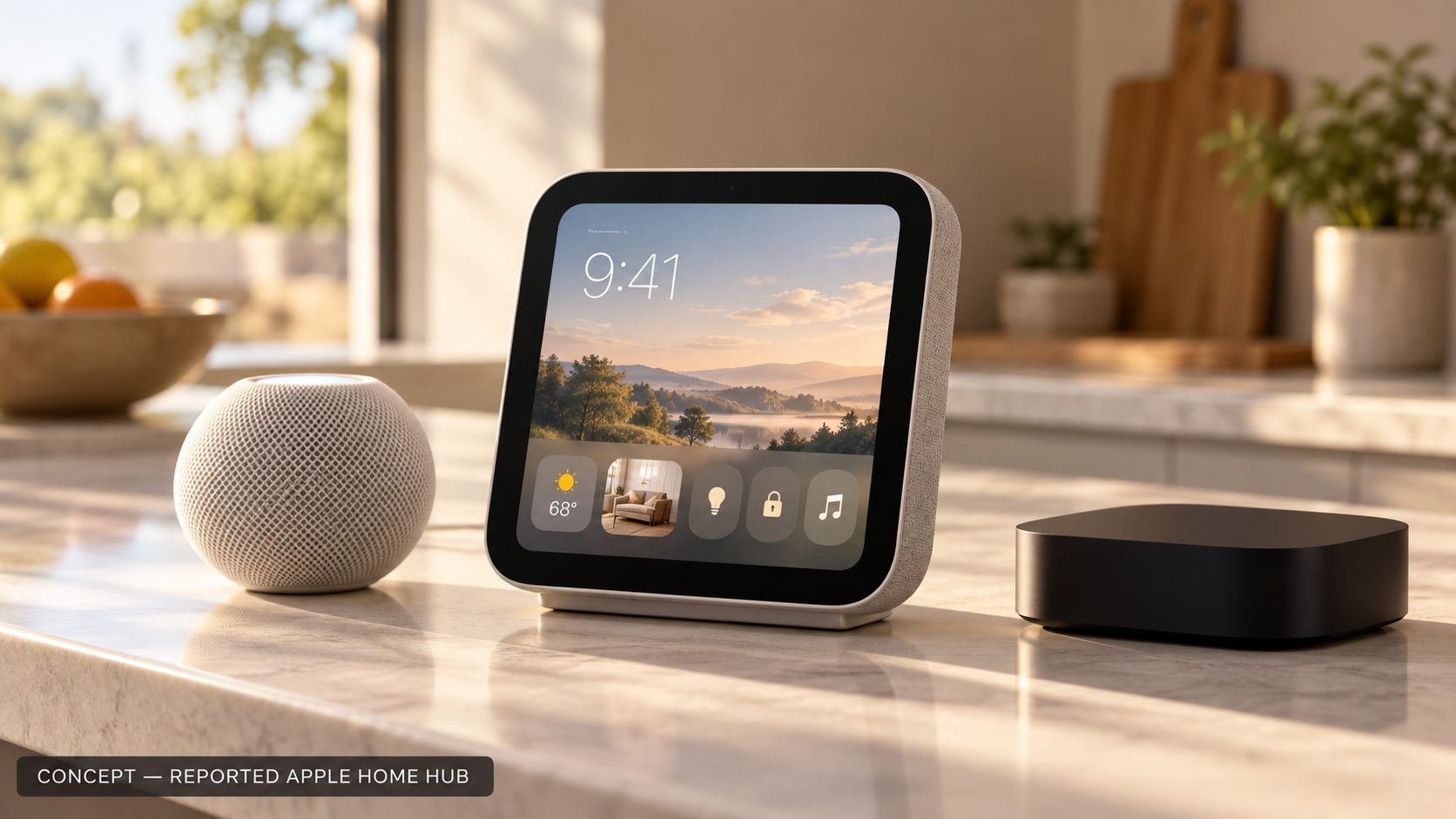
Concept image of a reported Apple smart-home display beside a small speaker and streaming box

Apple may be preparing its biggest smart-home push yet. Reuters, citing Bloomberg News and people familiar with the matter, reports that Apple plans to introduce a new smart-home hub code-named J490, an updated HomePod mini and a refreshed Apple TV at an event on October 13, 2026.

The report is credible enough to watch closely, but it is not an Apple announcement. Apple has not confirmed the event, the J490 name, pricing, availability or final specifications. That distinction matters: the useful takeaway today is what the reported lineup could change for Apple households—not a promise that every detail will arrive exactly as described.

Apple’s reported launch lineup

According to the report, the event could include three connected-home products:

  • A roughly six-inch square smart display code-named J490, designed for either wall mounting or countertop use.
  • The first HomePod mini hardware update since the original model debuted in 2020.
  • The first new Apple TV set-top box since 2022.

All three reportedly share a theme: making Apple’s home platform more visible, more personal and better prepared for newer Siri AI models. The display would be the genuinely new category; HomePod mini and Apple TV would remain familiar products with faster processors.

What the J490 hub could be

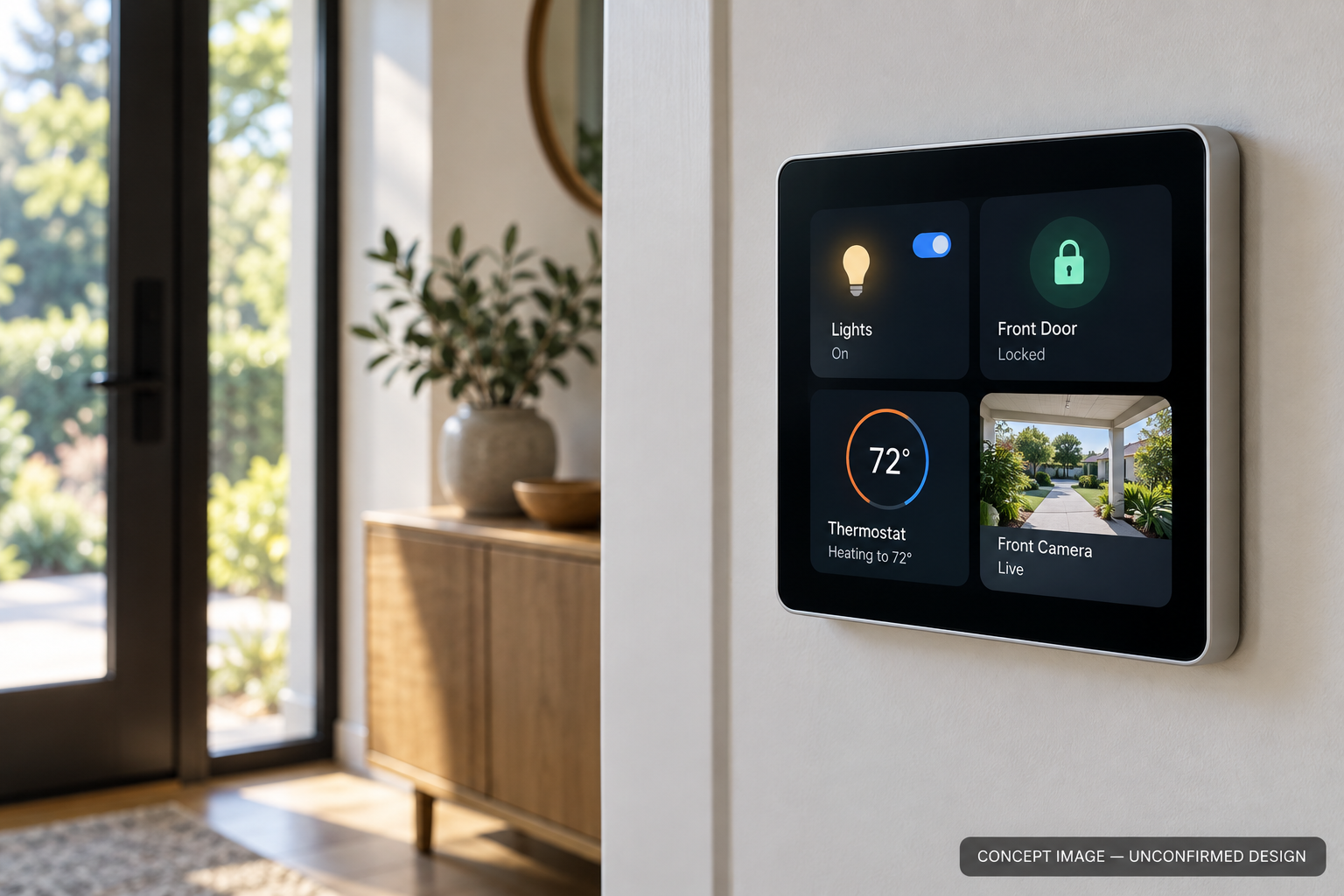
Concept image of a reported Apple J490 smart-home display mounted near an entryway

Bloomberg’s reported description points to a compact, roughly six-inch square display rather than a tablet-sized kitchen screen. Versions may attach to a wall or sit on a counter. The device is also said to recognize individual household members and surface personalized content and responses from their own accounts.

That could make J490 a dedicated dashboard for the Home app: glanceable controls for lights, locks, cameras, climate, scenes and household information without requiring someone to pick up an iPhone or turn on a television. A wall version could work near an entryway; a countertop version could serve kitchens, desks or bedside tables.

Those uses are a reasoned interpretation of the reported form factor, not confirmed features. Apple has not published a product page, interface preview or compatibility list. The concept image above is editorial artwork based only on the broad reported description and does not show a leaked or official design.

What Apple’s current products already do

Apple already treats HomePod mini and Apple TV 4K as home hubs. Apple says HomePod mini can provide remote control of HomeKit and Matter accessories through the Home app, while Apple TV 4K can automate accessories, provide remote access and manage connected devices through Control Center.

HomePod mini also supports voice recognition for up to six family members, personalized requests, Intercom and smart-home scenes. Apple TV 4K similarly recognizes up to six voices for personalized recommendations and can show connected cameras and accessories on a television.

J490 would therefore not create Apple’s home-hub function from scratch. Its value would be a dedicated always-available screen, a form factor Apple does not currently sell for the home.

What the reported companion updates could change

HomePod mini: a faster brain in the same shape

Reuters says the new HomePod mini is expected to retain the current design while gaining a faster processor for more capable Siri models. That would be a meaningful internal change because today’s HomePod mini still uses Apple’s S5 chip and was introduced in 2020.

Buyers should not assume a major speaker redesign, larger display or dramatic acoustic change. The current report emphasizes processing rather than new physical controls or audio hardware. If Apple keeps the existing exterior, the practical upgrade case may depend on responsiveness, on-device intelligence and how broadly new Siri features reach older speakers.

Apple TV: performance and smart-home potential

The reported Apple TV refresh is also expected to keep its current design while moving to a faster processor. The current Apple TV 4K uses the A15 Bionic chip, offers 64GB or 128GB storage, and adds Thread support and Gigabit Ethernet on the 128GB model.

A newer chip could improve app and game performance, extend software support and handle richer Siri features. But the report does not confirm a new remote, added ports, storage tiers, price or a Thread radio on every model. Anyone buying specifically for Matter-over-Thread accessories should wait for Apple’s final technical specifications.

Why household recognition matters

Personalization is the most consequential reported feature. A shared home screen has to know whose calendar, reminders, media, messages and recommendations it should show. Apple’s existing speakers and set-top box already recognize multiple voices, so the company has a foundation for account-aware experiences.

A camera or other sensing system could make a display more immediate, but the report does not specify how recognition works. It also does not explain whether household data is processed on the device, how guests are handled, what appears when nobody is recognized or which information can be hidden. Those privacy details will matter as much as hardware specifications.

What remains unconfirmed

  • Apple has not confirmed the event or any of the products in the report.
  • No price has been reported for the J490 hub.
  • No final product name, colors, storage capacity or accessory support has been confirmed.
  • There is no confirmed ship date, preorder date or country list.
  • Apple has not detailed J490’s cameras, microphones, speakers, sensors or privacy controls.

Treat renders, accessory listings and feature lists that go beyond the Reuters/Bloomberg report as speculation until Apple provides product pages or technical documentation.

Should you wait before buying?

If you want a dedicated Apple Home screen, waiting is sensible. The reported event is close enough that a short delay could reveal whether J490 fits your room, accessories and budget.

If you only need a streaming box, the current Apple TV 4K remains a capable option with 4K HDR, Dolby Vision, HDR10+, Dolby Atmos, HomeKit and Matter support. Still, buyers who keep streaming boxes for several years may prefer to see whether a faster model changes price, storage or connectivity.

HomePod mini buyers face a similar decision. The current speaker already supports whole-home audio, Intercom, Siri, HomeKit and Matter, but a processor refresh could determine which future Siri capabilities it receives. Existing owners should wait for compatibility details before replacing anything.

Buying advice and the sensible next step

Do not preorder accessories for J490 based on reported dimensions. Wall mounts, stands and power arrangements depend on final measurements and port placement. Also avoid paying inflated prices for products described as compatible before Apple confirms the hardware.

If you need a streaming device immediately, compare the current Apple TV 4K on Amazon with Apple’s direct pricing and return policy. Otherwise, wait for Apple to confirm the event and publish technical specifications. ReaderSpice will update the buying advice when official details arrive.

Disclosure: ReaderSpice may earn a commission from qualifying Amazon purchases made through the link above, at no additional cost to you.

Sources

Reuters report on Apple’s reported October smart-home launch

Apple HomePod mini product page

Apple TV 4K product page

Apple Home privacy and smart-home information

OpenAI Dots Are Always-On AI Agents: Availability, Privacy and What They Can Do

Abstract always-on AI agent connecting work apps with visible security and approval controls

OpenAI has introduced dots, a new class of always-on AI agents designed to keep working toward a goal even when you are not actively chatting. The pitch is bigger than a smarter chatbot: each dot gets a cloud computer and browser, can connect to thousands of apps, and can return with progress as a project changes.

For readers, the useful question is not whether dots sound futuristic. It is whether the new agents are available on your plan, what they can safely access, and where human approval still matters. Here is the practical version.

What are OpenAI dots?

A dot is a persistent agent inside the OpenAI ecosystem. OpenAI says dots are powered by GPT-6 Astra and can be assigned ongoing work rather than a single prompt. A user might ask one to track a developing sales opportunity, research a purchase, organize a trip, update a proposal as requirements change, or build a working software demo for review.

Each dot has its own cloud computer and browser. It can also connect to more than 4,000 apps through plugins, which gives it a way to gather context and act across the services a person or team already uses. OpenAI says people can communicate with dots in ChatGPT, Slack and Microsoft Teams, with text-message access planned later.

That persistent setup is the main distinction. A dot is meant to notice new information, continue a task in the background and bring back a useful result without making the user reopen the same conversation and restate the entire job.

Who can use dots now?

The rollout is gradual, so two people on the same plan may not see the feature at the same time. OpenAI says access is beginning for eligible Pro, Business Premium and Enterprise customers in supported markets. Enterprise access is controlled by workspace administrators and is off by default.

OpenAI is initially including one primary dot with eligible Pro and Business Premium plans at no additional charge. The company also describes a launch-period allowance for deeper work, but work delegated by a dot to Codex or ChatGPT Work can count against those products’ usage limits. That makes the included dot different from unlimited background labor.

If the feature is absent from your account, the most likely explanation is the staged rollout or a workspace setting—not necessarily an unsupported device. Enterprise users should check with an owner or administrator before assuming the account is ineligible.

What dots can actually do

OpenAI’s examples position dots as general-purpose project workers rather than simple reminders. Depending on the connected apps and permissions, a dot can:

  • Monitor a changing project and revise a deliverable when new information arrives.
  • Research across the web and connected sources, then summarize findings.
  • Prepare documents, presentations and analysis for review.
  • Use Codex to build or update software and return a working demo.
  • Coordinate through ChatGPT, Slack or Teams instead of requiring one permanent browser tab.
  • Remember feedback about how the user wants recurring work handled.

The reader benefit is continuity. Instead of asking for isolated outputs, you can define a result and let the dot keep the project moving. That can be useful for travel planning, competitive research, recurring reporting, launch preparation and other jobs where the inputs change over time.

How dots differ from a normal ChatGPT conversation

A standard conversation is usually reactive: you ask, ChatGPT answers, and the next step waits for another message. A dot is designed to be proactive and persistent. It can keep a project open, observe permitted sources, and decide when new information is important enough to act on or report.

Dots also have a dedicated cloud environment. That separation matters because the agent is not simply taking over your personal computer by default. OpenAI says local computer access requires permission, while the cloud computer remains a separate workspace unless you explicitly connect more capabilities.

That does not make a dot infallible. It changes the operating model from ‘answer this prompt’ to ‘work toward this goal,’ which increases both usefulness and the need for careful rules.

Privacy, permissions and human approval

Privacy, permissions and human approval

OpenAI gives users and administrators several controls intended to limit what a dot can do. Custom Rules can allow an action, require approval before it happens, or block it entirely. An Activity View provides a record of what the dot has been doing, while automatic review systems are intended to check consequential actions.

OpenAI says especially sensitive actions—such as changing passwords or permanently deleting data—require explicit consent. Business customer data is not used to train OpenAI models by default. Personal-plan users can manage whether conversations and dot activity are used to improve models through their data controls.

These protections are meaningful, but they do not remove the need for review. A dot can still misunderstand a goal, use stale information or produce an incorrect draft. The safest starting point is a narrow task with clear approval rules and a result that a person can inspect before it reaches customers, colleagues or the public.

Read-only research has an important boundary

When a dot is proactively researching while you are away, OpenAI says connected-app tools are restricted to read-only access. In that mode, the agent can inspect available information but cannot send messages, change content, or control a browser or computer.

That boundary is reassuring, but it is also easy to misunderstand. A dot may gain broader abilities when you are actively working with it and approve an action, or when workspace rules explicitly permit one. Users should review both the current task and the configured rules instead of assuming every dot interaction is permanently read-only.

A sensible first configuration is to allow reading and drafting, require approval for messages or file changes, and block destructive actions unless there is a compelling reason to enable them.

What enterprise teams should know

Enterprise workspaces do not automatically gain an unrestricted agent. Owners can decide whether dots are available, whether Slack or Teams connections are allowed, whether local computer access is permitted, and which Custom Rules apply.

That makes deployment a governance decision as much as a productivity decision. Teams should identify the systems a dot may read, the actions it may propose, who approves consequential changes, and how Activity View records will be reviewed. Regulated teams should also confirm that their existing data-handling and retention requirements match the chosen configuration.

OpenAI’s administration guide says phone messaging is not available for Enterprise at launch. The company also cautions that the rollout is gradual and that individual capabilities may not appear immediately.

Limits and questions to watch

The launch leaves several practical questions that only real-world use will answer. Long-running agents can consume more compute than a short chat, so allowance details and delegated-tool limits matter. Reliability also matters: Reuters reported that some voice-update demonstrations encountered problems during the live launch event.

Users should also watch how well a dot distinguishes a useful update from noise, how clearly it explains the actions it took, and how easily a project can be handed back to a person. An always-on agent that requires constant correction is not much of a time-saver.

Finally, availability remains uneven. OpenAI has announced the product, but the feature is still rolling out. Treat broad demos as examples of the intended experience, not a guarantee that every integration and channel is already enabled on every account.

Who should try a dot first?

Dots make the most sense for people who already have a recurring, multi-step workflow with clear inputs and a reviewable output. Strong first experiments include a weekly market brief, a monitored travel itinerary, a product-research watchlist, a draft status report or a software prototype that must be reviewed before release.

Avoid starting with high-stakes or irreversible work. Do not make the first test a password change, a public announcement or an unsupervised customer message. Begin with read access, drafting and explicit approval. Expand permissions only after the dot has shown that it understands the job.

A practical setup for voice updates and calls

If you plan to communicate with an agent through frequent calls or voice updates, a comfortable USB headset for computer calls can make long sessions easier and keep audio more consistent than a laptop microphone.

ReaderSpice participates in the Amazon Associates program and may earn a commission from qualifying purchases made through affiliate links, at no extra cost to you.

The bottom line

OpenAI dots are a significant shift from on-demand chat toward persistent software that can keep working across apps. The most compelling features are the dedicated cloud computer, broad plugin connectivity and the ability to maintain a project as conditions change.

The tradeoff is that persistence raises the stakes. Availability is limited, usage is not boundless, and permissions deserve careful attention. Readers who get access should start with a narrow, reversible workflow, keep approval gates around consequential actions, and judge the product by the quality of its Activity View and finished work—not by the promise of an agent that is always on.

Sources

Final Cut Camera 2.4 Adds Variable Aperture to iPhone 18 Pro: What It Changes

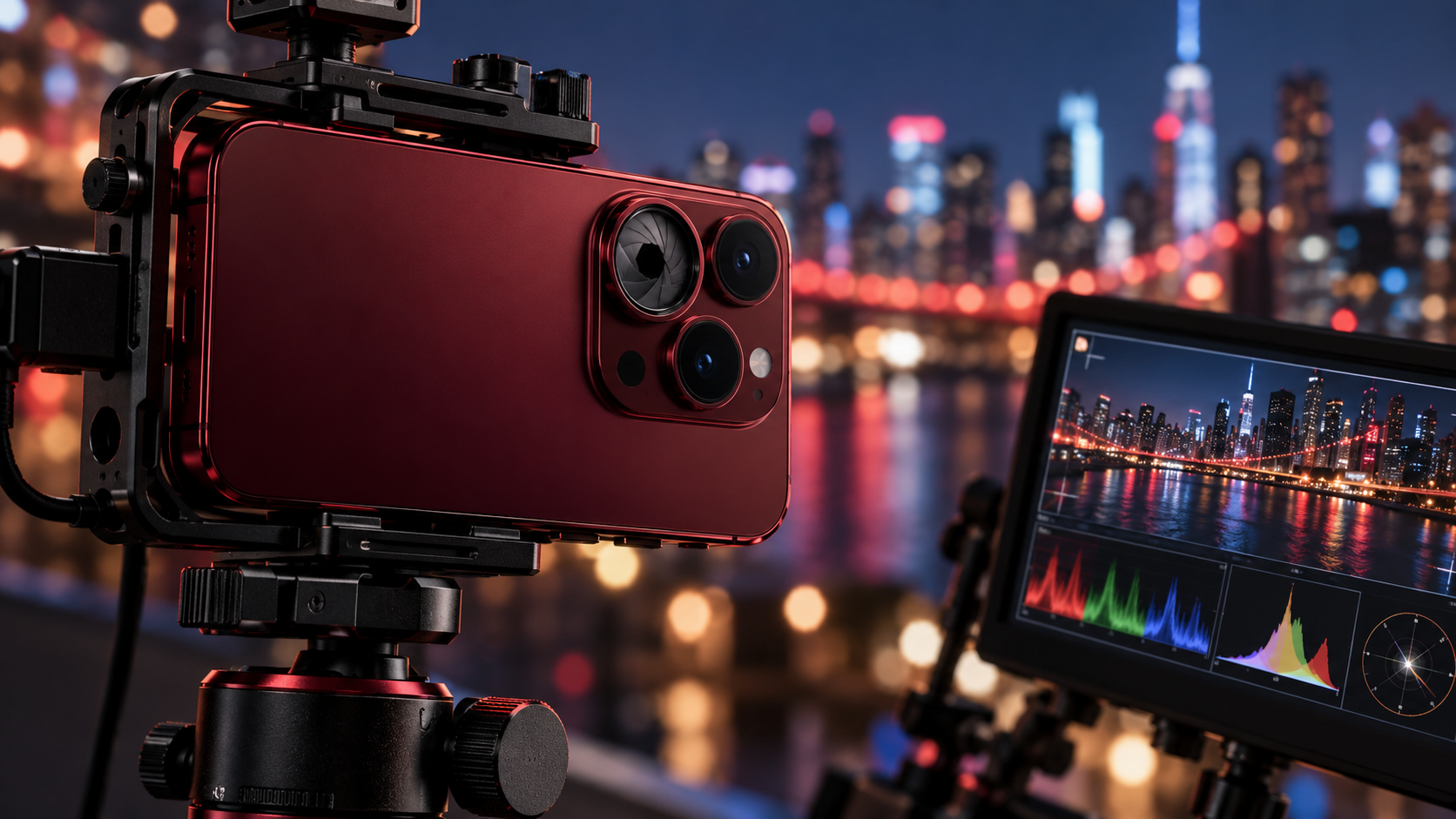
iPhone 18 Pro on a video rig with an adjustable aperture lens and professional monitoring scopes

Apple’s Final Cut Camera has received its most important update yet for mobile filmmakers. The new Final Cut Camera 2.4 brings direct variable-aperture control to iPhone 18 Pro, a redesigned interface, better exposure tools, and professional monitoring features that move the free app closer to a compact cinema-camera control center.

According to Apple’s announcement, the update is available now as a free download for supported iPhones. Some features work broadly with iOS 27, but physical aperture control is exclusive to the iPhone 18 Pro and iPhone 18 Pro Max because those models have Apple’s new variable-aperture Fusion Main camera.

Quick take

  • Final Cut Camera 2.4 is a free update.
  • Variable-aperture control requires an iPhone 18 Pro or iPhone 18 Pro Max.
  • The app adds shutter-priority and aperture-priority shooting modes.
  • New scopes, clean SDI output, and genlock offset target serious productions.
  • Regular ProRes and Apple Log footage can now carry editable Cinematic mode data.

How variable aperture changes iPhone video

How variable aperture changes iPhone video

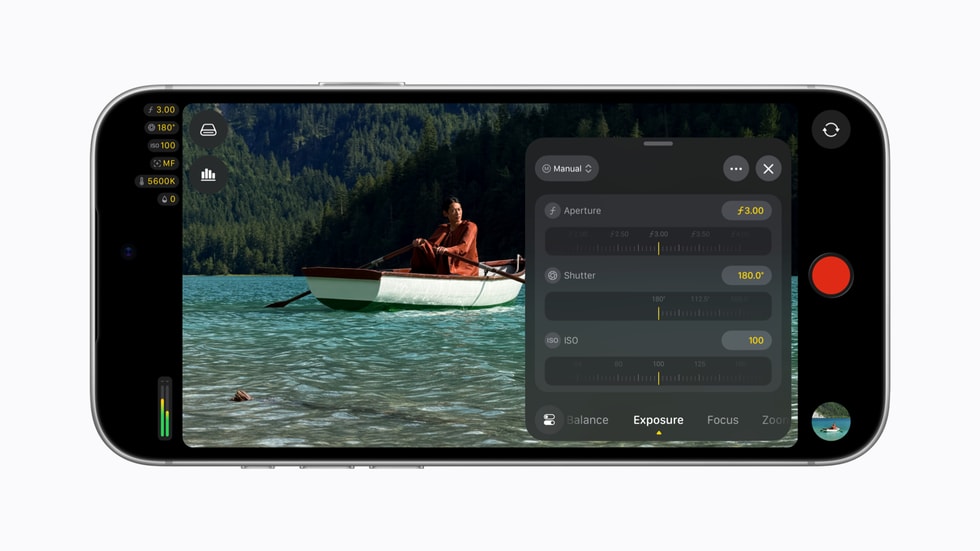
A conventional phone camera usually has a fixed aperture, so exposure is managed mainly through shutter speed, ISO, filters, and software processing. The iPhone 18 Pro’s Fusion Main camera can physically change its aperture. In Final Cut Camera 2.4, creators can select an aperture directly or let the app balance aperture and shutter behavior through priority modes.

That matters in three practical ways. A wider aperture lets in more light and can create shallower depth of field. A narrower aperture admits less light and keeps more of a scene in focus. Most importantly for video, aperture control gives filmmakers another way to hold a preferred shutter angle without immediately reaching for a stronger neutral-density filter or raising ISO.

The effect is not magic. A phone sensor and short focal length still produce more depth of field than a large-sensor cinema camera at comparable framing. But direct aperture control is a meaningful step because it gives creators a real optical choice rather than relying entirely on simulated background blur.

Aperture priority and shutter priority

Final Cut Camera now lets iPhone 18 Pro users choose aperture-priority or shutter-priority operation. Aperture priority is useful when depth of field or low-light performance is the creative priority. Shutter priority is better when motion rendering must remain consistent, such as maintaining a cinematic shutter angle while walking, panning, or filming action.

For controlled productions, manual aperture remains the most predictable option. Auto or priority modes are more convenient when light changes quickly, but creators should watch for visible exposure shifts during a take.

What else is new in Final Cut Camera 2.4

Apple redesigned the app around faster access to common controls and a cleaner viewfinder. The update includes:

  • Direct access to shutter angle, ISO, white balance, and aperture controls.
  • Customizable overlays with false color and clipping indicators.
  • Improved focus peaking with adjustable sensitivity.
  • A recording tally light and a two-finger gesture that clears the viewfinder.
  • A refreshed interface intended to reduce menu hunting while shooting.

False color and clipping indicators are particularly useful because they make exposure problems easier to spot before recording. Focus-peaking sensitivity should also help when working with detailed scenes or shallow depth of field, where an overly aggressive overlay can become distracting.

Professional scopes, clean SDI output, and genlock offset

Video scopes for more reliable exposure

With iOS 27, the app gains an RGB Parade and histogram. The RGB Parade separates red, green, and blue channel information, making color casts and channel clipping easier to diagnose. The histogram provides a fast overview of tonal distribution. Neither replaces a calibrated monitor, but both are valuable when shooting in Apple Log or under mixed lighting.

Clean SDI output for broadcast workflows

Final Cut Camera can now send a clean video signal through an HDMI-to-SDI converter. “Clean” means the outgoing feed omits the app’s controls and overlays, which makes the signal suitable for external recorders, switchers, monitors, and broadcast streaming systems. The feature is most relevant to multicamera crews and event producers; casual shooters are unlikely to need it.

Genlock offset solves a specialized timing problem

Genlock keeps multiple cameras synchronized to a common timing reference. The new offset control can compensate for latency differences between an iPhone and other genlocked cameras. Apple also says it can help reduce artifacts when recording displays. This is a niche addition, but it signals that Apple expects iPhones to appear in more professional multicamera rigs.

Cinematic effects now work with ProRes and Apple Log

The update also changes how creators can use Cinematic mode. Regular video recorded with Final Cut Camera can carry focus and depth information that remains adjustable in Final Cut Pro, including footage captured in ProRes and Apple Log. Editors can change focus points and depth of field after the shoot instead of committing to every focus decision on location.

Apple’s Creator Studio update says Final Cut Pro and Motion on Mac can apply these effects to native iPhone 18 Pro footage. For creators who prefer to capture a high-quality Log master and make aesthetic choices later, that is more useful than being locked into a separate Cinematic capture mode.

Who should install it

Every Final Cut Camera user benefits from the redesigned controls, exposure overlays, focus-peaking improvements, and monitoring tools. The update is most compelling for iPhone 18 Pro owners who shoot interviews, short films, product videos, live events, or multicamera projects.

Owners of older iPhones will not gain a physical variable aperture through software, but the interface and iOS 27 monitoring features can still improve their workflow. If your production depends on external monitoring or synchronization, confirm that every adapter, converter, cable, and destination device supports the required signal before a live shoot.

How to get started

  • Update the iPhone to iOS 27.
  • Install or update to new Final Cut Camera 2.4 from the App Store.
  • On iPhone 18 Pro, open the exposure controls and test manual aperture, aperture priority, and shutter priority.
  • Enable false color, clipping indicators, or scopes one at a time so the viewfinder stays readable.
  • Run a short recording test before using clean SDI output, genlock, ProRes, or Apple Log on a paid production.

A stable support is still one of the simplest upgrades for phone video. You can compare iPhone video tripod and rig options on Amazon. As an Amazon Associate, ReaderSpice earns from qualifying purchases.

Bottom line

Final Cut Camera 2.4 makes the iPhone 18 Pro’s variable aperture genuinely useful instead of leaving it as a hardware specification. Direct aperture control, priority modes, exposure overlays, scopes, clean SDI output, and genlock offset create a more coherent professional workflow from capture through Final Cut Pro. Most people will use only a fraction of these tools, but filmmakers now have more control over exposure, focus, motion, and monitoring without paying for the camera app itself.

Sources

Apple Newsroom: Final Cut Camera 2.4 update

Apple Newsroom: Apple Creator Studio updates