UCPN (Maoist) supremo Pushpa Kamal Dahal ‘Prachanda’ recently went on a nationwide campaign, which he said was a part of his broader objective of lifting his party to the top of country’s politics within two years.
Will Prachanda succeed in fulfilling this commitment which he publicly made during the party’s recently held central committee meeting? Is UCPN (M)’s revival possible when its well-known ideologues Baburam Bhattarai and Mohan Baidya have abandoned it? Or is Prachanda planning a merger with the CPN (UML)? Or will the party also face the fate akin to CPN-ML led by CP Mainali? Continue reading “Is Prachanda’s Revival Possible?”
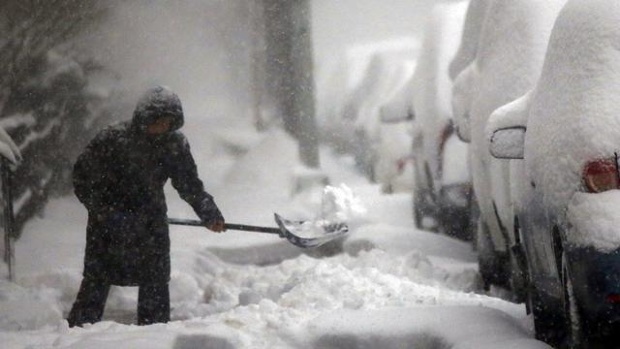
This is my first article. I am writing it while there is a rather extreme blizzard going on outside, and as of now have officially entered into a winter depression. Sure the white snow looks majestic and beautiful, with the branches glistening brightly, and the air feeling very fresh and clean (partly because there is literally not one car or even a human being outside right now). However, I dislike winter. Immensely. Continue reading “Painting the Sky”
When we say “City Never Sleep” anyone can guess. Yes, it is New York City. New York City is a diverse city in the world. More than 200 countries people reside or visit here everyday. This city never sleep, but today it is sleeping. May be city is tired of working 24/7, and taking deep breathe and sleeping in very quite environment. I landed to this state on 2006, and I have never seen this city sleeping. However, due to snow blizzard whole city is quite. No train, no car, no bus, many of the businesses are closed. Continue reading “City Never Sleeps, Slept Today”
Ketan Jung DulalI confess I hated dogs when I was young (I think I am more of a cat person). And the reason I became interested in animal behaviour was to study wild animals rather than domestic ones. My perception during my younger days was that animals should be studied in the wild rather than in those environments molded by humans. But now I study domestic animals and have come to realize that studying domestic animals gives the same fascination that studying wild animals does.
Dogs in Kathmandu are not like what we usually find in country like the one I live in currently (Canada). Most dogs in Kathmandu are not kept inside the warmth of the house with the comfort of a good owner. In Nepal, people usually keep dogs for guarding purposes. In developed countries, one might encounter a few agonistic interactions between dogs, but such interactions are plenty in the streets of Kathmandu. Although I hated dogs while growing up, my family had several dogs one after the other all through my younger days. But, I would say that not a single one of them was ‘domesticated’. Continue reading “My relationship with dogs”
PTI Los Angeles
A copyright suit filed against rapper 50 Cent over his 2007 hit “I Get Money” was dismissed.
Tyrone Simmons, aka Young Caliber, filed papers against 50 and the song’s producer William Stanberry in 2010, claiming they had infringed on his rights to use the instrumental for “I Get Money”, reported Billboard. Continue reading “Copyright case against 50 Cent dismissed”
As kids, my brother and I used to return home from our not-so-tedious school day to sit in front of the family computer and play an online game. The game revolved around the Year 1066, when the Saxons of England had to deal with invaders from the North – the ‘Vikings’; and invaders from the south – the ‘Normans’. It was a game entailing cunning tactics to beat my brother, the adversary. I played this game for months on end, fascinated by both the simplicity of its layout and the complexity of actually playing the game. I was baffled as to why England was so worthy of fighting over. Why couldn’t the Vikings have just stayed in their own land? Why did the Normans have to risk countless lives just to gain control over England? What was so special about England? Continue reading “The Things People Do”
Sushmita Sapkota (JUNU)INTRODUCTION
Every day we are used to hearing the news about the road accidents, government schools being closed, a farmer failed on growing the duplicate seeds imported from abroad, tens of hundreds of Nepali children dying due to malnutrition, people facing the death just because of curable diseases like fever and diarrhea and a common Nepali not able to teach their children in schools. On the other hand, government is spending millions of billions Nepali rupees announced for yearly economic budget and these budgets are mainly targeted in the areas like agriculture, education, health, infrastructures and poverty alleviation. But we are not being able to see the results of these investments. The common answer we can get now and then is “corruption”. Continue reading “Corruption and Good Governance”
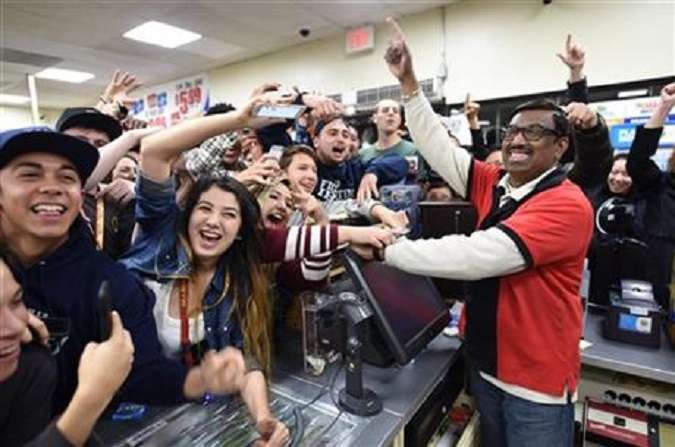
AP LOS ANGELES, Jan 14 print TAKES OUT REFERENCE TO ONLY WINNING TICKET – 7-Eleven store clerk M. Faroqui celebrates with customers after learning the store sold a winning Powerball ticket on Wednesday, Jan. 13, 2016 in Chino Hills, Calif. One winning ticket was sold at the store located in suburban Los Angeles said Alex Traverso, a spokesman for California lottery. The identity of the winner is not yet known. (Will Lester/The Sun via AP) MANDATORY CREDIT
An eye-popping and unprecedented Powerball jackpot whose rise to $1.6 billion became a national fascination will be split three ways. The winners’ identities remain a mystery, but they bought their tickets in Florida, Tennessee and a Los Angeles suburb where even lottery losers were celebrating Thursday that such heady riches were won in their modest city. Continue reading “$1.6 billion Powerball jackpot goes to 3 winners in 3 states”
Dinesh KarkiThe legislative parliament has passed the Reconstruction Authority Bill for executing the rebuilding program by disseminating the targeted $2 billion reconstruction fund plus $ 4.4 billion pledged by foreign governments and donors as grants and soft loans. The National Planning Commission (NPC) estimates the cost of reconstruction to be as high as $ 6.7 billion. The obvious question to ask now is ‘Who is going to bear all this cost?’ The obvious answer is us – the taxpayers. And if so, why is there a need for such huge government assistance in the first place? One plausible answer is that protective measures like buying insurance could have lowered the fund needed for reconstruction. However, such voluntary adoption of protective measures as buying insurance is very low in Nepal. In fact, some serious regulatory hurdles have constrained the growth of insurance industry!
Insurance penetration is very low in Nepal – a mere 1.42% of the GDP as per the Insurance Board of Nepal (IBN) data. The same for emerging markets averages 1.75% of the GDP. The compensation amount post-earthquake from insurers stands at Rs. 3.519 billion, a mere fraction of the required reconstruction costs. Apparently, there would be no need for such costly reconstruction assistance from the government had there been more structures been insured against earthquake-induced damages.
Rigid Solvency and Investment Requirements
In the name of prudential regulation for protecting consumers in case of insolvency, the IBN heavily regulates the insurance companies. There are strict solvency requirements and rigid investment requirements that limit the insurance companies from devising their own risk-management strategies.
The board has laid out solvency ratios and their consequent corrective actions. These solvency controls are uniform rule-based quantitative requirements without incorporating the risks undertaken by the insurers. It leads to a restrictive atmosphere where insurers are forced to meet inappropriate capital requirements even when the riskiness of their portfolio is low. Swiss Solvency Test (SST) in Switzerland and Solvency II Directive in the EU, for instance, align capital requirements with their specific risk profile.
The IBN has also laid out quantitative (mandatory minimum) requirements for investment in limited asset classes (for example, government securities, treasury bills, fixed or short term deposits of commercial banks, etc.) in the name of minimizing risks from uncertain losses. As per the recent IBN data, only 16.4% of the actual investments made by non-life insurers are under unregulated category which further proves how restrictive the requirements are. Such highly restrictive solvency and investment requirements are detrimental to the insurance industry as they stifle product development, innovation and competition.
Price-setting and Confidentiality of Premiums
The premiums charged for different categories of houses are set by the Insurance Tariff Advisory Committee (ITAC). The tariff and the premium rates are rendered confidential and are not available to consumers even when demanded. Such provision of price setting and confidentiality creates a problem of asymmetric information and further distorts the coordination of the insurance market through prices. Further, such price setting could lead to ‘cartel-type market arrangement’ imposing higher costs to insurers as well as consumers. Another problem is that they are not based on any actuarial methodologies; meaning, they are not based on specific risks of the policyholder. The basic principle of insurance dictates that equal risks must be treated equally while unequal risks must be treated differently. When unequal risks are pooled together and levied a uniform premium rate, this gives rise to the classic problem of ‘adverse selection’. In other words, such policies become more attractive to high risk consumers and unattractive to low risk consumers.
Disincentives for Purchasing Insurance: Earthquake Deductible and Low Claim Settlement
As far as the purchase-decisions are concerned, one clear disincentive for people while buying insurance is not being eligible for compensation. According to the latest IBN data, about 20% of the claims (i.e. 3499 out of 17,400 claims are ‘no claim’) related to earthquake are either ineligible or withdrawn by the homeowners. One of the reasons for the case of ‘no claim’ is because the claims are either equal or lower than the amount that insurers are allowed to deduct while settling claims. When we compare this to Japan’s case for instance, insurers are required to reimburse 100% of the insured amount. Another constraint for purchase and post-purchase decision can be attributed to the ineffective claim settlement process. The probability that an insurance claim will receive some compensation after being evaluated by a supervisor stands at just 3.28%.
The Reconstruction Bill and the Moral Hazard Problem
Even before people decide to purchase an insurance policy, they should recognize the need for it and evaluate other alternatives. When there is a strong assumption that the government will provide grants and soft-loans in case of an earthquake, there would be no financial incentive for people to purchase insurance. Inference from history suggests that post-disaster government responses play the role of the substitute to disaster preparedness. For example, loans provided during the reconstruction and rehabilitation program after the earthquake of 1988 were later converted into grants. Further, lobbying for total loan forgiveness in the past is a testimony for rent-seeking and vote-bank-securing behavior from politicians and interest groups. Though meeting immediate needs of the earthquake victims can be justified from the humanitarian aspect, outright grants and low-interest loans would only make things worse in the present and the future.
Tying It All Together
Removing these regulatory supply constraints will create room for the disaster insurance market to expand and thus cover more properties. This expansion will shift the risks of disasters like earthquakes to the homeowners themselves. The government will not have to redirect huge amounts of taxpayers’ funds to rebuilding efforts. Removing these constraints should in no way be viewed as a magic-wand; insurers will not magically cover all nooks and crannies of the country right away. Like all market processes, this will be a continuous process and will see scores of adjustments along the way. Having said that, this is in every way, a move in the right direction – letting the market thrive, giving choices to the people, and most importantly, reducing the burden to the government – the government that has not been very efficient in handling the relief and reconstruction activities to say the absolute least.
(Karki is a researcher at Samriddhi Foundation.Views expressed are personal. dinesh@samriddhi.org)
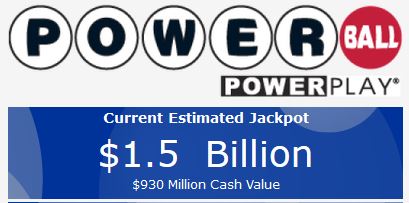
On Saturday, Powerball jackpot amount rises to $900 million. Many people have hope and expectation to win this jackpot. People started to dream about the huge amount of money, that they will receive if they win. However, no one won this jackpot on Saturday. This is the very huge jackpot in the history. Today, Wednesday Powerball will be drawn at 11 PM EST and the jackpot has rises to $1.5 Billion. Many people cannot imagine what they can do with this huge amount of dollar in front of their eyes. It’s all about luck to win this jackpot. Continue reading “Who will be the winner of $1.5 Billion Powerball Tonight?”