iOS 27 Is Here: The Biggest New iPhone Features You Should Try First

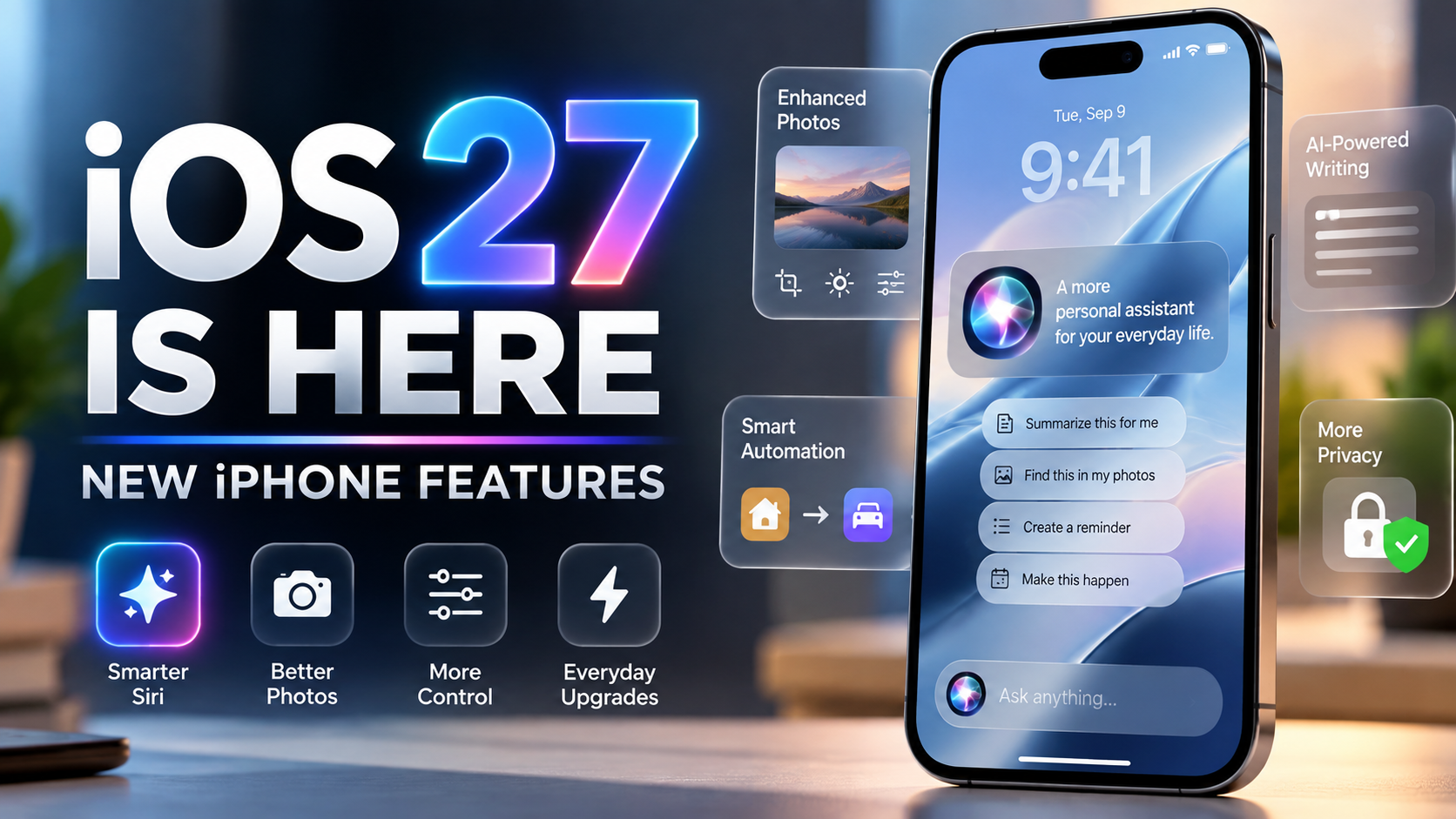
Apple has officially released iOS 27, bringing one of the biggest Siri upgrades in years alongside new Apple Intelligence features, photo-editing tools, design controls, parental protections, and performance improvements. The update began rolling out September 14, 2026, and is available for supported iPhones.

The headline feature is Siri AI, Apple’s reimagined assistant. But iOS 27 is more than an AI update. There are useful changes throughout the system that can make an iPhone feel smarter, more customizable, and easier to use.

Here are the iOS 27 features worth trying first, plus what you need to know about compatibility.

Siri AI Is the Star of iOS 27

Apple describes Siri AI as a more capable and conversational assistant built on the next generation of Apple Intelligence. Instead of handling only simple commands, the new Siri is designed to understand personal context, what is currently on your screen, and follow-up questions.

For example, Siri can surface relevant information from messages, emails, photos, and other personal content when responding to a request. Apple also says Siri can perform more actions across apps, such as helping draft an email or working with information already visible on the screen.

A dedicated Siri app is another major change. It gives users a place to revisit conversations, while iCloud can privately sync Siri conversation history across supported Apple devices.

Siri AI is initially rolling out in beta in English. Apple says French, Japanese, Korean, Portuguese, and Spanish support is coming next.

Try the New Photo Editing Tools

iOS 27 expands Apple Intelligence inside Photos. New tools include Spatial Reframing and improvements to Clean Up, giving compatible iPhones additional ways to adjust images after they have been captured.

Spatial Reframing can intelligently extend or reposition a photo to better fit a composition or wallpaper. This could be particularly useful when a favorite image does not naturally fit the iPhone Lock Screen.

Clean Up has also been improved for removing distracting objects or elements from an image. These features make the Photos app increasingly capable without requiring a separate editing app for quick fixes.

Siri Can Understand What’s on Your Screen

Onscreen awareness is one of the most practical parts of Siri AI. When something is displayed on your iPhone, you can ask Siri questions about it or request an action related to that content.

That could reduce the need to copy information between apps manually. Apple’s examples show Siri using information from webpages and personal content to answer questions and perform tasks.

This is one of the features that could make the new Siri feel substantially different from the older voice assistant, especially once more third-party apps support Siri’s expanded app actions.

More Control Over the Liquid Glass Look

iOS 27 continues Apple’s Liquid Glass design while giving users more control over its appearance. One notable addition is the ability to adjust the visual effect, making the interface easier to personalize.

For anyone who liked the overall design direction but wanted more control over transparency and readability, this is a small but welcome improvement.

Shortcuts Gets Smarter With Natural Language

Apple is also making automation easier. iOS 27 expands intelligence in Shortcuts, allowing users to create and work with automations using more natural language.

This has the potential to make Shortcuts more approachable for people who previously found building multi-step automations complicated. Instead of understanding every action in advance, users can describe more of what they want to accomplish and let the system help construct the workflow.

Better Writing Assistance Across iPhone

Apple Intelligence is more deeply integrated into everyday apps in iOS 27. Writing tools can help users compose, rewrite, and proofread text in places such as Mail and Messages.

The goal is not simply to generate text, but to make assistance available within the apps where people are already communicating. That can be useful for polishing an email, changing tone, or quickly improving a message without switching to another application.

New Parental Controls and Child Safety Features

iOS 27 also includes expanded tools for families. Apple has added stronger parental controls, including more options around age-appropriate apps, web browsing approvals, Screen Time, and communication safety.

These improvements are designed to give parents more control over what younger users can access while making those controls easier to manage from Apple devices.

Performance Improvements Matter Too

Not every meaningful upgrade needs to be flashy. Apple says its latest software releases include broader platform improvements intended to make devices more responsive and easier to use.

Apple highlights broad performance improvements in iOS 27, including up to 30% faster app launches, up to 70% faster loading of new captures in Photos, and up to 80% faster AirDrop transfers. Apple also lists more seamless switching between Wi‑Fi and cellular networks. Actual gains can vary by device and task.

Which iPhones Support iOS 27?

iOS 27 is available for iPhone 11 and later, as well as iPhone SE (2nd generation and later). However, installing iOS 27 does not mean every device receives every feature.

Apple Intelligence has stricter hardware requirements. Apple lists iPhone 15 Pro and iPhone 15 Pro Max, all iPhone 16 models, and later compatible iPhones among the supported devices for Apple Intelligence. Siri AI also requires an Apple Intelligence-capable device and is beginning its public rollout as a beta.

That distinction is important for owners of older supported iPhones: they can still receive iOS 27 and many of its system improvements, but the biggest AI features require newer hardware.

Should You Install iOS 27 Now?

For most users with a supported iPhone, iOS 27 is a significant update worth considering, especially if you own a device capable of running Apple Intelligence. Siri AI is the biggest reason to explore the release, but the photo tools, customization changes, family features, and system refinements make the update broader than Siri alone.

As with any major operating-system release, users who depend on critical work apps may prefer to verify app compatibility first. It is also sensible to back up important data before installing a major iOS update.

For compatible iPhones, the update can be found under Settings > General > Software Update.

The Bottom Line

iOS 27 marks a major step in Apple’s effort to make the iPhone more context-aware and useful through Apple Intelligence. Siri AI finally moves Siri toward richer conversations, personal context, onscreen understanding, and deeper app actions, while Apple has also added improvements that benefit users outside the AI experience.

If you have an Apple Intelligence-compatible iPhone, Siri AI and the new Photos features should be near the top of your list to try. On older supported iPhones, the design, safety, and performance changes still give iOS 27 plenty to explore.

Sources

Apple Newsroom — Major updates for Apple’s software platforms are now available

Apple — iOS 27 features, compatibility, and availability

Apple Support — Apple security releases and iOS 27 compatibility
The Verge — Apple releases iOS 27 with Siri AI

Galaxy S27 Pro and Ultra Could Get Samsung’s M16 OLED Upgrade, Report Says

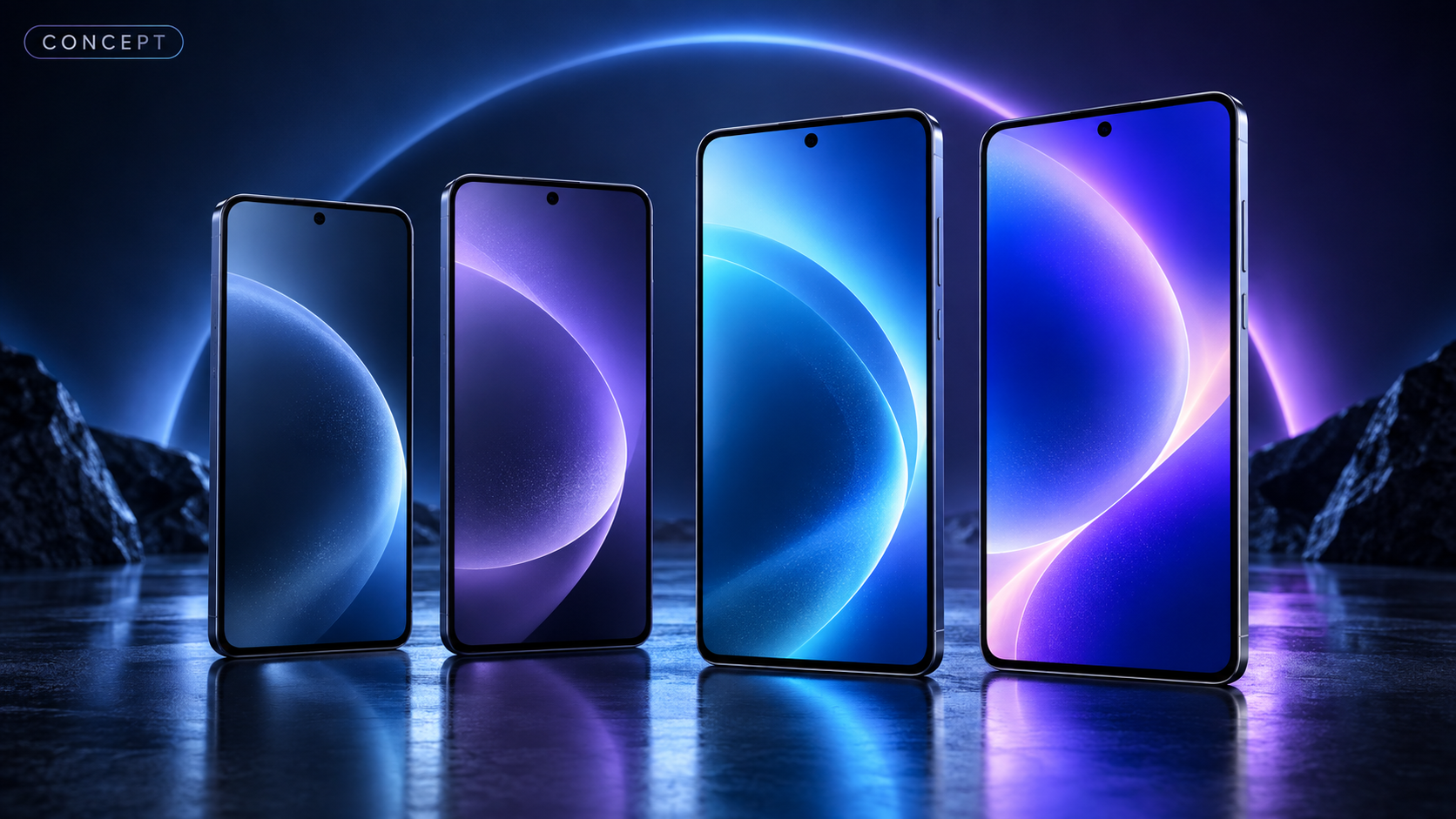
Concept image of four Galaxy S27-style phones representing rumored M14 and M16 OLED display tiers.

A new South Korean supply-chain report says Samsung plans to give the rumored Galaxy S27 Pro and Galaxy S27 Ultra its newer M16 OLED material set, while the standard S27 and S27+ move to M14. Samsung has not announced the phones or confirmed these specifications.

What the new report claims

South Korea’s ETNews reported on September 13, 2026 that Samsung Electronics and Samsung Display have decided to use the newer M16 OLED material set for the rumored Galaxy S27 Pro and Galaxy S27 Ultra. If accurate, these would be the first Samsung-branded phones to use M16 panels.

The report says Samsung would differentiate the lineup by giving the standard Galaxy S27 and Galaxy S27+ M14 material sets instead. Those models would still receive an upgrade from the M13 materials reportedly used across the Galaxy S24 through S26 generations, but the Pro and Ultra would keep the newer display tier.

Why M16 matters

M16 is the name of an OLED material set, not a screen resolution or marketing mode. Samsung Display combines different organic materials to determine characteristics such as light-emission efficiency, brightness potential, color performance and panel lifespan. A newer material generation can improve those fundamentals, although ETNews did not provide model-specific brightness, power-consumption or longevity figures.

Potential benefits include:

  • Improved luminous efficiency, which could reduce power use at comparable brightness.
  • More headroom for peak brightness and HDR performance.
  • Longer organic-material lifespan and more consistent color over time.
  • Greater display differentiation between Samsung’s mainstream and premium flagships.

These are expected advantages rather than confirmed Galaxy S27 performance measurements. Real benefits will depend on Samsung’s final panel tuning, refresh-rate behavior and software.

A four-model display hierarchy

ETNews describes four possible Galaxy S27 models and reports the following screen sizes:

  • Galaxy S27: 6.27 inches, M14 OLED.
  • Galaxy S27+: 6.66 inches, M14 OLED.
  • Galaxy S27 Pro: 6.47 inches, M16 OLED.
  • Galaxy S27 Ultra: 6.89 inches, M16 OLED.

That would place the rumored Pro between the standard and Plus models by screen size while giving it the same display-material generation as the Ultra. The lineup and dimensions remain unannounced, so they should be treated as supply-chain reporting rather than final specifications.

Privacy Display and COE could remain premium features

The M16 report also identifies Color Filter on Encapsulation and Privacy Display as technologies Samsung could use to separate the Pro and Ultra from the less expensive models.

COE replaces a conventional polarizer with a color filter integrated into the display stack. The approach can help improve light transmission and reduce panel thickness. Privacy Display restricts off-angle visibility to make sensitive content harder for nearby people to read.

Earlier reporting already pointed to Privacy Display for the Galaxy S27 Pro and Ultra. The M16 material claim is the new development: it suggests Samsung may divide the entire lineup by both OLED generation and premium display features.

Samsung may be using its newest panel later than rivals

ETNews says Samsung Display’s M16 material set is already used in Google’s Pixel 11 series and Apple’s iPhone 18 Pro models. If the report is correct, Samsung’s display division supplied the material to major customers before Samsung’s mobile division adopted it in a Galaxy phone.

That would not be unusual because Samsung Display and Samsung Electronics operate as separate businesses with different product schedules and requirements. It does, however, make the S27 upgrade more notable after several Galaxy S generations using older material sets.


What is confirmed and what is not

Confirmed:

  • Samsung Display develops OLED material generations identified by “M” numbers.
  • M16 is a newer material set than M14 and M13.
  • The Galaxy S27 family has not been officially announced.

Unconfirmed:

  • The four-model Galaxy S27 lineup.
  • M16 panels for the Galaxy S27 Pro and Ultra.
  • M14 panels for the standard S27 and S27+.
  • The reported display sizes, feature split and first-quarter 2027 launch window.

Bottom line

The report points to a meaningful display upgrade across the Galaxy S27 family, with the Pro and Ultra receiving Samsung Display’s newer M16 materials and the two mainstream models stepping up to M14. The possible efficiency and longevity improvements are promising, but Samsung has not confirmed the devices, and no measurable brightness or battery-life gains are available yet.


Sources

Google Removes Pixel Tablet From Its Store as Discontinuation Signs Mount

Google has removed the Pixel Tablet product page and the tablet category from its online Store, a strong sign that sales have ended. However, Google has not publicly confirmed that the product is discontinued, and its support page still promises updates through June 2028.

What is confirmed?

The Pixel Tablet is no longer listed for sale on the Google Store. The former product URL now redirects to the Store homepage, and the “Tablet” category has disappeared from the navigation. That is a concrete change to Google’s retail lineup, not a leak.

Independent checks by 9to5Google, Engadget and The Verge all found the same result. Engadget also reported that the Pixel Tablet was unavailable from Amazon and no longer available new from Best Buy when it checked. Those retail signals make a simple temporary stock shortage less likely.

What Google has not confirmed

Google has not issued a public statement declaring the Pixel Tablet discontinued. Engadget said it asked Google for confirmation and had not received an answer when its report was updated on September 10, 2026.

That distinction matters. Store removal strongly suggests the end of sales, but it does not prove that Google has permanently abandoned Pixel tablets or that a replacement cannot appear later. Until Google speaks, “appears discontinued” is more accurate than treating the product line’s future as settled.

What owners should know

The disappearance from the Store does not mean existing tablets immediately lose support. Google’s official Pixel Tablet support page says the device is guaranteed five years of operating-system and security updates, through June 2028. Google also says those updates may include new features delivered through Pixel Drops.

For current owners, the practical picture is therefore clearer than the product’s retail status:

● • Existing Pixel Tablets should continue receiving OS and security updates through June 2028.

● • Google has not announced an early end to software support.

● • Replacement accessories may become harder to find if remaining stock continues to disappear.

● • Warranty, repair and support information remains available through Google’s help pages.

A short-lived experiment with a distinctive idea

Google introduced the Pixel Tablet in 2023 as a hybrid Android tablet and smart-home display. Its Charging Speaker Dock let the tablet charge while operating in Hub Mode, giving it a rolethat conventional Android tablets did not offer. That approach was the Pixel Tablet’s most distinctive idea, but Google never released asecond-generation model. The product’s Store removal now leaves Google without a tablet in its current hardware catalog, even as the company continues to sell Pixel phones, watches, earbuds and smart-home products.

What this means for buyers

People considering a used or remaining-new Pixel Tablet should weigh the update commitmentagainst hardware availability. Support through June 2028 still gives the device useful life, butaccessory availability and long-term repair options deserve closer scrutiny once first-party sales end.

For most buyers, waiting is the safer choice unless the Pixel Tablet is deeply discounted and its dock-focused features specifically fit their needs. There is no officially announced successor to compare against, and Google has not provided a time table for returning to the tablet market.

Bottom line

The evidence is strong that Google has ended first-party sales of the Pixel Tablet: the product page redirects away, the Store’s tablet category is gone, and major retailers no longer shownormal new-device availability. What remains unconfirmed is the broader conclusion that Googlehas permanently exited tablets.

For owners, the most important confirmed fact is unchanged: Google still lists guaranteed Pixel Tablet OS and security updates through June 2028.

Sources


Galaxy S27 Ultra May Skip Polar ID Face Unlock as Samsung Reconsiders Its 2027 Flagship Upgrades

Samsung’s Galaxy S27 Ultra may not receive one of the biometric upgrades previously rumored for the 2027 flagship. A fresh report says Samsung currently has no plans to introduce Metalenz’s Polar ID face-authentication technology on the Galaxy S27 Ultra, potentially leaving the ultrasonic fingerprint reader as the phone’s primary secure biometric option.

The claim is not an official Samsung announcement, so it should be treated as a leak rather than a confirmed specification. Still, it is notable because earlier S27 Ultra coverage had pointed toward Polar ID as a possible major authentication upgrade.

What the New Galaxy S27 Ultra Leak Says

Tipster kro (@kro_roe) claimed on X on September 9 that Samsung currently shows no indication of bringing Polar ID to the Galaxy S27 Ultra. Gadgets 360 reported that Samsung’s earlier Metalenz testing remained experimental. If accurate, Samsung could continue using its established ultrasonic fingerprint system while retaining conventional camera-based face unlock for convenience.

That would make this less of a new feature story and more of a reversal: a previously discussed S27 Ultra upgrade may no longer be part of Samsung’s current plan.

What Is Polar ID?

Polar ID is an advanced facial-recognition approach associated with Metalenz that uses polarization information rather than relying only on a conventional RGB selfie image. The attraction for a flagship phone is stronger authentication without necessarily copying the exact hardware arrangement used by Apple’s Face ID.

However, Samsung has not announced Polar ID for the Galaxy S27 series, and reports that the company experimented with the technology do not mean it was ever guaranteed for a commercial device.

The Bigger Galaxy S27 Picture Is Getting More Interesting

This biometric report arrives as other S27-family leaks continue to build a picture of Samsung’s 2027 lineup. Recent reporting points to a possible Galaxy S27 Pro joining the regular S27, S27+ and S27 Ultra. One UI 9.5 firmware entries associated with the S27 family have also reportedly appeared on Samsung servers, with the sightings attributed to Samsung-focused leaker Tarun Vats.

Charging could be another important upgrade. Ice Universe recently posted information indicating 60W wired charging for both the rumored Galaxy S27 Pro and Galaxy S27 Ultra. That claim remains unofficial until Samsung confirms the devices and specifications, but it would represent a meaningful change if it reaches the final hardware.

These leaks should not be treated equally to an official product announcement. Firmware sightings and regulatory information can provide useful clues, while final hardware, names, features and regional configurations can still change before launch.

Why Samsung Might Skip the Feature

Cost and product priorities may be part of the explanation. Flagship development requires balancing camera hardware, displays, processors, batteries, thermal systems, connectivity and other components. Adding a new biometric system only makes sense if Samsung believes the security and user-experience gains justify the hardware and development cost.

If Polar ID has indeed been dropped from the current S27 Ultra plan, Samsung could redirect resources toward upgrades users interact with more frequently, such as cameras, battery life, charging, performance or display technology. That is an interpretation, however, not something Samsung has confirmed.

What Is Actually Confirmed?

Very little about the Galaxy S27 Ultra is official at this stage. Samsung has not announced the Galaxy S27 lineup, its final specifications, pricing or launch date. Reports currently point toward an early-2027 flagship window, but exact timing remains unconfirmed.

For now, the safest takeaway is straightforward: Polar ID was rumored, but the newest reporting says it may not be coming to the Galaxy S27 Ultra after all.

ReaderSpice Take

The most interesting part of early flagship leak season is watching specifications change as development progresses. The Polar ID story is a good example of why early rumors should never be presented as finished specifications.

The Galaxy S27 Ultra still has plenty of time before an expected 2027 introduction, and Samsung’s final priorities could change again. ReaderSpice will continue tracking Samsung’s development, while separating credible leaks from specifications Samsung actually confirms.

SOURCES

EDITORIAL NOTE

All Galaxy S27 specifications discussed above are leaks, reports or expectations unless explicitly identified as confirmed by Samsung.

Apple Watch Series 12 and Ultra 4 Announced: New Health Tracking, Apple Silicon and Prices

Apple Watch Series 12
Apple Watch Series 12 and Ultra 4
Official Apple Watch Series 12 featured-image candidate — Source: Apple Newsroom
Apple’s September 2026 event wasn’t only about iPhone. Apple also unveiled Apple Watch Series 12 and Apple Watch Ultra 4, positioning both devices around improved health and fitness tracking, new Apple silicon and a more intelligent watch experience.

Apple Watch Series 12

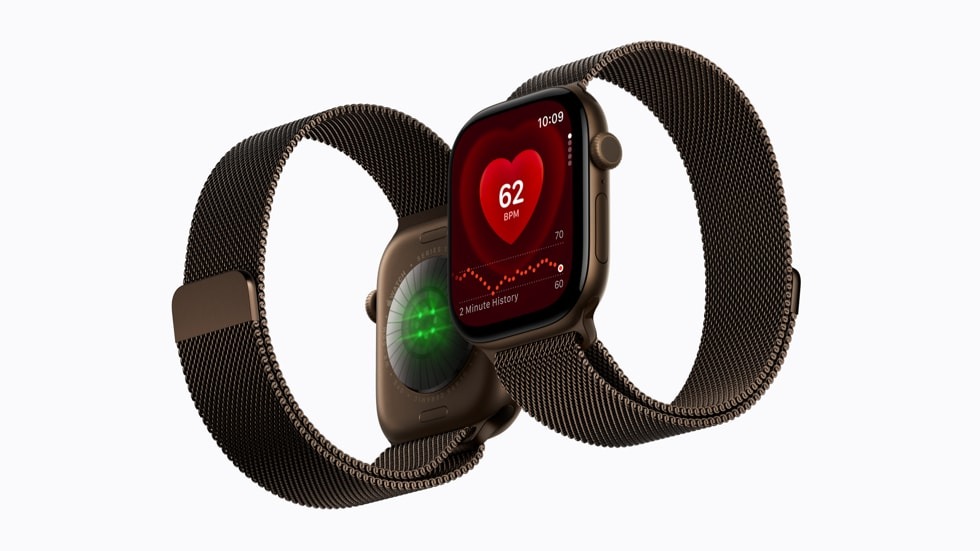
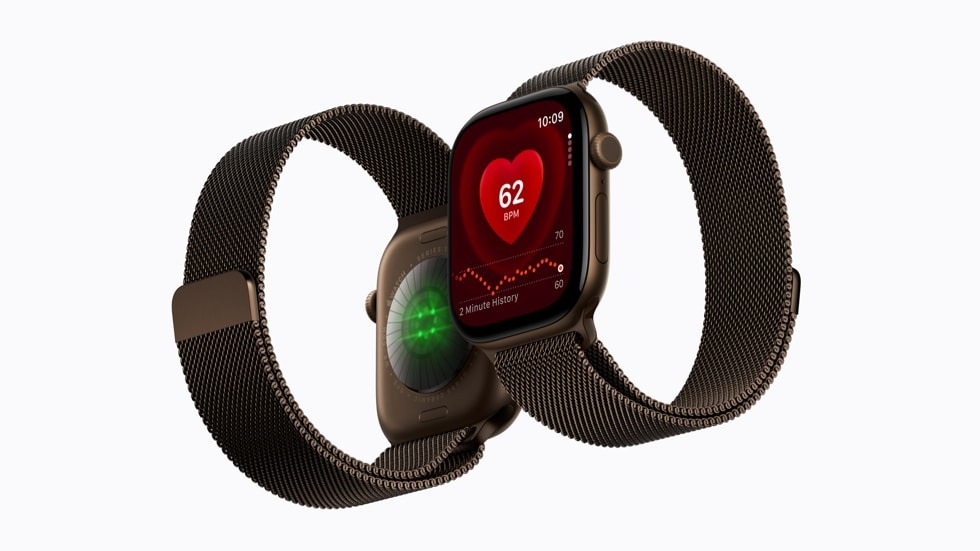
Series 12 remains Apple’s mainstream smartwatch, but the new generation puts additional emphasis on health data and recovery. Apple introduced a redesigned sensor system that can collect heart-rate information more frequently, supporting improved fitness and wellness insights.

The new watch also benefits from updated Apple silicon. Combined with watchOS 27 and Apple’s expanding intelligence features, the hardware is designed to provide faster processing and more useful summaries without turning the Watch into a miniature iPhone.

Apple Watch Ultra 4

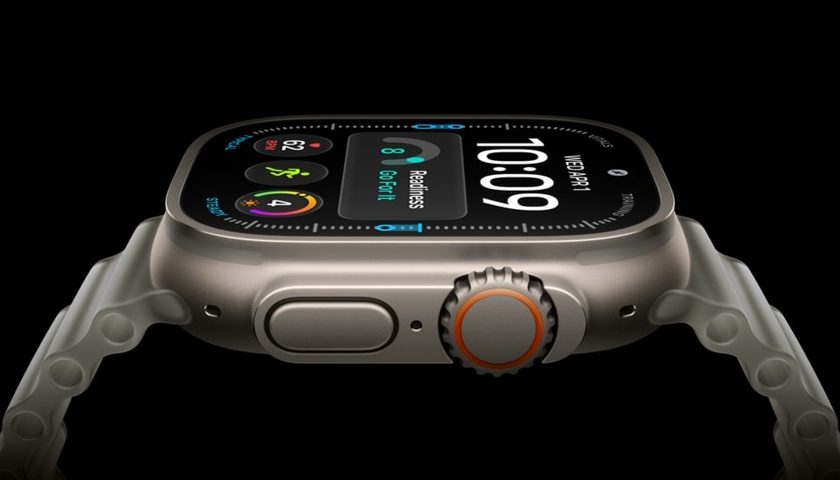
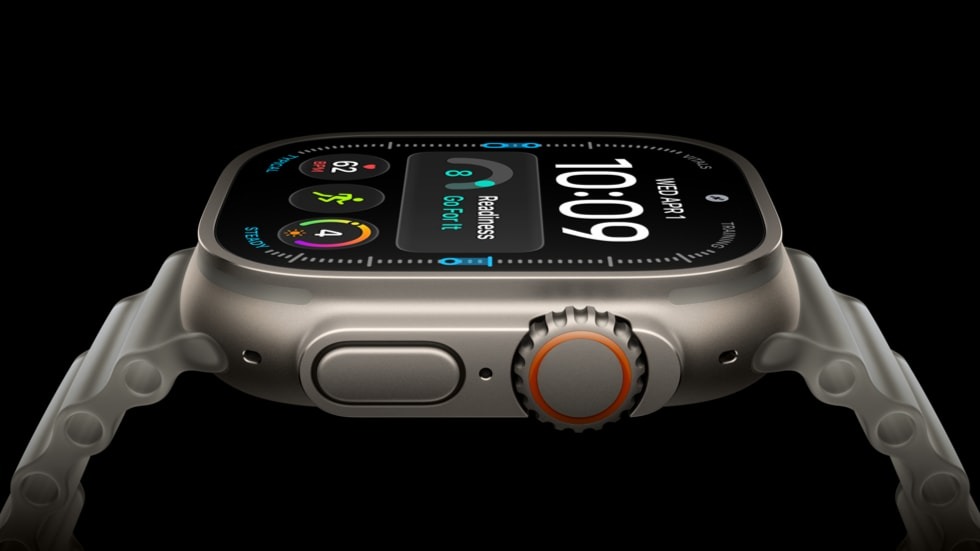
Ultra 4 continues as Apple’s rugged premium model for athletes, adventurers and users who want the company’s most capable watch. Apple is emphasizing improved sensors, health tracking and battery endurance while retaining the Ultra line’s outdoor-focused identity.

Apple Watch Ultra 4
Official Apple Watch Ultra 4 image — Source: Apple Newsroom

Health and Recovery Become More Important

One of the clearest themes of the new Watch generation is Apple’s attempt to turn the device from a passive activity tracker into a more useful interpretation layer for health and fitness data. More frequent heart-rate measurements can feed recovery and fitness features, helping users understand not only what they did but how their body is responding.

New Intelligence Features

Apple’s broader AI strategy also extends to the wrist. Launch coverage highlighted new summary and intelligence capabilities designed to surface useful information without requiring users to dig through multiple apps and metrics.

Pricing

Apple Watch Series 12 starts at $399, while Apple Watch Ultra 4 starts at $799, according to launch coverage. Those prices keep the new models in the familiar mainstream and premium positions of Apple’s Watch lineup.

Who Should Upgrade?

Series 12 will make the most sense for users with older Apple Watches who want improved health tracking and newer software capabilities. Ultra 4 is aimed at users who prioritize battery life, rugged construction, outdoor use and Apple’s most advanced Watch hardware.

Bottom Line

Apple Watch Series 12 and Ultra 4 are evolutionary upgrades, but Apple’s direction is clear: better sensors, more frequent health data, stronger on-device processing and software that turns raw measurements into information people can actually use.

SOURCES

  • Apple September 9, 2026 event / Apple Events
  • Reuters — Apple September 9 launch coverage
  • The Verge — Apple September 2026 event announcements
  • Axios — Apple event live coverage

Apple September 2026 Event: Everything Announced — iPhone Duo, iPhone 18 Pro, Apple Watch and AirPods 5

official Apple iPhone Duo launch image — Source: Apple Newsroom
Apple’s September 9, 2026 event delivered one of the company’s most consequential hardware launches in years. The headline was Apple’s first foldable iPhone, the iPhone Duo, but the company also introduced iPhone 18 Pro and Pro Max, Apple Watch Series 12, Apple Watch Ultra 4 and a new generation of AirPods.
official Apple iPhone Duo launch image — Source: Apple Newsroom
Apple’s September 9, 2026 event delivered one of the company’s most consequential hardware launches in years. The headline was Apple’s first foldable iPhone, the iPhone Duo, but the company also introduced iPhone 18 Pro and Pro Max, Apple Watch Series 12, Apple Watch Ultra 4 and a new generation of AirPods.

Here are the biggest confirmed announcements

iPhone Duo: Apple Enters the Foldable Era

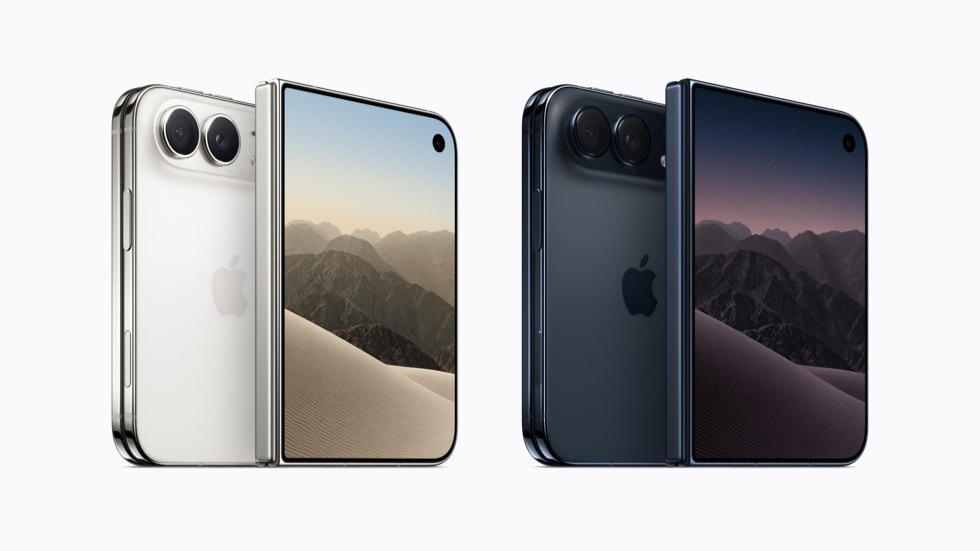
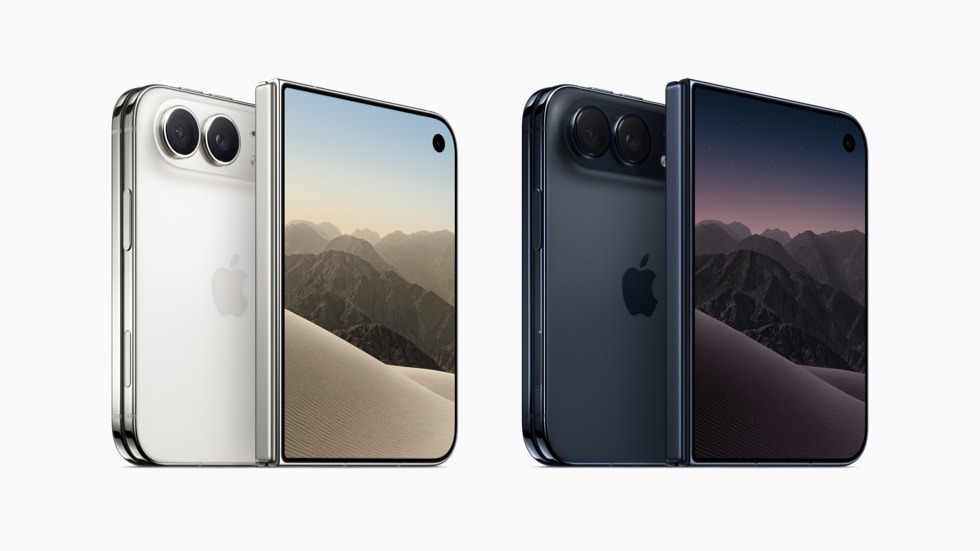
The biggest surprise — and the long-awaited “one more thing” — was iPhone Duo. Apple’s first foldable iPhone opens to a 7.6-inch display and includes a 5.4-inch outer screen. It supports multitasking, adapts iOS 27 to multiple orientations and folding positions, and will support Apple Pencil.

The Duo starts at $1,999 and is scheduled for availability October 23. Apple is positioning it as both a premium smartphone and a productivity device, effectively bringing some iPad-style use cases into a pocketable iPhone.

iPhone 18 Pro and Pro Max

iphone 18 Pro and iPhone 18 Pro Max

Apple also introduced iPhone 18 Pro and iPhone 18 Pro Max. The new models start at $1,199 and $1,299 respectively, with preorders beginning September 12 and availability September 18.

The Pro lineup introduces A20 Pro, stronger on-device AI capabilities and significant camera improvements. A 48-megapixel main camera with variable-aperture capability gives photographers more control over light and depth of field, while Apple is also expanding computational photography and video features.

Apple Reference Image

Apple introduced a new authenticity initiative called Apple Reference Image. The feature is designed to help prove the authenticity of images captured with supported iPhones at a time when AI-generated and manipulated photos are becoming increasingly difficult to identify. Apple also said it will support the emerging SynthID standard for identifying AI-created or edited imagery. Regional availability will vary.

Apple Watch Series 12 and Ultra 4

Apple Watch Series 12 and Ultra 4

Apple Watch Series 12 and Apple Watch Ultra 4 were also announced. Apple highlighted redesigned sensing and more frequent heart-rate measurements, alongside new Apple silicon and software features focused on health, recovery, fitness and intelligent summaries.

Apple Watch Ultra 4

Series 12 starts at $399, while Ultra 4 starts at $799 according to launch coverage.

New AirPods

Apple refreshed its entry AirPods line as well. The new generation brings active noise cancellation to a lower-priced AirPods tier. Launch coverage lists a $129 starting model and a $149 version with additional features including wireless charging and on-stem volume controls.

iOS 27 and Siri AI

The hardware announcements build on iOS 27 and Apple’s next generation of Siri AI. Apple emphasized that its intelligence system runs on-device whenever possible and demonstrated deeper app integration. The larger iPhone Duo display is one of the clearest examples of hardware and iOS 27 being designed together, with side-by-side apps and adaptive layouts.

What Was the Biggest Announcement?

The iPhone Duo is easily the defining product of this event. Apple is entering a foldable market that competitors have been developing for years, but it is doing so at the very top of the price range. Whether the $1,999 Duo becomes a mainstream success or remains a premium niche product will be one of the most important Apple stories to watch over the next year.

For traditional iPhone buyers, however, the iPhone 18 Pro and Pro Max remain the products likely to ship at much greater scale. Their camera and AI upgrades could matter more to Apple’s overall business even if the Duo receives most of the attention.

SOURCES

  • Apple Events / Apple Newsroom
  • Reuters — Apple September 9, 2026 launch coverage
  • Associated Press — Apple September 9 launch coverage
  • The Verge — Apple event biggest announcements
  • Axios — Apple live event coverage

Apple iPhone Duo Official: First Foldable iPhone Starts at $1,999

Apple iPhone Duo official foldable image.
Official Apple featured-image candidate — Source: Apple Newsroom

Apple’s foldable iPhone is no longer a rumor. The company has officially unveiled the iPhone Duo, a passport-shaped foldable that represents one of the biggest changes to the iPhone since the removal of the Home button.

The headline feature is a 7.6-inch inner display that opens into a tablet-like workspace while the phone retains a 5.4-inch outer display for normal one-handed use. Apple says the unfolded screen is its largest-ever iPhone display while the device remains pocketable when closed.

Price and Release Date

The iPhone Duo starts at $1,999 in the United States. Apple says the device will become available October 23, placing it above the iPhone 18 Pro Max as the company’s new ultra-premium iPhone option.

Two Displays, One iPhone

Apple has designed the Duo around a wider, passport-like shape rather than an unusually tall folding display. The inner screen supports multiple apps at once, allowing users to work with split-screen layouts and take advantage of apps optimized for the larger canvas. Apple demonstrated productivity scenarios involving apps such as Zoom and Slack.

Apple Pencil Support

In another first for iPhone, the iPhone Duo supports Apple Pencil. That pushes the Duo closer to the iPad experience and could make the device especially interesting for note-taking, annotation and creative work.

Touch ID Instead of Face ID

Apple is using Touch ID integrated into the side button rather than Face ID. Users can also unlock the Duo with Apple Watch. This is one of the clearest examples of Apple adapting familiar technologies to the engineering constraints of a foldable design.

Apple Silicon and Connectivity

The Duo uses Apple’s A20-class silicon and the company’s C2 cellular modem, continuing Apple’s move toward controlling more of the critical chips inside its devices. Apple is also emphasizing on-device AI and privacy across the new iPhone generation.

Cameras

The foldable includes dual rear cameras, with launch reporting describing two 48-megapixel cameras. The emphasis appears to be on keeping the device thin while still delivering a flagship-level camera experience, rather than matching every lens available on the Pro Max.

Built for iOS 27

The hardware story is only half of the Duo. Apple adapted iOS 27 to respond to different orientations and folding positions. Users can place apps side by side, pin video while using another portion of the display, and take advantage of layouts that change as the device is folded or rotated.

Why iPhone Duo Matters

Samsung, Google and Chinese manufacturers have spent years developing the foldable category, but Apple’s entry could push foldables further into the mainstream. At $1,999, this is clearly not a mass-market iPhone. It is a premium first-generation product designed to establish Apple’s approach to the category.

Bottom Line

The iPhone Duo is the most important new iPhone form factor in years. Its combination of a 7.6-inch inner display, Apple Pencil support, multitasking, Apple silicon and iOS 27 creates something closer to a pocketable iPhone-iPad hybrid than a conventional smartphone.

SOURCES

  • Apple September 9, 2026 event / Apple Events
  • Reuters — Apple debuts $1,999 foldable iPhone Duo
  • Associated Press — Apple unveils iPhone Duo
  • TechCrunch — Apple unveils its first foldable, the iPhone Duo
  • 9to5Mac — Apple unveils foldable iPhone Duo

VIDEO / MEDIA

Official Apple iPhone Duo launch page

Apple September 9, 2026 event video

iPhone 18 Pro and iPhone 18 Pro Max Official: A20 Pro, Variable-Aperture Camera, New Colors and Everything Apple Announced

Apple iPhone 18 Pro official product image shown during the September 9 2026 event

Updated: September 9, 2026

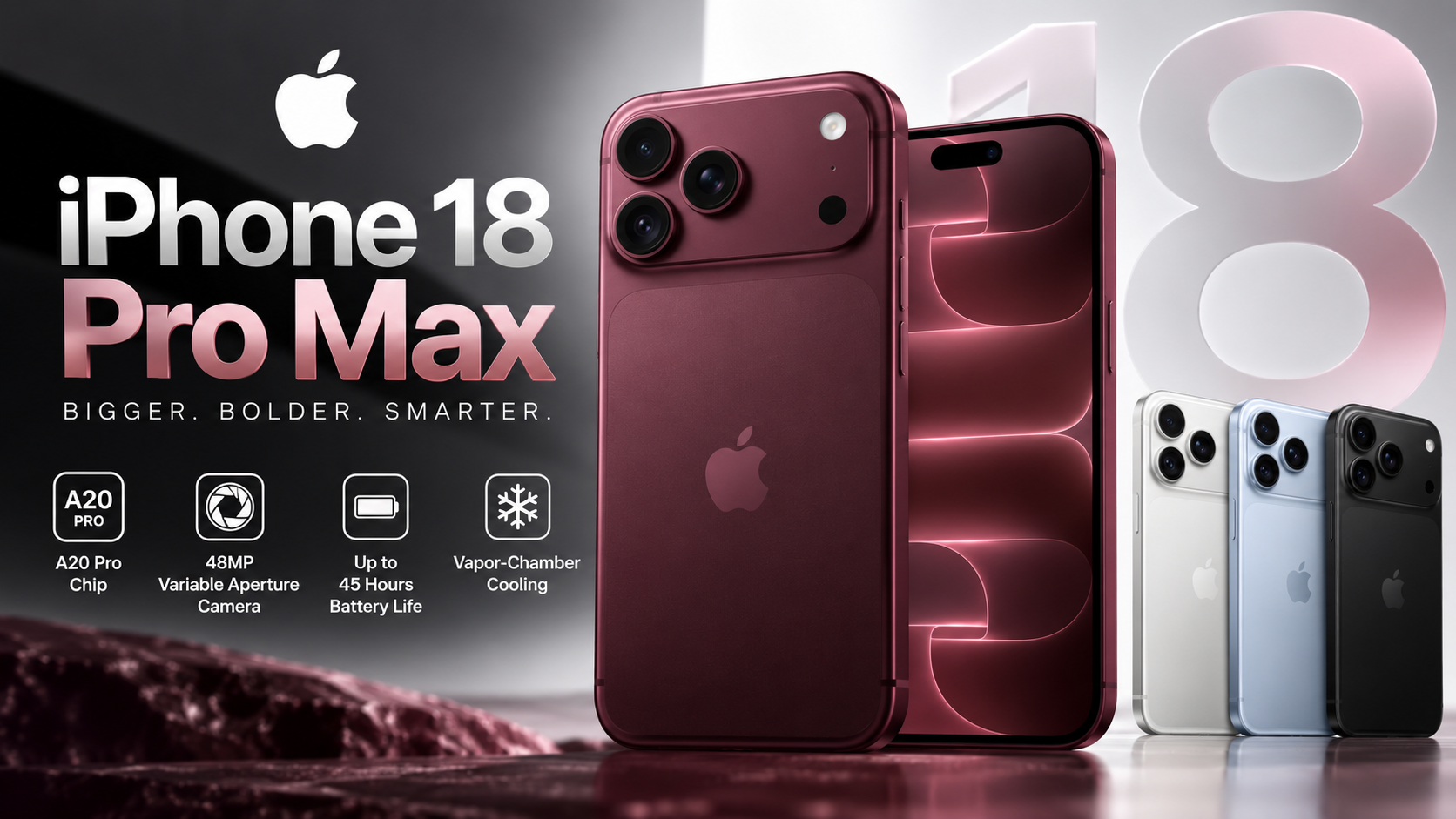
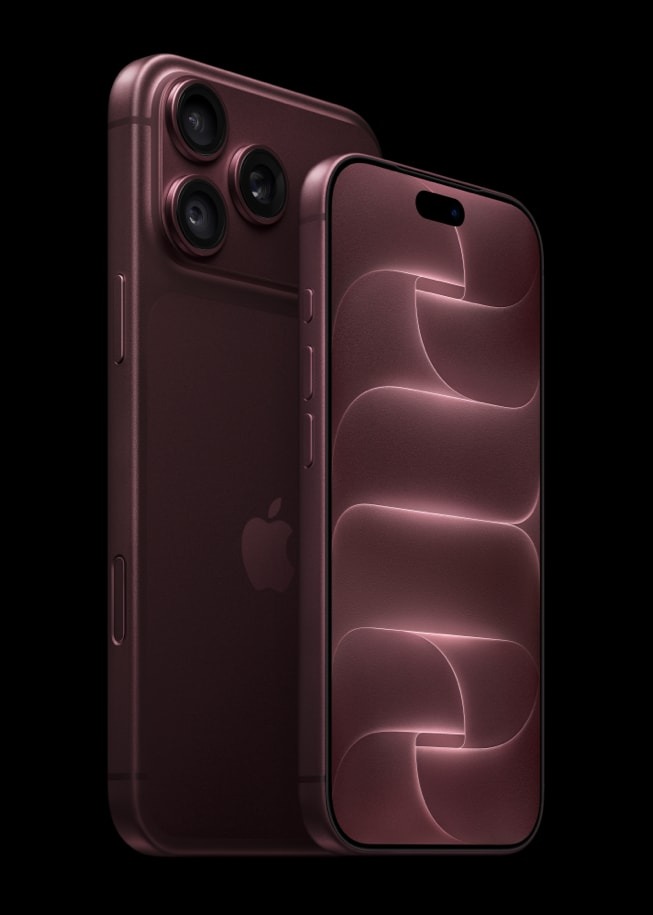
Apple has officially unveiled the iPhone 18 Pro and iPhone 18 Pro Max at its September 9 “Surprise and Shine” event. After months of leaks, the final hardware confirms several of the biggest rumors — including Apple’s new A20 Pro chip, a 48-megapixel variable-aperture main camera, a smaller Dynamic Island and new Pro color options.

The iPhone 18 Pro starts at $1,199 with 256GB of storage, while the iPhone 18 Pro Max starts at $1,299. Preorders open Saturday, September 12, with availability beginning Friday, September 18.

iPhone 18 Pro and Pro Max: What Apple Announced

Apple’s new Pro phones retain the overall design direction introduced with the iPhone 17 Pro generation, but the changes inside are substantial. Both models are powered by the A20 Pro, Apple’s first iPhone chip built using a 2nm process. The six-core CPU combines two high-performance “super” cores with four efficiency cores, while the architecture is designed to push Apple Intelligence and demanding mobile workloads further.

Apple also redesigned the vapor-chamber cooling system and says the new phones deliver longer battery life. Reported figures from Apple’s presentation put video playback at up to 36 hours on iPhone 18 Pro and 45 hours on iPhone 18 Pro Max.

Update: Exact Battery Capacities Revealed in EU Labels

Updated September 13, 2026: Apple’s European energy-label disclosures list the physical-SIM versions of the iPhone 18 Pro at 4,056 mAh and the iPhone 18 Pro Max at 5,391 mAh. These are confirmed figures for EU-style models, not estimates.

  • iPhone 18 Pro: 4,056 mAh, about 1.7% larger than the comparable iPhone 17 Pro physical-SIM battery.
  • iPhone 18 Pro Max: 5,391 mAh, about 11.7% larger than the comparable iPhone 17 Pro Max physical-SIM battery.
  • EU endurance rating: 52 hours for iPhone 18 Pro and 62 hours for iPhone 18 Pro Max under the standardized label test.

The EU capacities should not automatically be applied to U.S. models. Apple sells eSIM-only versions in the United States and other markets, where the space otherwise occupied by a physical SIM tray can accommodate a larger battery. Exact capacities for those versions had not been confirmed as of September 13.

The Pro Max’s larger cell is the most notable hardware change. The smaller Pro’s endurance gain appears to depend more heavily on A20 Pro and software efficiency, though real-world tests after the September 18 release will be more useful than laboratory ratings.

Battery-update sources: Apple’s iPhone 18 Pro technical specifications, MacRumors’ battery-capacity report, and Tom’s Guide’s EU-label comparison.

Apple iPhone 18 Pro official product image shown during the September 9 2026 event
iPhone 18 Pro official Apple product imagery. Image source: Apple, via TechCrunch event coverage.

The Biggest Camera Upgrade: Variable Aperture

The headline camera feature is a new 48MP Fusion main camera with variable aperture. Apple says the aperture mechanism uses six extremely thin blades and can automatically change based on the scene. In darker conditions, the aperture can open wider to capture substantially more light.

This also gives photographers and video creators more creative control. Apple is adding expanded Pro camera controls including manual adjustments such as shutter speed, white balance and aperture, along with tools such as a histogram. The camera can also record 4K Dolby Vision HDR video and apply cinematic effects after capture.

A20 Pro and a Smaller Dynamic Island

The A20 Pro is one of the most important generational upgrades. Beyond raw CPU and GPU performance, Apple is emphasizing on-device intelligence and its new Siri AI capabilities. The Pro models also introduce a smaller Dynamic Island, creating more usable display space while allowing multiple Live Activities to remain visible.

Apple’s new C2 cellular modem is also making its way into the Pro lineup, with support for mmWave 5G and improved efficiency compared with the previous generation.

Four Official iPhone 18 Pro Colors

Apple confirmed four finishes: Deep Black, Silver, Glacier Blue and Burgundy. Burgundy becomes the bold signature color this year, replacing the Cosmic Orange option from the iPhone 17 Pro generation. The rear aluminum and Ceramic Shield glass are also more closely color-matched for a more uniform appearance.

Price, Storage, Preorders and Release Date

Both Pro models now start with 256GB of storage. The iPhone 18 Pro begins at $1,199 and the Pro Max at $1,299, representing a $100 increase over their predecessors. Storage configurations include 256GB, 512GB, 1TB and, for the first time on these models, 2TB.

Preorders: September 12, 2026 at 5 a.m. PT / 8 a.m. ET
Release date: September 18, 2026

What Happened to the Regular iPhone 18?

Apple did not announce the standard iPhone 18 during the September event. The fall launch instead centers on the premium iPhone 18 Pro family and Apple’s newly announced foldable iPhone Duo. Reports point to the standard iPhone 18 arriving later rather than being part of today’s launch.

ReaderSpice Take

The variable-aperture camera is the standout upgrade because it changes more than a specification on a chart: it gives the iPhone camera new physical control over incoming light while Apple simultaneously expands manual software controls. Combined with the 2nm A20 Pro, longer battery life and new Burgundy finish, the iPhone 18 Pro generation is clearly aimed at creators and power users.

ReaderSpice will cover Apple’s other September 9 announcements separately, including the company’s first foldable iPhone, rather than mixing every major product into one article.

Sources

Apple — September 9 “Surprise and Shine” event
TechCrunch — Apple launches iPhone 18 Pro with upgraded camera
The Verge — iPhone 18 Pro and Pro Max announcement
MacRumors — Apple announces iPhone 18 Pro and iPhone 18 Pro Max

Apple’s September 9 Event: iPhone 18 Pro, Foldable iPhone Ultra and Siri AI Expectations

iPhone 18 rumors and Apple iPhone roadmap concept

Editor’s note: Apple has confirmed the event date and livestream details. Product specifications and lineup details below are clearly labeled as expectations or rumors until Apple announces them.

Apple’s “Surprise and shine” event is almost here, and this year’s keynote could be one of the company’s most important launches in years. Apple has officially confirmed a special event for Wednesday, September 9, at 10 a.m. Pacific Time, with the livestream available through Apple.com and the Apple TV app.

The company has not revealed its full product list. However, the latest reporting points to a premium-focused iPhone launch, Apple’s first foldable iPhone, a major moment for Siri AI, and possible updates to the Apple Watch, AirPods, and smart-home lineup.

Here is what is confirmed, what is widely expected, and what remains speculation ahead of the keynote.

What Apple has officially confirmed

Apple’s official event page confirms the “Surprise and shine” keynote will begin at 10 a.m. PT on September 9. Viewers can watch it at Apple.com or through the Apple TV app. Apple has not publicly confirmed product names or specifications, so every hardware detail beyond the event itself should be treated as a rumor until the keynote begins.

That distinction matters this year because reports suggest Apple may be changing its normal iPhone launch strategy. Instead of introducing every new iPhone model at once, the company may focus the September event on its most expensive and technically ambitious products.

The biggest expected announcement: a foldable iPhone

The headline product is widely expected to be Apple’s first foldable iPhone, sometimes called the iPhone Ultra in rumors. Reuters reports that analysts expect a book-style device that opens like a passport and could cost more than $2,500.

MacRumors reports that the rumored design may use a smaller outer OLED display of roughly 5.5 inches and a larger inner display of approximately 7.8 inches. That would give the phone a tablet-like workspace when opened while keeping it usable as a conventional smartphone when closed.

The main question is whether Apple can solve the problems that have affected other foldable phones. Buyers will be watching for a sturdy hinge, a less visible crease, a thin profile, strong battery life, and software that takes advantage of the larger screen. A foldable iPhone that simply opens into a larger display would be less compelling than one that offers better multitasking, file handling, video editing, and productivity tools.

Pricing could be the biggest barrier. Reports and analyst expectations place the device well above the price of a traditional iPhone Pro Max. Limited launch availability is also possible, especially if Apple is still refining production yields for the new display and hinge system.

iPhone 18 Pro and iPhone 18 Pro Max

The iPhone 18 Pro and iPhone 18 Pro Max are also expected to headline the event. Current reporting suggests Apple could delay the standard iPhone 18, iPhone 18 Plus, and a new iPhone 18e until a later spring launch window.

The Pro models are rumored to keep a familiar overall design while receiving meaningful internal upgrades. The most frequently discussed improvements include Apple’s next-generation A20 Pro chip, a new C2 modem, a smaller Dynamic Island, and a higher-resolution front-facing camera.

The iPhone 18 Pro Max could receive an exclusive camera upgrade. Rumors point to a variable-aperture main camera that would give photographers more control over light and depth-of-field effects. A longer optical zoom has also been discussed, although Apple has not confirmed either feature.

Battery life may become another major selling point. A more efficient chip, modem improvements, and a larger battery could help the Pro Max deliver longer real-world endurance. The important question is whether Apple will use those gains to make the phone last longer or to power more demanding camera, gaming, and AI features.

The rumored A20 Pro chip and Apple’s AI strategy

The A20 Pro chip is expected to be built on a more advanced manufacturing process, potentially improving speed and efficiency. But the bigger story may be how Apple connects the new chip to Apple Intelligence.

Reuters reports that the new Siri will be a central test for Apple’s new leadership. Apple has already previewed a more capable Siri, and reports suggest the company may use Google AI technology behind the scenes as part of the broader Siri overhaul.

The event could show how Apple plans to make AI useful without turning the iPhone into a collection of disconnected chatbot features. The most important demonstrations would involve personal context, app actions, follow-up questions, on-device processing, privacy controls, and reliable performance.

Availability may be complicated by regulation. Reuters reports that the new Siri could face delays in Europe and China, meaning some features may arrive later or work differently depending on the user’s region.

Apple Watch and AirPods updates

The Apple Watch Series 12 and Apple Watch Ultra 4 are also expected, although the rumored changes appear less dramatic than the foldable iPhone. Reports suggest Apple may focus on a faster chip, improved battery efficiency, health and fitness features, and closer integration with the updated Siri.

A new band attachment system has also been rumored. If that change happens, existing watch bands may not fit future models, so current Apple Watch owners should pay attention to compatibility details.

AirPods updates are another possibility. Tom’s Guide reports that Apple may introduce AirPods 5 with a faster chip, possible volume controls, and health-related features. The more ambitious AirPods Ultra concept—with cameras that could help Siri understand the environment—is reportedly not expected until a later date.

Possible smart-home announcements

Apple may also use the event to preview or launch new smart-home hardware, including a HomePod-style hub with a display, a refreshed HomePod mini, or an updated Apple TV. These products are less certain than the iPhone announcements, but they would fit Apple’s wider effort to make the home a more important part of its ecosystem.

A display-equipped home hub could give Apple a stronger answer to products from Google and Amazon. The challenge will be making the device useful without creating another screen that simply duplicates an iPhone or iPad.

Confirmed vs. rumored: what to expect

Status Details
Confirmed by Apple September 9 event, 10 a.m. PT, livestream on Apple.com and Apple TV app, “Surprise and shine” branding
Widely expected iPhone 18 Pro, iPhone 18 Pro Max, first foldable iPhone, new Siri AI features, Apple Watch updates, AirPods updates
Still uncertain Exact product names, final prices, pre-order dates, standard iPhone 18 timing, smart-home hardware, regional Siri availability, final specifications

What to watch during the keynote

The most important part of the presentation may not be the product count. Watch how Apple positions the foldable iPhone. Is it a luxury product, a productivity device, or the beginning of a new mainstream category?

Pay close attention to the software demonstrations. A foldable iPhone needs more than a large screen; it needs a convincing reason to open it. Apple’s multitasking interface, app support, file management, and video features may be just as important as the hinge and display.

For the iPhone 18 Pro models, look for improvements that can be tested in everyday use: camera speed, zoom quality, low-light performance, battery life, heat management, charging, and AI features that work consistently rather than only in a scripted demo.

How to watch Apple’s September 9 event

The keynote begins at 10 a.m. PT on Wednesday, September 9. Viewers can watch through Apple’s official event page or the Apple TV app. Apple also typically makes the presentation available to watch again after the livestream ends.

If you need a current iPhone before Apple’s keynote, you can check the iPhone 17 Pro Max on Amazon. Pricing, stock, seller, and delivery availability may change.

Final thoughts

Apple’s September event could mark a turning point. The iPhone 18 Pro models may deliver the expected annual improvements, but the foldable iPhone and Siri AI could define the keynote’s long-term importance.

For buyers, the smartest approach is to wait for Apple to confirm the final prices, availability, battery claims, camera features, and regional software support. Rumors can help set expectations, but the keynote will determine which ideas become real products.

ReaderSpice will update this coverage after Apple reveals the official lineup, pricing, specifications, and release dates.

Sources

Google Pixel 11 Pro and Pro XL Are Here: What Does the Extra $200 Buy?

Google’s Pixel 11 Pro and Pixel 11 Pro XL are officially released. Announced on August 12, the phones reached retail on August 20, 2026, with US launch prices starting at $1,099 and $1,299. Both begin at 256GB. For buyers, the central question is whether the XL’s larger format justifies another $200. Source: Google’s launch announcement.

Affiliate disclosure: As an Amazon Associate I earn from qualifying purchases.

Check price and availability on Amazon (paid link). Confirm the model, storage, seller and final price on Amazon before purchasing.

Pixel 11 Pro vs Pixel 11 Pro XL: Key specifications

Feature Pixel 11 Pro Pixel 11 Pro XL
US starting price $1,099 $1,299
Display 6.3-inch LTPO OLED 6.8-inch LTPO OLED
Refresh rate 1–120Hz 1–120Hz
Processor Google Tensor G6 Google Tensor G6
Typical battery capacity 4,850mAh 5,115mAh
Wireless charging Up to 25W, Qi2.2 Up to 25W, Qi2.2
Storage / RAM 256GB / 12GB; 512GB or 1TB / 16GB 256GB / 12GB; 512GB or 1TB / 16GB

Hardware figures: Google Store’s Japanese specification page; US launch prices: Google’s announcement. Confirm local configurations before purchase.

The XL’s advantages are size and charging

Google lists wired charging to approximately 55% in 30 minutes for the Pro, versus 75% for the XL, using suitable separately sold USB-C PPS chargers. Those are manufacturer test figures, not ReaderSpice measurements. The XL’s larger battery also should not be read as a guaranteed proportional increase in runtime.

Our buying take: the smaller Pro is the more sensible starting point if pocketability matters. Choose the XL if a larger screen for editing, maps or watching videos is worth the added cost and size.

Pro cameras on both models

Both phones list a 50MP main camera, 48MP ultrawide and 48MP telephoto with 5x optical zoom. That makes the larger phone a screen-and-battery decision rather than a requirement for the listed Pro camera hardware. Source: Google’s specifications.

Google also introduces 5x Portrait Mode and up to 120x Pro Zoom. The latter combines processing with the camera system; it is not 120x optical zoom. Google says the redesigned telephoto sensor improves light sensitivity, while Night Sight captures faster. Real-world image quality still needs to be judged from samples, especially at extreme zoom. Source: Google’s camera announcement.

Magic Capture and tools for solo creators

Magic Capture can produce photos and video during the same session, automatically selecting moments and applying edits such as cropping and unblurring. Camera Looks adds customizable styles at capture. Source: Google’s feature overview.

Creator Suite is particularly relevant to people filming themselves. Google describes a teleprompter that scrolls as you speak, social framing guides, project folders and Storyboard tools for trimming and rearranging clips. Rambler adds voice input designed to clean up filler words. These features could reduce steps between an idea and a finished clip, although that is an editorial assessment rather than a hands-on verdict. Availability and language restrictions apply to AI features. Source: Google’s feature overview.

A notification light and long-term support

HiLight uses colored LEDs around the flash for information such as incoming calls and Gemini activity. Both Pro phones also receive seven years of OS, security and Pixel Drop updates. Source: Google.

Which one makes more sense?

The Pixel 11 Pro is our default pick on specifications for buyers who want to keep spending lower. The XL is easier to justify when screen space and faster wired top-ups are daily priorities. Before choosing, compare the final price of your preferred storage tier: the cheapest version also has less RAM. This is a launch comparison based on official information, not a hands-on review.