
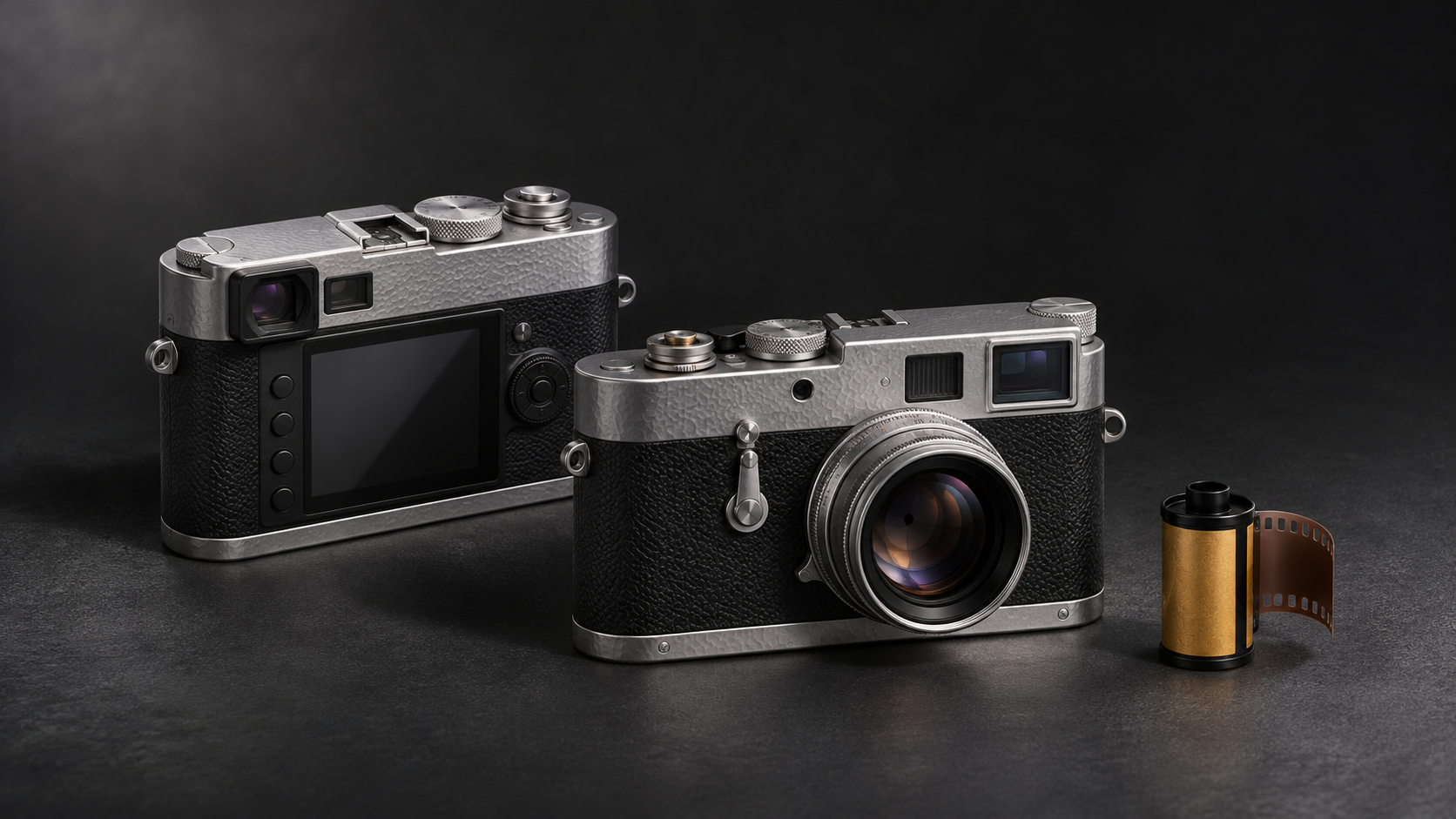
Leica has released two Hammertone versions of its M rangefinder cameras: the digital M11-P Hammertone and the fully mechanical M-A Hammertone. They went on sale worldwide on November 12, 2026, at U.S. retail prices of $10,950 and $8,000 respectively.
The important qualifier is that these are special product variants, not new camera platforms. Leica says the core technical specifications match the standard M11-P and M-A. The new value is concentrated in the textured finish, brass body detailing, matching design choices and collector appeal. ReaderSpice has not tested either camera; this guide separates the confirmed changes from the familiar hardware underneath.
Leica Hammertone prices, availability and key differences
- Leica M11-P Hammertone: $10,950 in the United States; €9,950 including VAT in Leica’s European announcement.
- Leica M-A Hammertone: $8,000 in the United States; €6,650 including VAT in Leica’s European announcement.
- Availability: worldwide from November 12, 2026, through Leica Stores, the Leica online store and authorized dealers.
- M11-P Hammertone: 60.3MP digital full-frame rangefinder with 256GB internal storage, a sapphire-crystal rear screen and Content Credentials.
- M-A Hammertone: fully mechanical 35mm film rangefinder with manual exposure and no built-in light meter.
- Shared change: solid-brass top and base plates with a silver-gray hammertone paint finish, black vulcanite-style leatherette, white engravings and cross-knurled controls.
- What is not new: the sensor, processor, storage and digital workflow of the M11-P, and the mechanical shutter and film transport of the M-A.
Neither model is described by Leica as a numbered limited edition. Leica’s own special-edition guide distinguishes a special edition from a fixed-production limited edition: a special edition is sold through normal retail channels and can remain available until discontinued, without an engraved edition number or certificate. Availability may still tighten because the finish is labor-intensive and demand is unpredictable.
What is actually new: the hammertone finish
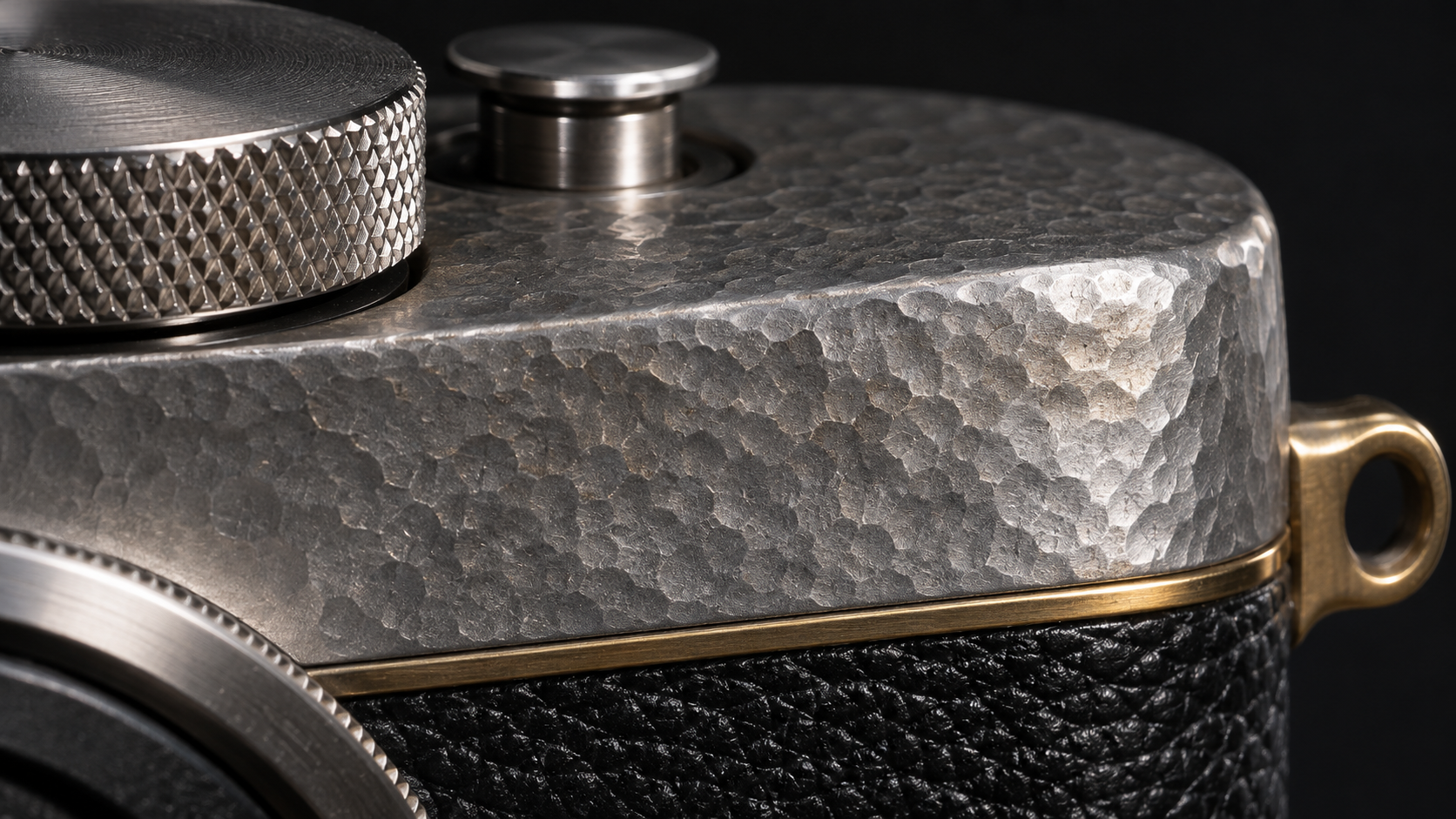
Hammertone is a textured paint treatment with a hammered-looking surface. Leica says metal pigments and special additives create small differences in surface tension while the coating dries. Those variations are part of the intended appearance, so two finished cameras should not have precisely identical patterns.
On both cameras, Leica applies the finish to solid-brass top and base plates. The design is completed by black vulcanite-style leatherette, white engravings, cross-knurled control surfaces and bright silver accents. The M11-P version also gets more rounded, classically styled edges on its top and base plates and a redesigned front screw with a silver-chrome finish. Its included BP-SCL7 battery carries a matching hammertone treatment, even though most of the battery is hidden in normal use.
Leica traces the look to technical instruments from the 1930s and to rare cameras in its own history. The company cites the 1964 Leica MD Hammertone, the 2003 MP LHSA, the 2011 M9 Hammertone and the 2016 M-A Vienna Edition. That history explains the pricing strategy: the finish is being sold as craftsmanship and lineage, not as a performance upgrade.
Leica M11-P Hammertone: the digital option
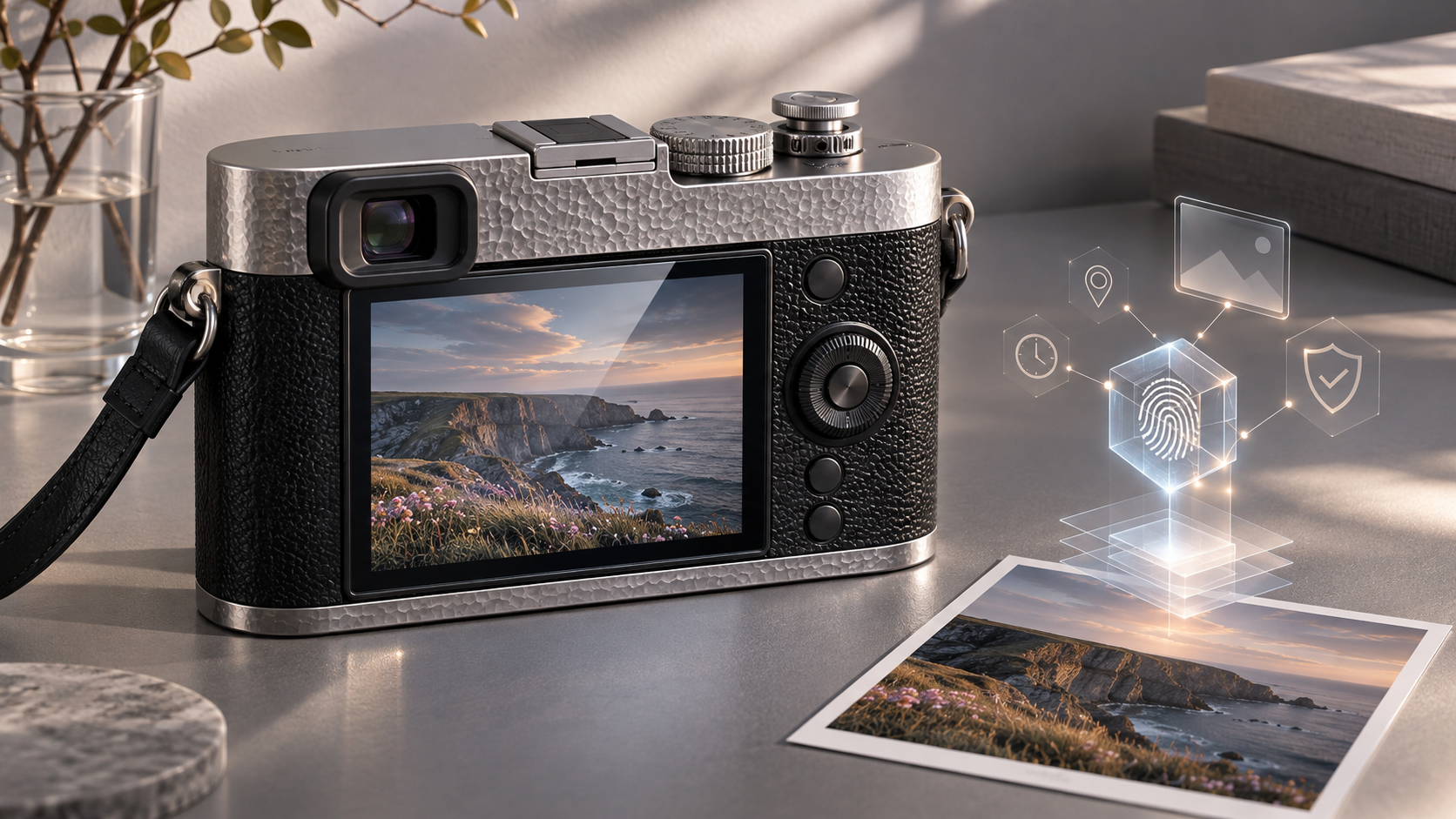
The M11-P Hammertone uses the same 60.3-megapixel full-frame BSI CMOS sensor and Maestro III processor as the standard M11-P. Triple Resolution Technology records DNG or JPEG files at roughly 60, 36 or 18 megapixels while using the full sensor area. Leica lists 14-bit DNG files, 1.3x and 1.8x digital crop modes and a 3GB buffer rated for about 15 DNG files or more than 100 JPEGs.
It remains a manual-focus M-mount rangefinder, not an autofocus mirrorless camera. Photographers focus through the optical rangefinder or use magnification and focus peaking in Live View. There is no video mode. Mechanical shutter speeds extend to 1/4000 second, while the electronic shutter can reach 1/16000 second. Continuous shooting tops out at 4.5 frames per second, which makes this a deliberate stills camera rather than a sports body.
Storage, display and connectivity
- 256GB of built-in storage plus an SD/SDHC/SDXC slot; Leica lists cards up to 2TB and recommends UHS-II media.
- 2.95-inch touchscreen with 2.33 million dots and scratch-resistant sapphire-crystal cover glass.
- USB-C, Bluetooth and Wi-Fi connections, including compatibility with the Leica FOTOS app.
- Optional Visoflex 2 electronic viewfinder support for through-the-lens composition and electronic focusing aids.
- Matching BP-SCL7 rechargeable battery included with the Hammertone body.
Why Content Credentials matter here
Leica Content Credentials can digitally sign photographs at capture and preserve supported provenance information under the Content Authenticity Initiative and C2PA framework. When enabled, the record can include camera, creator and image details and can be checked with compatible verification tools. It is an authenticity trail, not a guarantee that the subject of a photograph is truthful or that every later platform will retain the metadata.
For documentary photographers and publishers, provenance is the M11-P’s most distinctive functional feature. The Hammertone edition does not add a newer generation of the system; it carries the existing M11-P implementation into the special body.
Leica M-A Hammertone: the mechanical film option
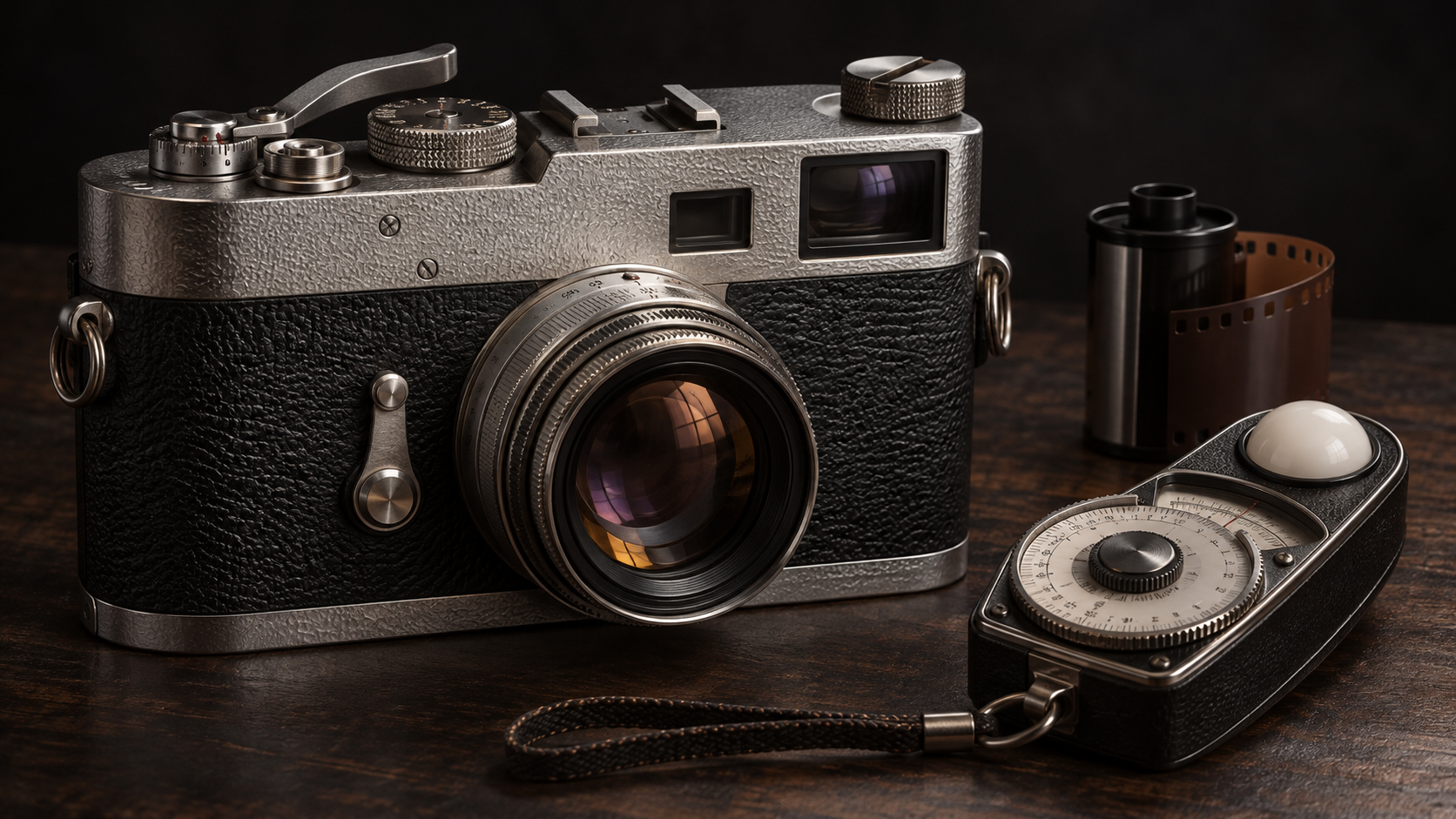
The M-A Hammertone is the more radical experience even though its mechanism is unchanged. It is a fully mechanical 35mm rangefinder camera with no built-in exposure meter. Shutter speed, aperture, focus and film-speed choice are controlled manually, and exposure must be estimated or measured with an external meter. The standard M-A operates without a battery, so there is no charging routine, screen or menu system.
Its cloth focal-plane shutter offers speeds from 1 second to 1/1000 second in full-stop increments plus Bulb. Film loading requires removing the base plate and opening the rear flap; advance and rewind are manual. Bright-line frame pairs cover 28/90mm, 35/135mm and 50/75mm lenses with automatic parallax compensation. Leica lists an approximate body weight of 578 grams.
This is not a beginner-friendly path to better image quality. It is a deliberately constrained process for photographers who value manual control, optical rangefinder focusing and 35mm film. Buyers should budget for film, processing, scanning or darkroom work and an exposure meter, not just the $8,000 body.
What the premium buys—and what it does not
The Hammertone premium buys an uncommon surface treatment, brass construction details, specialized finishing work in Wetzlar and a connection to earlier Leica special editions. On the M11-P, it also buys the rounded plate edges, silver-chrome front screw and matching battery finish. On both bodies, the pattern itself is slightly individual.
It does not buy a new sensor, autofocus, stabilization, video, faster burst shooting or a different rangefinder mechanism. Leica explicitly describes the two cameras as technically corresponding to their standard counterparts. Anyone choosing purely on shooting capability should compare the Hammertone price with the current standard M11-P and M-A prices and spend the difference only if the finish matters personally.
Potential owners should also inspect the exact unit before accepting delivery. Natural variation is a feature of hammertone, but a buyer should still check alignment, controls, rangefinder calibration, finish consistency, included accessories and the dealer’s return policy. A distinctive surface does not remove the need for ordinary camera inspection.
Who should consider each Leica Hammertone camera?
The M11-P Hammertone makes the most sense for:
- Experienced M photographers who want the M11-P workflow and care strongly about a historically inspired finish.
- Documentary and editorial photographers who can use Content Credentials and 256GB of internal storage.
- Collectors who prefer a current special edition they can shoot rather than store untouched.
- Manual-focus photographers who already own compatible M lenses and understand rangefinder limitations.
The M-A Hammertone makes the most sense for:
- Committed 35mm film photographers who want a battery-free, fully mechanical body.
- Photographers comfortable estimating exposure or carrying a separate meter.
- Collectors who value mechanical simplicity and the Hammertone lineage more than digital convenience.
Both are difficult recommendations for first-time camera buyers, autofocus-dependent work, video production or anyone expecting the finish to improve image quality. The standard versions—or a less costly used M body—deliver the essential rangefinder experience with more money left for lenses, film, travel and printing.
A relevant photography guide
Bryan Peterson’s Understanding Exposure, Fourth Edition is a camera-agnostic guide to aperture, shutter speed, light and creative exposure. That makes it relevant to both the meterless M-A workflow and the manual control available on the M11-P. The paperback’s ISBN-10 and Amazon ASIN are both 1607748509.
Disclosure: ReaderSpice may earn a commission from qualifying purchases made through the Amazon link above, at no additional cost to you.
Amazon prices, sellers and availability can change. Verify the edition, format, seller and return policy before ordering.
Bottom line
The Leica M11-P Hammertone and M-A Hammertone are finish-led releases with clearly different shooting experiences underneath. The M11-P is a 60.3MP digital rangefinder with substantial internal storage, a sapphire display and verifiable image provenance. The M-A strips photography back to a battery-free mechanical shutter, manual exposure and 35mm film.
Their shared appeal is the textured brass finish and the history it represents. Their shared limitation is equally clear: neither delivers a core technical upgrade over the standard model. Buy one because the exact camera, finish and process matter enough to justify the price—not because Hammertone changes the photographs by itself.
Sources
Leica Camera — M11-P Hammertone product page and confirmed features
Leica Camera — M-A Hammertone product page and mechanical operation
Leica Camera — M-A Hammertone technical specifications
Leica Camera — official Hammertone press release, November 12, 2026
Leica Camera USA — M11-P Hammertone U.S. price and detailed specifications
Leica Camera Inc. via PR Newswire — U.S. prices and availability
Google Books — Understanding Exposure bibliographic information and ISBN