Samsung Galaxy Buds On Cost $229: Open-Ear Design, Tradeoffs and Buying Advice

Black clip-on open-ear earbuds and charging case beside a blue-lit city running path

Samsung is bringing its first clip-on, fully open-ear earbuds to the United States at $229, with availability beginning in early November 2026. Galaxy Buds On are designed for listeners who want music, podcasts and calls without sealing the ear canal, so traffic, announcements and nearby conversations remain audible.

That benefit is also the central tradeoff. Galaxy Buds On do not provide the isolation or traditional active noise cancellation of sealed earbuds such as Galaxy Buds4 Pro. Samsung is instead selling comfort, awareness and hands-free Galaxy features. The practical question is whether those advantages justify a premium price before independent reviews have tested fit, sound leakage, call quality and battery life.

The quick take

  • U.S. price: $229 in black, with availability beginning in early November 2026.
  • Design: 6.65-gram clip-on open-ear earbuds that leave the ear canal uncovered.
  • Battery claim: up to 9.5 hours per charge and up to 38 hours with the case.
  • Durability: IP54 for the earbuds only; the charging case is not water resistant.
  • Compatibility: Android 12 or later with more than 1.5 GB of memory, although some features require a Galaxy device.
  • Best fit: runners, commuters and office users who prioritize awareness over isolation.

Galaxy Buds On keep the ear open for awareness

Galaxy Buds On keep the ear open for awareness

The clip-on bridge holds the speaker near the ear instead of pushing a tip into the ear canal. Samsung says it used more than 119 million ear data points, AI-assisted optimization and physics simulations to spread pressure and improve stability across different ear shapes. Each earbud weighs 6.65 grams.

An open design can be useful for outdoor running, walking, shared offices and travel situations where hearing the environment matters. It is not a substitute for situational judgment, and users should still keep playback at a level that allows them to notice vehicles, warnings and people nearby.

The same openness makes these a weaker match for airplanes, loud trains or anyone who wants to block background noise. Samsung itself positions Galaxy Buds4 Pro for focused listening and noise cancellation, while Galaxy Buds On are intended for awareness and all-day convenience.

Sound and call claims still need independent testing

Samsung equips Galaxy Buds On with an 11.3 mm TwinBoost speaker, three digital microphones and a voice pickup unit in each earbud. The company says automatic volume adjustment reacts to changing ambient noise, while an Audio Leakage Reduction system is intended to reduce how much nearby people can hear.

Those are manufacturer claims, not ReaderSpice test results. Open-ear products often trade sub-bass impact and isolation for comfort and awareness, and performance can change with ear shape, placement and ambient volume. Buyers should wait for independent measurements if bass extension, microphone performance or leakage at a desk is a priority.

The codec list includes Samsung Seamless Codec, SSC UHQ, AAC, SBC and LC3. The highest-quality Samsung options are most relevant inside the Galaxy ecosystem; non-Samsung Android users should not assume every advertised audio or AI feature will be available.

Battery life, charging and water resistance

Samsung rates the earbuds for up to 9.5 hours of music playback and up to 38 hours total with the fully charged case. Claimed talk time is up to 5.5 hours per charge and 25 hours total. These figures come from internal tests with pre-production hardware and default settings, so real results will depend on volume, calls, signal strength and enabled features.

The case supports wireless charging, but Samsung says charging cables and wireless chargers are sold separately. The earbuds carry an IP54 rating for dust and freshwater splashes for up to five minutes. The case is not water resistant, and Samsung specifically advises against beach or pool use.

Galaxy features are the strongest reason to pay the premium

On a compatible Galaxy phone or tablet, opening the case starts pairing without requiring the Galaxy Wearable app, and controls can appear in Quick Panel. Samsung also advertises hands-free Gemini Live access, Quick Voice Memo, Bixby search, voice commands and head gestures for actions such as accepting a call or dismissing an alarm.

Several of those features carry device, account, language or software requirements. Samsung says head gestures require One UI 8.5 or later, while Gemini Live needs a compatible Google account, device, region and internet connection. Some functions are unavailable on non-Samsung devices.

Samsung lists Bluetooth 6.2 and Auto Switch across compatible Galaxy devices. Its product page says Galaxy Connect can extend switching to non-Samsung Windows PCs, but Samsung does not advertise conventional two-device Bluetooth multipoint. SoundGuys also flags the absence of true multipoint, which matters if you regularly move between an Android phone and an iPad or a non-Galaxy computer.

How the $229 price compares

The launch price puts Galaxy Buds On near the top of the open-ear category. SoundGuys notes that they cost more than many established clip-on rivals, while the specification sheet is broadly competitive rather than obviously dominant. The strongest differentiators are the Galaxy integration, hands-free controls and Samsung’s claimed fit work.

For a cross-platform comparison, the Shokz OpenFit 2 on Amazon (ASIN B0DN11MTZ6) uses an ear-hook design, supports Bluetooth multipoint and is rated for up to 11 hours per charge and 48 hours with its case. Prices, seller, warranty and availability can change, so compare the exact listing before buying.

Disclosure: ReaderSpice may earn a commission from qualifying Amazon purchases made through the link above, at no additional cost to you.

Who should buy Galaxy Buds On and who should wait

Consider Galaxy Buds On if you already use a recent Galaxy phone, want to keep your ears open during runs or work, dislike pressure inside the ear canal and value hands-free Samsung features more than conventional multipoint or noise isolation.

Wait for reviews if sound leakage, bass response, microphone quality or long-session comfort will decide the purchase. Skip them if your main listening happens on planes or loud public transit, if you need active noise cancellation, or if your devices span multiple ecosystems and seamless two-device multipoint is essential.

At $229, the feature set makes the most sense as a Galaxy accessory rather than a universal open-ear bargain. Samsung’s 9.5-hour battery claim and light weight are promising, but the price is high enough that fit and independent performance testing should carry more weight than launch-day specifications.

Sources

Samsung U.S. Newsroom – Galaxy Buds On U.S. launch, price and availability

Samsung Mobile Press – official specifications and compatibility notes

Samsung – Galaxy Buds On product page and feature requirements

SoundGuys – launch analysis and open-ear market comparison

Engadget – Galaxy Buds On design and feature overview

Amazon – Shokz OpenFit 2 black (ASIN B0DN11MTZ6)

Inline image alt text: Runner wearing a black open-ear clip-on earbud on a city park path at sunrise
Windows 11 KB5127653 Adds Copilot Key Remapping, Emoji 17 and Safer File Previews

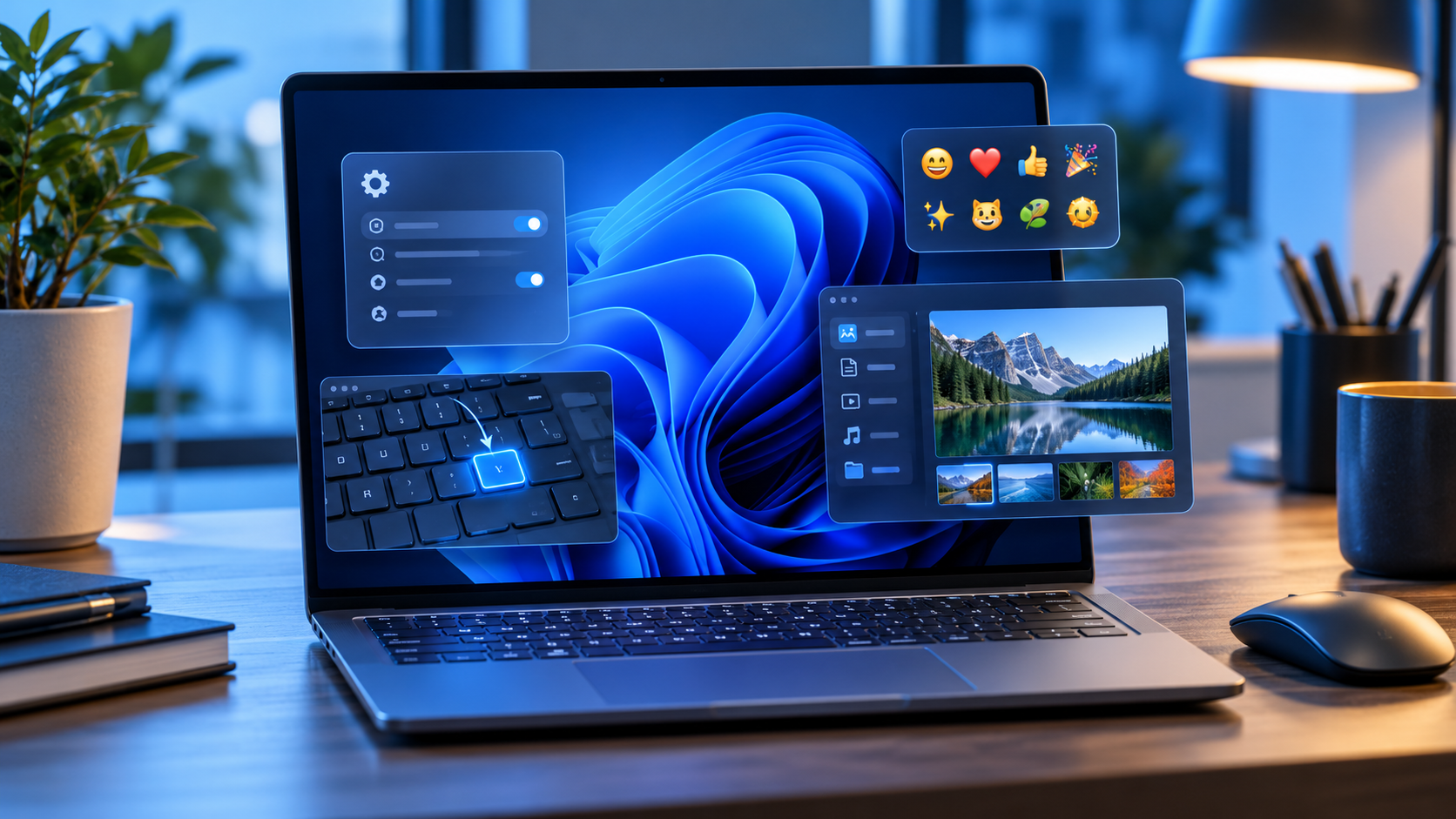
Windows 11 laptop showing a settings panel, emoji picker, remapped keyboard key and File Explorer preview

Microsoft released Windows 11 preview update KB5127653 on October 28, 2026, for version 26H1. The optional package moves supported PCs to OS build 28000.3365 and combines practical interface changes with reliability fixes, including Copilot-key remapping, Emoji 17.0, safer web-file previews and better Bluetooth behavior.

This is a non-security preview, not an urgent patch. Features are also rolling out in phases, so installing the update does not guarantee that every new control appears immediately. Most people can wait for the improvements to arrive in a later security update; testers and users who need a listed fix can install it after making a current backup.

Windows 11 KB5127653 at a glance

  • Applies to Windows 11 version 26H1 and raises the OS build to 28000.3365.
  • It is an optional non-security preview, available through Windows Update under Advanced options > Optional updates.
  • File Explorer adds an explicit Preview anyway choice for downloaded HTML files while automatically previewing non-HTML files such as PDFs.
  • The emoji panel gains Unicode Emoji 17.0 support, and several existing emoji receive refreshed artwork.
  • The Copilot key can be reassigned to Right Ctrl or the Context Menu key.
  • A Windows Security toggle begins rolling out for Administrator protection, which requires a restart when enabled.
  • Microsoft still lists an unresolved USB Audio Class 1.0 problem that can cause Code 10, no output or unresponsive sound controls.

Microsoft labels many headline additions as gradual-rollout features. Availability can differ by device even after the package is installed, and a work or school PC may follow a separate administrator-controlled deployment schedule.

The most useful changes

Copilot-key remapping is finally more flexible

On keyboards with a dedicated Copilot key, Windows can now map that key to Right Ctrl or the Context Menu function. That is useful for people who rely on older shortcut layouts, accessibility workflows or applications that expect a right-side Control key. It does not turn the key into an unrestricted macro button; the choices remain limited to the functions Microsoft exposes.

File Explorer changes web previews without removing the warning

Downloaded HTML files can carry active content, so File Explorer continues to show a warning before previewing them. KB5127653 adds a Preview anyway button for users who understand the risk and still want to inspect the file. Non-HTML files such as PDFs are previewed automatically, while cloud-file thumbnails and the Details pane receive reliability and layout improvements.

A preview is not a security scan. Do not use Preview anyway for an unexpected attachment merely because the sender name looks familiar. Confirm the source, scan the file with current security software and open suspicious material only in an environment appropriate for untrusted content.

Emoji 17.0 and a new Tips widget

Press Windows + Period to open the emoji panel after the update. Microsoft lists new Emoji 17.0 characters including distorted face, fight cloud and hairy creature, while saluting face, face with peeking eye, goose, lotus and kissing cat receive updated designs. A separate Tips widget can be added to the Widgets board or the lock screen for short Windows guidance.

Accessibility, touchpad and Bluetooth improvements

An Open apps maximized option appears under Settings > Accessibility > Visual effects for people who prefer every application to start at full size. Precision touchpads gain one-finger side scrolling and an automatic edge-scrolling option. Bluetooth work covers connection-state accuracy, Settings stability, Classic Audio microphone compatibility, LE Audio performance and a crash seen while streaming audio.

Administrator protection becomes easier to enable

Administrator protection is designed around least privilege: the user normally operates without full administrative rights and explicitly approves elevation when a task needs them. Microsoft says the feature uses Windows Hello authentication and an isolated administrator token to make silent privilege abuse harder.

KB5127653 begins a gradual rollout of a user-facing switch under Windows Security > Account protection. When the toggle is available, turning it on requires a restart. Organizations should test the setting with line-of-business software and follow their security baseline rather than enabling it ad hoc on managed PCs.

Other fixes worth knowing about

  • Edge Accelerated App Launch can reduce launch delay when Edge 150 or later is already running in the background; support covers Windows 11 25H2, 26H2 and 26H1.
  • A Remote Desktop failure affecting non-admin users when Administrator protection was enabled is fixed.
  • BitLocker pre-boot PIN retry handling is adjusted to reduce unintended repeated submissions and TPM lockout recovery.
  • Always On VPN fixes target connections stuck on Connecting or reporting that the specified port is already in use.
  • HDMI and DisplayPort audio playback failures on certain AMD graphics cards are addressed.
  • WSL2 nested virtualization on AMD processors receives a fix.
  • British Columbia and Alberta receive permanent daylight-saving-time support for November 2026, and Manitoba gains a dedicated time-zone entry.

Who should install it now—and who should wait

Install KB5127653 now only if the PC is already on Windows 11 26H1, you want to test the listed changes or one of the fixes addresses a real problem, and you can tolerate preview-update risk. A secondary PC is a better candidate than the only computer used for work, school, accessibility or live production.

Wait if the machine is stable, the new features are merely interesting, the PC depends on USB Audio Class 1.0 hardware, or the system is controlled by an employer or school. Because this is a non-security preview, waiting does not mean skipping the normal monthly security update. Microsoft says preview changes generally move into a later security release after broader validation.

How to install KB5127653 safely

How to install KB5127653 safely

  • Confirm the PC is running Windows 11 version 26H1 by opening Settings > System > About or by running winver.
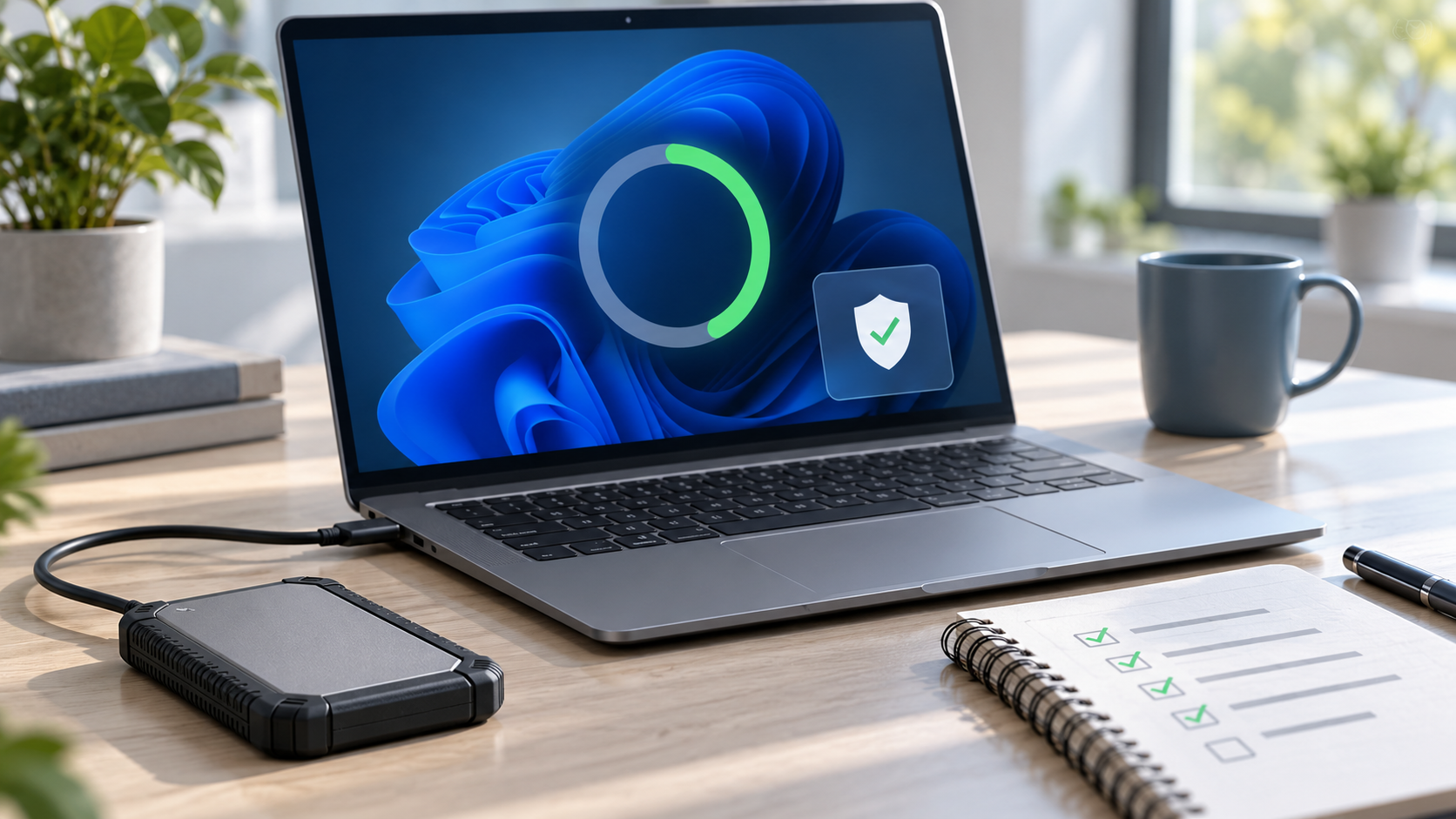
  • Back up irreplaceable files. Windows Backup can preserve supported settings and folders, while File History can keep versions on an external drive or network location.
  • If BitLocker or device encryption is enabled, make sure the recovery key is available before changing recovery settings or entering Windows Recovery Environment.
  • Connect the laptop to power, save open work and disconnect nonessential accessories—especially any audio hardware you cannot risk troubleshooting during the restart.
  • Open Settings > Windows Update > Advanced options > Optional updates, then choose the KB5127653 download and install link if it is offered.
  • Restart when prompted. After signing in, run winver and confirm OS build 28000.3365.
  • Test the functions the PC depends on: sound, VPN, Bluetooth, printers, cameras, accessibility tools, development environments and external displays.

Microsoft requires the latest servicing-stack update, but normal Windows Update handles that prerequisite. The Microsoft Update Catalog path is intended for advanced or managed deployments and should not be used to force a package onto an incompatible PC.

How to uninstall or recover if something breaks

  • If Windows starts normally, open Settings > Windows Update > Update history > Uninstall updates, select the relevant update and choose Uninstall. Some updates cannot be removed.
  • If Windows will not start, enter Windows Recovery Environment and choose Troubleshoot > Advanced options > Uninstall Updates > Uninstall latest quality update.
  • If the problem is not resolved, use Microsoft’s recovery options in order from least disruptive to most disruptive. Windows 11 can reinstall the current version while preserving files, apps and settings on supported releases.
  • Restore data only from a backup you verified. Keep the BitLocker recovery key available when using recovery tools.

A preview update should not be installed without a recovery plan. If the machine is business-managed, contact the administrator before removing an update because deployment policies, encryption and endpoint controls can affect the correct procedure.

A practical backup accessory

Readers who need an external drive for File History or a manual pre-update copy can compare the Samsung T7 Shield 1TB portable SSD on Amazon. The verified U.S. listing is ASIN B09VLK9W3S for model MU-PE1T0S/AM. Check the capacity, seller, included cables, system compatibility and return terms before ordering; an external SSD is optional, and any current, verified backup destination is more important than this specific model.

As an Amazon Associate, ReaderSpice earns from qualifying purchases.

Bottom line

KB5127653 is a substantial optional preview for Windows 11 26H1. Copilot-key remapping, Emoji 17.0, controlled HTML previews, accessibility improvements, Bluetooth fixes and an easier Administrator protection switch are all useful, but none makes the package urgent for a stable production PC.

Install it when a listed feature or fix matters and the machine has a tested backup and recovery path. Otherwise, leave the preview alone and let the changes reach a later security update after Microsoft has collected more real-world data.

Sources

Microsoft Support: KB5127653 release notes, features, known issue and installation method

Microsoft Learn: Windows 11 version 26H1 for IT professionals

Microsoft Learn: Administrator protection

Microsoft Support: How to uninstall a Windows update

Microsoft Support: Recovery options in Windows

Microsoft Support: Backup and restore with File History

Microsoft Support: Get Windows updates as soon as they are available

Amazon’s 2026 Alexa Lineup: Prices, Privacy Tradeoffs and Which Echo Fits

Five smart-home device types arranged in a warm modern living room, including a smart display, compact speaker, premium speaker, bedside clock and photo frame

Amazon has launched five Alexa devices that cover very different jobs: a $99.99 Echo Dot, a $249.99 Echo Studio with Home Camera, a $199.99 Echo Time bedside clock, a $199.99 Alexa Photo Frame and a $499.99 Echo Show 16. Four are on sale in the United States now; the Echo Show 16 is available for preorder and is due later in 2026.

The useful story is not simply that Amazon made Alexa hardware faster. The company is turning entry-level speakers into smart-home infrastructure, putting cameras into premium audio products, using ultrasound for sleep sensing and moving its largest display closer to a wall-mounted family dashboard. Those changes make the buying decision more practical—and more privacy-sensitive—than a list of specifications suggests.

Amazon’s five new Alexa devices at a glance

  • Echo Dot — $99.99; on sale now. Adds a built-in Zigbee, Matter and Thread smart-home hub, an eero Wi-Fi extender, AZ3 silicon, four microphones and 50 percent more bass than the previous generation.
  • Echo Studio with Home Camera — $249.99; on sale now. Combines Dolby Atmos audio, room adaptation, Live View and visual intelligence. The camera-free Echo Studio remains available for $219.99.
  • Echo Time — $199.99; on sale now. A camera-free 3.2-inch circular smart clock with optional sleep sensing, sunrise-style wake-up lighting and a smart alarm window of 10 to 60 minutes.
  • Alexa Photo Frame — $199.99 in black or $229 in birch or walnut; on sale now. Uses a 10-inch anti-glare touchscreen, Amazon Photos sync and Alexa-assisted photo search and selection.
  • Echo Show 16 — $499.99, or $569.99 with a Nanomatte display; preorder now with a $100 launch discount. Adds a 16-inch screen, Fire TV, night vision, a 13-megapixel camera and new family, photo and smart-home Screen Styles.

Amazon’s U.S. announcements say certain functions require Alexa+, which is included with Prime. International availability and pricing were not announced consistently across the launch pages, so buyers outside the United States should wait for a local listing rather than convert U.S. prices.

Which new Alexa device fits your room?

Which new Alexa device fits your room?

Echo Dot: the best value if you are building a smart home

The new Echo Dot is the most consequential upgrade for the broadest group of buyers. Its built-in hub supports Zigbee, Matter and Thread, which can reduce the need for a separate bridge when adding compatible bulbs, plugs, locks and sensors. The built-in eero extender can add up to 1,000 square feet of coverage, but that benefit applies to an existing compatible eero network—not every Wi-Fi setup.

At twice the traditional $50 entry price of many older Dots, it is no longer an impulse speaker. It makes the strongest case when the hub or eero function replaces something you would otherwise buy. If you only want timers, weather and background music, compare sale prices on earlier Echo models before paying $99.99.

Echo Studio with Home Camera: premium audio with a bigger trust decision

The camera-equipped Studio is the most unusual product in the lineup. Amazon says the camera enables Live View, object recognition, visual questions and future Fire TV video calling. Advanced Room Adaptation continuously tunes audio for the space, while Adaptive Volume adjusts playback as a listener moves around the room.

That combination may make sense in a living room where one device can serve as a music system, room monitor and Alexa interface. It is a poor fit for anyone who is uncomfortable with an always-present camera in an audio-first product. Amazon keeps the standard $219.99 Echo Studio in the range, so camera-free buyers do not need to accept the sensor to get the premium speaker.

Echo Time: a bedside choice for people who want no camera

Echo Time is deliberately camera-free and uses Omnisense sensors plus ultrasound to estimate sleep and breathing patterns. Its optional smart alarm can wake a user during lighter sleep within a selected 10- to 60-minute window before the target time. The screen can dim below typical daytime brightness and gradually brighten like a sunrise alarm.

The limitation is fundamental: sleep-stage estimation from a nightstand is not the same thing as a clinical sleep study. Treat it as a convenience feature, not a diagnosis or medical measurement. Couples and people with pets should also wait for independent testing to see how reliably it distinguishes the intended sleeper from movement nearby.

Alexa Photo Frame: best for households already using Amazon Photos

The Photo Frame is the simplest device to understand. It syncs with Amazon Photos, can surface images based on people, time and context, and accepts voice requests for a person, pet or trip. Prime members receive unlimited full-resolution photo storage, while every frame includes 90 days of Alexa+ according to Amazon.

Its value depends on the photo library you already maintain. A household using Google Photos, Apple Photos or a local server should consider the work and lock-in involved before switching. Because facial and contextual search touches personal memories, owners should review shared albums, household access and voice-note permissions before gifting a preconfigured frame.

Echo Show 16: the family dashboard and Fire TV option

Echo Show 16 is the most capable—and most expensive—device. The 16-inch display is larger than the Echo Show 15, while the redesigned chassis is nearly 40 percent thinner. Its 13-megapixel camera adds night vision and a wider field of view, and the audio system uses eight micro woofers and two tweeters. Fire TV and a remote are included.

The new Screen Styles are the reason to buy it: a family organizer, a photo display or a smart-home dashboard with Alexa Home Map. Amazon says Home Map can show connected devices in their rooms and, with compatible cameras, surface activity around a property. Some camera-map functions require additional Ring subscriptions, and the map preview is scheduled to roll out later rather than arrive fully formed on day one.

At $499.99 before stands, this is closer to a small TV or household control panel than a countertop assistant. The $100 preorder discount is meaningful, but independent testing of the Nanomatte screen, night vision and Home Map would be more useful than buying simply to secure the discount.

What Alexa+ changes—and what still costs extra

Amazon says the latest Alexa can hold more natural conversations, reason across several sources, ask clarifying questions and organize ongoing topics into Cards. The Echo Show 16 can generate visual layouts during a conversation, while the speaker products rely on voice responses. Alexa+ is included with Prime, but Amazon repeatedly notes that only certain features require it.

That wording matters because the hardware purchase does not guarantee every advertised experience forever or in every country. Prime membership, Ring plans, Kids+ and optional accessories can all change the real cost. Before ordering, list the functions you expect to use and confirm which subscription, account and compatible hardware each one needs.

Camera and sleep-sensing privacy questions to answer first

Amazon says camera-equipped Echo devices include a button that disables microphones and cameras, plus visible indicators when a camera stream is active. Echo Time sleep sensing is opt-in and can be disabled in the Alexa app or by muting the microphones. Those controls are useful, but they do not replace household consent and account security.

  • Decide whether every person using the room is comfortable with the camera, Live View, Visual ID or sleep sensing before enabling it.
  • Review every phone and household profile that can access the Alexa account, and remove devices that no longer need control.
  • Use a unique Amazon password and multi-factor authentication, then audit voice history, camera settings and saved profiles.
  • For Echo Time, start with the shortest acceptable alarm window and verify that ultrasound sensing works reliably in the actual bedroom.
  • For Echo Show 16 and Studio, place the device so the camera does not cover private areas or neighboring property.
  • Prefer the camera-free Echo Studio or Echo Time when the visual features do not solve a problem you actually have.

A verified Amazon option

The new Echo Dot is the most broadly useful entry in this lineup because its hub and networking functions may replace separate hardware. Readers can check the 2026 Echo Dot on Amazon (ASIN B0FXN2JWST) for current color, stock and shipping details. Confirm that the listing identifies the 2026 model before ordering.

Affiliate disclosure: ReaderSpice may earn a commission from qualifying Amazon purchases made through the link above, at no additional cost to you.

Should you buy now?

The Echo Dot is the clearest day-one recommendation for households that need a smart-home hub or already use eero. Echo Time is a reasonable camera-free bedside option for people who value a smart wake-up window and accept that consumer sleep sensing needs real-world validation. The Alexa Photo Frame is strongest for families already committed to Amazon Photos.

The Echo Studio with Home Camera and Echo Show 16 deserve more caution. Both add cameras to rooms where people may not expect them, and their most ambitious functions depend on Alexa+, account permissions or future software. Buy either for the audio, display and controls available now—not for a promised feature you cannot test yet.

Sources

Sony XYN Spatial Capture Is Live: Pricing, Compatible Cameras and Who It Is For

Creator uses a mirrorless camera and mounted smartphone to scan a sculpture into a glowing 3D spatial mesh

Sony has opened its XYN Spatial Capture Solution to customers in the United States and Canada, turning an April preview into a product creators can actually buy. The suite converts photographs of rooms, locations and physical objects into 3D computer-graphics assets for virtual production, games, product visualization and digital-twin work.

The new availability matters because Sony is no longer pitching XYN only as an enterprise demonstration. A free tier, monthly subscriptions starting at $20 and online token purchases lower the entry cost. The practical barrier is hardware: the guided capture app requires a supported Pro-model iPhone and a compatible Sony Alpha or Cinema Line camera, so this is not a phone-only scanning app.

This is a launch analysis based on Sony’s published specifications, pricing pages and capture documentation, not a hands-on review. The key buying question is whether XYN’s guided camera workflow and cloud generation are worth a recurring token system for the number and quality of 3D assets a team needs.

Sony XYN is now available in the United States and Canada

Sony announced commercial availability on October 27, 2026. The service is available in the United States, excluding U.S. territories, and Canada. Customers can register online, choose a plan, buy additional generation tokens and pay by credit card. Sony also lists Japan in the pricing terms, but the new North American announcement is specifically about U.S. and Canadian availability.

XYN is pronounced “zin.” It is a suite rather than one application, and the components divide the job into capture, cloud processing and display. That separation is important: the iPhone app guides the photography, but Sony’s cloud service does the computational work of turning the image set into a 3D asset.

What the three XYN applications do

XYN Spatial Scan Navi

Spatial Scan Navi is the capture assistant. A compatible iPhone mounts with a supported Sony camera and shows framing, coverage and distance guidance while the user photographs a location or object. The free plan limits Navi to three projects and up to 200 guided images per project; paid plans raise the image limit to 500 and remove the project cap.

XYN Spatial Scan

Spatial Scan is the cloud application that runs Sony’s Venus generation algorithm. It processes the uploaded photographs into a 3D computer-graphics asset. Generation consumes tokens, and the amount varies with the number of input images and the quality preset. Every listed plan includes 15GB of Scan storage.

XYN Spatial Renderer Plugin

The Renderer Plugin displays generated assets in virtual-production environments. Sony lists Unreal Engine, Disguise RendererStream and Aximmetry support. The commercial plugin is included only with the $209.05-per-month Creation 2000 + Renderer plan; lower tiers receive a watermarked trial that Sony says is not for commercial use.

How the Sony XYN capture workflow works

How the Sony XYN capture workflow works

The user connects a supported iPhone and Sony camera, selects a location or object workflow, and follows on-screen guidance while taking overlapping photographs from multiple angles. For object capture, the assisted mode sets a scan region based on subject size and helps the operator maintain a consistent distance around the full circumference.

After the capture is uploaded, Spatial Scan uses the selected quality and color settings to generate the asset. Sony says the object workflow can preserve transparency and gloss, while background assets can be prepared for virtual-production displays with HDR and color-management options. In the Renderer Plugin, splat editing, splat processing and flicker suppression are intended to make Gaussian-splat-style assets more usable on green-screen and LED-wall stages.

A sensible first test

  • Choose a matte, medium-size object with distinct surface detail and space to walk around it safely.
  • Use even, soft lighting and avoid moving shadows, reflections or background people during capture.
  • Complete the guided circuit without changing zoom, exposure or the object’s position.
  • Generate at Basic or Enhanced quality before spending tokens on a high-end preset.
  • Inspect thin edges, glossy areas, transparent parts and the underside before approving the asset for production.

XYN pricing and what the token math means

Sony offers a free plan, three fixed-price Creation plans and a custom enterprise option. Prices on the U.S. portal exclude tax and can change.

  • Free: $0 per month, no included tokens, three Navi projects, up to 200 guided images and 15GB of Scan storage. Additional tokens cost $20 per 500.
  • Creation 500: $20 per month with 500 tokens, unlimited Navi projects, up to 500 guided images and the Renderer trial.
  • Creation 2000: $67.32 per month with 2,000 tokens and the same capture limits, aimed at ongoing professional production.
  • Creation 2000 + Renderer: $209.05 per month with 2,000 tokens plus the commercial Renderer Plugin.
  • Custom: negotiated pricing and token volume for larger production pipelines.

The $20 plan does not buy one maximum-quality scan. Sony estimates that 500 tokens produce about three Basic assets or two Enhanced assets using 110 input images, but zero Advanced or Extreme assets. A 2,000-token allocation is estimated to cover about 13 Basic, 10 Enhanced, one Advanced or one Extreme asset.

Generation time also scales with quality. Sony estimates roughly 15 minutes for Basic, 30 minutes for Enhanced, one hour for Advanced and three hours for Extreme under its reference conditions. Input count, resolution and server congestion can change both token use and processing time.

Unused tokens expire six months after issuance and are nonrefundable. Subscriptions renew automatically unless canceled before renewal. Teams should treat expired token value, cloud storage and renderer licensing as part of the cost, not compare the monthly fee with a desktop photogrammetry license in isolation.

Compatible iPhones and Sony cameras

Spatial Scan Navi currently requires an iPhone 15 Pro, 15 Pro Max, 16 Pro, 16 Pro Max, 17 Pro or 17 Pro Max running iOS 18, iOS 26 or later. Standard iPhones and Android phones are not listed as compatible. The App Store description is equally explicit that the app cannot be used by itself.

Sony’s specification page lists the Alpha 1 II, Alpha 1, Alpha 9 III, Alpha 7R V, Alpha 7 IV, Alpha 7C II, Alpha 7CR, Alpha 7 V, Alpha 7R VI, FX2, FX3 and FX3A. The FX3 and FX3A require manual focus adjustment. Compatibility can change, so confirm the current model and firmware list before purchasing equipment around the workflow.

The dual-device requirement is the central tradeoff. A supported Pro iPhone provides guidance and monitoring while a Sony camera captures the image set. That can deliver more controlled photography than a quick phone scan, but it adds mounting, pairing, battery, storage and lens decisions to every job.

What object scanning adds to the original XYN pitch

Sony introduced XYN around location and background capture for virtual production. The commercial release expands the Venus algorithm to isolated physical objects such as props, consumer products, vehicles and industrial assets. Users can define the generation range, select quality and color workflows, and export an asset with transparency for use in a larger scene.

That makes XYN relevant beyond film stages. A game studio could digitize a practical prop, a product team could create a visualization model, a museum could document an artifact, and a production crew could preserve a location or object for later reshoots. Sony plans Lab apps by the end of 2026 so creators can test developing features, but those future tools should not be counted as current capability.

The biggest limitations to understand before subscribing

  • The free tier is a trial route, not free generation. It includes no tokens, and the Renderer trial adds watermarks and cannot be used commercially.
  • The capture app supports a narrow list of Pro iPhones and Sony cameras. Existing equipment outside that list does not qualify just because it can shoot high-resolution photos.
  • Cloud generation introduces upload time, service availability, storage and account-dependency risks that a local workflow may avoid.
  • Token use varies by image count, resolution and quality. A nominal monthly allocation does not guarantee a fixed number of deliverable assets.
  • Reflective, transparent, featureless, moving and very large subjects remain difficult capture cases. Sony’s guidance notes size limits, and marketing examples do not replace a workflow test.
  • The public material is primarily Sony’s own documentation and launch announcement. Independent production testing is still limited at launch.

Teams evaluating XYN should compare it with the workflow they already use, including camera time, cleanup labor, software licensing, local compute, revision speed and export requirements. A low monthly price can be attractive while the full production cost remains high if assets require extensive repair.

Who should try Sony XYN

Good candidates

  • Small virtual-production teams that already own supported Sony cameras and Pro iPhones.
  • VFX and game artists who want guided capture without building a photogrammetry pipeline from scratch.
  • Product-visualization teams that can standardize lighting and object setup.
  • Studios that need to preserve locations or props for later pickup shots and reshoots.

Who should wait

  • Casual users expecting a one-device phone scanner with instant local output.
  • Teams whose cameras or phones fall outside the compatibility list.
  • Projects involving confidential spaces that cannot be uploaded to an external cloud service without review.
  • High-volume pipelines that need predictable per-asset cost, automated batch processing or a broader choice of cameras.

The safest path is to start with the free account and a small token pack, generate representative assets at Basic and Enhanced quality, and measure capture time, upload time, processing time, cleanup and final usability. A successful demo scan is less important than a repeatable result on the hardest object or location the team handles regularly.

Buying note for a compatible Sony camera

Sony lists the Alpha 7 IV as compatible with XYN Spatial Scan Navi. It is a 33-megapixel full-frame hybrid camera and a reasonable existing-market option for teams that also need general stills and video work. Check the Sony Alpha 7 IV body on Amazon (ASIN B09JZT6YK5). Confirm the exact seller, included accessories, warranty and return policy before ordering.

Disclosure: ReaderSpice may earn a commission from qualifying purchases made through the Amazon link above, at no additional cost to you.

Do not buy the camera solely for XYN without confirming the current compatibility page, required phone, mounting hardware and the lenses Sony recommends for the subject sizes you plan to capture.

Bottom line

Sony XYN Spatial Capture is now a purchasable creator platform rather than a concept. Its strongest idea is a guided workflow that combines a Pro iPhone, a supported Sony camera, cloud generation and virtual-production rendering. Object capture makes the suite more versatile, while plans starting at $20 give small teams a realistic way to test it.

The apparent affordability needs context. Tokens expire, high-quality generations can consume a full 2,000-token allocation, the commercial renderer sits behind the $209.05 plan, and the hardware list is narrow. XYN is most compelling for creators who already own compatible gear and need repeatable 3D assets. Everyone else should test a difficult real project before committing to the subscription and cloud workflow.

Sources

Sony Electronics – XYN Spatial Capture commercial availability announcement, October 27, 2026

Sony XYN – Pricing, token estimates and plan comparison

Sony XYN – Spatial Scan Navi supported phones and cameras

Sony XYN – Object capture workflow guide

Apple App Store – XYN Spatial Scan Navi requirements and version history

Inline image alt text: Mirrorless camera and smartphone capturing a tabletop object while spatial points form a 3D mesh

M6 MacBook Pro Starts at $1,999: Price, Specs and Who Should Upgrade

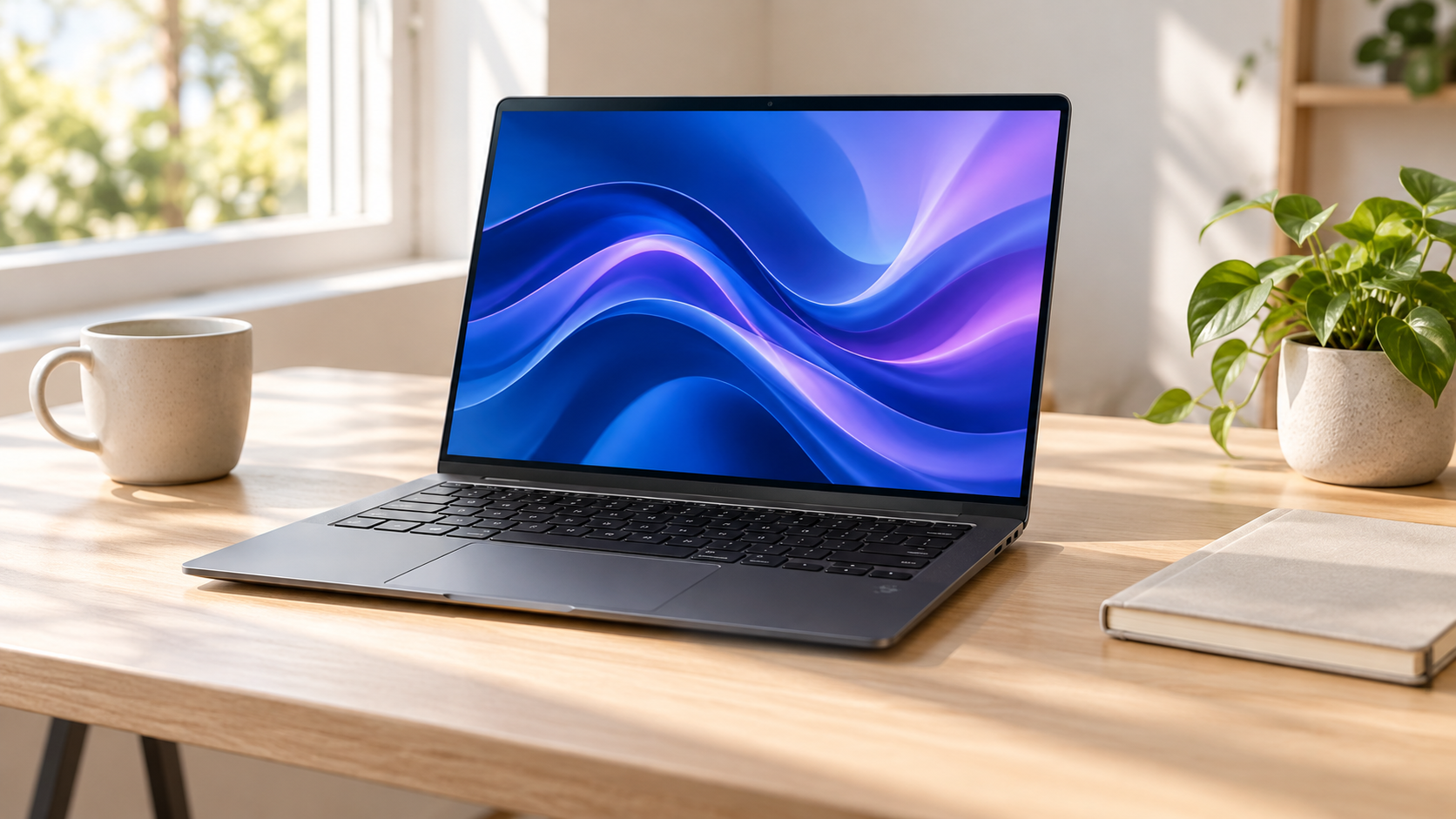
Dark professional laptop with blue and violet abstract display on a sunlit wood desk

Apple has refreshed the entry-level 14-inch MacBook Pro with its M6 chip, Wi-Fi 7 and Bluetooth 6. The laptop starts at $1,999 in the United States with 16GB of unified memory and a 1TB SSD. Preorders open October 28, and deliveries and store availability begin November 6.

This is a focused performance update, not the touchscreen OLED redesign that has been reported for other MacBook Pro models. The aluminum chassis, Liquid Retina XDR display, camera, speakers and port selection remain familiar. That makes the buying decision less about appearance and more about whether the base M6 chip, memory ceiling and Thunderbolt 4 connectivity fit the work.

M6 MacBook Pro price and release date

Apple sells the M6 model only in the 14-inch size. It sits below the M5 Pro and M5 Max configurations that remain in the MacBook Pro lineup.

The M6 launch details are:

  • The 14-inch M6 MacBook Pro starts at $1,999.
  • The education price starts at $1,899.
  • Preorders open Wednesday, October 28, 2026.
  • Deliveries and retail availability begin Friday, November 6, 2026.
  • Space black and silver finishes are available.
  • The standard configuration includes 16GB of memory and 1TB of storage.

Memory can be configured to 24GB or 32GB. Storage choices are 1TB, 2TB and 4TB. The starting configuration is generous enough for many office, development and creative workflows, but neither memory nor internal storage can be upgraded later. Buyers should price the machine they will need several years from now, not only the least expensive checkout option.

What the M6 chip changes

The M6 has a 12-core CPU with two super cores, four performance cores and six efficiency cores. Its 12-core GPU includes Neural Accelerators and hardware ray tracing, while a dual 16-core Neural Engine handles machine-learning work. The media engine accelerates H.264, HEVC, ProRes and ProRes RAW, and it can decode AV1 video.

Apple claims up to 30 percent faster graphics and up to 25 percent faster AI workloads than the M5 MacBook Pro. The company also cites up to 1.2 times faster multithreaded CPU performance. Those are manufacturer-controlled comparisons, so results will vary by application, project size and sustained workload. Independent testing will be especially important for fan noise, long exports, game performance and local AI models.

Memory bandwidth is another configuration detail. The 16GB version is listed at 153GB/s, while 24GB and 32GB models reach 170GB/s. A larger memory configuration therefore provides both capacity and bandwidth, which can matter for large photo libraries, code builds, virtual machines and on-device models.

The display and design stay familiar

The 14.2-inch Liquid Retina XDR display remains a major strength. Apple lists a 3024-by-1964 resolution, ProMotion refresh rates up to 120Hz, one billion colors, P3 wide color and up to 1,600 nits of peak HDR brightness. A nano-texture option is available for bright rooms and glare-sensitive work.

There is no OLED panel, touch input or major chassis redesign on this model. The 12-megapixel Center Stage camera, six-speaker audio system, three-microphone array, Magic Keyboard and Force Touch trackpad continue. Space black and silver are the only finishes.

That continuity is useful for buyers who already like the 14-inch design, but it reduces the case for replacing a recent MacBook Pro. An M5 owner will see a faster processor and newer wireless standards, not a fundamentally different screen, keyboard, camera or travel experience.

Ports and external displays remain a strength

Ports and external displays remain a strength

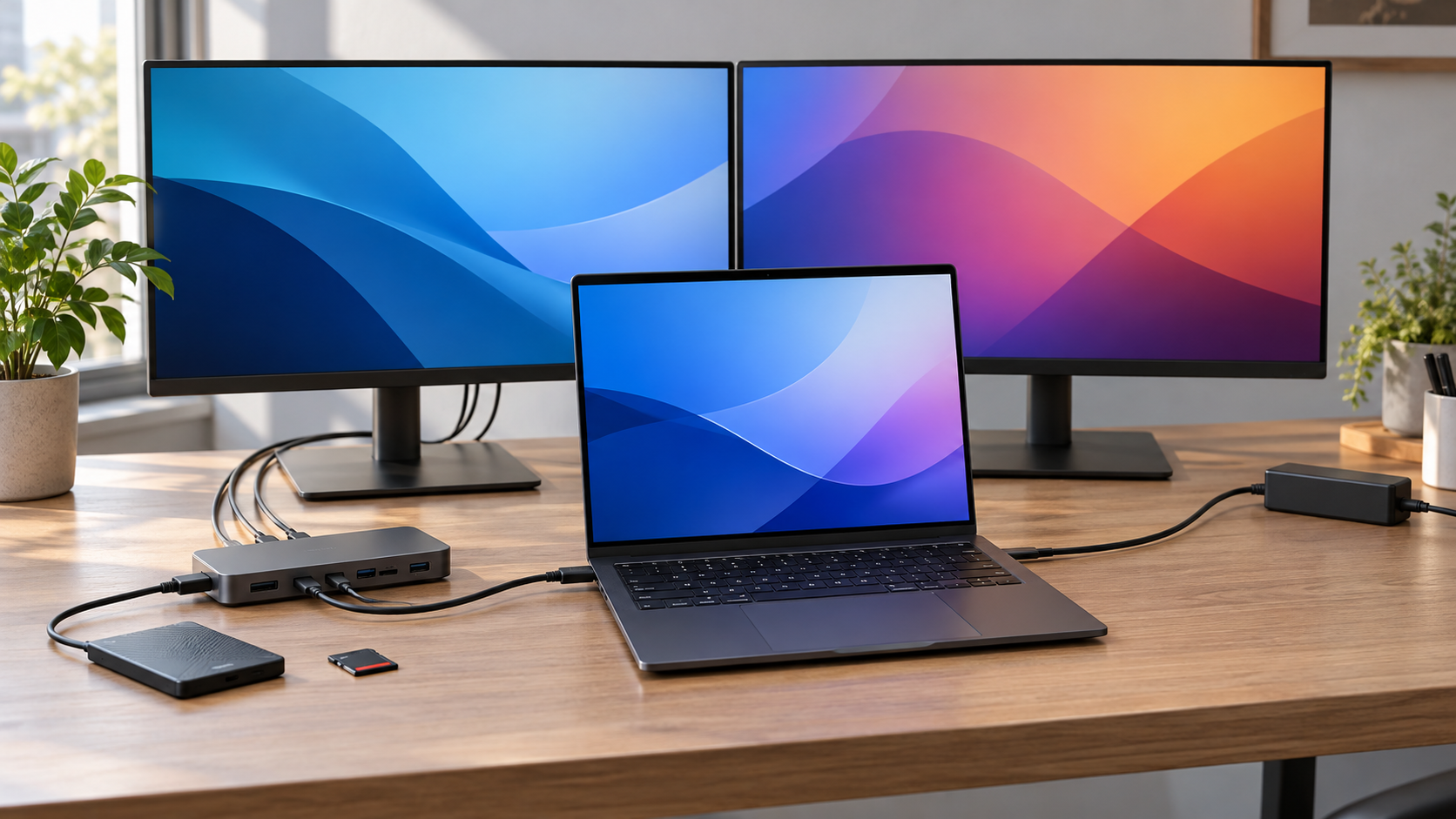
The M6 model includes MagSafe 3, HDMI, an SDXC card slot, a 3.5mm headphone jack and three Thunderbolt 4 ports rated up to 40Gb/s. It does not receive the Thunderbolt 5 ports found on the M5 Pro and M5 Max configurations. Photographers and video creators should account for that distinction when choosing high-speed docks, storage arrays and capture hardware.

Apple supports up to two external displays while the built-in screen remains active. The published combinations include two displays at up to 6K 60Hz or 4K 165Hz, or one display at up to 8K 60Hz, 5K 120Hz or 4K 240Hz. Buyers who need three or four external monitors should move to a Pro or Max configuration rather than assuming every 14-inch MacBook Pro has the same display limits.

The N1 wireless chip brings Wi-Fi 7, Bluetooth 6 and Thread. Wi-Fi 7 can improve throughput and latency on a compatible network, but the laptop cannot make an older router or slow internet connection faster. Thread is relevant mainly to compatible smart-home accessories.

The inline image above is an editorial illustration of a laptop using two external displays, a dock, storage and a memory card. It is not an Apple diagram, and actual accessories are sold separately.

Battery life and charging

Apple rates the M6 model for up to 24 hours of video streaming and up to 16 hours of wireless web use. The 72.4-watt-hour battery can charge through MagSafe or USB-C. Apple recommends at least a 60W power source for charging and specifies a 96W or higher USB Power Delivery source for fast charging.

Apple says a compatible 96W adapter can reach about 50 percent charge in 30 minutes. Real battery life will depend on display brightness, connected devices, background activity and whether the CPU and GPU remain under sustained load.

The Apple 96W USB-C Power Adapter is available on Amazon under ASIN B081FVQCHQ. It does not include a charging cable, and Amazon inventory can mix older packaging or sellers, so confirm the model, condition, seller and return terms before ordering. The MacBook Pro already includes a 70W adapter and MagSafe cable; a separate 96W unit is only relevant for buyers who want the faster charging option.

Disclosure: ReaderSpice may earn a commission from qualifying Amazon purchases made through the link above, at no additional cost to you.

Who should upgrade from an Intel MacBook Pro

Intel owners have the clearest reason to move. The practical benefits extend beyond benchmark claims: current macOS support, Apple silicon efficiency, a much stronger media engine, longer battery life, modern wireless connectivity and quieter performance in everyday work.

Before switching, audit specialized software, plug-ins, drivers and peripherals. Rosetta can run many Intel applications, but it does not guarantee that an old audio interface, printer, security tool or business application will behave exactly as it did on the previous machine. Check each critical vendor before retiring a working Intel system.

The M6 model is a strong replacement for an aging 13-inch or 15-inch Intel MacBook Pro when 32GB of memory and two external displays are enough. Workflows that need more memory, additional displays or Thunderbolt 5 should be priced against M5 Pro and M5 Max models instead.

Should M1, M2 or M3 owners upgrade?

M1 owners can gain a faster CPU and GPU, improved media handling, longer stated battery life, newer wireless standards and a more capable external-display setup. The decision becomes stronger when 8GB or 16GB of memory is already limiting the work, or when an older battery has lost substantial capacity.

M2 and M3 owners should identify a specific bottleneck first. Routine browsing, documents, streaming and video calls may not feel dramatically different. A large codebase, local AI model, 3D project or repeated video export can justify the upgrade, but a benchmark percentage by itself is not a reason to replace a functioning laptop.

Why most M5 owners should wait

The M5 MacBook Pro shares the same display, chassis, camera, speakers, port layout, 1TB starting storage and up-to-24-hour video-streaming claim. M6 adds CPU and GPU cores, newer wireless connectivity and a higher memory-bandwidth ceiling on larger-memory configurations, but the daily experience remains similar.

An M5 owner should upgrade only if independent testing proves that M6 saves meaningful time in a workload that is already slow, or if Wi-Fi 7, Bluetooth 6 or the revised external-display support solves a real requirement. Otherwise, keeping the M5 avoids spending at least $1,999 for an incremental refresh.

Which configuration makes sense

  • Choose 16GB and 1TB for office work, school, web development, music playback and moderate photo or video projects.
  • Choose 24GB when multitasking, development tools, creative apps or local AI work regularly push beyond 16GB.
  • Choose 32GB for heavier virtual machines, large media projects and models that fit within the base chip’s limits.
  • Add internal storage only after comparing Apple’s upgrade price with a reliable external SSD and the inconvenience of carrying it.
  • Choose M5 Pro when Thunderbolt 5, more memory or three external displays matter more than having the newest base-generation chip.
  • Wait for independent reviews when sustained performance, thermals, battery endurance or fan noise is central to the purchase.

The bottom line

The 14-inch M6 MacBook Pro is a capable, well-equipped entry to Apple’s professional laptop line. Its 12-core CPU and GPU, 1TB starting storage, excellent XDR display, useful ports and up-to-24-hour battery claim make it a strong replacement for an Intel Mac or an older Apple silicon model.

It is also a conservative update at a high starting price. The unchanged design, 32GB memory ceiling and Thunderbolt 4 ports mean buyers with demanding professional needs should compare the M5 Pro and M5 Max lineup carefully. Most M5 owners can wait. For everyone else, the right decision depends less on the M6 name than on memory, storage, external-display and connectivity requirements.

Sources

Apple Newsroom: Apple introduces the new 14-inch MacBook Pro with M6 — October 27, 2026

Apple: MacBook Pro technical specifications

The Verge: Apple updates the MacBook Pro with M6 chips — October 27, 2026

Macworld: Apple’s M6 MacBook Pro is here — October 27, 2026

Reuters: Apple launches M6 MacBook Pro and iMac — October 27, 2026

Amazon: Apple 96W USB-C Power Adapter (ASIN B081FVQCHQ)

M6 iMac Starts at $1,499: What Changed and Who Should Upgrade

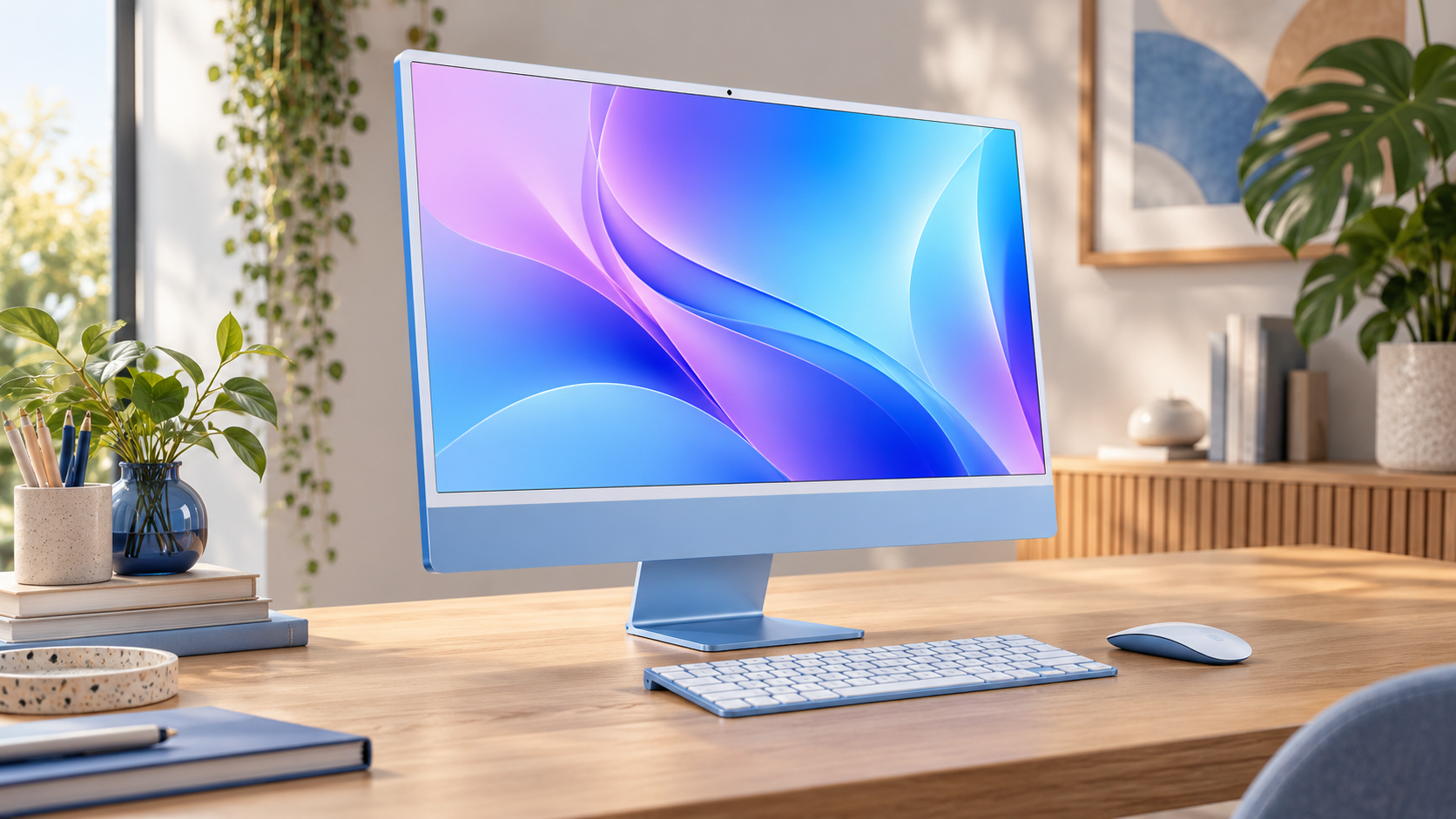
Slim blue all-in-one desktop with colorful abstract display, matching keyboard and mouse on a light wood desk

Apple has updated the 24-inch iMac with its M6 chip, faster storage and newer wireless connectivity. The desktop starts at $1,499 in the United States, opens for preorder on October 28 and reaches customers and stores on November 6.

This is a performance and connectivity refresh rather than a redesign. The colorful enclosure, 24-inch 4.5K display, camera, speakers and basic desk-friendly concept remain familiar. That makes the buying decision unusually straightforward: the M6 iMac is most compelling for people replacing an Intel model or building an all-in-one workspace, while recent M4 owners have fewer reasons to move.

M6 iMac price and release date

Apple is selling two main processor and port configurations. Memory, storage, nano-texture glass and accessories can raise the final price, so the starting figure should not be treated as the likely total for every buyer.

  • The 10-core CPU and 10-core GPU model starts at $1,499.
  • The 12-core CPU and 12-core GPU model starts at $1,699.
  • Preorders begin Wednesday, October 28, 2026.
  • Retail availability begins Friday, November 6, 2026.
  • Seven colors remain available: blue, green, pink, yellow, purple, orange and silver.
  • Both starting configurations include 16GB of unified memory and a 256GB SSD.

The entry model can be configured with up to 24GB of memory and 1TB of storage. The higher configuration can reach 32GB and 2TB. Anyone planning to edit large photo libraries, keep local video projects or run on-device models should price the memory and storage they actually need before comparing the iMac with a Mac mini and separate display.

What the M6 chip changes

The new chip is the center of the update. Apple offers a 10-core CPU and GPU in the entry version and a 12-core CPU and GPU in the higher model. Both include a dual 16-core Neural Engine, Neural Accelerators in the GPU cores, hardware ray tracing and a media engine for H.264, HEVC, ProRes, ProRes RAW and AV1 playback.

Apple claims up to twice the graphics performance of the M4 iMac and up to five times faster on-device AI performance in selected tests. Those figures come from Apple-controlled comparisons and will not translate evenly to every app. Short office tasks may feel only modestly different, while GPU-heavy editing, games and local AI workloads have more opportunity to benefit.

The company also says SSD read and write performance can be up to twice as fast as the previous generation. Faster storage can improve app launches, large project loading and swap-heavy work, but capacity still matters. A fast 256GB drive can fill quickly when a machine is used for video, RAW photos or local model files.

The display and design barely change

The 24-inch 4.5K Retina display remains one of the iMac’s strongest reasons to exist. Apple lists a 4480-by-2520 resolution, 500 nits of brightness, P3 color and True Tone. The actual diagonal measurement is 23.5 inches. Nano-texture glass is available only on the higher processor configuration.

The limitation is that buyers do not get a larger screen, mini-LED, OLED or higher refresh rate. The enclosure, colors and most exterior hardware are also essentially unchanged from the M4 generation. That is good for a clean desk and predictable accessories, but it means the M6 model does not solve requests for a 27-inch Apple all-in-one.

The 12-megapixel Center Stage camera, six-speaker system and three-microphone array continue. Those integrated parts are useful for family calls, remote work and a simple office setup, yet they are not a new reason for an M4 owner to upgrade.

Port count matters more than the color

Port count matters more than the color

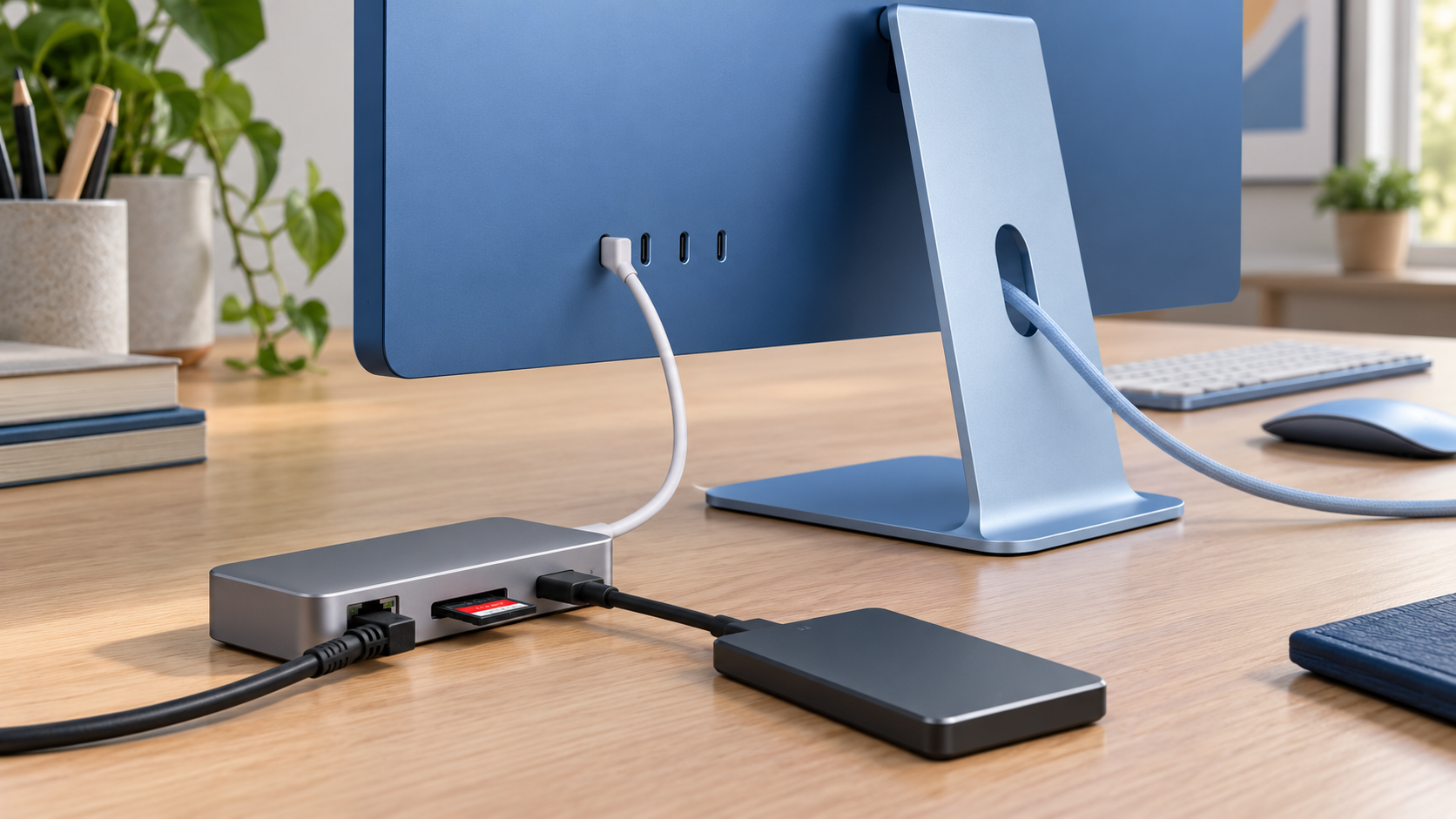
The entry configuration has two Thunderbolt ports. The higher model has four Thunderbolt 4 ports and is the more flexible choice for external storage, capture hardware, docks and multiple displays. Both keep a 3.5mm headphone jack.

Apple also adds its N1 wireless chip with Wi-Fi 7, Bluetooth 6 and Thread. The practical value depends on compatible routers, accessories and network conditions. A Wi-Fi 7 label cannot make an older router faster, and Thread support matters mainly when the iMac is used around compatible smart-home devices.

Apple lists 2.5 Gigabit Ethernet as available in the lineup. Verify the exact store configuration because wired networking and port count differ by model. Creators moving large files to a NAS should confirm that the computer, switch, cabling and storage system all support the intended speed; one slower component can cap the connection.

The inline image above is an editorial illustration of a multi-port desktop using a hub, Ethernet, SD card and external storage. It is not a manufacturer diagram, and actual accessories are sold separately.

Who should upgrade from an Intel iMac

Intel-based owners receive the clearest benefit. Apple claims performance can be up to 18 times faster than its comparison Intel system, but the more dependable reasons to upgrade are broader: current macOS support, Apple silicon efficiency, faster media engines, modern wireless standards and a quieter integrated workspace.

Before replacing an Intel iMac, audit software and peripherals. Older plug-ins, drivers, printers, audio interfaces and specialized business tools may need updates or replacements. Rosetta can help with many Intel applications, but it does not guarantee compatibility with every driver or workflow.

Move to the M6 iMac if the old machine no longer receives required updates, struggles with current creative work or has become unreliable. If it still handles the workload and remains secure, the new model is an upgrade opportunity rather than an emergency.

Should M1 or M3 iMac owners upgrade?

An M1 owner can expect a meaningful jump in CPU, graphics, connectivity and supported memory. The case becomes stronger when 8GB of memory or limited storage is already constraining the machine. The unchanged display and enclosure mean the experience will still feel familiar, so performance needs should drive the decision.

M3 owners should be more selective. M6 is faster, but ordinary browsing, documents, streaming and video calls may not expose enough difference to justify replacing a relatively recent computer. Upgrade when a specific workload, memory limit or network requirement is costing time.

Why most M4 owners should wait

The M4 iMac already has the same overall design, display size, camera concept and color choices. The M6 improves processor performance, storage speed and wireless connectivity, but it does not transform the everyday all-in-one experience.

An M4 owner should upgrade only when independent testing shows a meaningful gain in a workload that is already slow, or when a required configuration such as faster wired networking, additional external-display capability or more memory changes the job. Otherwise, keeping the M4 avoids spending $1,499 or more for improvements that may be difficult to notice in routine use.

Magic Mouse and accessory costs

Apple includes color-matched input devices, but configuration choices can change the total. A buyer who prefers a trackpad, needs more USB-A ports, imports SD cards or keeps large local media libraries should budget for those accessories before ordering.

The current white Apple Magic Mouse with USB-C charging is available on Amazon under ASIN B0DL72PK1P. It is compatible with Mac and uses a rechargeable battery and Multi-Touch surface. Confirm the seller, model number and return terms because pricing and availability can change, and do not buy it merely because an iMac already includes a mouse.

Disclosure: ReaderSpice may earn a commission from qualifying Amazon purchases made through the link above, at no additional cost to you.

Which configuration makes sense

  • Choose the $1,499 model for family use, schoolwork, office apps, streaming and light photo editing when two Thunderbolt ports are enough.
  • Choose the $1,699 model when four ports, higher CPU and GPU counts, more memory or larger storage ceilings matter.
  • Add memory before storage when long-term multitasking and creative workloads are the priority, but remember that neither can be upgraded internally later.
  • Budget for external storage if 256GB will not hold the local library; a fast external SSD can be more economical than a large internal upgrade.
  • Verify Ethernet and display support in the exact configuration before checkout rather than assuming every M6 iMac has the same connections.
  • Wait for independent tests if sustained performance, fan noise, gaming or local AI speed is central to the purchase.

The bottom line

The M6 iMac keeps the all-in-one formula intact and improves the parts that affect heavy work: processor speed, graphics, AI acceleration, storage and networking. The $1,499 starting price is unchanged from the prior entry point, but the base 256GB storage and two-port layout still require careful configuration.

For Intel owners, small businesses and families that want one clean desktop package, the M6 iMac is a strong modern replacement. M1 and M3 owners should upgrade for a specific bottleneck. Most M4 owners can wait, because the screen, enclosure and everyday experience remain too similar to make this an automatic purchase.

Sources

Apple Newsroom: Apple unveils new iMac with M6 — October 27, 2026

Apple: iMac technical specifications

The Verge: Apple refreshes the iMac with M6 chips — October 27, 2026

Ars Technica: Apple refreshes the iMac and entry-level MacBook Pro with M6 — October 27, 2026

Macworld: iMac gains M6 performance boost but little else changes — October 27, 2026

Amazon: Apple Magic Mouse USB-C (ASIN B0DL72PK1P)

Navi Mumbai Airport Flight Shift: What IndiGo, Air India Express and Akasa Travelers Need to Know

Unbranded passenger aircraft taxis beside a modern airport terminal with runway lights and a coastal skyline at blue hour

Mumbai’s two-airport system is entering a more complicated phase. IndiGo, Air India Express and Akasa Air have now outlined separate plans to move selected flights from Chhatrapati Shivaji Maharaj International Airport to Navi Mumbai International Airport, with changes beginning in December 2026 and continuing through 2027.

The shift can create more capacity for the Mumbai region, but it also creates a simple travel risk: a ticket described as “Mumbai” may use either BOM or NMI. Those are different airports in different parts of the metropolitan region. Travelers who assume the wrong terminal—or the wrong airport—could face an expensive road transfer and a missed flight.

This guide separates the announced phases from routes that are still subject to approval or schedule changes. The operating airline’s current booking record remains the final authority for the airport, date, terminal and check-in deadline.

Mumbai’s two-airport transition at a glance

  • Navi Mumbai International Airport uses the IATA code NMI.
  • Chhatrapati Shivaji Maharaj International Airport uses BOM.
  • Air India Express plans four daily domestic departures from NMI beginning in December 2026, followed by a phased international expansion.
  • Akasa Air says its Mumbai–Jeddah operation will move to NMI in December 2026.
  • IndiGo plans to begin its new international phase at NMI in February 2027 and progressively transfer selected departures through the summer schedule.
  • Most Mumbai traffic will continue using BOM while Terminal 1 is redeveloped.
  • Airline, airport and regulatory approvals can change dates, frequencies and exact routes.

This is not a wholesale overnight closure of Mumbai’s established airport. It is a phased redistribution. A traveler should therefore check the airport code for every trip instead of relying on what the airline used last month or what a previous itinerary showed.

What IndiGo is moving and when

IndiGo and Adani Airports announced a phased expansion of international operations at Navi Mumbai on October 25. ETTravelWorld reports that IndiGo plans to begin the new phase in February 2027, progressively transferring 12 daily international departures from BOM while adding a daily Kathmandu service from NMI.

Reported destination plans include Bahrain, Riyadh, Jeddah, Kuwait, Muscat, Dhaka and Jakarta. The important word is progressively: not every route moves on the same day, and an announced city does not guarantee that every frequency to that city will use NMI.

IndiGo may also adjust domestic flights to support international connections at the new airport. That can make NMI more useful as a connecting point, but travelers should not assume that separate domestic and international bookings will connect automatically. Through-checked baggage and disruption protection depend on the ticket and airline rules.

For any IndiGo booking in the transition period, confirm the three-letter airport code in the itinerary and Manage Booking page. Recheck after a schedule-change email because the departure time may remain similar even when the airport changes.

What Air India Express plans

Air India Express is taking a different path. The published transition plan starts with four daily domestic flights from NMI in December 2026. International expansion is expected to follow, including Kuwait service from January 2027 and a progressive transfer of selected West Asian operations.

The airline’s current Navi Mumbai booking page already treats NMI as a distinct origin and lists domestic and international options. That page is useful for checking live availability, but it also warns that routes, fares and frequency can vary by season and demand.

Travelers should distinguish Air India Express from full-service Air India when reading an itinerary or news report. The carriers are part of the same group, but a flight number, fare bundle, baggage allowance and operating carrier still determine the actual rules. If a booking was sold by another airline, look for the “operated by” line as well as the marketing brand.

Akasa moves the Jeddah route in December

Akasa Air has announced one especially clear change: its Mumbai–Jeddah operation is scheduled to move from BOM to NMI in December 2026. The Indian Express reported the change on October 27, citing the airline and Adani Airport Holdings.

That does not mean every Akasa flight serving the Mumbai region is moving. It means passengers on the affected Jeddah service should verify the airport on their specific date. A round trip can also use different airports if the change occurs between the outbound and return journeys.

Anyone with a hotel transfer, family pickup, religious-tour package or separate domestic connection should update the ground plan as soon as the airline confirms NMI. A transfer arranged for BOM will not automatically redirect to Navi Mumbai.

Why flights are shifting from BOM

The airline moves support the redevelopment of Terminal 1 at Chhatrapati Shivaji Maharaj International Airport. Financial Express reports that the project is intended to raise Terminal 1’s annual passenger capacity from 15 million to 20 million while modernizing safety, passenger and operational facilities.

The current plan does not remove most traffic from BOM. Reporting on the redevelopment says roughly 9% of CSMIA’s annual passenger volume is expected to relocate during the first phase, leaving about 91% at the existing airport. Those percentages explain why airport-code checking matters: both airports will remain active, and the same airline may operate from both.

Navi Mumbai’s first terminal is designed for 20 million passengers a year, with long-term expansion planned. The broader goal is a dual-airport market that can add capacity without forcing every traveler through one congested site.

How to check whether your ticket uses NMI or BOM

How to check whether your ticket uses NMI or BOM

Do not rely on a city name alone. Use the itinerary, airline account and airport’s live flight-status page together.

  • Open the airline’s official app or website and retrieve the booking with the PNR.
  • Find the airport code beside every departure and arrival: NMI means Navi Mumbai; BOM means Chhatrapati Shivaji Maharaj International.
  • Check the operating carrier and flight number, especially on a codeshare.
  • Confirm the travel date, local departure time and terminal.
  • Review every segment separately; one connection can use BOM while another uses NMI.
  • Open the official airport flight-status page close to departure and compare the flight number.
  • Save the corrected itinerary offline and update whoever is providing transport.
  • Recheck after any airline schedule-change message.

If an email says only that the schedule changed, compare the old and new airport codes before accepting the revision. A small time adjustment can hide a much larger ground-transport change.

Changing airports can break a connection

NMI and BOM are not two terminals in one complex. A traveler changing between them must leave one airport, collect any checked baggage that is not through-tagged, travel by road and complete check-in and security again.

Traffic can make a cross-airport journey unpredictable. Immigration, customs, delayed baggage and road congestion can consume a large buffer before the second airline’s cutoff. A booking engine may display separate tickets next to each other without protecting the passenger if the first flight is late.

Before accepting a split-airport itinerary:

  • Confirm whether all flights are on one protected ticket.
  • Ask whether baggage is checked to the final destination.
  • Price the road transfer, tolls and possible overnight stay.
  • Check the second airline’s missed-flight policy.
  • Avoid a tight same-day connection, especially after an international arrival.
  • Keep essential medicine, documents and one change of clothes in hand baggage.

If the airlines will not guarantee the connection, treat it as two separate journeys. A cheaper fare is not necessarily cheaper after a transfer, hotel or replacement ticket.

Ground transport and arrival planning

Navi Mumbai International Airport is in the Ulwe area, while BOM serves the established airport complex closer to central Mumbai. The practical choice depends on the traveler’s origin, destination, time of day and road conditions.

Use the official NMI website for the current airport address, passenger services and flight status. Do not ask a driver simply for “Mumbai airport.” Send the airport code and terminal from the booking. If a pickup is being arranged by family, a hotel or a tour company, share a screenshot of the confirmed itinerary.

Allow more time during the transition period. Drivers, hotel desks and even repeat travelers may default to BOM from habit. Confirm the destination before the vehicle leaves, and keep the airline’s contact details available in case a late airport change appears.

Baggage and check-in deadlines still come from the airline

Moving to a new airport does not create one universal check-in rule. Domestic and international deadlines, baggage allowances, document requirements and boarding-gate closure times remain airline- and fare-specific.

Air India Express advises travelers to select NMI explicitly when booking and to verify the live timetable. Its published guidance recommends arriving earlier for international travel than for domestic travel, but passengers should use the deadline shown for their own flight and fare.

Check baggage allowance before packing because a route move can coincide with an aircraft, schedule or fare change. If the airline reissues the ticket, verify that paid seats, meals, extra baggage and assistance requests remain attached to the booking.

A small luggage scale can prevent check-in surprises

Airport changes are stressful enough without discovering an overweight suitcase at the counter. Amazon lists the Etekcity Digital Luggage Scale, ASIN B00NW62PCA, as a compact handheld scale with a claimed capacity of up to 110 pounds or 50 kilograms.

Travelers can compare the Etekcity luggage scale on Amazon before departure. Confirm the exact seller, current model, battery inclusion and return terms. A home scale is a planning aid; the airline’s calibrated airport scale and the baggage allowance on the ticket determine the final result.

Disclosure: ReaderSpice may earn a commission from qualifying Amazon purchases made through the link above, at no additional cost to you.

Practical checklist before departure

  • Confirm NMI or BOM on every flight segment.
  • Recheck the airport after schedule-change emails.
  • Verify the operating carrier and flight number.
  • Update taxi, hotel, family pickup and tour arrangements.
  • Download the itinerary and airport address for offline access.
  • Confirm baggage, passport, visa and check-in rules with the airline.
  • Add a large buffer for any NMI–BOM ground transfer.
  • Use the official airport flight-status page on the travel day.
  • Keep documents, medicine, chargers and essentials in hand baggage.

The bottom line

The Navi Mumbai transition is becoming real, but it is deliberately gradual. Air India Express begins a new domestic phase in December 2026, Akasa moves its Jeddah service in December, and IndiGo’s expanded international phase is scheduled from February 2027. Exact routes and frequencies can still change.

For passengers, the most important habit is simple: read the airport code, not just the city. NMI and BOM are separate airports. Confirm the code at booking, after every schedule update and again before leaving for the terminal.

Sources

IndiGo: IndiGo and Adani Airports announce phased expansion of international flight operations at Navi Mumbai Airport — October 25, 2026

ETTravelWorld: IndiGo and Air India Express transition plans for Navi Mumbai Airport — October 27, 2026

The Indian Express: Akasa Air to move Mumbai–Jeddah flights to Navi Mumbai Airport — October 27, 2026

Financial Express: Mumbai Terminal 1 redevelopment and passenger-capacity plan — October 26, 2026

Navi Mumbai International Airport: Official flight-status page

Navi Mumbai International Airport: Official traveler information

Air India Express: Flights from Navi Mumbai (NMI)

Amazon: Etekcity Digital Luggage Scale (ASIN B00NW62PCA)

iOS 27.2 Fixes 160+ Security Flaws: How to Update Safely

Smartphone and tablet installing a security update beside a charging cable on a blue-lit desk

Apple released iOS 27.2 and iPadOS 27.2 on October 26, 2026, with a large security package for supported iPhones and iPads. Independent reporting counted more than 160 addressed vulnerabilities, while Apple’s advisory documents risks involving images, fonts, web content, privacy permissions, Mail, Siri, HomeKit, the kernel and other system components.

This is not an update to postpone for a cosmetic reason. Many of the listed issues concern files or content that a person could receive during ordinary use, and several could expose sensitive information, corrupt memory or let an application cross a privacy boundary. Apple has not flagged the iOS 27.2 entries as actively exploited, but that does not make the update optional. Installing a supported release closes known paths before attackers have more time to study them.

Why the iOS 27.2 security update matters

Apple’s security notes describe a broad maintenance release rather than one single headline bug. The practical risks fall into several groups:

  • Malicious images, fonts, 3D models and other files could trigger crashes, memory disclosure or memory corruption.
  • Applications could access sensitive user data, bypass certain privacy preferences or learn information about other installed apps.
  • Web content could expose sensitive information, while certificate-validation and cross-site protections received fixes.
  • Mail, Messages, HomeKit, Shortcuts, Siri, Spotlight, Photos Storage and Safety Check all appear in the advisory.
  • Kernel and low-level storage issues could cause unexpected termination, reveal system information or corrupt memory.
  • Nearby or local-network attackers could affect Thread, media or networking components in specific circumstances.

A security bulletin lists possible impact, not proof that every flaw is easy to exploit. Some entries require a malicious app, crafted content, local access, physical proximity or a privileged network position. The breadth still matters because an iPhone or iPad handles all of those inputs during normal life.

What Apple fixed in images, fonts and files

Media parsers are prominent in the advisory. Apple lists multiple ImageIO fixes for out-of-bounds reads and writes, buffer overflows, uninitialized memory and integer handling. A maliciously crafted image could cause an application to terminate, disclose process memory or corrupt memory.

Font handling also received numerous fixes. CoreText and FontParser entries describe crafted fonts that could disclose memory, crash a process, corrupt memory or expose sensitive data. These are meaningful because fonts and images can arrive inside webpages, messages, documents and other content rather than through a traditional app installation.

Other file-processing components are included as well. Apple’s notes identify problems involving archives, disk images, 3D models and webarchive files. The important lesson is simple: avoiding unfamiliar apps is useful, but it cannot replace an operating-system patch when the vulnerable code sits inside system frameworks used by many apps.

Privacy and account protections also changed

Several fixes focus on privacy boundaries instead of conventional code execution. Apple says applications could have accessed sensitive information through components including HomeKit, MediaAnalysis, Shortcuts, Siri and Safety Check. Photos Storage received a fix for bypassing certain privacy preferences, while Spotlight entries include privacy bypass and data-access issues.

Mail received a particularly understandable correction: Apple’s advisory says a user’s original email address could be exposed while using Hide My Email. Another entry addresses a remote denial-of-service risk, and a third concerns a maliciously crafted message. Updating is the only supported way to receive these system-level fixes.

The release also repairs an issue that could let an app identify other installed applications and another that could fingerprint a user. Individually, those problems may sound less dramatic than memory corruption. Together, they show why point releases matter even when a device appears to work normally.

Which iPhones and iPads can install it?

Apple lists iOS 27.2 for iPhone 11 and later. iPadOS 27.2 is available for iPad Pro 12.9-inch (4th generation and later), iPad Pro 11-inch (2nd generation and later), iPad Air (4th generation and later), iPad (9th generation and later), and iPad mini (6th generation and later).

Apple also released iOS 26.7.2 and iPadOS 26.7.2 on October 26 for devices or installations staying on that branch. The listed iPad support reaches some earlier models, including iPad Pro 12.9-inch (3rd generation), iPad Pro 11-inch (1st generation), iPad Air (3rd generation), iPad (8th generation) and iPad mini (5th generation).

For still-older hardware, iOS 18.7.11 and iPadOS 18.7.11 cover iPhone XS, iPhone XS Max, iPhone XR and iPad (7th generation). Do not choose a version by copying someone else’s screen. Open Software Update on the device and install the newest supported release Apple offers for that exact model and current software branch.

How to update iPhone or iPad safely

How to update iPhone or iPad safely

Before starting, allow enough time for a backup, download, installation and restart. Avoid beginning just before travel, a work call or another moment when the device must remain available.

  • Connect the iPhone or iPad to reliable Wi-Fi.
  • Connect it to power or confirm that the battery has a comfortable charge.
  • Open Settings, tap your name, choose iCloud and open iCloud Backup.
  • Select Back Up Now and wait for the latest-backup time to update.
  • Return to Settings, choose General and select Software Update.
  • Review the exact version offered for the device, then choose Download and Install.
  • Keep the device connected to power and do not force it to restart during installation.
  • After the device restarts, return to Software Update and confirm that it reports the current version.

A backup is protection against an interrupted installation, storage failure or an unrelated device problem; it is not a substitute for the update. People who cannot update wirelessly can use Finder on a trusted Mac or Apple Devices/iTunes on a trusted Windows PC, following Apple’s supported instructions.

What to do if the update will not install

A failed download does not mean a device is unsupported. Work through the likely causes in order:

  • Check available storage under Settings, General, iPhone Storage or iPad Storage.
  • Restart the device and check Software Update again.
  • Use a stable private Wi-Fi connection rather than an unreliable public hotspot.
  • Disable a VPN temporarily only if its provider documents an update conflict, then re-enable it afterward.
  • Confirm that Apple’s system-status page does not show a current update-service outage.
  • If the update file appears under device storage, remove that downloaded update and request it again.
  • Use Finder or Apple Devices on a trusted computer if wireless updating continues to fail.

Do not download unsigned firmware or configuration profiles from unfamiliar sites. A security update should not require disabling core protections or trusting an unknown certificate. Managed work or school devices may follow an administrator’s deployment schedule; contact the administrator rather than attempting to bypass management.

Security fixes are separate from the new features

iOS 27.2 is not only a security package. Apple’s release notes also describe Siri AI improvements that can retain useful context from previous interactions and use a wider range of personal context on compatible devices. Messages gains suggestions that can offer quick actions in apps such as Calendar and Reminders based on conversation context.

Apple also lists changes across apps and experiences, while Shortcuts receives new automations and updated actions. Those features vary by hardware, language, region and account configuration. An eligible phone can receive the security fixes even when a particular Siri AI feature is unavailable.

That distinction matters during troubleshooting. If Software Update shows iOS 27.2 but a promoted AI feature does not appear, the security installation may still be complete. Confirm the installed version first, then check Apple’s feature-availability requirements separately.

Are any of these vulnerabilities already being exploited?

Apple normally adds explicit wording when it is aware that a vulnerability may have been exploited. The iOS 27.2 security page does not include that warning, and independent reporting says Apple had not identified active exploitation for the listed fixes at publication time.

That is reassuring but should be interpreted narrowly. It does not prove that exploitation is impossible, and public disclosure gives researchers and attackers more information to study. The safer response is to install promptly rather than wait for evidence of attacks.

Users at elevated risk—including journalists, activists, public officials, executives and people who believe they may be individually targeted—should also review Lockdown Mode and Apple’s security-notification guidance. Most people do not need Lockdown Mode, but everyone benefits from current software, a strong device passcode and two-factor authentication on the Apple Account.

Power and charging considerations

The update is safest when the device has stable power. Apple’s compact 20W USB-C adapter is a straightforward option for compatible iPhones and iPads, but it does not make the update faster and it is not required if another reputable USB-C Power Delivery charger already works correctly.

Amazon’s Apple 20W USB-C Compact Power Adapter listing uses ASIN B0DJFW7PNM. Readers who need a spare can compare the Apple 20W USB-C power adapter on Amazon, checking the seller, plug style, compatibility and return policy before ordering. The adapter does not include a charging cable, so verify what is already in the box or available at home.

Disclosure: ReaderSpice may earn a commission from qualifying Amazon purchases made through the link above, at no additional cost to you.

How to verify protection after the restart

Open Settings, choose General and select About. Confirm that the iOS Version or iPadOS Version field shows 27.2, or the newest security release offered for the device’s supported branch. Then return to Software Update and check once more.

Update apps from the App Store as a separate step. Operating-system patches repair Apple components, while app updates repair third-party code and compatibility issues. Review important permissions under Privacy & Security if the update prompts an app to request access again.

A security update should not erase normal data. If something appears missing, allow Photos, Messages and iCloud time to finish syncing before assuming data is lost. Check the recent backup and avoid repeated restores until the issue is understood.

Bottom line

iOS 27.2 and iPadOS 27.2 are substantial security releases. The more-than-160-fix count is notable, but the more useful detail is the range: images, fonts, files, web content, Mail, Siri, HomeKit, privacy permissions, the kernel and networking components all received corrections.

Back up the device, connect to reliable Wi-Fi and power, install the newest release Apple offers, and verify the version after the restart. There is no confirmed active-exploitation warning in Apple’s iOS 27.2 advisory, but known vulnerabilities should still be closed promptly.

Sources

Apple Support: About the security content of iOS 27.2 and iPadOS 27.2

Apple Support: Apple security releases

Apple Support: About iOS 27 updates

Apple iPhone User Guide: Update iOS on iPhone

Apple Support: Back up iPhone or iPad with iCloud

The Times of India: iOS 27.2 fixes more than 160 security vulnerabilities

Amazon: Apple 20W USB-C Compact Power Adapter

Surface Laptop Ultra Firmware Fixes Flicker and Restarts: How to Install It Safely

Premium silver workstation laptop installing a firmware update on a dark professional desk

Microsoft has released the first substantial firmware update for Surface Laptop Ultra after early owners and reviewers reported display and reboot problems. The October 22, 2026 release targets screen flickering, unexpected restarts and unusually long reboot times, while also adding unspecified bug fixes and general performance improvements.

The update is important because Surface firmware cannot be uninstalled or rolled back to an earlier version. Owners should install it through Microsoft’s supported process, keep the laptop connected to power and complete the required restart rather than treating it like an ordinary app update. The fixes are welcome, but Microsoft has not said that every launch issue—including separately reported speaker interference—is resolved.

What the October 22 firmware fixes

Microsoft’s official Surface Laptop Ultra update history lists three specific corrections:

  • Extended reboot times that could make a normal restart take much longer than expected.
  • Screen flickering that could interrupt work or make the display appear unstable.
  • Unexpected restarts that could close applications and risk unsaved work.

Microsoft also lists additional bug fixes and general performance improvements without identifying every change. That wording should not be interpreted as confirmation that any unlisted problem has been fixed. The practical claim is narrower: the company has acknowledged and addressed the three problems above.

The release appears in Windows Update as Microsoft Corporation System Hardware Update (200.0.7.0). Microsoft says distribution is staged, so two otherwise identical laptops may not receive it at the same time. Delayed availability does not necessarily mean a device is unsupported or that Windows Update is broken.

Which firmware and drivers are included

The package contains several components, and the exact set installed depends on the laptop’s configuration. Microsoft’s October 22 release notes identify:

  • Surface TCON Firmware version 161.32.1.42.
  • Surface UEFI Firmware version 7.3.0.0.
  • Surface Integration system-device driver version 142.0.8.0.
  • Surface Panel Driver V2 version 3.7.434.0.

The TCON and panel-driver changes are especially relevant to display behavior, while UEFI and Surface Integration updates can affect startup, power management and communication between Windows and the hardware. Owners should not download individual driver files from third-party driver sites. Windows Update and Microsoft’s official Surface packages are the authoritative sources.

A version number missing from Device Manager does not automatically mean the update failed. Microsoft notes that components are installed according to the device configuration, and some firmware versions may be shown in the Surface app, Windows Update history or a different Device Manager category.

What the update does not confirm

The Verge reported slow reboots, visual trails while moving windows and intermittent speaker interference on its review unit. The October 22 notes explicitly mention long reboots and screen flicker, but they do not mention speakers, audio crackling or interference.

That distinction matters. A restart may temporarily clear an audio problem without proving that the cause has been corrected. Owners who still hear loud pops, crackling or other abnormal speaker noise after installing the update should document when it happens, which application was active, whether the laptop was charging and whether headphones or external displays were connected.

Microsoft has also not published new battery-life, thermal or application-compatibility claims with this release. The firmware is a reliability update, not a performance upgrade for the RTX Spark processor. Readers evaluating the machine can revisit ReaderSpice’s Surface Laptop Ultra launch guide for the hardware, ports, battery claims and Windows-on-Arm considerations.

How to install the Surface Laptop Ultra update safely

How to install the Surface Laptop Ultra update safely

Before starting, save open work and allow enough time for at least one restart. Firmware installation should not be interrupted.

  • Connect Surface Laptop Ultra to its charger.
  • Confirm that the battery is at least 40 percent charged.
  • Use a stable internet connection and disconnect unnecessary storage devices.
  • Open Settings, select Windows Update and choose Check for updates.
  • Install Microsoft Corporation System Hardware Update (200.0.7.0) and any applicable Surface driver updates.
  • Open Advanced options and check Optional updates for additional Surface items.
  • When installation finishes, select Start, Power and Restart.
  • Return to Windows Update after the restart and check again until no applicable Surface updates remain.

Microsoft recommends keeping Surface accessories connected while updating so compatible keyboards, docks or pens can receive their own updates. For this laptop, the most important rule is to maintain power and avoid forcing a shutdown while firmware is being written.

Windows Update is the recommended method for most people. IT administrators and experienced users can obtain model-specific driver and firmware packages from Microsoft’s Download Center, but the manual package must match the exact Surface model. Using a package intended for another Surface device is not a sensible troubleshooting shortcut.

How to verify the update installed

Start with Windows Update history. Open Settings, Windows Update, Update history and look for Microsoft Corporation System Hardware Update (200.0.7.0). A successful entry is the clearest general confirmation.

The Surface app provides another check. Open the app, expand Help & support and review the update status. Microsoft uses the app to identify the device and route owners to the correct support information.

Advanced users can inspect Device Manager, although the names do not always mirror the marketing name of the laptop. Depending on the installed components, the relevant versions may include Surface TCON Firmware 161.32.1.42, Surface UEFI 7.3.0.0, Surface Integration 142.0.8.0 and Surface Panel Driver V2 3.7.434.0.

After confirming installation, reproduce only the ordinary actions that previously caused trouble. Restart the laptop normally, move windows across the display and use the system for a regular work session. Do not repeatedly force restarts or stress the system merely to test it. The useful question is whether the original symptom returns under normal conditions.

What to do if flickering or restarts continue

Because Surface firmware cannot be rolled back, troubleshooting should focus on evidence and supported recovery steps rather than attempting to downgrade it.

  • Install all remaining Windows and optional Surface updates, then restart once more.
  • Record the time, application and connected accessories when the problem appears.
  • Disconnect nonessential docks, monitors and USB devices to test whether a peripheral is involved.
  • Check the Surface app’s Help & support section for device-specific diagnostics.
  • Contact Microsoft Surface support if flickering, unexpected restarts or unusually long boots continue.

If the computer restarts unexpectedly, save critical work more frequently until the cause is resolved. Organizations should also check Windows reliability history and event logs before reimaging a device, since those records can distinguish a driver failure from an application crash or power interruption.

A Windows restore point or operating-system recovery image does not provide a reliable way to reverse firmware. Microsoft’s release notes are explicit that the firmware update cannot be uninstalled or reverted. Do not follow unofficial instructions that promise a simple downgrade.

What owners and prospective buyers should do

Current owners should install the update, particularly if they have seen one of the three named problems. The combination of display, UEFI and integration changes suggests this is a foundational reliability package rather than a cosmetic revision. Back up important files as part of normal practice, keep the laptop powered and complete the restart.

Prospective buyers should view the update as evidence that Microsoft is responding to launch problems, not proof that every issue is finished. Surface Laptop Ultra is a premium workstation starting at $2,599.99, and early firmware maintenance is normal for new hardware. At that price, however, buyers are justified in waiting for follow-up testing of display stability, audio behavior, battery life and application compatibility.

Amazon’s Surface Laptop Ultra listing for the 15-inch NVIDIA N1X model uses ASIN B0HFQVF89X. Readers comparing availability can check the Surface Laptop Ultra on Amazon, but should verify the processor, memory, storage, seller and return policy because the product page may group multiple configurations.

Disclosure: ReaderSpice may earn a commission from qualifying Amazon purchases made through the link above, at no additional cost to you.

Bottom line

Microsoft’s October 22 firmware is a necessary early fix for Surface Laptop Ultra. It directly addresses extended reboot times, screen flickering and unexpected restarts, and it updates the display, UEFI and Surface integration stack.

Install it through Windows Update, keep the laptop connected to power, restart when prompted and verify update 200.0.7.0 in history. If a named problem remains—or if speaker interference continues—record the circumstances and use Microsoft support rather than looking for an unsupported firmware downgrade. The update improves the ownership picture, but independent follow-up testing is still needed before the laptop’s launch issues can be considered fully settled.

Sources

Microsoft Support: Surface Laptop Ultra update history

Microsoft Support: Download Surface drivers and firmware

The Verge: Surface Laptop Ultra update fixes reboot and display bugs

ReaderSpice: Surface Laptop Ultra launch guide

Amazon: Surface Laptop Ultra 15-inch NVIDIA N1X listing

New iPad mini Gets OLED and A20 Pro: Price, Release Date and Buying Advice

Compact midnight-colored tablet with vivid OLED display and white stylus on a wooden desk

Apple has given the iPad mini its biggest redesign in years. Announced October 26, 2026, the new compact tablet moves to an 8.5-inch OLED display, gains the A20 Pro chip, adds IP67 water and dust resistance and becomes thinner even as the screen grows.

The redesign also changes the buying equation. The Wi-Fi model starts at $699 in the United States, while Wi-Fi + Cellular starts at $849. Preorders open October 28 and availability begins November 6. That is a significant premium over the previous A17 Pro model, so the important question is not simply whether the new mini is better. It is whether its display, durability and portability upgrades are worth the extra money for the way you use a tablet.

New iPad mini price and release date

Apple will sell the redesigned iPad mini in midnight and starlight finishes, with 128GB, 256GB and 512GB storage options. The key launch details are:

  • Wi-Fi models start at $699.
  • Wi-Fi + Cellular models start at $849.
  • Preorders begin Wednesday, October 28, 2026.
  • Retail availability begins Friday, November 6, 2026.
  • A nano-texture display option is offered on 256GB and 512GB configurations.

Those prices put the mini closer to larger, more capable iPads than its size might suggest. Cellular adds $150 before service costs, while storage and the nano-texture option can push the total higher. Buyers should price the exact configuration they want rather than treating $699 as the likely final cost.

The OLED display is the biggest upgrade

The OLED display is the biggest upgrade

The new 8.5-inch Super Retina XDR display is slightly larger than the previous generation’s 8.3-inch panel, but the body remains compact because Apple reduced the bezels by 24 percent. OLED gives each pixel its own light source, producing deeper blacks and much higher contrast than the older LCD screen. Apple specifies a 2,000,000:1 contrast ratio, up to 1,200 nits of peak HDR brightness and a one-nit minimum brightness for dim rooms.

That combination should matter most for reading at night, viewing HDR video, editing photos and using dark interfaces. The optional nano-texture finish on higher-capacity models is aimed at users who work under glare, although it adds cost and requires more careful cleaning.

There is an important limitation: this is still a 60Hz display. Apple has not added ProMotion, so scrolling and Pencil strokes will not look as fluid as they do on a 120Hz iPad Pro. OLED improves contrast and response, but it does not turn the mini into a miniature iPad Pro. Anyone who prioritizes animation smoothness should try the display in person before ordering.

A20 Pro performance has an unusual storage catch

Every new iPad mini uses Apple’s A20 Pro chip and a 16-core Neural Engine. The chip is designed for demanding games, creative apps and on-device Apple Intelligence features, while keeping the small tablet responsive for years of software updates.

The CPU configuration changes with storage, however. The 128GB and 256GB models have a five-core CPU with two performance-focused cores and three efficiency cores. The 512GB model gets a six-core CPU by adding a fourth efficiency core. This is not a reason for most people to buy more storage by itself: an efficiency core typically helps sustained multitasking and background work more than short bursts of speed. It is still a real specification difference, and Apple shoppers should know it exists.

For reading, streaming, note-taking and ordinary photo work, the base model should have ample performance. People exporting large creative projects or keeping the tablet for many years may value the higher storage tier for capacity first and the extra CPU core second.

A thinner, tougher design for travel

At 5.4mm thick, the new iPad mini is substantially slimmer than the previous model and also lighter. The narrower bezels preserve the one-hand-friendly footprint despite the larger screen. That makes it unusually well suited to airplanes, trains, small bags, field notes and handheld reading.

IP67 water and dust resistance is the more practical redesign feature. It does not make the tablet indestructible or appropriate for underwater use, but it gives travelers and field workers useful protection against spills, rain and dust. As with any rated device, damage from liquids may not be covered in every circumstance, so a protective case remains sensible.

Apple still promises up to 10 hours of web browsing or video playback over Wi-Fi. Real battery life will vary with brightness, cellular use, games and creative workloads. The thin enclosure therefore appears to preserve the familiar all-day target rather than extend it.

Cameras, audio and connectivity improve

Apple moved the 12-megapixel front camera to the long edge, a better position for video calls when the tablet is in landscape orientation. The rear camera is also 12 megapixels and can record 4K video. The change fixes one of the previous mini’s awkward compromises for people who use it with a stand or keyboard.

The new Acoustic Display audio system uses specially designed woofers paired through the display, with tweeters placed between the glass and aluminum enclosure. Apple’s goal is stronger bass, more volume and clearer high frequencies without giving up the thin design. Audio quality will need independent testing, but the approach is more ambitious than a routine speaker update.

Apple’s N1 networking chip adds Wi-Fi 7, Bluetooth 6 and Thread. Cellular models use the C2 modem and eSIM. Those upgrades improve the mini’s usefulness as a travel device, a connected field terminal and a potential controller for Thread-based smart-home accessories. Benefits will depend on compatible routers, accessories, carriers and local networks.

What the new iPad mini is best at

The new mini remains a specialist tablet rather than a cheaper iPad Air. Its strongest uses are the ones where a full-size screen becomes a burden:

  • Reading books, comics, news and research while holding the device for long periods.
  • Taking handwritten notes or marking documents in tight spaces.
  • Viewing maps, checklists, camera controls and reference material while traveling.
  • Running games and creative apps that benefit from a powerful chip but not a large canvas.
  • Using a portable video-call or media screen that fits in a small bag.

It is less convincing as a laptop replacement. An 8.5-inch display limits side-by-side work, timelines, spreadsheets and long writing sessions. The 60Hz refresh rate also weakens the value proposition for artists who are sensitive to stylus latency. Portability is the reason to choose this size; buyers who mostly work at a desk should compare a larger iPad Air before committing.

Should existing iPad mini owners upgrade?

Owners of the 2024 iPad mini with A17 Pro already have a fast, lightweight tablet with 128GB base storage and support for modern iPadOS features. They should upgrade only if OLED, water resistance, the landscape camera or the thinner design solves a specific problem. The new model is a substantial redesign, but it does not make the A17 Pro version obsolete.

Owners of older mini models have a clearer case. They gain a brighter, higher-contrast screen, much faster silicon, more base storage, current wireless standards and a modern accessory ecosystem. Battery health may be as important as processor speed for devices several years old.

There is also a value argument for waiting. The outgoing A17 Pro model may be discounted as retailers clear inventory. Readers who mainly want a compact device for books, streaming and light note-taking can compare the 128GB iPad mini with A17 Pro on Amazon. The verified listing is ASIN B0DK3YM6KP; prices and availability can change, and that linked configuration includes cellular connectivity, so confirm the seller, color and network model before checkout.

Disclosure: ReaderSpice may earn a commission from qualifying Amazon purchases made through the link above, at no additional cost to you.

Buying advice: who should order and who should wait

Order the new iPad mini if compact size is non-negotiable and you will benefit from OLED contrast, IP67 protection or the improved landscape camera. Travelers, pilots, photographers, field technicians, medical professionals and committed digital readers are the audience most likely to appreciate the redesign every day.

Wait for reviews if display smoothness is important, because the 60Hz limit is unusual at this price. It is also worth waiting for independent battery, thermal and Acoustic Display testing. Creative professionals should compare the mini with an iPad Air once storage and accessories are added.

Choose the 128GB Wi-Fi model if your library is mostly streamed or cloud-based. Move to 256GB for a larger local media library, offline maps, games or photo work. Buy 512GB only if you know you need the space; the extra efficiency core is a bonus, not a strong reason to spend more on its own.

The bottom line

Apple has made the iPad mini more distinctive at the same time it has made it more expensive. The 8.5-inch OLED screen, A20 Pro, IP67 rating, thinner design, landscape camera and modern connectivity address many of the old model’s weaknesses. The lack of 120Hz remains the biggest compromise.

For buyers who want the smallest capable iPad, this is the most complete version yet. For everyone else, the $699 starting price makes comparison shopping essential. The best purchase will depend less on benchmark numbers than on whether an 8.5-inch tablet genuinely fits places and routines where a larger iPad does not.

Sources

Apple: Apple gives iPad mini its biggest update ever

The Verge: Apple updates the iPad mini with a larger OLED display

Amazon: Apple iPad mini with A17 Pro, 128GB cellular listing